REVIEW · TRAPANI
Guided tour of the Trapani Salt Pans and Salt Museum
Book on GetYourGuide →Operated by ORO DI SICILIA S.R.L. · Bookable on GetYourGuide
This is salt work you can see and feel. The guided route between the Saline Culcasi of Trapani and the salt museum pairs a slow, scenic walk with hands-on learning, including fleur de sel tastings and touching salt inside the production tanks. I especially like how you move from sea-level nature (white salt textures against blue water) to the story of the people who kept this craft going for four generations. One catch: it’s an active visit, with about one hour of hiking on uneven ground, so go in prepared.
If you’re looking for a short, high-value stop in western Sicily, this hits a good balance: 75 minutes, guided in English or Italian, and priced at $21 per person with the museum entrance and tastings included. You start at the ticket office in the forecourt below the windmill (look for the guide behind the salt sales counter), then the experience unfolds in two parts. The tour is wheelchair accessible, but if mobility is limited, you’ll still want to consider the walking segment.
You’ll leave understanding how seawater becomes salt, not just admiring the white pools. And yes, at the end you may be able to add an aperitif or dinner at the on-site restaurant with a view, if you’re in the mood to linger.
In This Review
- Key Highlights Worth Prioritizing
- Why Trapani’s Salt Pans Feel Different From Other Nature Stops
- The 75-Minute Plan: Two Parts That Keep the Pace Comfortable
- Part One: Walking the Salt Ponds Like a Living Production Map
- Hands-On Moments: Touching Salt and Collecting the Process in Your Head
- The Tastings: Whole Salt and Fleur de Sel With Different Aromas
- Part Two: Inside the Salt Museum and the 1400s Mill
- Price and Value: What $21 Buys You in Real Time
- Who Should Book This Tour (and Who Should Consider Alternatives)
- Practical Tips: Shoes, Shade, and How to Get More From the Guide
- Should You Book the Trapani Salt Pans and Salt Museum Tour?
- FAQ
- How long is the guided tour?
- What does the tour include for the price?
- Where do I meet the guide?
- What languages is the tour offered in?
- Is the tour wheelchair accessible?
- Do I need to hike, or is it mostly walking?
- What should I bring?
- Is there a cancellation option?
Key Highlights Worth Prioritizing
- Culcasi-family tour option: the only tour offered by the family running the salt pans.
- Salt workers’ continuity: traditions passed down for four generations.
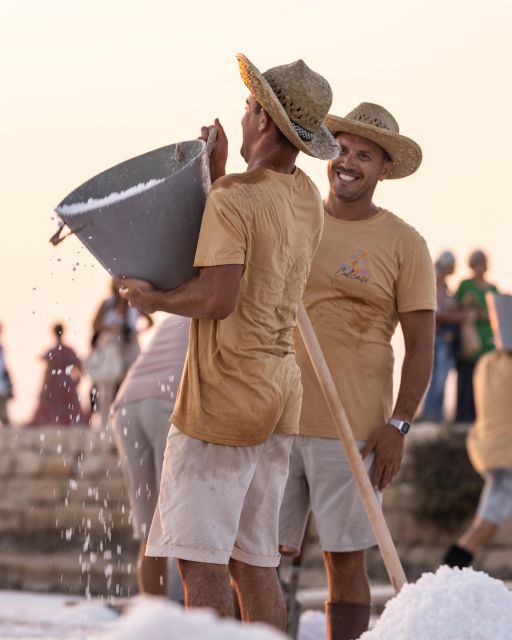
- Hands-on tank experience: you can actually touch the salt during production.
- Flavor tastings: whole salt plus fleur de sel in different aromas from their production, tied to Slow Food.
- Nature + bird-and-plant setting: the walk happens within the WWF reserve area with protected plants and birds.
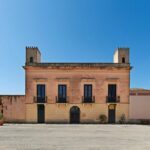
- Museum housed in an ancient farmhouse: plus an ancient mill dating to the 1400s.
Why Trapani’s Salt Pans Feel Different From Other Nature Stops

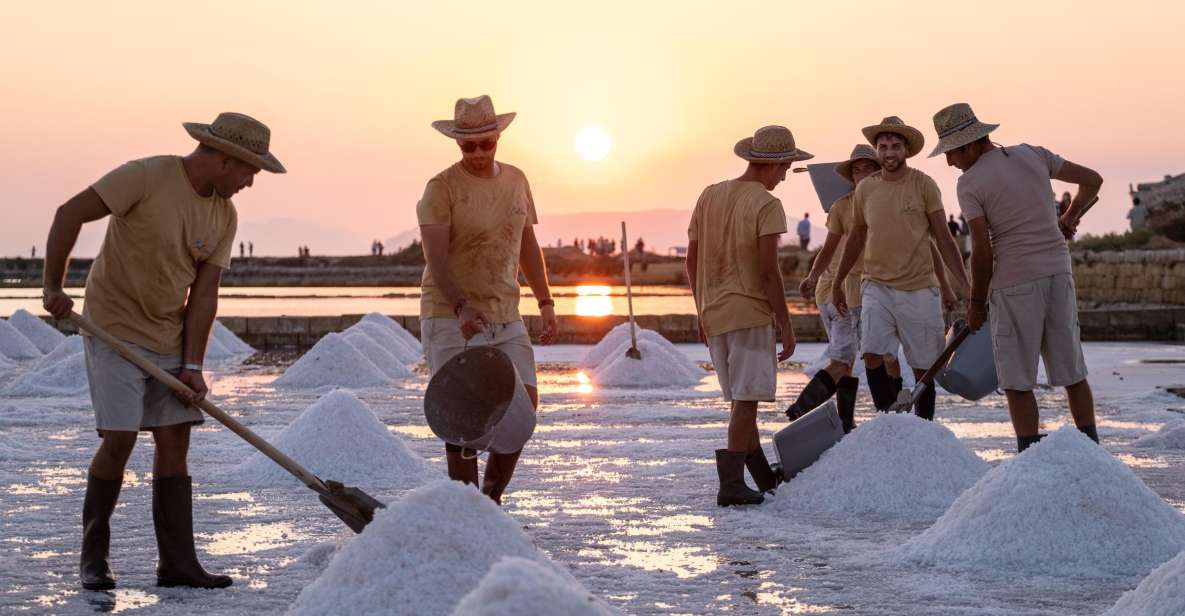
Trapani salt isn’t just a landscape. It’s a working system, and the Culcasi salt pans keep that idea front and center. The guided format matters because the best parts of salt harvesting are visual and tactile, but also easy to miss if you’re just wandering on your own. With a guide leading the way, you get context for what you’re seeing: where water sits, where salt forms, and why the colors and textures change.
I also like that the tour doesn’t treat salt as a museum piece. It treats it as daily work shaped by geography and time. The experience is designed to connect the sea, the clay, the salt ponds, and the people behind them. You walk along the perimeter, you reach the banks where water mirrors the sky, and you follow the process step by step from seawater to harvested salt.
And because it’s linked to family knowledge passed down through generations, the story has a human center. That’s why the salt museum feels more than academic. You’re learning how long this craft has mattered here, and how the tools and the farmhouse setting helped preserve that link between sea and salt.
You can also read our reviews of more guided tours in Trapani
The 75-Minute Plan: Two Parts That Keep the Pace Comfortable

This tour is built in two clear segments, and that structure is one of its strengths. The full experience runs about 75 minutes, which is long enough to feel satisfying but short enough to fit into a day of exploring western Sicily.
The first part is outdoors and active: a guided walk that helps you read the landscape like a salt map. You’ll move through different shades of white in the ponds, with the sea, gray clay, and pink pools showing up along the way. This segment is designed to be suitable for different age groups, but there’s still real walking involved.
The second part shifts indoors and slows down into explanation. You’ll visit the salt museum in an ancient farmhouse and see the ancient mill from the 1400s. This is where the tour becomes more about family, tools, and the long timeline behind salt production, rather than just what’s happening in front of you.
If you like experiences that change gear—nature walk first, then history indoors—this timing works. If you prefer a totally flat, no-walking stop, you should take the hike requirement seriously before booking.
Part One: Walking the Salt Ponds Like a Living Production Map
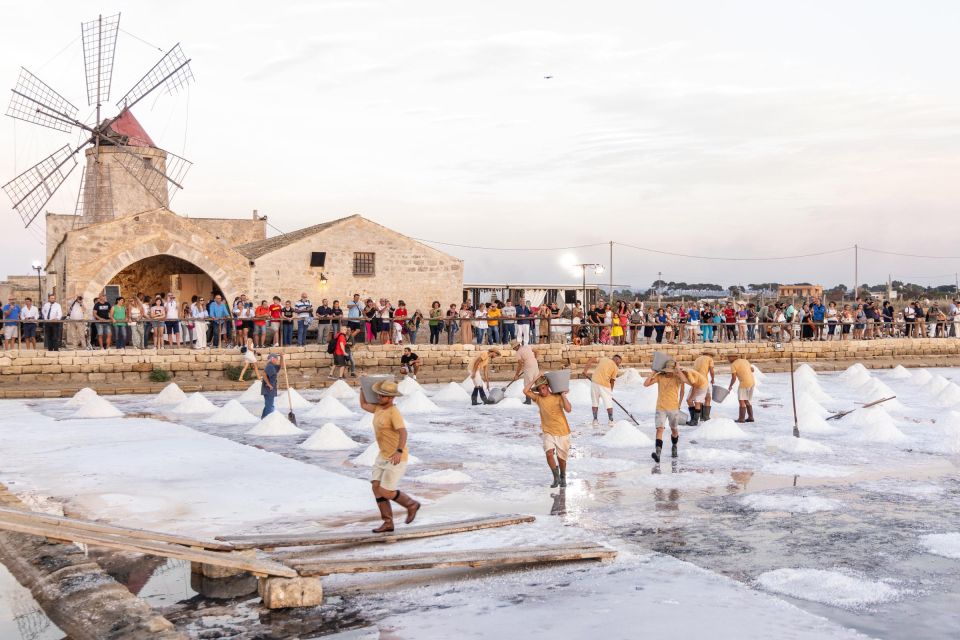
You start out near Via Salina Chiusa, 1, then meet at the ticket office in the forecourt below the windmill. Once the guide gets you oriented, the salt pans become a kind of outdoor classroom.
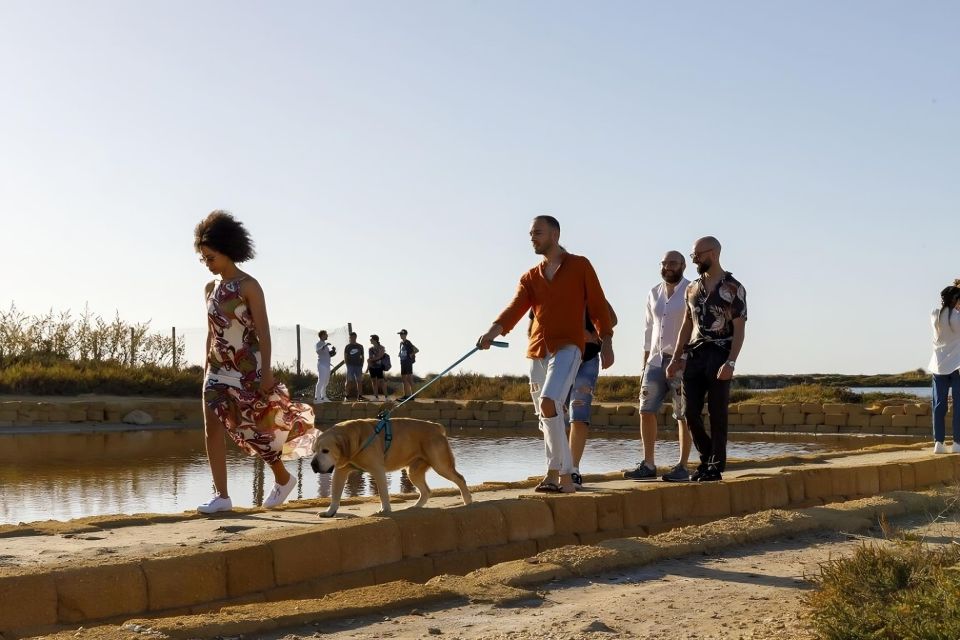
The walk follows the perimeter of the salt pan, with pauses that help you understand what you’re looking at. The experience is visual in a practical way: you’re learning to spot the differences between water and salt areas, and to connect the surface changes with the production steps. That matters because salt ponds can look similar if you’re not shown what to notice.
Along the route, you’ll encounter the most photogenic and most meaningful contrasts:
- white salt surfaces that look like they’re dusted on
- the blue of the sea as a reference point for how the process begins
- gray clay elements that frame the ponds
- pink pools that add color and signal how the system shifts
One more thing I appreciate here: the walk happens in a WWF reserve area, with protected plants and birds. That turns the visit into more than a salt spectacle. You’re sharing space with a protected habitat while watching how a human process uses and respects coastal conditions.
Hands-On Moments: Touching Salt and Collecting the Process in Your Head
The tour is hands-on in a way that goes beyond pointing. You get the chance to collect salt with your hands during the walk, and you can also touch salt inside the production tanks. This is where learning sticks, because your brain connects explanation to physical sensation.
That might sound minor, but it changes the whole experience. Salt production is a chain of stages, and touching the material helps you understand what stage you’re seeing. It’s also a nice way to break the usual museum pattern of watching without participating.
At the same time, keep expectations realistic. You’re not running a tank or handling industrial equipment. This is guided interaction designed for visitors, so you’ll still be learning through the guide’s instructions while staying safe and respectful of the working environment.
If you love sensory travel—learning by seeing, hearing, and feeling—this is one of the best segments to prioritize. It also helps kids and curious adults engage quickly, because the salt itself becomes the lesson.
The Tastings: Whole Salt and Fleur de Sel With Different Aromas
The tasting portion is one of the tour’s highest-impact value adds. Included in the price, you’ll sample whole salt and flavored fleur de sel with different aromas tied to the production.
This is more than a food perk. Tastings turn a production story into something you can take home. You start noticing salt differently: not all salt is the same texture, not all crystals behave the same on the tongue, and aroma-based blends make sense only when you connect them to what you just watched in the pans.
What I like for practical reasons: you don’t need a fancy palate to enjoy it. You’re not asked to memorize tasting notes. Instead, you taste, you compare the samples, and you build an association between the visuals outside and the flavor profile you’re sampling inside.
If you enjoy Slow Food culture, this part also connects the tour to a bigger idea: local food traditions that protect craft. It’s one of those moments where the tour quietly justifies itself. Paying for time here isn’t only paying for access—it’s paying for the chance to understand what salt tastes like when it’s made with intention.





Part Two: Inside the Salt Museum and the 1400s Mill
The museum visit is where the experience stops being only about scenery. It turns into a story of labor, tools, and continuity—specifically the family behind the pans.
You’ll tour the ancient salt museum located inside an ancient farmhouse. The setting matters because it makes the history feel grounded. Salt production wasn’t just an abstract business; it was a farm-and-sea system that shaped daily life. When you move through the museum space, you’re retracing not only the work itself, but the family narrative that has run it for generations.
There’s also an ancient mill from the 1400s. That detail gives you a sense of how long the process and the supporting technology have existed here. Even if you don’t read every label, seeing the physical reminder of milling-era work anchors what the guide explains about turning raw salt into usable product.
I find this second part especially good after the outdoor walk because you already have the visuals in mind. The museum then answers the questions your eyes created:
- How did people manage this work over long seasons?
- How did the tools evolve?
- What role did the farmhouse play in daily operations?
Price and Value: What $21 Buys You in Real Time
At $21 per person for about 75 minutes, this tour is priced like a focused, practical activity rather than a long-day excursion. The value comes from three bundled pieces:
1) Guided entry that connects what you see to how salt is made
2) A museum visit in an ancient farmhouse, including the mill element from the 1400s
3) Tastings of whole salt and aromatic fleur de sel
You’re not just paying for access. You’re paying for interpretation and for sensory reinforcement—touching salt and tasting it—so the experience doesn’t fade the next day.
Is it expensive? No, especially if you’re considering a day with multiple stops. A guided salt-pan visit plus museum time in one outing is efficient, and the tasting adds a souvenir quality you can actually use (even if you only remember it by flavor).
The main value risk is matching the activity to your body. If the one-hour hiking requirement is a problem for you, the tour can feel like a mismatch. In that case, look for an easier alternative, or at least go in with a plan for pacing and footwear.
Who Should Book This Tour (and Who Should Consider Alternatives)
This tour is ideal if you want an outdoors-and-culture combo in western Sicily without spending a whole day in transit. I think it’s especially good for:
- people who enjoy food culture and want to taste what they’re learning
- travelers who like hands-on experiences more than look-only sightseeing
- families looking for a nature setting with real-world explanations
- history-minded visitors who appreciate how old tools and old systems connect
It’s also a strong choice if you’re the type who likes learning in place. Salt pans can look like simple white scenery, but with guidance, they become an operating landscape.
The main consideration is the hike. The tour is described as a one-hour walk with a basic level of fitness required. You’ll want comfortable shoes, and if you’re feeling unwell or have limited mobility, this could be the wrong day for it. Even though the tour is wheelchair accessible, the outdoor portion still matters.
If you hate walking on uneven ground or you need a very low-step experience, you might prefer something more museum-only. But if you can handle a solid walk with stops, this is one of those places where the active parts are also the learning parts.
Practical Tips: Shoes, Shade, and How to Get More From the Guide
A few small choices will make this tour smoother:
- Wear comfortable shoes with good grip. The salt-pan ground and paths can feel different from normal sidewalks.
- Bring a hat and comfortable clothes. The environment can feel exposed, and you’ll want protection as you walk.
- Plan for the walk segment even though the overall tour time is 75 minutes. The outdoor part is the active core.
When you arrive, don’t overcomplicate the start. Meet at the ticket office in the forecourt below the windmill, then find the guide behind the salt sales counter. Once the group starts moving, pay attention early—before you’re deep into the ponds—because the guide’s explanations help you read what’s in front of you.
For the tasting, keep an open mind. You’ll sample whole salt and fleur de sel in different aromas, and the goal is comparison, not perfection. Take a moment between samples, and if you have questions, ask them. The best tours let you connect the flavor to what you just touched.
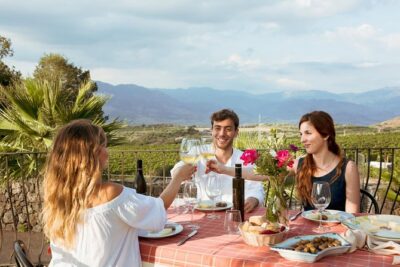
If you want to extend the day, ask about options at the end. The tour mentions that an aperitif with a view and/or dinner at the restaurant may be possible.
Should You Book the Trapani Salt Pans and Salt Museum Tour?
I’d book it if you want a short, high-impact experience that teaches you how salt is made while giving you real sensory moments: a guided walk through the salt pans, a chance to touch and collect salt, and tastings of whole salt plus fleur de sel aromas. The combination of the outdoor WWF reserve setting and the museum housed in an ancient farmhouse (with an ancient mill from the 1400s) makes it feel complete in under two hours.
I would think twice if you can’t manage about one hour of hiking, even at a basic fitness level. A visitor who plans around the walking requirement will enjoy this much more than someone trying to treat it like a quick, flat stop.
If your schedule allows and your legs are good to go, this is a very practical way to see a working craft in Trapani—and taste its results.
FAQ
How long is the guided tour?
The tour lasts about 75 minutes.
What does the tour include for the price?
Your ticket includes a guided visit to the Culcasi salt pan and the salt museum, plus tastings of whole salt and fleur de sel in different aromas from the production.
Where do I meet the guide?
Meet at the ticket office in the forecourt below the windmill. The guide is behind the salt sales counter.
What languages is the tour offered in?
The live guide offers tours in English and Italian.
Is the tour wheelchair accessible?
Yes, the tour is listed as wheelchair accessible.
Do I need to hike, or is it mostly walking?
You should expect about one hour of walking as part of the experience, so a basic level of fitness is required.
What should I bring?
Bring comfortable shoes, a hat, and comfortable clothes.
Is there a cancellation option?
Yes. Free cancellation is available up to 24 hours in advance for a full refund.