REVIEW · CORLEONE SICILY
Corleone: Guided Tour of the C.I.D.M.A – Anti-Mafia Movement
Book on GetYourGuide →Operated by C.I.D.M.A. · Bookable on GetYourGuide
Mafia history can feel heavy fast. CIDMA in Corleone turns that weight into a clear, guided story of the fight against organized crime through documents, images, and testimonies.
I especially like the way the tour anchors big ideas in tangible proof, not generic slogans. You get direct access to the Palermo Maxi Trial materials, including the infamous faldoni of thousands of original records, explained by the guide.
One thing to consider: this is not a light, “quick photo stop” kind of visit. The subject matter is serious, and some content is shown in its original language, so the emotional tone and the reading/text experience may feel intense for some people.
In This Review
- Key highlights at CIDMA in Corleone
- CIDMA in Corleone: an anti-mafia museum that works like a classroom
- Planning your 1-hour guided route (and what you’ll actually see)
- The Palermo Maxi Trial folders (faldoni): where justice becomes physical
- Letizia and Shobha Battaglia photos: Sicily told by faces and fear
- How the guide shapes the story (and helps you avoid movie clichés)
- Price and value: what $11 gets you in Corleone
- Best fit: who will like CIDMA (and who might find it hard)
- Should you book the CIDMA guided tour?
- FAQ
- Where is the CIDMA tour meeting point?
- How long is the guided tour?
- How much does it cost?
- What’s included in the price?
- Which languages are available for the live guide?
- Is the center wheelchair accessible?
- Will I see any content in its original language?
- What are the cancellation rules?
Key highlights at CIDMA in Corleone
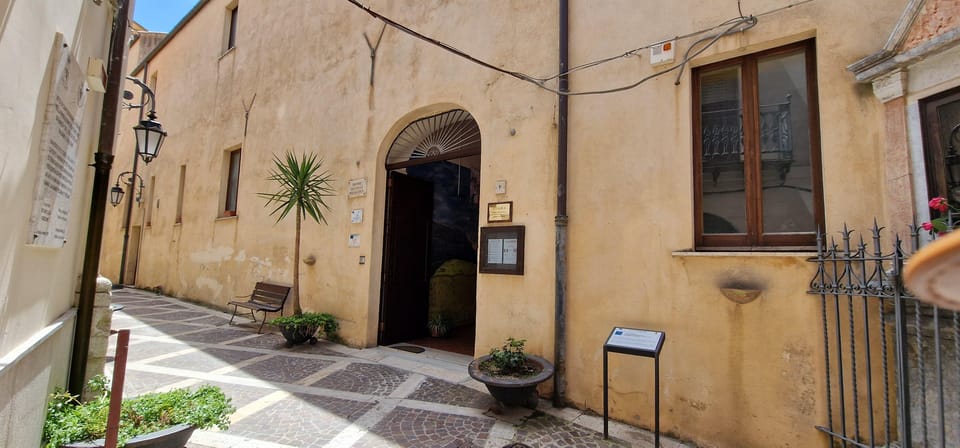
- Real Maxi Trial documents (faldoni): thousands of authentic records tied to the justice process.
- The famous folder room: a dedicated space for the maxiprocesso story and its turning point impact.
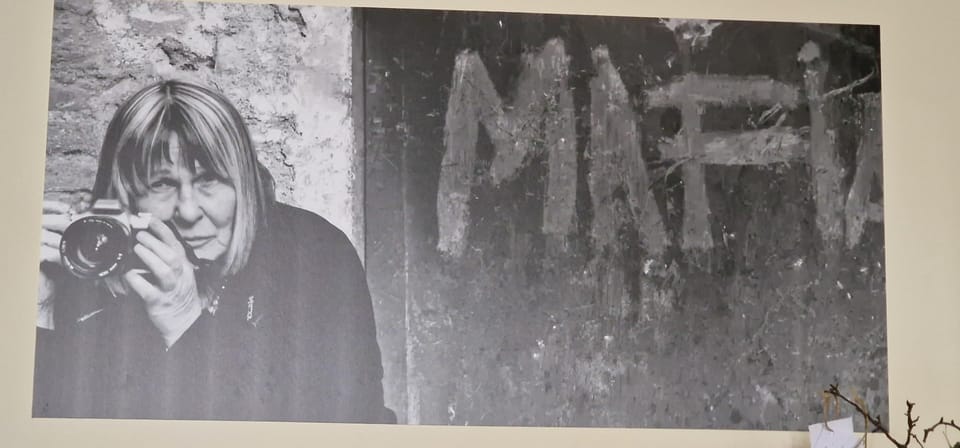
- Letizia Battaglia photos: powerful photojournalism that shows Sicily under Mafia pressure.
- Shobha Battaglia’s perspective: the mother-daughter connection adds depth to the images.
- Guided context in multiple languages: Italian, English, and Spanish to help you connect the dots.
- A “past meets present” approach: documentation plus testimonies that keep the fight against the Mafia human.
CIDMA in Corleone: an anti-mafia museum that works like a classroom
CIDMA (the International Center for Documentation on the Mafia and the Anti-Mafia Movement) is in Corleone, a town closely linked with Sicily’s Mafia story. But this isn’t a shrine to criminal folklore. It’s a place built around evidence, names, and the long, grinding work of resistance and justice.
What makes CIDMA feel practical is the structure. Instead of asking you to feel something vague, it shows you material that explains something specific: how the Mafia operated, how people pushed back, and what changed when the justice system finally went on the offensive in a big way. Even the design of the visit, with its themed rooms, helps you follow the logic without getting lost.
The tour also has a strong “past meets present” concept. Documentation isn’t just old paper in a drawer. Here, documents and photos are treated like living witnesses, connected to testimonies and to the courage of those who challenged illegality.
You can also read our reviews of more tours and experiences in Corleone Sicily.
Planning your 1-hour guided route (and what you’ll actually see)
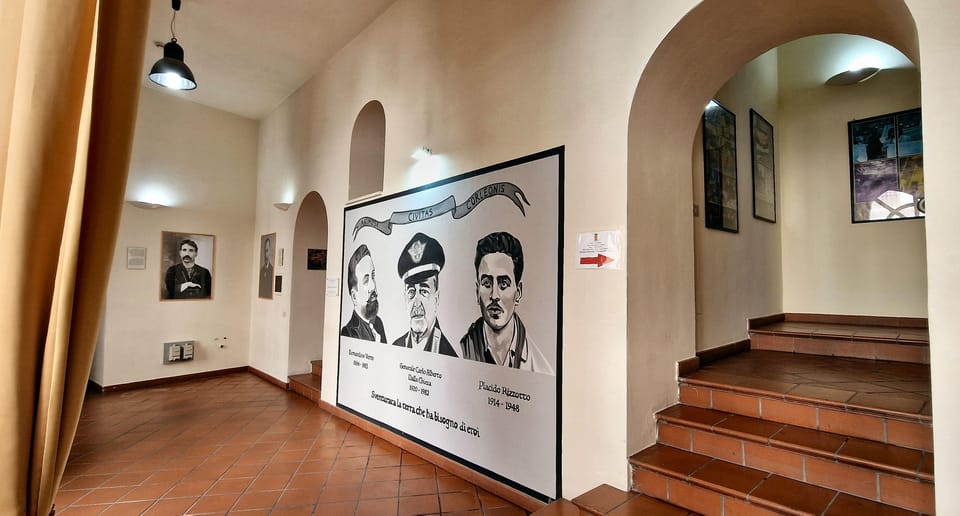
This experience is built to fit into a tight schedule: about 1 hour with a live guide (Italian, English, or Spanish). That matters because it changes how you should plan your day. You’re not meant to wander slowly. You’re meant to listen, look, and connect themes fast.
You’ll start at the CIDMA site near Piazza Giuseppe Garibaldi, at 7 G. Valenti Street, Corleone. From there, the route focuses on two big anchors:
1) the documentation side, especially the Maxi Trial folders room, and
2) the human side, especially the photo work of Letizia Battaglia and Shobha Battaglia.
Because some content may be shown in its original language, don’t panic if you see segments that don’t immediately translate visually. The guide’s job is to supply the context so you still get the meaning.
Practical tip: if you’re the type who likes to ask questions, keep an ear open for moments when the guide explains what you’re looking at. CIDMA rewards attention, but it doesn’t require you to be a legal-history expert.
The Palermo Maxi Trial folders (faldoni): where justice becomes physical
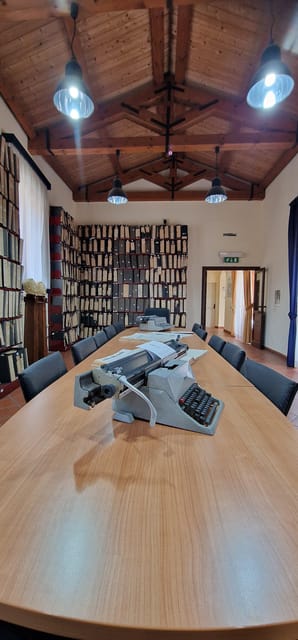
The heart of the visit is the room devoted to the maxiprocesso, the largest trial against the Mafia ever held in Italy. Here, the story moves from generalities to paperwork. The center presents the faldoni, the folder bundles holding thousands of authentic documents, treated as tangible witnesses to the turning point in the fight for justice.
Why is this so powerful? Because it forces you to rethink the Mafia from a distance-of-movies concept into something closer to a system. When you see evidence organized into thousands of documents, you start to understand that stopping organized crime isn’t only about dramatic arrests. It’s about sustained investigation, careful documentation, and the courage of people who kept going even when it was dangerous.
There’s also an important emotional effect. These folders aren’t “background.” They become proof that legal processes matter. Even if you only catch the main ideas in a 1-hour tour, you’ll leave with a clearer sense of how a society changes when justice is willing to confront organized crime at scale.
What to watch for: the guide’s explanations are the difference between reading names and understanding why those names mattered. Pay attention to how the guide connects the folder materials to the bigger anti-Mafia movement.
Letizia and Shobha Battaglia photos: Sicily told by faces and fear
The other major anchor is photojournalism by Letizia Battaglia, and the presence of Shobha Battaglia alongside her. Their images capture drama and daily pressure in Sicily, showing the human side of living under the shadow of the Mafia.
This is where CIDMA becomes more than “history.” Photos do something documents can’t: they show the atmosphere. You can feel the difference between a story about crime and a story about people, families, work, and community life under threat.
What I find especially valuable for visitors is the way the images are used as part of the guided narrative. Photos alone can become a montage. CIDMA tries to keep them tied to meaning: what life looked like, what choices were made, and where resistance came from.
If you’re worried about the subject feeling too dark, don’t skip it. The power here is that the images also point toward strength. The center frames the anti-Mafia struggle as collective resistance, not just punishment after the fact.
In practical terms, plan to stand and look for a minute at each photo area the guide points out. This isn’t a gallery where you quickly pass by. The guide’s context helps you read the images instead of just viewing them.
How the guide shapes the story (and helps you avoid movie clichés)
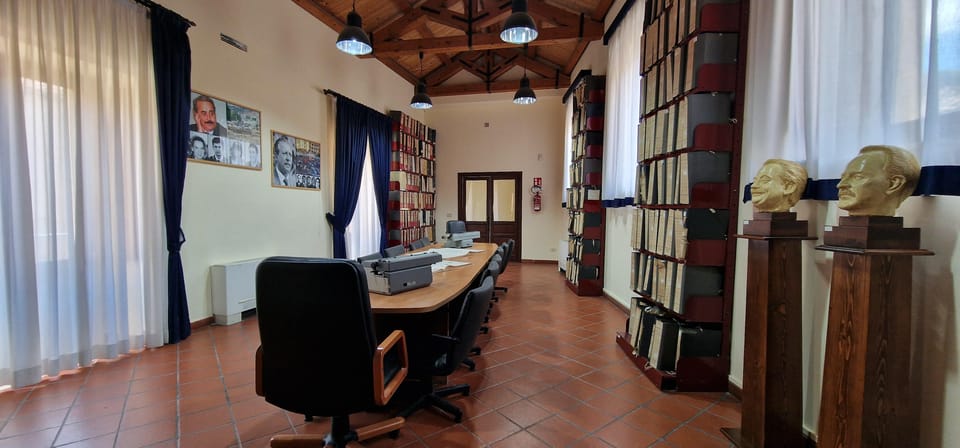
A lot of people arrive with Mafia ideas pulled from film. CIDMA is designed to correct that automatic storyline. A strong guide approach keeps facts clear without turning the visit into a lecture, and it uses the materials on site to show what’s real and what’s myth.
From the overall experience pattern, the best tours manage a tricky balance:
- explain the bigger picture enough that you understand the stakes, and
- keep the focus anchored to the objects in front of you, like the trial folders and the Battaglia photographs.
That balance is key if you’re not a specialist. You don’t need to already know the timeline to get value. You do need someone to connect the “what you’re seeing” to the “why it mattered,” and that’s exactly what a guided CIDMA visit is built to do.
Also helpful: the tour is available in Italian, English, and Spanish, so you can match the language to your comfort level. That reduces the chance you’ll miss key explanations because of a language gap.
Price and value: what $11 gets you in Corleone
The price is $11 per person, with the entrance and guide included. For a 1-hour guided experience centered on unique materials, that’s strong value—especially compared with the cost of typical museum entry + separate guided services.
Here’s why the price feels fair:
- You’re not paying for a generic exhibition. You’re paying for access to a focused documentation center with special rooms.
- You’re not paying for “time in a building.” You’re paying for guided context that helps you interpret serious materials quickly.
- The subject matter is niche, but the tour design is accessible. It’s written for normal people, not only academic audiences.
If you’re doing a Corleone stop with limited time, CIDMA is a smart use of an hour. It’s the kind of place where a short visit can still leave a lasting mental map, because the themes are organized clearly.
Best fit: who will like CIDMA (and who might find it hard)
CIDMA is a great match if you care about:
- history and culture tied to real evidence,
- the anti-Mafia movement as a human story,
- and understanding organized crime beyond movie imagery.
It also fits well if you’re traveling with someone who likes guided interpretation. The center’s materials (folders and photos) are much easier to process with context than on your own.
Who might find it challenging:
- If you’re expecting an entertaining, light museum hour, the tone may be heavy.
- If you struggle with reading/processing content shown in original language, the experience could feel less smooth unless the guide frequently translates or summarizes key points for your language group.
A simple way to decide: if you’re willing to trade a relaxed vibe for a thought-provoking one, this works.
Should you book the CIDMA guided tour?
I’d book CIDMA if you want an hour in Sicily that goes beyond stereotypes and gives you something concrete: trial folders, documented evidence, and Battaglia photos tied to lived reality. For $11, the value is in the combination of guided context and materials you can’t really replicate by walking past.
Skip it if you need a very casual visit with minimal emotional weight, or if you want a museum experience that’s mostly self-guided and flexible. This tour is designed to be short and structured, and it stays serious.
If your day allows only one culture stop in Corleone, CIDMA is the one I’d bet on for meaning per hour.
FAQ
Where is the CIDMA tour meeting point?
The center is near Piazza Giuseppe Garibaldi in Corleone, at 7 G. Valenti Street.
How long is the guided tour?
The tour lasts about 1 hour.
How much does it cost?
It costs $11 per person.
What’s included in the price?
Entrance to the center with a guide included.
Which languages are available for the live guide?
The live guide is available in Italian, English, and Spanish.
Is the center wheelchair accessible?
Yes, the activity is listed as wheelchair accessible.
Will I see any content in its original language?
Some content is shown in its original language.
What are the cancellation rules?
You can cancel up to 24 hours in advance for a full refund, and it also offers reserve now & pay later.