REVIEW · CEFALU
Cefalù: Guided Walking Tour & Cefalu Cathedral Mosaics
Book on GetYourGuide →Operated by Italygonia Travel T.O. · Bookable on GetYourGuide
Cefalù tells its story in stone and mosaic. This guided walk is one of the easiest ways to connect the dots between the Jewish quarter and the UNESCO Cefalù Cathedral in just two hours. I particularly like that the route moves from everyday street scenes to the cathedral’s iconic interior details, including the Christ Pantocrator mosaic.
The main trade-off is time: it’s a fast, focused 2-hour loop, so you won’t have hours to wander off-script, linger in smaller corners, or add extra stops on your own. Still, if you want a smart first look, it’s a strong choice.
In This Review
- Key things to notice before you go
- Why this Cefalù walk works so well (even if it’s your first time)
- The Jewish quarter and Porta Giudecca: where the stories start
- Following the alleys toward the fishing port and Porta Pescara
- Palazzo Martino’s medieval wash house: history you can almost smell
- Palazzo Mandralisca (from the outside) and why the artworks matter
- Cefalù Cathedral: Norman power, Arab influence, and gold mosaics
- Two towers and what they signal
- Inside: Christ Pantocrator and the apse mosaic
- What the guide adds (and why it matters more than you think)
- Price and value: what $325.13 per group really means
- Who should book this Cefalù tour?
- Should you book it? My straightforward take
- FAQ
- How long is the Cefalù guided walking tour?
- Where does the tour take place?
- What’s included in the price?
- Is the tour private?
- What languages are offered?
- What are the main sights on the route?
- Is there free cancellation?
- Can I reserve now and pay later?
- How much does it cost?
Key things to notice before you go
- Two-hour pacing: enough time for the highlights, not enough for long detours
- Jewish quarter route: Porta Giudecca and local traditions shape the opening of the walk
- Porta Pescara and the fishing port: great “see it, photograph it, understand it” moments
- Medieval wash house: the laundry basins and lion-head water spouts make history physical
- Norman cathedral interior: Byzantine-style gold mosaics centered on Christ Pantocrator
Why this Cefalù walk works so well (even if it’s your first time)
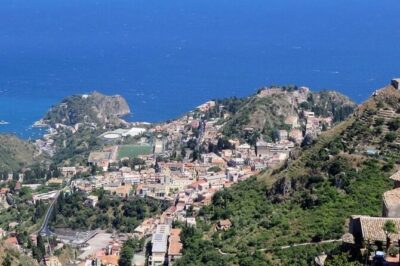
Cefalù can feel like a postcard the moment you arrive: tight lanes, sea light bouncing off pale stone, and the cathedral looming like a landmark you can’t ignore. The value of this tour is that it gives you order. Instead of wandering and guessing what you’re looking at, you get a guided path that explains why these neighborhoods, gates, and monuments matter.
You’ll also get a practical rhythm for the day. The tour concentrates on the most readable parts of town: starting with the Jewish quarter outside the historic center, then moving through the alleys toward the fishing port and onward to the cathedral. It’s the kind of itinerary that helps you get your bearings fast and understand what you might want to revisit later.
You can also read our reviews of more walking tours in Cefalu
The Jewish quarter and Porta Giudecca: where the stories start
The walk begins in the ancient Jewish quarter, just outside Cefalù’s historic center. This area preserves traces of a Jewish community that lived here for almost 200 years. That context changes how you see the streets. Instead of treating the neighborhood like scenery, you understand it as a place with a timeline.
The star of this opening section is Porta Giudecca, the gate tied to access and identity for the community. From here, you continue toward the sea and the lighthouse area, and the walk naturally connects architecture to geography. It’s easier to grasp the city’s layout once you’re moving with someone who knows how the pieces fit.
One tip: wear shoes you can trust. The charm of Cefalù is in its tight, uneven lanes, and a walking tour turns that charm into a real workout if your footwear isn’t ready.
Following the alleys toward the fishing port and Porta Pescara
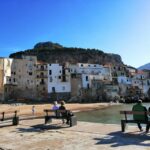
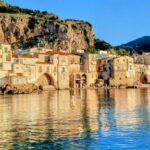
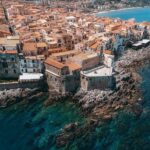
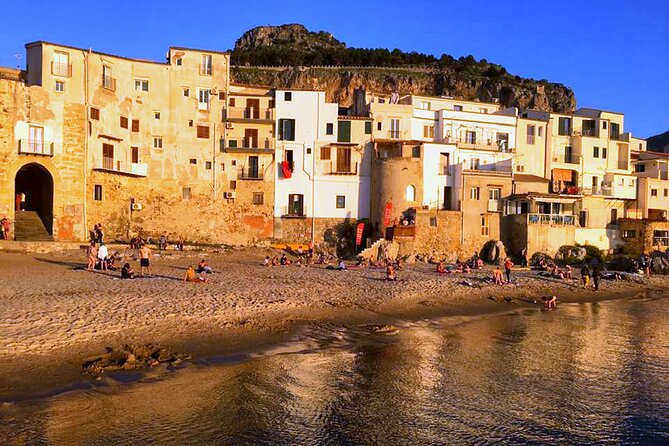
After the opening neighborhood, the tour moves along “suggestive Sicilian alleys” until you reach the small fishing port. This is where you’ll see Cefalù as film crews often do: colorful fishing boats, tight waterfront views, and a postcard-perfect corner that still feels used by locals.
The port is framed by the ancient medieval Porta Pescara gate. That detail matters because gates aren’t just decorative. They mark controlled entry points and help explain how people once moved between town and sea. When you know what the gate means, the waterfront feels less random.
You’ll also hear why this area has been used as a film set—examples include New Cinema Paradiso and the latest Indiana Jones 5. Even if you don’t care about filming history, it’s a reminder that Cefalù’s visuals aren’t accidental. They’re the result of long-standing urban form and coastal life.
Palazzo Martino’s medieval wash house: history you can almost smell
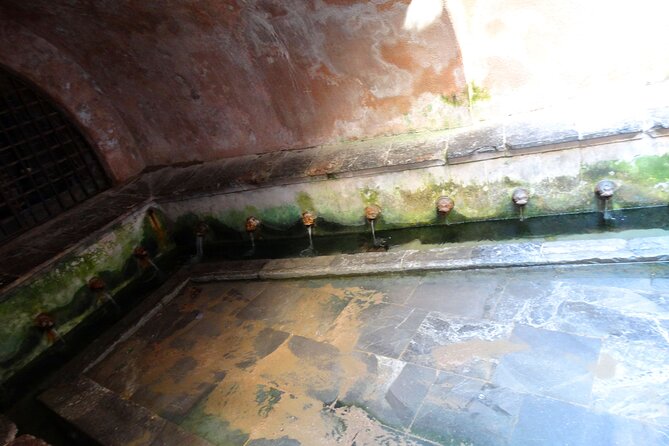
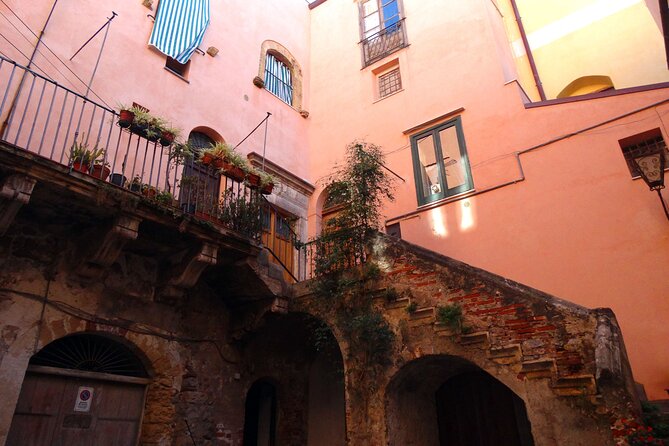
From the port, the tour heads to a medieval wash house located in the atrium of Palazzo Martino. This is one of the most memorable stops because it turns “history” into something you can picture. You’ll see the lava stone staircase and the basins where water was used for washing.
The really striking part is the design: water flowed from mouths shaped like a lion’s head. Those lion-head supports were used to rub clothes, which means this wasn’t a polite fountain. It was built for labor. The stop gives you a grounded view of daily life—how communities handled washing before modern plumbing made it invisible.
If you like travel that mixes architecture with human routines, you’ll enjoy this portion. It’s the kind of stop that makes other places feel more real, because you’re reminded that these towns were lived in, not just admired.
Palazzo Mandralisca (from the outside) and why the artworks matter
The tour doesn’t promise a long museum detour, but it still makes Palazzo Mandralisca count by pointing you to what it houses. Even though you’ll see it externally, the connection is clear: this is the kind of building that anchors a city’s cultural pride.
Mandralisca is famous for Byzantine icons and for the portrait known as the Unknown by Antonello da Messina. That’s a strong art combination for two reasons:
- Byzantine icons connect directly to the cathedral’s Byzantine-style influence you’ll see later.
- Antonello da Messina’s portrait brings a different artistic voice into the Cefalù story.
If you’re the type who plans return visits, this is a good “bookmark” stop. You’ll leave with enough context to decide whether you want to add museum time after your tour ends.
You can also read our reviews of more guided tours in Cefalu

Cefalù Cathedral: Norman power, Arab influence, and gold mosaics
The tour closes at the Cefalù Cathedral, a UNESCO World Heritage Site. This is the big reason most people want a guide here. Without context, you might notice “pretty mosaics.” With context, you start noticing systems—how styles, religious symbolism, and building choices communicate who held power.
Two towers and what they signal
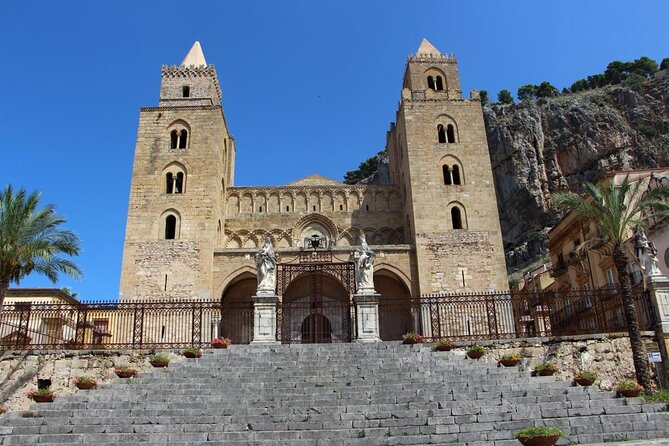
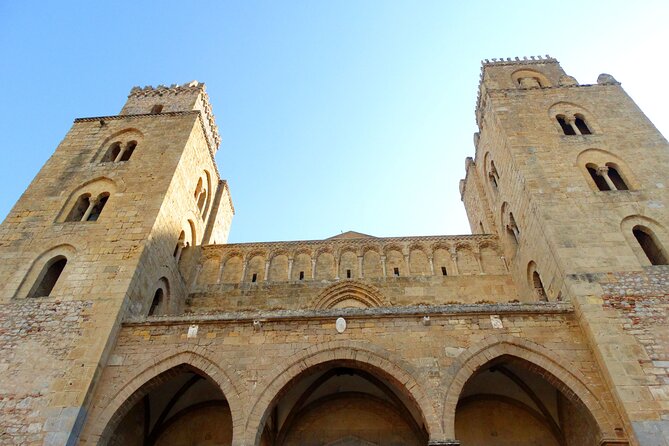
From the outside, you’ll see the cathedral’s Norman style with Arab influences. The facade features a marble portal and two towers on either side:
- one with a square plan, tied to the power of the Church
- one with an octagonal plan, representing the power of kings and the nobility
That symbolism helps you read the building as more than architecture. It becomes a statement—built to communicate authority.
Inside: Christ Pantocrator and the apse mosaic
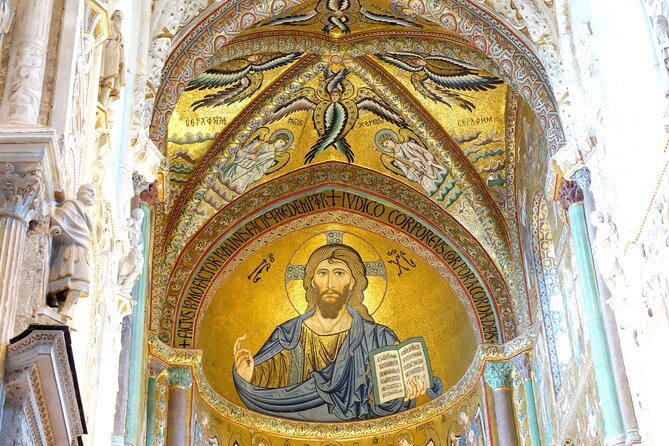
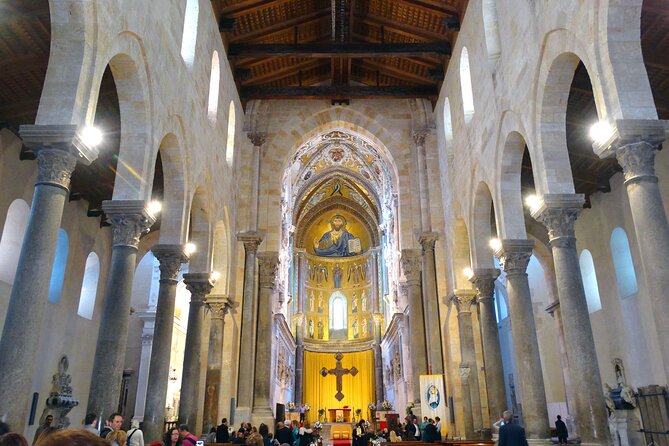
Inside the cathedral, the highlight is the Christ Pantocrator overlooking the apse. The mosaic is positioned to face the faithful, so it feels less like wall art and more like the center of attention.
You’ll see the bright gold mosaics and paintings on a golden background in a Byzantine style. This is the point where the walk’s earlier art connections start making sense. Your eyes begin linking the city’s styles—Norman structure, Arab influence on design language, and Byzantine-style mosaic traditions.
Practical note: if you’re photographing, keep it respectful. Move slowly and give space to people who came specifically to look, not to shoot.
What the guide adds (and why it matters more than you think)
This is a guided tour with a licensed guide, offered in Italian and English. The group is private, which typically makes the experience feel less like a “herd” and more like a conversation you can join at your pace.
A name you might hear in the guide lineup is Marisa. People describe her as friendly, funny, and professional, and her storytelling style can be vivid—so if you’re traveling with kids, you’ll probably want to make a quick judgment call about how much dramatic lore fits your family’s comfort level.
Here’s the real value: the guide turns visual cues into comprehension. Gates stop being random stone; wash basins stop being “old stuff.” You start recognizing why each feature is there and what it would have meant to the people living their normal days nearby.
Price and value: what $325.13 per group really means
The price is listed as $325.13 per group, with a group size up to 25, for a total duration of about 2 hours.
That can be a bargain—or not—depending on how you’re splitting it:
- If you’re traveling with a small group of friends or family, this can work out to a reasonable per-person cost for a licensed guide plus a tight, well-planned route.
- If you’re traveling solo and end up paying as the only person, it may feel pricier than a standard join-in group tour.
My advice: treat it like a “first-day orientation tour.” You’re paying for speed plus clarity—getting you to the cathedral’s key interior moment and giving you context for what you’ll want to explore on your own afterward.
Also, flexibility helps. The offering includes free cancellation up to 24 hours in advance for a full refund, and it’s available with a reserve now & pay later option, which makes it easier to fit into your Sicily schedule.
Who should book this Cefalù tour?
This tour fits best if you want:
- a structured introduction to Cefalù’s main historical threads without spending half a day planning
- a cathedral visit guided by context, especially the Christ Pantocrator and Byzantine-style mosaics
- a walk that includes both major monuments and smaller life-details like the wash house
It’s less ideal if you want long free time. With a 2-hour format, you’ll be guided through specific stops, and you may not have the slack to linger everywhere.
Should you book it? My straightforward take
If you’re heading to Cefalù and you care about understanding what you’re seeing, I think this is a smart booking. The mix of gates, alleys, the wash house, and the cathedral gives you a storyline instead of a checklist. The cathedral portion alone—those two towers outside, then the Christ Pantocrator and gold Byzantine mosaics inside—makes the guided format worth it.
I’d pass only if you’re trying to stretch every minute into a self-guided wander day, or if your group strongly prefers slow pacing with lots of optional detours. For a focused first look that helps you explore smarter afterward, book it.
FAQ
How long is the Cefalù guided walking tour?
It lasts about 2 hours.
Where does the tour take place?
It’s in Cefalù, Sicily, near Palermo and the Madonie Park.
What’s included in the price?
The tour includes a licensed tour guide.
Is the tour private?
Yes, it’s described as a private group experience.
What languages are offered?
The live tour guide is available in Italian and English.
What are the main sights on the route?
You’ll walk through the ancient Jewish quarter and see Porta Giudecca, the fishing port area with Porta Pescara, a medieval wash house connected to Palazzo Martino, and the Norman Cathedral with its mosaics, including Christ Pantocrator.
Is there free cancellation?
Yes. You can cancel up to 24 hours in advance for a full refund.
Can I reserve now and pay later?
Yes, the experience offers a reserve now & pay later option.
How much does it cost?
It’s listed at $325.13 per group, up to 25 people.