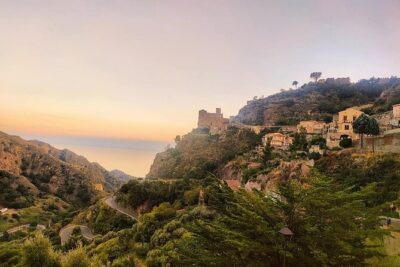
REVIEW · NOTO ITALY
From Catania: Siracusa, Ortigia, Noto audio-guided tour
Book on GetYourGuide →Operated by Tourist Service Soc. Coop. A.r.l. · Bookable on GetYourGuide
Crumbling ancient stones, plus baroque streets.
This full-day Catania to Syracuse–Ortigia–Noto route strings together three very different Sicilian worlds, with an audio guide to keep your feet moving and your head full. I love that it’s paced like a day trip should be: van comfort for the transfers, then on-your-own wandering where it counts.
Two things I really liked: the stops themselves, and the freedom inside them. At Neapolis Archaeological Park, you’re up close to the Greek Theatre and Roman Amphitheater, and you can linger when something grabs you. In Ortigia, the walk around Piazza Duomo and the myths around the Fountain of Arethusa make the whole island feel alive.
One drawback to consider: it’s not a nonstop, step-by-step live guide experience. The “guided” part is mainly audio commentary, and some people may want a more hands-on guide telling you exactly where to stand and what to notice.
In This Review
- Key takeaways before you go
- How the Catania to Syracuse–Ortigia–Noto van day really works
- Neapolis Archaeological Park: Greek Theatre and Roman Amphitheater time
- Ortigia island walk: Fountain of Arethusa, Piazza Duomo, fortress walls
- Noto’s Sicilian Baroque: Hercules fountain and palace stops
- Audio guide in 6 languages: how to make it actually work for you
- Tickets, lunch, and what to bring for an easy day
- Price and value: who benefits most from this format
- Potential gaps: time limits and the “what kind of guiding is this?” issue
- Should you book this tour from Catania to Syracuse–Ortigia–Noto?
- FAQ
- Where is the meeting point in Catania?
- What’s the duration of the tour?
- Is the Neapolis Archaeological Park ticket included?
- Is lunch included?
- What languages are available for the audio guide?
- Is the tour wheelchair accessible?
Key takeaways before you go

- Air-conditioned van transfers: less stress between three towns in one day.
- Neapolis tickets are on you: plan for entry costs separately from the tour price.
- Ortigia is the myth-and-walk highlight: Fountain of Arethusa, fortress walls, and baroque churches.
- Noto is all about Sicilian Baroque: plan to slow down for palaces and fountains.
- Audio guide runs in 6 languages: Italian, English, Russian, Spanish, French, German.
How the Catania to Syracuse–Ortigia–Noto van day really works
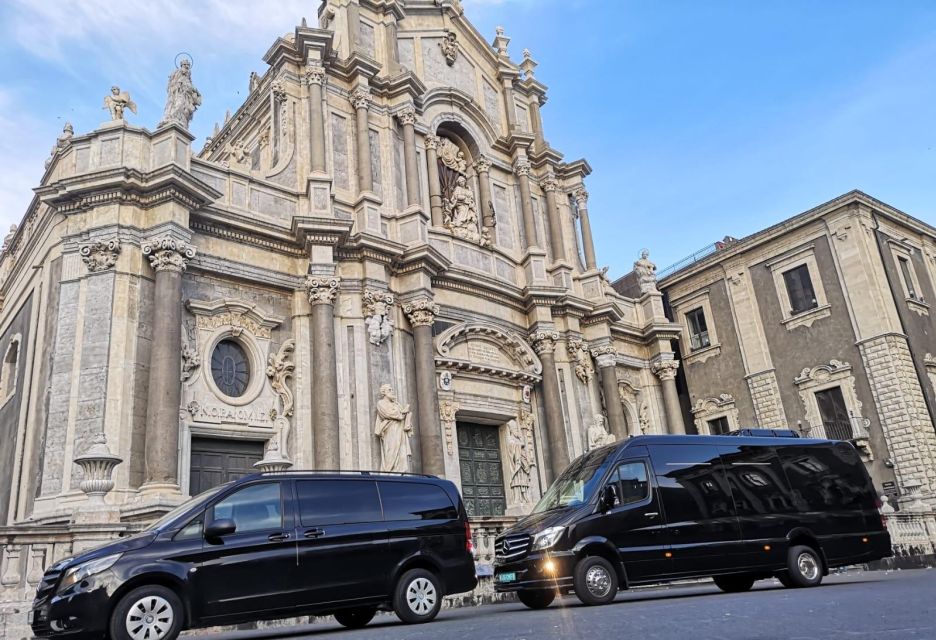
This is a 9-hour day trip built around one key idea: you get moved efficiently between sights, and then you explore at your own pace. You meet your driver at the corner near Saint Agatha Cathedral on Duomo Square in Catania, by the Red Tourist Service Office (coordinate: 37.502933502197266, 15.087703704833984). Then you head to Syracuse in an air-conditioned van.
At each stop, you’re not stuck in a museum loop with a guide holding a clipboard. You’ll park, then walk. That matters because these places reward casual wandering: you turn a corner and suddenly the view, the scale, or the details make sense. If you like controlling your own time—more photos here, less time there—this style fits.
A small practical point: the van part is smooth and scheduled, but the walking time inside cities depends on what you choose to do. If you’re the type who always stops for cafés and shops, build that into your pace.
You can also read our reviews of more guided tours in Noto Italy


Neapolis Archaeological Park: Greek Theatre and Roman Amphitheater time
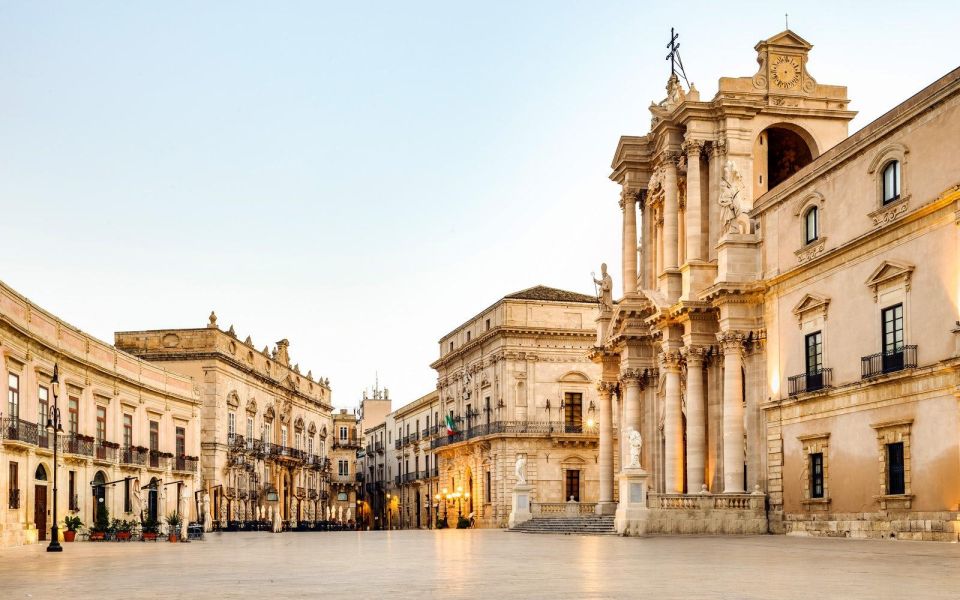
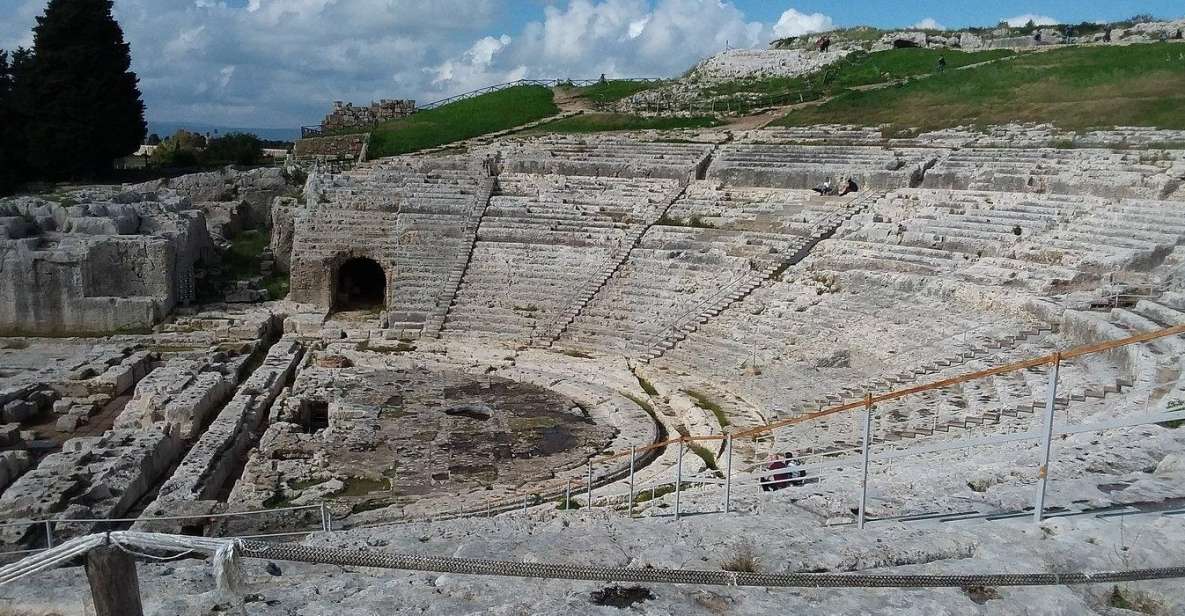
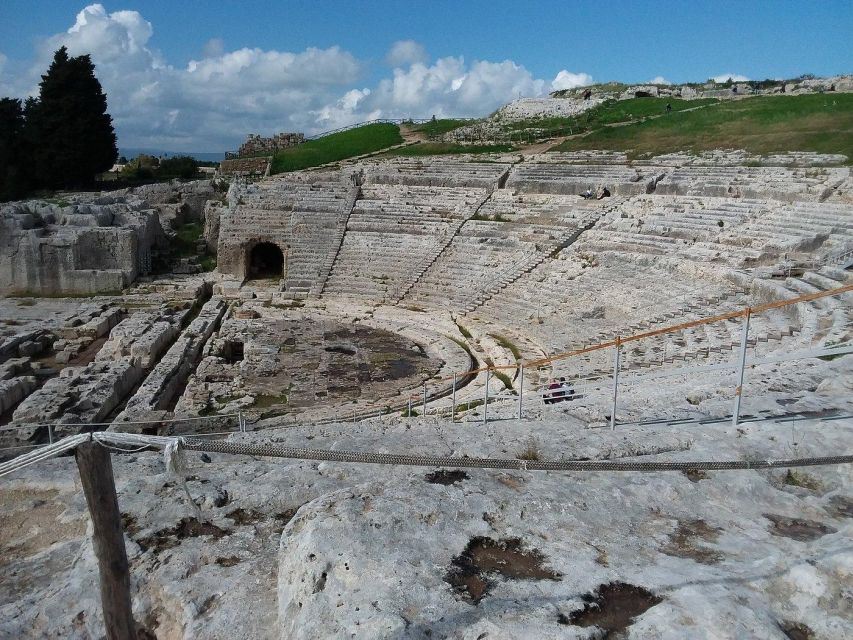
Neapolis Archaeological Park is where the day’s “wow factor” turns into “wait, I’m standing in history” energy. You’ll need to purchase tickets to enter the park. Once you’re inside, expect the major anchors of the area: the Greek Theatre, the Roman Amphitheater, and the stone quarries.
Here’s what makes Neapolis special on a practical level: the site is open-air and spread out, so the architecture isn’t just something you look at—it’s something you walk through. The theatre shapes your view of the surrounding area. The amphitheater gives you a different kind of scale, and it’s easier to understand the shift from Greek forms to Roman uses when you can move between viewpoints.
Time tip: if you want the most from audio, give yourself a minimum of focused walking. If you treat Neapolis like a quick photo stop only, you’ll miss how the ruins connect visually. One booking experience I came across even flagged that they wished they had a little more time here—so if Neapolis is your top priority, be ready to spend a bit longer and then adjust your pace for the later stops.
Ortigia island walk: Fountain of Arethusa, Piazza Duomo, fortress walls
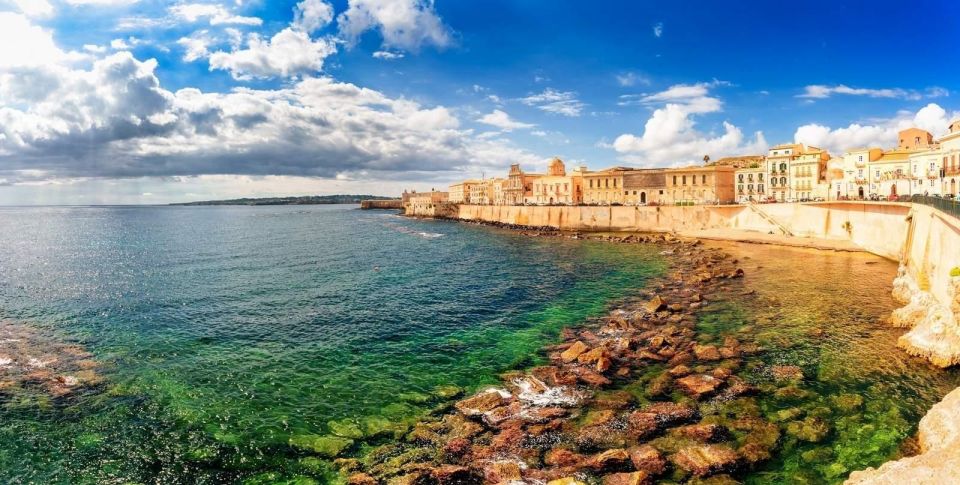
Ortigia is the part of the day that feels most like a movie set—except you’re walking on real streets, with real sunlight and real street life. After Syracuse, you head to this ancient fortified island and start exploring on foot.
The key sights you’ll want to steer toward include the mythical Fountain of Arethusa, Piazza Duomo, the fortress walls, and the island’s Baroque churches and palaces. The mix is the point: you’re moving between sacred-looking spaces, defensive walls, and places tied to legend.
What I like about Ortigia’s pacing is that it’s naturally flexible. You can do the “must-see” route (Arethusa and Piazza Duomo early, then wander outward), or you can slow down and just follow your curiosity. Baroque churches here don’t always hit you like a single photo-friendly façade; instead, they reward looking up, moving along side streets, and noticing repetition and texture.
Food note, since this area is a draw: one account I saw mentioned a seafood lunch in Ortigia by the water as a highlight. Lunch isn’t included on this tour, so you’ll be choosing your own spot. That’s a plus if you want control over price and timing, but it also means you should plan a rest break before you start thinking about the next town.
Also, quick warning in advance: Ortigia involves walking on uneven streets. Comfortable shoes aren’t optional here—they’re part of the experience.
Noto’s Sicilian Baroque: Hercules fountain and palace stops
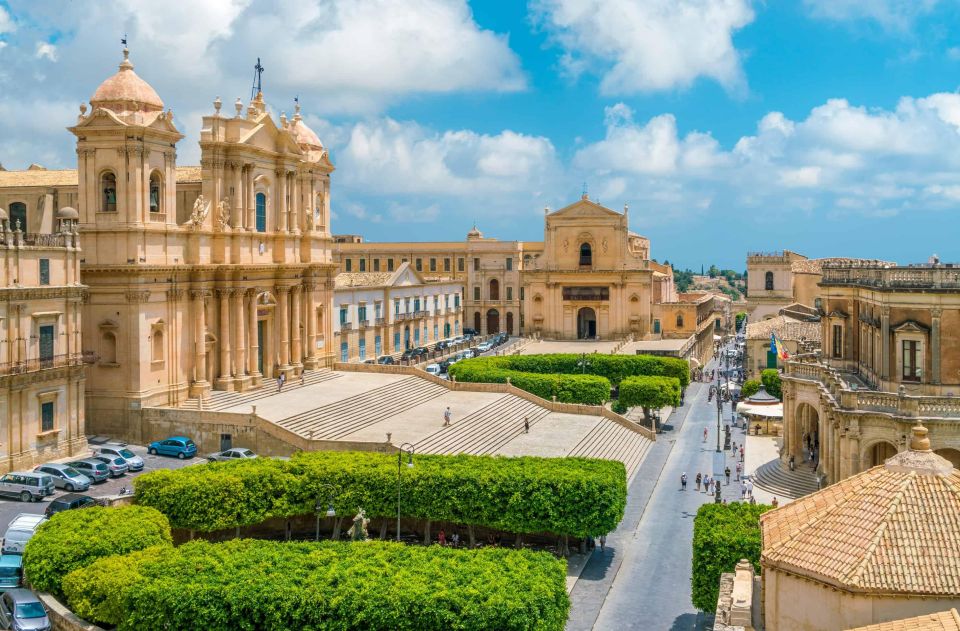
Then you drive to Noto, a town famous for its Sicilian Baroque look. Noto is less about ruins and more about unified elegance—big shapes, ornate façades, and a sense of theatrical street design.
The tour gives you free time to see sights such as the Fountain of Hercules and noble palaces including Palazzo Astuto and Palazzo Trigona Cannicarao. The practical way to experience Noto is to slow down and keep shifting your focus: façade details, then street layout, then back up to domes and sculpted elements.
This is also the best stop for people who enjoy city-strolling without needing every minute planned. You can spend time near major landmarks and then cut through side streets to catch different angles of the same buildings. In a day already packed with ancient sites, Noto offers variety—and variety is what keeps one-day itineraries from feeling like a checklist.
If you’re the type who hates rush, keep your expectations realistic: Noto is the last act of a long day. If you want more time here, it helps to not spend every spare minute in Syracuse.
Audio guide in 6 languages: how to make it actually work for you
This tour includes a multilingual audio guide in Italian, English, Russian, Spanish, French, and German. The driver is listed as Italian and English.
So here’s the key thing to understand before you go: this experience is designed around audio, not constant live narration. That can be fantastic when the audio is clear and timed to your stops. It can feel less satisfying if you expected someone to act like a traditional live guide.
One practical move: when you arrive at each location, give yourself a minute to get oriented before you press play. Audio works best when you can match the explanation to what you’re seeing right now. If you’re hopping between buildings quickly, the audio can feel like it’s talking to a version of the site you aren’t looking at.
If you’re going in English, still listen carefully for how the audio segments guide you through the layout. And if you prefer deeper human explanation—why a certain feature looks the way it does, or the inside story of a particular church—be ready to ask questions locally or rely on your own reading on-site. The audio is useful, but it’s not the same as a live walk-and-talk.




Tickets, lunch, and what to bring for an easy day
Not everything is included. Lunch and ticket entrances aren’t included, and you’ll need to buy park tickets for Neapolis Archaeological Park.
That means you should plan for:
- A paid entry ticket at Neapolis
- Your own lunch in Ortigia or wherever you choose
- Possible snack and water breaks (especially in warm months)
What to bring is clearly laid out: comfortable shoes, water, a credit card, and passport or ID card (a copy accepted). A copy rule is handy, but I still recommend bringing the real ID if you have it—easier if anyone needs to confirm something on the spot.
One more “don’t get stuck” rule: drinks and food aren’t allowed in the vehicle. You can absolutely grab water, but plan to buy it after the driving segments, not before you board.
Price and value: who benefits most from this format
You’re paying for three things that matter on this route:
1) Transportation in an air-conditioned van
2) A structured day connecting three major places without you arranging buses yourself
3) Audio commentary in multiple languages
The value is strongest if you want to see Syracuse + Ortigia + Noto without the hassle of driving, parking, and figuring out timing between cities. If you’ve tried Sicily driving before, you already know how much energy that saves.
This is also a good fit if you like choosing your own pace inside each stop. Neapolis and Ortigia especially reward walking freely. Noto works well when you want to enjoy the look of the place without being herded.
Where it might not be the best value: if you expected a full-on live guided tour where someone constantly stops the group, explains every detail with a microphone, and keeps everyone together tightly. This setup is more like a smooth van day plus audio interpretation.
Potential gaps: time limits and the “what kind of guiding is this?” issue
Everything here hinges on expectations. When the audio and the driver rhythm are aligned, the day can feel smooth and enjoyable. In at least one positive experience I came across, the driver was praised for being courteous and on time, and they even suggested a place to eat in Ortigia. That kind of local help can turn a good day into a great one.
But there are also caution flags from other experiences: some accounts complained that the “audio guided” element felt minimal and that the driver focused more on selling additional activities than guiding the group. Another account complained about feeling more accompanied than guided, and there was even a mention of a day/date change that disrupted plans.
So what should you do with that? Keep expectations grounded:
- Assume you’ll do most of the sightseeing by walking and listening to audio, not being constantly guided live.
- When you board, confirm how the audio works with your device and where the audio timing starts.
- Arrive early enough at the meeting point so you’re not dealing with last-minute stress.
Finally, one more practical note: the van experience is the backbone of the day. If driving style matters a lot to you, you might want to choose a less “fast-moving” day trip style in general. Your comfort comes from both schedule and driving behavior.
Should you book this tour from Catania to Syracuse–Ortigia–Noto?
I’d book this if you want an efficient one-day way to hit Neapolis, Ortigia, and Noto with minimal logistical work. The combination works well: ruins in Syracuse, myth-and-walk in Ortigia, then the baroque showpiece of Noto. Add the audio guide in multiple languages and you’ve got a solid tool for self-directed exploring.
I wouldn’t book it if you strongly prefer a tightly run live guide tour with constant explanations and guaranteed structured stops—because this is clearly designed around audio and on-your-own wandering. Also, if you can’t walk comfortably for several chunks of the day, rethink it.
If you fall in the middle—curious, comfortable walking, and happy to use audio rather than constant narration—this is a very reasonable way to sample three of Sicily’s big hitters in one day.
FAQ
Where is the meeting point in Catania?
You meet at the corner near Saint Agatha Cathedral by Duomo Square, next to the Red Tourist Service Office.
What’s the duration of the tour?
The full day lasts about 9 hours.
Is the Neapolis Archaeological Park ticket included?
No. You purchase tickets to enter the Neapolis Archaeological Park.
Is lunch included?
No. Lunch isn’t included, so you’ll need to plan your own meal during free time.
What languages are available for the audio guide?
The audio guide is included in Italian, English, Russian, Spanish, French, and German.
Is the tour wheelchair accessible?
The activity lists wheelchair accessibility, but it also notes it’s not suitable for people with mobility impairments. If accessibility is a concern for you, it’s worth checking details with the provider before booking.