REVIEW · TAORMINA
From Taormina: Syracuse and Noto Guided Day Trip by Bus
Book on GetYourGuide →Operated by Noema Viaggi Srl - Sicilyexcursions · Bookable on GetYourGuide
One day, three eras of Sicily. I love the guided sweep from Neapolis’ Greek landmarks to Ortigia’s Baroque highlights, and I love how Noto’s UNESCO-listed streets turn architecture into something you can walk and feel. The downside is simple: it’s a long, packed day with a lot of steps, so build in some patience for the pace.
I also really liked the human factor. Our guide, Christy, was praised for staying organized and explaining Sicily’s layers clearly, and the tour runs with a live guide on the bus plus a local guide on site. If your idea of a vacation day is slow coffee and lingering, this may feel like a “see it all” style tour.
In This Review
- Key things to know before you go
- From Taormina to Syracuse and Noto: what this day trip actually gives you
- Pickup and pacing: how the coach day works (and how to survive it)
- Neapolis Archaeological Park: the Greek Theatre, Latomia del Paradiso, and the Ear of Dionysius
- Ortigia on foot: Foro Italico, Fountain of Arethusa, and the Apollo Cathedral area
- Syracuse baroque squares to Noto’s UNESCO streets: how the afternoon changes the mood
- Getting lunch in Ortigia: a smart way to save time
- Tickets, costs, and what you’re really paying for at $68
- Weather, crowds, and the speed of the schedule
- Who should book this trip?
- Should you book Syracuse and Noto from Taormina by bus?
- FAQ
- How long is the Taormina to Syracuse and Noto day trip?
- What does the tour include?
- Is pickup from Taormina included?
- What languages is the guide available in?
- Are monument tickets included in the price?
- Is lunch included?
- What are the main stops during the day?
- Is there free time during the tour?
- What should I wear or bring?
- Is this tour suitable for wheelchair users?
Key things to know before you go
- Neapolis Archaeological Park first: Greek Theatre, Latomia del Paradiso, Ear of Dionysius, and the Roman Amphitheatre are all part of the guided experience.
- Ortigia is walk-and-look: you’ll stroll from the Foro Italico to the Fountain of Arethusa and then reach the Cathedral Temple of Apollo area.
- Noto is the Baroque payoff: you’ll pass Porta Reale and walk Corso Vittorio Emanuele to major churches and civic buildings.
- You’re paying a bit extra for monuments: Neapolis entry is around €16.50 and the Duomo Ortigia is around €2.
- Timing matters: early pickup options and long transfers can make this feel like a full-day commitment, especially if you’re on the first/last stop.
From Taormina to Syracuse and Noto: what this day trip actually gives you
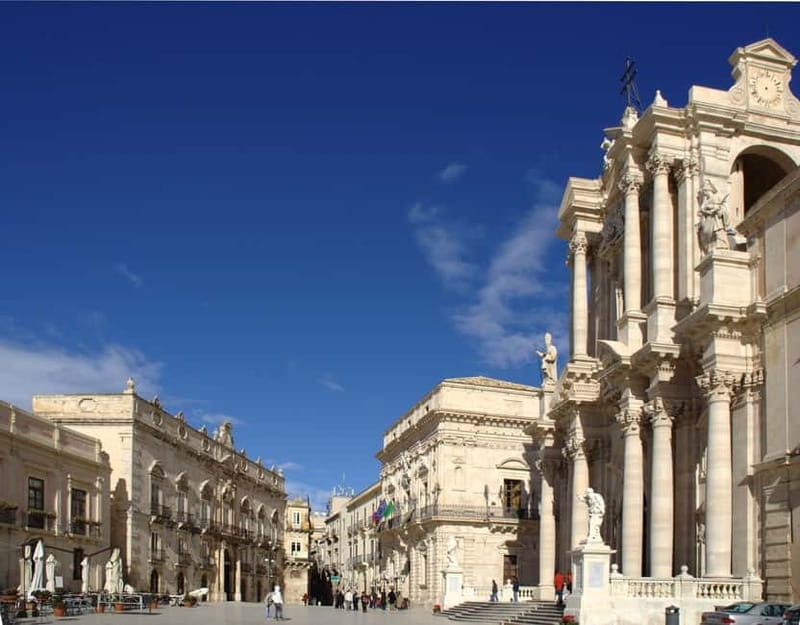
This is one of those Sicily trips where the bus is not a punishment. It’s the delivery system for a day that covers three strong “themes” without you doing the driving or planning. You’ll go from ancient Greek Syracuse to Baroque Noto, with Ortigia—the historic heart on the island—right in the middle.
The value here is not just the list of sights. It’s that the tour connects the dots: Greek origins show up in the Neapolis quarter, the Roman layer appears in the amphitheatre, and the Baroque world is unmistakable in both Ortigia and Noto. If you’re visiting Taormina for a few days and want to see more than Taormina’s coastline, this is an efficient cultural add-on.
One practical note: the day feels best if you’re flexible. There’s a scheduled service stop, and between the towns you’re on a coach for significant chunks. That’s the trade for seeing both Syracuse and Noto in one go.
You can also read our reviews of more guided tours in Taormina


Pickup and pacing: how the coach day works (and how to survive it)
The tour starts early, with multiple pickup locations around the Taormina area. You might depart from places like Letojanni at 7:00, the cable car area (Mazzarò) at 7:10, and Taormina terminal bus around 7:20, with other options afterward. You’ll also get a recognizable orange sign with SIRACUSA NOTO, and you should arrive about 5–10 minutes early.
Why I care about pickup times? Because they directly affect your “energy budget.” Several guide-and-review comments highlight that the day becomes especially long for guests who are the first pickup or the last drop-off. If you want to do an evening stroll in Taormina afterward, don’t plan it right away the same day.
Also expect a mix of walking styles. Some parts are short but include stairs and uneven stone; other parts are longer walks through historic cores. Comfortable shoes aren’t just a suggestion—they’re what keeps the day enjoyable instead of exhausting.
Neapolis Archaeological Park: the Greek Theatre, Latomia del Paradiso, and the Ear of Dionysius
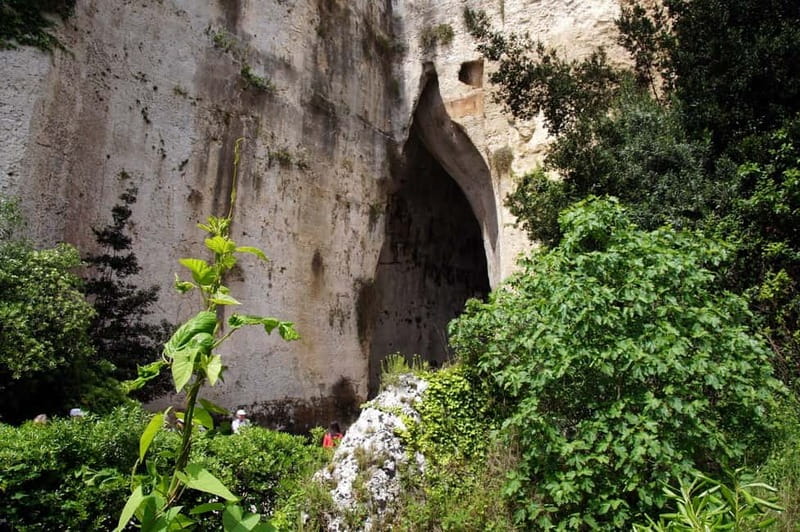
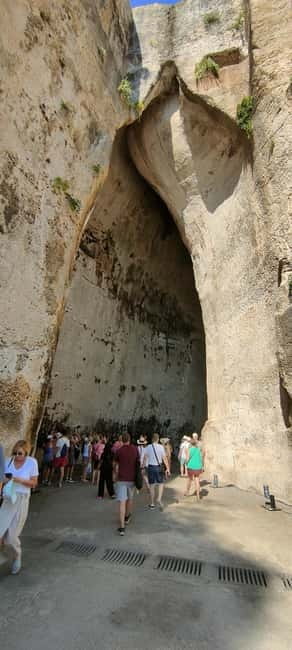
If you love archaeology that feels human—like you can picture daily life—Neapolis is your anchor stop. It’s the most characteristic piece of old Syracuse, and you’ll get a guided tour of the park for around two hours.
Here’s what you can expect on the ground:
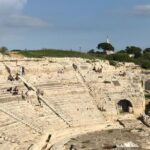
- Greek Theatre: you’ll get the dramatic scale of the theatre and its role in the city’s past.
- Latomia del Paradiso: these limestone quarries help you understand how geography and resources shaped Syracuse.
- Ear of Dionysius: this name alone gets your attention, and it’s part of why the stop is popular.
- Roman Amphitheatre: you’ll see the later Roman stamp after the Greek foundation.
The practical side: park entry tickets aren’t included, and the tour notes Neapolis around €16.50 per person. Keep your ticket accessible, especially because the experience involves more than one entry point through the area. A couple of people mentioned confusion about managing tickets during visits, so do yourself a favor: keep it in one place and don’t toss it in your bag.
Time is tight, so here’s my advice for making the most of the guided tour. Listen first, then decide if you want a quick re-look at the Greek Theatre area once the group moves on. You won’t get hours of roaming here, but you will get a clear story of how the site evolved.
Ortigia on foot: Foro Italico, Fountain of Arethusa, and the Apollo Cathedral area
Ortigia is where Syracuse turns from ruins into a living city you can walk through. After the coach leg, you’ll spend around 105 minutes with a guided tour plus additional free time, and you’ll cover some key sights that make Ortigia feel distinctly Sicilian.
One highlight is the walk along the Foro Italico to the Fountain of Arethusa. This is a freshwater spring that forms a natural pool with papyrus plants, and it sits on a terrace with sea views. It’s one of those places where the photo works, but the setting is the real hook: you feel how the city relates to water.
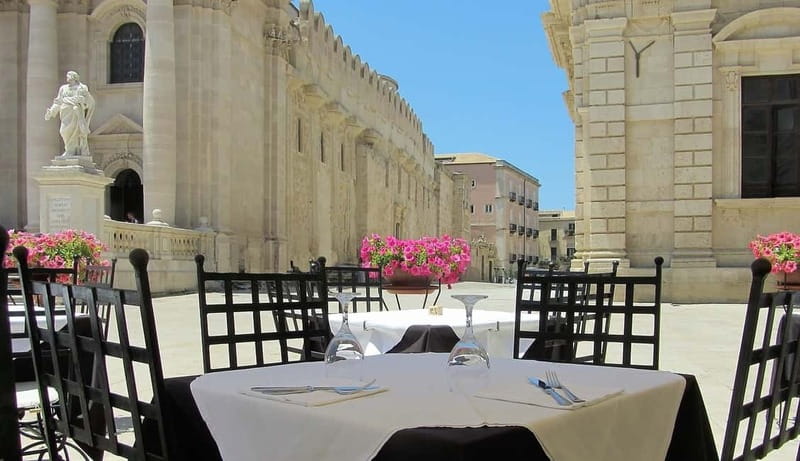
From there, you’ll reach the Cathedral Temple of Apollo area and the Baroque square where it stands. There’s also a cathedral visit in the schedule, about 30 minutes, and the Duomo Ortigia is around €2 when it applies. That means you should expect that you might need to pay a small fee to go inside, depending on the exact moment and route your group takes.
Free time matters here. Some people use it for a slow coffee, others for gelato, and others for quick shopping along the lanes. If you want to manage the day well, use free time with a plan: one short loop for photos, one sit-down moment, then back to meeting points early. This tour moves on time, and the group needs everyone back when the coach is ready.
Syracuse baroque squares to Noto’s UNESCO streets: how the afternoon changes the mood
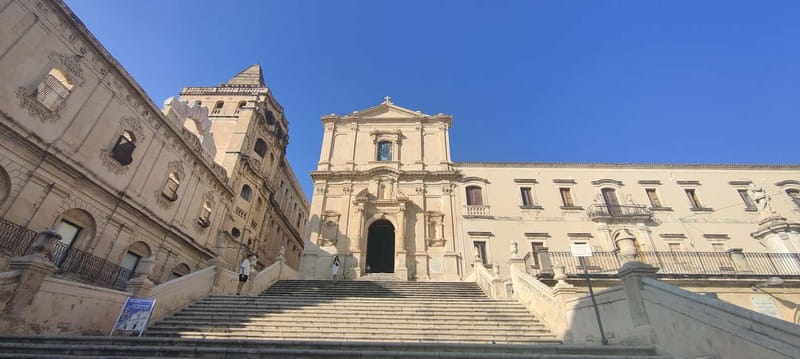
Leaving Syracuse after the ancient and waterfront parts feels like a mental shift. The coach ride lines you up for Noto, often described as the capital of Sicilian Baroque—and that label is earned.
Noto’s historic centre was declared a UNESCO World Heritage Site in 2002, and the experience focuses on walking and seeing Baroque all along a main corridor. You’ll pass through Porta Reale and then walk down Corso Vittorio Emanuele, a street that connects a lot of the city’s most important stops.
A few of the sights on your walk include:
- Church of S. Chiara
- Palazzo Landolina
- Cathedral of S. Nicolò
- Church of S. Domenico
- Municipal Theatre
This is where you’ll start noticing details that don’t show up in a quick bus window stop. Baroque isn’t just “pretty.” It’s angles, curves, repeated motifs, and the way buildings frame the street like stage sets. Because you’re walking rather than just looking from afar, Noto reads like a designed experience.
There’s free time in Noto too—around an hour—plus photo stops. That’s enough time for a snack or a short detour, but it’s not enough for a major sit-down meal unless you choose wisely. If you’re hungry, think simple and local.
You can also read our reviews of more tours and experiences in Taormina




Getting lunch in Ortigia: a smart way to save time
Lunch isn’t included. That means you’ll need to handle food on your own, and you’ll want something that fits the tour rhythm. One practical tip from the day: people suggested grabbing a sandwich from Borderi in Ortigia and then doing your rest-of-walk with full energy.
I like this kind of strategy because it prevents the common mistake: waiting too long for a sit-down lunch and then running behind for the group. With a day this packed, it’s better to eat well and quickly than to chase the perfect restaurant.
Tickets, costs, and what you’re really paying for at $68
At around $68 per person, this trip is priced as a full guided day with coach transport. What you’re getting is a guided experience in both the Syracuse area and Ortigia, plus coordinated bus logistics with multiple pickup points.
But you should budget for monument entries:
- Neapolis Archaeological Park: about €16.50 per person
- Duomo Ortigia: about €2 per person
Lunch and drinks aren’t included either.
So is it good value? I think it is—if you’re the type of traveler who wants structure and context. The Neapolis guided tour saves you from wandering without understanding what you’re seeing. And the Ortigia portion gives you a walk route that’s hard to replicate quickly on your own when you’re short on time.
If you’re the type who prefers slow freedom and doesn’t care about guided explanations, you might find it less efficient. But for first-timers to Syracuse and Noto, the combination of guided storytelling and time-managed stops is a solid bargain.
Weather, crowds, and the speed of the schedule
This day can be affected by weather. One review noted rain in the morning that reduced enjoyment of the ruins, with things improving later. That’s normal in Sicily: the drama of ruins can be damp and slippery, even if the sites are still open.
The bigger issue than weather is the schedule density. Even when everything goes right, you may get only about an hour at each main town focus, with guided segments that keep you moving. Some people wished for more time—especially around the Greek Theatre—but the tour is built to cover both Syracuse and Noto in one day.
Here’s my practical advice:
- Bring comfortable shoes you trust on uneven stone.
- Plan for a faster walking pace.
- When you get free time, return early to the meeting point rather than at the last second.
If you’re traveling with older family members or you’re carrying any mobility limitations (even without a wheelchair), consider whether you can handle a day where the group needs to keep pace.
Who should book this trip?
This is a strong pick if you want an efficient one-day introduction to Syracuse and Noto without extra planning. It fits well for culture lovers, history-first travelers, and anyone who likes their sightseeing with a clear narrative thread.
It’s also a good match if you appreciate multilingual guiding. The tour is offered in Italian, English, French, and German, and reviews strongly emphasized how effectively Christy explained the sites and kept everyone on track.
Skip it (or choose carefully) if:
- you need a slow pace with lots of unscheduled time,
- you dislike walking-heavy days,
- or you have mobility needs, since the activity is not suitable for people with mobility impairments or wheelchair users.
Should you book Syracuse and Noto from Taormina by bus?
I’d book this day trip if you have limited time in the Taormina area and you want the payoff of both ancient Syracuse and Baroque Noto in one organized day. The guided Neapolis segment and the Ortigia walking loop do more than check boxes; they help you understand what you’re looking at, and that makes the sights more satisfying.
I wouldn’t book it if you’re looking for a relaxed vacation day. This tour runs on schedule, includes significant transfers, and asks for steady walking.
My final take: if you’re willing to trade a little leisure for a lot of Sicily in one stretch, this is a very practical way to see the highlights and leave with a better sense of how Syracuse and Noto became what they are today.
FAQ
How long is the Taormina to Syracuse and Noto day trip?
The duration is 10 hours.
What does the tour include?
It includes a tour guide and private bus transportation.
Is pickup from Taormina included?
Yes. Pickup is offered from multiple locations, and the bus is recognizable by an orange sign with SIRACUSA NOTO.
What languages is the guide available in?
The live tour guide is offered in Italian, English, French, and German.
Are monument tickets included in the price?
No. Neapolis Archaeological Park entry is around €16.50 per person, and the Duomo Ortigia is around €2 per person.
Is lunch included?
No. Lunch and drinks are not included.
What are the main stops during the day?
You’ll visit Neapolis Archaeological Park, the island of Ortigia (including Fountain of Arethusa and the Cathedral Temple of Apollo area), and you’ll also visit Noto (including a walk along Corso Vittorio Emanuele).
Is there free time during the tour?
Yes. There is free time in both Ortigia and Noto after the guided portions.
What should I wear or bring?
Wear comfortable shoes, and appropriate clothing for visiting churches.
Is this tour suitable for wheelchair users?
No. It is not suitable for people with mobility impairments or wheelchair users.