REVIEW · TAORMINA
Day Trip: Noto and Siracusa Highlights From Catania or Taormina
Book on Viator →Operated by Journeys Around Sicily · Bookable on Viator
Greek ruins and Baroque streets, in one day. This private outing connects Neapolis archaeology and Ortigia’s waterfront core with Noto, the UNESCO late-Baroque city—run with an English-speaking driver and hotel pickup so you can focus on sights, not schedules.
I especially like the mix of guided stops and real free time. You get to see big-ticket Syracuse highlights like the Greek Theater and the Ear of Dionysius, then shift gears on Ortigia to wander at your own pace—Temple of Apollo, the Fountain of Arethusa, Saint Lucy Cathedral, and Piazza Duomo—followed by time to hunt down a proper seafood lunch.
One thing to plan for: food and some site entries aren’t included, so the day can cost a bit more than the base price—plus you’ll do plenty of walking and exploring without a constant “inside-your-ear” guide narration.
In This Review
- Key points
- The Smart Combo: Syracuse + Noto in One Shot
- Pickup From Your Hotel: Less Stress, More Sightseeing
- Ortigia Island: Where Free Time Turns Into Real Travel
- Neapolis Archaeological Area: The Big Ancient Set Pieces
- Noto’s UNESCO Baroque Core: Royal Door to Palazzi
- How Much It Really Costs (And Where the Value Lives)
- Pace and Practical Tips for a Long, Beautiful Day
- Who Should Book This Syracuse and Noto Day Trip?
- Should You Book This Tour?
- FAQ
- What cities and areas does the tour cover?
- How long is the tour?
- Where do I get picked up?
- What time does the tour start?
- Is the driver speaking English?
- Are admissions included?
- Is there free time during the day?
- Is this a private tour?
- Can the order of stops change?
Key points
- Private pickup from Taormina, Catania, Giardini Naxos, Letojanni, and nearby areas (8:00 am start)
- Ortigia self-paced time for the Apollo Temple area, Fountain of Arethusa, and Piazza Duomo
- Neapolis stops for Teatro Greco and Orecchio di Dionisio, with other major ruins nearby
- Noto’s late-Baroque core built around a royal-feeling walk along Via Vittorio Emanuele
- You can invert the visit order, depending on what works best that day
- English-speaking driver who explains the route and what you’re seeing along the way
The Smart Combo: Syracuse + Noto in One Shot
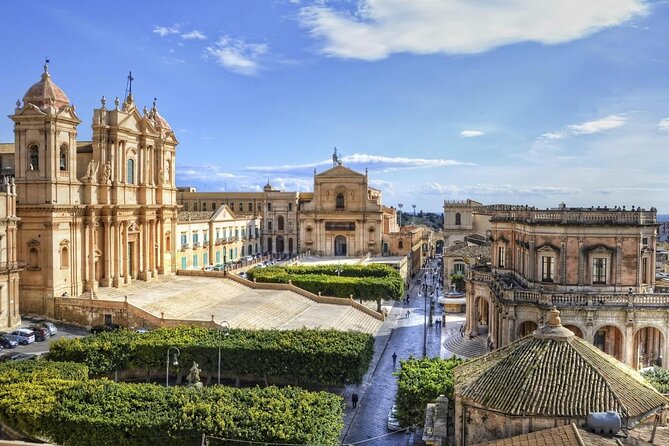
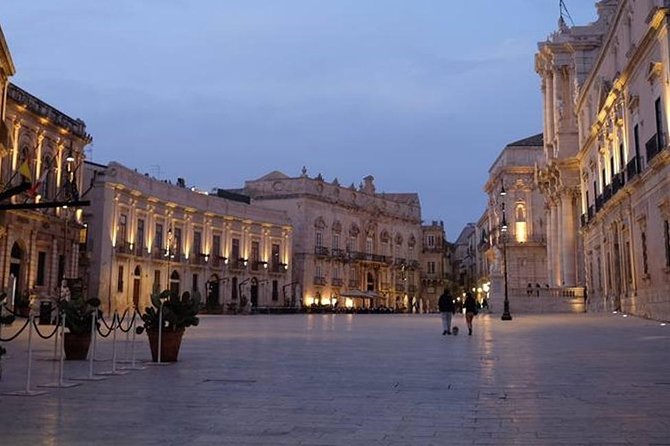
Syracuse and Noto complement each other better than you’d expect. Syracuse gives you the “wow” factor first: classical ruins tied to Greek Sicily, then a coastal island center full of churches, squares, and seafood. Noto flips the mood to Late Baroque—more white-stone drama, curved facades, and grand details that look almost sculpted.
This is a value-packed structure because you’re not doing two separate logistics-heavy day trips. You’re also not stuck with only one style of sightseeing. If you’re the type who likes variety—ancient theater one minute, candy-coated Baroque street views the next—this itinerary fits.
Timing matters here. You start early (8:00 am), and the whole outing runs about 7 to 8 hours. That’s long, but it’s also exactly what you need to hit both UNESCO-level towns without feeling rushed at every stop.
You can also read our reviews of more tours and experiences in Taormina



Pickup From Your Hotel: Less Stress, More Sightseeing
The tour is built around convenience. Pickup is offered from hotels and even the port area in Catania and Taormina (plus Giardini Naxos, Letojanni, and surrounding spots). That means no bus transfers, no guessing how to get from the coast to hill towns, and fewer “where do we meet?” moments.
The driver is English-speaking and acts as your main guide for the day’s flow. You’ll also get context while you ride—so the drive itself becomes useful, not dead time. One of the best things about this setup is that it’s private: only your group rides together, and you’re not fighting crowds for the “next photo angle.”
One practical note: the plan of the visit can be inverted. That’s helpful because traffic and timing can swing day to day. It also lets you keep control of what you most want to prioritize.
Ortigia Island: Where Free Time Turns Into Real Travel
Ortigia is where Syracuse becomes human-scale. After heading to the archaeological side, you move to the island center for time on your own. This is a great format for travelers who like independence but still want someone to set you up.
Your Ortigia free time can include:
- Temple of Apollo (best viewed as part of the island’s layered street layout)
- Fountain of Arethusa
- Saint Lucy Cathedral
- Piazza Duomo, the central square vibe you’ll feel the moment you step into it
And yes—this is also the point where lunch happens. The best strategy is to treat lunch like part of the itinerary, not an afterthought. Look for a seafood spot near the harbor zone, then actually slow down. Ortigia rewards a calmer pace.
Since you’re not stuck with a strict “follow me” tour loop in the island center, you can choose your rhythm: quick highlights if you’re on a mission, or longer wandering if you want to get your bearings and explore side streets.
Neapolis Archaeological Area: The Big Ancient Set Pieces
Neapolis is the “this is why you came to Syracuse” portion. You’re in the right zone for the major classical features—Greek Theater, the Ear of Dionysius, and other dramatic remains that make ancient engineering feel real.
You can expect stops aligned with:
- Teatro Greco (Greek Theater)
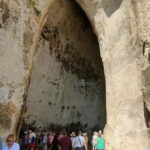
- Orecchio di Dionisio (Ear of Dionysius)
- Latomie del Paradiso (the stone quarries/cavern-like spaces)
- Anfiteatro Romano (Roman Amphitheater)
- The famous cluster around the Tomb of Archimedes and the Altar of Hieron (as part of the Syracuse archaeological focus)
Two important practical details:
- Admission tickets aren’t included for Parco Archeologico della Neapolis. This is one of the main “on your own” costs.
- Time on site is limited by the day’s overall schedule, so wear comfortable shoes and keep your energy for walking between viewpoints.
If you’re the kind of traveler who likes to see one or two sites deeply, this section is ideal. If you like to sprint through a lot, it still works—but you’ll get more out of it if you take pauses and look back to understand how the ruins sit in the landscape.
Noto’s UNESCO Baroque Core: Royal Door to Palazzi
Noto is the contrast you didn’t know you needed. After the heavy stone and classical scale of Syracuse, Noto feels like a different planet—especially once you’re walking its main historic lanes.
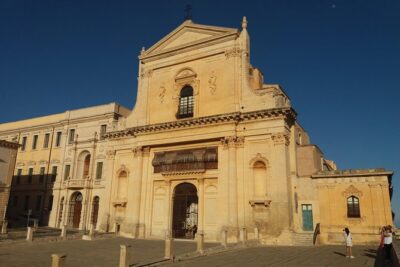
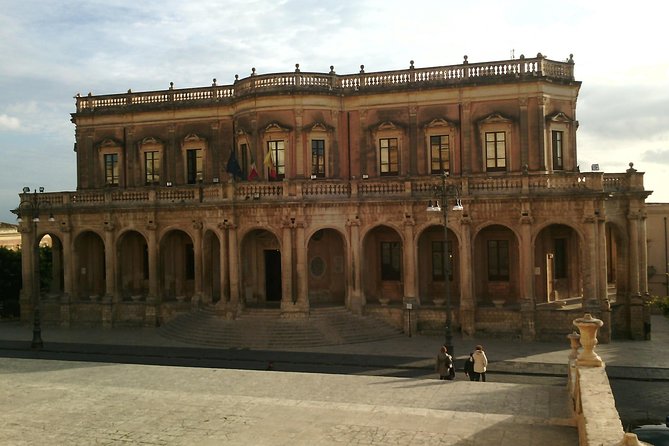
Here’s the special thing about Noto: the Baroque details aren’t just “pretty facades.” They’re part of a planned streets-and-buildings experience. You’ll go through the historic center and focus on key landmarks along Via Vittorio Emanuele, including:
- Cattedrale di San Nicolo
- Ducezio Palace
- Palazzo Nicolaci
- The Theatre and other aristocratic and ecclesiastical buildings dating to the 17th century
- The Royal Door area (often the “turning point” moment for how grand the street feels)
Because this is a late-Baroque UNESCO center, the best way to enjoy it is slow. You don’t just look forward—you glance up, check the edges, and notice how light hits carvings and curves. If you rush, you miss what makes Noto special.
Like Neapolis, Noto site admission isn’t included, so plan for that in your budget.





How Much It Really Costs (And Where the Value Lives)
The price is $291.56 per person for this full-day private format, typically scheduled around 7 to 8 hours. That number can feel high at first glance—until you factor in what you’re buying: private pickup, an English-speaking driver, and local taxes included. You’re also getting a day that would be hard to stitch together smoothly by public transport on your own.
Where costs may add up:
- Food and drinks are not included.
- Site admissions aren’t included for parts of the day (Neapolis and Noto).
- Ortigia is listed with an admission-free element in the schedule, but the rest of your day still includes entry-type expenses.
So the value equation looks like this: you pay for convenience and private routing, then you spend a bit more on your own on-the-ground “fun costs” (tickets and lunch). If you’re traveling in a group (this is minimum 2 people per booking), the private-transport value can feel especially fair.
Also, you start early. That reduces wasted time and makes the whole day more efficient.
Pace and Practical Tips for a Long, Beautiful Day
This tour is designed to keep you moving, but not to trap you in one-minute “photo stops.” The best version of the day usually looks like:
- Ride, learn the route and context
- See the major ruins in Neapolis efficiently
- Switch to relaxed wandering in Ortigia
- End with Noto’s Baroque walking loop
A few practical tips to make it smoother:
- Bring water and a small snack, especially if you’re hoping for lunch at a specific harbor spot.
- Wear shoes with grip. Neapolis and old-town centers involve uneven surfaces and steep moments.
- Bring a light layer. You’re outside for much of the day, and coastal shade can change fast.
- Decide in advance what you’ll prioritize: Neapolis “must-dos” or Noto’s building details. You can’t maximize everything if you treat every stop like a marathon.
One more consideration: this experience is private and structured, but it’s still driver-and-pace oriented. You’ll spend plenty of time exploring on your own in Ortigia and Noto, which is great if you like independence. If you want nonstop formal guiding inside every site, you might find a different style better.
Who Should Book This Syracuse and Noto Day Trip?
Book this if you want:
- A private car day that covers two heavyweight destinations
- A balance of structured stops and self-paced wandering
- An English-speaking driver to explain what you’re seeing while you travel between towns
- The chance to pair ancient Syracuse with Baroque Noto without extra hotel changes
This is also a strong pick if you’re a little tired of long lectures and want a day that feels more like “guided by a great local friend” than “sit and listen all day.”
It might not be your best fit if:
- You expect tickets and meals to be fully included
- You need a highly formal, licensed guide-style tour at every ruin and church interior
- You want a short day. This is a long one by design, and it works because you start early.
Should You Book This Tour?
I think it’s a good buy if you value convenience, smooth logistics, and a day that mixes standout ancient sites with a very different Baroque town. The early start, hotel/port pickup, and private format make it easier than DIY, and the built-in free time in Ortigia is where you get to turn sightseeing into real strolling.
If your budget can handle extra tickets and lunch, this tour is set up to satisfy. If you hate spending time walking on your own, or you want every moment narrated like a museum program, you may prefer a more structured, fully-guided alternative.
If you’re on the fence: pick this when your priority is seeing Syracuse’s Neapolis + enjoying Noto’s Baroque core in one go—then plan your lunch and ticket spending and you’ll have a strong day.
FAQ
What cities and areas does the tour cover?
It covers Syracuse, including the archaeological zone Neapolis and Ortigia (the historic island center), plus Noto.
How long is the tour?
The duration is about 7 to 8 hours.
Where do I get picked up?
Pickup is offered from hotels and the port in Catania and Taormina, plus Giardini Naxos, Letojanni, and surrounding areas.
What time does the tour start?
The start time is 8:00 am.
Is the driver speaking English?
Yes. The tour includes an English-speaking driver.
Are admissions included?
Food and drinks are not included. For admissions, the schedule notes admission ticket not included for Neapolis and for Noto.
Is there free time during the day?
Yes. In Ortigia, you’ll have free time to visit highlights such as the Temple of Apollo, Fountain of Arethusa, Saint Lucy Cathedral, and Piazza Duomo.
Is this a private tour?
Yes. This is a private tour/activity, and only your group participates.
Can the order of stops change?
Yes. The plan of visit can be inverted.