REVIEW · RAGUSA
3-hour walking tour Discovering Ragusa Baroque
Book on Viator →Operated by Alla scoperta del barocco ibleo · Bookable on Viator
Baroque façades start before the first step. This 3-hour walk links Ragusa Superiore and Ragusa Ibla to UNESCO-listed churches and terraces, with enough viewpoints to make the stair-climbing feel worth it. By the time you reach Ragusa Ibla, you’ll understand why the city’s late Baroque look is more than decoration.
I love the way Serena explains each façade—history, saints, and the meaning of the grotesque masks—so the buildings feel personal, not like a checklist. I also like that the tour keeps to small groups (up to 10), which makes questions easy and helps you pause for photos without feeling rushed.
The main catch is the vertical walking: this isn’t a good fit for reduced mobility, and you should expect many steps and a steady 3 hours on foot. Comfortable sneakers are not optional.
In This Review
- Key highlights you’ll actually feel during the walk
- Ragusa Baroque: why the buildings look different at every turn
- The start in Ragusa Superiore, and the descent that shapes the whole tour
- San Giovanni Battista: terrace views and a church with strong stage presence
- Santa Maria delle Scale: stairs, panoramas, and pre-earthquake architectural clues
- The grotesque masks and six balconies: small details with big personality
- Santa Maria dell’Itria and Palazzo Cosentini: how churches and palazzi connect
- Duomo di San Giorgio: the staircase façade and saint-centered storytelling
- The café of the knights and the Benedictine oval interior
- Giardini Iblei: end your walk in the green lungs of Ibla
- What you’re paying for: $78.44 and the value of a guided Baroque read
- Who this tour is best for (and who might want a different plan)
- Should you book Discovering Ragusa Baroque?
- FAQ
- How long is the Ragusa Baroque walking tour?
- How much does the tour cost?
- Is the tour offered in English?
- Where do I meet, and where does it end?
- Do I need to pay admission tickets at the stops?
- Is the tour suitable for reduced mobility?
Key highlights you’ll actually feel during the walk
- Serena’s clear storytelling in English, with calm answers and time for questions
- UNESCO façades and church interiors, not just outside views
- Ibla viewpoints built into the route, including a panoramic stop from the stairs
- Late Baroque balcony details, including grotesque masks on multiple buildings
- Inspector Montalbano film-location trivia, tied to the café of the knights
- Giardini Iblei at the end, where the walking turns green and scenic again
Ragusa Baroque: why the buildings look different at every turn
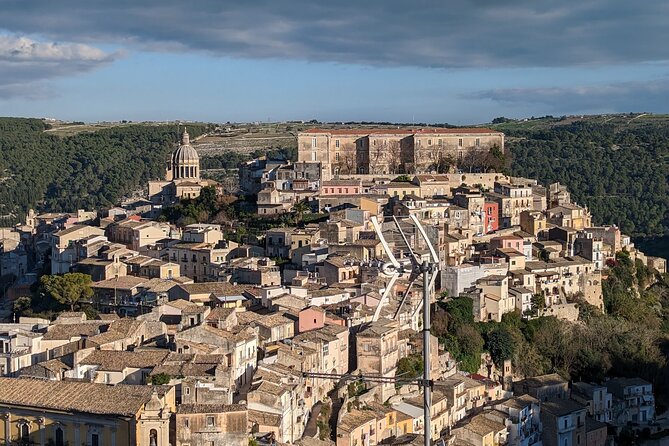
Ragusa doesn’t treat Baroque like a single style you either see or miss. In Upper Ragusa, the architecture works like stage scenery: terraces, stairways, and dramatic façades you approach from different angles. Then the route drops you into Ibla, where the view opens up and the same design language starts to feel more human—like a town built for daily life, not just for postcards.
The best part is that you’re not left guessing. With Serena guiding you, you get the story behind what you’re seeing—saints’ feasts, church connections, and why certain features survived or were rebuilt after major damage. That context is what turns façades into something you can describe to friends later.
You can also read our reviews of more walking tours in Ragusa
The start in Ragusa Superiore, and the descent that shapes the whole tour
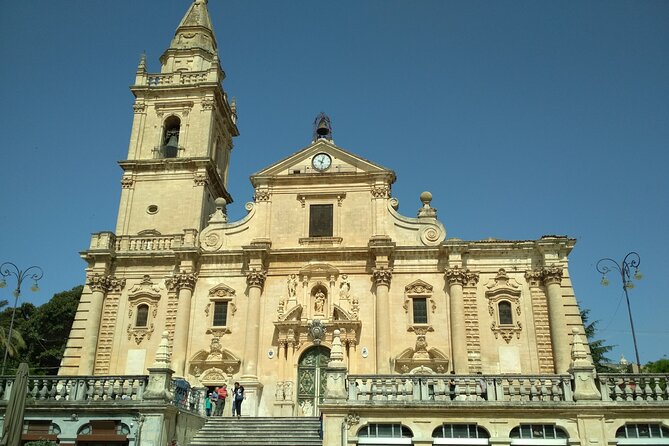
You’ll meet at Cattedrale di San Giovanni Battista in Piazza S. Giovanni (upper town). From there, the tour follows a classic Ragusa pattern: you work uphill first in your head, even while your feet start moving, and then the day ends with a descent toward Ragusa Ibla.
This matters because Ragusa is two towns stacked on a slope. Ending near Via Giardino 5 by the Iblean Garden means you’re finishing in the lower-town area with urban bus stops and taxis. So you can plan an easy next step after the walk instead of starting a whole new mission to get back to wherever you’re staying.
Also, since the group is kept small (maximum 10), you can usually move at a pace that fits a real sightseeing rhythm. You’re not herded from one photo spot to the next like a timer is running.
San Giovanni Battista: terrace views and a church with strong stage presence
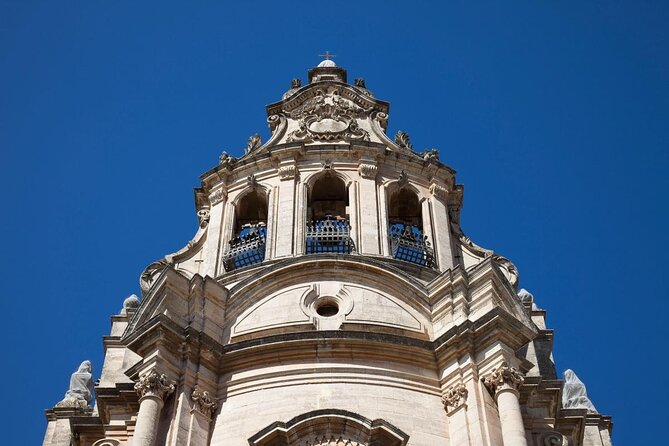
Your first big stop is San Giovanni Battista’s Cathedral, with an emphasis on its late Baroque exterior. You’ll take in the cathedral’s terrace setting, surrounded by a balustrade and flanked by side gardens. It’s a great opening because it gives you the “why” before you start collecting details—this is Baroque designed to be seen as you arrive and as you look around.
After the exterior, you’ll go inside the cathedral. That inside visit is important here, because the tour isn’t only about façades. Serena also ties the cathedral to the history and the feast of the patron saint, which helps you understand why these churches mattered in everyday life, not just as buildings.
If you’re the type who likes first impressions, this stop works fast: you’ll get an immediate sense of scale and style before the rest of the day’s churches pile on.
Santa Maria delle Scale: stairs, panoramas, and pre-earthquake architectural clues
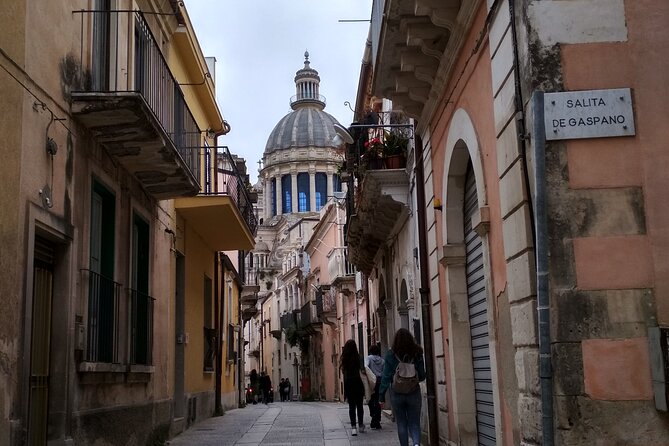
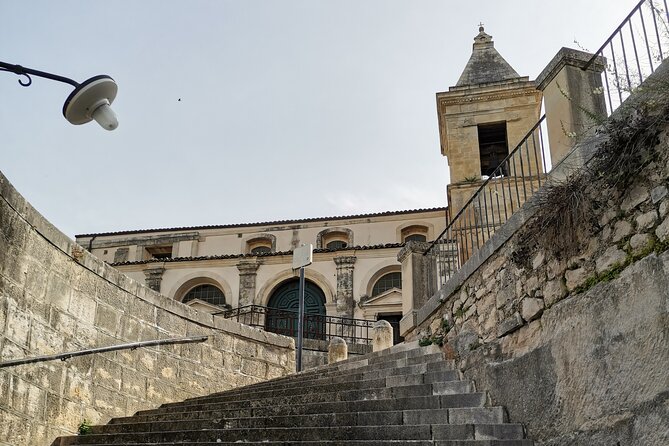
Next comes Chiesa di Santa Maria delle Scale, where the route literally goes down through stairs. The big win is the view: you pause to admire the panoramic outlook over Ibla. It’s the kind of stop where you can look up and see the baroque massing in the distance, then look down and understand where you’re headed next.
You may also have the option to visit the interior depending on timing. When you can, Serena explains why this church is so valued: it’s a precious record of the architectural style prior to the earthquake. That detail gives the whole tour extra weight. You’re not just enjoying pretty façades; you’re seeing layers of what the town became after major change.
One practical note: because this area involves stairs, this is where you’ll feel the walking most. If your legs get tired early, take that as your cue to slow down and let Serena’s pace guide you.
The grotesque masks and six balconies: small details with big personality
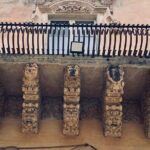
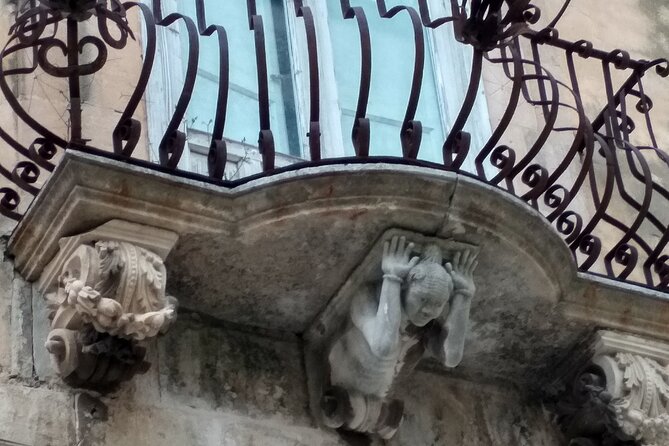
Between major churches, the tour slows just enough for you to really read the façades. You’ll admire late Baroque exteriors decorated with grotesque masks, including the striking look of six balconies featuring those traditional mask motifs.
These details are more than decoration. They show you how Baroque in Ragusa uses drama and character to turn buildings into conversation—facades that feel like they’re speaking, even when you’re standing still.
If you like architecture photography, this is where you’ll appreciate having someone point out what to look for. Without guidance, it’s easy to focus on the biggest elements (the height, the stairs, the main doorway) and miss the mask rhythm repeating across different buildings.


Santa Maria dell’Itria and Palazzo Cosentini: how churches and palazzi connect
At Chiesa di Santa Maria dell’Itria, Serena shares the story of the church and then turns your attention to the late Baroque façade of the Palazzo Cosentini. This palace matters because it’s described as being once connected internally to the church.
That connection is a key idea for understanding Ragusa. Religious buildings weren’t always isolated monuments; they were part of a web of power, patronage, and local life. When Serena explains that relationship, the architecture starts to feel like a system, not separate scenes.
If the timing works, you can also have the chance to visit the interior. Either way, the façade comparison here is worth it because it ties the day’s theme together: Ragusa Baroque often looks like theatre, but it functions like a city.
Duomo di San Giorgio: the staircase façade and saint-centered storytelling
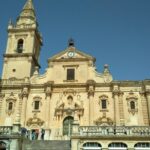
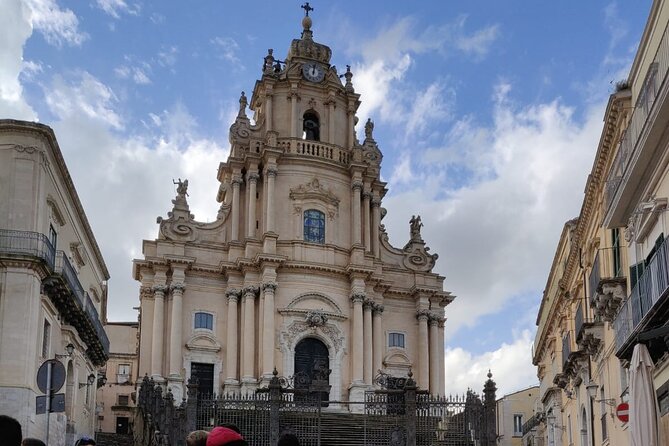
Then you reach Duomo di San Giorgio, and the façade gets extra attention. You’ll admire its beautiful front with a staircase approach, which is exactly the kind of Baroque design choice that makes people stop walking and look up.
Serena ties the church to the story of the saint and the feast, so you aren’t just looking at shapes and ornament. You’re learning why these places were central to community rhythm.
Interior access depends on time of day and season, but even without that moment, the façade-and-stories combo gives you a solid understanding of what makes this church distinct within the Ragusa Baroque lineup.
The café of the knights and the Benedictine oval interior
This portion of the walk adds a fun layer that many visitors miss: the conversation club, also known as the café of the knights. It’s famous for being a location used in scenes from Inspector Montalbano fiction. If you’ve watched the show, this stop gives you a recognizable anchor point inside the real town.
After that, you’ll also admire the late Baroque facade of the Benedictine church (another UNESCO stop). When possible, you may visit the interior, noted for its oval-shaped interior. That shape is a great contrast after all the straight lines and stair-driven exteriors earlier in the day.
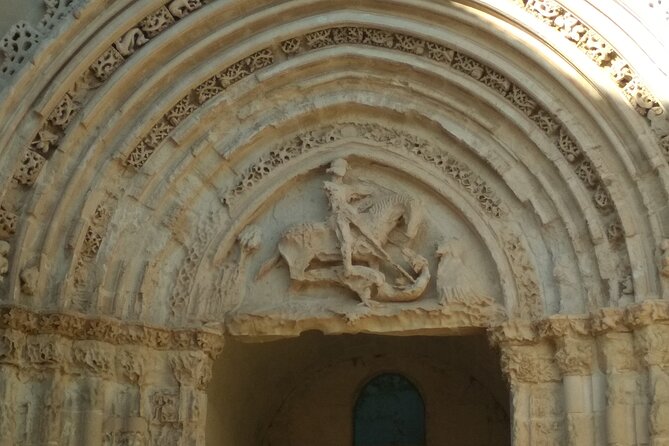
The route continues with the ancient portal of Saint George church, highlighted as UNESCO heritage and described as evidence of the architectural style prior to the earthquake. This keeps the day grounded in history rather than only style.
Giardini Iblei: end your walk in the green lungs of Ibla
The final act is Giardini Iblei, the green lung of Ibla. Instead of ending in a dense street canyon, the walk finishes with a calmer setting where you can breathe and reset.
The gardens host three churches, and depending on time and season you may visit St. James and St. Agata. Even if you only catch parts of the church visits, the idea is clear: Ragusa’s Baroque doesn’t only sit on grand squares. It also lives inside everyday spaces like gardens.
Ending here is smart for your logistics too. You’re close to the area where buses and taxis are easiest, so you’re not stuck trying to “escape” the hill right after your legs feel like they’ve filed a complaint.
What you’re paying for: $78.44 and the value of a guided Baroque read
At $78.44 per person for about 3 hours, you’re paying for more than a walk. You’re paying for a guide who can translate ornament into meaning—why a façade is late Baroque, what a terrace adds to the experience, and what the townspeople needed these buildings to do.
You also get value from the structure of the day:
- multiple UNESCO heritage stops
- repeated chances to look closely at façades and balcony details
- interior visits when timing allows
- a small group size (maximum 10), which keeps attention on the details rather than the crowd
Admission tickets are listed as free for the church stops. That means your cost is mainly about guiding and time, not separate entrance fees stacking up at every corner.
If you plan to self-guide, you can still see these places. But you’ll likely spend extra time trying to piece together the “why,” especially around connections between churches and palazzi and the mentions of architectural styles before and after the earthquake.
Who this tour is best for (and who might want a different plan)
This is a great fit if you want:
- English guidance with a story-led approach
- a fast way to see both Upper Ragusa and Ibla
- architecture and church details explained in a way you can remember
It’s less ideal if:
- you have trouble with steps or long stair climbs (it’s not recommended for reduced mobility)
- you want a slow, street-by-street wandering style with minimal church time
And if you’re the type who likes to ask questions, the small group helps a lot. Serena’s pace seems designed to handle curiosity without shutting people down.
Should you book Discovering Ragusa Baroque?
I think you should book it if you want a high-impact afternoon that turns Ragusa Baroque from scenery into a real understanding of the town. The combination of UNESCO sites, panoramic Ibla views, and the specific façade details (grotesque masks, balconies, and saint-centered stories) makes the tour feel like more than a standard church walk.
Pass if your mobility is limited or you know you’ll struggle with a route that includes many steps. If that’s you, you’ll enjoy Ragusa more with a flatter plan and fewer stair-heavy stops.
If you can handle the walk, this is an easy yes—especially with Serena’s style and the small-group format keeping the day personal instead of chaotic. If weather turns poor, the tour requires good conditions, so keep that in mind when you’re planning your dates.
FAQ
How long is the Ragusa Baroque walking tour?
It’s approximately 3 hours.
How much does the tour cost?
The price is $78.44 per person.
Is the tour offered in English?
Yes, the tour is offered in English.
Where do I meet, and where does it end?
You start at Cattedrale di San Giovanni Battista, Piazza S. Giovanni, 41/45, 97100 Ragusa RG, Italy. It ends near Ragusa Ibla, Via Giardino, 5, 97100 Ragusa RG, by the Iblean Garden.
Do I need to pay admission tickets at the stops?
Admission tickets are listed as free for the churches included in the tour.
Is the tour suitable for reduced mobility?
It’s not recommended for people with reduced mobility because the route includes many steps.