REVIEW · RAGUSA
Ragusa Ibla: Walking Tour with Local Guide
Book on GetYourGuide →Operated by Italygonia Travel T.O. · Bookable on GetYourGuide
Baroque corners in Sicily feel almost staged. On a Ragusa Ibla walking tour, you’ll get the story behind the facades, gardens, and churches that make this part of the town so striking, and you’ll finish at San Giorgio Cathedral with its big stair approach.
I love how the route starts with the town’s emotional anchor—the Portal of San Giorgio, tied to the earthquake history—and Ibleo’s calm garden stop adds a breather before you’re back in the lanes.
The main thing to consider: this is a full 2-hour walk on uneven historic streets, and the cathedral visit comes with an imposing staircase, so comfortable shoes matter.
In This Review
- Key highlights at a glance
- Why Ragusa Ibla’s backstreets work so well on a guided walk
- Meet at Portal of San Giorgio: the town’s earthquake survivor
- A practical tip for the start
- Ibleo Garden: palms, views, and the Church of San Giacomo
- The Church of San Giacomo: details that surprise
- Baroque alleys and palaces: reading the neighborhood like a map
- Conversation Circle (Caffè dei Cavalieri): the nobles’ meeting place feel
- Church of S. Giuseppe: Baroque face and majolica floor
- How to enjoy this stop
- San Giorgio Cathedral: staircase first, then art, then St. George
- Why this finale works
- Price and value: what $389.70 buys you for up to 15
- Who this tour suits best (and who might want something else)
- Small details that make the experience smoother
- Should you book Ragusa Ibla’s walking tour with a local guide?
- FAQ
- FAQ
- How long is the Ragusa Ibla walking tour?
- Where does the tour start?
- Where does the tour end?
- How much does the tour cost?
- Is the tour private?
- What is included in the price?
- Is food and drink included?
- Are there transfers or pickup/drop-off?
- What languages are available?
- What can I expect to see during the walk?
- Are there different starting times?
Key highlights at a glance
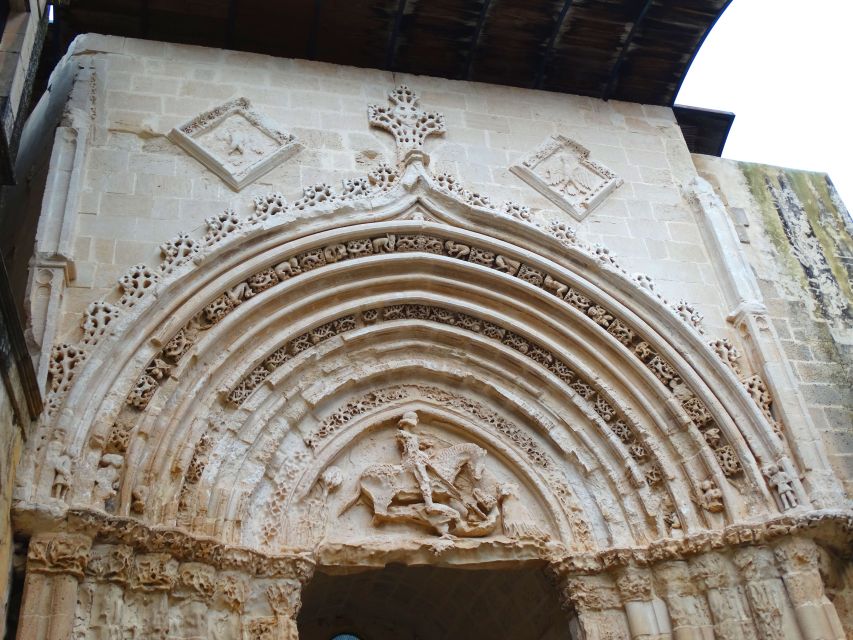
- Portal of San Giorgio in Gothic-Catalan style: the surviving piece that symbolizes Ragusa’s comeback
- Ibleo Garden, Ragusa’s oldest garden: palm-lined entry and quiet shade over wide views
- Church of San Giacomo inside the garden: dramatic interior details you won’t expect
- Conversation Circle (Caffè dei Cavalieri): a neoclassical nobles’ meeting place you can spot by the finish work
- Baroque lanes, masks, and handmade craft: the everyday Ragusa texture beyond the big monuments
- San Giorgio Cathedral as the finale: grand staircase and major interior art, including St. George
Why Ragusa Ibla’s backstreets work so well on a guided walk
Ragusa Ibla looks like someone turned the Baroque volume up. Yet the magic isn’t just the buildings—it’s the way the town is layered in time, and how the guide connects the dots. This tour follows the late-Baroque look of the historic center, mixing religious sights with the palaces and small shops that keep Ibla feeling lived-in rather than museum-quiet.
What I like about this format is that it’s designed for orientation. You’re not only chasing landmarks; you’re learning how the town’s symbols repeat: dramatic stonework, ornate entrances, garden spaces that feel like relief, and churches that act like visual anchors for the neighborhood.
It’s also paced well for a short outing. Two hours is long enough to see the big moments—Portal, Garden, cathedral—and still short enough that you don’t need the day to “recover” afterward.
You can also read our reviews of more walking tours in Ragusa
Meet at Portal of San Giorgio: the town’s earthquake survivor
The walk begins right where Ibla’s story becomes physical: at the Portal of San Giorgio on Via dei Normanni, in front of the restaurant Risìu. Your guide will be easy to spot with a license badge around their neck.
This isn’t just a pretty entrance. It’s described as the only surviving architectural element after the earthquake that destroyed the town, and that context changes how you read the stone. You’ll see the portal’s light pink color and the Gothic-Catalan style details, plus the central relief showing the fight between St. George and the dragon.
And if you like “why this matters” moments, this is a good one. The guide’s framing makes it clear that the portal isn’t only decorative—it’s a symbol of survival. You’re starting with a piece of town memory before you move on to newer layers and rebuilt sacred spaces.
A practical tip for the start
If you’re arriving a bit early, use that first minute to look past the portal itself. In this area, the streets and facades are part of the design language. Getting your bearings here makes everything later feel less like a maze.
Ibleo Garden: palms, views, and the Church of San Giacomo
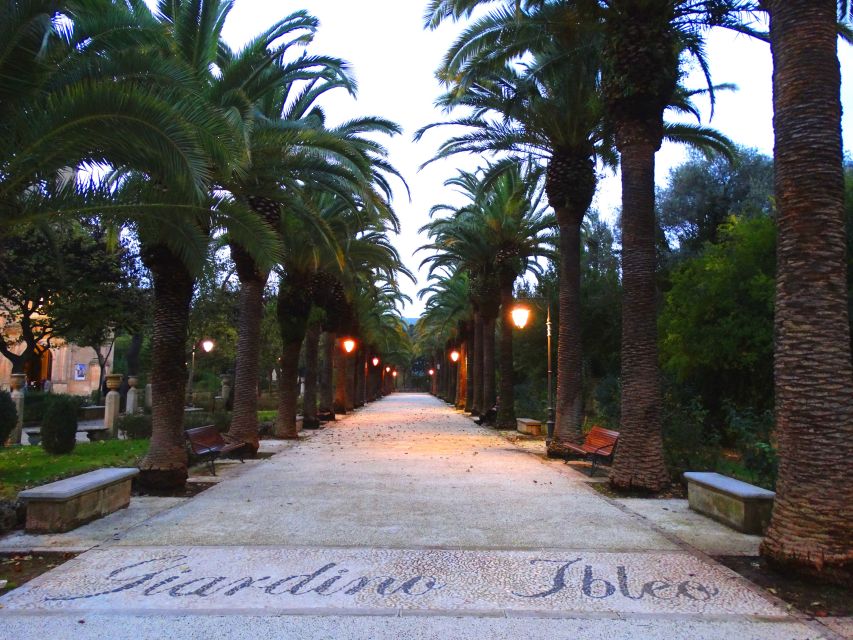
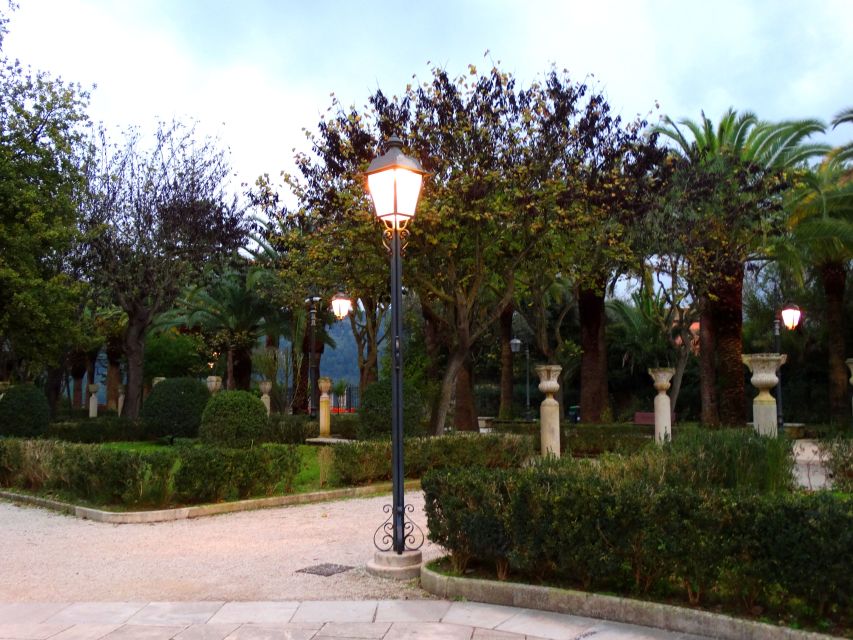
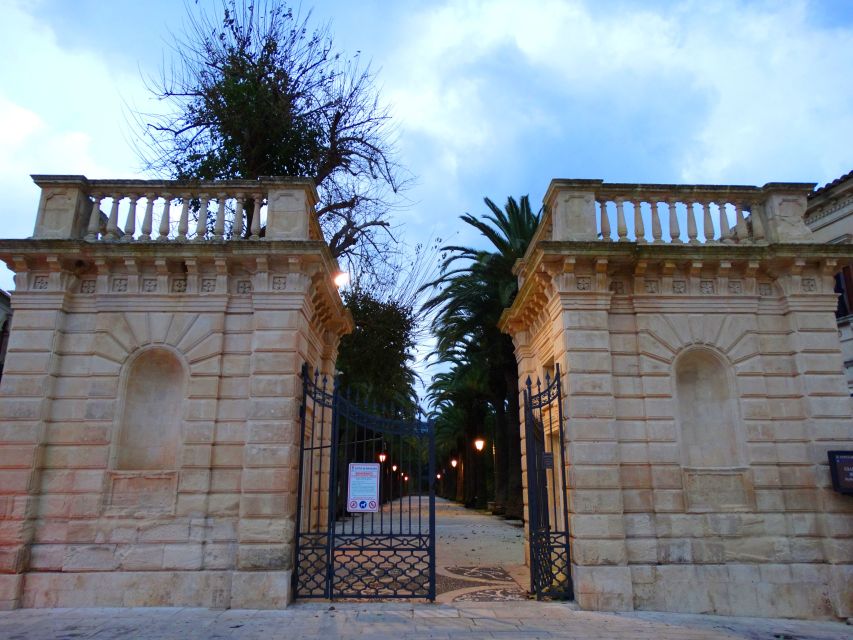
A few steps from the portal, the tour shifts from carved stone drama to a small pocket of calm. The entrance to the Ibleo Garden is the kind of change of scenery you’ll feel immediately—especially after historic lanes. The garden is the oldest in Ragusa and dates to the nineteenth century.
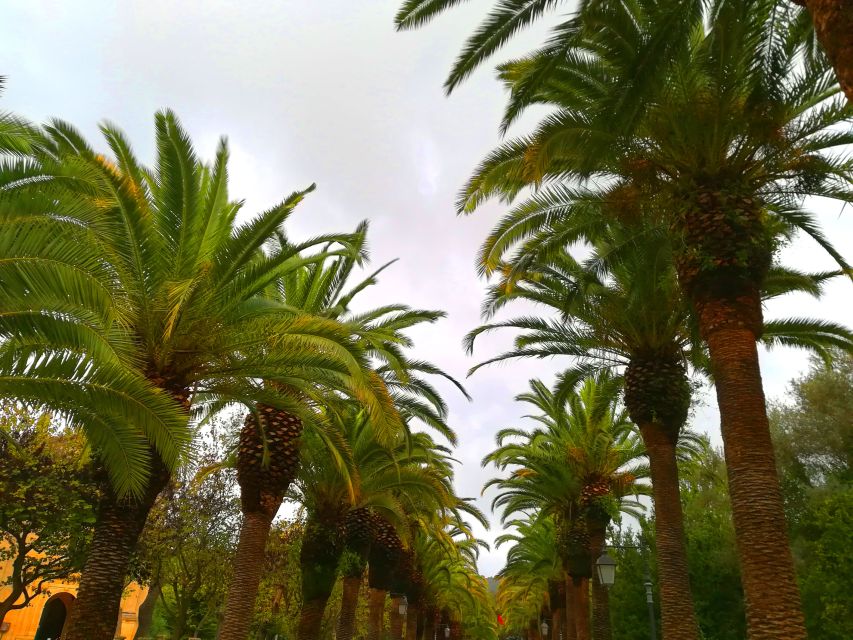
From the start, you get a classic garden promenade: an avenue of 50 palm trees leads you in, with an elegant balcony that borders the garden. And it has one of those “Sicily geography” setups—the garden looks out toward the Irminio Valley and the Iblei Mountains. Even if the day is busy, the setting makes it feel like you’ve found a quieter rhythm.
Inside, you’ll see fountains, including one shaped like Sicily. There’s also a monument to the fallen of the Great War. In other words, the garden isn’t only for plants—it’s also a place where memory and landscape share space.
The Church of San Giacomo: details that surprise
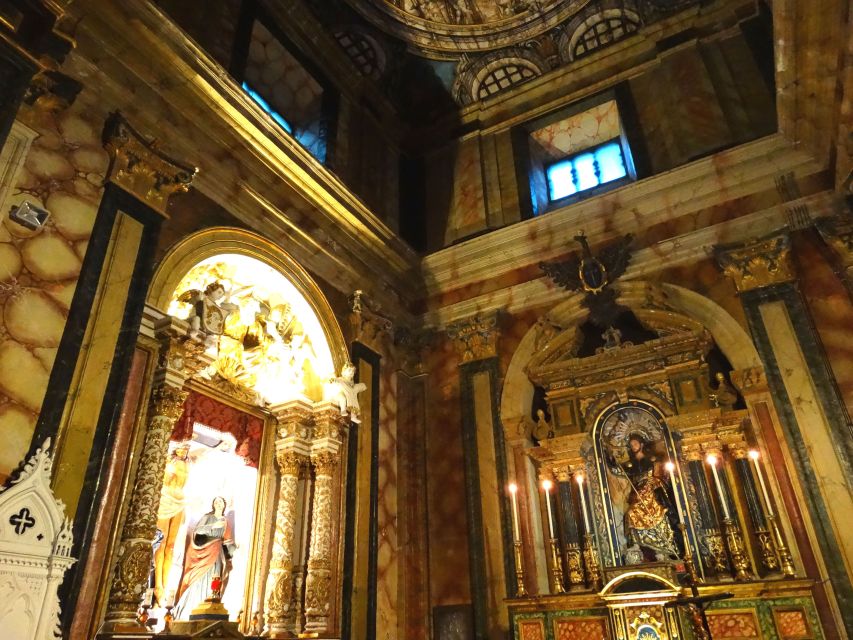
Within the garden, you visit the Church of San Giacomo, which sits on an ancient temple. The interior is where the tour earns its keep. You’re looking at a wooden ceiling, Corinthian columns, statues, and precious paintings.
This is one of those stops where a guide matters. Without guidance, you might notice the “nice interior” and move on. With guidance, you’re more likely to clock the bigger picture: the layers—temple to church, then the garden context—show how these spaces evolve without losing their role as spiritual and cultural centers.


Baroque alleys and palaces: reading the neighborhood like a map
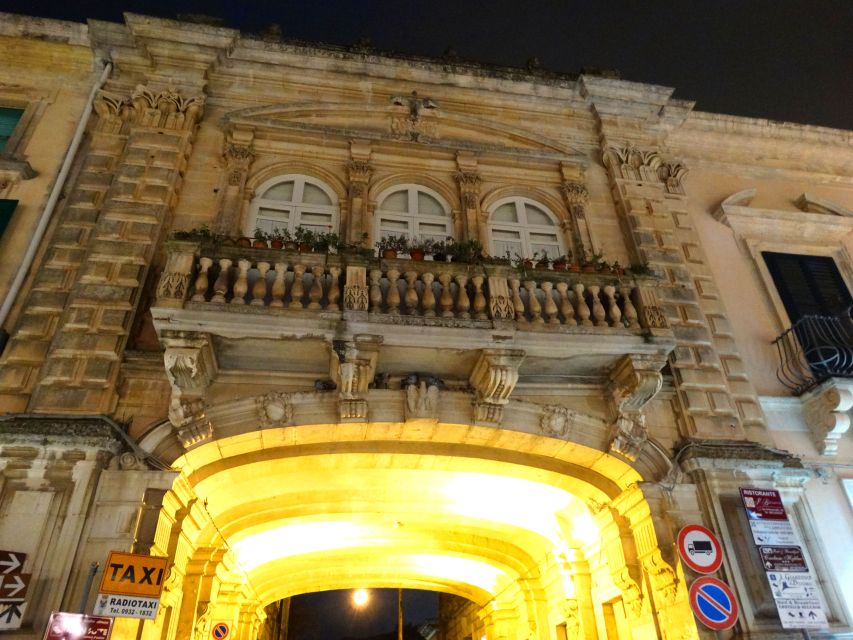
After the garden, the walk goes back into the historic center lanes. This is where Ragusa Ibla’s late-Baroque character becomes real in your eyes, not just in postcards.
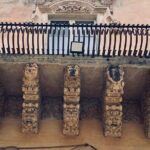
You’ll stroll among elegant Baroque-style buildings with outside details you can actually recognize: balconies supported by typical Baroque-style masks and Sicilian ceramics shops and artisan storefronts. The tour also points you toward traditional craft work, including the creation of the famous Sicilian carts.
That may sound niche, but it’s exactly the kind of detail that prevents your visit from feeling like a checklist. The guide helps you see why these workshops belong inside the town’s story. Ragusa Ibla isn’t only monuments—it’s also people making things and keeping traditions alive.
Conversation Circle (Caffè dei Cavalieri): the nobles’ meeting place feel
One of the most fun named stops is the Conversation Circle, also called Caffè dei Cavalieri. It’s a neoclassical building wanted in the nineteenth century by the nobles of Ragusa as an exclusive meeting point.
From the outside, you’ll still catch the elegance: precious frescoes and chandeliers, plus mirrors that give you that sense of a formal nineteenth-century room even while you’re outside in the street. It’s a reminder that class and social life were built into the architecture, not just into family names.
If you’re the kind of visitor who loves “who used to hang out here,” this stop hits.
Church of S. Giuseppe: Baroque face and majolica floor
On the main street leading toward the cathedral, the tour includes Church of S. Giuseppe. The exterior has a Baroque facade similar to the cathedral, so you can start noticing the design family resemblance in this part of town.
The standout inside is the floor of colored majolica. That’s the kind of thing that makes the church feel almost like a patterned stage—bright, handmade-looking, and very Sicilian in its love of color.
How to enjoy this stop
Don’t rush it. If you only glance at the facade, you’ll miss what makes the church memorable. Let your eyes drop to the floor and then come back up. It’s like reading a sentence in two parts.
San Giorgio Cathedral: staircase first, then art, then St. George
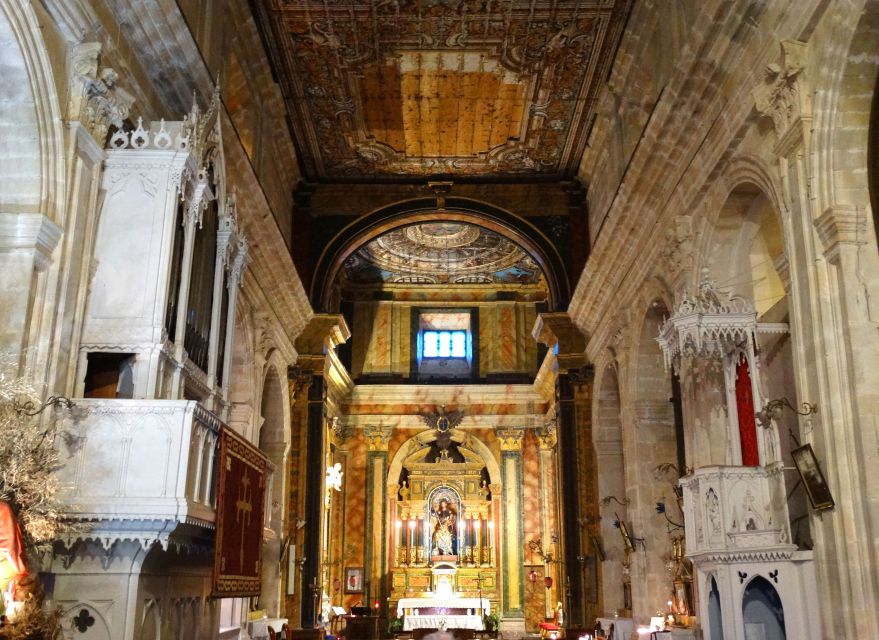
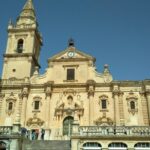
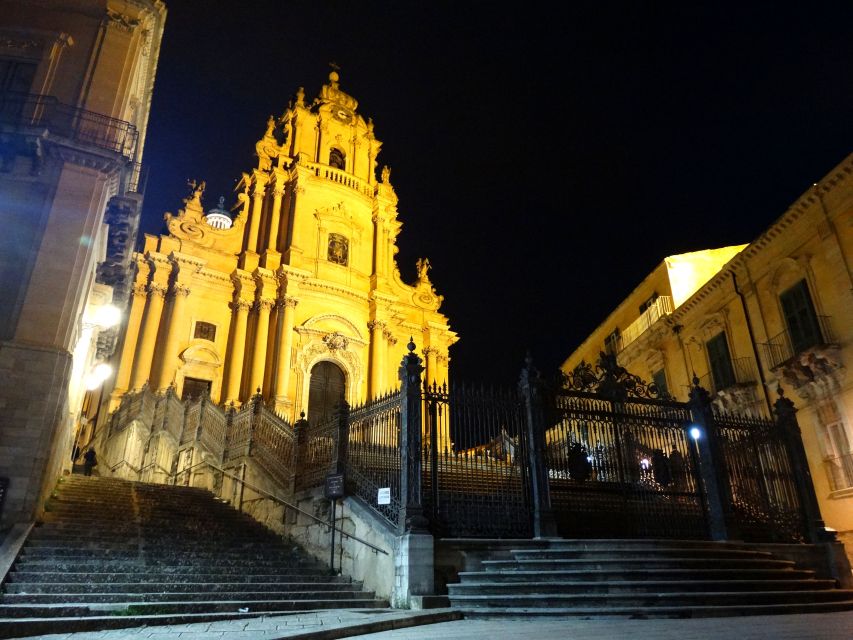
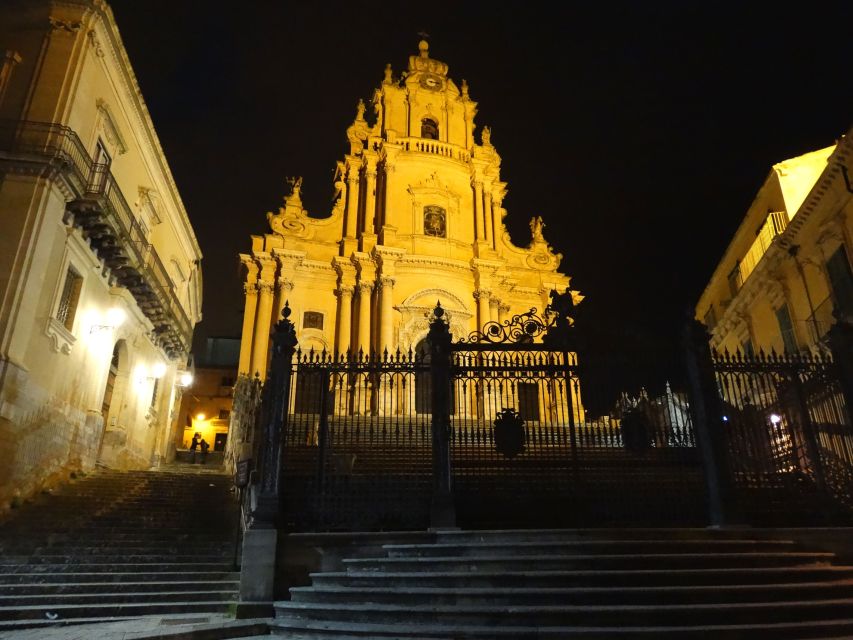
The tour ends at the symbolic heart of Ragusa Ibla: the Cathedral of San Giorgio. Expect an imposing staircase that leads up to the main square. This is one of those architectural “you feel it in your legs” moments—short, dramatic, and purposeful.
Inside, the guide leads you through major highlights. You can admire paintings by eighteenth-century Sicilian masters, a large pipe organ, and a statue of St. George on horseback with his reliquary.
St. George shows up more than once in this tour’s story. You started with the portal’s St. George and dragon battle relief. Now you see the saint again in a more monumental, devotional form. That repetition helps the whole experience feel cohesive rather than like random stops.
Why this finale works
A cathedral can easily become a passive “look and leave” site. Here, the earlier context—what survived, what was rebuilt, and what symbols mean—makes the interior feel more like a continuation of the town’s narrative, not a separate attraction.
Price and value: what $389.70 buys you for up to 15
The price is $389.70 per group for up to 15 people, lasting about 2 hours. That’s the key value hook: it’s priced like a private experience with a group cap, not like per-person ticketing that spikes quickly.
Here’s the practical way to think about it:
- If you’re near the maximum group size (up to 15), the cost can work out surprisingly reasonable per person.
- If you book with just a few people, it’s still a private guide, but you’ll feel more of the group premium.
Either way, you’re getting a licensed local guide and a tight, sight-focused route that hits Ragusa Ibla’s most interpretive points: the portal survival story, garden layers, and a cathedral finale with named art and key objects.
For couples and small families, I’d treat it as a “get the town’s language fast” outing. You’re paying for clarity: the whys behind what you see, not just the where.
Who this tour suits best (and who might want something else)
This is a great fit if:
- you want a short guided walk that still covers major Ibla highlights
- you like religious architecture but want it explained in a human, story-first way
- you enjoy craft details—ceramics, traditional cart making, and the social-life vibe of places like Caffè dei Cavalieri
You might want a different plan if:
- you’re expecting lots of long sightseeing time or big cross-town walking beyond Ibla
- you want a calmer pace with minimal steps, since the route includes the cathedral staircase and historic streets
One review note you’ll want to take seriously: if you’re hoping to add the view from Ragusa Superiore, you may feel like the tour stays focused on Ibla proper. This experience concentrates on Ibla’s core, so plan a second visit or add-on if panoramic views are your main goal.
Small details that make the experience smoother
- Your guide speaks Italian, English, French, and Spanish, so you can pick your comfort language.
- The tour is a private group, which usually means less stopping for crowd wrangling and more time actually looking.
- It starts and ends back at the meeting point by Portal of San Giorgio (Via dei Normanni, in front of Risìu), which keeps navigation simple.
Also, one of the nicer perks of doing a local-guide walk is how often you’ll get practical meal advice. In a short tour like this, that kind of suggestion can be worth as much as the monuments.
Should you book Ragusa Ibla’s walking tour with a local guide?
Yes, if your goal is to understand Ragusa Ibla quickly and enjoy it without stress. This tour hits the town’s strongest anchors in a smart order: Portal of San Giorgio (survival story), Ibleo Garden (peace and layered meaning), key Baroque lanes (the everyday craft texture), and San Giorgio Cathedral (art and St. George).
Book it if you like walking with a guide who can point out what you might otherwise miss, especially the symbolic details—like St. George showing up in both the portal and the cathedral. And if you’re okay with two hours of walking and a staircase finish, you’ll likely come away with a sharper sense of why this Sicilian corner is so beloved.
FAQ
FAQ
How long is the Ragusa Ibla walking tour?
The tour runs for about 2 hours.
Where does the tour start?
It starts at the Meeting point with the tour guide at Portal of San Giorgio (Via dei Normanni street), in front of the restaurant Risìu.
Where does the tour end?
The activity ends back at the meeting point at Portal of San Giorgio.
How much does the tour cost?
The price is $389.70 per group, up to 15 people.
Is the tour private?
Yes, it’s a private group experience.
What is included in the price?
A licensed tour guide is included.
Is food and drink included?
No. Food and drink are not included.
Are there transfers or pickup/drop-off?
No, transfers or pickup/drop-off are not included.
What languages are available?
The tour guide offers Italian, English, French, and Spanish.
What can I expect to see during the walk?
You’ll see the Portal of San Giorgio, the Ibleo Garden and Church of San Giacomo, the historic center with Baroque churches and palaces, the Conversation Circle (Caffè dei Cavalieri), Church of S. Giuseppe, and finish at San Giorgio Cathedral.
Are there different starting times?
The starting times depend on availability, so you’ll need to check to see what’s offered.