REVIEW · SICILY
CATANIA 1943: Husky operation
Book on Viator →Operated by Etna 'Ngeniousa · Bookable on Viator
Catania has a way of keeping its past visible, and this tour turns Operation Husky into real places you can stand in. You’ll move through four stops that connect the Allied landings in Sicily to how the war literally marked the city’s stones.
What I like most is the first stop’s strong, organized setup—so you don’t get WWII facts in a random order—and the way the walking route ties those facts to physical memorials. One thing to keep in mind: this is a sober, war-focused outing, so if you want lighter sightseeing, this won’t be the best fit.
In This Review
- Quick takeaways before you go
- How Operation Husky becomes a city walk in Catania
- Museo Storico dello Sbarco in Sicilia 1943: your must-do first stop
- Anfiteatro Romano: where Roman stone met wartime shelter
- Via Sant’Euplio ruins: spotting July 1943 damage on the ground
- Piazza del Duomo: ending at a war-damage altar for peace
- Guide impact: Oreste’s care and how it changes the experience
- Price and value: what $94.68 buys you for 3 hours
- Timing, meeting points, and how to plan your Catania day
- Who should book this Husky-era tour
- Should you book CATANIA 1943: Husky operation?
- FAQ
- How long is the CATANIA 1943: Husky operation tour?
- Where does the tour start and end?
- What language is the tour offered in?
- What stops are included?
- Is admission included in the price?
- Is it a private tour?
- What’s the typical schedule for the tour?
- How do tickets work?
- Is free cancellation available?
- Are service animals allowed?
Quick takeaways before you go
- Start with the museum context so the rest of the route makes instant sense.
- See WWII use inside Roman Catania, including how a major amphitheater functioned during air raids.
- Walk along bomb-scarred ruins connected to Sant’Euplio and July 1943.
- End at Piazza del Duomo where war damage became a peace-minded altar.
- English-guided, private-format value for groups who want fewer crowds and a steadier pace.
How Operation Husky becomes a city walk in Catania
This isn’t the usual “look, a landmark” style tour. It’s built around one idea: Operation Husky shaped Sicily in 1943, and you can trace that story on the ground in Catania. The best part is the flow. You start with the big picture, then you shrink it down to neighborhood-scale details.
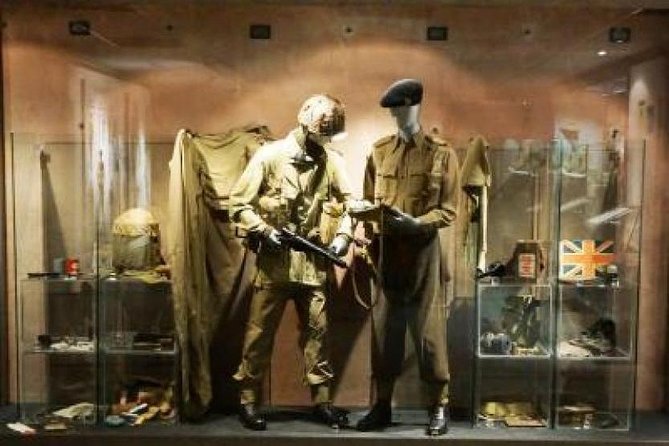
You’ll be guided through the Allied landing narrative with a focus on Operation Fustian and the battle of Simeto. That matters because it gives you a clear frame for what you’re seeing next. Without that context, bomb damage can feel like tragedy with no timeline; with it, the city becomes a timeline you can walk.
The pacing is also practical for a tour like this. Expect roughly 3 hours total, broken into short blocks that don’t feel like a long slog. It’s also privately run, so your group stays together with the guide rather than being shuffled among many strangers.
You can also read our reviews of more tours and experiences in Sicily.



Museo Storico dello Sbarco in Sicilia 1943: your must-do first stop
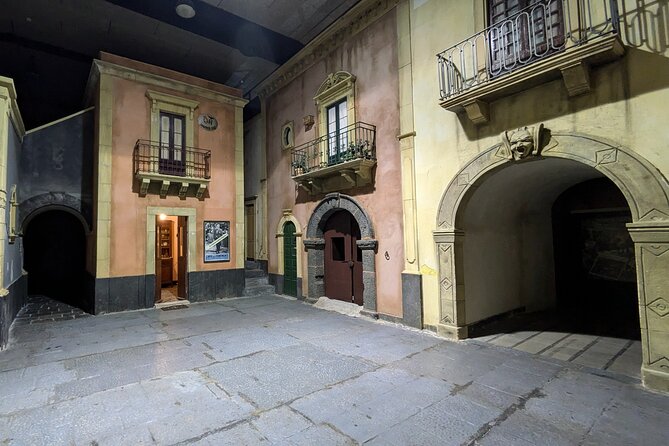
The day begins at the Museo Storico dello Sbarco in Sicilia 1943 at Piazzale Rocco Chinnici. This first stop lasts about 2 hours, and the admission ticket is included—so you’re not guessing how much of your time is “paywalled” by ticketing.
Here’s why I think this start is so valuable for you: the museum is doing the heavy lifting of explanation before you hit outdoor sites. You get a detailed introduction to the Allied landing in Sicily and the broader operation story, including Operation Fustian and the battle of Simeto. That structure helps you connect cause and effect, instead of simply memorizing dates.
A nice bonus is how the museum sets expectations for the city stops that follow. Instead of seeing ruins as random damage, you learn what to look for and how the war affected ordinary life. If you care about history that has consequences—not just history as dates—this museum is the point where the trip starts clicking.
If you’re sensitive to war themes, plan for that mood right away. Museums on this topic can feel heavy, even when they’re well done. But the payoff is you leave the museum ready to read what the rest of Catania is showing you.
Anfiteatro Romano: where Roman stone met wartime shelter
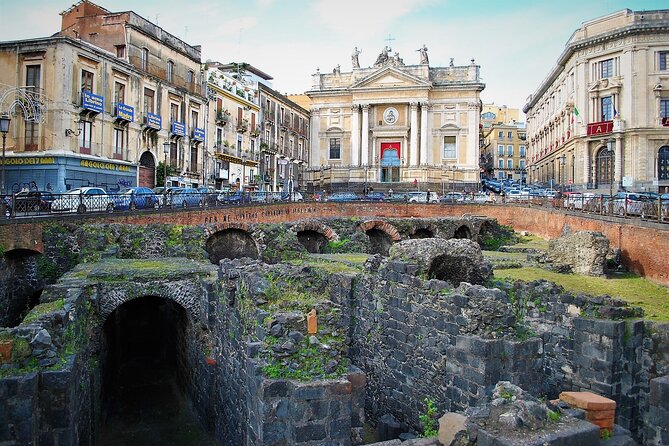
Next you head to the Anfiteatro Romano, the Roman amphitheater that still signals the power of early Catania. Your time here is about 30 minutes, and the admission ticket is included.
What makes this stop memorable is the contrast. An amphitheater built for public life becomes, during WWII, part of the city’s survival—used as an air raid shelter. It’s the kind of detail that makes you slow down, because it’s hard to imagine ancient spaces taking on modern roles under pressure.
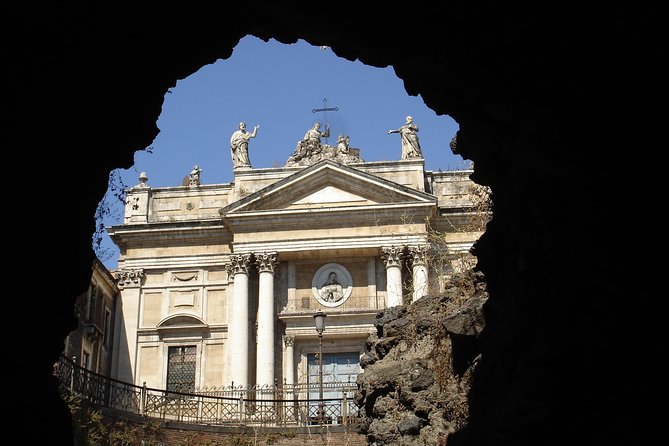
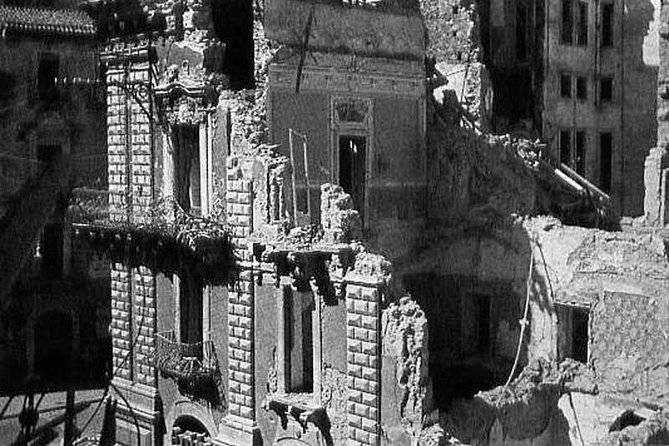
In the same square, you can still see the remains of the church of Sant’Euplio, bombed on April 16, 1943. That surviving fragment functions like a memorial you can’t ignore. It doesn’t ask for belief; it simply shows the wound.
One practical consideration: this is an outdoor stop with a short time window. If your group likes to linger, keep the museum time in mind—you’ll get more of the story indoors, and here you’ll want to focus on the key visuals and your guide’s cues.
Via Sant’Euplio ruins: spotting July 1943 damage on the ground
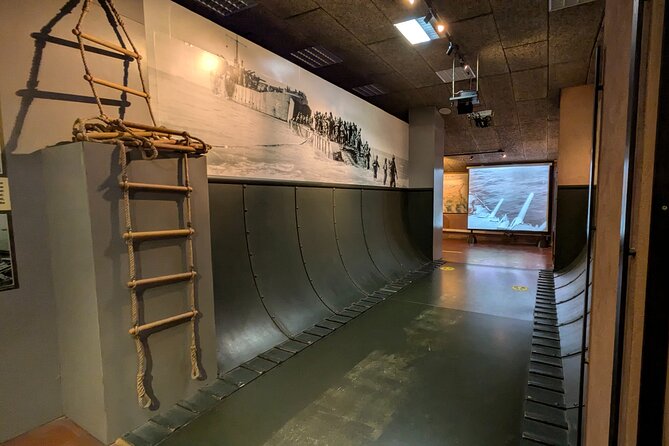
After the amphitheater, the route includes Via Sant’Euplio for about 10 minutes, and there’s no additional ticket cost. This portion is shorter, but it’s important because it links the memorial idea to the physical scars on the ruins.
The church ruins of Sant’Euplio still show signs of bombing from July 1943. That’s the timeline detail that makes the city feel layered. You’re not just seeing “war happened.” You’re seeing multiple impacts at different moments, and your guide helps you place them in order.
For you, this is a great moment to ask yourself a question: what does it mean for a city to keep those marks visible? It shifts how you see reconstruction. Instead of pretending history vanished cleanly, Catania shows the seam.
Piazza del Duomo: ending at a war-damage altar for peace
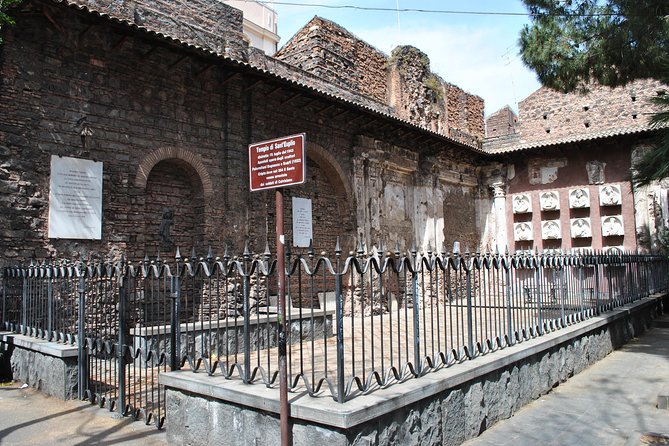
The last stop is Piazza del Duomo, where you’ll spend about 15 minutes. No extra ticket is listed here, and it’s a strong way to close because it changes the tone from destruction to remembrance.
In the heart of the city, you pause on an altar that bears signs of bombings and, after the war, became a place of prayer for peace. This ending choice works. After visiting ruins and shelters, you’re left with something more forward-looking than “the damage.”
It’s also a good place to reset your bearings before you head off on your own. Piazza del Duomo is central and easy to reorient from, especially if you want to continue exploring Catania right after the tour.






Guide impact: Oreste’s care and how it changes the experience
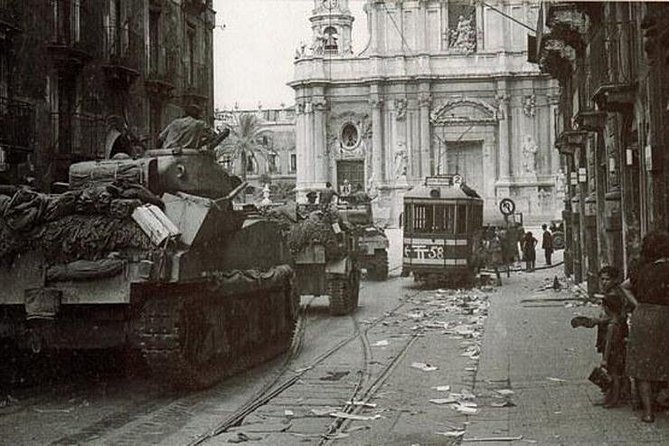
The quality of this kind of tour lives or dies with the guide. In the best cases, you get both facts and pacing that respects your group.
One guide name came up: Oreste. In the experiences I’ve seen shared from this route, Oreste is praised for being professional and kind, with a clear command of WWII–Catania connections and what the war meant for local people. That combination matters because history tours can drift into lecture mode. A guide who can shape the story keeps it human.
There’s also a very practical detail that can mean a lot: Oreste reportedly offered to drive one elderly traveler from the museum to the next part of the tour so she could keep up comfortably. Whether you need something like that or not, it signals that the guide is paying attention to your group’s real needs, not just the clock.
If you’re traveling with anyone who has mobility limits or stamina issues, this is worth noting. The walking segments are short by design, but having a flexible guide mindset can make your day smoother.
Price and value: what $94.68 buys you for 3 hours
At $94.68 per person for about 3 hours, this isn’t a budget “quick photo” option. But it can be good value if you care about interpretation and you’re treating it as a history-focused tour rather than a casual walk.
Here’s where the price helps you:
- Admission is included at the museum and Roman amphitheater stops.
- Two other stops are free on the route, so you’re not paying repeatedly to reach each site.
- It’s offered in English and run as a private tour/activity, so your group isn’t competing with others for the guide’s time.
Also check the small print you can’t see until you book: there are group discounts, and confirmation comes at the time of booking. Plus, a mobile ticket is used, which is helpful when you’re moving around a city.
If you’re traveling solo, private tours can feel pricier. If you have a small group and you split the cost, it can shift into a very sensible choice—especially since your guide is handling both the story and the route.
Timing, meeting points, and how to plan your Catania day
The start point is at the Museo Storico dello Sbarco in Sicilia 1943 (Piazzale Rocco Chinnici, 95129 Catania CT). The tour ends at the Roman Amphitheater of Catania (P.zza Stesicoro, 95124 Catania CT).
You’ll want to schedule this early enough that you still have time to roam afterward without rushing. A lot of people do this before other sightseeing, simply because it gives the city context that makes later stops more meaningful.
The listed opening window shows Tuesday through Sunday, 10:00 AM to 1:00 PM. If you’re in Catania on a Monday, you’ll likely need another plan. And since it’s a guided tour with a set route, show up a few minutes early so you don’t start tense.
Who should book this Husky-era tour
Book this if you want WWII history tied to real places, and you like your sightseeing with structure. It’s especially suited for:
- History-minded travelers who want the story of the Allied landing to be explained clearly first.
- People who appreciate memorial sites and don’t mind a reflective, serious tone.
- Small groups who’d rather do a private format than merge into a crowded tour.
It may not be ideal if you’re looking for relaxed beach-and-cocktail pacing. This route is built around destruction, shelter, and remembrance.
Also, the tour notes say most people can participate, and service animals are allowed. If you’re planning around someone’s needs, it’s smart to communicate that early and choose a time when you’re not already drained.
Should you book CATANIA 1943: Husky operation?
I’d book it if you want to understand Catania during 1943 instead of just walking past damage. The strong museum start, the short and focused city segments, and the way the story ties to Sant’Euplio and the Duomo make this feel like more than a collection of stops.
Skip it if your trip needs lighter themes. And if your group struggles with emotional subject matter, plan to pace yourselves—this is history with weight.
If you’re still deciding, ask yourself one question: do I want WWII in Catania explained with a timeline? If yes, this tour is a solid way to get there without guessing.
FAQ
How long is the CATANIA 1943: Husky operation tour?
It lasts about 3 hours.
Where does the tour start and end?
It starts at Museo Storico dello Sbarco in Sicilia 1943 (Piazzale Rocco Chinnici, Catania) and ends at the Roman Amphitheater of Catania (P.zza Stesicoro, Catania).
What language is the tour offered in?
The tour is offered in English.
What stops are included?
The tour includes the Museo Storico dello Sbarco in Sicilia 1943, the Anfiteatro Romano, Via Sant’Euplio, and the route ends in Piazza del Duomo.
Is admission included in the price?
Admission tickets are included for the museum and the Roman amphitheater. Via Sant’Euplio and Piazza del Duomo are listed as free stops.
Is it a private tour?
Yes. It’s private, meaning only your group participates.
What’s the typical schedule for the tour?
The listed opening hours are Tuesday to Sunday from 10:00 AM to 1:00 PM.
How do tickets work?
You’ll have a mobile ticket.
Is free cancellation available?
Yes. You can cancel up to 24 hours in advance for a full refund.
Are service animals allowed?
Yes, service animals are allowed.

![|FROM CATANIA| Etna and Taormina Tour [PRIVATE TOUR] - The morning from Catania: pickup, comfort, and a practical start](https://b2.sicily-guide.com/wp-content/uploads/from-catania-etna-and-taormina-tour-private-tour-400x267.jpg)