REVIEW · SICILY
Etna excursion 3000 meters with 4×4 cable car and Trekking
Book on Viator →Operated by Gruppo Guide Alpine Etna Sud · Bookable on Viator
Etna at 3000 meters changes your map. What makes this outing special is the combo of cable car + 4×4 and the chance to hike near volcanic craters and lava terrain at high altitude. I also love the crater-edge walking with big views on clear days. The main drawback is the physical demand: steep sections, narrow paths near drop-offs, and chilly, windy conditions at the top.
You’ll meet at Piazzale Rifugio Sapienza with Etna Sud Alpine Guides, ride up fast, then switch to off-road transport and trekking. The guides (like Pepe, Fabio, Antonio, Arthuro, Vincent, and Nino) tend to make the geology feel real, not textbook. Just be ready for dust, cold layers, and extra payments on the day for the cable car and jeep transport.
In This Review
- Key moments that make this Etna trek worth it
- Getting up Etna: cable car to 2500m, then 4×4 to 2850m
- Valle del Bove: the horseshoe-shaped crater depression viewpoint
- Barbagallo crater and Torre del Filosofo: walking near lava flows
- Summit crater views with Central and South-East Craters
- The Bar Funivia dell’Etna return: volcanic sand routes and wide views
- Price and the real value: what’s included vs what costs extra
- Gear, clothing, and the common mistakes to avoid
- Fitness, altitude comfort, and who this tour fits best
- How the day runs: group size, pacing, and guide style
- Should you book the 3000m Etna trekking tour?
- FAQ
- What is the duration of the Mount Etna 3000m excursion?
- Is lunch included?
- What does the price include, and what costs extra?
- Where do I meet for the tour?
- What fitness level do I need?
- What happens if the weather is bad?
Key moments that make this Etna trek worth it
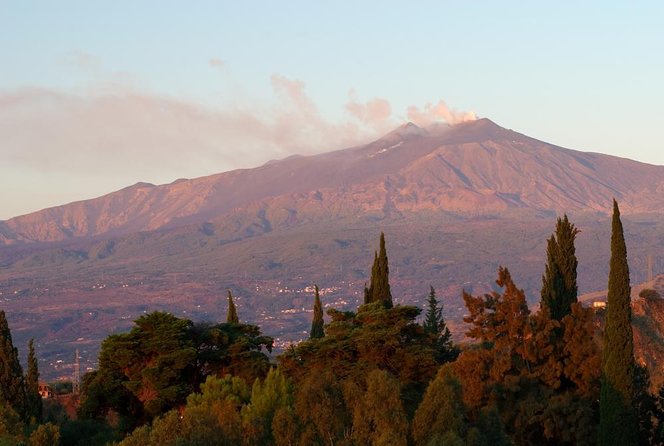
- Cable car and 4×4 get you high quickly, so the hiking time is focused on the good volcanic bits.
- Valle del Bove viewpoint gives you a dramatic horseshoe-shaped look at Etna’s volcano-tectonic depression.
- Barbagallo crater walk brings you up close to lava flows and sandbanks at around 3000 meters.
- Torre del Filosofo and active-looking terrain keep the route feeling purposeful, not just scenic wandering.
- Summit craters show gas plumes up close on the right day, then you return along volcanic channels.
- This is a gear-and-conditions outing, not a casual stroll: wind, cold, and dust are part of the deal.
Getting up Etna: cable car to 2500m, then 4×4 to 2850m
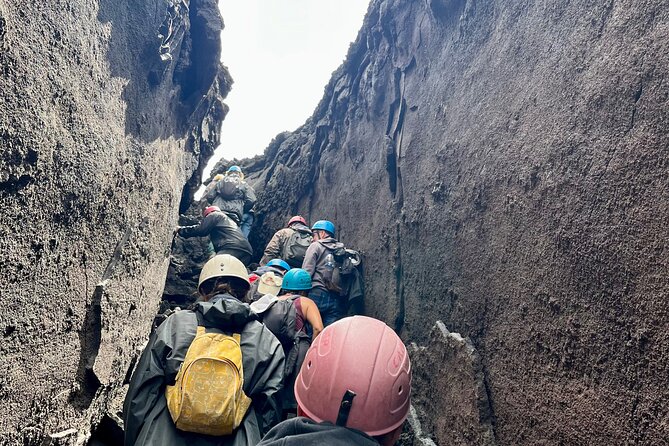
Your day starts at the Etna Sud Alpine Guides hut at Piazzale Rifugio Sapienza (near Nicolosi). First you climb by cable car up to about 2500 meters. That part matters because it compresses the hard work and gets you to the high-altitude zone without wasting hours on low-value climbing.
Then you switch to off-road vehicle transport to around 2850 meters. This is the smart pivot for a 4-to-5-hour overall experience: you get the altitude and terrain without turning it into a full-day grind from the base. It also sets the tone—this is an active volcano area where you follow a plan, not a casual self-guided wander.
One practical note: the cable car and jeep transport ticket is not included in the tour price, and you’ll need extra money on the day.
You can also read our reviews of more hiking tours in Sicily
Valle del Bove: the horseshoe-shaped crater depression viewpoint
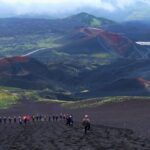
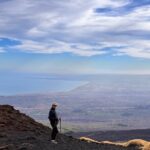
Once you’re up, you’ll pause at the Valle del Bove viewpoint. This is the big horseshoe-shaped volcano-tectonic depression on Etna’s eastern side. On fine days, the view can feel almost unreal—huge structure, layered geology, and a clear sense of how Etna’s past shaped the terrain you’re walking through.
This stop is shorter (about 30 minutes), so don’t treat it like a long picnic break. Treat it like a quick orientation: look back the way you came, check the horizon, and use the time to mentally connect what you’ll see later at higher elevations.
If weather turns cloudy, the viewpoint can be less impressive. That’s a recurring theme on Etna, and it’s why you should build in flexibility for day-of conditions.
Barbagallo crater and Torre del Filosofo: walking near lava flows
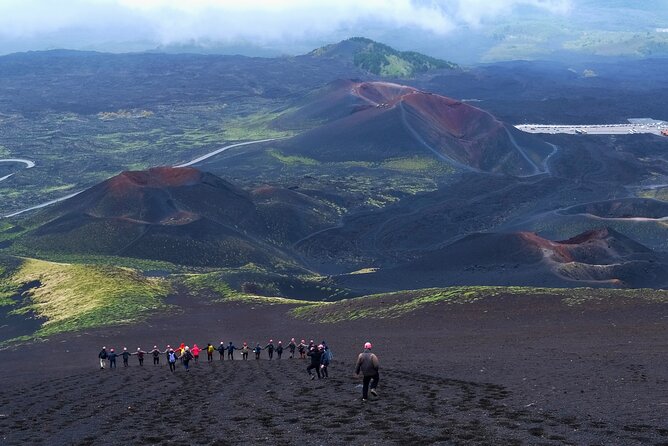
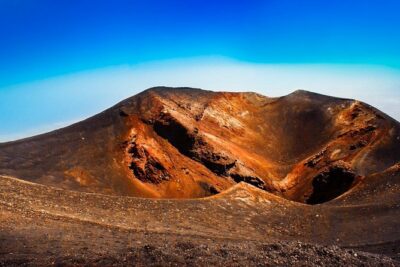
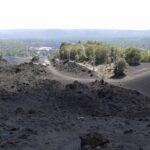
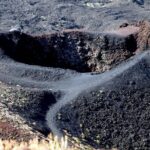
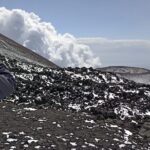
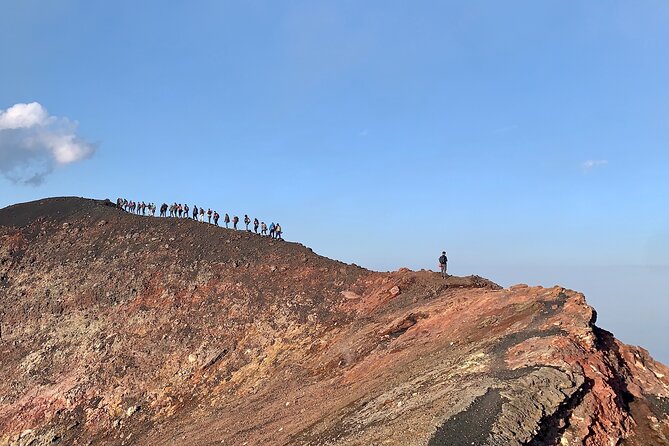
This is the heart of the hike. You head toward Crateri Barbagallo at roughly 3000 meters, walking up along volcanic sandbanks. From there, the route follows features tied to past eruptions, including a lava flow channel associated with the 2002 eruption.
What I like about this style of route is that it’s not only “look at the volcano.” You move along the terrain that lava created—so you get a sense of shape and direction, not just scenery.
You also continue toward Torre del Filosofo (about 2920 meters) along more recent lava flows, with the guide noting still-hot terrain tied to the 21-05-2023 events. That matters because it reinforces what makes Etna different from a normal mountain hike: the ground you step on is part of an ongoing process.
After a lunch break, you walk along the edge of the Barbagallo crater area and admire:
- summit craters above you
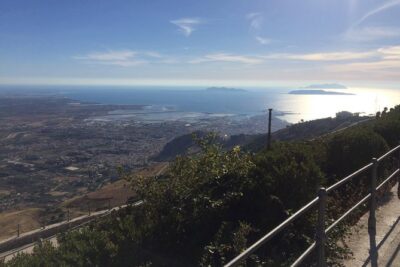
- the eastern coast view, from Taormina to Syracuse on clear days
This section is where the tour earns its adventurous reputation. Expect steep bits, narrow travel on ridges at times, and footing that is less forgiving than a maintained trail.
Summit crater views with Central and South-East Craters
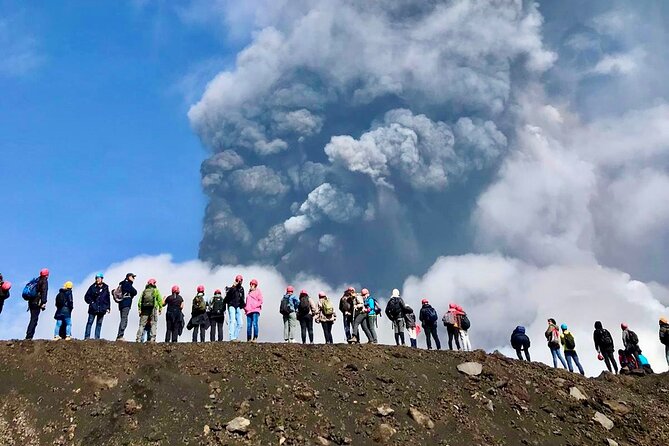
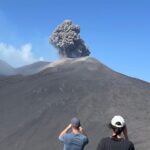
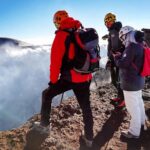
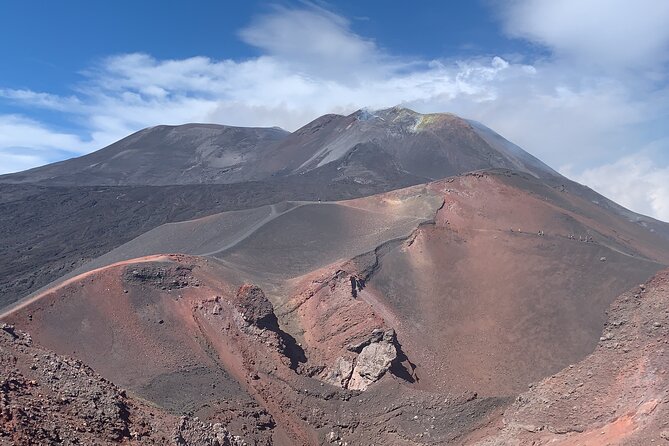
After the edge walk, you get a final chance before the descent to admire the summit craters—especially the Central Crater and the South-East Crater, including their gas plumes. In good visibility, this is where you really understand Etna as a working volcano.
This stop is about 20 minutes, so it’s not a long sit. It’s timed so you’re not stuck when conditions shift. Use it actively: look for gas movement, take photos quickly, and keep your eyes on your footing in case the ground is loose or uneven.
Even if you’re not a geology person, this is the moment where the whole day clicks.
The Bar Funivia dell’Etna return: volcanic sand routes and wide views
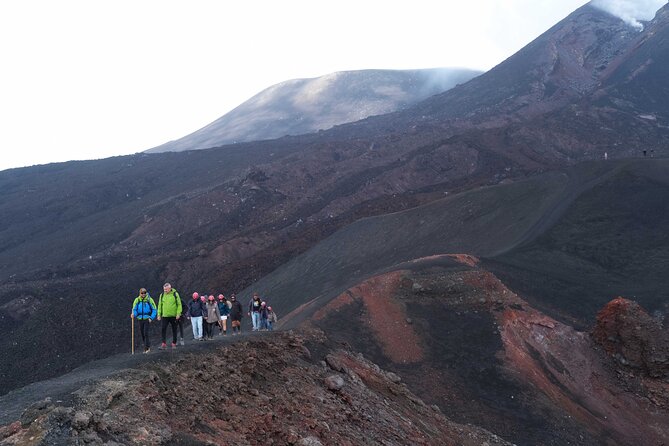
You return by cable car on the way down, with views stretching from the Ionian coast toward the interior of Sicily when visibility allows. The timing is about 1 hour 30 minutes for the return segment, which helps make the full day feel “managed” rather than rushed.
One reason I think this return method is good value: it keeps energy for the hiking parts, instead of draining it with long downclimbs. Still, the “downhill” in Etna terrain can be real work, and you’ll feel it in your legs if you did the crater-edge walking.
Price and the real value: what’s included vs what costs extra
The price you’ll see is $66.51 per person for the Etna Sud Alpine Guides experience (English offered). The big value point is that the tour includes key safety gear: socks, shoes, jackets, and helmets, plus an alpine and/or volcanological guide service.
But there’s an important split: cable car and jeep ticket is €45 per person, and lunch is not included.
So the true cost is basically:
- your tour price
- plus the day ticket for the mountain transport
- plus food you bring or buy (depending on what you plan)
Is it worth it? For most people, yes—because the included gear and guided route are doing a lot of the heavy lifting. You’re not just buying a ride up; you’re buying guided access to specific high-altitude crater terrain that’s easy to do wrong without local expertise and safety discipline.
One logistics tip from real-world timing: plan to pay the extra on arrival with cash if card payments fail. I’d rather you carry it and not need it.
Gear, clothing, and the common mistakes to avoid
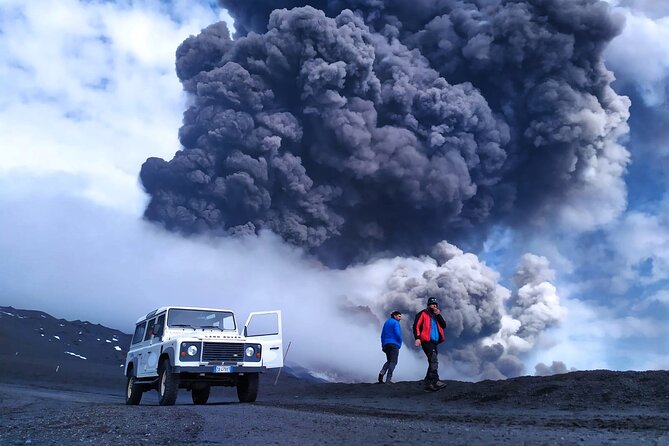
The operator provides socks, shoes, jackets, and helmets. That’s a big help if you’re traveling light. Still, treat the provided boots as a starting point, not an ironclad promise—some boots can be older or less grippy. If you have solid hiking shoes of your own, bring them. You’ll likely enjoy the downhill and narrow ridges more.
For clothing, aim for layers. At altitude it can get very cold and windy, and the windproof jacket (provided) helps, but you may still want extra warmth under it. Also plan for dust. Volcanic dust sticks to everything, including your legs and clothing, so long pants and a wind layer make the hike easier to tolerate.
A few practical add-ons that can make a difference:
- bring water and a hearty snack if you need it
- trekking poles or sticks can help on steep, rocky descents
- arrive early enough to get geared up without stress
If you have respiratory problems, skip this one. The tour explicitly isn’t recommended for that.
Fitness, altitude comfort, and who this tour fits best
This is rated for travelers with moderate physical fitness. That’s the official level. In practice, it can feel tougher than a casual “moderate” hike because the walking can include steep sections and narrow crater-edge paths with drop-offs.
You should feel comfortable on rough ground, and you should have endurance for up-and-down movement at high altitude around 3000 meters. Even if your lungs feel fine, your legs might notice the steepness and loose footing.
The tour also has guidance about age. It’s not for children under 6. If you’re traveling with kids closer to that minimum, understand that the narrow and exposed parts can be intimidating.
If heights make you anxious, this isn’t a great match. One of the most consistent “watch outs” on this route is the feeling of walking on thin ridgelines above steep drop-offs.
How the day runs: group size, pacing, and guide style
This experience caps at 25 travelers, so it’s not a private one-on-one trek, but it’s also not an enormous crowd. The pacing is structured: you move together, stop for key photos and explanations, and you’re held to a route that matches safety needs at altitude.
Guide style can shape the whole day. In my view, the best Etna days are the ones where the guide turns geology into a story you can stand on. Guides here include people like Pepe and Fabio, and they tend to explain the volcano and eruption context so the terrain doesn’t feel random.
There’s also translation flow if your group has multiple language speakers. That can slow down questions, so try to ask your big ones early.
Finally, the tour is weather-dependent. Strong winds or low cloud cover can change or cancel the summit-style segments. The operator prioritizes safety and offers options if conditions make the planned route unsafe.
Should you book the 3000m Etna trekking tour?
Book it if you want a guided, high-altitude Etna experience that mixes transport up the volcano with real hiking on crater terrain. The value is strongest if you appreciate:
- volcanic geology you can physically walk through
- structured guidance near hazardous areas
- included cold-weather gear and helmets
Consider skipping or choosing a gentler Etna option if you:
- don’t handle steep hikes or narrow exposed paths well
- have respiratory issues
- need a low-stress, low-footing day
If you do book, do two things that raise your odds of a great day:
1) bring cash for the extra €45 transport ticket
2) dress for wind and cold even if the base area feels mild
Etna is unforgettable when visibility cooperates. Even when it doesn’t, this kind of guided route is still one of the most meaningful ways to see what a live volcano actually looks like from the ground.
FAQ
What is the duration of the Mount Etna 3000m excursion?
The experience runs about 4 to 5 hours.
Is lunch included?
No. Lunch is not included.
What does the price include, and what costs extra?
Your tour price includes socks, shoes, jackets, helmets, and guide service. Cable car and jeep transport ticket are extra at €45 per person, and lunch is not included.
Where do I meet for the tour?
You meet at Piazzale Rifugio Sapienza, Nicolosi (Etna Alpine Guides Excursions). The activity ends back at the same meeting point.
What fitness level do I need?
The tour is for travelers with a moderate physical fitness level. It’s not recommended for people with respiratory problems.
What happens if the weather is bad?
This experience requires good weather. If it’s canceled due to poor weather, you’ll be offered a different date or a full refund.