REVIEW · SICILY
SALT TOUR-all inclusive: salt tour: Trapani, Paceco, Nubia
Book on Viator →Operated by Trapani Emotions · Bookable on Viator
Salt flats can be quiet, not boring. You’ll tour Trapani’s salt world with a small group and a guide who turns working salt into something you can actually picture. I especially like the up-close salt-pan walks and how you move from one historic site to the next without wasting time. Two things I like a lot: the tastings of fleur de sel (including flavored salt flower), and the chance to see how sea water becomes salt through a real, hands-on process.
You start at the port area, then work your way through Salina sites in Paceco and Nubia. You’ll hear how generations of salt workers did this job, and you’ll get a museum stop where the tools and the routines feel human, not just “old stuff in a building.” One possible drawback to plan around: the tour depends on good weather, so cloudy or rainy conditions can change the experience.
In This Review
- Key Highlights Worth Your Time
- Salt Tour Starts Where the Action Is: Port Fire Station Departure
- Maria Stella: First Mill Views and the End-of-the-1500s Story
- Salina Calcara and the 4 Orders: Sea Water to Salt Through Staged Work
- Culcasi Salt Pans and the Over-600-Year Museum Mill
- Tastings of Salt Crystal and Aromatized Salt Flower
- Birds, Birds, Birds, Plus That Sunset Feeling
- Small Group Logistics: Air-Conditioned Ride, Limited Seats, Easy Timing
- Price and Value: $60.46 for a Guided Salt Education + Tastings
- Should You Book This Salt Tour in Trapani?
- FAQ
- How long is the SALT TOUR all-inclusive experience?
- Where do I meet, and where does the tour end?
- What’s included in the price?
- What tastings should I expect?
- How big are the groups?
- Is the tour offered in English?
- What happens if the weather is bad?
Key Highlights Worth Your Time
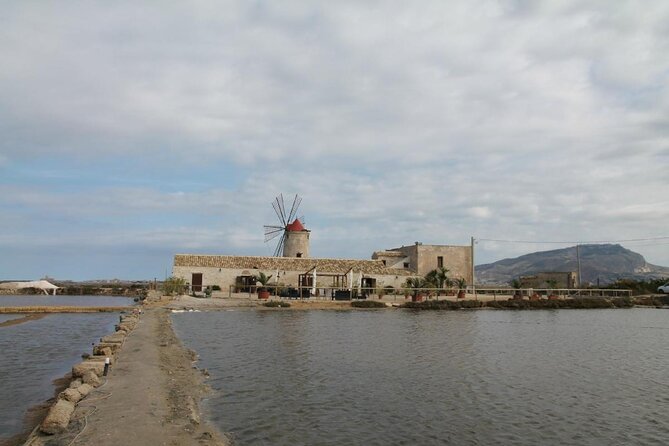
- Small group focus: capped to keep things intimate (with a max of 16 travelers, and the experience described as limited to 8 for quality).
- Three salt-pan stops: Maria Stella, Salina Calcara/Chiusicella, and Culcasi.
- A museum mill over 600 years old: you walk through how it worked, who did what, and why salt mattered.
- Fleur de sel tastings: crystals plus salt flower, both plain and flavored (orange, lemon, rosemary, oregano).
- Bird spotting in the Saline: flamingos, herons, egrets, and other sightings can happen along the way.
- Guide storytelling from Alessio: expect detailed, practical explanations of salt and the region’s salt culture.
Salt Tour Starts Where the Action Is: Port Fire Station Departure
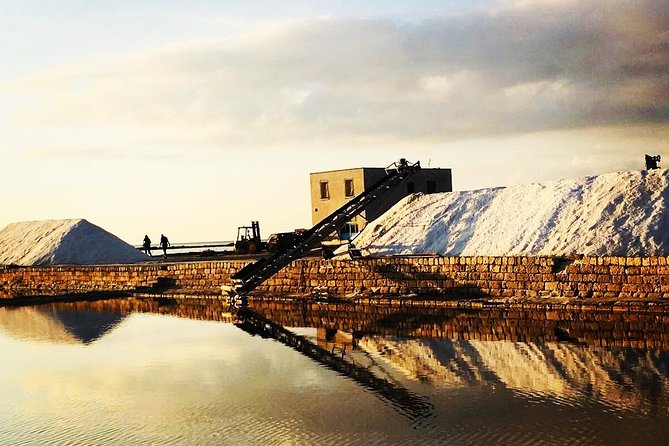
This is a very “Sicily practical” kind of tour. You meet at the Vigili Del Fuoco Distaccamento Portuale Trapani, right by the port (Via Ammiraglio Staiti 101). It’s not a far-away countryside pickup spot. It’s close to where the salt history and sea logistics make sense.
From there, you ride in an air-conditioned vehicle to the first salt area. That matters more than it sounds. If you’re visiting in warm months, you’ll be glad to have cool transport before you step into the salt pans. And because it’s a timed tour (about 2 hours 30 minutes), you’re not left guessing how long everything takes.
Also, you’re getting a mobile ticket and a guided experience in English. Service animals are allowed, and the meeting point is described as near public transportation. So if you’re staying in Trapani without a car, you can still make this work without turning the day into a logistics puzzle.
You can also read our reviews of more tours and experiences in Sicily.

Maria Stella: First Mill Views and the End-of-the-1500s Story
After about 10 minutes, you reach the first salt pan on the route: Maria Stella. This stop is a quick hit, but it’s designed to give you a foundation. You’ll admire the first mill built in the area, dating to the end of the fifteenth century.
Why this matters: salt production is not one single step. It’s timing, repetition, and the right infrastructure. Starting with an early mill helps you see the big picture before you get into the details of the working pans later.
At this stage, don’t rush past what you’re looking at. Even if you’ve seen salt photos before, this is the moment where the tour’s tone clicks into place: you’re learning how the process was engineered to work season after season. If your goal is a real understanding, this early framing is what makes the later stops click.
And because it’s a small-group setup, you can usually hear what the guide is pointing out rather than standing at the back and playing guessing games.
Salina Calcara and the 4 Orders: Sea Water to Salt Through Staged Work
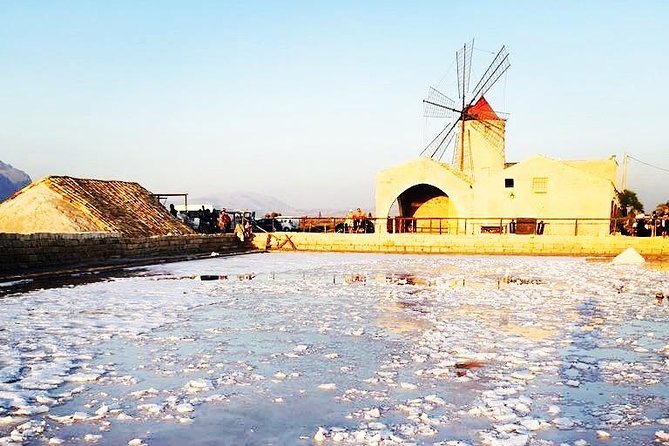
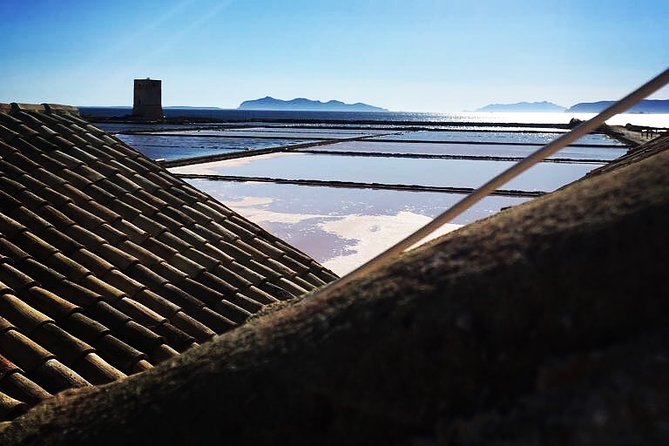
Next you head to Salina Calcara, with the route also described around Salina Chiusicella. This is where the tour starts to feel like a living landscape of ponds, channels, and carefully managed conditions.
You’ll learn about the four orders of salt tanks, essentially how sea water is transformed step by step into salt. That sounds technical, but the structure is the point. By the time you get to the next stop, you’ll better understand why salt workers needed both patience and precision.
This is also where wildlife can steal the show. The tour route description includes potential sightings like flamingos, herons, and egrets. In the salt world, birds aren’t a side note—they’re part of the environment created by the salt process. It’s a nice balance: you get practical industry knowledge and then you’re looking at nature adapting to it.
A practical note: bring your sense of timing. This is one of the stops where good photos depend on light and patience. If you care about pictures, arrive mentally ready to pause and re-frame a shot without feeling like you’re holding everyone up.
Culcasi Salt Pans and the Over-600-Year Museum Mill
The final working stop is Saline Culcasi. It’s described as the last salt pan on the tour and the place where you get to enter an ancient mill—over 600 years old—that’s now a museum.
This is the part I’d call the “why and how” engine of the experience. Inside, you’ll find out how salt was collected and how the mill worked. You’ll also learn about tools, hierarchies, and the role salt played in the area. Then you compare past and present—what changed, what stayed the same, and what that tells you about the region.
After the museum time (about 1 hour 15 minutes on this stop), you shift from history facts to sensory facts. You’ll taste different types of salt crystals and the salt flower. The tour description is specific about flavors: natural salt flower plus versions flavored with orange, lemon, rosemary, and oregano.
Then you go for the “path of the saltman,” a walk inside the salt tanks. This is a great moment to connect everything you just learned. You’re no longer reading about salt work—you’re moving through the space where the work happened.
Possible drawback to consider here: the walk is inside an active salt setting. The tour is suitable for most travelers, but it still helps to wear shoes you trust on uneven ground and bring a light layer if it’s breezy.
Tastings of Salt Crystal and Aromatized Salt Flower
The tasting is not an afterthought. It’s built in, and it’s one of the best ways to leave understanding with your brain and your palate.
You’ll sample salt crystal types plus salt flower, including natural and flavored options (orange, lemon, rosemary, oregano). This is clever for a couple reasons.
First, it helps you separate salt as a single ingredient from salt as a spectrum of textures and flavors. Salt flower is known for being delicate, and pairing it with citrus and herbs makes it feel usable right away. If you cook, you can translate what you taste into real habits at home. If you don’t cook, you’ll still come away with a sense of why “good salt” is not the same as “salt that’s salty.”
Second, the tasting anchors the tour emotionally. Even if some technical terms slide over your head (sea water orders, mill function, etc.), you’ll have something memorable to hold onto.
If you’re the type who buys food souvenirs, this stop is where you’ll likely understand what to bring back. If you’re not a food buyer, you can still treat this as a guided lesson in flavor, not shopping pressure.

Birds, Birds, Birds, Plus That Sunset Feeling
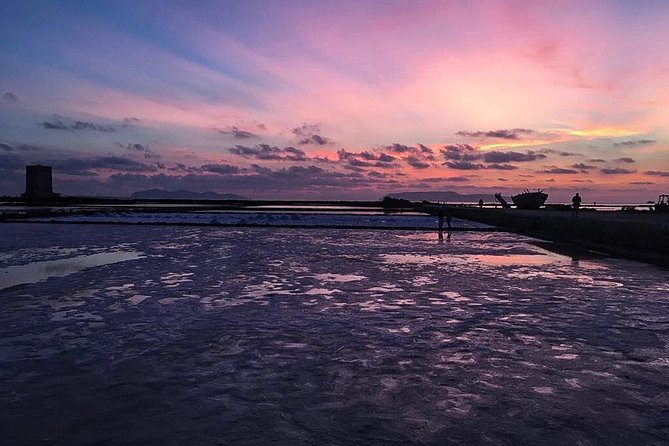
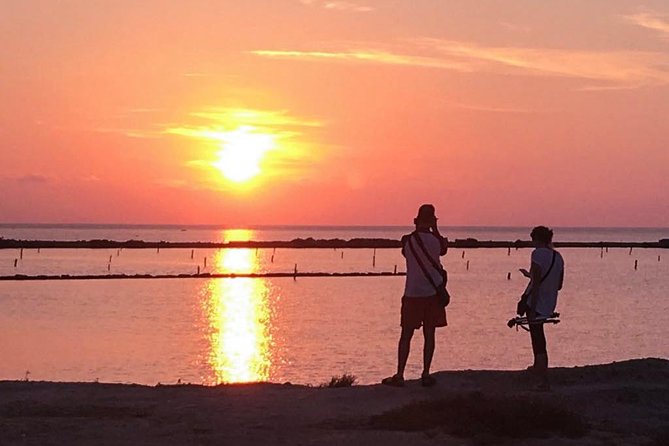
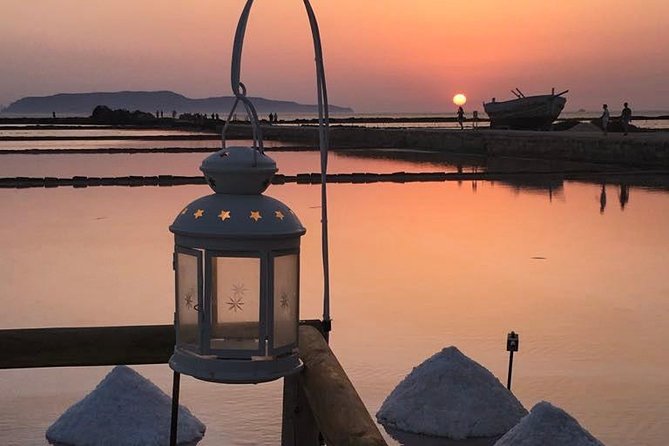
The route information calls out the chance for flamingos, herons, and egrets, and one of the strongest themes in the experience is the timing and atmosphere—especially in the evening.
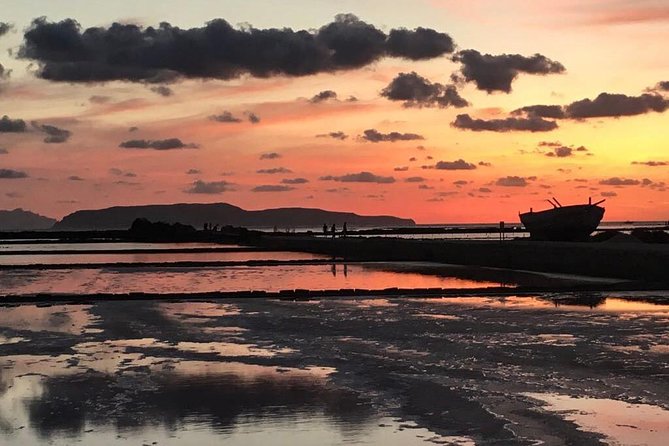
Several highlights point toward sunset views over the salt pans, and people consistently react to that moment as a clear payoff. Clouds can happen, of course, and then your sunset view might be softer than expected. But even without a perfect sky, the salt pans still look different once the light shifts.
Here’s how to think about it practically: if you’re scheduling this tour on a day where weather can be iffy, plan the rest of your evening with a little buffer. You’ll be outside for parts of the experience, and conditions can change how long you want to stand and watch.
Because the tour requires good weather, it may be rescheduled or refunded if conditions are poor. That’s a strong reason to take it seriously in your planning, rather than stacking too many outdoor activities back-to-back.
Small Group Logistics: Air-Conditioned Ride, Limited Seats, Easy Timing
Let’s talk about the stuff that makes or breaks a tour: time, group size, and comfort.
The tour runs about 2 hours 30 minutes. Departure and return happen at the same meeting point near the port, so you’re not juggling multiple drop-offs. You’ll be back within roughly the same area after the final return segment.
Group size is a key part of the value. The experience is described as limited to 8 people for intimacy and quality, and it also lists a maximum of 16 travelers. Either way, you’re not in a huge crowd. That usually means less waiting, more guide attention, and fewer missed explanations while you try to see past shoulders.
You’re also riding in an air-conditioned vehicle, and the minivans are described as sanitized in line with COVID-19 regulations. Whether or not that’s your main concern, it’s still a comfort plus on a hot day.
One more real-world detail: Alessio (the named guide from the experience) is described as flexible with timing when traffic issues come up. That matters in Trapani area days, where schedules can slip. If you’re the kind of traveler who hates “we’ll see” uncertainty, you’ll appreciate a guide who can adjust rather than just bulldoze onward.
Price and Value: $60.46 for a Guided Salt Education + Tastings
At $60.46 per person, this tour sits in the “small splurge, clear payoff” category.
Here’s what you’re paying for, beyond the basic idea of salt pans:
- A guide who explains process, history, and how salt shaped the region
- Three salt-pan sites rather than one stop and a photo op
- A ticketed museum visit inside a mill that’s described as over 600 years old
- Tastings of salt crystals and salt flower (including flavored versions)
- Transport with an air-conditioned vehicle
- All fees and taxes are included
So the value isn’t just the scenery. It’s the combination of instruction + guided access + tastings + multiple locations in a tight time block.
Is it worth it if you mainly want photos? You might feel it’s pricier than a self-guided museum visit or a taxi. But if you want someone to explain why the salt tanks are laid out the way they are, why fleur de sel matters, and what you’re looking at when birds show up in the pans, the guide-led structure is the difference.
One possible consideration: it’s not built like a long open-ended wandering session. If your priority is a slow, stretched-out evening shoot session, you might find the tour length less flexible. Still, for most people, the timing is a plus, because it turns a half-day block into a focused learning experience.
Should You Book This Salt Tour in Trapani?
Book it if you want a guided, small-group salt experience with real tastings and a museum mill stop. You’ll like it if you enjoy food education, simple science explained in human terms, and the idea of seeing salt production as a system—not just a pretty view.
I’d skip or reconsider if your top goal is purely taking pictures with maximum time on-site, or if you’re only interested in one quick stop. Also, keep in mind the tour depends on good weather, so build it into a day where you can accept a reschedule if needed.
If you’re doing Trapani and want something authentic that feels different from the usual walking tour, this is a strong pick. You leave with a better eye for what you’re seeing and a concrete souvenir in the form of taste.
FAQ
How long is the SALT TOUR all-inclusive experience?
The duration is listed as approximately 2 hours 30 minutes.
Where do I meet, and where does the tour end?
You meet at Vigili Del Fuoco Distaccamento Portuale Trapani, Via Ammiraglio Staiti 101, 91100 Trapani TP, Italy, and the tour ends back at the same meeting point.
What’s included in the price?
Included are an air-conditioned vehicle, all fees and taxes, tastings of salt crystal and aromatized salt flower, the ticket to the Salt Museum, visits to 3 different salt pans, the path of the salt worker, and a guide.
What tastings should I expect?
You’ll taste different types of salt crystals and the salt flower, with natural and flavored options mentioned as orange, lemon, rosemary, and oregano.
How big are the groups?
The tour highlights mention places limited to 8 people, and the overall listing also states a maximum of 16 travelers.
Is the tour offered in English?
Yes, the tour is offered in English.
What happens if the weather is bad?
The experience requires good weather. If it’s canceled due to poor weather, you’ll be offered a different date or a full refund.