REVIEW · CATANIA
ETNA VOLCANO: Excursion to the Craters of 2002
Book on GetYourGuide →Operated by ETNA EXPLORER || Official volcano guide · Bookable on GetYourGuide
Etna has a way of turning even a short hike into a real story. This 2-hour excursion takes you over the 2002 lava flow, through birch woodland, and up to the edge of four inactive craters from that eruption year. I really like how the route mixes geology and scenery, and I also like that you’re not just looking—you’re learning what you’re seeing. The walk has a fair amount of physical prep, but the trail is described as manageable for many people.
One thing to consider: you’ll be walking on uneven volcanic terrain in changing ground conditions, so you’ll want closed-toe shoes and the right gear. It also isn’t a fit if you have certain medical limits, since the experience isn’t advertised for people with heart or respiratory issues.
In This Review
- Key things I’d circle before you go
- Why Etna’s 2002 craters feel different from a basic volcano view
- Getting started at Piano Provenzana (and why the meeting point matters)
- Walking the 2002 lava flow, then seeing Le Betulle up close
- Birch forest time on Etna: a break that still feels volcanic
- The lava channel climb: where the hike turns from scenic to meaningful
- Ionian coast panoramas: what you’ll see and how to use your photo time
- How the pacing works over roughly 2 hours (transfers included)
- Price and value: what $39.86 buys you on Etna
- What to pack (and what to avoid) for a crater-edge walk
- Who this excursion suits best (and who should skip it)
- Should you book Etna: Excursion to the Craters of 2002?
- FAQ
- How long is the Etna Volcano excursion?
- Where does the tour start and end?
- What’s included in the price?
- What language is the guide?
- How physically demanding is the walk?
- What will I see during the walk?
- Are there photo stops?
- What should I bring?
- What is not allowed during the tour?
- Is the tour suitable for everyone?
Key things I’d circle before you go
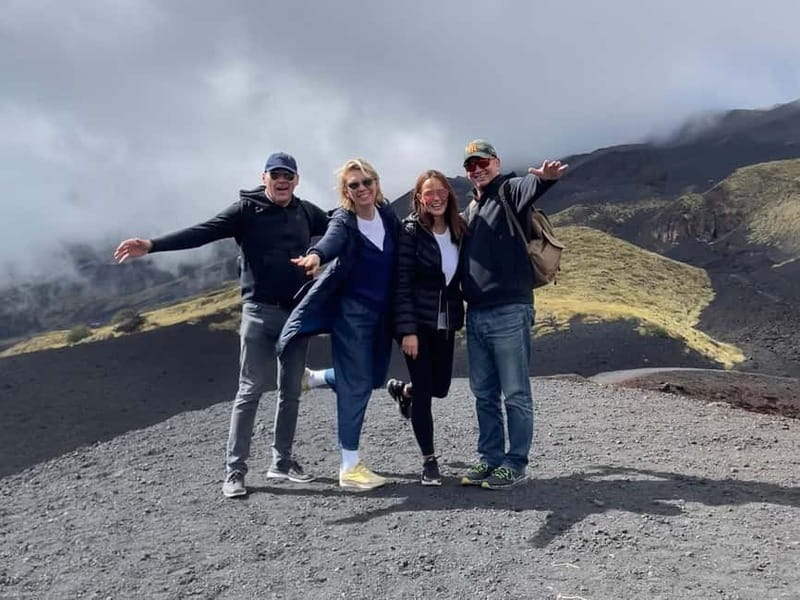
- Walk the 2002 lava flow: see channels and textures tied to the eruption year
- Spot Le Betulle remains: the old hotel area destroyed by the event
- Birch forest on Etna: a cooler-feeling section that breaks up the climb
- Lava channel crossing: you literally pass alongside a volcanic feature before reaching the craters
- Edge-of-crater viewpoints: photo stops with big sightlines over the Ionian coast
- A volcanological guide: you get explanations in Italian or English, not just a scenic stroll
Why Etna’s 2002 craters feel different from a basic volcano view
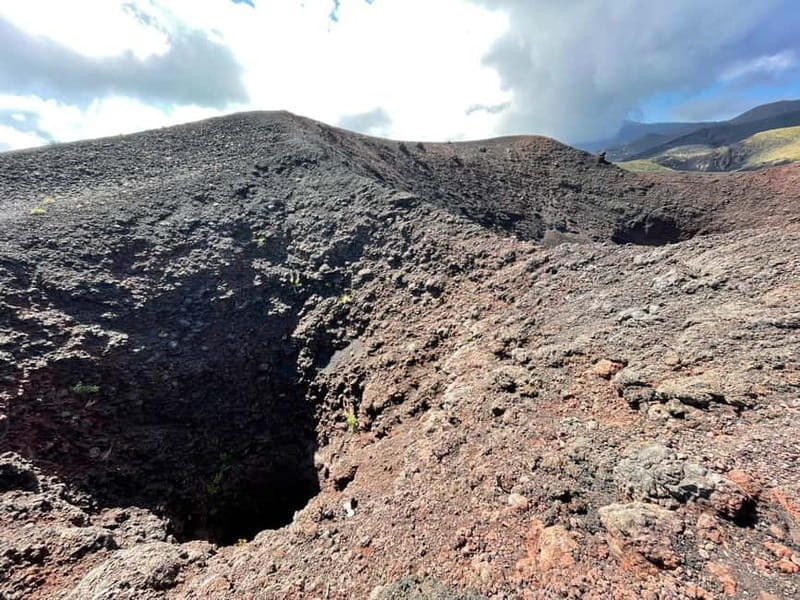
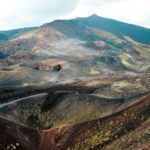
Most Etna moments are about looking out. This one is about walking through the eruption’s aftermath. The route is built around the last four inactive craters of 2002, with you moving between lava flows and channels along the way. That matters, because you’ll connect the scenery to what caused it—how lava moved, where channels formed, and what an “inactive” crater means in real landscape terms.
You also get a nice balance of moods. One stretch is stark and volcanic, then you’re back in the kind of forest light you don’t expect at altitude on a mountain. The birch trees section is more than a pretty intermission—it helps you reset before the final climb to crater edges.
If you’re the type who likes to understand what you’re seeing, this is a strong match. If you only want flat, easy paths, you may find the terrain and incline more demanding than you expected.
You can also read our reviews of more tours and experiences in Catania.
Getting started at Piano Provenzana (and why the meeting point matters)
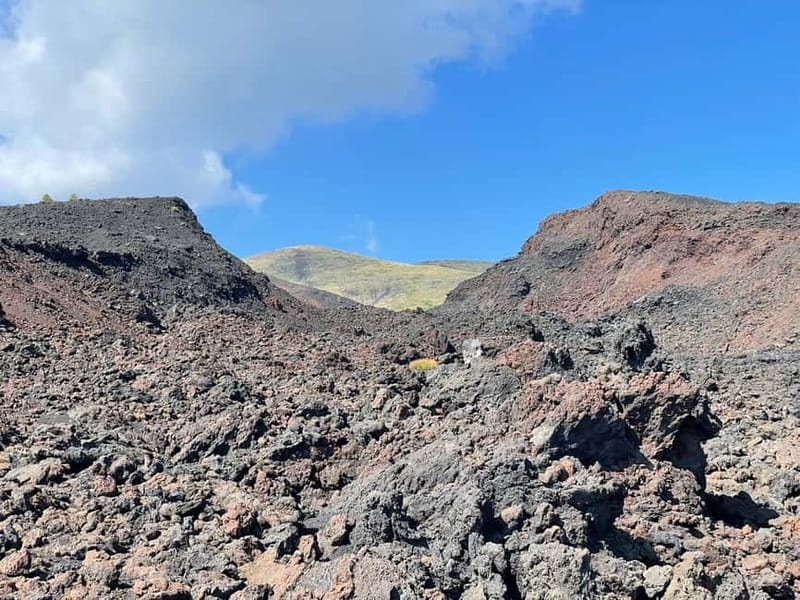
You start on the northern side of Etna, at Piano Provenzana. The activity meets in front of Chiosco bar Etna Nord, then you’re guided through what will happen and what to look for. That short briefing is useful. It sets expectations for the route and helps you spot the key volcanic features as you move.
From there, you begin with a brief section of walking and short transitions. The timing is set up so you’re not constantly in motion for the full two hours. You’ll have a couple of short stops for photos and viewpoints, plus a longer stretch of travel between zones. It’s the kind of pacing that works well when you’re hiking but also want time to look.
Practical tip: start the day hydrated and keep your phone/camera ready. You’ll be stopping often enough that grabbing shots will be easy—but only if you’re not digging for gear during the best moments.
Walking the 2002 lava flow, then seeing Le Betulle up close
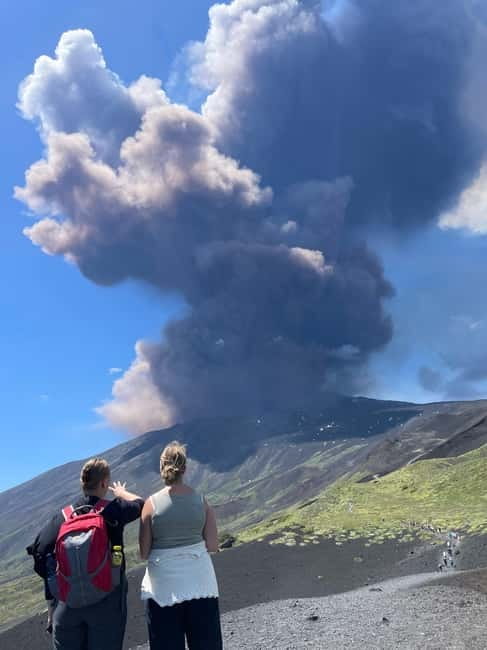
One of the best parts is how quickly the hike connects the dots between eruption and real-world damage. After a few hundred meters, you reach the remains of an old hotel called Le Betulle, destroyed by the eruption.
That detail lands. You’re not just seeing rock; you’re seeing where normal life got interrupted. It also changes how you view the lava flow itself. The ground underfoot isn’t just dramatic—it’s evidence.
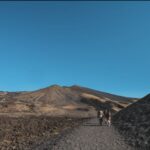
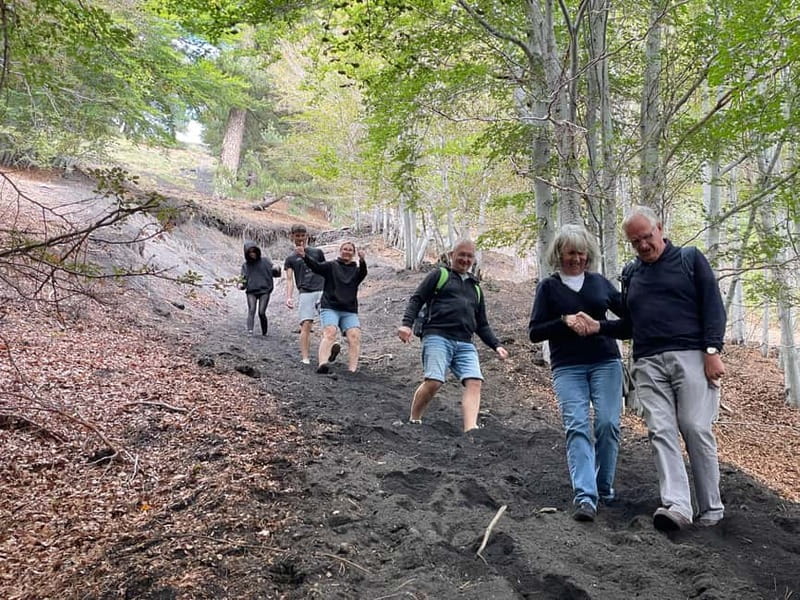
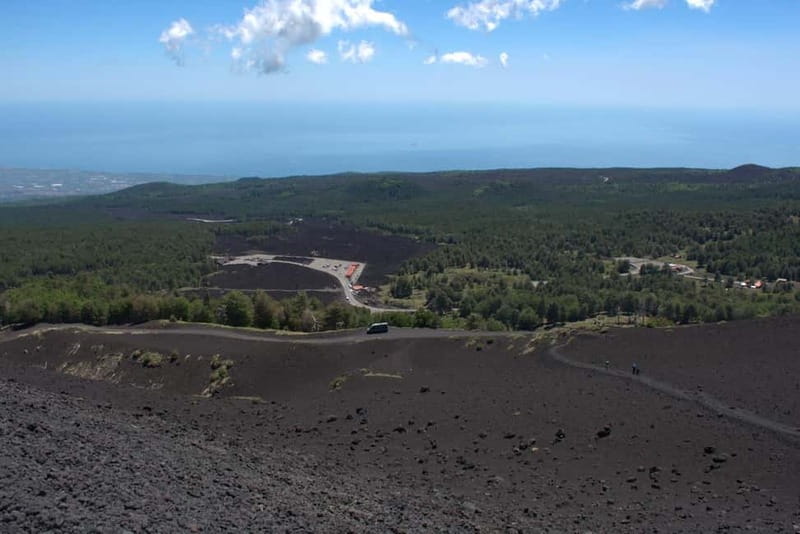
Then you continue along the volcanic terrain. The excursion is built around walking on the 2002 lava flow, and the path takes you past the kinds of features that show where lava traveled and how it shaped the area. You’ll also pass points where you can understand the structure of lava channels—later on you’ll get closer to those features at a larger scale.
The drawback here is simple: this is not a smooth, paved walk. Even if the incline is described as slight, the ground can be uneven. Plan to take your time on steps and footing.
Birch forest time on Etna: a break that still feels volcanic
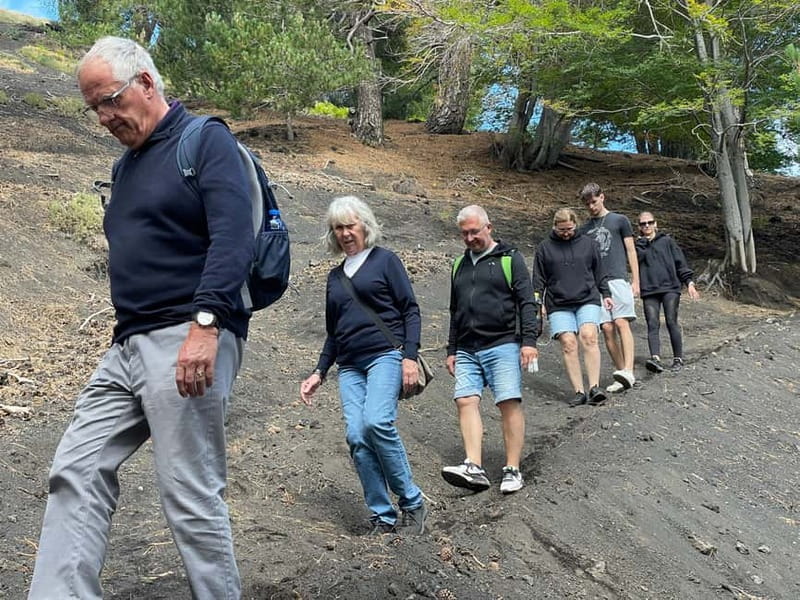
The excursion includes a “magnificent forest” section made of Etna birch trees. This is where the experience gets more human-scale. Instead of staring at raw volcanic shapes the whole time, you move into a softer visual environment with filtered light and a calmer walking feel.
Why I like this part: it makes the hike more comfortable without losing the volcano story. You’re still on Etna, still in the same overall route, but the birch forest gives you a natural pause—good for breath, good for photos, and good for just resetting your brain before the more intense crater-edge segment.
If you’re someone who gets tired faster at the end of hikes, this forest stretch is a smart design choice. It helps the final climb feel manageable.
The lava channel climb: where the hike turns from scenic to meaningful
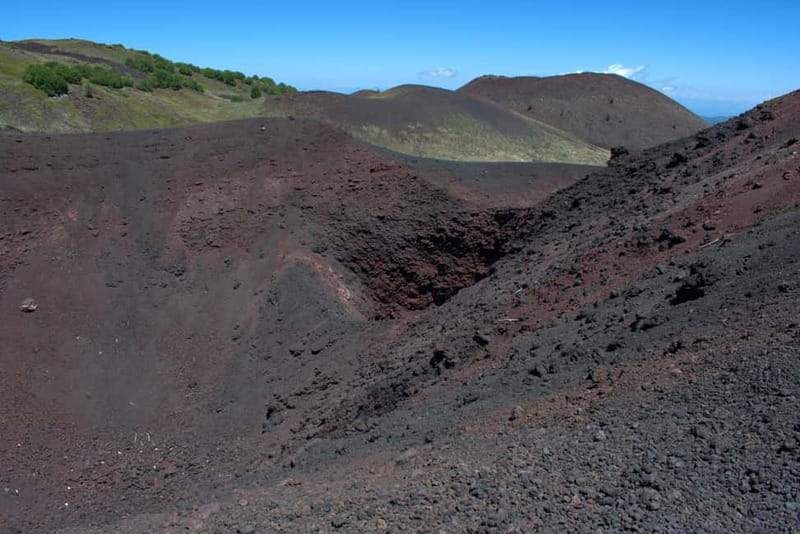
After the birch forest, the route brings you toward a lava channel a few dozen meters wide. This is one of those “you can’t get this from a viewpoint” moments. Passing through and alongside a channel makes the geology practical. You start to see the eruption as a flow system, not just a single explosion.
Then you climb to the edge of the last four majestic inactive craters of 2002. At the crater edge, the hike pays off visually. This is where you get the wide crater views the excursion is known for, plus the sense of being perched right at the boundary between volcanic features and the surrounding landscape.
Expect a bit more exertion here than earlier segments, but the overall hike is still presented as suitable for many people who are comfortable with a moderate walk. Reviews also point out a slight incline and a trail that many find workable.
Ionian coast panoramas: what you’ll see and how to use your photo time
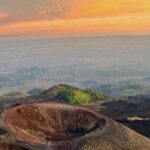
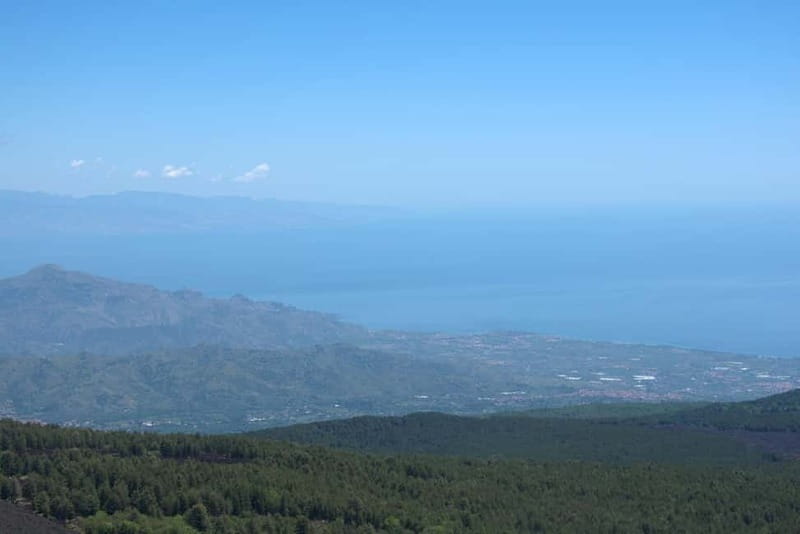
From the crater edge, you’re set up for views over the Ionian coast, including Giardini Naxos, Taormina, and even a sense of direction toward the “tip of Italy” and toward Calabria. That’s a lot to pack into one short outing, and it’s part of why this works as an add-on when you want a volcano day but don’t want to spend half your life hiking.
The itinerary includes photo and viewpoint breaks. You’ll have time to take photos and admire the view at a viewpoint stop, then again during the main crater-edge segment. Use that time smartly:
- Take a wide shot first, so you have context of the coast and crater layout.
- Then go closer for crater textures and the channel lines.
- If the light is harsh, protect your eyes with sunglasses; you’ll likely be staring toward bright sky and darker rock.
This is also a good moment to compare what your guide points out with what you see. A guide’s explanation turns a view into a story you’ll remember.
How the pacing works over roughly 2 hours (transfers included)
The whole experience runs about two hours, and that includes some transitions by vehicle. You start with a short setup period and a walk, then you’ll do a mix of short photo/viewpoint stops and longer transfer time between zones.
Practically, that means you’re not constantly exerting yourself. You’ll walk enough to feel you did something real, but the schedule leaves room for stops and viewing. It’s a good balance for people who want more than a quick look but still want to be back at the meeting point within a morning/afternoon window.
On the way back, you descend and return to Piano Provenzana, ending back at the meeting point in front of Chiosco bar Etna Nord. Don’t rush the descent. Loose volcanic ground can be tricky on the way down, so keep it steady.
Price and value: what $39.86 buys you on Etna
At $39.86 per person, you’re paying for a volcanological guide and a structured walking route that’s built around specific features from the 2002 event. In plain terms: you’re not just buying a spot outdoors—you’re buying someone who helps you read the mountain while you’re on it.
That value shows up in the feedback tied to the guide. The explanations are described as wonderful, and the guide is called friendly and helpful. When a volcano walk includes real interpretation—what you’re seeing, why it matters—that’s what keeps the tour from feeling generic.
Is it expensive compared to walking solo? Sure, if you can read the geology yourself. But most people can’t. This kind of guide-led route saves time, reduces confusion, and makes the crater edge more meaningful than a quick photo stop.
What to pack (and what to avoid) for a crater-edge walk
The essentials are pretty clear, and you’ll feel more comfortable if you follow them:
Bring:
- Sunglasses and sunscreen
- Sun hat
- Closed-toe shoes
- Long pants (recommended)
- A jacket (weather can change on mountains)
- Change of clothes
- Camera
- Food and drinks, plus snacks
- At least 1 liter of water per person
Avoid:
- Swimwear
- Alcohol and drugs
- Shoes indoors (not relevant to you unless you’re changing into something else)
- Costumes
If you’re thinking about layering: pack smart. You’ll likely start cooler and warm up as you climb, so bring a jacket that you can handle on and off during breaks.
Who this excursion suits best (and who should skip it)
This tour is listed as requiring a fair amount of physical preparation. Reviews describe a slight incline and a trail suitable for everyone, but that doesn’t change the fact that you’ll be walking over volcanic terrain.
It’s not suitable for people with:
- heart problems
- respiratory issues
- altitude sickness concerns
- pre-existing medical conditions
- recent surgeries
- people over 287 lbs (130 kg)
- people over 70 years
If you’re generally healthy, comfortable with a moderate walk, and you want a guide-led crater-and-lava experience, this is a solid choice.
If you’re unsure, be honest with yourself about pace and footing. You’ll have stops, but the route still involves climbing to crater edges and descending afterward.
Should you book Etna: Excursion to the Craters of 2002?
I think this is worth booking if you want Etna with context. The mix of 2002 lava flow, Le Betulle remains, birch forest, and the last four inactive craters of 2002 gives you a full story in just two hours. Add the volcanological guide, and you’ll likely come away with more than a view.
You might skip it if you strongly prefer easy, flat walks, or if your health limits make walking and altitude conditions a concern. This is a real outdoor hike with uneven volcanic ground.
If you’re on the fence, ask yourself one question: do you want to learn what you’re standing on? If yes, book it. If you only want a casual panorama, you may be happier with a less structured option.
FAQ
How long is the Etna Volcano excursion?
It lasts about 2 hours.
Where does the tour start and end?
It starts at Piano Provenzana on Etna’s northern side, meeting in front of Chiosco bar Etna Nord, and it ends back at the same meeting point.
What’s included in the price?
You get a volcanological guide and a walking tour.
What language is the guide?
The live guide speaks Italian and English.
How physically demanding is the walk?
The tour requires a fair amount of physical preparation. It includes some incline and climbing to the crater edges, plus walking on uneven volcanic terrain.
What will I see during the walk?
You visit the last four inactive craters of 2002, walk on the 2002 lava flow, pass between lava flows and channels, see the remains of the old hotel Le Betulle, and walk through a birch forest.
Are there photo stops?
Yes. There are viewpoint moments for photos and guided viewing, including at the crater edge.
What should I bring?
Bring sunglasses, a sun hat, sunscreen, closed-toe shoes, a jacket, a change of clothes, a camera, and enough food and drinks. The guidance recommends at least 1 liter of water per person.
What is not allowed during the tour?
Swimwear, alcohol and drugs, and costumes are not allowed.
Is the tour suitable for everyone?
No. It’s not suitable for people with heart problems, respiratory issues, altitude sickness, pre-existing medical conditions, recent surgeries, people over 287 lbs (130 kg), or people over 70 years.