REVIEW · MODICA
Modica private tour: the chocolate town in Sicily
Book on GetYourGuide →Operated by Italygonia Travel T.O. · Bookable on GetYourGuide
Modica runs on chocolate and stairs. This private walk through UNESCO-listed Modica is all about late Baroque sights in two levels of town, plus a real chance to taste the kind of chocolate people actually come here for. I love the theatrical San Giorgio cathedral setting and the 254-step approach, and I also love that you get a guided chocolate tasting instead of wandering around guessing where to start.
Two hours can feel short if you like to stop for photos at every view, and the route does involve lots of uphill walking and stairways through tight old lanes. Still, that effort pays off because you’re seeing Modica the way it was meant to be seen: from above, then down into the street life of the lower town.
You’ll start in Modica Alta, then work your way toward Modica Bassa, with stops at two major churches—Cathedral of San Giorgio and Cathedral of San Pietro—plus key historical beats along the way. The best part is how your guide connects architecture, local legend, and everyday food culture into one walk you can actually finish without burning your day.
In This Review
- Key highlights you’ll feel on the walk
- The split town idea: Modica Alta above, Modica Bassa below
- Starting at Cathedral of San Giorgio and its 254-step approach
- How your guide reads the facade and the interior at San Giorgio
- Walking the alleys: viewpoints that feel like a scene
- Castle of the Counts: medieval leftovers on top of the rock
- Modica Bassa and Salvatore Quasimodo’s birthplace museum
- Cathedral of San Pietro: late Baroque stairs and the twelve apostles
- Corso Umberto I: chocolate culture right where you end up
- Price and value for a private 2-hour Modica walk
- What to wear and expect in just two hours
- Who should book this Modica private tour
- Booking this Modica private tour: should you do it?
- FAQ
- Where does the Modica private tour start?
- How long is the tour?
- Is this a private group tour?
- What languages are offered?
- What’s included in the price?
- Is food and drink included?
- Is there free cancellation?
- Is there a way to book without paying right away?
Key highlights you’ll feel on the walk
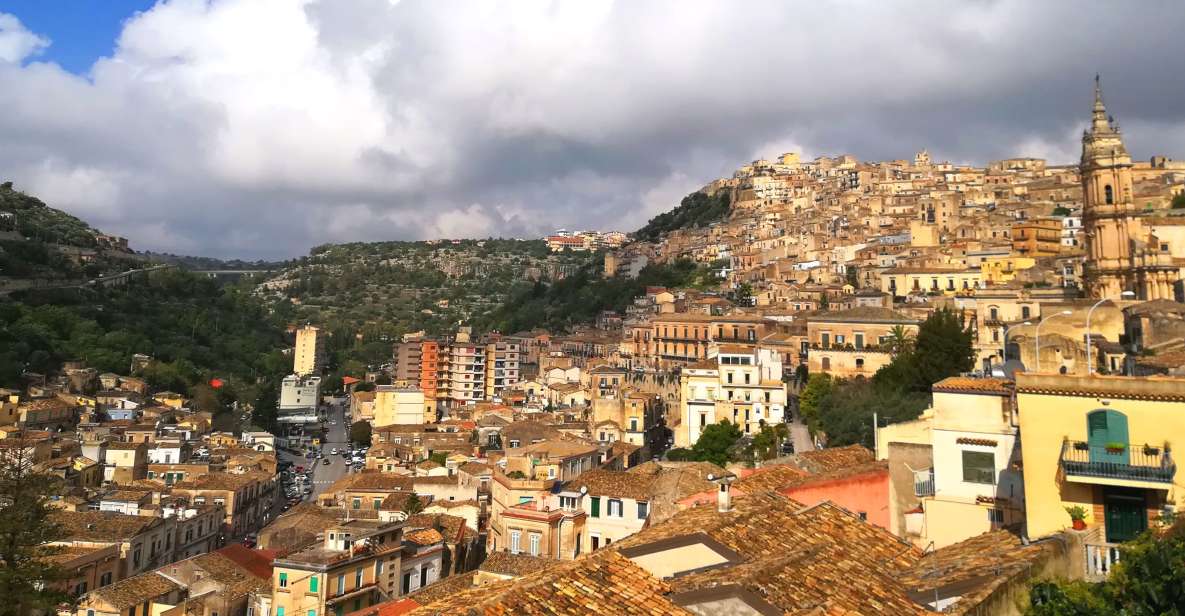
- San Giorgio’s 254 steps leading up to Modica Alta’s Baroque showpiece, with hanging gardens and jasmine and bougainvillea
- Inside details at San Giorgio, including a sundial, the Holy Ark, and relics of San Giorgio
- Epic viewpoints between Alta and Bassa, where the lower town views can feel like a Nativity scene
- Castle of the Counts area, with remains perched above the street level and a clock tower built on an older watchtower
- Cathedral of San Pietro, late Baroque, famous for its stairs and statues of the twelve apostles
- Chocolate tasting and street-level time on Corso Umberto I, Modica Bassa’s main ribbon of shops and food
The split town idea: Modica Alta above, Modica Bassa below
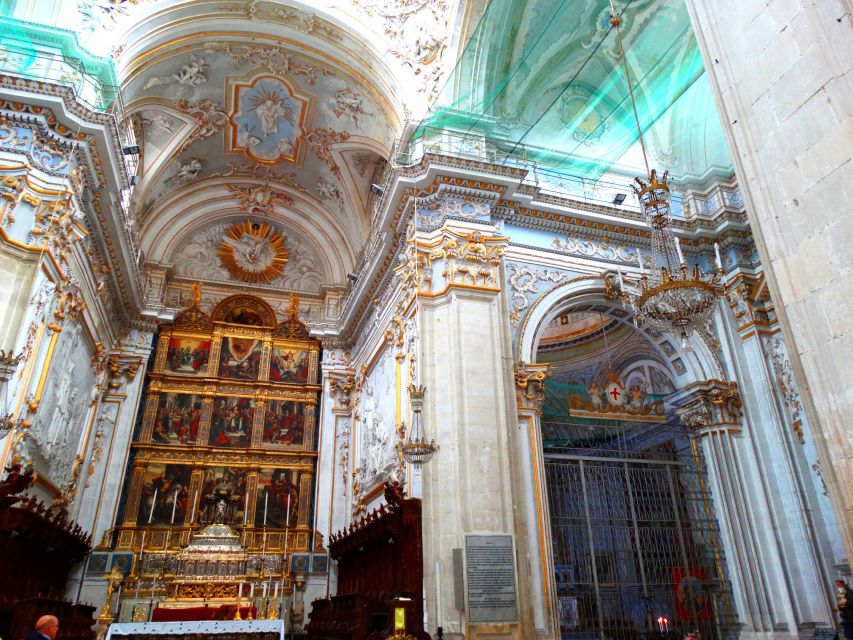
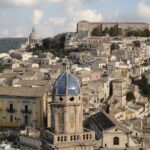
Modica is one of those Sicilian places that makes you slow down without anyone telling you to. The town is built in two main parts: Modica Alta up on higher ground, and Modica Bassa below it. When you do a guided walk across both, you start to understand why the architecture looks so theatrical—churches, staircases, and viewpoints were designed for seeing and being seen from different elevations.
This is also why this tour format works so well. Instead of trying to cram everything into a car or a long day trip, you get the sweep of the city in a controlled 2-hour loop. You get the upper-town Baroque landmarks first, then descend into the lower town where daily life and food shops cluster around Corso Umberto I.
You can also read our reviews of more tours and experiences in Modica.
Starting at Cathedral of San Giorgio and its 254-step approach
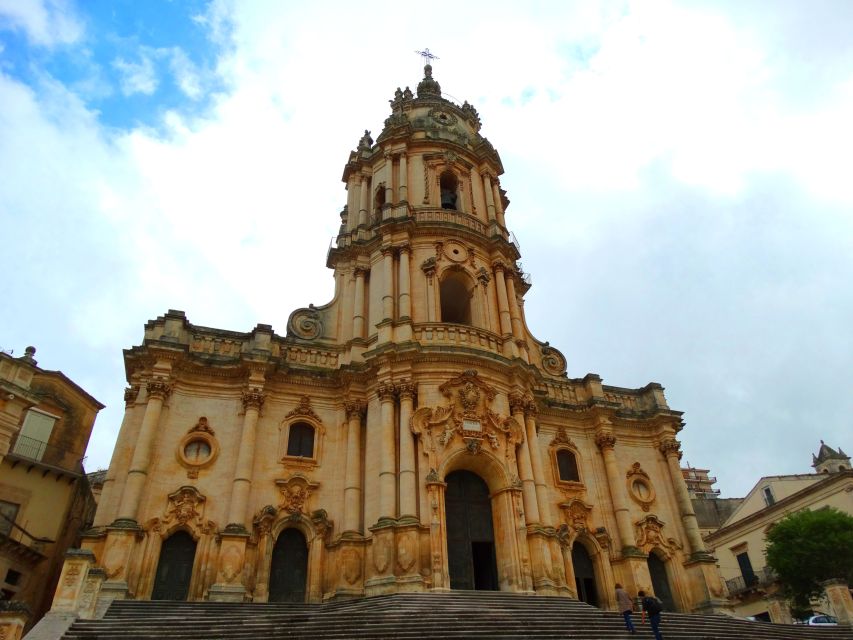
Your tour starts at the stairway of Cathedral of Saint George on Corso S. Giorgio street. Look for the licensed guide badge around the neck—clear, visible, and easy to spot once you know what to look for. From the first minutes, the tour feels like it’s built around one main wow factor: the way the cathedral and its approach dominate Modica Alta.
San Giorgio’s setup is the definition of Sicilian Baroque drama. The cathedral sits at the top of an extravagant staircase of 254 steps. Along that ascent, you’ll also notice hanging garden effects with bougainvillea and jasmine—details that make the climb feel like more than just getting from point A to point B.
You’ll also hear about the building’s origins and character. The church was built in the 1700s, and the facade is described as taking on an amber color at sunset. Even if your timing isn’t perfect for that glow, it’s still helpful to understand the idea—Baroque buildings weren’t just constructed to be looked at; they were designed for how light and color change through the day.
How your guide reads the facade and the interior at San Giorgio
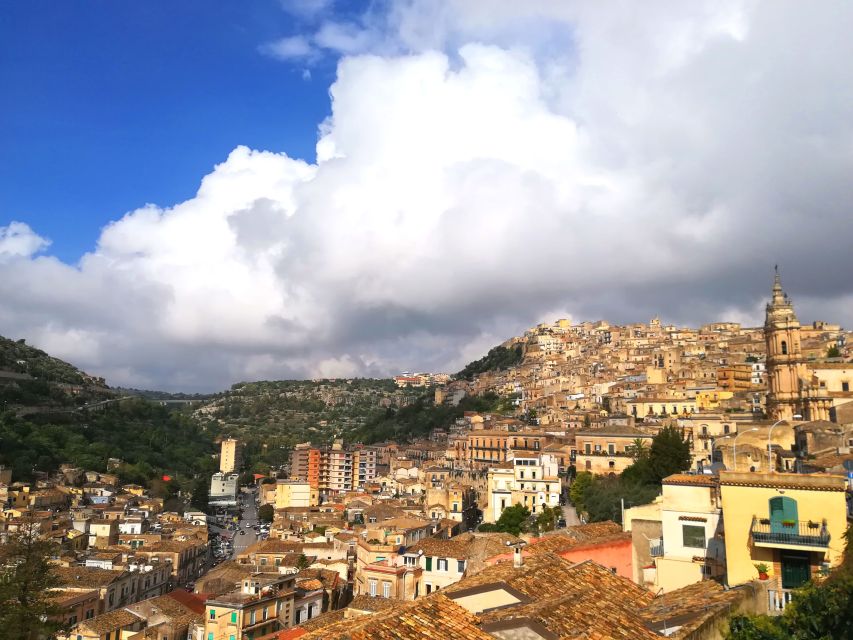
The key to enjoying San Giorgio is not just seeing it once, but learning how to look at it. Your guide points out the kinds of details that most people miss when they’re rushing for photos. For example, inside the cathedral you can find a sundial, the Holy Ark, and relics of San Giorgio. There are also stuccos and works of art that reward a slower gaze.
Why that matters: Modica’s Baroque style can look like visual noise if you don’t get a quick roadmap. With a guide, the decorations become functional storytelling—symbols, religious artifacts, and design choices that explain what the community valued. And because Modica is a UNESCO World Heritage site tied to late Baroque town planning, this kind of context turns a pretty church into something you actually understand.
If you’re traveling with teens or anyone who says architecture is boring, this is usually where the conversation flips. The combination of stairs outside and objects inside gives people multiple entry points. Also, the tour’s pace keeps you from standing in one spot too long.
Walking the alleys: viewpoints that feel like a scene
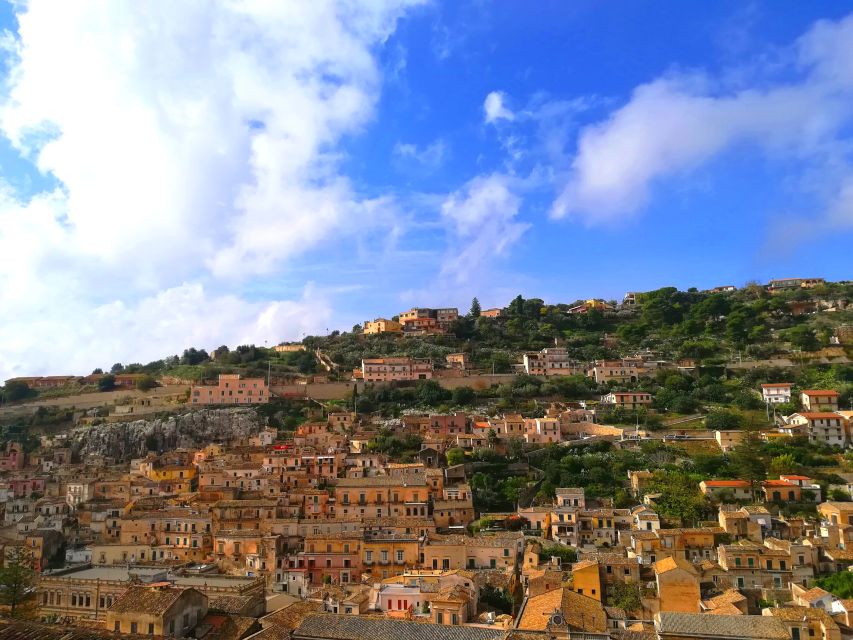
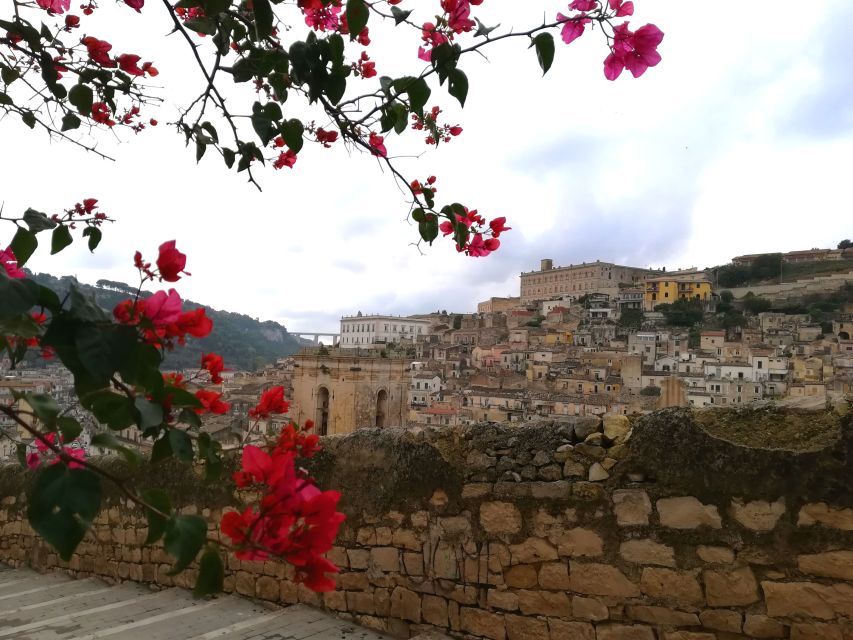
After San Giorgio, the tour shifts to street-level reality. You walk through the narrow alleys and stairs that connect the higher and lower parts of town, and you’ll be shown panoramic views down toward Modica Bassa. The description is specific: the lower town views can resemble a Nativity scene, which is exactly the kind of visual that makes you stop and actually look instead of just scrolling your camera.
This segment is less about one single monument and more about learning Modica’s “why.” The city’s layout funnels your movement along stairways and cut-through lanes, so your sense of the place grows from experience rather than a map. You also see the emotional side of Baroque town planning—churches aren’t isolated; they’re part of a walkable theater.
Practical note: this part includes tight spaces and uneven steps. If you’re bringing kids, elderly relatives, or anyone with mobility limits, you’ll want to think about whether they can handle constant stairs for a couple of hours. The tour is only 2 hours, but it’s not a flat stroll.
Castle of the Counts: medieval leftovers on top of the rock
As you continue down, you’ll spot remains of the Castle of the Counts. It’s perched on top of a rock above the town, with a clock tower that was built on the remains of a watchtower. That detail helps you connect different time periods: medieval defense structures layered into a city that later became famous for Baroque church architecture.
This stop is short but meaningful, because it gives Modica a deeper timeline. You’re not just moving from church to church; you’re tracing how power and building styles changed. A clock tower on older watchtower remains is the kind of physical reminder that this place didn’t start as a tourist town—it started as a stronghold and a settlement that kept rebuilding.
If you like history that’s visible rather than read in a book, you’ll appreciate this. And if you don’t, it still works because it gives you a mental break between cathedral stops.
You can also read our reviews of more tours and experiences in Modica
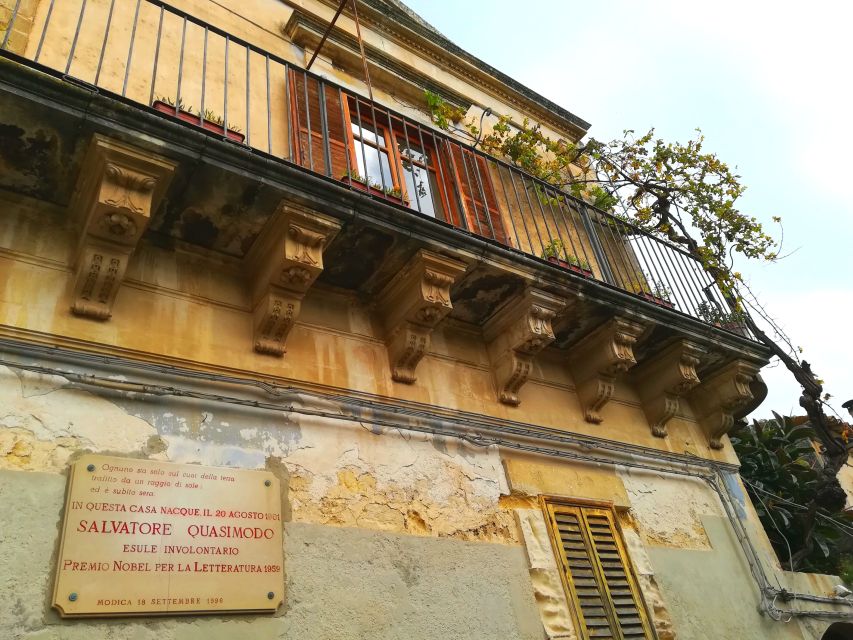
Modica Bassa and Salvatore Quasimodo’s birthplace museum
Next you’ll reach Modica Bassa and the birthplace of Salvatore Quasimodo, which has been turned into a museum. This is a great pivot point for anyone who wants more than churches and views. It connects Modica to Italian literature and gives you a sense of the town producing notable voices, not only Baroque architects.
Important reality check: the tour description doesn’t specify how long the museum visit lasts or what you’ll see inside, so I’d treat this as a focused stop rather than a long museum detour. Still, it adds variety to the walk and breaks up the heavy visual repetition of facades and staircases.
If you enjoy blending culture with food towns, this stop also helps explain why Modica has stayed interesting. It’s not only a chocolate brand or a photo stop—it’s a lived-in city with artists, writers, and local identity.
Cathedral of San Pietro: late Baroque stairs and the twelve apostles
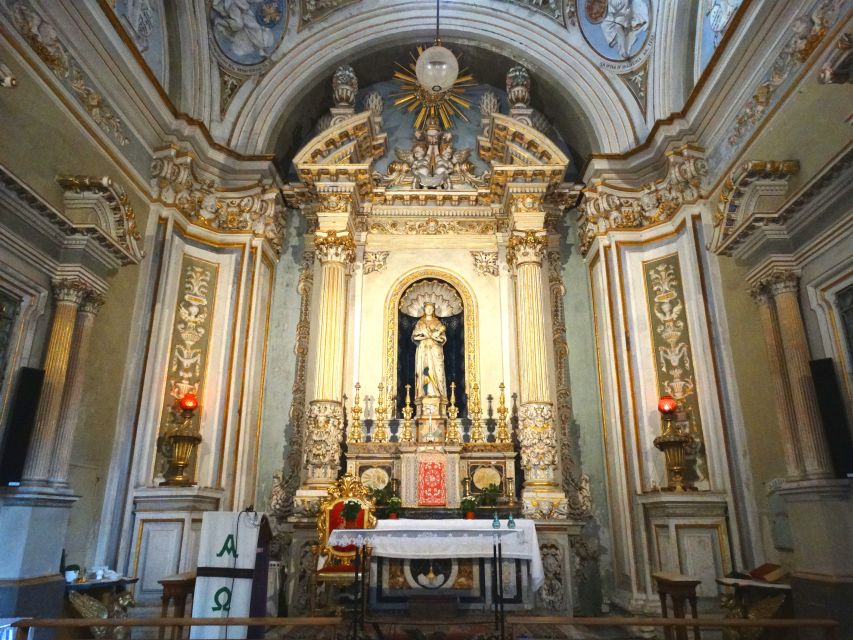
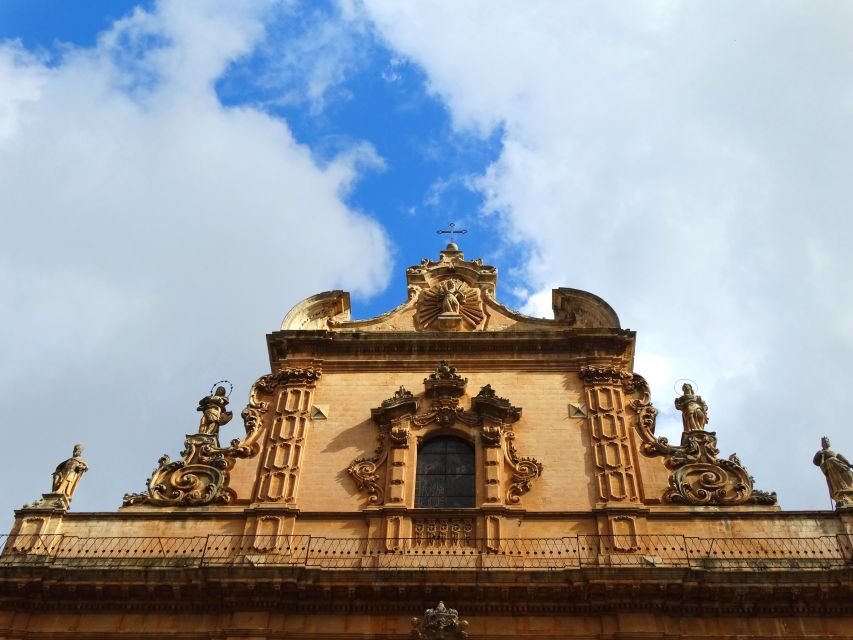
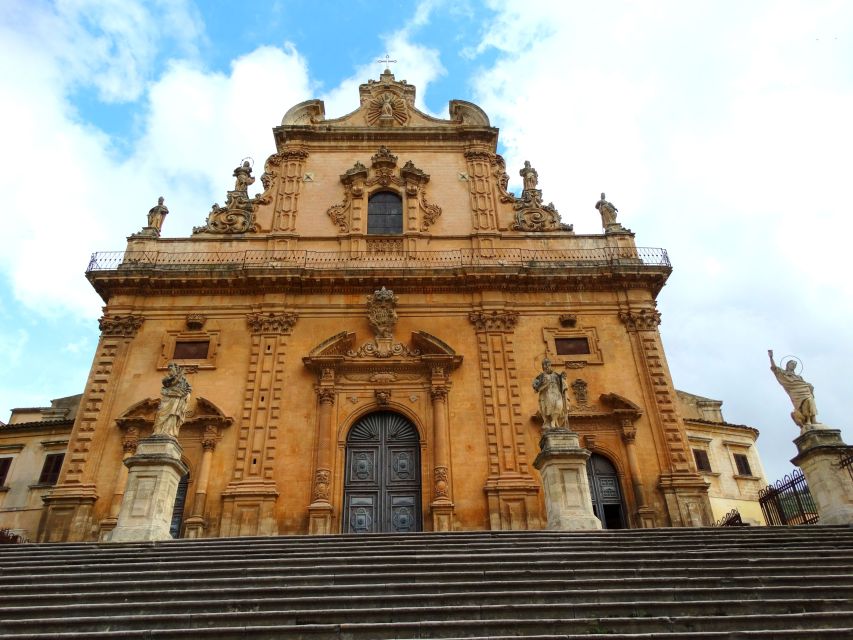
The highlight of Modica Bassa is often Cathedral of San Pietro, and the tour gives you the reasons right away. It’s another late Baroque monument, made even more dramatic by the staircase with statues of the twelve apostles. That’s the kind of composition that grabs you instantly: a stairway as a stage, figures placed to guide your attention upward.
Inside, you’ll see aisles decorated with white and polychrome marble, plus frescoes of the Old and New Testament. This is where your guide’s role really matters. With someone telling you what you’re looking at—what the frescoes represent, how the marble and color work together—the cathedral becomes a real experience rather than just a pretty interior.
One consideration: if you’re a big fan of quiet churches, know that this is a popular city stop. You’ll likely experience it as part of a guided flow. That’s not bad; it just means don’t plan on a long, silent browse.
Corso Umberto I: chocolate culture right where you end up
Your tour wraps along Corso Umberto I, the main street of Modica Bassa, where Cathedral of San Pietro is located and where local shops sell typical food and souvenirs. This is where you get to turn what you learned into something you can buy, taste, and remember.
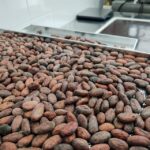
The tour includes chocolate tasting, and that’s a big part of why Modica earns its reputation. Local chocolate here isn’t just a generic souvenir. It’s part of the town’s identity, and your tasting gives you a baseline so you can shop with confidence afterward.
What about food like ravioli alla ricotta or cannoli alla ricotta? The tour data points to these as typical Sicilian options connected to the local flavors. Since food and drink aren’t included, you should treat those as recommendations to pursue on your own right after the tour—or as things your guide can point you toward for lunch.
Price and value for a private 2-hour Modica walk
The price is $344.39 per group, up to 25 people, for a 2-hour private tour. That pricing structure matters. If you’re traveling solo or as a couple, it can feel steep for two hours. But if you’re a group of friends, a family with multiple people, or you’re booking for a larger party, the per-person cost drops fast.
Is it worth it? In my view, it is when you care about two things:
- You want someone to connect the dots across Modica Alta and Modica Bassa so the Baroque details make sense.
- You want a shortcut to the good chocolate experience without spending your time hunting.
The guide is licensed and the tour is multilingual (Italian and English), which also reduces the risk of misunderstanding what you’re seeing. And because you’re moving through the city on foot with a structured route, you’re buying time and clarity, not just narration.
If you’re the type who loves to wander without structure, you can still do Modica on your own. But you’ll spend more time figuring out what matters, and you’ll likely skip some of the specific interior details (sundial, Holy Ark, relics) that add real value to the stops.
What to wear and expect in just two hours
This tour is short, but you don’t get to forget that Modica is built on stairs. Expect uphill walking, narrow lanes, and classic “city steps” that can be slick if the weather turns.
For comfort, I’d wear walking shoes with grip and plan to dress for sun or shade. Bring a water bottle if you need it; the tour includes guidance and chocolate tasting, but food and drink aren’t included. Also, if you’re someone who gets photo-spot serious, give yourself permission to pause. The good views are part of the deal, especially while moving from the higher town toward the Nativity-like perspectives of the lower town.
One more practical detail: the tour ends back at the meeting point. So even though you move across Modica, you’re not left stranded across town after the cathedrals and chocolate.
Who should book this Modica private tour
I think this tour is perfect for:
- Couples and small groups who want the highlights without planning every step.
- People who love Baroque architecture but want quick context instead of reading plaques.
- Food-minded travelers who want a real chocolate introduction and then time to explore shops on Corso Umberto I.
- Anyone who appreciates history that’s visible in the city fabric, from the Castle of the Counts remains to the churches’ interior artifacts.
It’s less ideal if your group is looking for a relaxed, flat walk with minimal steps. The route’s charm is also what makes it physically demanding.
Booking this Modica private tour: should you do it?
If you want a focused introduction to Modica that covers both halves of the city, this tour is a strong choice. You get the big Baroque landmarks—San Giorgio and San Pietro—plus historical context through the castle remains and Quasimodo’s birthplace museum, and you finish with chocolate culture on Corso Umberto I.
I’d book it when you want to make the most of a short visit to Sicily and you’d rather spend your energy looking at cathedrals than figuring out directions. For me, that mix of structured walking, meaningful interior details, and included chocolate tasting makes it good value for the time you’re spending.
If you’re only in Modica for a quick stop and you’re physically limited on stairs, then consider how much you can realistically handle in two hours. Otherwise, this is exactly the kind of town-walk experience that turns a checklist trip into a story you remember.
FAQ
Where does the Modica private tour start?
It starts at the stairway of Cathedral of Saint George (on Corso S. Giorgio street). The guide will have a visible license badge around the neck.
How long is the tour?
The tour lasts 2 hours.
Is this a private group tour?
Yes. It’s a private group tour, priced per group up to 25 people.
What languages are offered?
The live tour guide is available in Italian and English.
What’s included in the price?
The tour includes a licensed tour guide and a multilingual tour.
Is food and drink included?
Food and drink are not included. The tour does include chocolate tasting, and your guide can help you with nearby food options.
Is there free cancellation?
Yes, you can cancel up to 24 hours in advance for a full refund.
Is there a way to book without paying right away?
Yes. There’s an option to reserve now & pay later, with payment due later.