REVIEW · MONREALE
Monreale Cloister Ticket with Audio App
Book on GetYourGuide →Operated by GetYourGuide Tours & Tickets GmbH · Bookable on GetYourGuide
Monreale’s mosaics are a whole story. This self-guided audio experience takes you into one of Sicily’s most famous Norman sites, then slows you down in the cloister where the Bible scenes play out across arches and columns. I especially like how the audio helps you read what you’re looking at, instead of just pointing at pretty walls.
The second thing I really like is the cloister layout itself: four sides, 26 arches per side, and 228 columns—so you can pace it without rushing. One possible drawback: the ticket details say you’ll enter the Cloister of Santa Maria Nuova, but cathedral entry isn’t listed the same way, so you’ll want to confirm what’s covered when you exchange your voucher.
In This Review
- Key takeaways before you go
- Getting to Piazza Guglielmo il Buono and picking up your voucher
- What this ticket really covers: cloister entry + audio app
- Monreale Cathedral mosaics: what to look for with the audio
- The cloister arcade: 4 sides of 26 arches and 228 columns
- How the pillar scenes work as you walk
- The fountain courtyard: a place to breathe and take photos
- Timing that keeps you from rushing: opening hours and last entry
- Duration in real life: how long this feels once you listen
- Price and value: what $13 buys you in Monreale
- Who should book this (and who might skip it)
- Practical tips that make the audio experience work
- Should you book? My take
- FAQ
- What’s included with the Monreale Cloister ticket and audio app?
- Where do I start, and where does the activity end?
- Do I need to exchange a voucher before going in?
- What are the cloister opening hours?
- What’s the last entry or last admission time?
- Is this activity wheelchair accessible, and is there a live guide?
Key takeaways before you go
- Audio-first storytelling: it’s built for you to stop, look up, and understand the mosaics and saint scenes as you walk.
- Benedictine cloister design: the “four sides / 26 arches / 228 columns” setup makes the slow walk feel structured, not endless.
- Bible and saint imagery close-up: you’ll see scenes carried on pillars and framed by the arcade rhythm.
- A calmer courtyard break: the fountain and planted areas give you a natural pause point for photos and rest.
- Time matters: last entry is 1 hour before closing, with last admission 15 minutes before the doors fully shut.
Getting to Piazza Guglielmo il Buono and picking up your voucher
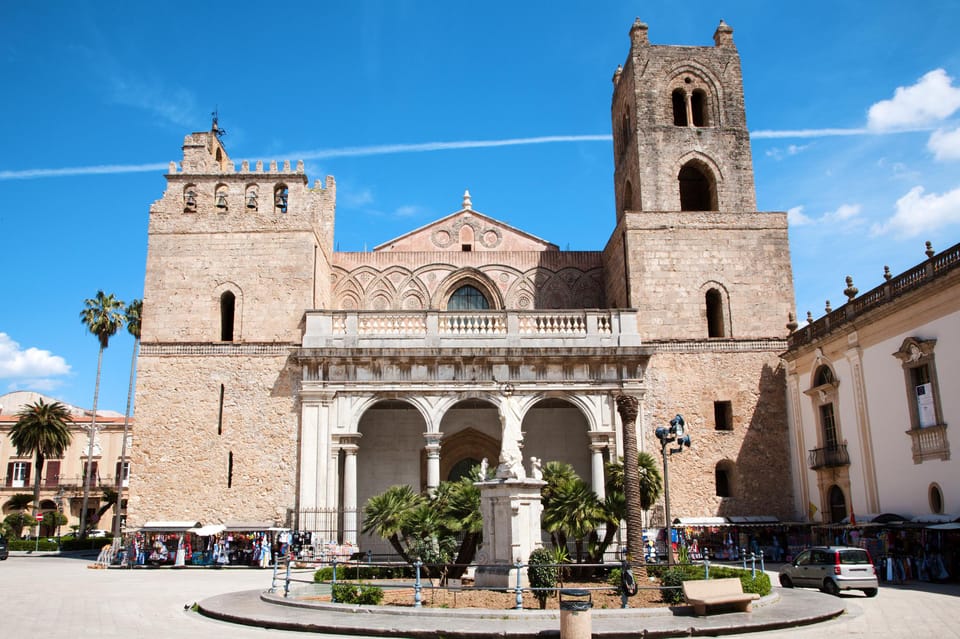
Your start point is Piazza Guglielmo il Buono, Monreale (PA), and the activity ends back there. Since this is voucher-based, the first real step is exchange—you must swap your voucher at the ticket office before you go in.
I suggest building in a few extra minutes for that exchange, especially if you’re arriving near opening or later in the day. Once you’re inside, this experience works best when you can take your time—so you’ll feel the value more if you start calmly, not stressed.
You can also read our reviews of more tours and experiences in Monreale.

What this ticket really covers: cloister entry + audio app
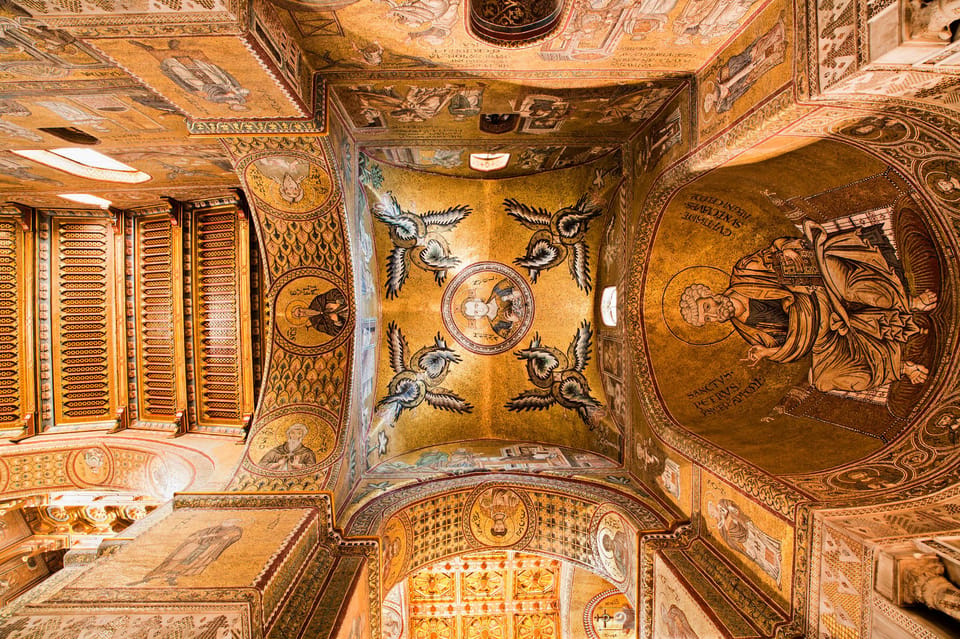
The experience is described as exploring Monreale Cathedral and the Cloister of Santa Maria Nuova with a combined ticket and audio guide. In the inclusions, it specifically lists entrance to the Cloister of Santa Maria Nuova plus the Monreale Audio App.
So here’s the practical move: when you exchange your voucher, ask the ticket office one simple question—does your ticket include cathedral entry, or is it just the cloister with audio coverage? That way, you don’t end up standing outside a doorway wondering if you’re missing a piece.
Either way, you’re getting the best part of the plan: the audio app, which is designed to interpret what you see—saints, Bible scenes, and the meaning behind the mosaics.
Monreale Cathedral mosaics: what to look for with the audio
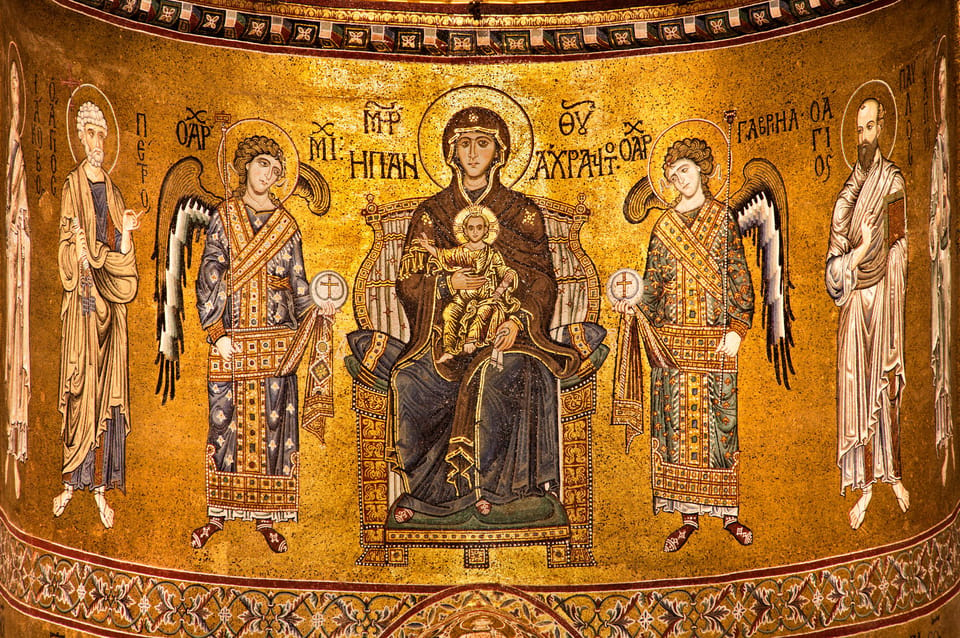
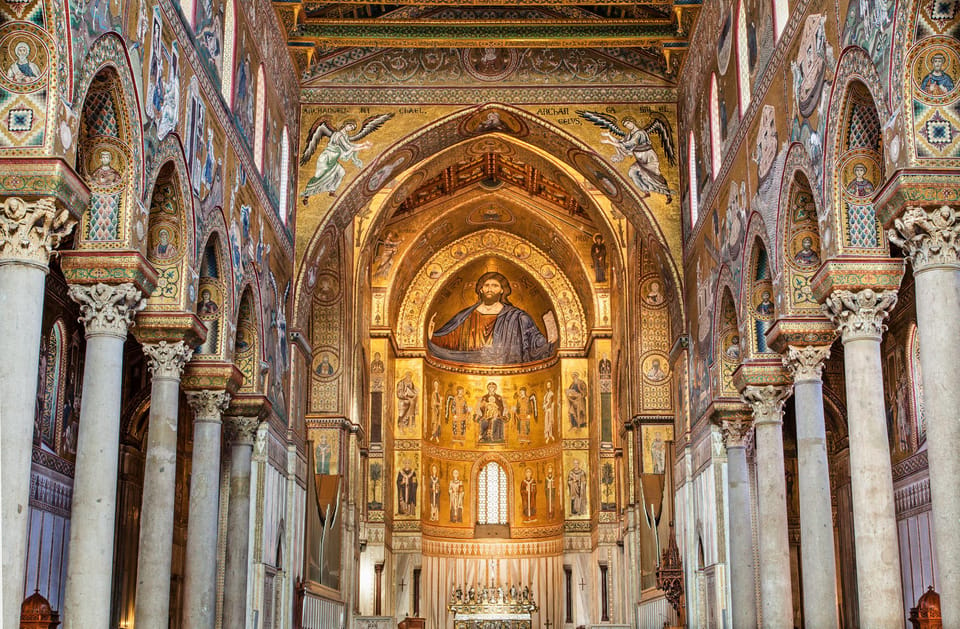
Monreale Cathedral is 12th-century and connected to William II of Sicily, and it’s considered a major example of Norman architecture in the world. The big reason people come is the mosaics: they cover the interior and tell stories through images of the Bible and the lives of the saints.
With an audio guide, the trick is to slow down just enough to let the explanations shape your viewing. Instead of treating the mosaics like a single wall of gold, you’ll hear what each area is trying to communicate—who the figures are, what scene you’re looking at, and how the layout “reads” in sections.
If you’re the type who likes to understand before taking photos, you’ll likely enjoy this format. If you prefer to roam freely with no commentary, the audio can feel like it’s nudging you to follow a path.
The cloister arcade: 4 sides of 26 arches and 228 columns
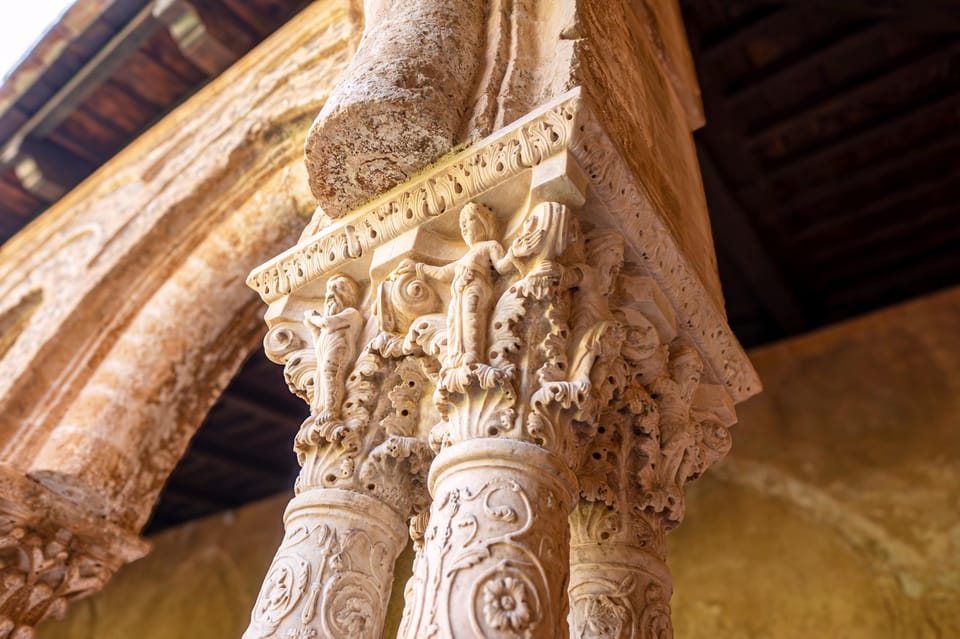
Then you shift to the cloister, the part people often talk about for good reason. The cloister is one of the finest in Italy, built as a Benedictine Cloister, and described in terms that make the scale easy to grasp: four sides, 26 arches long on each side, and 228 columns supporting the arcade.
That number talk isn’t just trivia. It helps you understand why the cloister feels so “walkable.” With this design, you can move segment by segment—one arch, one column group, one set of scenes—without losing your place.
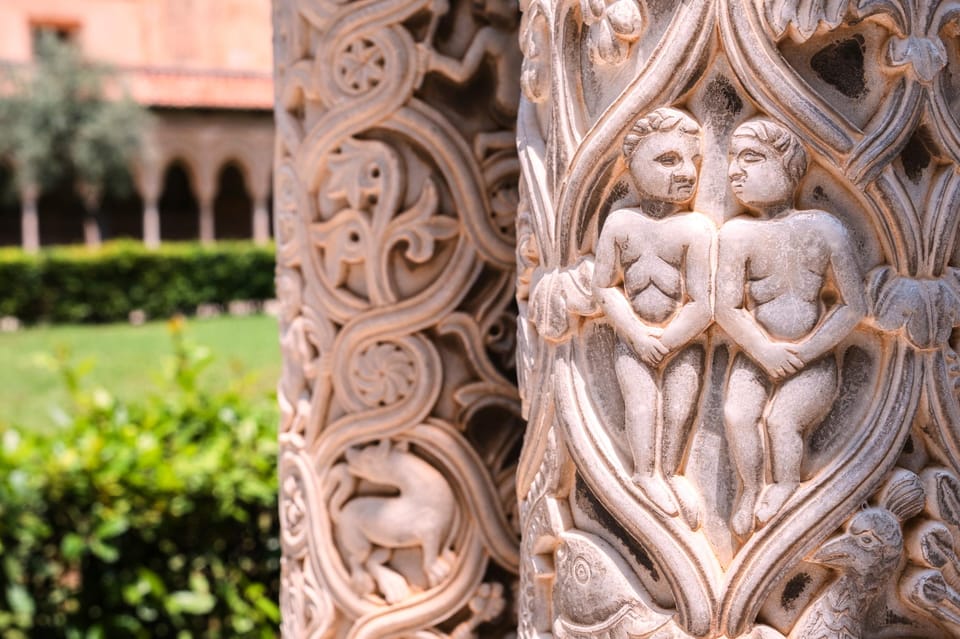
The artisanship is also described as a blend: the cloister reflects the prowess of Arab and Byzantine artisans. When the audio points this out, it’s easier to see the style choices as more than decoration. You start noticing the influences in the way figures, patterns, and framing feel related yet distinct.
How the pillar scenes work as you walk
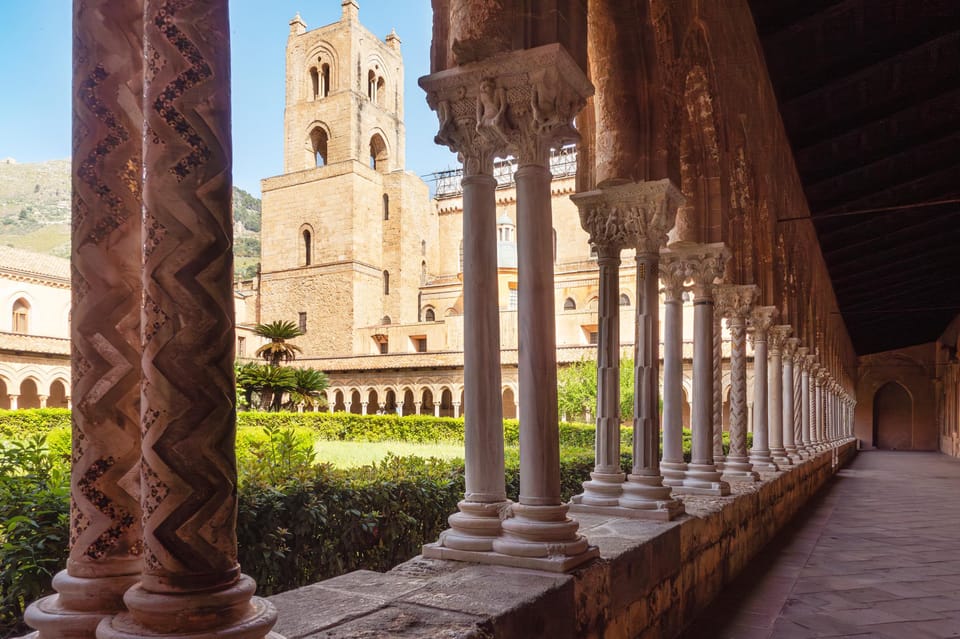
One of the most satisfying things about this cloister is that it isn’t just architecture; it’s storytelling. The description explains that you can explore each pillar as scenes unfold—Bible stories and saints’ lives carried through the sculptural and mosaic-like program.
With a self-guided app, your job is simple:
- Stop where the figures are clearest.
- Let the audio catch up before you move on.
- Then walk to the next pillar cluster and compare what changes.
That rhythm is what makes the cloister experience feel personal. You can spend two minutes in one segment and five in another, depending on what the audio is telling you.
Possible mismatch: if you want a group pace or a live guide to answer questions on the spot, this format will feel less interactive. The audio helps, but it can’t respond to your curiosity in real time.
The fountain courtyard: a place to breathe and take photos
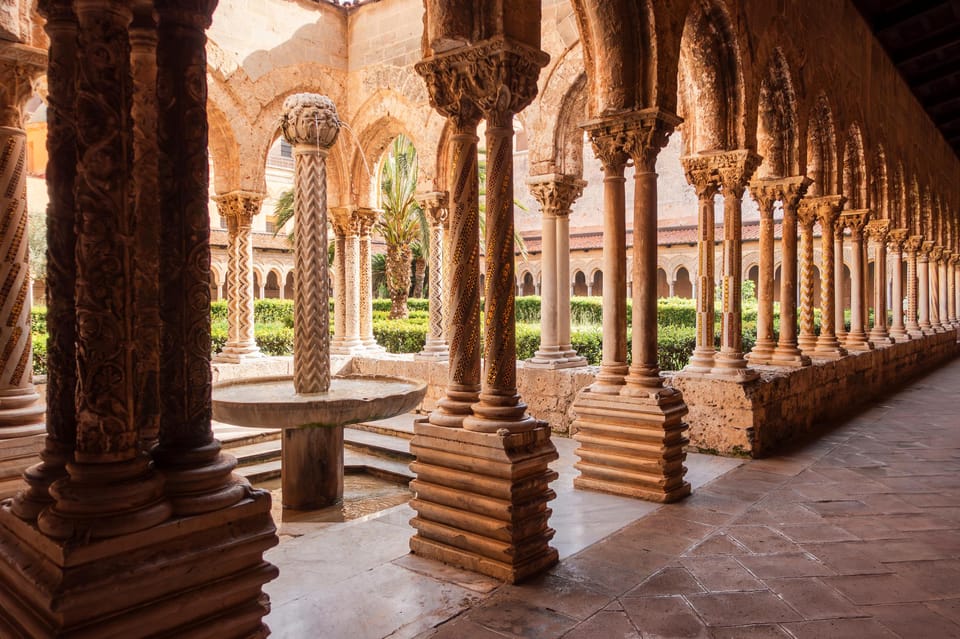
At the center of the cloister experience, you’ll find a fountain, surrounded by lush vegetation. This is the spot where the energy changes from “look up and interpret” to “look around and slow down.”
I like using the fountain area as a reset. After you’ve been reading columns and scenes, the greenery gives you a visual break. It’s also a practical photo moment because the fountain creates a focal center while the arcade frames it from the sides.
Even if you’re not a photographer, this is where you’ll likely pause naturally—because a courtyard with trees and water invites a slower pace than stone corridors.
Timing that keeps you from rushing: opening hours and last entry
Your ticket is valid for 1 day, with starting times depending on availability (so check what’s offered on your date). The cloister opening hours listed are:
- Monday to Saturday: 9:00 – 19:00
- Sundays: 9:00 – 13:00
Now the part that affects your day the most:
- The last entry is 1 hour before closing.
- Last admission is 15 minutes before closing.
Those two rules can be easy to misread, so I’d plan conservatively. Aim to be at the entrance and through the exchange/check process well before the 1-hour mark, and don’t plan on finishing right at closing time. If you’re hoping to take photos, linger with the audio, and walk the whole arcade route, you’ll want extra margin.
Because Sunday hours are shorter, I’d treat Sunday as a “morning visit” if you can. You’ll get more of the cloister’s story without feeling time pressure.
Duration in real life: how long this feels once you listen
The booking says the activity lasts with one-day validity, but your actual time on site depends on your listening pace. If you treat it like a quick walk, you’ll still see the highlights. If you listen actively—stop at pillars, wait for explanations, then move—you’ll likely need a relaxed stretch of time.
For me, this is the kind of site where slowing down improves the value. The mosaics and saint/biblical scenes aren’t just background. The audio turns them into a guided sequence, and the sequence works best at walking speed.
Price and value: what $13 buys you in Monreale
At $13 per person, you’re paying for two things: access to the cloister and the Monreale Audio App. The pricing is fairly lean for a site that includes structured, interpretive content (the app) and a long architectural walk (the cloister arcade).
Here’s how I judge the value for you:
- If you like architectural storytelling and will actually use the audio, the cost feels justified.
- If you hate audio tours and will only glance at things, you might feel like you paid for a tool you didn’t use.
Also consider that there’s no live guide included. That makes the experience more flexible for your schedule, but it also means you won’t get spontaneous answers. The app is doing the work instead.
And one more reality check: the experience has a 3.1 rating based on 31 reviews. That’s not a disaster, but it does suggest mixed satisfaction. The most likely reasons are common for self-guided attractions: people either want more guided help, or they run into confusion about what’s included (especially since cathedral entry is mentioned in the description but not clearly listed in inclusions).
Who should book this (and who might skip it)
This ticket is a good fit if:
- You love mosaics and religious art and want an explanation while you walk.
- You prefer independent pacing over group tours.
- You enjoy structured architecture, where the setting naturally divides into segments.
It might not be ideal if:
- You specifically want a live guide to answer questions.
- You’re hoping for a fully guided visit that covers everything inside the cathedral without needing to check your access.
If you’re in between, do what I do: arrive early enough to confirm your entry coverage at the ticket office, then switch to the approach that fits your energy—fast look vs. slow audio listening.
Practical tips that make the audio experience work
A few small things can make a big difference here:
- Comfortable shoes: the cloister walk and the stop-and-go pattern add up.
- Camera: you’ll likely want photos of the arcade rhythm, the pillar scenes, and the fountain area.
- Water: even in a cloister setting, you’ll be moving.
Also, because you’re exchanging a voucher first, keep your phone charged. The audio app is your main guide, and a dead battery can turn a thoughtful visit into a guess-and-wander day.
When you’re listening, don’t rush through the narration just to finish quickly. Use it like a key. Let it help you spot what’s worth looking at, then take your time where it matters.
Should you book? My take
I’d book this if you want a self-paced, art-focused visit and you’ll actually use the Monreale Audio App. The cloister is built for walking and pausing, and the audio is the difference between seeing images and understanding them.
Skip it or at least verify details first if cathedral entry is a must for you, since the inclusions list cloister access while the description mentions both cathedral and cloister. If you’re flexible and open to confirming that at the ticket office, the value at $13 plus the guided-by-audio format makes this a sensible way to experience Monreale without spending more for a live guide.
FAQ
What’s included with the Monreale Cloister ticket and audio app?
The inclusions are entrance to the Cloister of Santa Maria Nuova and the Monreale Audio App.
Where do I start, and where does the activity end?
The activity starts at Piazza Guglielmo il Buono, Monreale (PA), and it ends back at the same meeting point.
Do I need to exchange a voucher before going in?
Yes. Guests must exchange the voucher at the ticket office.
What are the cloister opening hours?
Monday to Saturday: 9:00 – 19:00. Sundays: 9:00 – 13:00.
What’s the last entry or last admission time?
Last entry is 1 hour before closing, and last admission is 15 minutes before closing.
Is this activity wheelchair accessible, and is there a live guide?
It’s wheelchair accessible. A live guide is not included since you’ll have the audio app instead.
—
If you tell me your visit day (weekday vs Sunday) and roughly what time you plan to arrive, I can help you pick a timing strategy so you don’t feel rushed in the cloister.