REVIEW · CATANIA
Mount Etna: Tour to the Summit Craters by Cable Car
Book on GetYourGuide →Operated by Luca Cosma · Bookable on GetYourGuide
Etna feels less like a hike and more like time travel. One minute you’re riding up; the next you’re walking through lava-and-ash terrain while a volcanological guide makes the science click. The day also pays off with summit craters views that are hard to forget.
I like how the route mixes the dramatic top—central crater edges and 360° perspective—with the quieter, stranger volcanic details on the way down. That balance matters because Etna isn’t just a single “big look.” It’s a whole system of eruptions, channels, and craters in one outing.
The main drawback is physical demand. You’re heading into high altitude, and the route can change with weather or volcanic risk, which may change how much time you spend walking versus riding.
In This Review
- Key things to know before you go
- Cable car start, real trekking finish: what makes this Etna day work
- How long 5.5 hours really feels at Etna altitude
- First climb: from Etna South cable car area up to the trekking start
- The Central Crater edge at 3,400 m: your 360° view check
- Lava flow channel and lateral craters: the hike becomes science on your boots
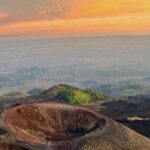
- The descent: craters from the 2002 eruption, lava tunnel, and Valle del Bove
- Gear and guide support: what’s included, what to add, and why it matters
- Price and value: where the €62.63 fits in
- Weather and volcanic risk: the day can change
- Who this tour suits (and who should skip it)
- Should you book the Etna Summit Craters by Cable Car tour?
- FAQ
- What is the duration of the Mount Etna Summit Craters tour?
- What languages are available for the live guide?
- What is included in the ticket price?
- How much are the cable car and 4×4 costs?
- What should I bring for the hike?
- Is this tour suitable for people with health issues?
Key things to know before you go
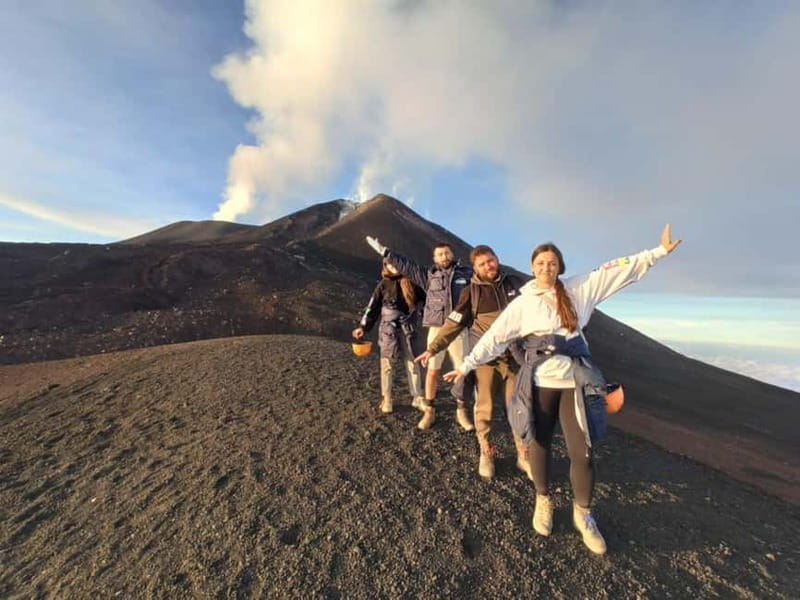
- Summit crater edge at 3,400 m for wide, weather-dependent 360° views
- Cable car lift to about 2,500 m, then higher by vehicle before the main trek starts
- Lava flow features: you’ll see eruption-altered terrain plus a lava tunnel on the return
- Valle del Bove volcanic amphitheater gives you a huge sense of Etna’s scale
- Gear is included: windbreaker jacket, helmet, and trekking boots
- Language support is available (English/Italian/French), and the operator may coordinate partners when needed
Cable car start, real trekking finish: what makes this Etna day work
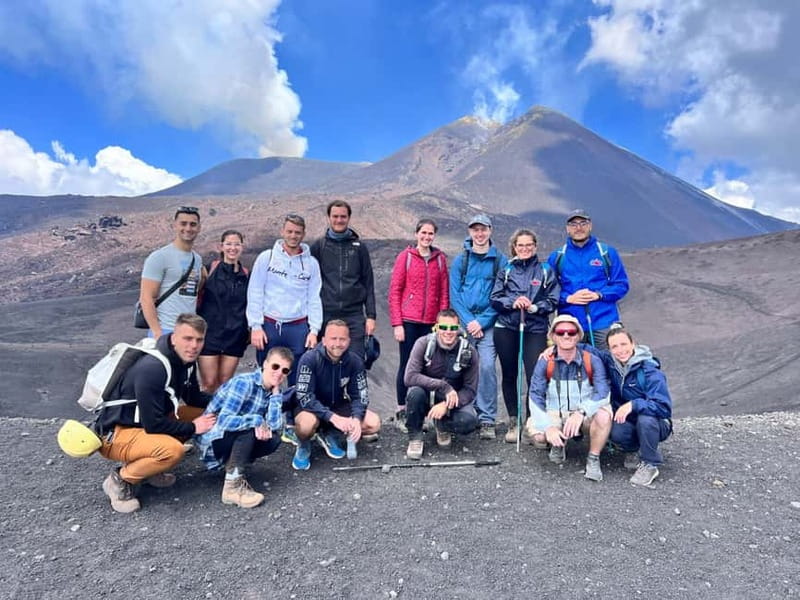
If you only have one shot at Etna, this style of tour is a smart pick. You don’t just bus-walk in the lower foothills. You get lifted high by cable car, then you walk into the volcanic world itself—on foot, at altitude, with a guide who can explain what you’re seeing as you see it.
The day’s rhythm is the key. It’s part transport, part marching, part stopping to look and listen. You begin at the Etna south cable car area near Rifugio Sapienza, then ride up to roughly 2,500 meters. After that you’re carried higher toward the trekking start point, and the hiking becomes the main event.
This isn’t a long-distance endurance test, but it is a serious altitude outing. You should expect cold hands, changing wind, and a need to pace yourself. Even if you’re an experienced hiker, treat this like a mountain day first and a photo day second.
You can also read our reviews of more tours and experiences in Catania.
How long 5.5 hours really feels at Etna altitude
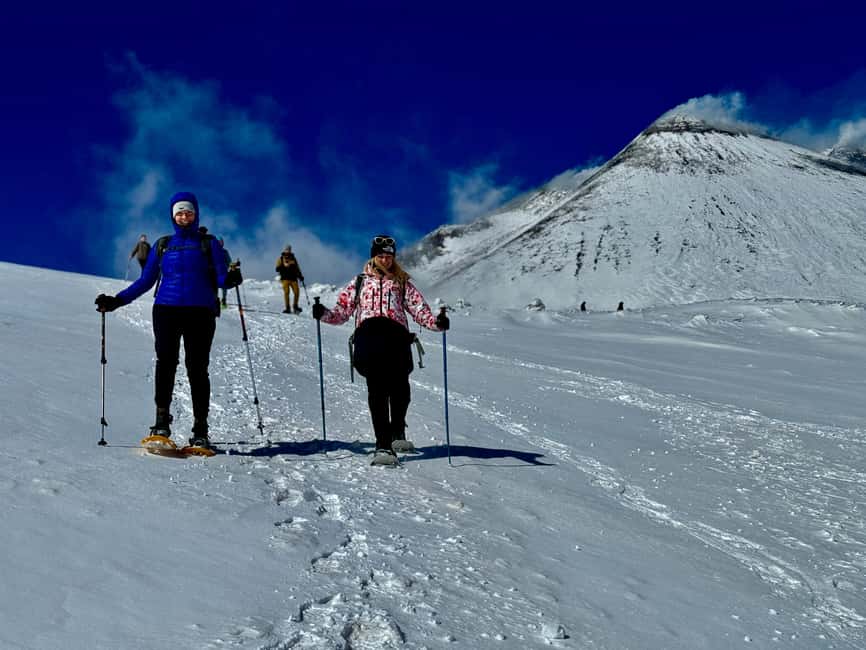
The tour is listed at about 5.5 hours. In practice, that time includes multiple segments: cable car rides, coach/bus transfers, and the guided hike plus breaks.
Here’s the altitude reality you should plan around:
- You ride up by cable car to around 2,500 m
- The program brings you to about 2,920 m before the trek begins
- You hike up to the edge of the Central Crater at 3,400 m
- From there you descend back down and finish by cable car
That altitude step is why you need decent physical condition. High altitude can slow you down even if your legs are strong. You might feel breathy early on, especially if it’s windy.
Also, pace can vary based on operational needs. I’ve seen cases where transfers can be limited on certain days, meaning you spend more time walking and the group pace can feel faster than you expected. If you’re the type who likes steady, slow hiking, ask ahead about which transfers are planned for your date and season.
First climb: from Etna South cable car area up to the trekking start
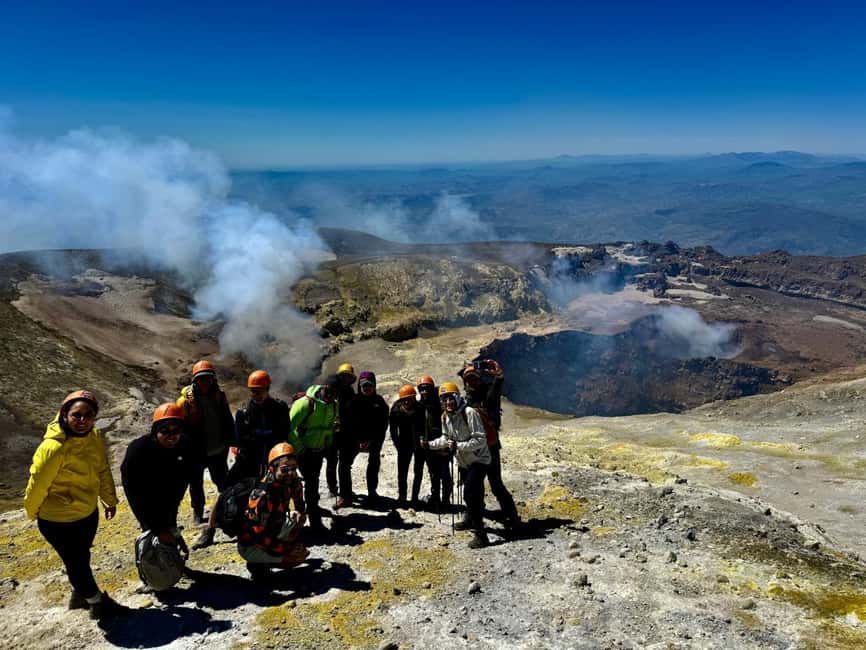
Your meeting is at the Etna South cable car area near the Rifugio Sapienza area, with guides meeting you by the offices around La Terrazza dell’Etna. This is set up so you’re not hunting for people in the dark. The tour then uses a mix of cable car and vehicle transfer.
The cable car segment is short—about 15 minutes—but it sets the tone. You leave thicker air behind and start moving into the “other world” altitude where Etna’s surface looks like it belongs on another planet.
After the cable car, there’s a coach/bus transfer and then a higher vehicle up to about 2,920 m (the exact approach can vary with conditions). This matters because it reduces unnecessary walking on rough volcanic roads. You still hike a lot, but you’re not starting the day from the parking lot.
One more practical upside: you skip the ticket line. That saves time and keeps the day on schedule, which is important when the sky or volcano activity affects what they can safely do.
The Central Crater edge at 3,400 m: your 360° view check
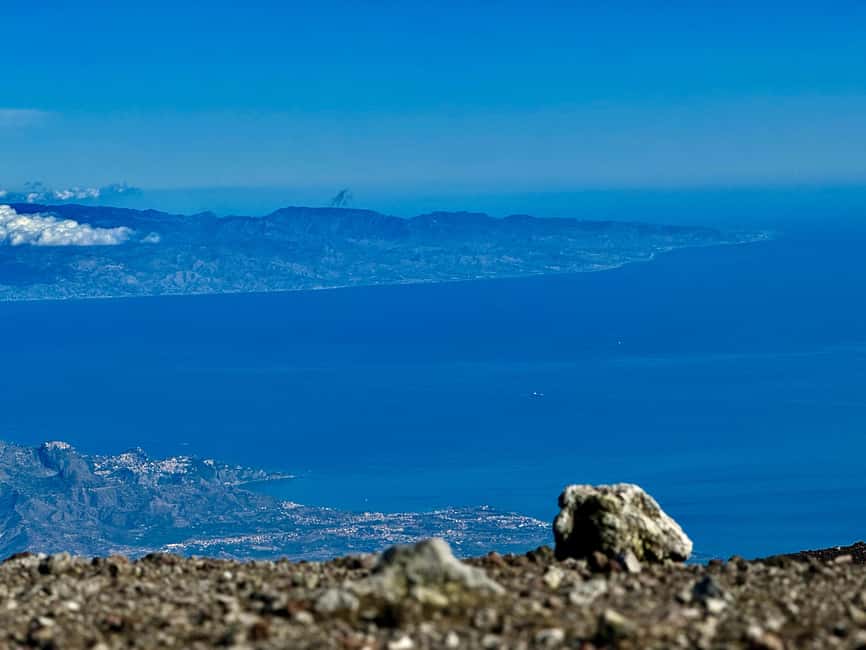
The centerpiece is reaching the edge of the Central Crater at about 3,400 meters. That moment is where your day stops being “a tour” and becomes “you’re actually on the volcano.”
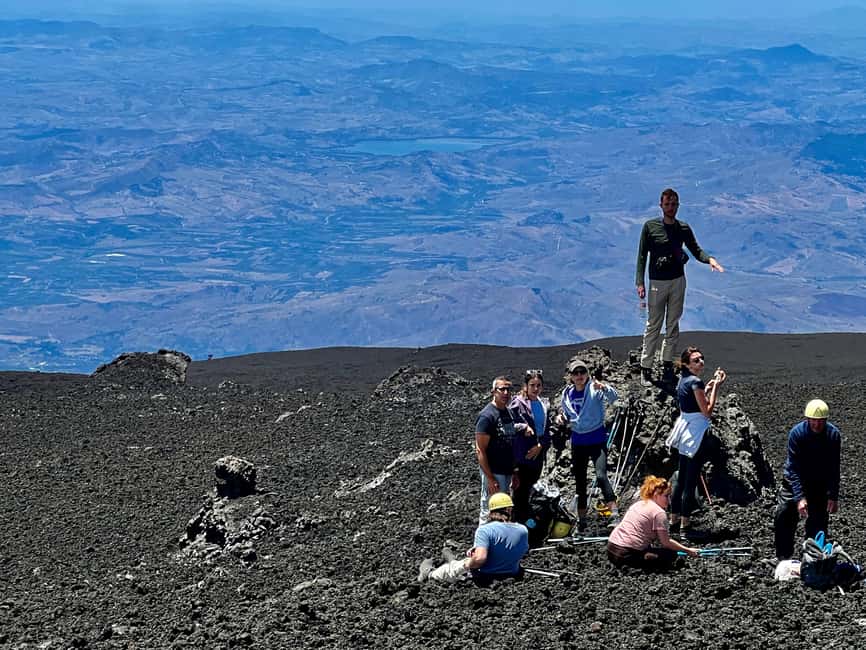
When the weather cooperates, you get 360° views. The program also notes that you may be able to see the Aeolian Islands plus parts of northern and eastern Sicily if visibility is good. Even if you can’t see that far, Etna’s crater rim still gives you scale—walls of ash and rock, old cuts in the ground, and the sense that the mountain has been reshaped over and over.
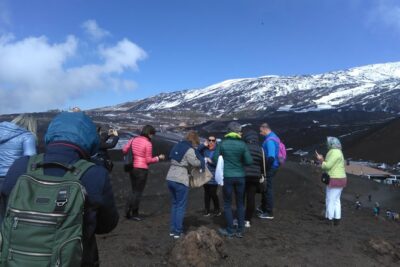
Your guide’s job here is huge. At crater edges, things look similar from a distance. With a guide, you learn what you’re looking at: what recent lava flows can look like, how eruption terrain differs from older deposits, and why certain crater features form the way they do.
This is also a good time to slow down mentally. Take in the view, then listen. If you’re the type who loves photos, you’ll do fine here. Just remember: windy crater rims aren’t the place to sprint for the perfect shot.
Lava flow channel and lateral craters: the hike becomes science on your boots
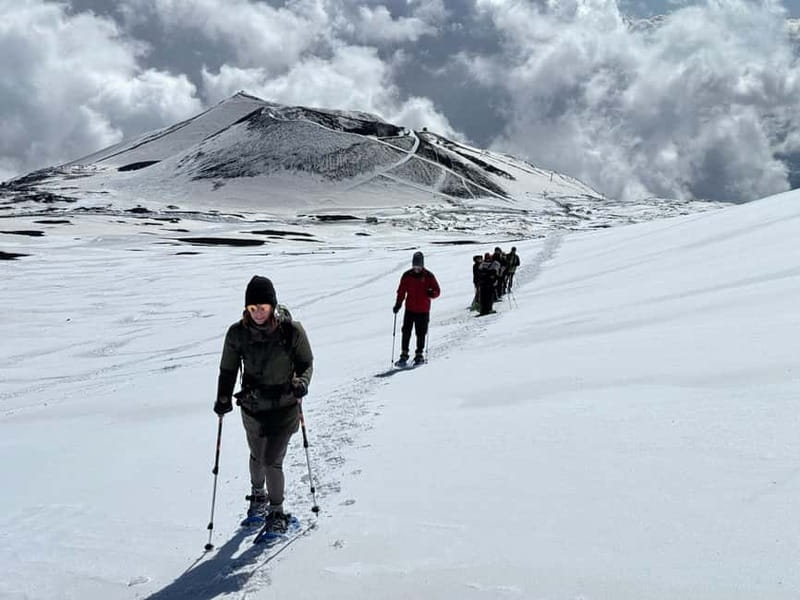
After the summit-crater moment, your trek continues through the volcanic features that make Etna more interesting than a single peak view.
You’ll explore:
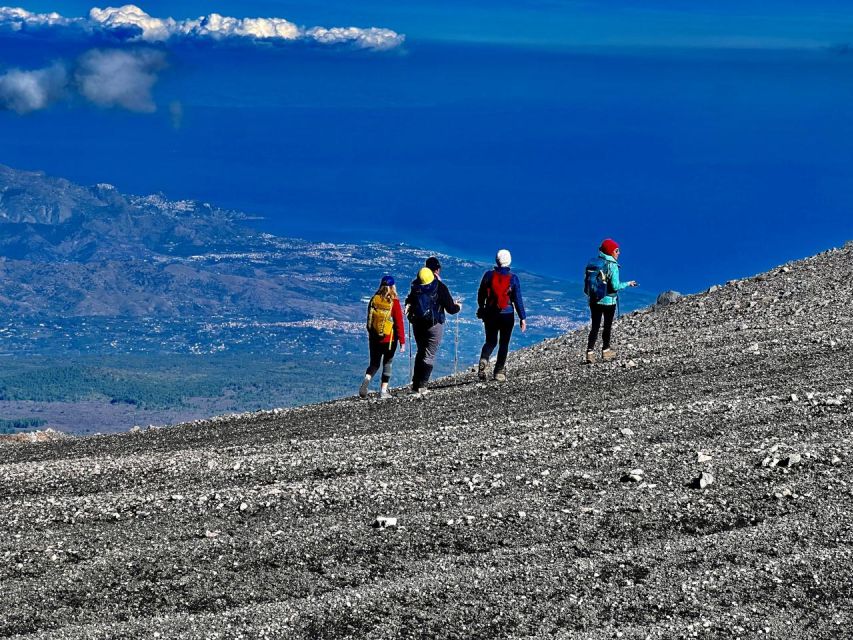
- Lava flow areas shaped by more recent activity
- A lava flow channel (a big deal visually, because you can often trace how flows moved)
- Lateral craters, which help explain how Etna vents beyond just the central summit
This is where the volcanological guide really earns their place. You’re walking on surfaces formed by eruption behavior. The same area can have different textures and colors—some spots look fresh, others look weathered and blended by time. Your guide helps you connect those differences to what eruptions were doing.
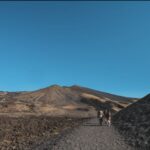
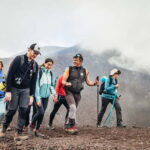
The terrain is also physically demanding in a different way. It’s not “technical climbing” in the typical sense, but the ground can be loose, uneven, and unpredictable. That’s why trekking boots are included and why you should pay attention to your footing even when the views are pulling your attention upward.
The descent: craters from the 2002 eruption, lava tunnel, and Valle del Bove
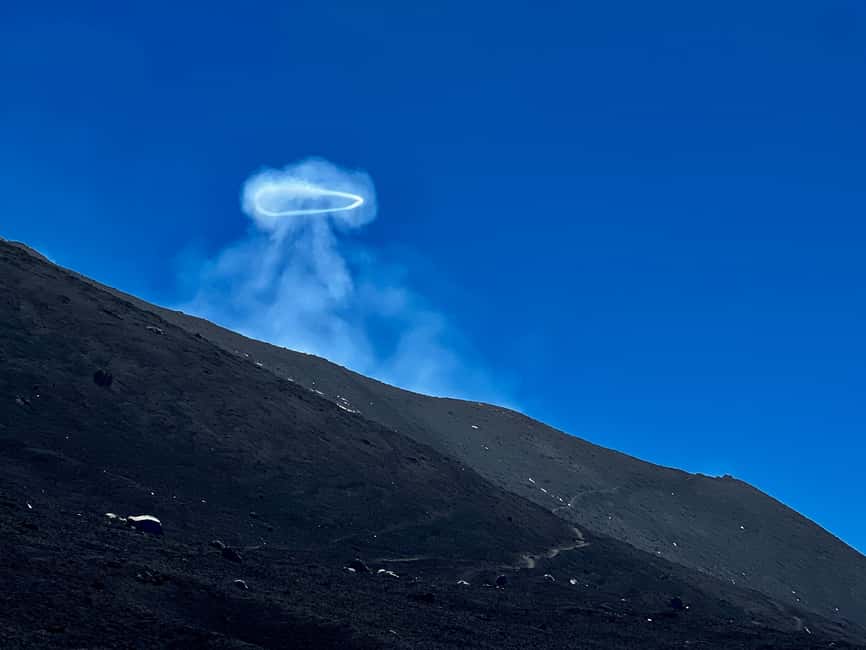
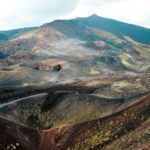
On the way down, the tour keeps teaching you how Etna works. You cross craters linked to the 2002 eruption, then you move into a lava tunnel area and finish with the Valle del Bove—described as a volcanic amphitheater.
That sequence makes sense because it shows multiple “eras” and multiple eruption paths in one outing:
- First you see the higher summit features
- Then you walk through crater terrain tied to a known eruption event
- Then you get a different experience underground, with the lava tunnel element
- Finally, you step back to see the broader structure of Etna’s large-scale valley system
Valle del Bove is where Etna’s size hits you again. Even if you’ve already been impressed at the crater rim, the open volcanic amphitheater view gives a different kind of awe: less “up close” and more “how big this all is.”
This part of the tour is also where the day becomes more varied. After walking on ash and uneven ground at altitude, a lava tunnel stop changes your senses. It’s quieter, different air, and a more sheltered way to see volcanic process at work.
Gear and guide support: what’s included, what to add, and why it matters
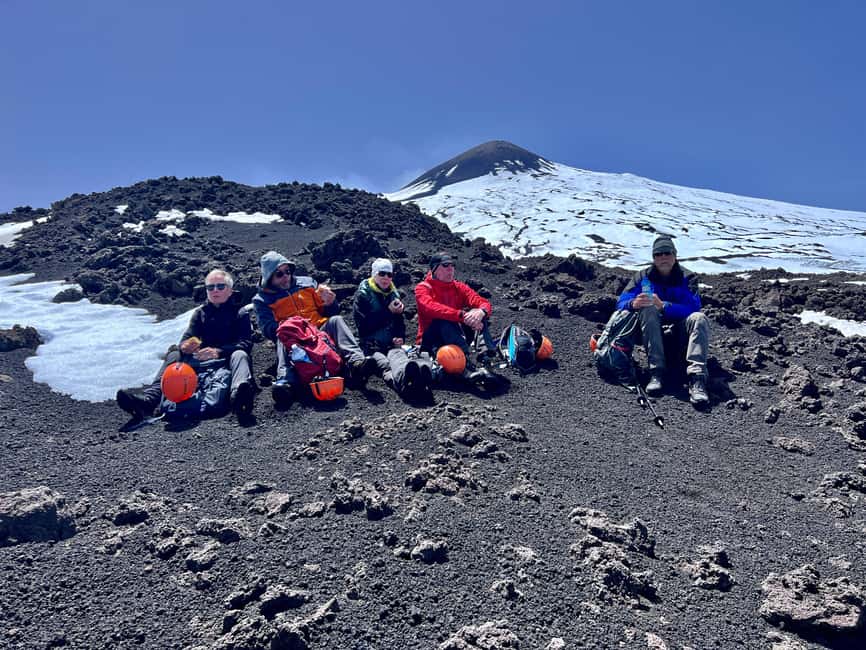
One of the best value points here is that the operator includes essential gear:
- Windbreaker jacket
- Helmet
- Trekking boots
- Insurance
- A certified Alpine/Volcanological guide
That’s not just “nice.” It reduces your hassle and your risk. Etna conditions can turn fast—wind at altitude is common, and cold hands are normal. Having a windbreaker and helmet makes the summit-area experience more comfortable and safer.
What you still need to bring:
- Food and drinks
- A jacket if you have one you trust with wind and cold
- Trekking gear (and your first aid kit if you carry one)
- Anything personal that helps you manage altitude (like hydration habits)
A small but real warning from the tour info: this isn’t suitable for everyone. It’s not recommended if you have respiratory issues, heart problems, or if you’re pregnant. Good physical condition is important because the excursion happens at high altitude.
Language is covered too: the live guide can be English, Italian, or French. In at least one French-request situation I’ve seen mentioned, the operator coordinated with a partner team (Aitne) when the original schedule didn’t line up. In the end, the day ran well and the guide (Maximo in that instance) adjusted to the group. The takeaway for you: if language is important, book with confidence but keep your expectations flexible on specific dates—Etna conditions can shift plans.
Price and value: where the €62.63 fits in
The price shown is about $62.63 per person for the tour. On its face, that can look like a bargain for a high-altitude volcanology experience. But here’s how to judge value honestly: the big cost driver is the transport up to the summit zone—cable car and the higher vehicle segments.
Cable car and vehicle costs are listed separately in the details:
- If the tour goes up from the south side, cable car and 4×4 are €65 per person
- If the itinerary changes, cable car alone is €52 per person
So what are you really paying for with the base price? You’re paying for:
- A certified guide
- The structured route and safety coverage
- Included trekking boots, helmet, and windbreaker jacket
- Insurance and guided interpretation of crater and lava features
- The timed flow of the day, with cable car coordination and transfers when applicable
If you arrive on a day when the full plan runs, your total spend can be higher than the base listing price alone. But you’re also getting the whole arc: crater edge, lava features, a tunnel component, and Valle del Bove.
If you’re budgeting, I’d treat that €65 cable car/4×4 note as part of the plan rather than a surprise. It helps you decide earlier if the full summit trek is worth it for you.
Weather and volcanic risk: the day can change
Etna doesn’t follow a script. The tour notes that the itinerary may change due to volcanic risks or weather conditions. That’s not a marketing line—it’s the reality of visiting an active volcano.
What that means for you:
- You might not reach every intended summit crater area on a specific day
- You may do a modified route and rely more on the cable car-only alternative cost
- You should dress and pack as if the full day is happening, but stay mentally ready for adjustments
If you’re chasing one exact photo angle, accept that conditions control what you can see. If you’re chasing the experience of walking through volcanic terrain with expert interpretation, you’ll still get value even on a modified day.
Who this tour suits (and who should skip it)
This is a great fit if you:
- Want a guided, high-altitude Etna experience with real volcanic features, not just a viewpoint
- Enjoy structured hiking and learning as you go
- Can handle altitude pacing and uneven volcanic ground
- Appreciate a guide-led science explanation at crater level
It’s a poor fit if you:
- Have respiratory issues or heart problems
- Are pregnant
- Struggle with high altitude exertion
- Prefer flat, low-risk walking
And if you’re sensitive to pace changes, ask about what transfers are planned for your date so you know how much time you’ll spend on foot.
Should you book the Etna Summit Craters by Cable Car tour?
I’d book this if your goal is to experience Etna’s summit world in one day, with enough structure that you spend your energy on the hike instead of logistics. The included gear is a real plus, and the combination of crater edge, lava features, and Valle del Bove creates a well-rounded volcanic story.
Skip it if high altitude is a concern for you, or if your ideal hike is gentle and predictable. This is more “mountain day” than “easy excursion.”
If you do book, pack like the summit happens: bring food, water, a wind-ready layer, and plan your pace. Then let the guide do the explaining. You’ll get more out of the terrain when you know what you’re stepping on.
FAQ
What is the duration of the Mount Etna Summit Craters tour?
The tour is listed at about 5.5 hours. Exact starting times depend on availability.
What languages are available for the live guide?
The live guide is offered in English, Italian, and French.
What is included in the ticket price?
Included: a certified Alpine/Volcanological guide, windbreaker jacket, helmet, insurance, and trekking boots. Transfers with extra cost may apply depending on your situation.
How much are the cable car and 4×4 costs?
The cable car and 4×4 are listed as €65 per person if the tour goes up from the south side. If the itinerary changes, the cost of the cable car alone is listed as €52 per person.
What should I bring for the hike?
Bring food and drinks, a jacket, trekking gear, and a first aid kit.
Is this tour suitable for people with health issues?
It is not suitable for people with respiratory issues, heart problems, or for pregnant women, and it requires good physical condition due to high altitude.