REVIEW · PIAZZA ARMERINA
Piazza Armerina: Roman Villa del Casale Mosaics Tour
Book on GetYourGuide →Operated by Italygonia Travel T.O. · Bookable on GetYourGuide
Roman mosaics this intact are hard to top.
This guided visit to the UNESCO-listed Villa del Casale in Piazza Armerina is a fast, focused way to see some of the richest Roman mosaic art in the world, spread across about 3,500 m of floor and wall surfaces. I love that you get a real guided run through major rooms and themes, including the Great Hunt and the bikini athletes scene, and I also love the way the tour connects the mosaics to daily life and status in Roman society. One potential drawback: the site can feel crowded at busy moments, and one review specifically flagged feeling surrounded by other visitors at times.
If you’re the kind of person who cares about details—who painted what, why it was placed there, and what the imagery was doing—this tour is built for you. The guide lead is licensed, and the tone sounds enthusiastic and contextual (one standout guide name mentioned was Stefania), which matters a lot when you’re staring at thousands of tiny tesserae. Another consideration: this is 90 minutes, so you’ll see a lot, but you won’t be stopping long for a slow, self-paced museum crawl.
In This Review
- Key Highlights You’ll Remember
- Villa del Casale: Why the mosaics are world-famous
- 90 Minutes in 48 Rooms: How the pacing really works
- The Great Hunt and Bikini Athletes: The scenes that anchor your visit
- Garden, Great Hall Corridor, and the triclinium dining room
- Basilica floors, theatrical masks, and the bedroom medallion
- Baths with Frigidarium and Tepidarium: Roman comfort you can picture
- Circus Hall, gym culture, and the Circo Massimo mosaic reproduction
- Price and value: Is $325.13 per group worth it?
- Where it starts at SP90 and what to plan for
- Who this guided mosaic tour is best for
- Should you book the Piazza Armerina Villa del Casale mosaics tour?
- FAQ
- How much does the Piazza Armerina Roman Villa del Casale mosaics tour cost?
- How long is the guided tour?
- Is the entrance ticket to the archaeological site included?
- Is transportation or pickup provided?
- What languages are available for the live guide?
- Is this a private group tour?
- Where do we meet for the tour?
- How many people are allowed per group?
- Is free cancellation available?
Key Highlights You’ll Remember
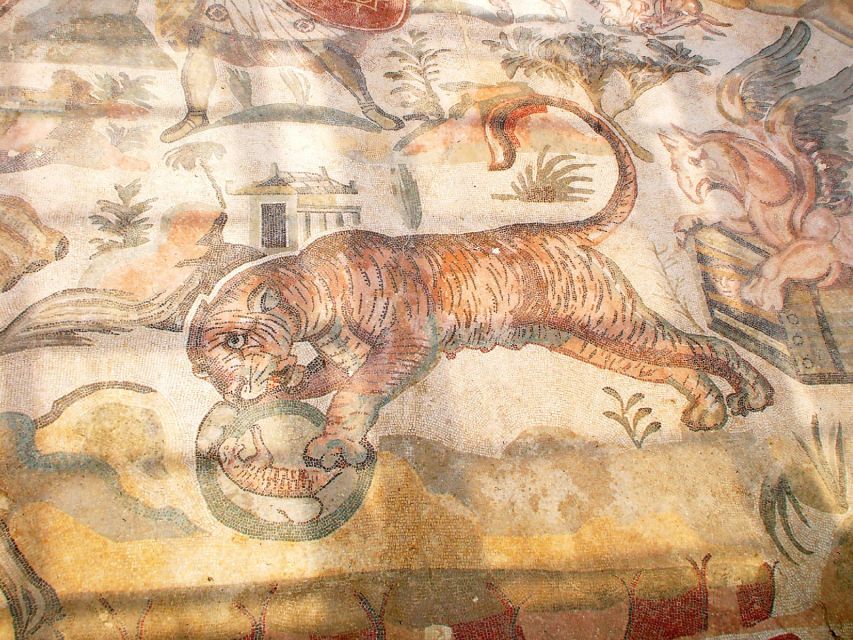
- Great Hunt mosaic: a starring set-piece that makes the villa feel like a living narrative.
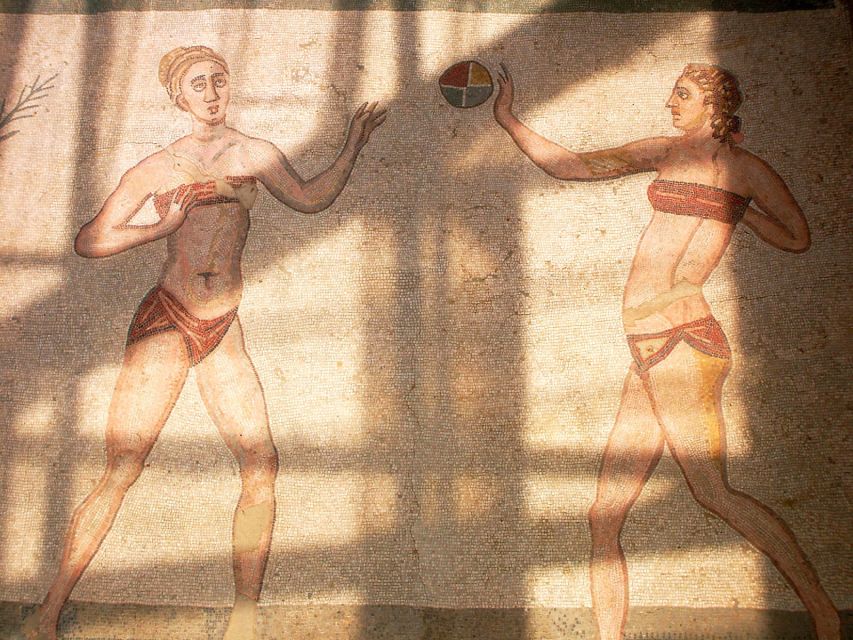
- The bikini mosaic: a surprisingly specific athletic-sport theme that still looks fresh.
- 48 rooms in one tour: the pacing hits the major zones without wasting time.
- Peristyle floor with European and African animals: one of the villa’s most distinctive visual signatures.
- Domus baths (Frigidarium and Tepidarium): you see how comfort and hygiene worked in Roman homes.
- Circus Hall and the Circo Massimo reproduction: Roman leisure meets Roman gym culture.
Villa del Casale: Why the mosaics are world-famous
Villa del Casale is the kind of place where the first thing you notice is scale—and the second thing is control. You’re not looking at a few decorative panels. You’re walking through rooms and corridors where mosaics cover huge areas, telling stories in scenes you can actually follow. That’s why this UNESCO World Heritage site tends to hit people differently than typical “ancient ruins” stops.
What makes it especially valuable for you is how the guided approach turns visual overload into meaning. The tour is designed to help you see themes, not just patterns. You’ll connect everyday life scenes, hero and deity depictions, hunting imagery, and games to a single household world—likely linked with Valerio Massimiano, described as a powerful Roman patrician associated with the villa.
And yes, you’ll probably want to take photos. But the best payoff is when you stop using your camera as a substitute for looking. When the guide points out what’s in the scenes—rather than just telling you it’s beautiful—you start spotting details you’d miss on your own.
You can also read our reviews of more tours and experiences in Piazza Armerina.

90 Minutes in 48 Rooms: How the pacing really works
The tour runs about 1.5 hours, and it’s structured to cover a lot of ground fast: you’ll move through numerous rooms of the domus, plus major feature areas. The stated total is 48 rooms, which is why timing matters. This is not the tour for you if you want long pauses at each mosaic panel.
But it can be a great fit if you want the highlights without feeling exhausted. The sequence is practical: major corridors and signature spaces early, then feature rooms (dining, bedrooms, baths), and ending in the Circus Hall.
Here’s the practical way to think about it. You’ll get enough context to understand why each area matters, but you’ll have to accept that you’re seeing impressions at speed. If you’re traveling in peak season—or if you’re sensitive to crowds—build in the mindset that you’ll be sharing space with other visitors. One review complaint was simply that there were too many people, and while that’s outside the provider’s control, it’s a real factor for your comfort.
The Great Hunt and Bikini Athletes: The scenes that anchor your visit
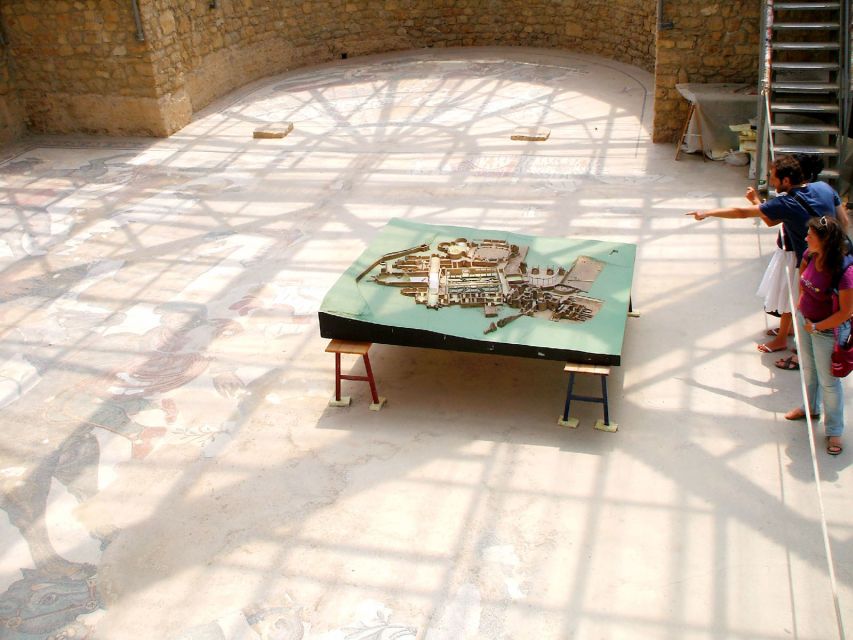
Two mosaics are singled out as must-sees, and that makes sense. They act like anchors. When you remember the tour later, these are the images you’ll likely picture first.
First up is the Great Hunt mosaic. It’s one of the key hunting scenes of the villa, and it helps you understand that Roman mosaic art wasn’t just for decoration. It was also for status, storytelling, and identity—showing the leisure world and power dynamics the household wanted to project.
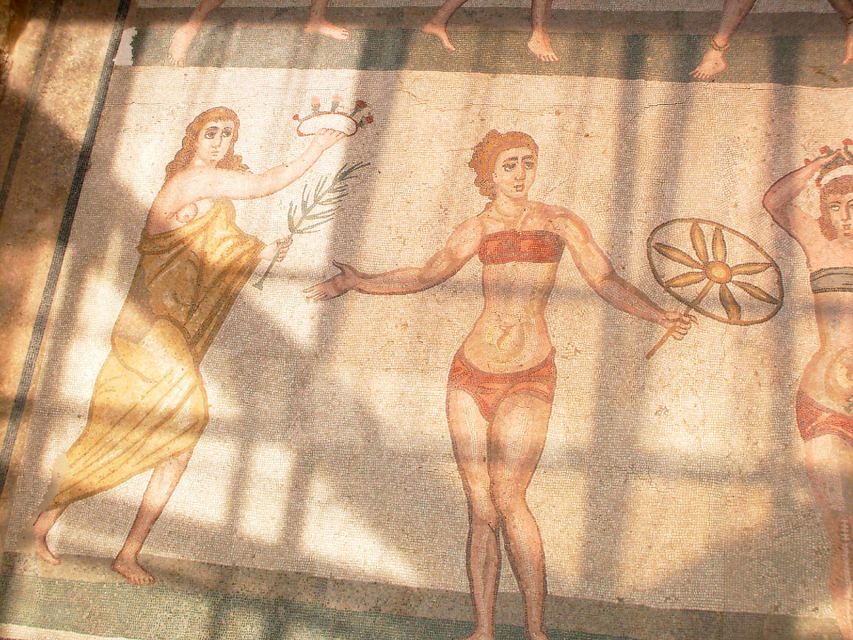
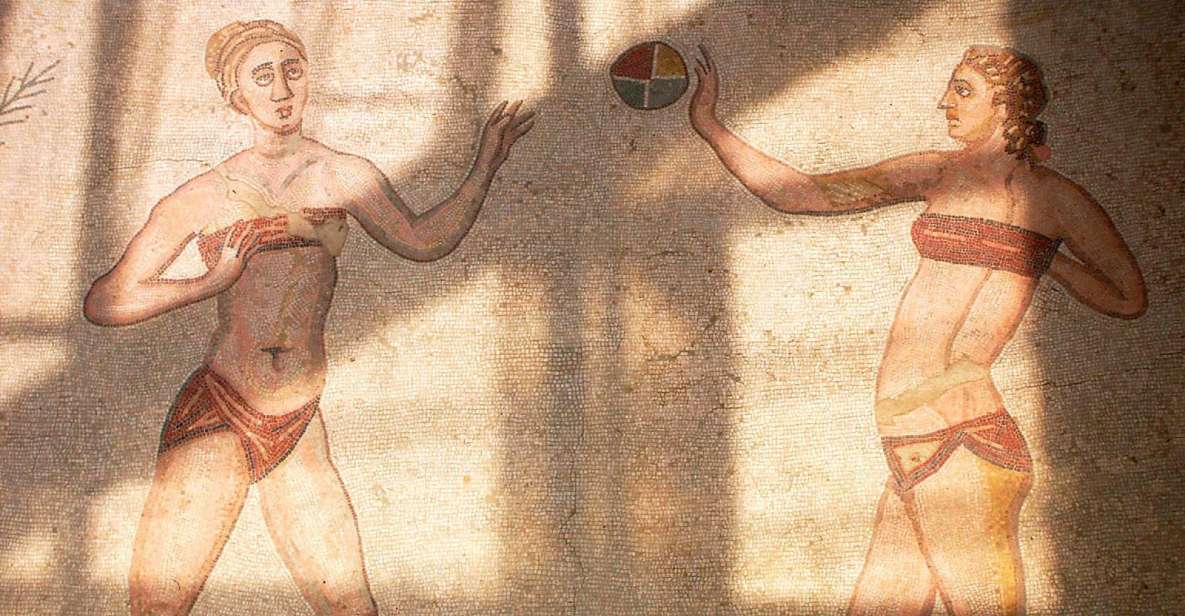
Then comes the famous “bikini” mosaic: ten girls depicted playing sports, with scenes that include throwing a discus, playing with a ball, exercising with weights, and what’s described as cross country-style activity. The shock (in a good way) is how athletic and varied the action feels. The imagery isn’t vague; it’s organized into specific activities, which makes it easier for you to see the mosaic as a snapshot of play, training, and social messaging.
If you enjoy art that has personality—human movement, themed scenes, and repeated visual logic—these two areas do the most work in explaining why the villa is considered so rare.
Garden, Great Hall Corridor, and the triclinium dining room
After the big standouts, the tour expands into spaces that show how Romans lived. You’ll stroll through the garden, which is enhanced by a fountain with three pools—marble outside and mosaics inside. That combination matters. It’s not only pretty; it’s also a clue that mosaics were part of daily “life design,” not just indoor wall treatments.
Next, you’ll enter the Great Hall Corridor, where the tour describes two columns with female figures used to symbolize the two peripheral provinces of the empire. This is a great stop for you if you like learning the “why” behind imagery. It’s not just decorative symmetry—it’s political geography turned into art you can walk past.
Then comes the oval-shaped triclinium, the dining room. The triclinium was a key social space in Roman homes, and in this tour you’ll also be introduced to private rooms reserved for domestic people. That’s a subtle but important point: you’re seeing an elite house, but you’re also reminded that a villa like this had layers of daily labor and different roles in the household.
Basilica floors, theatrical masks, and the bedroom medallion
The tour continues into the Basilica, where the focus is on polychrome marble floors. This shift—from mosaic scenes to marble color—helps you avoid a fatigue problem. If you spend too long looking at one visual type, you stop seeing. Mixing material styles keeps your brain engaged.
Then you’ll move into a bedroom area with a rectangular alcove. The mosaic decorations include theatrical masks and a central medallion featuring lovers. If you like symbolism, this stop is a good one because it feels both personal and theatrical. Masks suggest performance, identity, and role-playing; lovers suggest romance or ideal relationships; and the medallion concept helps you understand how mosaics framed important focal points within a room.
This is also where guided interpretation pays off most. On your own, you might see images. With the guide, you’re more likely to understand how mosaics functioned as a designed backdrop to life—and to status.
Baths with Frigidarium and Tepidarium: Roman comfort you can picture
One reason this tour can feel more satisfying than a quick ruin walk is that it includes the home-body zones: the domus baths. You’ll visit the Frigidarium and Tepidarium, which are specifically identified on the tour.
Even if you don’t know the technical differences between each room at first, the structure is easy to grasp when you’re physically there. You’re moving through the logic of Roman hygiene and comfort: cold, warm, and the idea of staged bathing. When a tour includes these spaces, it does something important—it makes the mosaics feel less like museum art and more like architecture that supported real routines.
If you’re the type who likes ancient sites that help you picture daily life (not only big heroic legends), this section is a strong part of the overall experience.
Circus Hall, gym culture, and the Circo Massimo mosaic reproduction
The tour ends in the Circus Hall, described as a gym used for training. That detail changes the vibe. Instead of thinking only about dining, worship, or leisure, you’re reminded that Roman athletic activity and spectacle culture mattered inside the home too.
One final standout is the mosaic reproduction of the Circo Massimo in Rome. It’s a clever way to end: you get a direct visual link from a provincial villa to the most famous Roman entertainment spaces. That connection helps you leave Piazza Armerina with a bigger map in your head—how Roman identity traveled and showed up even far from Rome itself.
Price and value: Is $325.13 per group worth it?
The price is listed as $325.13 per group, with group size up to 15 people, and the duration is about 1.5 hours. On paper, this can sound high if you compare it to solo admission tickets or self-guided audio routes. But here’s how I’d judge the value in a practical way.
You’re paying for a licensed guide and a guided, thematically organized walk through major mosaic zones and rooms—including the highlights that many visitors come for (Great Hunt, bikini mosaic) plus the surrounding context (baths, basilica floors, garden fountain, and more). In other words, you’re not just buying access; you’re buying interpretation that helps the mosaics make sense.
If you’re traveling with family or friends and can split the group cost, the value improves quickly. If you’re traveling solo and group joining is limited, then the cost may feel steeper—but the tour’s structure (fast, focused, with clear story beats) is exactly what you want when you only have a short window for Piazza Armerina.
One more practical point: entrance tickets are not included, so plan on budgeting separately for entry to the archaeological site. Transportation/pickup isn’t included either, so you’ll want to already have your plan to reach the meeting area.
Where it starts at SP90 and what to plan for
The meeting point is the entrance to the archaeological site, on SP90, 94015 Piazza Armerina EN, Italy. The tour ends back at the meeting point.
That setup is convenient because it keeps logistics simple. You don’t have to worry about a drop-off far from where you started—just confirm the exact entrance you’re using, and arrive with enough time to get through any on-site lines. Since the tour duration is only 90 minutes, being late can squeeze your experience.
Also keep in mind the tour language options: Spanish, English, French, German, and Italian. If you’re traveling with mixed language needs, it’s worth confirming which language the guide will use at your chosen start time.
Who this guided mosaic tour is best for
This tour is ideal if you want a guided path through one of Sicily’s most important ancient sites without turning the visit into a full-day project. It’s also a strong choice if you enjoy mosaics as storytelling—where the imagery connects to Roman life, power, and identity.
You’ll likely enjoy it if you:
- want to see the Great Hunt and the bikini athletes mosaic without second-guessing what to look for
- appreciate a quick-but-structured walk through lots of major rooms (48 rooms in 1.5 hours)
- like learning context, not just collecting photos
It might be less satisfying if you need long quiet time in each room, or if crowds make you uncomfortable. The tour is built for movement and coverage, and one review flagged crowding as the only real complaint.
Should you book the Piazza Armerina Villa del Casale mosaics tour?
If your goal is to see the villa’s most important mosaic areas with a guide who can put the imagery into context, then yes, this is a solid booking. The combination of guided interpretation, strong highlight emphasis (Great Hunt and bikini athletes), and a smart, time-efficient route through baths, garden, basilica floors, and the Circus Hall makes it feel like a complete experience rather than a rushed checklist.
Book it especially if you value learning—because Stefania, one of the guides named in reviews, is described as putting the villa into context and pointing out what matters most (and what’s most interesting). Just remember two practical realities: entrance tickets aren’t included, and crowds can happen at the site.
If you’re visiting with limited time in Sicily, this tour is a good way to make your hours count.
FAQ
How much does the Piazza Armerina Roman Villa del Casale mosaics tour cost?
The price is listed as $325.13 per group, up to 15 people.
How long is the guided tour?
It lasts about 1.5 hours. Starting times vary, so you’ll want to check availability for your dates.
Is the entrance ticket to the archaeological site included?
No. The tour price includes a licensed guide, but the entrance ticket is not included.
Is transportation or pickup provided?
No. Transportation/pickup is not included.
What languages are available for the live guide?
The live guide is available in Spanish, English, French, German, and Italian.
Is this a private group tour?
Yes. The experience is listed as a private group.
Where do we meet for the tour?
You meet at the entrance to the archaeological site on SP90, 94015 Piazza Armerina EN, Italy.
How many people are allowed per group?
The group can be up to 15 people.
Is free cancellation available?
Yes. You can cancel up to 24 hours in advance for a full refund.
—
If you tell me your travel dates and whether you’re visiting in peak season, I can help you decide how to time the tour so you get the best viewing comfort at the site.