REVIEW · SYRACUSE
Syracuse: Ortigia Private Walking Tour
Book on GetYourGuide →Operated by Hermes Sicily Tours · Bookable on GetYourGuide
Ortigia is small, but it packs serious layers. I like that this tour gives you Greeks-to-Baroque context you can actually see in the streets, and I also love the relaxed pace of a private walking tour where you can ask questions. One thing to plan for: the stop at the cathedral area is a religious site, so the dress code matters.
You’ll start at the Apollo Temple area and get oriented fast, then the walk shifts into brighter, limestone Cathedral Square and the sea-side Arethusa Fountain. If you’re hoping to jump straight into every interior space without a thought for rules or timing, adjust expectations—some access is optional, and the market stop depends on morning and working days.
This is an easy win if you want value: one guide, a clear route, and a short time window that still feels complete. If you’re traveling with limited mobility, good news: it’s listed as wheelchair accessible, but you’ll still be on city sidewalks.
In This Review
- Key points at a glance
- Ortigia on Foot: why this 2-hour route works
- Finding your bearings at Largo XXV Luglio and the Apollo Temple
- Cathedral Square: where pagan roots meet baroque brightness
- Dress code: the one rule that can ruin your morning
- Arethusa Fountain by the sea: myth with a real-world detail
- A viewpoint stop: plan to pause, not race
- Jewish Quarter and Via Maestranza: reading Ortigia’s social map
- Piazza Archimede ending: short walk to “local life”
- Private vs small group: what you gain for your money
- The guides: why this tour feels personal
- Practical tips before you go
- Should you book Syracuse: Ortigia Private Walking Tour?
- FAQ
- Where do we meet the guide for the Ortigia tour?
- How long is the Syracuse: Ortigia Private Walking Tour?
- Is this tour private, and can I choose a group option?
- What languages are offered during the tour?
- Do we get to enter the cathedral?
- What dress code do I need for places of worship?
- Can the tour end at the fish and fruit market?
- Is the tour wheelchair accessible?
Key points at a glance
- Apollo Temple start: you meet at Largo XXV Luglio by the temple entrance and quickly get the town’s historical thread.
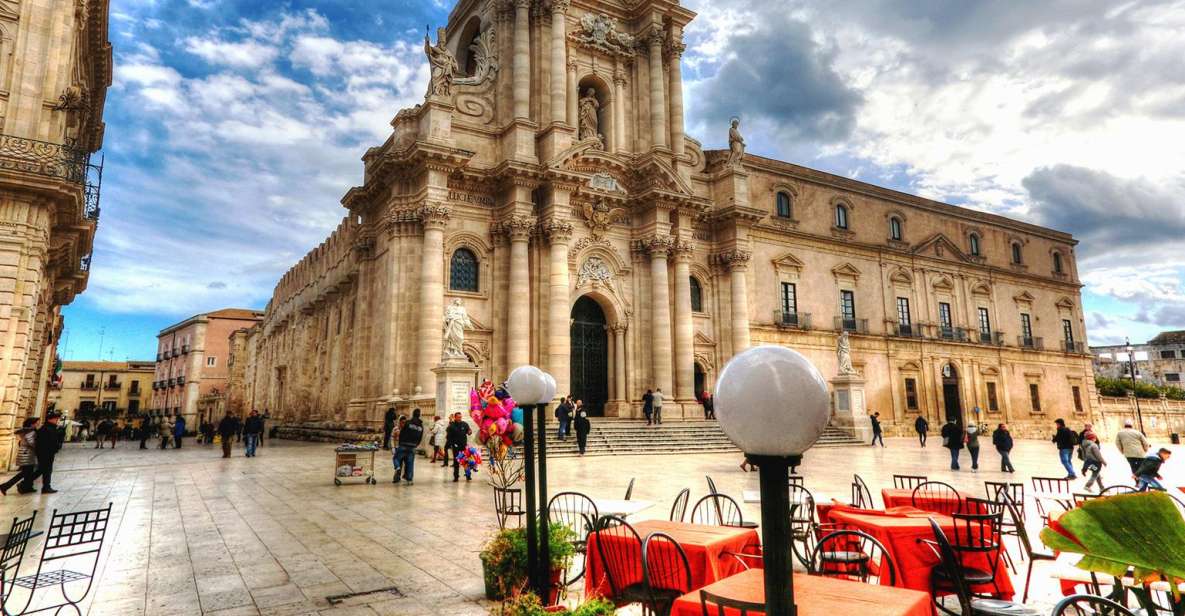
- Cathedral Square focus: bright limestone buildings around the cathedral help you read Ortigia’s “layers” in one go.
- Optional cathedral interior: you can visit the inside, but plan for the admission fee not being included and follow the dress code.
- Arethusa Fountain myth and papyrus: the guide connects Ovid’s story to what grows there today.
- Jewish Quarter + Via Maestranza: the streets steer you from power and nobility toward older community life.
- Flexible ending: you return to the meeting point, or you can ask to finish at the fish and fruit market if it’s open.
Ortigia on Foot: why this 2-hour route works
Ortigia is ideal for a short walking tour because it’s compact, yet historically dense. You don’t need a bus. You just need a good guide who can point at what you’re seeing and explain why it’s there.
This tour is built for that. It’s a 2-hour walk with a licensed guide, and the itinerary is flexible because it’s private. That flexibility matters in Ortigia where one turn can change the whole feel of the street—Greek traces, baroque façades, sea air, and sudden viewpoints.
One more practical win: the meeting point is clear. You meet at the Apollo Temple entrance area in Largo XXV Luglio, and the guide holds a Hermes Sicily Tours sign or logo. If the weather is off, you still get a structured walk rather than wandering on your own.
You can also read our reviews of more walking tours in Syracuse

Finding your bearings at Largo XXV Luglio and the Apollo Temple
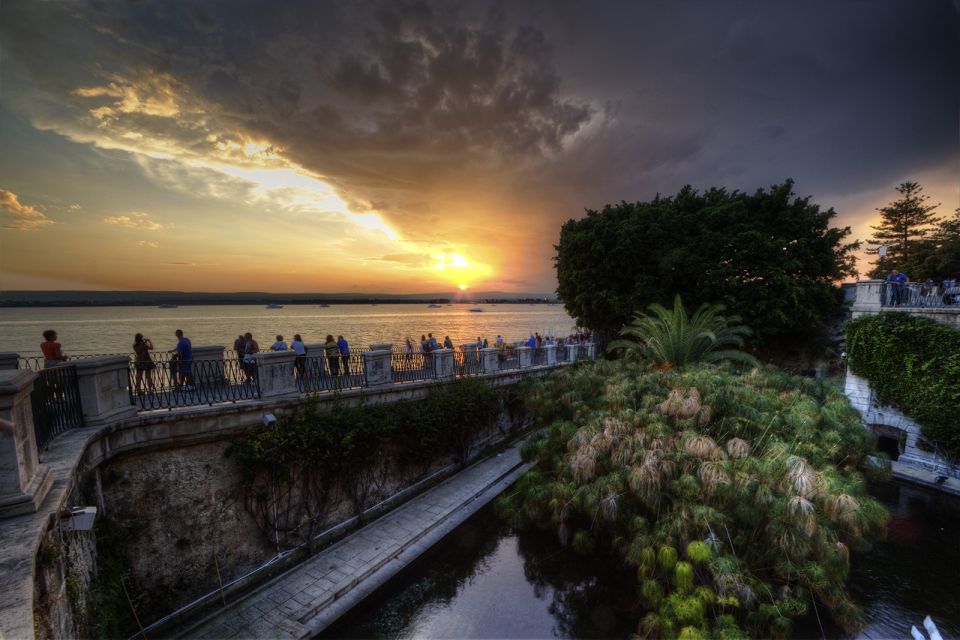
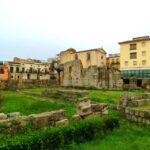
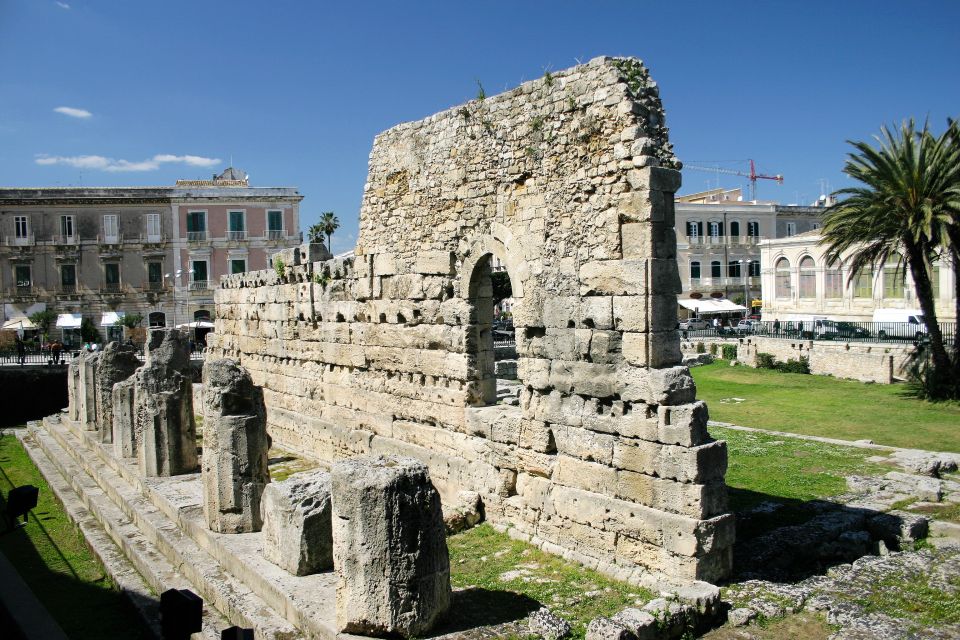
The tour starts with a simple orientation at the Apollo Temple area, right at the island’s edge of history. You’ll get a short introduction to Syracuse’s story and how Ortigia fits into it. That matters because otherwise the town can feel like “pretty buildings,” not a timeline.
From there, the guide sets the tone for the rest of the walk: you’re not just moving from one photo spot to the next. You’re learning how different peoples governed Sicily and left marks you can spot in the architecture and street plan.
This is also where you’ll feel the difference between a scripted tour and a real guide. In past walks with Hermes Sicily Tours guides like Eva and Galina, people praised the way the guide kept things clear while still going deep when questions came up. If you like explanations that match what your eyes are doing, this kind of start is gold.
Cathedral Square: where pagan roots meet baroque brightness
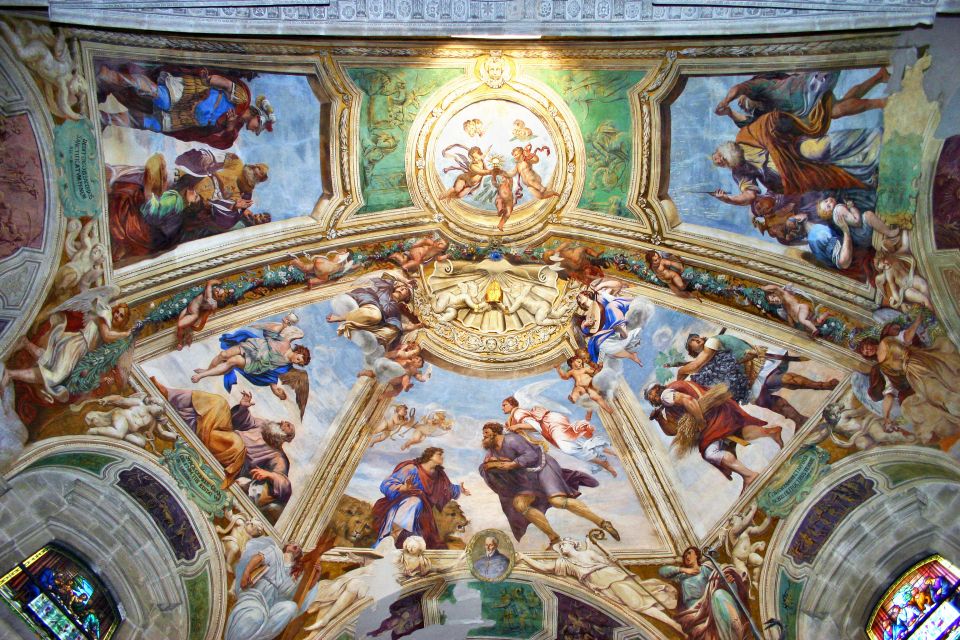
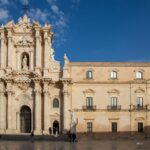
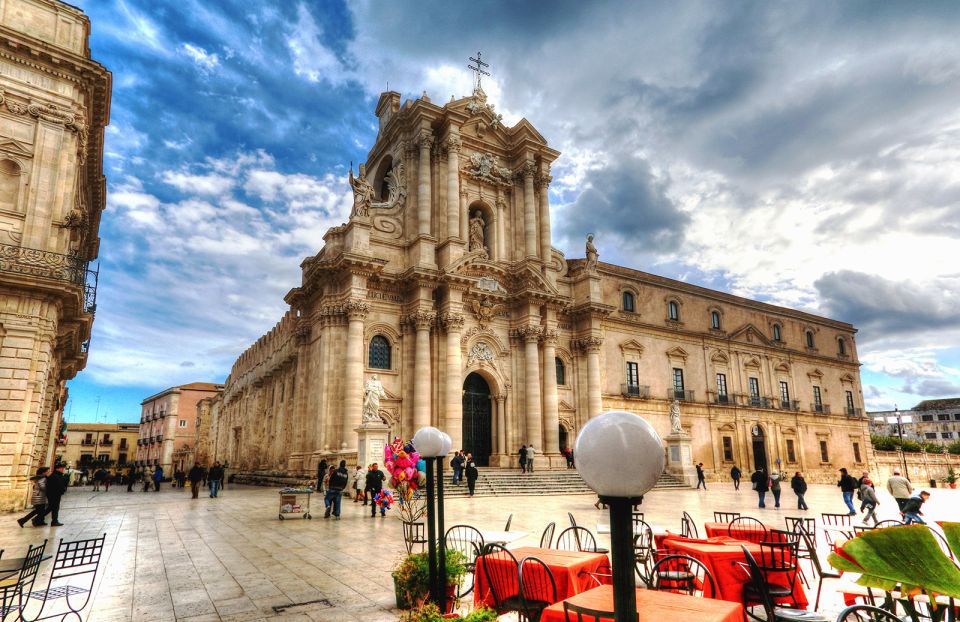
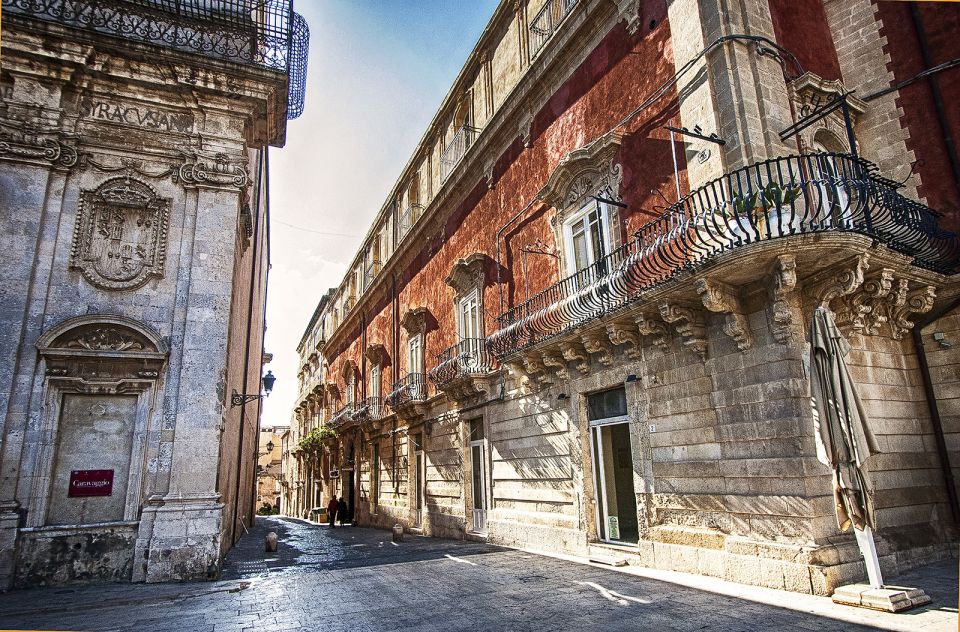
The walk takes you to Cathedral Square, and this is the moment Ortigia starts to “click.” The guide frames the surrounding buildings—town hall, Palazzo Beneventano, the bishop’s palace, and St. Lucy’s Church—so the cathedral isn’t isolated. You see the whole power center of the town.
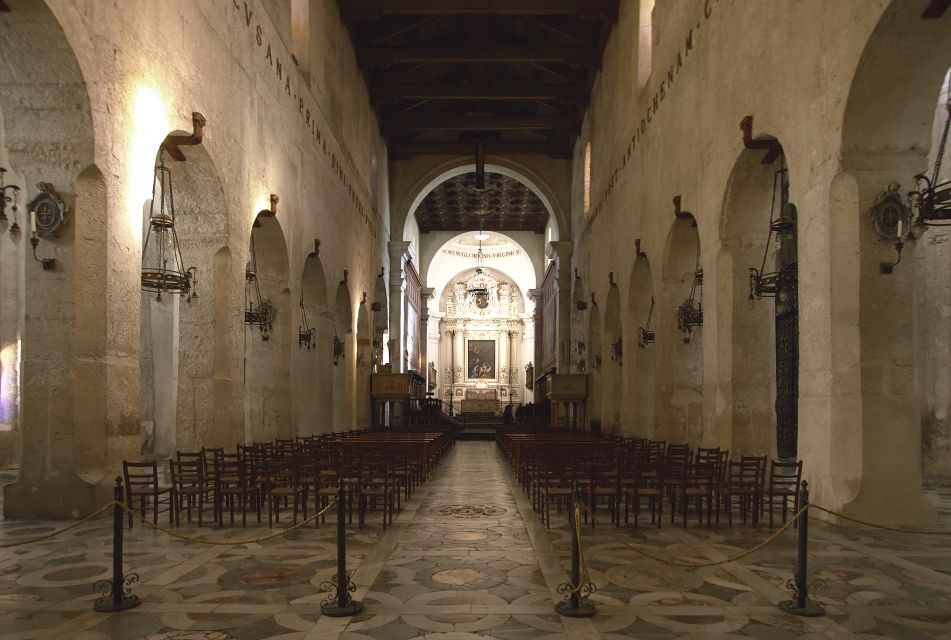
Then the cathedral becomes the main event. It’s described as the only church still in use today that used to be a pagan temple. That single idea is why this stop is worth your time: you’re standing in one site where centuries got layered instead of erased.
There’s also the optional interior visit. If you’re visiting during open hours and the guide invites it, I’d take it. Interiors are where the transformation from ancient to church use becomes more than a fact; it becomes something you can sense in the structure and details.
Two things to keep in mind:
- The cathedral is a place of worship, so dress code rules apply.
- Admission for the interior is not included, so it’s a small extra cost if you add it.
Dress code: the one rule that can ruin your morning
This is the easiest “avoid stress” tip for the whole tour. For places of worship, shoulders must be covered for both men and women, and you can’t wear shorts or sleeveless tops.
If you’re arriving from beach time, fix it before you go. Bring a light layer you can throw on. It’s the kind of rule that doesn’t care how interesting the day is—if you don’t match the dress code, you may have to sit it out or skip parts.
Also, it’s Sicily in real life. Plan for comfortable walking clothes that still respect the requirements. If you want, ask your guide how strict the gatekeepers are that day, but don’t count on flexibility.
Arethusa Fountain by the sea: myth with a real-world detail
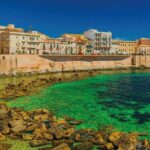
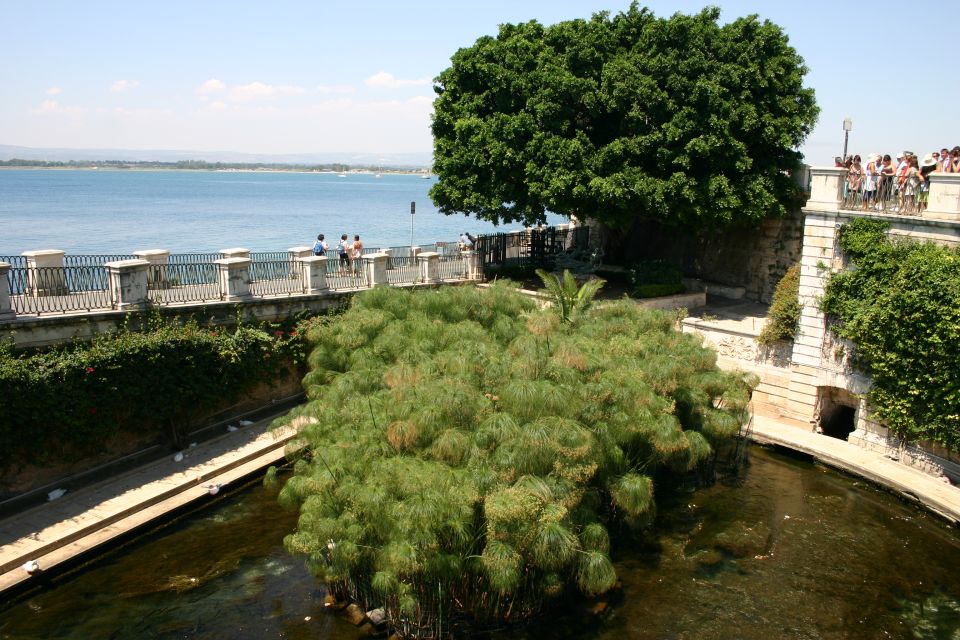
After the cathedral focus, you shift toward the sea with a stop at Aretusa Fountain (Arethusa Spring). This is not just a pretty water feature. The guide ties it to the myth told by Ovidius and connects the story to what you can see there.
One of the most memorable details is papyrus growing in clear freshwater. The guide notes that papyrus was probably brought here when Archimedes lived in town. That kind of connection makes the fountain feel like a living footnote to the ancient world, not a tourist prop.
If you’re a fan of stories that have physical evidence, this stop is satisfying. If you just want photos, it’s still a good pause: fresh air, water sounds, and a calmer moment after the cathedral square.
You can also read our reviews of more private tours in Syracuse



A viewpoint stop: plan to pause, not race
The route includes a viewpoint stop. The exact spot isn’t described in detail, but you can expect it to function like it does on many Ortigia walks: a short pause to take in the sea and the island’s built-up rhythm from a better angle.
This is where I like to slow down and look. The guide’s job here is usually to point out what you’d miss if you only shoot pictures while walking. You’ll understand why certain streets lead where they do, and why the coast matters in Syracuse’s story.
If you’re traveling in rain, you won’t lose the whole tour. People have mentioned that guides stayed flexible and kept the experience informative even when weather changed. Still, dress for walking conditions—wet stone can be slippery.
Jewish Quarter and Via Maestranza: reading Ortigia’s social map
On the way back, the tour crosses through the Jewish Quarter and then onto Via Maestranza, the street linked to the nobility and their pompous homes.
This is a smart sequence because it reminds you that Ortigia isn’t only monuments. It’s also neighborhoods and social power. The guide helps you connect architecture to the people who lived there and what those streets were for.
Then you get one more historical anchor at Archimedes Square, where the neoclassical Fountain of Diana is placed as a reminder of Syracuse’s past. Even if you don’t know the names in advance, the guide gives you the context you need to make it feel meaningful.
Piazza Archimede ending: short walk to “local life”
The tour ends at Piazza Archimede in the heart of Ortigia. That’s a good finish point because you’re still in the zone where you can continue your day on foot.
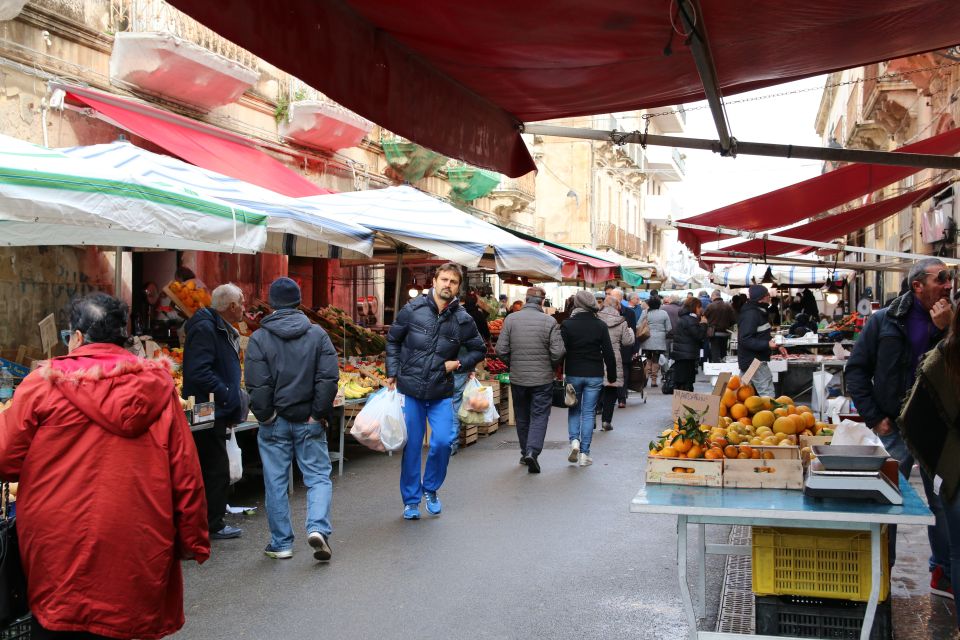
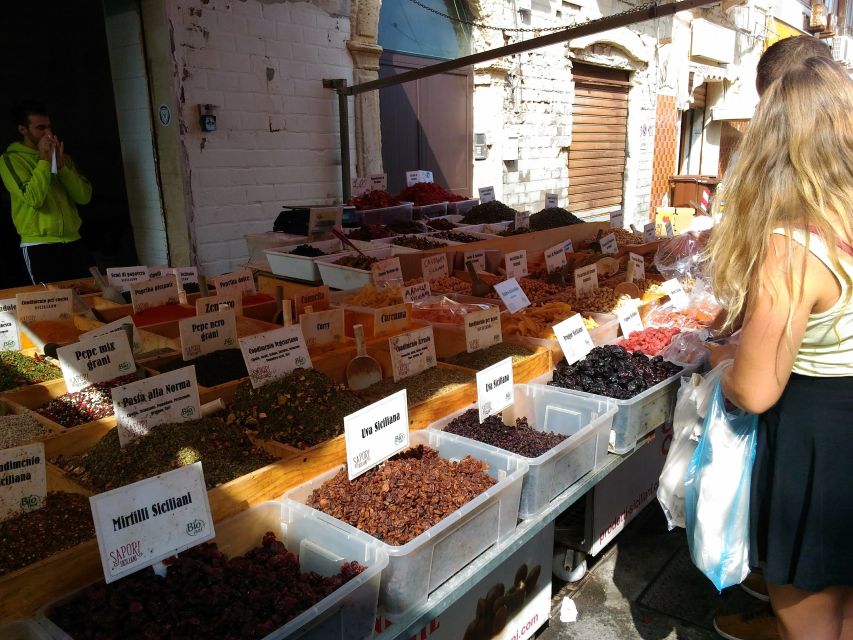
There’s also an optional add-on behavior you should know about: you can ask your guide to end at the local fish and fruit market. Here’s the catch—the market is open only in the morning and on working days. If you’re thinking about that extra stop, plan your timing so you don’t show up to closed shutters.
If you do catch it open, the market gives you the opposite of the ancient sites. It’s scents, colors, and everyday rhythm. I like it as a “reset” after history-heavy stops.
Private vs small group: what you gain for your money
This experience can be booked as a private tour (the listing says it’s available all year) or as a small/shared group option. Price is listed as $220.91 per group up to 9.
For value, here’s how I look at it:
- If you’re a couple, small family, or a tight group, splitting the cost can be very reasonable for a guide-led, organized route through multiple major sights.
- If you’re solo, the private cost might feel steeper, but you’re buying flexibility—especially the relaxed pace and question time.
Language options help too. Private tours are offered in Italian, English, and German. Shared group tours are bookable only in English or Italian. If language comfort matters a lot to you, choose private so the guide can tailor explanations to your questions.
Also, people mention they were able to get a truly private experience by booking for only their family. That’s the biggest advantage: you’re not stuck with a fixed pace and limited time for your own interests.
The guides: why this tour feels personal
One of the strongest reasons to pick this tour is the human factor. Reviews gave consistent praise for guides like Eva and Galina—friendly, professional, and clear with excellent English (and similarly strong communication in other supported languages).
Two standout themes show up:
- The explanations connect details to the bigger story, especially around the cathedral and what makes it unique.
- Guides show flexibility. One experience described how a major event (a visit by the German President) affected access, and the guide adapted while keeping the tour informative.
That kind of “plan B” matters more than most people think. Ortigia can have access changes, crowds, or security reroutes. A good guide keeps you from losing the day.
Practical tips before you go
A few things that will make your two hours smoother:
- Wear the right clothes for worship sites: shoulders covered, no shorts or sleeveless tops.
- Bring comfortable shoes. You’ll be walking through historic streets and squares.
- If you want the cathedral interior, assume there may be an extra admission fee.
- If you want the market ending, aim for a morning visit on a working day.
- If you’re using mobility assistance, the tour is listed as wheelchair accessible, but still plan for uneven historic surfaces.
And if you’re the type who likes asking questions, this is one of those tours where it’s worth it. The guide’s role is to turn “I see a building” into “I understand why this building exists.”
Should you book Syracuse: Ortigia Private Walking Tour?
Book it if you want a focused, two-hour walk that connects Syracuse’s ancient roots to baroque art and the sea. It’s especially good if you care about context, like architecture stories, and you don’t want to spend your time guessing what matters.
I’d also book it if you’re traveling with kids or family where you want a steady pace and the option to pause. The private format helps keep everyone comfortable and on time.
Skip it only if your top priority is a self-guided museum-style deep dive inside multiple sites. This is a walking tour with optional interior time at the cathedral, so you’re getting meaning through route and explanation more than checking off a long list of buildings.
If you’re deciding between group and private, choose private when language fit and flexibility matter. If cost is the main driver, the shared group option can still work well, just with fewer chances to tailor the pace.
FAQ
Where do we meet the guide for the Ortigia tour?
Meet at the Apollo Temple entrance area in Largo XXV Luglio. The guide will have a Hermes Sicily Tours sign or logo and will wait in the area between the small fountain on the right side and the benches in front of the temple.
How long is the Syracuse: Ortigia Private Walking Tour?
The tour is listed as 2 hours. Starting times depend on availability.
Is this tour private, and can I choose a group option?
Yes. It’s available as a private walking tour, and there is also an option for shared group or small groups depending on the period and language.
What languages are offered during the tour?
Private tours are offered in Italian, English, and German. Shared group tours are available in English or Italian.
Do we get to enter the cathedral?
You can visit the cathedral interiors as an optional stop. Admission fees are not included.
What dress code do I need for places of worship?
You need to cover your shoulders, and you can’t wear shorts or sleeveless tops for visits to places of worship.
Can the tour end at the fish and fruit market?
You can ask your guide to end at the local fish and fruit market. Note that the market is open only in the morning and on working days.
Is the tour wheelchair accessible?
Yes, the tour is listed as wheelchair accessible.