REVIEW · SICILY
Basic Scuba Diver
Book on Viator →Operated by Etna & Sea Excursion · Bookable on Viator
Sicily teaches you to breathe underwater without fuss. This Basic Scuba Diver course mixes classroom learning with guided water practice, then finishes with an exam that leads to international certification. You’re not just doing cool activities—you’re practicing the standards so you know what to do when it counts.
What I like most is the way the day kicks off with real prep: the team fits your wetsuit right at the base and keeps the schedule tight, with a punctual start around 8:30. Then you get a steady, confidence-building progression—clear explanations from Andrea, practice in shallower water, and careful checks before going deeper.
One thing to keep in mind: this is intense training. The learning block is described as about three days of focused classroom work, even though the activity is listed as around two days, so plan for a packed schedule—and be ready for the required health questionnaire before any time in the water.
In This Review
- Key Things That Make This Course Worth Your Time
- Basic Scuba Diver in Sicily: What You Actually Train For
- Where You Start in Aci Castello (and Why That Location Helps)
- Classroom Theory: Standards First, Then Skills
- Equipment Rental and the Wetsuit Fit Moment
- Shallow-Water Exercises: Learn the Flow Before You Go Deeper
- The Traditional Boat Factor and Getting to the Training Area
- Certification and Exam: What You Need to Finish Strong
- Price and Value: Is $520.92 a Fair Deal?
- Transfers, Timing, and What to Expect Day to Day
- Weather, Health Checks, and When You Might Have to Reschedule
- Group Size and Instructor Style: Small Numbers, Better Attention
- Who This Course Is Best For (and Who Should Think Twice)
- Should You Book Etna & Sea Excursion for Basic Scuba Diver?
- FAQ
- What time does the course start?
- Where does the course meet?
- How long is the experience?
- What’s included in the price?
- Is a dive certification required?
- Do I need a health check before going in the water?
- What happens if the weather is bad?
Key Things That Make This Course Worth Your Time
- 8:30 start in Aci Castello, with wetsuit measurements first
- Andrea’s clear instruction and hands-on coaching in the water
- Shallow-water exercises before you move to deeper water
- International certification after the exam
- Small group size (maximum 15) with a professional guide
- Equipment rental included, plus taxes and fees
Basic Scuba Diver in Sicily: What You Actually Train For
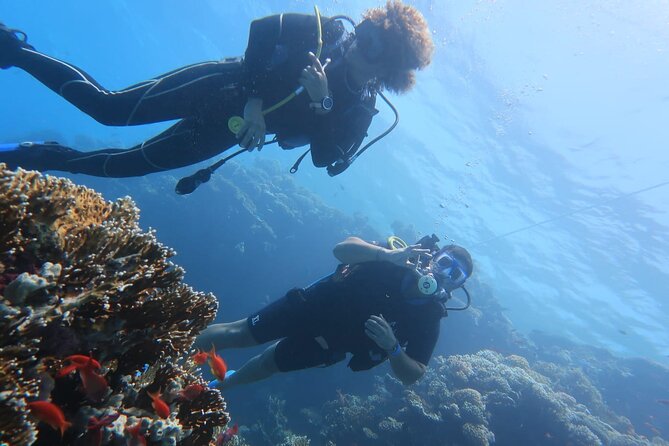
This is a structured Basic Scuba Diver program designed to meet international standards. That matters because the goal isn’t only to see underwater views—it’s to build skills you can rely on later. You’ll spend serious time learning the why in a classroom, then you’ll put it into practice with your instructor nearby.
Expect a mix of theory and in-water work, taught with clear progression. A theme you’ll feel immediately from the way the team teaches is safety-by-checks: the instructor makes sure you’re comfortable with each step before moving forward. That’s especially important if you’re trying scuba for the first time.
The training also ends with an exam, and then the team releases your international certification. If you’re thinking long-term—future trips, fun dives with less stress, or building toward more advanced courses—finishing a proper course in one go is a big advantage.
You can also read our reviews of more scuba diving tours in Sicily
Where You Start in Aci Castello (and Why That Location Helps)
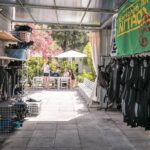
Your meeting point is Via Provinciale, 23, 95021 Aci Castello CT, Italy, with the start time listed at 8:30am. The good news is you’re not thrown into a confusing scavenger hunt. You meet at the base first, and in practice that’s where the wetsuit fitting happens.
One small detail that makes a big difference: getting your wetsuit measurements early. A proper fit helps you stay comfortable, keep warmth, and focus on technique instead of fighting gear. If you’ve ever tried to do sports while underdressed or restricted, you already know why this matters.
From there, the day connects to the port area (the training is described as about 50 meters from the port of Aci Trezza area). The point is simple: you’re close enough to the action that the transition to water practice feels efficient, instead of wasting time in transit.
Classroom Theory: Standards First, Then Skills
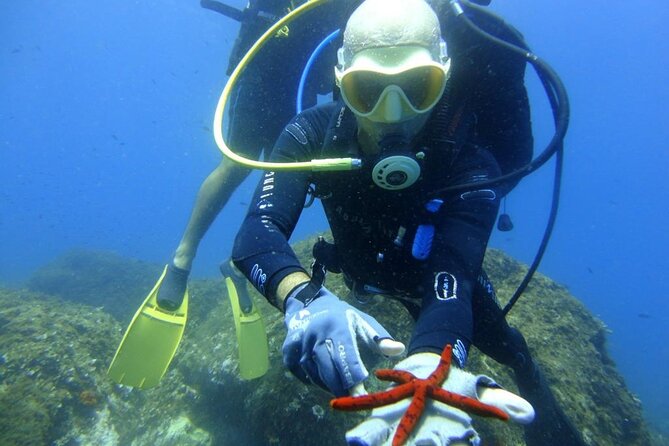
The course is described as intense learning in the classroom at the diving training location, followed by water sessions. In real terms, this is where you learn how scuba equipment and procedures are supposed to work—before you ever depend on them underwater.
I like this order. When you understand what you’re doing on land, the in-water practice becomes about muscle memory and calm repetition, not panic problem-solving. And because the course aims to implement the standards required by the teaching, you get a framework that’s meant to translate beyond one day.
The course also uses an instructor-led approach during the water portion. That matters because you’re not alone with a checklist. You’re guided while skills become real—so if something feels off, you can correct it right away.
Equipment Rental and the Wetsuit Fit Moment
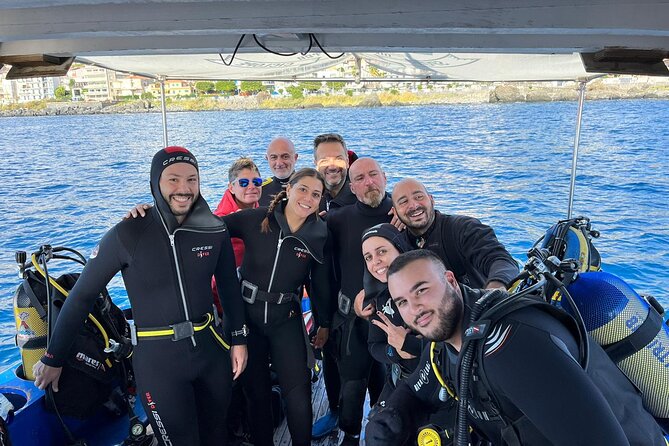
Equipment rental is included, so you don’t need to track down gear or pay extra on top of the course. That’s a real value point because scuba equipment can add up quickly if you have to rent multiple items separately.
What you’ll likely notice first is the wetsuit fitting process at the base. The practical benefit is straightforward: you’ll wear what you need for the water conditions, and the instructor can help confirm fit before you go forward. A better fit often means less distraction during training.
Also, because equipment is provided, you avoid the common first-day trap: arriving with gear that isn’t quite right. With a rental set-up, you’re working with the gear the instructors expect you to use for the standards they’re teaching.
Shallow-Water Exercises: Learn the Flow Before You Go Deeper
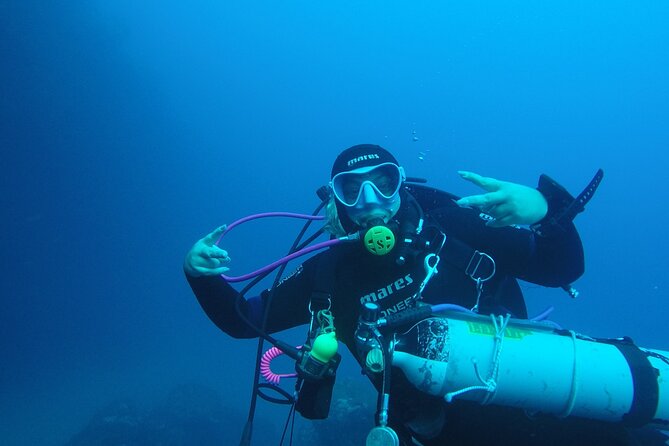
Your water training is structured in steps. A clear pattern shows up: practice in flatter, shallower water first, then progression into deeper water. The instructor checks that everything is going well before increasing depth.
That “slow enough to learn, guided enough to feel safe” approach is exactly what first-timers want. You’re building control—breathing rhythm, buoyancy awareness, and the basics of handling equipment—while someone watches for the moments where beginners typically struggle.
If you’re anxious about being new underwater, this part is often where confidence gets built. The instruction style described here is patient and attentive. You’re coached, and the instructor makes sure you’re okay before you move on. That single change—from rushing to assessing—can turn an overwhelming experience into a skill-building one.


The Traditional Boat Factor and Getting to the Training Area
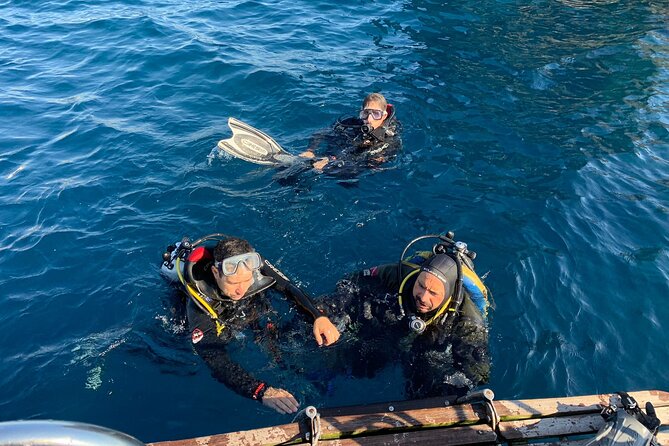
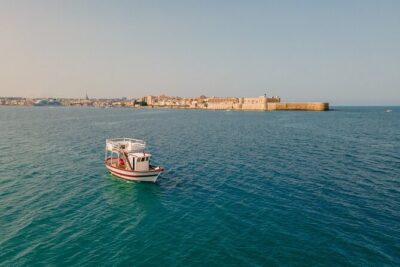
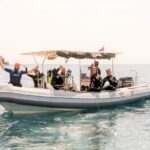
The experience is connected to the port area of Aci Trezza/Aci Castello. In at least one account, the team uses a traditional boat, which adds a sense of place and authenticity. Even if you mostly care about the course itself, the boat ride is part of the day’s rhythm.
Why I think that’s more than just a nice detail: it helps keep the whole course feeling like a proper local operation, not a rushed “pop in, pop out” set-up. You spend less time feeling like you’re being processed and more time being trained.
Also, being on the water with your instructor before the deeper work starts gives you a smoother mental transition. You get oriented to the local feel of the sea and your gear in a real setting, then you focus on the skills you came for.
Certification and Exam: What You Need to Finish Strong
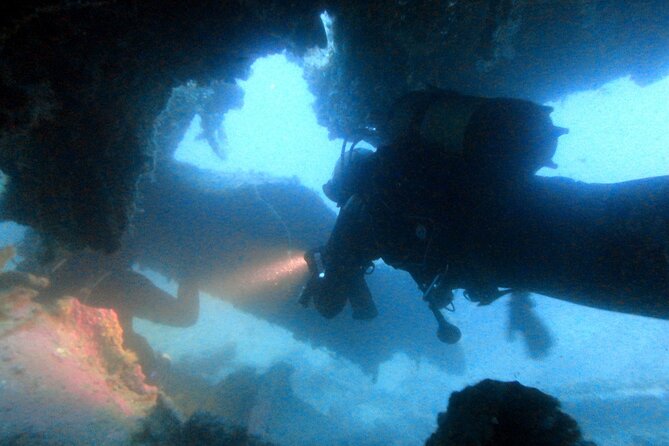
The course includes an exam at the end, and after it you’re issued international certification. The big value here is completion. You’re not just paying for a lesson—you’re paying for a finished outcome.
This matters if you want to continue scuba later. A certification card is your ticket to wider opportunities, and it typically also reduces friction when you book future activities. It’s one of the most practical travel “investments” you can make because it unlocks more than one experience.
To do well, show up ready to learn. The training is designed for the standards required by the teaching, and it moves through theory plus water skills. If you’re tired or distracted, it becomes harder to retain the procedures you’ll be asked to demonstrate.
Price and Value: Is $520.92 a Fair Deal?
At $520.92 per person for about two days, the price can feel like a big decision—until you break down what’s included. You’re getting taxes and fees covered, a professional guide, scuba equipment rental, and the core training itself.
A lot of “cheap” options fall apart once you add gear rental and instruction costs. Here, the package includes the main expense drivers. That makes the value easier to judge: you’re mainly paying for instructor time, equipment, and getting through the course to certification.
The other hidden value is structure. When the course is tightly run, you don’t burn vacation time on confusion—meeting at 8:30, doing fitting and training with a small group, and moving through theory and water sessions. For many people, saving even half a day is worth something.
So for the right person, I’d call this a fair deal: you’re paying for a complete training path, not just an underwater outing.
Transfers, Timing, and What to Expect Day to Day
Transfers are mentioned as approximate, and the exact timing depends on time of day and traffic. That’s normal around ports and coastal roads, so plan a little flex time around your schedule.
The start is clearly set at 8:30am, and the activity ends back at the meeting point. That means you don’t have to figure out complicated drop-offs at the end of a training day, which matters when you’re tired and you’ve just done an exam.
One scheduling nuance: the overall course description mentions about three days of intense classroom learning, while the duration is listed as approximately two days. I’d treat this as “time-intensive, with lots of classroom and water work,” not as a relaxed vacation activity. If your travel days are tightly booked, build in breathing room.
Weather, Health Checks, and When You Might Have to Reschedule
This experience requires good weather. If it’s canceled due to poor conditions, you’ll be offered a different date or a full refund. For scuba, weather isn’t just comfort—it’s safety and water conditions, so this requirement makes sense.
Before any water time, you’ll complete a health questionnaire. Some medical conditions, including asthma or heart conditions, may prevent you from diving, and you’re advised to consult your doctor. If you have any doubt at all, don’t wing it.
Also, diving within 48 hours of flying isn’t recommended. If you’re building a Sicily trip around flights, give yourself a small buffer so you can meet the course’s safety expectations.
This is the part that can change outcomes. When health and weather line up, the course flows. When they don’t, you may need to pause or reschedule.
Group Size and Instructor Style: Small Numbers, Better Attention
You’ll be in a maximum group size of 15. That’s a sweet spot for beginner training because it keeps you from feeling like a number, while still letting the instructors run a real program.
The experience may be operated by a multi-lingual guide. Even if you’re not fluent in Italian, this setup can make it easier to understand safety points and procedures, which is crucial when learning scuba fundamentals.
And the instructor style matters. In descriptions of the course, Andrea stands out for being prepared and approachable, explaining clearly and checking that everything is okay before increasing depth. That kind of calm attention can make the difference between feeling awkward and feeling capable.
Who This Course Is Best For (and Who Should Think Twice)
This Basic Scuba Diver course is ideal if:
- you want an international certification with a structured exam
- you’re a beginner or returning to fundamentals and want guidance throughout
- you value small group training and clear instruction
It’s also a good fit for travelers who want a “real skill” outcome from a trip, not just a one-time activity. Once you’re certified, you’re freer to explore future water experiences with more confidence.
Think twice if you:
- have medical concerns that may affect scuba clearance
- hate intense schedules and long classroom learning blocks
- have a tight flight schedule with no buffer time
Should You Book Etna & Sea Excursion for Basic Scuba Diver?
Yes, if you want a complete, structured path to international certification with equipment provided and a clear teaching style. The combination of punctual starts, wetsuit fitting at the base, shallow-to-deeper progression, and instructor-led checks is exactly what you want when learning something technical.
I’d also book it if you’re the type who likes learning standards first. The classroom time isn’t filler here—it supports what you’ll be asked to demonstrate in the water and on the exam.
The main reasons to hesitate are the same things that keep scuba safe: health screening requirements and weather dependence. If you can meet those conditions and you’re ready for an intense training schedule, this course is a strong value for your time in Sicily.
FAQ
What time does the course start?
The start time is 8:30am.
Where does the course meet?
You’ll meet at Via Provinciale, 23, 95021 Aci Castello CT, Italy.
How long is the experience?
The duration is listed as approximately 2 days.
What’s included in the price?
Included are all taxes and fees, a professional guide, scuba sessions, and scuba equipment rental.
Is a dive certification required?
The information says evidence of dive certification is required for divers wishing to participate in a certified dive.
Do I need a health check before going in the water?
Yes. You’ll be required to complete a health questionnaire prior to diving, and some conditions (like asthma or heart conditions) may prevent you from diving. It’s advised to consult your doctor.
What happens if the weather is bad?
This experience requires good weather. If it’s canceled due to poor weather, you’ll be offered a different date or a full refund.