REVIEW · CATANIA
boat tour exploring and searching for dolphins in Acitrezza
Book on GetYourGuide →Operated by Navigando per trezza · Bookable on GetYourGuide
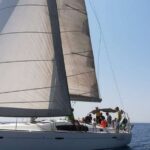
Dolphins have a habit of showing up here. This Aci Trezza boat tour is timed for early evening, when the protected waters around the Cyclops archipelago are at their most active. You’ll ride out with a small group and spend real time scanning the sea for dolphins, turtles, and local fish.
Two things I really like: the crew runs a respectful, professional search, with experience built from 10+ years in the sector. You also get smart tools for spotting what’s out there, including binoculars and cetacean identification cards, plus an onboard briefing about the monitored area.
One thing to keep in mind: dolphin-watching is never guaranteed. You’re going out about 5 km from shore and conditions matter, so you’ll want to be flexible if sightings are light or the sea turns rough.
In This Review
- Key things to know before you go
- Why Aci Trezza at Sunset Is Ideal for Cetacean Watching
- Getting Oriented at Bazar del Mare and the Pre-Departure Briefing
- Sailing Past Lachea Island: Nature Reserve Views and Subvolcanic Clues
- The Faraglioni and the Cyclops Story You’ll See in Real Rock
- Dolphin Marine Protected Area: When the Scanning Really Gets Moving
- The Swim Stop in Ionian Waters (And How to Prepare)
- Small Group Watching: Comfort, Guidance, and Cetacean ID Cards
- Price and Value: What $67.97 Really Covers
- Who Should Book This Aci Trezza Dolphin Search
- Should You Book This Dolphin Tour in Aci Trezza?
- FAQ
- How long is the boat tour?
- What time does the boat start?
- Where do we meet for the tour?
- How far offshore does the boat go?
- What animals are the crew searching for?
- Is swimming included?
- What languages are available on the tour?
- What happens if weather is bad?
Key things to know before you go
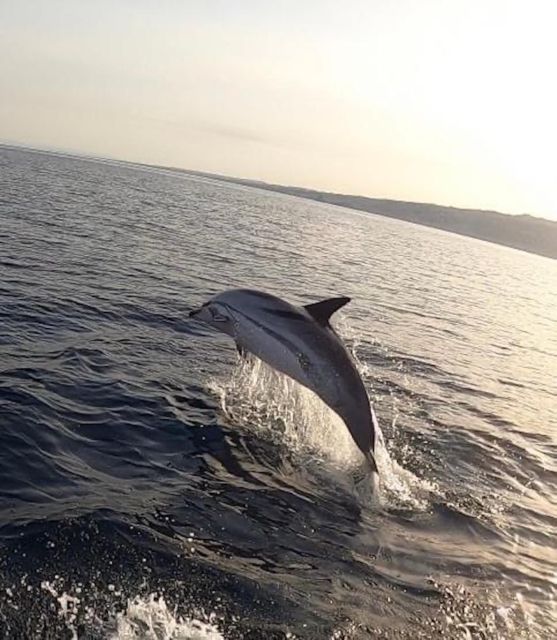
- Sunset timing with a 6:30pm start to catch the best light for spotting wildlife
- About 3 nautical miles (5 km) offshore before the main searching begins
- Binoculars + cetacean identification cards so you can follow what the guide sees
- A protected-water route focused on dolphins, turtles, and typical Sicilian fish like bluefin tuna
- Small group limit of 8 participants for easier listening and watching
- A possible swim stop during the tour stages, weather and sea permitting
Why Aci Trezza at Sunset Is Ideal for Cetacean Watching
Aci Trezza is one of those Sicilian places where the sea feels close enough to talk back. When you head out in the late afternoon, you trade bright midday glare for softer evening light, which can make animals easier to spot—and easier to enjoy from the deck.
This tour is built around that rhythm. It’s a 2-hour experience that starts at 6:30pm, and the crew positions the boat in the marine protected area where dolphins are monitored. Even if you don’t see a dolphin every minute, the scanning and the sea-time are the point.
The other smart choice here is how close you stay to the action. The boat moves away from the coast by about 3 nautical miles (roughly 5 km), so you’re not doing an all-day transfer. You’re out long enough to search, but still close to the local waters that make Aci Trezza famous.
You can also read our reviews of more boat tours in Catania
Getting Oriented at Bazar del Mare and the Pre-Departure Briefing
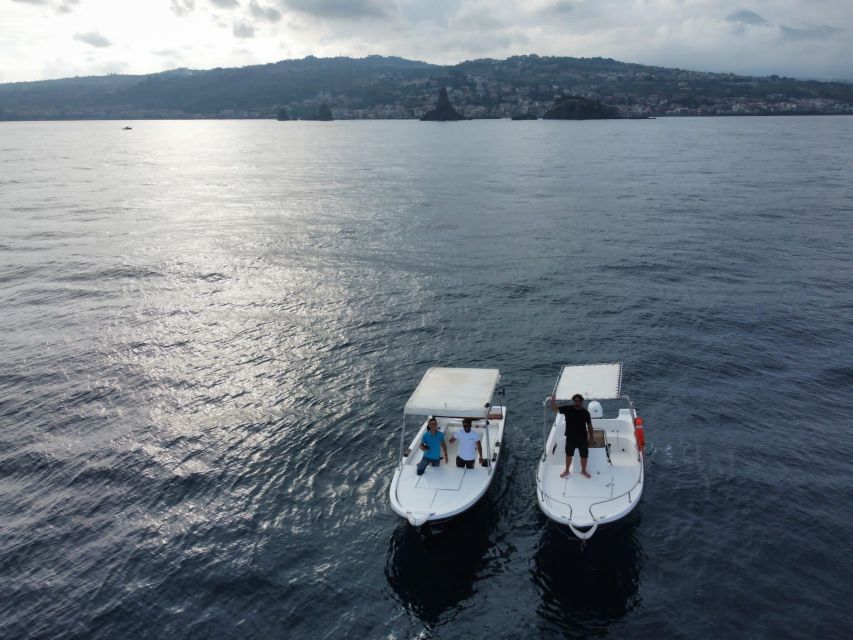
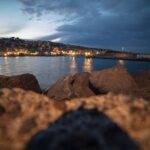
You meet at bazar del mare, with the tour based at Via Lungomare Dei Ciclopi, 177. This area is right where the vibe of Aci Trezza comes through—sea views, port energy, and that quick sense of: okay, we’re actually going out and looking.
Before the cruise gets serious, there’s a guided moment that helps you understand what you’re seeing. You’ll get an information briefing on cetaceans and the monitored area, plus the materials that make the spotting feel less random. The crew also provides binoculars and cetacean identification cards, so you’re not just staring at “the horizon” and hoping.
Language coverage is solid for a small operation: the skipper and guide work in Italian, English, and Spanish. On a tour where timing is everything, having instructions you can fully follow matters. You’ll also hear how the crew approaches wildlife, and the key idea is respect for flora and fauna (not racing around or crowding animals).
Sailing Past Lachea Island: Nature Reserve Views and Subvolcanic Clues
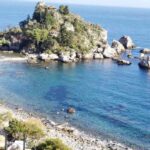
The cruise route includes a first wildlife-and-scenery stop around Lachea Island, which sits a bit farther off the coast of Aci Trezza. Lachea isn’t huge, but it’s prominent in the local seascape, and it belongs to the protected area that covers Lachea Island and the Cyclops stacks—a nature reserve established in 1998.
What I find useful about this stop is that it gives context fast. Lachea is described as subvolcanic in origin, shaped by magma intruding into existing seabed rocks. You don’t need to be a geology fan to appreciate what that means visually: these formations feel sturdy, ancient, and built by forces you can still see in the rock shapes.
Practically, it’s also a good “reset” point for your eyes. Before the main search zone, you get time to settle into the rhythm of scanning—watching water lines, looking for surfacing patterns, and learning what the guide considers a meaningful sign.
If you’re sensitive to motion, this is also the moment to decide where you’ll stand or sit for the best view. The tour structure assumes you’ll be outside looking, using binoculars rather than relying on screens.
The Faraglioni and the Cyclops Story You’ll See in Real Rock
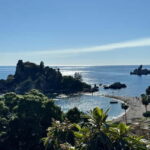
Next up are the Faraglioni, the famous stacked rocks that show up in local storytelling about the Cyclops Polyphemus. The legend goes that Polyphemus, blinded by Ulysses, hurled rocks into the sea—trying to stop the Greek hero from escaping. It’s a good myth, and honestly, it helps you remember what you’re looking at.
But there’s also the real-world side: the Faraglioni are part of a protected marine area made up of Lachea Island, the stacks, and other rocks arranged in an arc. Over thousands of years, wind and rain carved these shapes into something dramatic. Even if you’ve seen similar formations elsewhere in Italy, the Cyclops archipelago has a specific look—more rugged and angular, less smooth and beachy.
Why does this matter for your dolphin search? Because the protected area isn’t just scenery—it’s where the monitoring happens. The rocks and the marine layout influence how currents move and how animals travel. You’re not just wandering for views; you’re in a zone where the crew expects to find life and knows how to read the water.
A small drawback here: if you’re hoping for maximum wildlife action at every single stop, rock-and-legend moments can feel a bit “more sightseeing” than pure dolphin pursuit. Still, it’s a meaningful trade. The guide’s explanation turns the viewpoint into a lesson, not just a photo break.
Dolphin Marine Protected Area: When the Scanning Really Gets Moving
The heart of the tour is the time spent in the Dolphin Marine Protected Area at sunset. This is the portion designed for active watching—spot dolphins dancing in the waves, and keep an eye out for other species the crew monitors in the same waters.
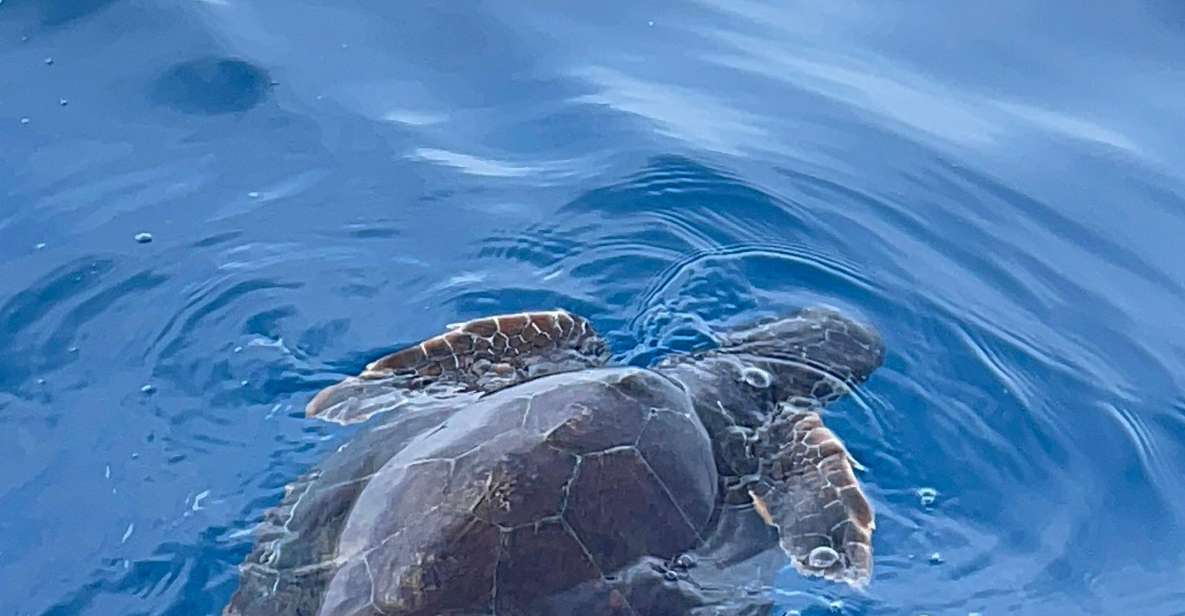
The tour description also points you to what else is possible: turtles and typical Sicilian fish such as bluefin tuna. Of course, fish and turtles aren’t guaranteed sightings on any single outing. The big value is that the crew isn’t only scanning for one animal. They’re looking with an informed, species-aware approach.
Here’s what I’d do in your shoes: treat the dolphin search like a coordinated effort, not a passive wait. Use the binoculars when the guide signals it, watch for the changes the crew is trained to notice, and stay patient through the quiet stretches. Often the best sightings come after a few minutes of “nothing,” when everyone’s already settled into the same search pattern.
Also, note the practical side of this zone. The boat heads away from shore for about 5 km, so you’ll likely see a broader view than you could from the promenade. That wider search area can increase your odds, but it also means your attention has to stay sharp. Bring the energy for scanning, not just for snapping photos.
The Swim Stop in Ionian Waters (And How to Prepare)
One of the nice extras is that, in the Sicilian Ionian Sea, you can stop for a swim during the tour stages. This isn’t described as a full on snorkeling session, but it’s enough to make the trip feel more than a standard wildlife cruise.
If you plan to swim, pack like you’re doing a quick beach-to-boat shift. The essentials listed are sunglasses, sunscreen, water, a jacket, and a waterproof bag. Even when it’s warm, evening breezes can cool you down after you’re done in the water.
From a comfort standpoint, a swim stop is also a small reset for people who don’t love standing still for 2 hours straight. You get a break from watching, and then you’re back on deck for the rest of the search.
The tour is only run in favorable weather conditions, so the swim portion depends on sea and conditions on the day. If you show up prepared for both scenarios—dry deck time or actual water time—you’ll enjoy it more.
Small Group Watching: Comfort, Guidance, and Cetacean ID Cards
This is a small group tour, limited to 8 participants. That’s not a random marketing number. It changes the experience because everyone can actually hear the guide, and there’s less crowding when someone spots a sign of wildlife.
The materials are part of that value. Cetacean identification cards plus binoculars mean you can connect what you’re seeing to what the guide is telling you. It’s easier to understand differences in surfacing behavior or body shapes when you’re given a framework before the searching starts.
I also appreciate the multilingual setup. If you’re more comfortable in English, Italian, or Spanish, you’re not stuck. The skipper and guide cover all three, which matters when instructions are coming quickly and you’re trying to stay focused on the sea.
One more detail I found encouraging: there’s emphasis on professionalism and respect for flora and fauna. That’s important for dolphin tours because the way a boat approaches wildlife changes everything. When the crew is trained and careful, your experience feels more ethical and more controlled.
And yes, you might even get a guide name on your date. In one past experience, someone thanked Andrea, which suggests he may be part of the crew on some departures. You’ll still be in good hands either way, but it’s a nice reminder that this isn’t a faceless operation.
Price and Value: What $67.97 Really Covers
At $67.97 per person, this tour isn’t just paying for time on a boat. You’re paying for a guided search with real equipment: binoculars, cetacean identification materials, and an information briefing on the monitored area.
It also includes the skipper and guide (Italian and English listed, with staff languages including Spanish too), plus civil liability insurance. For many short tours, that insurance and guided instruction are the difference between a pleasant boat ride and a structured nature experience.
The small-group limit matters for value. If you’re paying around $68, you want attention, not a scramble for space. Here, with up to 8 participants, you’re more likely to stay engaged and actually use the binoculars the way they’re meant to be used.
You’re also getting a 2-hour chunk of prime evening time. It’s not an all-day ticket that drains your energy. For Aci Trezza, that makes it easier to pair with dinner in Catania or another stop around the Ionian coast.
Who Should Book This Aci Trezza Dolphin Search
This tour fits best if you want guided wildlife watching without chaos. If you like learning while you look—using binoculars, following a search pattern, and hearing why the crew focuses on certain waters—you’ll enjoy it a lot.
It’s also a good choice for people who want a realistic chance at dolphins and other marine life, but understand that nature doesn’t guarantee results. Think of it as a search with experts, not a guaranteed wildlife show.
A couple of practical fit notes:
- It’s not suitable for people with heart problems or serious illnesses.
- It’s not wheelchair accessible, but it is accessible for strollers.
- Newborns must sit on an adult’s lap, so family planning matters.
If you’re traveling with kids, the stroller-friendly detail can help. If you’re traveling with someone who needs accessibility accommodations beyond stroller access, you’ll want to check alternatives before committing.
Should You Book This Dolphin Tour in Aci Trezza?
If you’re going to Sicily for sea views and you care about doing wildlife watching the right way, I’d book it. The combination of sunset timing, a protected-water focus, and a small group with real spotting tools makes it feel grounded, not random.
Book it especially if you want to get more out of the experience than just hoping for dolphins. The cetacean briefing, identification cards, and guide support turn the boat ride into a learning-and-looking mission.
But if your whole trip depends on one perfect outcome—like dolphins guaranteed, or a swim guaranteed—then be cautious. This tour runs in favorable weather, and sightings depend on the sea that day.
My practical advice: bring the listed essentials, arrive ready to stand and scan, and treat it like a short, well-run marine search. If you do that, you’re giving yourself the best shot at a memorable Sicilian evening out at sea.
FAQ
How long is the boat tour?
The tour duration is 2 hours.
What time does the boat start?
The start time is 6:30pm.
Where do we meet for the tour?
The meeting point is bazar del mare, and the main location reference is Via Lungomare Dei Ciclopi, 177.
How far offshore does the boat go?
The boat moves away from the coast for about 3 nautical miles, about 5 km.
What animals are the crew searching for?
The tour focuses mainly on dolphins, and also turtles and typical Sicilian fish such as bluefin tuna.
Is swimming included?
You can stop for a swim during the stages of the boat tour in the Sicilian Ionian Sea.
What languages are available on the tour?
The skipper and guide provide information in Italian, English, and Spanish.
What happens if weather is bad?
The experience only takes place in favorable weather conditions. If it’s canceled due to bad weather, you can choose another date or receive a full refund.