REVIEW · CATANIA
Catania: Private Tour with Arancino Tasting
Book on GetYourGuide →Operated by Italygonia Travel T.O. · Bookable on GetYourGuide
Catania has a brainy side and a food side. This private tour pairs big sights like the Ursino Castle and Sant’Agata Cathedral with the kind of on-the-ground context that makes architecture feel personal. I especially like the way you move through real city life—fish market sights and Roman-era traces—then finish with a proper arancino tasting that comes with clear rules for how to eat it. A key thing to consider: the walk is not wheelchair-friendly, so comfortable shoes matter.
I also love that the pacing is tight enough to fit a lot of meaningful stops into 2 hours, without turning the whole experience into a sprint. If you dislike crowded-looking market areas or prefer minimal walking, you may want to plan your day around this so you’re not already tired.
In This Review
- Key reasons this tour works well
- A city where Baroque façades meet serious ideas
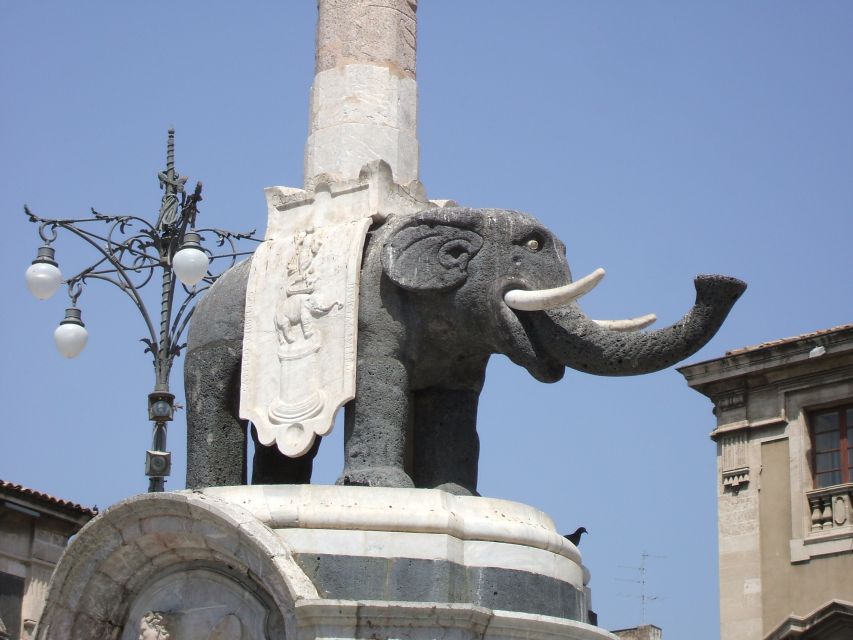
- Starting at Piazza del Duomo and the elephant fountain orientation
- Ursino Castle: a photo-worthy 13th-century anchor with Eastern-Western flair
- Via Auteri, Roman baths, and the fish market reality check
- Piazza del Duomo again: Baroque details and the elephant fountain loop
- Cathedral of Sant’Agata: built in 1090, rebuilt after 1693
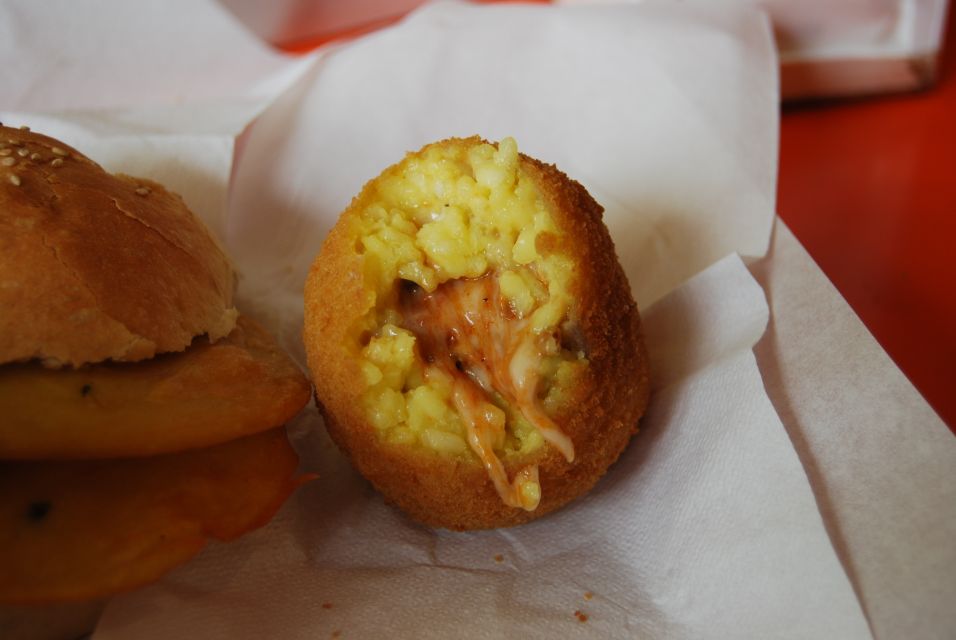
- Arancino tasting: the drop shape, the rice filling, and eating by hand
- Bellini Theater: Opera energy without needing a ticket
- Via Vittorio Emanuele and the long, satisfying walk-to-finale
- Benedictine monastery and Church of San Nicolò: a quieter ending
- Price and value: what $183.52 buys in real time
- What to bring, wear, and plan for during the walk
- Who this tour is best for
- Should you book this Catania Private Tour with Arancino Tasting?
- FAQ
- Where is the meeting point?
- Where does the tour end?
- How long is the private tour?
- Is this tour private?
- What languages are available for the guide?
- What’s included in the price?
- Is pickup or drop-off included?
- Are food and drinks included?
- Is it wheelchair accessible?
- What should I bring?
Key reasons this tour works well
- Silvia-level guidance: the guide’s deep historical command makes the sites click.
- Ursino Castle first: start with a 13th-century anchor before the city “unfolds” around it.
- Roman layers in the open: Via Auteri, Roman baths, and Roman-era references create a sense of continuity.
- Sant’Agata Cathedral with real stakes: built in 1090, rebuilt after the 1693 earthquake, with major tombs inside.
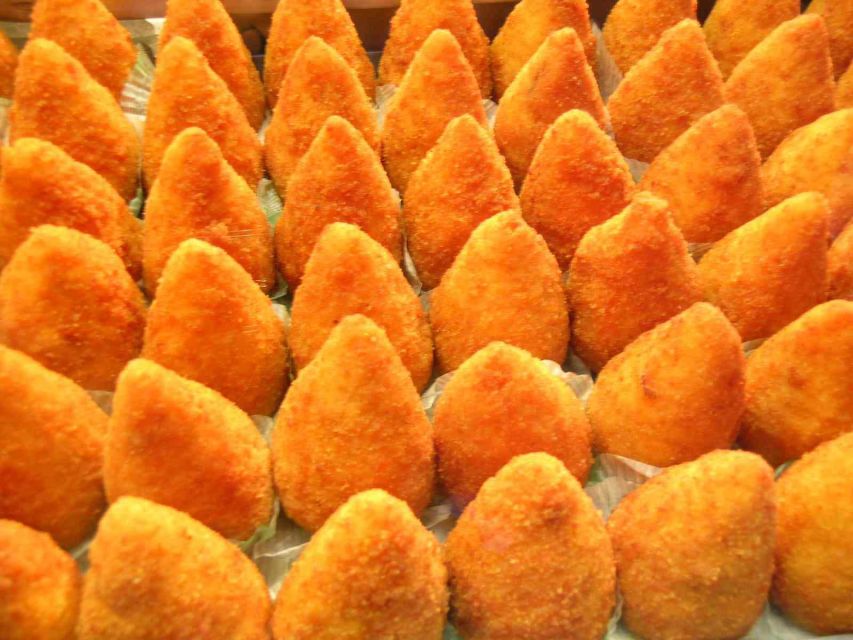
- Arancino, properly: drop-shaped, rice-and-meat filling, and an explicit hands-on eating method.
- The Opera house on foot: Bellini Theater adds a performance-energy moment even if you’re just sightseeing.
A city where Baroque façades meet serious ideas
Catania feels like Sicily’s meeting point between waves of history and the people who studied, sang, and built. You’ll hear names tied to artistic and scientific inspiration—like Vincenzo Bellini, Carmen Consoli, Giovanni Verga, and Ettore Majorana—while you’re standing in places that explain why the city produced that mix.
The best part is you’re not just looking. You’re walking a route that links monuments, streets, and daily scenes. That matters because Catania’s identity isn’t one monument—it’s the way everything layers on top of everything else.
You can also read our reviews of more food & drink experiences in Catania



Starting at Piazza del Duomo and the elephant fountain orientation
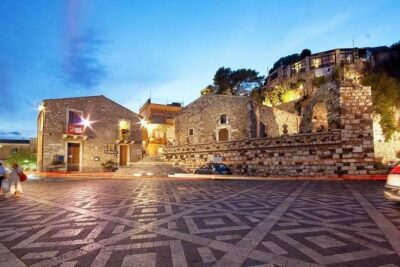
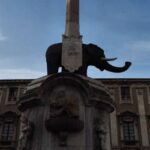
Your tour meets at Piazza del Duomo, right next to the elephant fountain. This is a smart starting point because the square helps you lock onto Catania’s “center of gravity” fast, before you start climbing into stories from different centuries.
From there, you’ll orient yourself to the Baroque buildings and the Piazza’s layout, so the rest of your walk doesn’t feel random. If you like taking photos, this area gives you an easy first set—bright stonework, dramatic façades, and that elephant fountain as a visual landmark.
Ursino Castle: a photo-worthy 13th-century anchor with Eastern-Western flair
The walk begins at Ursino Castle, a 13th-century structure that acts like a time anchor for the tour. One of the coolest details is how the architecture is described as a creative mix of Eastern and Western design. Even if you’re not a building-nerd, that concept gives you something to look for as you take pictures.
This stop works because you get a sense of power and permanence early on. Castles can be intimidating to tour, but starting here keeps the pace grounded: you learn what you’re seeing, then you move outward to the city that formed around it.
Practical note: bring your camera and plan for at least a few minutes of lingering. The castle is where it’s easiest to get that “this is Sicily” shot without needing any special timing.
Via Auteri, Roman baths, and the fish market reality check
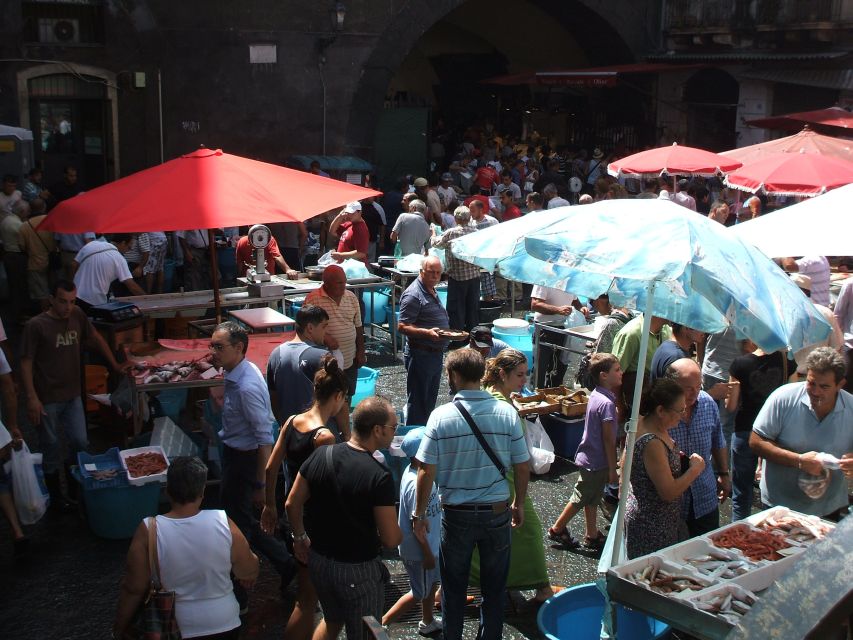
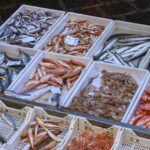
After the castle, you’ll pass along Via Auteri and reference the Roman baths in the city’s layers. Then comes a sensory shift: the route brings you to Catania’s fish market.
Walking near the market is a great reminder that Catania isn’t frozen in stone. You’ll see an array of sea creatures as you go, which turns the historical story into something current—very different from what you’d experience at an all-museum day.
The consideration here is simple: fish markets can be intense on sight and smell, even when the goal is just to look. If you’re sensitive to that, keep your expectations realistic and wear comfortable shoes so you can slow down without stress.
Piazza del Duomo again: Baroque details and the elephant fountain loop
Yes, you’ll return to Piazza del Duomo during the walk. That isn’t a mistake—it’s a way to build a stronger mental map. Seeing the same starting square after you’ve moved through Roman-era references helps you connect the timeline.
This segment focuses on the Baroque buildings and the elephant fountain. It’s the kind of place where photos make sense because the lines are theatrical and the stonework is meant to be noticed. You’ll also understand why the square is such a common meeting spot in a city with layered neighborhoods.
You can also read our reviews of more private tours in Catania


Cathedral of Sant’Agata: built in 1090, rebuilt after 1693
Next up is the Cathedral of Sant’Agata, built in 1090 above the Roman baths of Achille. That’s one of those details that changes how you see the cathedral: you’re not just looking at a church—you’re looking at a structure built over earlier Roman space.
Then comes a key turning point in Catania’s story: after the earthquake of 1693, the cathedral was completely rebuilt. You’ll feel the impact of that kind of event in the way religious architecture can become both a spiritual symbol and a rebuild statement for a whole city.
Inside, you’ll see the tomb of Vincenzo Bellini and many Aragonese kings. This is the stop where the tour’s “why” becomes visible. Bellini ties the city’s creative legacy directly to a physical place, and the Aragonese connection gives you a sense of political power showing up in sacred space.
Tip for your camera: inside lighting can be dim, and you may want to use settings that don’t blur. Keep your shots quick, then listen for the guide’s point-by-point explanations.
Arancino tasting: the drop shape, the rice filling, and eating by hand
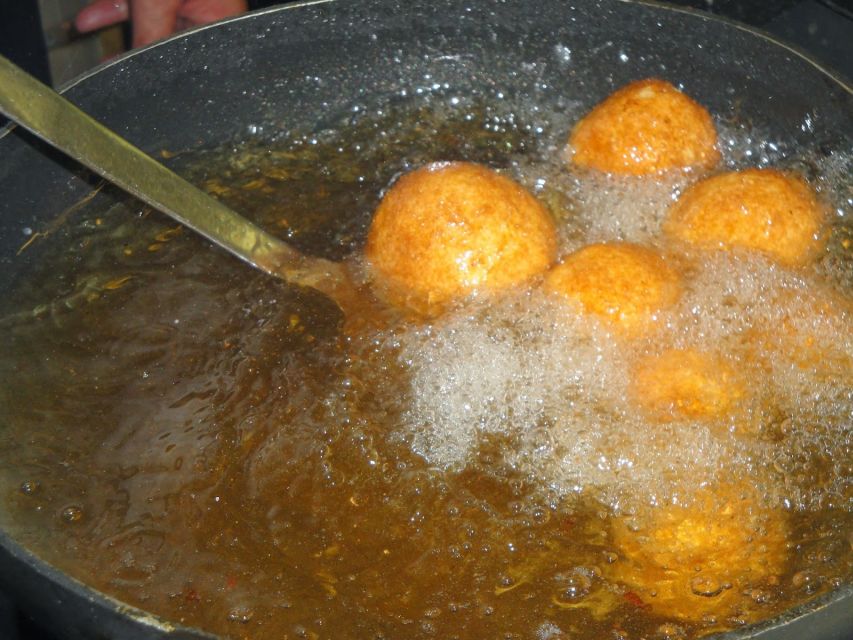
Feeling hungry? This is where the tour earns its keep. You’ll do arancino tasting, and it’s not just a snack handed to you. You get instruction on what to do, including how to eat it.
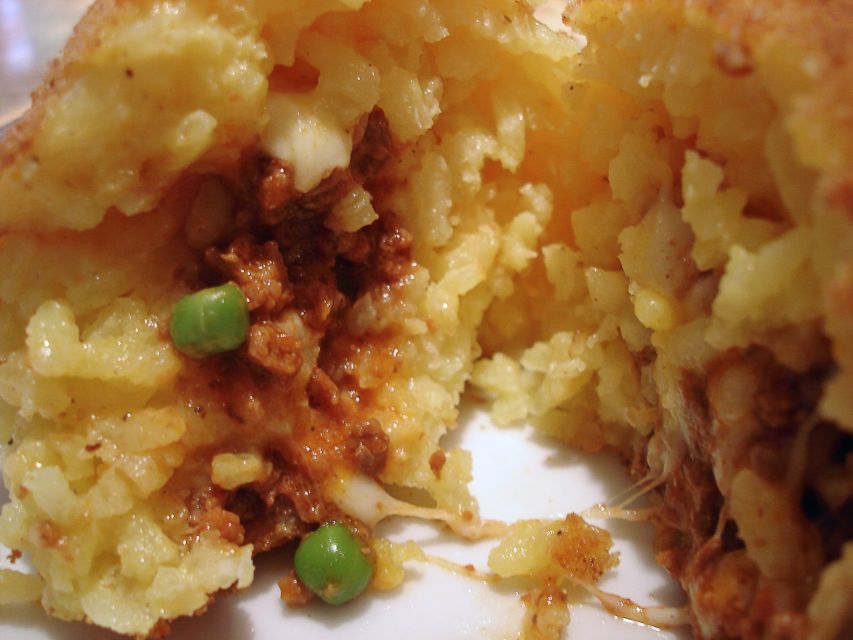
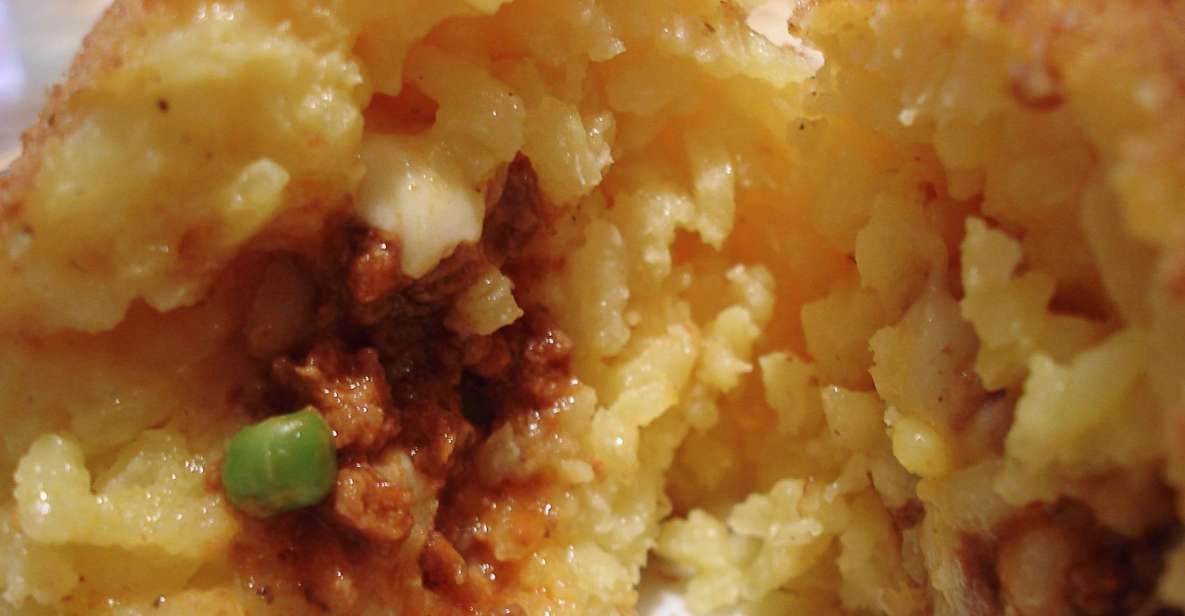
Arancino here is described as a specific product shaped like a drop, filled with rice and meat sauce. And here’s the rule: it should be eaten strictly with the hands, holding it from the bottom end.
That “from the bottom end” detail sounds minor, but it’s practical. It keeps the filling from spilling, and it helps you eat it like a local rather than fighting it like a messy street food. If you love authentic food experiences, this is one of the few tours where the eating method is part of the lesson, not just the ingredient list.
Bellini Theater: Opera energy without needing a ticket
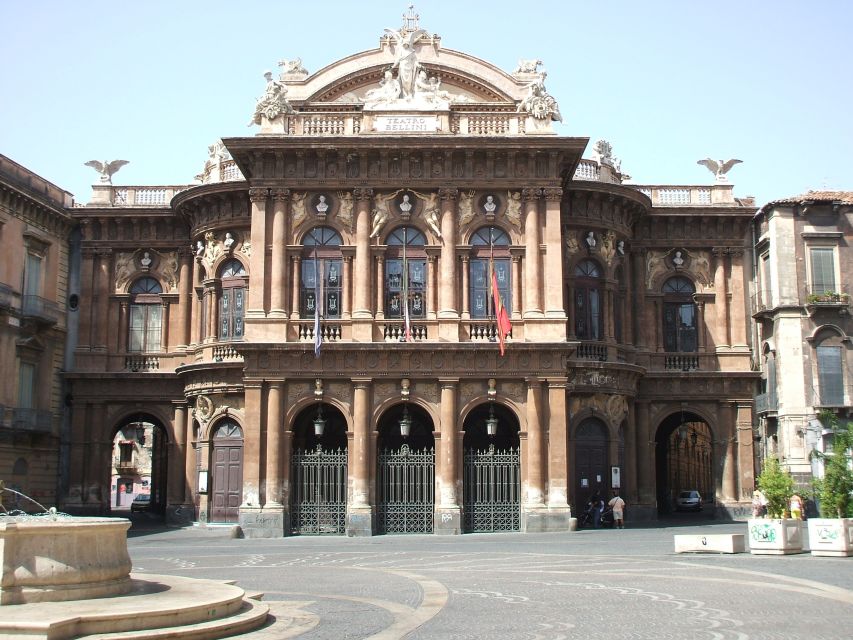
After arancino, you’ll walk toward the Bellini Theater, which stages the Opera. Even if you’re not attending a performance, the building itself is the point, with enough visual drama that you’ll want photos for your feed.
This stop is valuable because it connects people’s lives—music, drama, public culture—to a city tour that started with castles and cathedrals. Bellini’s presence in the cathedral, then the theater named for him, gives you a tidy emotional line: you’re seeing how art leaves fingerprints in stone.
If you’re an Instagram shooter, plan to pause a bit here. The theater is one of those places where a “quick snap” always underdelivers.
Via Vittorio Emanuele and the long, satisfying walk-to-finale
From the theater area you’ll stroll along Via Vittorio Emanuele. This part of the route helps you shift from landmark mode to neighborhood rhythm.
It’s also a good “breathing space” moment. After you’ve taken in cathedral interiors and market life, this street gives your feet and brain an easy reset before you finish at the religious sites.
Even though it’s not the biggest monument in the mix, it keeps the tour from feeling like a checklist. You start to see how the city actually links its important places.
Benedictine monastery and Church of San Nicolò: a quieter ending
The tour finishes at the Benedictine monastery and the Church of San Nicolò. This ending matters because it keeps the focus on faith-and-history without dragging the day into another major-ticket stop.
It’s also a good moment for photos if the light cooperates, since smaller churches often photograph well when you take your time. Expect a slower feel here compared with the market and cathedral moments.
Then you’ll return to the meeting point in Piazza del Duomo, keeping the logistics simple.
Price and value: what $183.52 buys in real time
At $183.52 per person for a 2-hour private tour, you’re paying for three things: a guide who can connect the story threads, the concentrated walking route, and the included arancino tasting.
If you’ve ever done the “self-walk with a map” version, you know what you miss: context. Here, your guide’s job is to make the overlap between Norman-Swabian heritage, Baroque rebuilding, and Roman references feel coherent as you walk. That’s the value part. The sights are important, but the explanation is what turns them into something you remember.
Also, because it’s a private group, the pace can match how you like to travel. Two hours is long enough to feel you “did” something, but short enough to stay sharp.
What’s not included is also worth noting: food and drinks aren’t included beyond the arancino tasting, and there can be Roman theater fees if a ticketed stop comes up. There’s no pickup/drop-off, so you’ll want to get yourself to Piazza del Duomo on your own.
What to bring, wear, and plan for during the walk
This tour gives you a clear packing list, and I’d treat it as a checklist:
- Comfortable shoes
- Camera
- Water
- Comfortable clothes
- Credit card and cash
I’d add one small practical tip: wear clothing you can move in. You’ll be on foot through squares, streets, and sites that take a bit of time to look at properly.
And one more consideration: the tour is not suitable for wheelchair users, so if mobility is an issue for you or your group, you’ll want to look for a different format.
Who this tour is best for
This is ideal if you want a tight, guided route that mixes famous landmarks with everyday city texture—market sights, street energy, and stops that connect history to modern identity.
It also fits well if you care about food that’s more than a random bite. The hands-on arancino rule makes it feel like a real local skill, not just a snack stop.
If you’re traveling with someone who likes history, and another person who wants photos and food, this tour is one of those rare compromises that satisfies both.
Should you book this Catania Private Tour with Arancino Tasting?
Book it if you want a guide-led walk that covers Catania’s major anchors—Ursino Castle, Sant’Agata Cathedral, Bellini Theater—and you don’t mind a couple of concentrated walking segments.
I’d pass or rethink it if your group needs wheelchair accessibility or you’re aiming for minimal walking and maximal free time. Also, because food beyond the arancino tasting isn’t included, plan for water and consider grabbing drinks on your own before or after.
One more reason to feel confident: the tour has strong feedback about the guide’s depth. In particular, Silvia is highlighted for excellent knowledge, including a very high level of historical background, which is exactly what turns a 2-hour tour into a meaningful one.
FAQ
Where is the meeting point?
Meet your guide at Piazza del Duomo, right next to the elephant fountain.
Where does the tour end?
The tour ends back at the meeting point in Piazza del Duomo.
How long is the private tour?
The duration is 2 hours.
Is this tour private?
Yes, it’s a private group experience.
What languages are available for the guide?
The live tour guide is available in English and Italian.
What’s included in the price?
A local guide and an arancino tasting are included.
Is pickup or drop-off included?
No pickup and drop-off is included.
Are food and drinks included?
Food and drinks are not included, beyond the included arancino tasting.
Is it wheelchair accessible?
No, it’s not suitable for wheelchair users.
What should I bring?
Wear comfortable shoes. Bring a camera, water, credit card, and cash, plus comfortable clothes.