REVIEW · CATANIA
Catania: Volcanic Wine Tasting in a Metropolitan Market
Book on GetYourGuide →Operated by Kemedia · Bookable on GetYourGuide
Volcanic wine in a city market sounds odd. Yet at Piazza Scammacca in Catania, you taste how volcanic soils shape real Sicilian wines, with a guided explanation that stays clear and practical. It’s a smart mix of market atmosphere and wine education, built around four pours and bites.
I really like two things here. First, the four-glass tasting comes with food that’s designed to match what you’re tasting, not random snacks. Second, the sommelier-led talk connects flavors to volcanoes in a way that actually makes sense, and you might hear different stories from hosts such as Luca, Dominico, Andrea, Frederico, or Gabrielle.
One thing to consider: the pacing can be slow between some pours. On one booking, I saw comments about longer wait times and a less-than-ideal flow early on, so if you hate hanging around, I’d show up hungry and ready to focus.
In This Review
- Key points before you go
- Piazza Scammacca: where the tasting feels local
- The volcanic-wine theme: the part that makes this different
- What happens during the 1.5 hours: four pours and bite-sized matching
- One careful note on timing
- The pairing philosophy: how chefs and sommeliers work together
- The human factor: meet the sommeliers (and why names show up)
- Where you’ll be tasting: Piazza Scammacca atmosphere with an interesting interior
- Price and value: is $53 fair for what you get?
- Who this Catania tasting suits best
- Who should skip it
- Practical tips so your tasting goes smoothly
- Should you book this volcanic wine tasting in Catania?
- FAQ
- How much is the volcanic wine tasting in Catania?
- How long does the experience last?
- How many glasses of wine will I taste?
- What food is included?
- Where do I meet the staff?
- What languages is the instructor available in?
- Is the experience wheelchair accessible?
- Who is this experience not suitable for?
- Is free cancellation available?
Key points before you go
- Piazza Scammacca starts the story: you’re tasting in Catania’s first metropolitan market area.
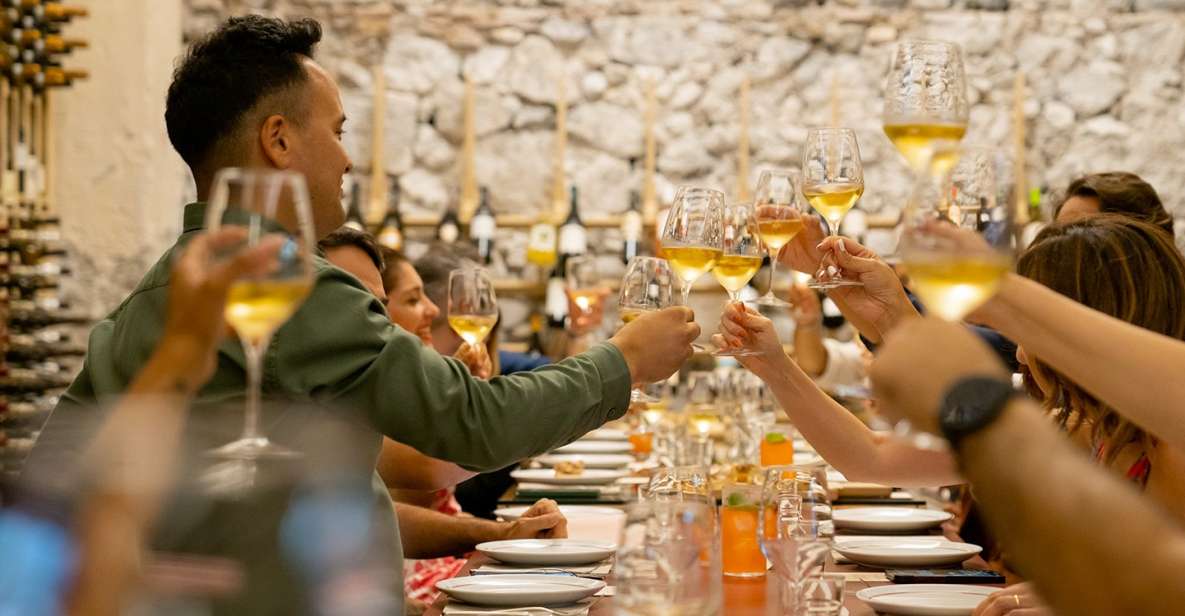
- Four wines, four food pairings: each glass arrives with matching bites planned for that pour.
- Volcano science, explained simply: you’ll learn how eruption-influenced soils affect smells and flavors.
- You may taste a surprising bubbly white: at least one guest noted it was not champagne or prosecco.
- Real staff energy matters: reviews highlight hosts like Luca and Dominico for clear, fun explanations.
Piazza Scammacca: where the tasting feels local
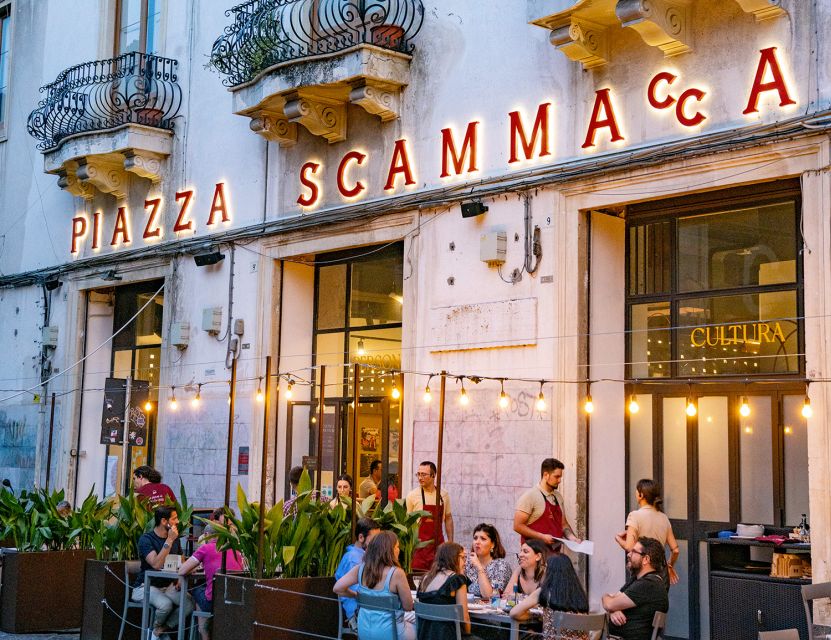
Catania has a way of doing culture through everyday life. This experience starts in Piazza Scammacca, the city’s first metropolitan market, so you’re not stepping into a wine “theme room” right away. You’re right where people shop, eat, and move through the day.
That matters because it changes your mindset. Wine tastings can feel a bit staged. Here, the market setting keeps the vibe grounded. Even if you’re a total wine beginner, you’ll feel like you’re learning something tied to local habits, not a distant hobby.
You’ll show your confirmation voucher to staff at the entrance of Piazza Scammacca, so plan a few minutes to arrive on time. Once you’re in, you’ll get the guided structure for the tasting, plus a quick orientation about the place and the wine theme.
You can also read our reviews of more food & drink experiences in Catania


The volcanic-wine theme: the part that makes this different
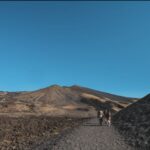
Most wine tastings teach grape variety and winemaking basics. This one adds a twist: it’s built around Sicilian volcanic wines and how volcano eruptions influenced aroma and flavor.
You’ll get explanations about:
- different volcano origins and compositions
- how those differences relate to how wines are produced
- why soils can create smells and flavors that feel truly unusual
The practical value of this theme is that it gives your brain something to hold onto while you taste. Instead of just saying, This one is fruity and that one is dry, you’re learning what to look for—how mineral-like impressions, scent shifts, and overall “character” can connect to volcanic ground. Even if you don’t remember every technical term, you’ll remember the flavor logic.
And yes, the surprise factor is real. One participant specifically called out a bubbly white that wasn’t champagne or prosecco. That’s the kind of moment that tells you this tasting isn’t just repeating the usual labels.
What happens during the 1.5 hours: four pours and bite-sized matching
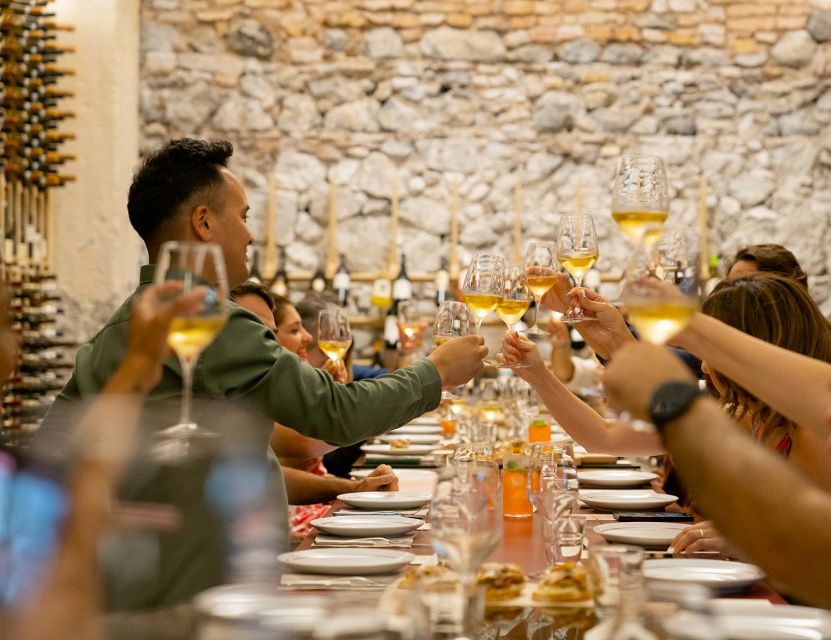
The tasting runs about 1.5 hours, and the structure is straightforward: four different glasses, each paired with food.
Here’s how I’d expect the flow to feel:
- You start with the first wine and a short explanation from your sommelier.
- Then the matching food shows up—meant to “meet” the wine where it’s strongest.
- You move to the next pour, with another layer of context and flavor comparisons.
- The process repeats until you’ve tasted all four glasses and had enough time to connect the dots.
This pacing is part of the value. With four tastings, you’re not just getting one “best-of” pour. You’re building a mini education. You’ll taste differences, then learn what likely causes them.
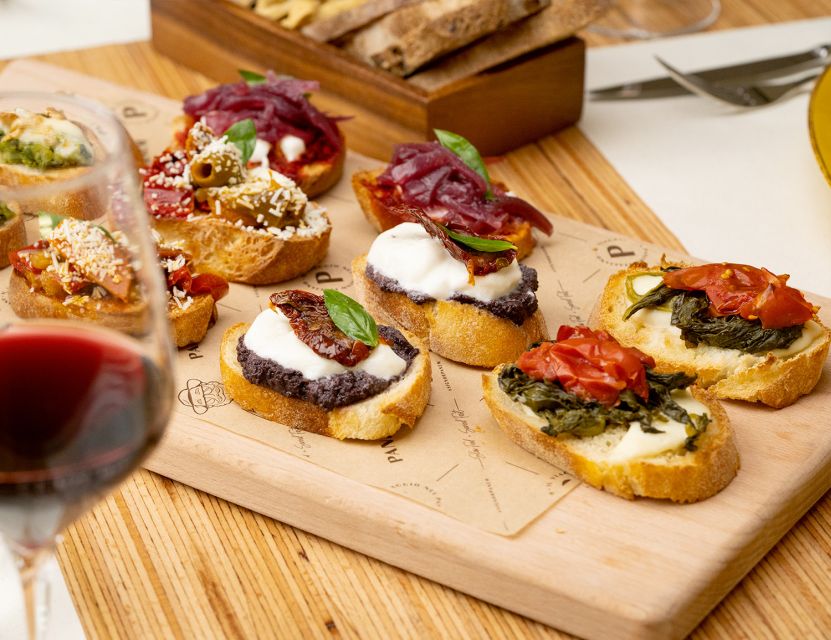
Food-wise, it’s designed to be synergy, not filler. The experience includes food samples crafted to pair perfectly with each wine. That’s why you should treat it like a real mini meal. Multiple reviews mention skipping dinner beforehand because the pairing food is substantial enough to matter.
One careful note on timing
Not everyone loved the tempo. One review said there were noticeable wait times between pours even though the restaurant wasn’t busy. Another pointed to a slower start and delays before things picked up.
So here’s my practical advice: don’t schedule this right before something you have to rush to. If you tend to get impatient in seated experiences, give yourself cushion time before and after.
The pairing philosophy: how chefs and sommeliers work together
The key ingredient you should expect is collaboration. Your sommelier leads the wine side, while local chefs help create the food pairings so the whole thing makes sense as one experience.
Why that’s valuable:
- You taste the wine in a real-food context.
- You learn how flavors shift when they meet salt, fat, acid, or spice.
- You stop guessing and start understanding what pairing is trying to accomplish.
In reviews, guests repeatedly called the food delicious and “perfect” alongside the wines. Even better, one guest with gluten intolerance reported that special food was prepared for them, which is a strong sign that the pairing team takes dietary needs seriously when possible.
If you have dietary requirements, I’d still be direct and ask what can be accommodated at the time of your booking or with staff at check-in. The data here shows they can handle at least some needs, but it doesn’t spell out a full policy list.
You can also read our reviews of more shopping tours in Catania


The human factor: meet the sommeliers (and why names show up)
Wine can be taught in two ways: with facts, or with a story people can follow. This experience seems built to do both.
Reviews highlight hosts including:
- Luca, praised for excellent explanations
- Dominico, described as enthusiastic and easygoing while still informative
- Andrea, credited with friendly, clear guidance
- Frederico, noted for learning guests about Etna and the regional context
- Gabrielle, praised for a knowledgeable and friendly approach
The practical takeaway: you’re not just buying wine. You’re buying how someone turns wine into something you can taste and remember.
And when the host is lively, that’s when the whole event clicks. One review even mentioned additional kindness like extra time spent talking and helping after the tasting. That’s not guaranteed, but it matches the overall theme: the staff seem invested in making the experience feel personal.
Where you’ll be tasting: Piazza Scammacca atmosphere with an interesting interior
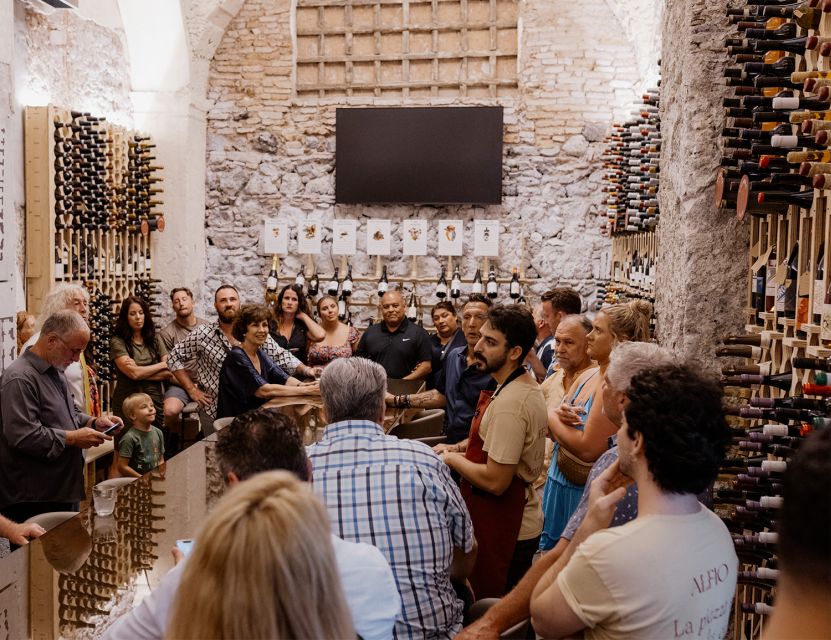
The tasting happens in the Piazza Scammacca area, and multiple reviews mention a distinctive setting—some describe it as being in part of an old church or cathedral, with a restaurant inside.
That kind of interior is more than decoration. It helps you slow down and pay attention to each pour. It also makes the evening feel different from a standard bar-and-chair wine stop.
Another practical detail from reviews: there may be multiple kitchens available in the venue, which could explain how quickly food can be served as you move through the tasting.
If you like watching people and soaking up street life, the location also helps. One guest specifically mentioned the venue being interesting for people-watching, which is a nice bonus when you have a little time before or between courses.
Price and value: is $53 fair for what you get?
At $53 per person for about 1.5 hours, this is not a budget tasting. It’s priced like a guided experience with real wine and food, not a quick flight.
Here’s why it can still feel like good value:
- You get 4 glasses of wine. That alone puts this into the “real tasting” category.
- You get food samples paired to each wine. Even small pairings add up when the planning is intentional.
- You get an expert-led explanation focused on volcanic influence, which is the differentiator here.
Also, the overall rating is strong: 4.4 out of 5 from 119 reviews. Most feedback focuses on the wine quality, the pairing quality, and the guide’s ability to explain.
So my take: if you enjoy wine you’ll actually talk about—plus food pairing—you’re likely to feel this is money well spent. If you only want a casual sip and don’t care about learning, then you might feel the cost more than you’d like.
Who this Catania tasting suits best
This activity fits best if you like:
- guided tastings with a clear theme
- food pairings (not just wine)
- learning how “place” affects wine style
It may also suit couples well. Several reviews describe great experiences for small groups, and one booking mentioned being just two people with the guide taking extra time to talk.
Who should skip it
The experience is not suitable for:
- pregnant women
- children under 18
- people with pre-existing medical conditions
Wheelchair accessibility is listed as available, which is reassuring if mobility is a concern for you.
Practical tips so your tasting goes smoothly
A few small moves can make a big difference here.
- Go hungry or lightly fed. The food samples are part of the tasting flow, and at least one review said not to eat dinner beforehand.
- Expect guided pacing. If you dislike waiting between pours, don’t schedule tight connections right after.
- Listen for the host’s volcanic framing. The whole point is connecting soil and volcano history to what you smell and taste.
- Try the bubbly carefully. Since at least one person reported it wasn’t champagne or prosecco, it’s worth tasting it as its own style rather than expecting a familiar label.
- Ask about dietary needs early. Gluten intolerance was supported in a review, but you’ll want clarity on your specific situation.
Should you book this volcanic wine tasting in Catania?
If you want something more interesting than a generic wine flight, I think this is a smart booking. The blend of volcanic-wine education, four planned glasses, and food pairing makes it feel like a focused experience rather than a quick stop.
Book it if:
- you enjoy wine explanations tied to place
- you want pairing food included
- you’re spending time around Piazza Scammacca and want a structured, local-feeling evening
Skip it if:
- you hate any slow pacing between pours
- you want only a short, casual drink without guided discussion
- you fall into one of the listed unsuitability groups
If you’re on the fence, pick a time when you can relax before and after. When the flow works, this turns into one of those Catania moments you’ll remember because it taught you how the island tastes, not just what it costs.
FAQ
How much is the volcanic wine tasting in Catania?
It costs $53 per person.
How long does the experience last?
The duration is 1.5 hours.
How many glasses of wine will I taste?
You’ll sample four glasses of Sicilian volcanic wines.
What food is included?
The experience includes food samples meant to pair with the four wine glasses. Additional food and drinks are not included.
Where do I meet the staff?
Show your confirmation voucher to staff at the entrance of Piazza Scammacca.
What languages is the instructor available in?
The instructor offers English and Italian.
Is the experience wheelchair accessible?
Yes, it’s listed as wheelchair accessible.
Who is this experience not suitable for?
It’s not suitable for pregnant women, children under 18, and people with pre-existing medical conditions.
Is free cancellation available?
Yes, free cancellation is offered up to 24 hours in advance for a full refund.