REVIEW · SICILY
ETNA – Sunset at high altitude
Book on Viator →Operated by Ashàra Etna & Stromboli Guides · Bookable on Viator
Etna at sunset hits different. This guided trek takes you from Sapienza high up to crater country, with big views over the Valle del Bove and a long return under starlight. It’s timed for the southern side of the volcano, so the light feels dramatic and the whole place goes quiet as the day turns.
I especially like the way the walk is built around real volcanic landmarks: you get explanations tied to the 2001 eruption and then look out over the Valle del Bove. You’ll also reach the well-known Torre del Filosofo viewpoint and keep climbing to wait for sunset around 3,000 meters, on the Craters of 2002/2003.
One thing to plan for: the €52 per person cable car ticket is not included in the tour price, and the hike asks for moderate fitness (plus a long walk back over volcanic sand with a headlamp).
In This Review
- Quick Highlights Before You Lace Up
- Why Etna’s Sunset Hike Works at 3,000 Meters
- Gear and Fitness: What’s Included (and What You Must Bring)
- Price Reality: How $62.47 Becomes a Full Etna Plan
- The 3:00 pm Start: How the Timing Feels
- Stop-by-Stop: From 2,500m to the Valle del Bove
- What can be hard here
- Waiting for Sunset at ~3,000m: Craters of 2002/2003
- The Descent Under Starlight: Volcanic Sand Walk-Back
- Guides Matter: The Ashàra Team Touch
- What You’ll Learn Without Feeling Like a Classroom
- Who This Etna Sunset Hike Is Best For
- Value Check: The Real Trade-Offs
- Should You Book This Etna Sunset Hike?
- FAQ
- What time does the Etna sunset hike start?
- Where does the tour meet?
- Do I return to the same place?
- How much is the cable car ticket?
- What gear is included?
- How fit do I need to be?
- How big are the groups?
- What happens if the weather is bad?
- What is the cancellation policy?
Quick Highlights Before You Lace Up
- Cable car to 2,500 meters first: you start high, so the hiking feels focused on Etna’s most interesting zones rather than slogging up from town.
- Eruption stories tied to viewpoints: you learn about what changed on Etna in 2001, not just the usual name-and-date version.
- Valle del Bove viewpoint: the huge eastern depression reads instantly once you’re up there.
- Torre del Filosofo and higher craters: you get a classic Etna stop, then keep going for sunset at roughly 3,000 meters.
- Headlamp + helmet included: you’re set for the starlit return, and the route is taken seriously.
Why Etna’s Sunset Hike Works at 3,000 Meters
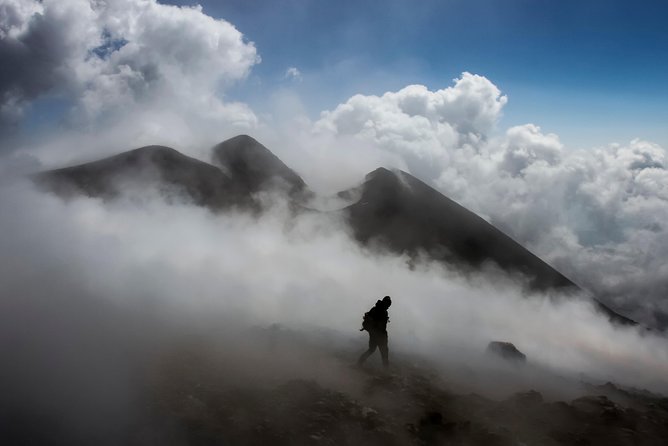
This is the kind of hike where timing matters. Starting in the late afternoon and reaching crater terrain right as the light shifts means you’re not just walking for exercise; you’re walking for atmosphere. At altitude, clouds move fast and colors change quickly, so you’re always watching, not just hiking.
What I like is that the route is practical: you’re not trying to brute-force altitude from sea level. You take the cable car to around 2,500 meters, then the guide helps you connect what you’re seeing with what the volcano did. That makes the views feel less random and more meaningful.
The sunset part is also handled thoughtfully. You’ll wait at higher elevation for the sun to drop, then your descent becomes a night walk under stars. That flips the mood: daytime Etna feels sharp and bold; the return feels silent, a little spooky in a good way, and very memorable.
You can also read our reviews of more evening experiences in Sicily
Gear and Fitness: What’s Included (and What You Must Bring)
The package includes trekking shoes, trekking poles, headlamp, and a helmet. That’s a big deal for value and for comfort. If you don’t already have proper hiking shoes or poles, you won’t lose time figuring out rentals at the last minute.
Still, you should come prepared for cold and effort. At 3,000 meters, temperatures can drop fast once the sun goes down. The tour asks for moderate physical fitness, which usually means you should be comfortable with a sustained climb, not just a short stroll. Also, the long walk back happens on characteristic volcanic sands, which can feel different from normal trail dirt under your feet.
If you’re prone to knee pain, consider your pace. Trekking poles help, but your legs will still feel it. The good news: the group size is capped at 20, so it’s not chaos on narrow sections.
Price Reality: How $62.47 Becomes a Full Etna Plan
The listed price is $62.47 per person, but the cable car ticket is €52 per person and is not included. That means your real budget is the base tour cost plus the cable car.
Is it worth it? In my view, yes, if you value the guide-led timing and included gear. You’re paying for more than a path. You’re paying for:
- a structured route up to viewpoints tied to specific eruptions,
- the choice to wait for sunset at altitude (when you really want an expert to time things),
- and safety tools like helmet and headlamp that you don’t want to improvise.
If you already have solid hiking gear and you were planning to go up on your own, the biggest difference is the explanation + pacing. The guided approach helps you understand why each step matters.
The 3:00 pm Start: How the Timing Feels
This tour starts at 3:00 pm from Piazzale Rifugio Sapienza in Nicolosi (CT). It lasts about 5 to 6 hours, and it ends back at the meeting point. That round-trip structure is handy: you don’t need to worry about transportation after you’ve climbed and waited for sunset.
The late start is key. You’ll use the afternoon to gain elevation, then you’ll be positioned at high altitude when the light turns. If you’ve ever watched sunset from sea level, you know it’s pretty. From Etna’s crater zone, it’s different: the sun seems lower in the sky, shadows stretch across volcanic ground, and the views feel wide in a way that’s hard to describe until you’re there.
Stop-by-Stop: From 2,500m to the Valle del Bove
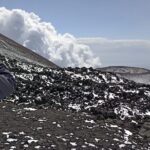
You begin at 2,500 meters after the cable car ride. Early on, the guide sets the stage with the story of Etna’s 2001 eruption and what visitors can notice on the ground today. This is where a guided format pays off, because you’re seeing volcanic features that would otherwise blur together.
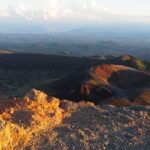
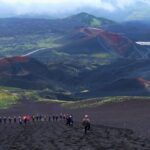
Then you’ll look out over Valle del Bove, the massive depression marking Etna’s eastern flank. From the viewpoint, the valley reads clearly as a huge open shape carved into the volcano’s side. It’s one of those views where your brain suddenly understands scale, not just height.
After the overlook, you climb toward the Torre del Filosofo area. This is a famous landmark on Etna, and reaching it as part of a timed hike feels better than treating it as a quick photo stop. You get to move through the terrain in sequence, so each viewpoint makes sense relative to the next.
What can be hard here
The route requires commitment. Even before sunset, you’re gaining elevation and spending time at high altitude where walking effort feels greater. Take it steady, use your poles, and don’t rush the stops.
Waiting for Sunset at ~3,000m: Craters of 2002/2003
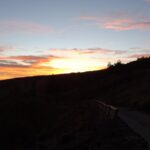
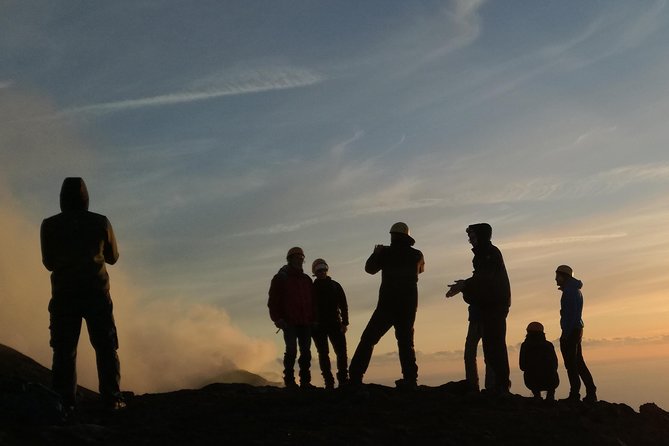
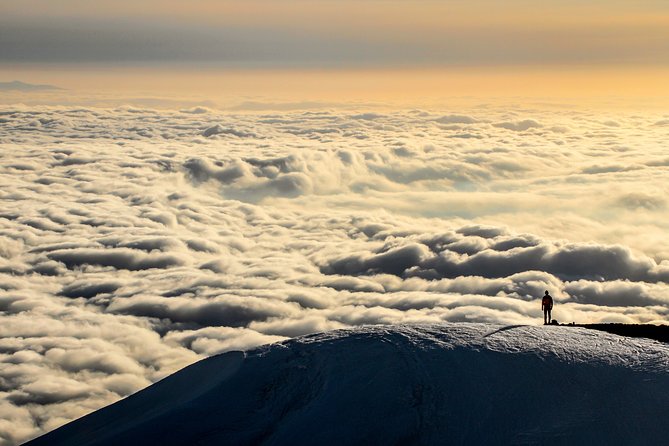
The main event is the sunset wait at about 3,000 meters on the summit area of the Craters of 2002/2003. This is why the hike is scheduled the way it is. You’re not just passing through; you’re arriving with time to settle, look around, and watch the day change.
There’s an art to staying comfortable at altitude while the light shifts. Even if the hike feels steady, the waiting portion can feel colder than you expect. The included headlamp also signals what comes next, so you’re not caught off guard when the sun goes down.
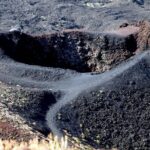
One of the best benefits of being up here is that you see Etna as a working system, not just a mountain. The craters and the surrounding ground give you a physical sense of how eruptions shape this place over time.
The Descent Under Starlight: Volcanic Sand Walk-Back
After sunset, you’ll make the long walk back across volcanic sands, guided and paced for safety. If you’ve never walked on volcanic sand, expect it to feel a bit loose compared to compact trail. Your feet need to place carefully, and your stride becomes shorter and more deliberate.
This is where the included headlamp matters. You’ll still have stars overhead, but the ground needs light for balance. The helmet is also part of the safety setup, especially in higher, rockier areas.
The mood on the return is the payoff. Daytime Etna can feel intense. At night, it turns eerie-quiet, with only footsteps, the guide’s explanations, and the glow of your headlamp. It’s the kind of experience you’ll remember later when you think of Sicily and realize it wasn’t only about the coast.
Guides Matter: The Ashàra Team Touch
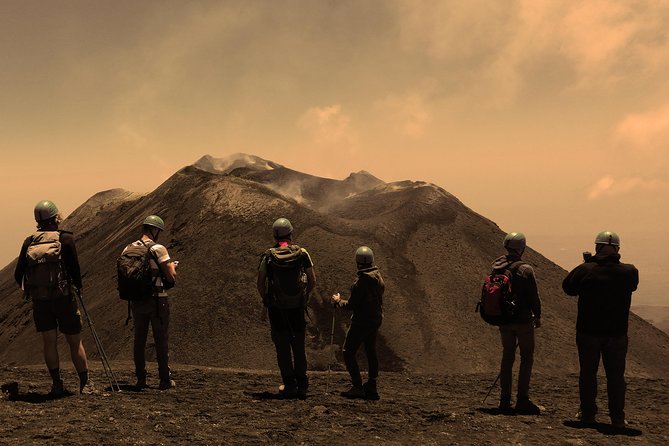
The professionalism of the Ashàra guides is a real part of the experience. In particular, I’ve seen strong praise for guides like Pepe and Max for combining care with real details about the volcano. That matters on Etna, because the terrain can look similar if you’re not sure what you’re seeing.
A good guide also helps you keep your energy right. When you’re climbing at altitude and waiting for sunset, you don’t want to burn out early. With a group size capped at 20, you’re more likely to get attention when questions pop up about what you’re looking at.
What You’ll Learn Without Feeling Like a Classroom
This hike connects geology to viewpoints you can actually see. You learn about the 2001 eruption as you stand at vantage points where the aftermath is part of the story. Then you look toward Valle del Bove and connect that huge depression to Etna’s structure on the eastern flank.
Instead of just hearing facts, you’re moving between stages: overlook, climb to a known viewpoint, then rise for sunset at the crater area. That rhythm helps the information stick, because you’re matching explanation to scenery in real time.
Who This Etna Sunset Hike Is Best For
This suits you if:
- you want a guided hike with real explanations tied to what you see,
- you like sunset experiences that go beyond a quick viewpoint,
- you’re comfortable with moderate fitness demands and a longer walk back.
It’s also a good option if you don’t want to figure out all logistics on your own. The tour handles the gear basics and keeps the group size small.
If you hate cold evenings, have weak balance, or can’t handle altitude walking, you might find it stressful. At 3,000 meters, comfort takes a back seat to safety and stamina.
Value Check: The Real Trade-Offs
Here’s the honest balance. You pay extra for the cable car (€52 per person). But you get included gear (shoes, poles, headlamp, helmet) and a timed route that places you at the right elevations for learning and sunset.
Compared with hiking independently, you’re also paying for an organized pace, which matters a lot on volcanic ground. The guide helps you avoid wasting time guessing where to stop, and the eruption context makes your photos more than decoration.
For many people, the value comes from the combination:
- sunset at altitude,
- structured viewpoints,
- and gear included.
Should You Book This Etna Sunset Hike?
Book it if you want one of Sicily’s most memorable experiences that mixes views with real volcanic storytelling. The late afternoon start, the climb to around 3,000 meters, and the starlit return create a complete arc, not just a hike.
Skip it or reconsider if:
- you’re not up for moderate physical effort,
- you strongly prefer flat walking,
- or you’re not comfortable adding the €52 cable car cost.
If the weather is solid, this is the kind of tour that feels worth planning around.
FAQ
What time does the Etna sunset hike start?
It starts at 3:00 pm. The tour runs about 5 to 6 hours.
Where does the tour meet?
The meeting point is Piazzale Rifugio Sapienza, 95030 Nicolosi CT, Italy.
Do I return to the same place?
Yes. The activity ends back at the meeting point.
How much is the cable car ticket?
The cable car ticket costs €52 per person and is not included in the tour price.
What gear is included?
You get trekking shoes, trekking poles, a headlamp, and a helmet.
How fit do I need to be?
The tour is listed for travelers with moderate physical fitness.
How big are the groups?
The tour has a maximum of 20 travelers.
What happens if the weather is bad?
This experience requires good weather. If it’s canceled due to poor weather, you’ll be offered a different date or a full refund.
What is the cancellation policy?
You can cancel up to 24 hours in advance for a full refund. If you cancel less than 24 hours before the start time, the amount paid is not refunded.