REVIEW · SICILY
Trapani: Salt Pans Sunset Tour and Flamingo Way
Book on GetYourGuide →Operated by MANITA SRL · Bookable on GetYourGuide
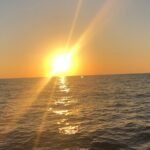
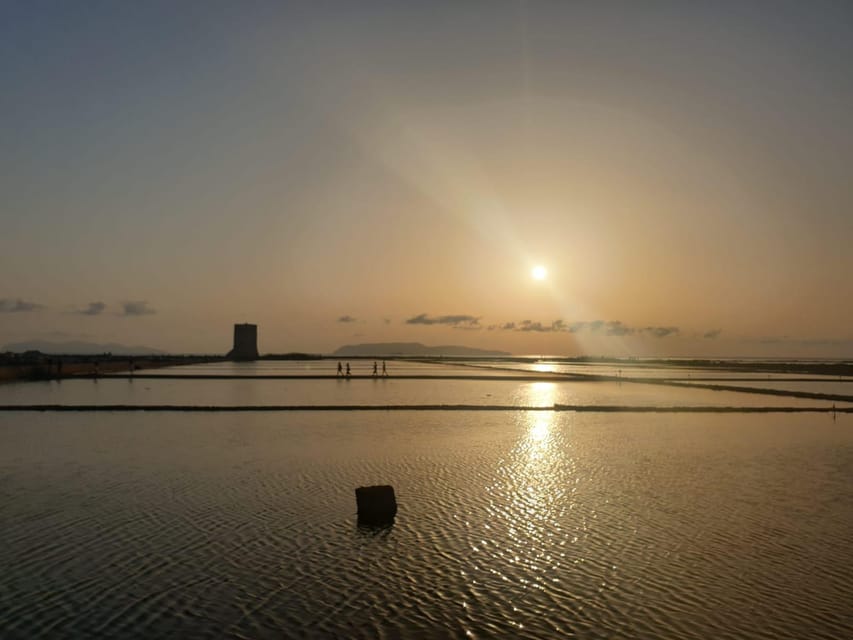
White salt turns gold at sunset. This Trapani salt-pan tour sends you to Saline di Trapani e Paceco for bird photos and those Mediterranean glow-up colors. I especially like the mix of flamingo watching and quick, well-timed stops at historic salt-working sites. One thing to keep in mind: flamingo sightings can depend on the season, so don’t plan your photos around guaranteed pink birds.
The logistics are simple: you’re picked up in Trapani and driven out by van, then you spend most of the 2 hours outdoors where the light does the work for you. The tour also pairs photo time with an actual explanation of salt production—so it’s not just pretty views and a camera sprint. The museum visit is guided (and entry is included), which is a big reason this tour feels like real value at $34 per person rather than a rushed “drive-by.”
You’ll likely come away with more than photos: you’ll understand how salt shaped local life, from labor to industry—and why these flat, silvery plains matter to birds. If you’re expecting a deep, stop-by-stop narration during the first parts, there may be less in-the-moment detail than you’d hope, especially if the vehicle leans on audio. Still, the sunset payoff and the museum stop usually do the heavy lifting.
In This Review
- Key highlights you’ll notice right away
- Trapani’s salt flats at sunset: why this works as a short tour
- Door-to-door van ride and the 2-hour schedule (what to expect)
- First salt-pan photo stop: using the light at Trapani Salt Pans
- Salina Chiusicella: the salt-mine area where walking meets bird watching
- Salina Calcara pass-by and scenic moments for second-chance photos
- Salt Museum in Trapani: the guided stop that makes the whole tour click
- Birds at Saline di Trapani e Paceco: flamingo expectations and photo realism
- The practical value of $34: what you’re really paying for
- Comfort, timing, and camera tips for an outdoor evening
- Who should book this sunset salt-and-flamingo tour
- Should you book it?
- FAQ
- How long is the Trapani Salt Pans Sunset Tour and Flamingo Way?
- How much does the tour cost?
- Is hotel pickup and drop-off included?
- What’s included in the price?
- Are meals and drinks included?
- What languages are offered?
- Will there be time for sunset photos?
- What should I bring for bird watching?
Key highlights you’ll notice right away
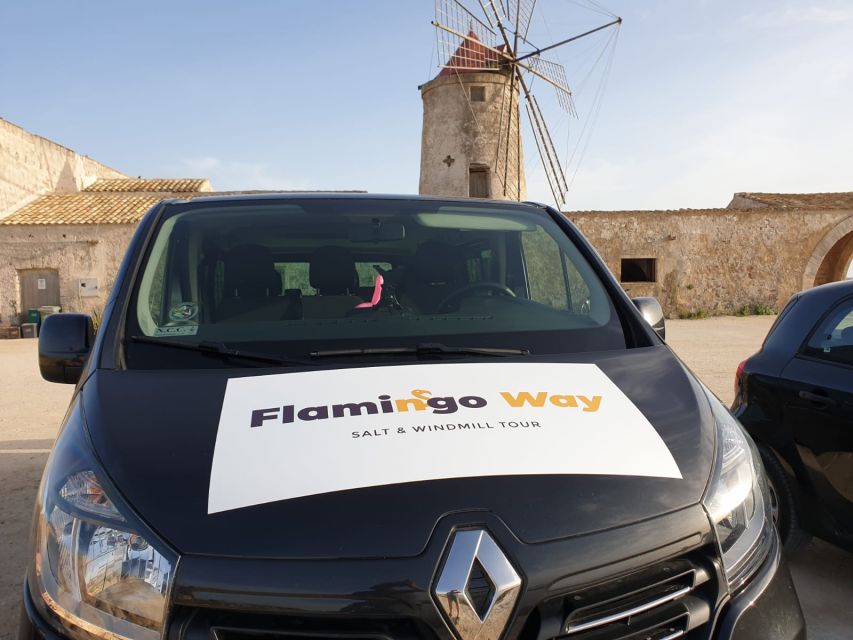
- Golden-hour photo time across multiple salt sites with scenic stops
- Binocular help and bird spotting for flamingos, avocets, and other migratory birds
- Historic salt production areas where salt was harvested for centuries
- Salt Museum entry with a guided component that adds context to the scenery
- A relaxed, not-rushed pace built around a short 2-hour outing
- Hotel pickup and drop-off in Trapani city so you don’t need to drive or navigate
Trapani’s salt flats at sunset: why this works as a short tour
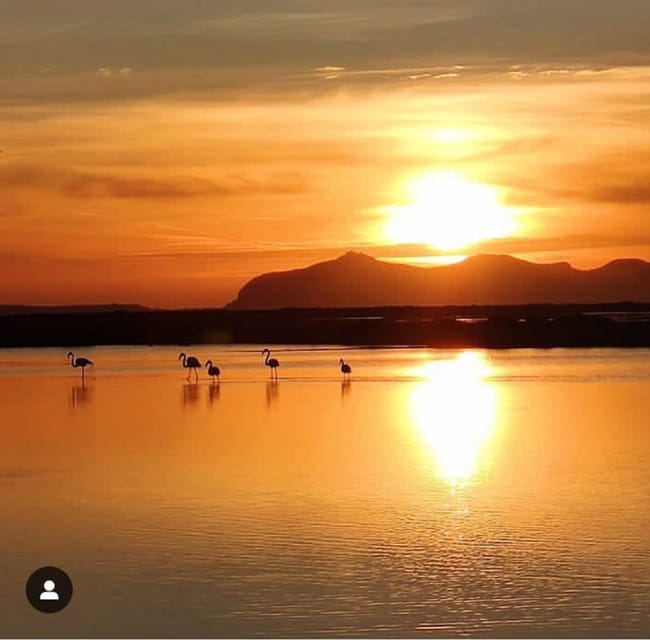
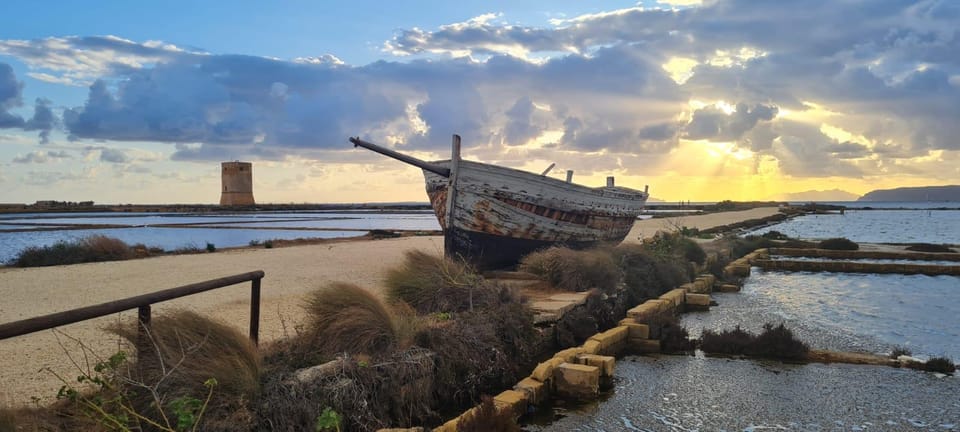
Sicily has lots of places where the sunset is pretty. This one adds a second layer: salt. The Saline di Trapani e Paceco reserve is built on a landscape that humans have been working for a very long time, and that history shows up in the basins, piles, and working buildings you’ll pass and photograph.
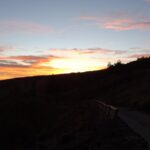
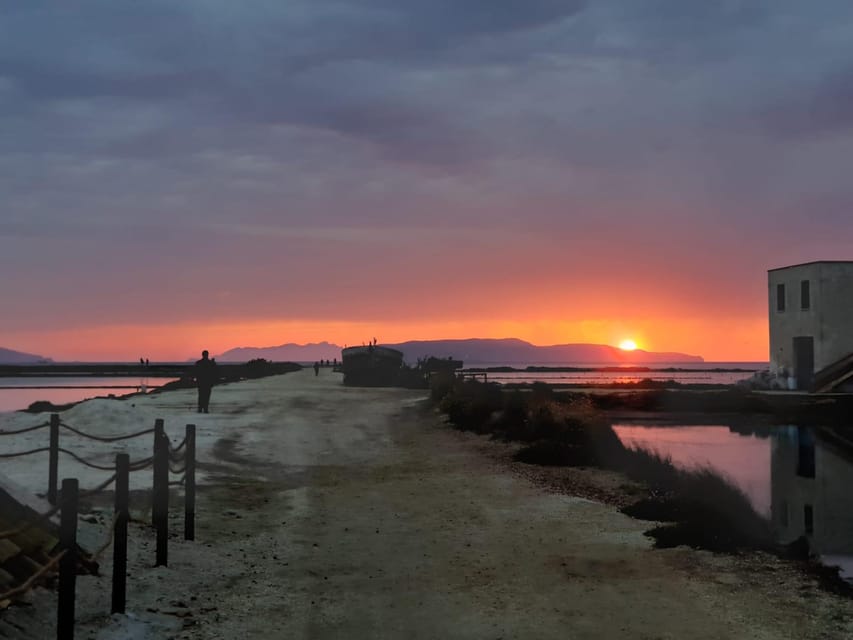
That matters because the colors at sunset don’t just reflect on water—they bounce off pale salt surfaces too. So when the sky shifts from warm orange to pink, you get a scene that looks different minute to minute. If you like travel photos, you’ll appreciate how quickly this tour gives you the chance to shoot, check your framing, and then keep shooting as the light changes.
And yes, the bird angle is real here. The area is known for migratory birds, with flamingos specifically highlighted. You’ll be on the lookout for birds as you walk and pause, and the tour gives you practical help like binoculars, plus reminders to stay respectful and keep distance.
The vibe is also a change of pace from Trapani’s streets. Even though you’re only out for about two hours total, it feels like a mini escape: less traffic noise, more open space, more “stand still and watch” time.
You can also read our reviews of more evening experiences in Sicily
Door-to-door van ride and the 2-hour schedule (what to expect)
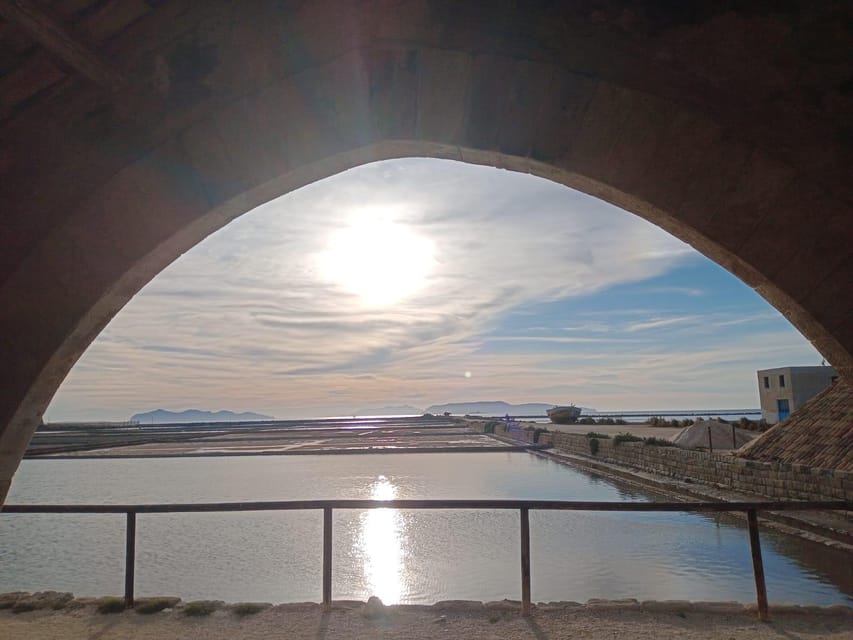
This is designed to be easy. You meet the team for pickup in Trapani, then you’re in the van for short stretches between photo and site stops. The total tour duration is listed at about 2 hours, so you won’t be stuck on a long bus ride. Instead, the plan is to spend time where it counts: outdoors during light that’s good for photos.
A typical flow goes like this:
- You’re picked up in Trapani city and ride out to the reserve.
- There are a couple of quick van segments and scenic/pass-by moments (including a stop area connected to the Sosalt spa complex).
- You stop for photos at salt pans and at salt-mine areas.
- The core learning happens at the Salt Museum in Trapani, where you get a guided component plus time to walk around.
- Then you head back to Trapani.
One reason people like the format is that it balances movement with pauses. You’ll get short windows to shoot and look around, not just one long “walk fast” session. At the same time, it’s short enough that you don’t feel trapped waiting for a bus for hours.
A small caution: because the tour is compact, the early bird-and-salt stops can feel like “press pause, shoot, move on.” If you want slow travel and lots of narration at every step, you might feel slightly more satisfied if you’re already comfortable exploring on your own. The museum stop helps with that.
First salt-pan photo stop: using the light at Trapani Salt Pans
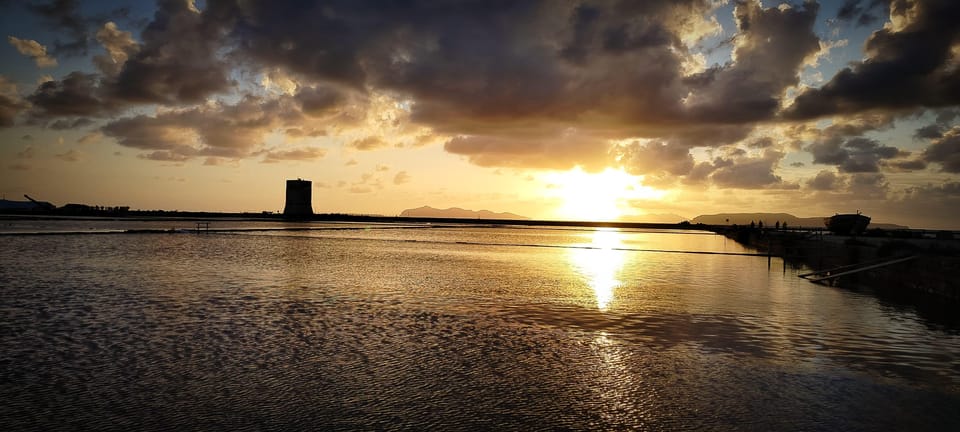
Your first meaningful outdoor moment is a photo stop at the Trapani salt pans area. This is where the tour’s photography purpose becomes obvious. You get a chance to frame the salt works, test your camera settings for reflective surfaces, and scan the edges for bird movement.
This stop is short (around 15 minutes), so treat it like a warm-up. Don’t try to capture everything at once. Instead:
- Start with one wide shot of the salt plain.
- Then shift to smaller details—structures, basins, and any birds you spot at a distance.
- Keep your eyes moving. Open flats can hide birds until they suddenly lift off or step into view.
The biggest practical benefit of this early stop is that it sets you up for the rest of the evening. Once you understand the angles—how the salt surfaces lie, where the sky sits—you can react faster at the later photo moments when the sunset is stronger.
Salina Chiusicella: the salt-mine area where walking meets bird watching
Next up is Salina Chiusicella, which includes a break plus photo and wildlife viewing time. The tour time here is relatively tight, but it’s structured: you’ll have moments to pause for photos, then a walk component where you can see more of how the salt-working landscape functions.
This is also one of the key places to spot birds. You’re in one of the working reserve zones where birds roam across almost 1,000 hectares, so you’re not just looking at a single pond. You’ll scan for migratory birds like flamingos and avocets, and you’ll get guidance to keep a respectful distance.
One thing I like about this kind of stop is that it’s both visual and educational without turning into a classroom. You’re not only looking at “pretty pink birds.” You’re also seeing the infrastructure that supported salt harvesting over centuries, which makes the reserve feel like a living landscape instead of a backdrop.
If you’re a photographer, this is where I’d spend your second wave of shooting. Early golden light tends to look flatter. As the sun lowers, reflections and texture show up more, and that’s when salt surfaces start to glow.
Salina Calcara pass-by and scenic moments for second-chance photos
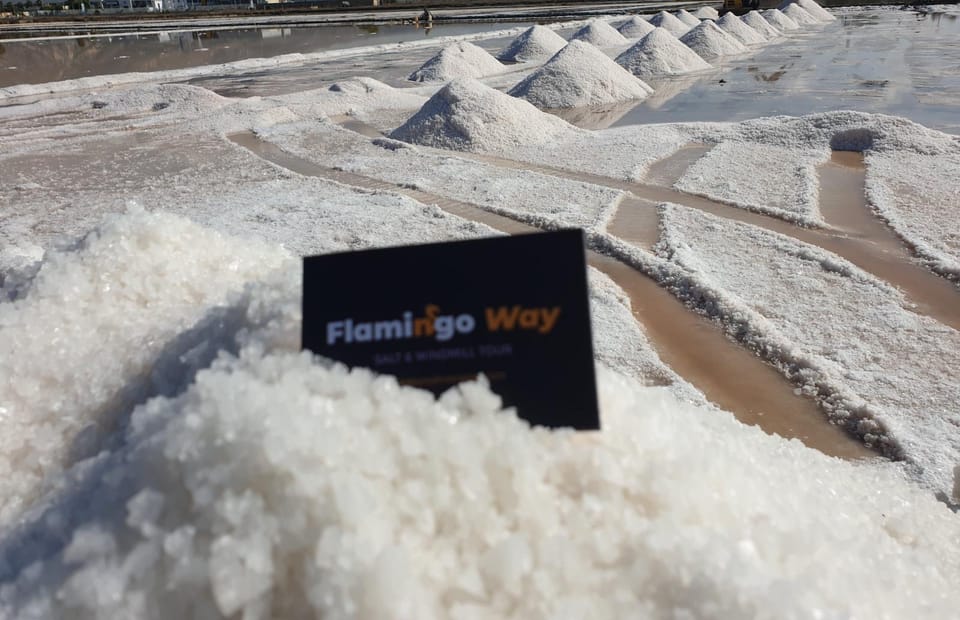
You’ll also have a photo stop related to Salina Calcara. The tour description frames it as a photo moment and scenic viewing while moving between sites, so treat this like an in-between bonus.
These “pass-by” segments are easy to overlook, but they can be your chance to catch a composition you missed earlier—especially if the wind shifts or if birds decide to stand in a slightly different spot.
If you’re traveling with a camera setup that takes time to adjust, use this segment to reset. Wipe your lens if needed, change memory cards, and get ready. At sunset, you don’t want to be scrambling during the moment you finally nail the shot.

Salt Museum in Trapani: the guided stop that makes the whole tour click
The Salt Museum stop is the part that turns a photography outing into a meaningful experience. Entry is included, and there’s a guided tour component with time built in for you to walk around.
This is where you learn how people harvested salt at the site for centuries—how the work shaped the local economy and how it affected the people doing it. The museum also helps you understand why these reserves are so carefully maintained: they’re not just scenic plains, they’re a historical working environment now tied to nature and wildlife.
One name to look out for if you’re lucky enough to get the same guide: Nathalie is praised for delivering an excellent explanation. If your tour timing lines up, you might hear a similarly clear walkthrough about salt production’s social and economic sides, not just the mechanics.
The timing here is also smart. You get some sunset moments and scenic views around the museum stop. So even if you don’t see every bird you imagined, you still get an emotionally strong finish: the landscape, the sky, and the sense that you’re looking at something shaped by generations of work.
If you’ve ever wondered why salt matters historically—this is the stop that answers it in practical terms.
Birds at Saline di Trapani e Paceco: flamingo expectations and photo realism
Here’s the honest bird-watching truth: birds are wildlife. They move, they choose where to feed, and their presence can vary by season. Even with flamingos highlighted, sightings may not be guaranteed.
That said, the tour is still worth it even when flamingos are scarce because:
- You’ll scan larger areas than a single fenced viewpoint.
- You’re given help like binoculars for better viewing (and you can bring your own if you want a personal set).
- The salt pans and basins are visually interesting even without birds in frame.
For photography, you’ll get better results if you use this strategy:
- Take some time to watch before you shoot—watching helps you spot where birds actually appear.
- Shoot from a steady stance whenever possible; quick panning on open flats often looks messy.
- Plan for distance. The tour’s reminders to keep respectful space are there for a reason, and it also helps you avoid frantic, close-range positioning.
And if flamingos do show up, you’re in the right setting. The sky plus pale salt equals color contrast. That’s what makes those images pop.
The practical value of $34: what you’re really paying for
At $34 per person for a 2-hour tour, the value comes from the combination, not any single element.
You’re paying for:
- Hotel pickup and drop-off in Trapani city (door-to-door saves time and hassle).
- A driver to handle the route.
- Audio guide support on the van.
- Entry to the Salt Museum, including a guided explanation.
Meals and drinks aren’t included, so if you want a post-tour snack or drink, you’ll need to plan for that separately.
Is it a bargain compared to other day tours? Yes, especially because the museum entry is part of the price. It would be easy to spend more just getting to the reserve and paying a museum ticket on your own.
One more value point: the tour’s pace. Multiple people note it doesn’t feel rushed, and that you actually get time to see and do what you came for—birds, salt landscape, and museum learning.
Comfort, timing, and camera tips for an outdoor evening
This is outdoors in the evening, so plan clothing like you would for a sunset walk: cooler air, changing light, and time spent standing. One practical tip from real experience: dress warmly, because you’re outside when the temperature can drop.
Your camera matters, but so does your workflow. A good way to keep yourself from missing shots is to decide ahead of time what you want:
- One or two main flamingo shots
- A couple of “salt basins at sunset” frames
- A museum photo or two for context
Binoculars help you find the birds first. Then you photograph when you have them in the right spot. If you try to shoot everything immediately, you’ll end up missing the moment birds actually decide to show off.
Also, be ready for a group dynamic. It’s not a private experience for every departure. Some outings can be small (like groups around 8), but you should still expect you’ll pause, walk, and view in the same general rhythm as everyone else.
Who should book this sunset salt-and-flamingo tour
You’ll probably love this tour if:
- You want a short, easy evening outing from Trapani.
- You’re into sunset photography and want salt reflections, not just coastline views.
- You want bird watching without doing logistics or driving yourself.
- You like learning what you’re seeing—salt production makes the scenery make sense.
You might feel a bit less satisfied if:
- You’re expecting long, detailed narration at every salt stop. Some portions may rely more on audio while the driver handles the route.
- You only care about flamingos in particular and you’re traveling in a season where sightings can be lower. (In that case, the sunset and museum still carry the experience.)
Should you book it?
Yes, I think this tour is a solid pick if you want an evening that blends salt landscapes, bird watching, and a real museum explanation without a full day commitment.
If you’re flexible on flamingo sightings, you’ll likely come away happy even when the birds aren’t everywhere. And if you’re in Trapani for just a couple of days, this is a smart way to get both: the eye-candy sunset and the human story behind the white gold.
FAQ
How long is the Trapani Salt Pans Sunset Tour and Flamingo Way?
The tour duration is listed as 2 hours.
How much does the tour cost?
The price is $34 per person.
Is hotel pickup and drop-off included?
Yes. Pickup and drop-off are included for hotels located in Trapani city.
What’s included in the price?
The included items are hotel pickup and drop-off in Trapani, a driver, an audio guide, and entry to the Salt Museum.
Are meals and drinks included?
No. Meals and drinks are not included.
What languages are offered?
The tour provides English and Italian (live tour guide is English, Italian).
Will there be time for sunset photos?
Yes. The schedule includes a sunset focus, with scenic views and photo opportunities timed around the sunset.
What should I bring for bird watching?
You should bring your camera and binoculars are referenced as helpful/available for wildlife viewing, along with reminders to keep a respectful distance.