REVIEW · SYRACUSE
From Syracuse: Etna Tour with Light Lunch and Wine Tasting
Book on GetYourGuide →Operated by Etna Experience Excursion · Bookable on GetYourGuide
Etna has a way of making you feel small fast. This trip from Syracuse mixes a real mountain hike, a guided walk through a volcanic lava cave, and a winery lunch with Etna wine tasting.
I especially like the hands-on feel: you get helmets and flashlights for the cave, plus boots and poles so you’re not scrambling last minute. Second, I like that the group stays small (8 people), so your naturalist guide can pace the walk and keep the explanations coming without turning it into a rush-job.
The main thing to consider is fit: it’s not for people with mobility limits, heart or respiratory conditions, fear of heights, or pregnancy. It also includes walking on uneven ground at altitude, and it can be chilly even when Syracuse feels mild.
In This Review
- Key highlights you’ll care about
- Etna Day Trip From Syracuse: Why This Route Feels Worth It
- Pickup, Van Ride, and the Small-Group Advantage
- Walking the Southern Slope: From 2001–2002 Lava to 2000-Meter “Moon” Ground
- The Lava Cave With Helmets and Flashlights: Where the Volcano Gets Personal
- Winery Lunch and Etna Wine Tasting: Food That Breaks Up the Altitude
- Gear, Weather Reality, and Comfort at Altitude
- Duration, Timing, and What a Full 9 Hours Really Means
- Price and Value: What $134.81 Buys You in the Real World
- Who This Etna Tour Suits Best (and Who Should Skip It)
- Should You Book This Etna Experience Excursion?
- FAQ
- How long is the Mount Etna tour from Syracuse?
- What time will I be picked up in Syracuse?
- What does the tour include besides the hike?
- Is lunch and wine tasting included in the price?
- What should I bring for the day?
- How many people are in the group?
Key highlights you’ll care about
- Small group touring (8 people max) means you actually hear the guide and move at a human pace
- Southern-slope hike at 1900–2000 meters includes pauses for views and volcanic explanations
- Lava cave visit with helmets and flashlights turns geology into something you can feel
- Winery light lunch + Etna wine tasting gives you local flavors without stretching the day into a marathon
- Route can shift with weather/volcanic activity so you get safety-first flexibility
Etna Day Trip From Syracuse: Why This Route Feels Worth It
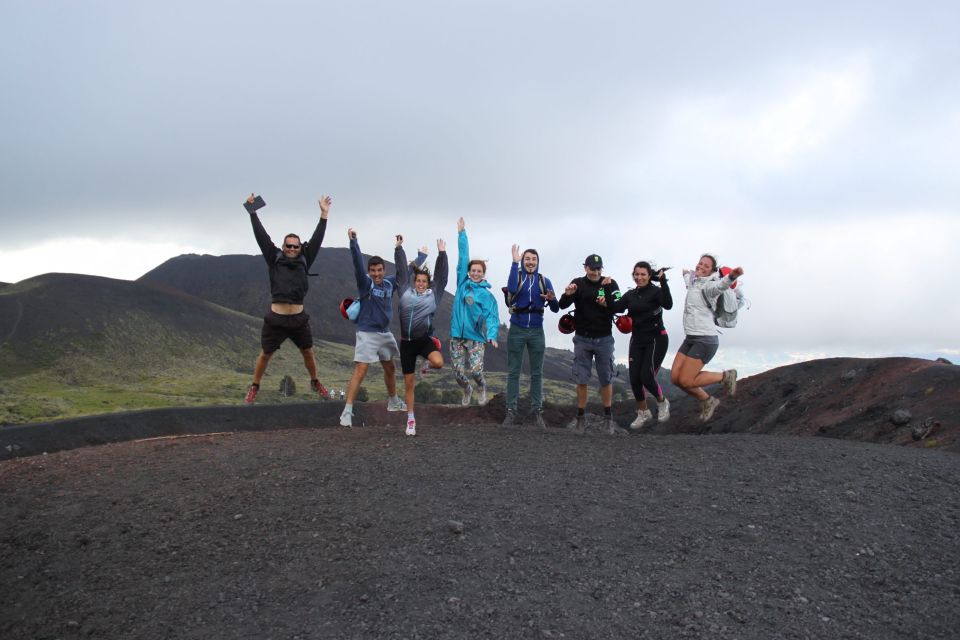
This is one of those Etna days that doesn’t just promise big views. It builds them. You start with the drive up to the mountain, then walk through a lunar-feeling stretch around the 1900–2000 meter range, then head underground for the lava cave. Finally, you land at a winery for lunch and wine tasting. It’s a clean arc: mountain → earth’s plumbing → food.
What makes the experience work for most people is the balance. You’re on the volcano long enough to feel like you did something real, but the hike is planned to be accessible and guided with a comfortable pace. It’s also built around a pro naturalist guide, which matters on Etna. Without context, you’d just see black rock and steam. With context, you start reading the landscape like a story.
And yes, you’re traveling from Syracuse, so you get the bonus of getting out of city mode early and coming back with something concrete: photos from craters and lava surfaces, plus a cave memory you’ll remember the minute the helmet clicks into place.
You can also read our reviews of more food & drink experiences in Syracuse
Pickup, Van Ride, and the Small-Group Advantage
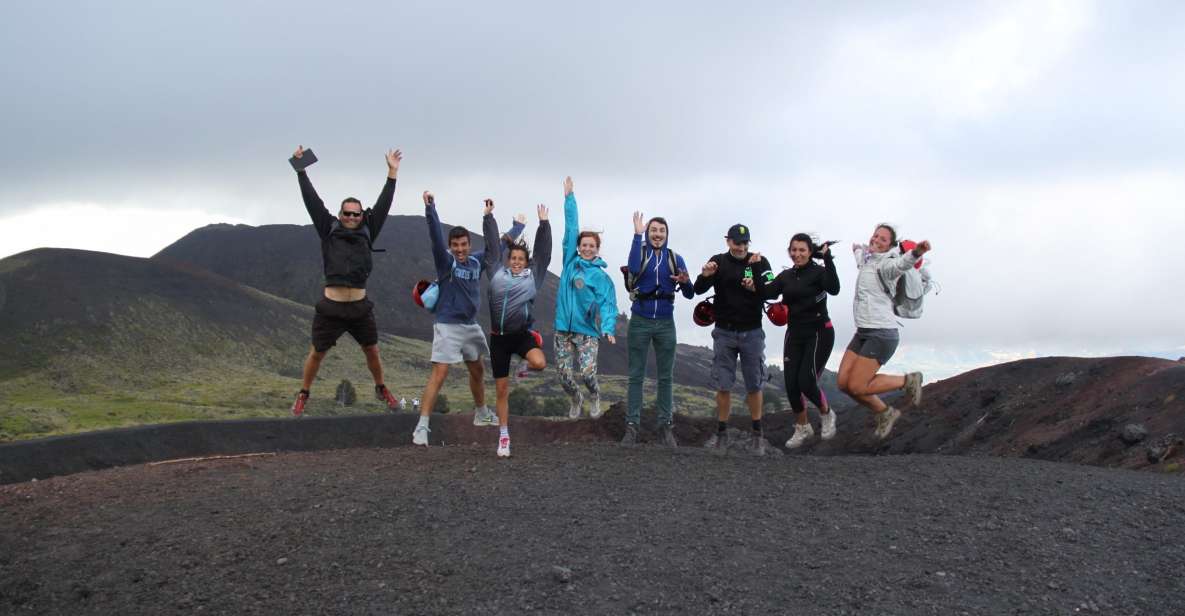
The day starts with a pickup in Syracuse between 8:00 and 8:15 a.m. You’ll ride in an air-conditioned vehicle, either a rugged jeep or a minivan, for the climb time. Expect about 1.5 hours each way of driving, with the tour time carved out for the mountain and winery stops.
I like this setup because it keeps the volcano day from feeling like a random self-guided expedition. You don’t have to figure out where to park or how to time your ticket line. Your guide handles the flow.
Language options are also a real benefit: the guide can work in Italian, English, or French. And because the group is capped at 8 participants, you’re not just a face in a crowd. The guide can check in and adjust the pace. In multiple guide-led accounts, names like Luca, Andrea, Giovanni, and Mirko came up as enthusiastic and info-heavy, with a knack for explaining what you’re actually seeing on the mountain and in the cave. That kind of guiding style makes a difference when you’re at altitude and every stop is short.
Walking the Southern Slope: From 2001–2002 Lava to 2000-Meter “Moon” Ground
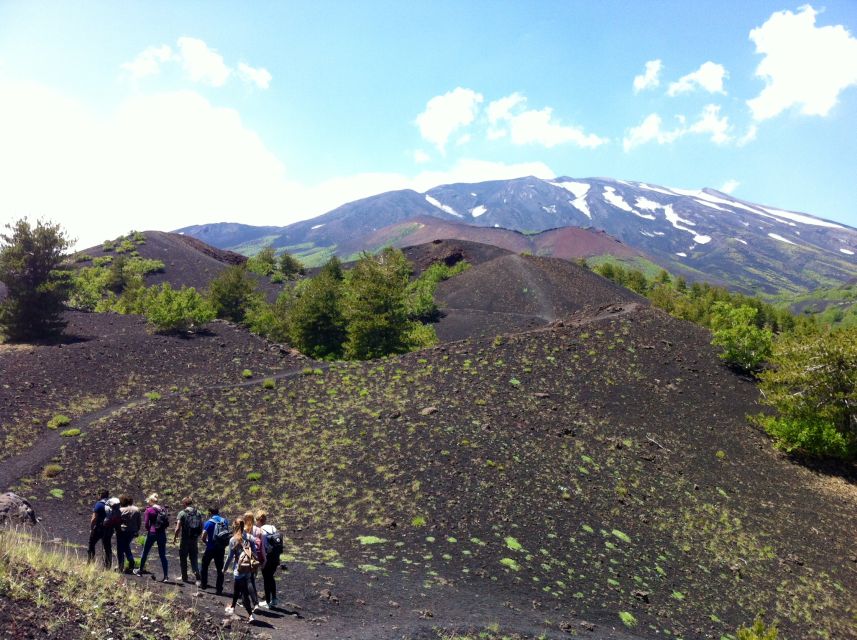
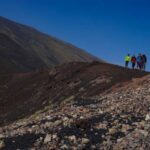
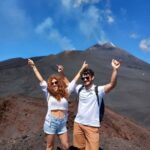
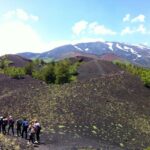
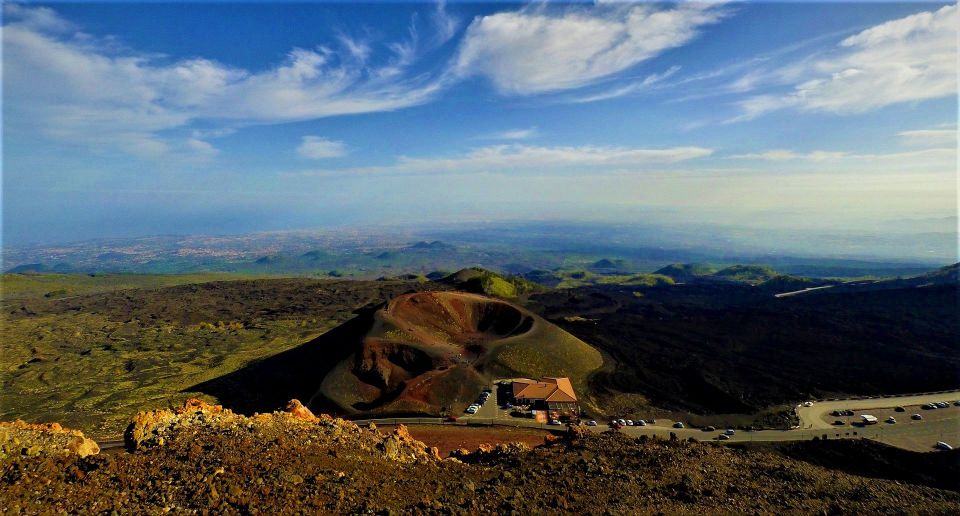
Once you reach Mount Etna’s area at roughly 1900–2000 meters, the hike portion begins. It’s described as an easy trek on the southern slope, but “easy” here doesn’t mean flat stroll. The ground is volcanic terrain. Think uneven surfaces, changes in texture, and lots of stopping to look and listen.
One of the best parts is that the walk connects what you can see to specific volcanic history. Your guide points out lava flows from 2001 and 2002, which is a rare way to make a volcano feel time-bound rather than abstract. You’re standing on fresh-seeming rock fields while learning how those flows shape the terrain you’re walking across.
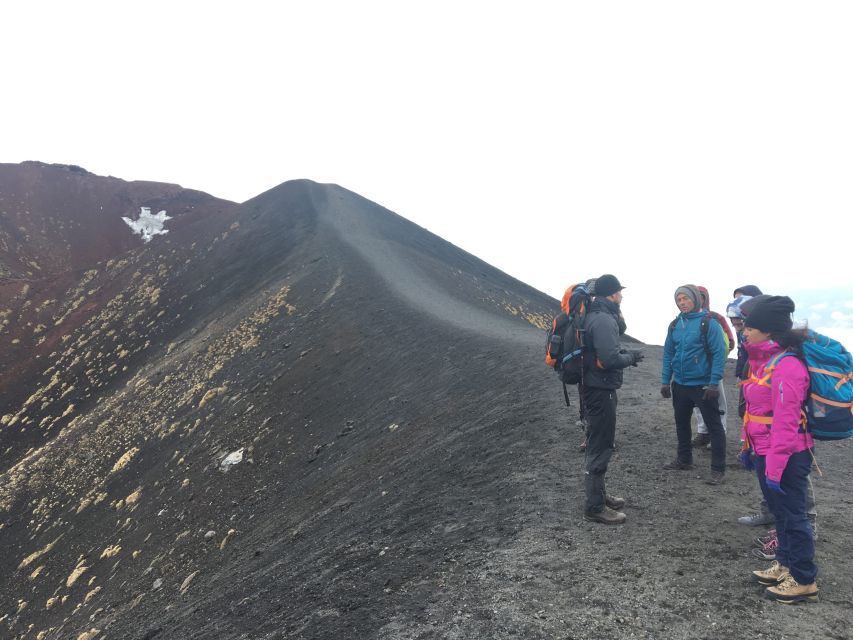
You’ll also visit crater areas in that 1900–2000 meter zone. Your guide will keep the hike at a comfortable pace and stop for explanations and landscapes. And there’s some flexibility: the route can change due to group needs, weather, or volcanic activity. Sometimes that means adjusting plans so you might explore the north side instead of the planned approach. That’s not a marketing tweak—it’s a safety-and-conditions reality on an active volcano.
In practice, what you should bring to this hike is exactly what the tour asks for: sturdy closed-toe shoes, water, sunglasses, and sunscreen. If you’ve ever walked on volcanic rock before, you’ll understand why the shoe requirement is strict. It’s not a pavement day.
The Lava Cave With Helmets and Flashlights: Where the Volcano Gets Personal
After the craters and lunar-ground walk, the day takes a turn underground. You’ll visit a volcanic lava cave, and you’ll be equipped with helmets and flashlights, plus other gear like jackets and hiking poles provided by the operator.
This is the stop that tends to stick in people’s heads because it’s sensory. Above ground, you interpret rock. In the cave, you’re dealing with dark, cool air, and the feeling of moving through the inside of the volcano’s history. You also don’t have to worry about improvising safety equipment. The helmets and torches are part of the tour, and the professional guide leads the navigation.
What I like about this structure is that the cave visit isn’t tacked on as a quick photo stop. It’s treated like its own “thing.” You go in prepared, walk in a guided group, and come out with that specific Etna story: I was underground in the volcano.
Also, pay attention to how you move. Even if the cave walk is described as safe and guided, you’ll still be walking on uneven surfaces while adjusting to low light. If you’re someone who hates tight spaces or gets spooked easily in darkness, you’ll want to think twice. The tour is not marketed for people afraid of heights, and while the cave is not a cliff scenario, fear sensitivity can matter in dark environments too.
Winery Lunch and Etna Wine Tasting: Food That Breaks Up the Altitude
By the time you reach the winery, you’ve already spent hours walking on the mountain. So the lunch stop hits like a reset button.
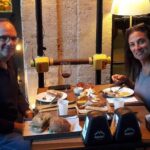
You’ll stop for about an hour for lunch at an Etna winery, with a meal described as a light lunch using typical products. In real-world terms, that often means: expect a spread that feels more like an Italian meal than a tiny snack box. Multiple accounts describe the lunch as plentiful and very good quality, not the watery-portion version that some tours offer.
Then comes the wine tasting, included as part of the experience and paired with the meal courtesy of Etna Experience. I like including wine with lunch because it’s not a separate, time-consuming activity. You eat, you taste, you learn what you’re drinking in the context of where it comes from.
If you have dietary needs, this is one of the nicer practical points in the details you provided: you can request vegan, vegetarian, gluten free, or lactose free options if you inform the operator when booking. That matters, because a volcano day is already a full-day schedule. You don’t want to spend it hunting for safe food.
One caution: extra drinks or extra snacks are not included. You’ll have options, but you may want to plan to pay for anything beyond what’s part of the lunch and tasting.
You can also read our reviews of more wine tours in Syracuse

Gear, Weather Reality, and Comfort at Altitude
Etna days are often cooler than you expect. The tour advises you to bring a jacket, because temperatures at higher altitudes can be about 10 degrees cooler than the city center. Even if you’re traveling in summer, that difference can feel real once you’re standing around craters and waiting for the guide’s explanation.
The tour also flags a few practical clothing rules: no high-heeled shoes, and comfortable, closed-toe footwear matters. The good news is the operator provides a lot of the essentials—gear like jackets, helmets, flashlights, and hiking poles are included. You’ll still want to come with your own basics like sunscreen, water, and sunglasses, plus comfortable shoes if you have them.
This is also where your body matters. The tour says it’s not suitable for people with cardiovascular or respiratory issues, and it’s not recommended for people with certain health limitations. That’s not a scare tactic. Walking at altitude and spending time outdoors can be harder than it sounds, especially if you’re managing breathing or heart concerns.
If you’re not sure, it’s worth taking the “altitude + walking” combo seriously. This tour is built for people who can handle outdoor movement comfortably for a few hours.
Duration, Timing, and What a Full 9 Hours Really Means
The tour runs for 9 hours total. Pickup is around 8:00–8:15 a.m., and you return to Syracuse by 5:00 or 5:30 p.m. That length is perfect for people who want a full Etna day without turning it into an all-night commitment.
The day is organized into clear blocks:
- Travel up to Etna (about 1.5 hours)
- Mountain hiking (about 2.5 hours) with explanations and breaks
- Lunch at the winery (about 1 hour)
- Return drive (about 1.5 hours)
That pacing is important. It gives you enough time above ground to learn and look, enough time for the cave to matter, and enough time to eat and not feel frantic on the way back.
Also, because it’s a small group in a vehicle designed for comfortable transport, you’re less likely to waste energy on logistics. You spend your energy where you should: on the hike, the cave, and the tasting.
Price and Value: What $134.81 Buys You in the Real World
At $134.81 per person (for a 9-hour guided experience), this tour looks reasonable when you break it down by what’s included. You’re not only paying for a guide and a view.
Your price includes:
- Hotel pick-up and drop-off (or a meeting point near your accommodation)
- Air-conditioned transportation
- A professional naturalist guide
- Equipment such as jackets, helmets, flashlights, and hiking poles
- A lava cave visit
- Light lunch with typical products
- Wine tasting
- Insurance with the operator
When you see it like that, the day isn’t just “a hike with wine.” It’s more like: guided Etna access + safety gear + food + tasting, with the guide taking care of how you get from point A to point C without guesswork.
What’s not included is also clearly stated: extra drinks and extra snacks. That’s normal. The value is in the included lunch and tasting.
In short: if you want Etna with minimal planning and maximum structure, this is priced like a full-day activity, not like a bargain basement outing. Given the small group size and the cave component, it’s easy to see why the overall rating is 4.8 with strong scores.
Who This Etna Tour Suits Best (and Who Should Skip It)
This is best for you if:
- You want a moderate hike with a guide explaining what you’re seeing
- You like hands-on experiences like a cave walk with helmets and flashlights
- You enjoy pairing a nature day with a real Sicilian lunch and wine tasting
- You prefer a small group over bus-style touring
It’s not a good fit if:
- You have mobility impairments or need wheelchair access (the tour isn’t suitable)
- You have respiratory issues, heart problems, or you’re managing cardiovascular limits
- You’re pregnant
- You’re over 95 years or over 220 lbs (100 kg)
- You fear heights
- You need strollers or baby carriages (not allowed)
If you’re traveling as a couple or solo, the small-group format feels friendly. If you’re traveling with friends, it still feels manageable because you’re capped at 8 people.
Should You Book This Etna Experience Excursion?
If your main goal is an Etna day that’s guided, structured, and not overly complicated, I’d say yes. The combination of southern-slope hiking up around 1900–2000 meters, a lava cave with helmets and flashlights, and a winery lunch with Etna wine tasting is a solid recipe. You get variety, not repetition. You also get safety equipment handled for you, which is a big deal when you’re dealing with volcanic terrain.
If you’re unsure about whether your fitness level or health profile will work, take the tour’s suitability notes seriously and decide with your body in mind. A volcano day is beautiful, but it isn’t a sit-and-stare museum outing.
Book it if you want Etna to feel real, not distant—rock under your boots, darkness under your helmet, and local food that closes the day on a warm note.
FAQ
How long is the Mount Etna tour from Syracuse?
The experience lasts 9 hours in total.
What time will I be picked up in Syracuse?
Pickup happens between 8:00 and 8:15 a.m., depending on your location.
What does the tour include besides the hike?
You’ll have a guided hike on Mount Etna, a lava cave visit with helmets and flashlights, lunch at an Etna winery, and a wine tasting. Transportation and a professional naturalist guide are included too.
Is lunch and wine tasting included in the price?
Yes. The price includes a light lunch with typical products plus a wine tasting. Extra drinks or extra snacks are not included.
What should I bring for the day?
Bring sunscreen, water, comfortable shoes, and sunglasses. You should also plan for cooler temperatures at altitude and wear sturdy closed-toe shoes.
How many people are in the group?
The tour is limited to a small group of up to 8 participants.