REVIEW · SYRACUSE
Syracuse: Greek Theater and Neapolis Guided Private Tour
Book on GetYourGuide →Operated by Empeeria · Bookable on GetYourGuide
Syracuse’s Neapolis feels like a time machine. This private tour takes you through one of the ancient Mediterranean’s most important centers, and I love how the guide turns ruins into stories with a clear focus on the polis of Syracuse. I also like the mix of dramatic stops, from the Ear of Dionysius with its famous shape and acoustics to the Latomie quarries that were once work and prison space. One possible drawback: it moves at a walking-pace through several major sights in just 2 hours, so you’ll want comfortable shoes and an interest in history if you’re going to fully enjoy it.
The heart of it is the Neapolis Archaeological Park. You start at the entrance, get a short briefing, then step inside with a certified guide who shares myths and history as you go, including the tyrant Dionysius legend tied to the cave. If you book the Italian option, you may also be able to attend the show Il mito di Aretusa, but that depends on the option you select and what’s running at the time.
Because this is an outdoor park, weather matters. If conditions are poor, your reservation could be modified or canceled, so it’s smart to keep flexibility when you plan your day in Syracuse.
In This Review
- Key highlights worth your attention
- First steps in Neapolis: how the guide sets the scene fast
- Latomie: the old quarry scars you can actually walk through
- Ear of Dionysius: the cave, the myth, and the acoustics factor
- Grotta dei Cordari and the art of seeing from different levels
- Greek Theater: big scale, real atmosphere, and the Nymphaeum fountain view
- Altar of Hieron II: when size is the message
- Roman Amphitheater: the city after the Greeks
- Guide quality matters: what the best reviews really point to
- Price and value for a 2-hour private group
- Weather and timing: what to plan so the day stays easy
- Who this private Neapolis tour suits best
- Should you book Syracuse Greek Theater and Neapolis private tour?
- FAQ
- How long is the Syracuse Greek Theater and Neapolis guided private tour?
- What’s the group size for this private tour?
- Which languages are available?
- What sites are included in the Neapolis route?
- Is there an option to attend Il mito di Aretusa?
- What happens if the weather is bad?
Key highlights worth your attention
- A certified guide who explains the polis of Syracuse, not just what you’re looking at
- Latomie stone quarries that shift from hard labor past to green, shaded atmosphere
- Ear of Dionysius for its shape, particular acoustics, and the Dionysius legend
- Greek Theater viewpoints, including the panorama over the big port area
- Altar of Hieron II, noted as the largest stone altar built in the Greek world
- Roman Amphitheater, showing the city’s Roman phase and gladiatorial games
First steps in Neapolis: how the guide sets the scene fast
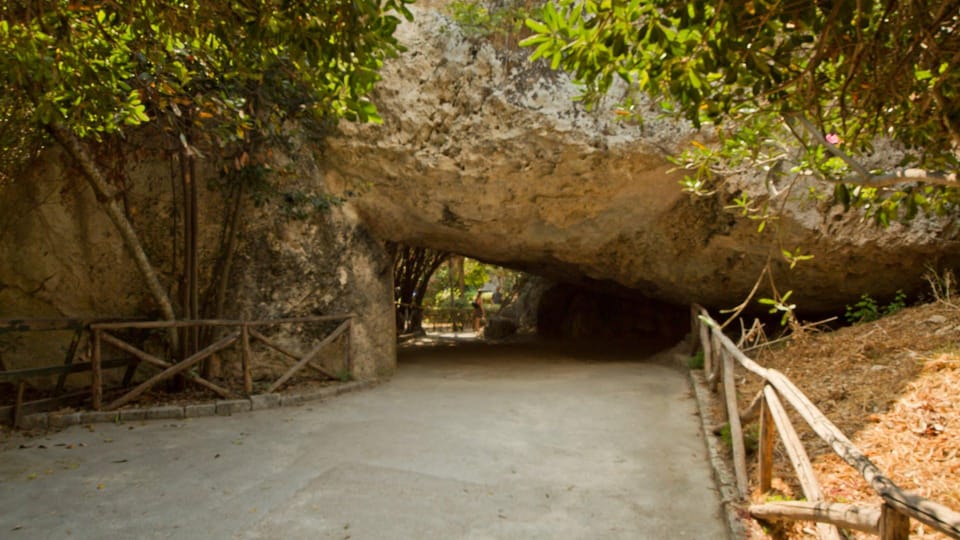
The tour starts at the entrance of Neapolis Archaeological Park, where you meet your guide and get a short briefing. I like this approach because Neapolis can feel like a lot of scattered stone if you arrive cold. A good guide gives you a framework right away: this was a Greek city section with major civic and cultural spaces, and Syracuse’s identity is tied to both its Greek roots and later Roman layers.
From there, you enter the archaeological park and begin moving site to site. The pacing matters on this kind of walk. With a 2-hour total duration, you’ll cover several big landmarks, so you’re not “wandering” as much as progressing through a focused route. It’s ideal if you want structure and story without spending half a day.
One more practical note: this is a private group, listed up to 15 people. That size can still feel like a crowd at certain terraces, but compared with a large bus tour, you typically get more direct attention and a smoother flow.
You can also read our reviews of more guided tours in Syracuse


Latomie: the old quarry scars you can actually walk through
Your first major stop is the Latomie, the ancient stone quarries where construction materials for Syracuse were extracted for centuries. This is where the tour earns its weight. The Latomie aren’t just “pretty ruins.” The guide explains how these were places of heavy work and imprisonment. That context changes how you see everything: you start noticing the scale of the cut stone and the sense of confinement rather than just the greenery.
Today, the Latomie look different. They’ve become covered with greenery, so the space can feel cooler and calmer than you might expect. I like that the tour doesn’t treat the sites like museum pieces. You’re walking through a real, layered environment where nature and architecture share the stage.
A practical tip for enjoying this stop: take a moment to look back and around as you move. The cuts, paths, and openings help you understand why this area worked as a quarry and why it later fit other uses. If you take quick photos, do it while you’re still positioned well—some angles are easier at the start than after you’ve moved deeper into the route.
Ear of Dionysius: the cave, the myth, and the acoustics factor
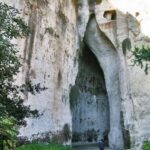
Next comes one of Syracuse’s most famous curiosities: the Ear of Dionysius. The guide walks you through why it has that recognizable shape and why it’s known for particular acoustics. Even if you’ve read the legends before, hearing them explained in context tends to land better when you’re standing where they’re set.
You’ll hear the story tied to the tyrant Dionysius and the legend connected to the cave. I find that’s the real value here: the guide links myth to geography. You’re not just memorizing a tale. You’re connecting a narrative to a place in Neapolis.
This stop also works well for mixed interests. If you’re into history, the Dionysius thread gives you a strong story anchor. If you’re more into “seeing famous stuff,” the shape and acoustics reputation makes the Ear memorable even when you don’t go deep into technical details.
Grotta dei Cordari and the art of seeing from different levels
After the Ear of Dionysius, the tour continues with the view of the Grotta dei Cordari before reaching the Greek Theater area. The way this section is handled is smart because it gives you a change in perspective. Caves and quarries can feel like “inside spaces.” A view stop helps you reset your bearings and start noticing the bigger layout of Neapolis.
If you like panoramas, this is a good moment to slow down. The surrounding terrain and the way sightlines open up are part of the experience. It’s also a moment to catch a breather—worth it, because the next portion involves climbing to terraces and taking in the scale of the theater complex.
Greek Theater: big scale, real atmosphere, and the Nymphaeum fountain view
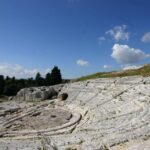
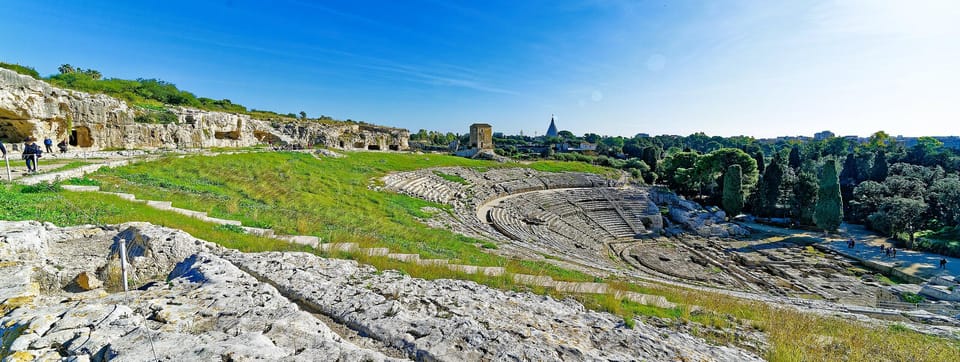
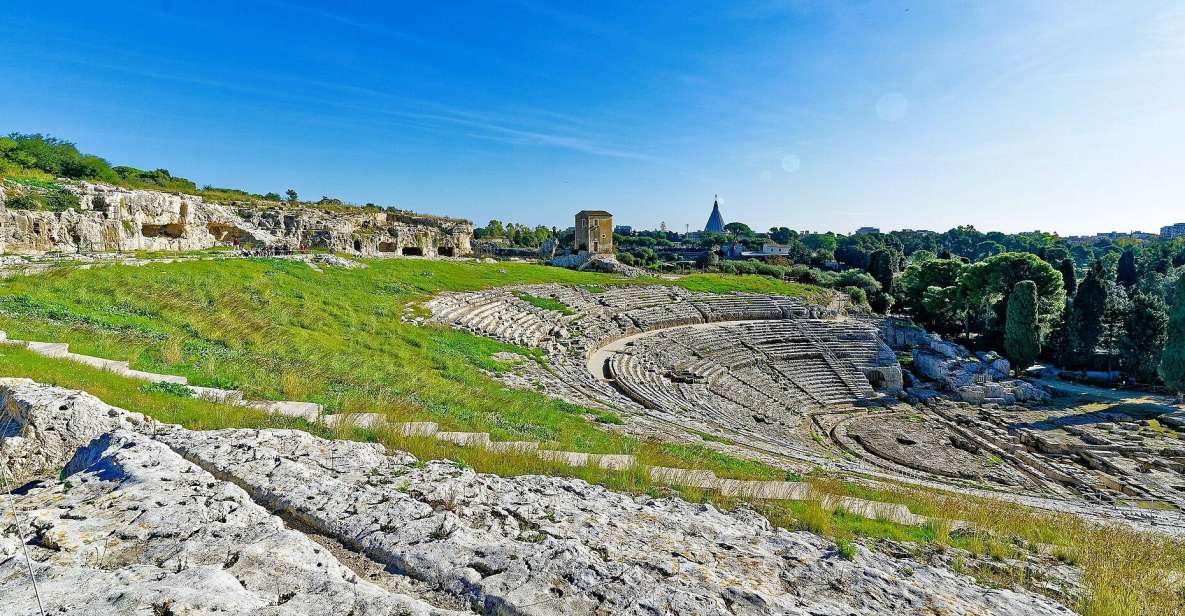
Then you reach the Greek Theater, one of the largest Greek theaters in the Mediterranean. You’ll view it from the upper terrace, and that’s key. The higher vantage points help you understand how the theater fit into the landscape and how spectators would have experienced the space.
From that terrace, you can admire the Fountain of the Nymphaeum and get a wonderful panorama overlooking the large port area. This is exactly the kind of payoff I want on a short guided tour: you get both the ancient structure and the modern landscape context that makes it feel alive.
The theater itself is where the tour’s storytelling style shines. The guide ties the Greek city’s public life to what you’re seeing in front of you. Even if you’re not a theater nerd, it’s easy to grasp why a major civic culture would build a space like this.
One practical consideration: terraces can be breezy and uneven. If you’re sensitive to uneven footing or have trouble on steps, plan to move carefully. A private guide can help you pick safer spots to pause, so it’s worth staying close rather than drifting ahead.
You can also read our reviews of more private tours in Syracuse




Altar of Hieron II: when size is the message
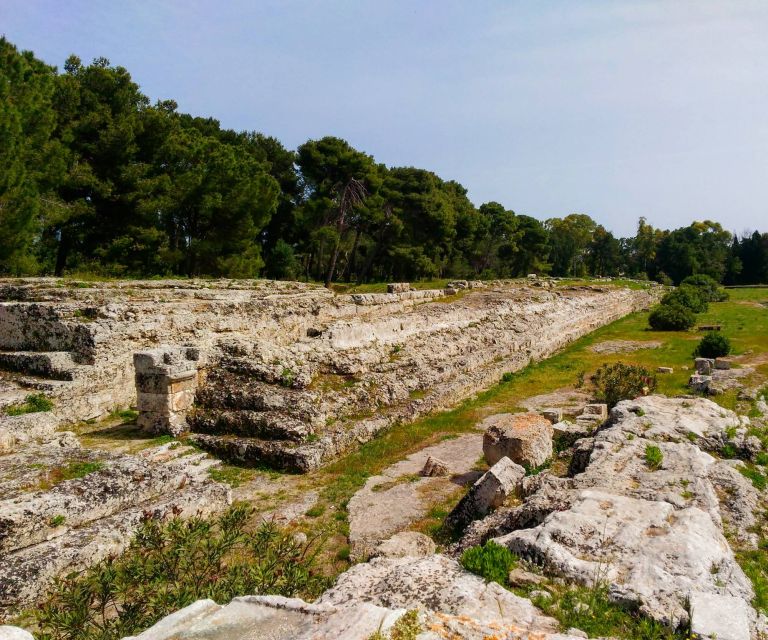
After the theater, you move to the Altar of Hieron II, described as the largest stone altar built in the Greek world. This is a standout stop for a reason. It’s easy to think of ancient sites as “buildings to look at.” But this one is about function and statement—massive stone made a civic and religious point in a very physical way.
The guide’s explanation helps you connect the altar to the broader Greek civic and ceremonial life of Syracuse. Even if you can’t picture the rituals in detail, the sheer scale communicates purpose. It’s one of those places where you can look up, look around, and get a strong sense of why the Greeks cared about monumental space.
If you like photo moments, this is a good spot to do it slowly. The altar’s size can be deceptive at first. Give yourself time to step back and reframe before you commit to angles.
Roman Amphitheater: the city after the Greeks
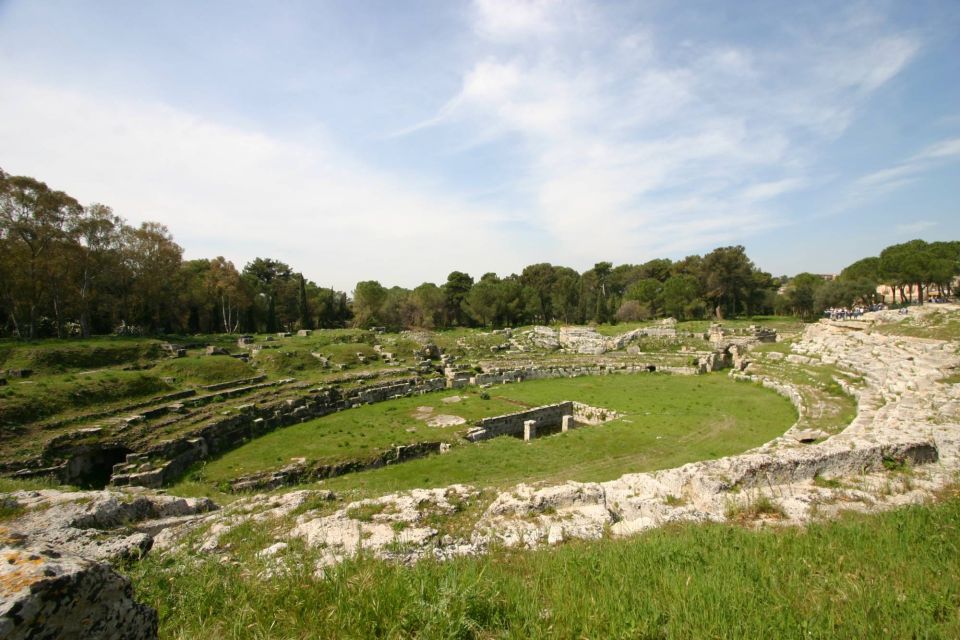
The final monument in Neapolis on this tour is the Roman Amphitheater. The guide shows you the Roman phase of the city and explains the building characteristics and the particularities of gladiatorial games.
This part works because it turns Neapolis into a timeline you can stand on. You start in the Greek layer—quarries, myths, theater, altar—and you end with Roman spectacle. It’s a practical way to understand cultural change without needing a big lecture.
If you’re less interested in gladiatorial history, don’t skip the explanation. It’s not just “Romans were here.” The guide’s breakdown helps you see how the space shifts in design and use across eras.
The Roman Amphitheater also gives you closure. By the time you reach it, you’ve already learned the story of why Neapolis mattered. Now you see how later Romans reshaped the same broader urban world.
Guide quality matters: what the best reviews really point to
This tour is rated 4.6 with a solid base of feedback, and two names come up in a very meaningful way: Rita and Cristina.
Rita gets praised for knowing the history well and making it engaging. That’s a big deal on a 2-hour tour, where you need explanations that land quickly and clearly. Cristina is noted for explaining details, and people also highlight the park itself as beautiful and impressive. I take that as a sign that the guide helps you notice what you might otherwise miss—like how the Latomie’s past changes when you know it was work and imprisonment space, or how the Ear’s legend feels more grounded when you’re standing inside the setting.
In other words, this isn’t a “walk-by” tour. You’re paying for a guide who can connect the dots in real time.
Price and value for a 2-hour private group
The listed price is $283.21 per group (up to 15 people) for about 2 hours. That can sound steep if you compare it to cheaper group walking tours, but the value calculus is simple:
- It’s private, so you’re not stuck with a giant group that may limit questions.
- You get a certified guide covering multiple major monuments in one compact loop.
- You’re paying for interpretation: history, myths, and context that can transform ruins into something you remember.
For small groups, this often pencils out well. If you’re traveling as a couple or family, it’s a reasonable way to get the most from Neapolis without spending extra time searching for the “best” route yourself.
Where you should be careful is expectations. This is not a long, slow archaeological day. If you want to linger at every corner, you might feel rushed. If you want a focused, story-driven orientation to Syracuse’s ancient core, it’s a good match.
Weather and timing: what to plan so the day stays easy
Neapolis is outdoors, and the operator notes that in bad weather the reservation could be modified or canceled. That means you’ll want a flexible mindset when you schedule Syracuse sights.
Also, starting times vary by availability. If your plan involves other anchors in Syracuse—meals, the coast, or another attraction—pick a buffer. Two hours can vanish fast when you include walking between key terraces and caves.
Finally, check which language you booked. The tour is offered in English, German, Italian, Spanish, and French. If Italian is your choice and you’re hoping to attend Il mito di Aretusa, treat that as option-dependent. Build your day so you’re not crushed if the show doesn’t line up with your schedule.
Who this private Neapolis tour suits best
This tour fits you if:
- You want a guided route through major Neapolis monuments in a short window.
- You enjoy myth plus history, especially the Dionysius thread and the cave legends.
- You like structured sightseeing where someone helps you understand what you’re seeing.
It’s also a good pick for visitors who want a “big hits” plan that still includes context, not just photo stops. The mixture of Greek and Roman sites in one flow is especially helpful if it’s your first time in Syracuse’s ancient zone.
Should you book Syracuse Greek Theater and Neapolis private tour?
I’d book it if you want a guide who can connect Latomie, the Ear of Dionysius, and the major monuments into a coherent story, and you’re happy with a fast, focused 2-hour walk. The value is strongest for small groups who care about explanation more than wandering.
Skip it if you’re looking for a long, unhurried archaeological day or if you prefer to explore at your own pace without guided interpretation. In that case, you might be happier with independent time in the park.
If you do book, I’d come prepared with comfy shoes and a bit of curiosity about myths. You’ll get more out of the experience that way, especially at the cave and theater stops.
FAQ
How long is the Syracuse Greek Theater and Neapolis guided private tour?
The tour lasts about 2 hours.
What’s the group size for this private tour?
It’s a private group with the price listed per group up to 15 people.
Which languages are available?
The live guide is available in English, German, Italian, Spanish, and French.
What sites are included in the Neapolis route?
You’ll visit the Latomie, the Ear of Dionysius, the Grotta dei Cordari view, the Greek Theater, the Fountain of the Nymphaeum viewpoint, the Altar of Hieron II, and the Roman Amphitheater.
Is there an option to attend Il mito di Aretusa?
If you choose a tour in Italian, you may have the opportunity to attend Il mito di Aretusa.
What happens if the weather is bad?
In bad weather conditions, the reservation could be modified or canceled.