REVIEW · SYRACUSE
Syracuse: Neapolis Archaeological Park Small Group Tour
Book on GetYourGuide →Operated by Hermes Sicily Tours · Bookable on GetYourGuide
Echoes in stone, then history comes alive. On this Syracuse Neapolis Archaeological Park small-group tour, you’ll walk through the Ear of Dionysius grotto and the big Greek theatre view that overlooks the bay, guided by people like Eva or Federica who know how to turn ruins into a clear story of Greek and Roman Syracuse. I especially like that the tour hands you context you would miss on your own, and that the stops are paced for real looking, not just marching. One possible drawback: with a 1.5-hour total time, you’ll want to be comfortable with a brisk walk between sites.
The park itself is dramatic—rock-cut quarries, old amphitheater walls, and those surreal acoustics inside the Ear. You’ll get a proper guide-led route that focuses on the big set pieces (not every stone in sight), plus a photo pause so you can actually frame the bay and the monuments rather than rushing through them. If you’re on a larger shared group, the tour provides radio receivers so you can still hear the guide clearly.
At around $26 per person for 90 minutes with a licensed guide, this is one of the easier ways to make your Syracuse archaeological time feel worthwhile. It’s also wheelchair accessible, and you may find the paths are more manageable than you’d expect—one guest noted help with easier routes for pushing a stroller when needed.
In This Review
- Key reasons this Neapolis tour works so well
- Why Neapolis is better with a guide than on autopilot
- Meeting at the park: keep an eye on the start point
- Latomie del Paradiso and Grotta dei Cordari: the quarry walk you’ll remember
- The Ear of Dionysius: where acoustics become a story
- Greek theatre and Temenite Hill views: the bay is part of the monument
- Photo stop at Neapolis: don’t rush this pause
- Altar of Hieron II and the Roman amphitheater: the story keeps moving
- Shared group vs private: choose based on how you like to learn
- Price and value: why $26 can feel like a steal here
- Practical tips so you enjoy it more
- Who should book this tour (and who might skip it)
- Should you book Hermes Sicily Tours for Neapolis?
- FAQ
- How long is the Syracuse Neapolis Archaeological Park tour?
- Where do I meet the guide?
- Are entry tickets included?
- What language is the live guide?
- Do I need special equipment or a payment card?
- Is the tour wheelchair accessible?
Key reasons this Neapolis tour works so well
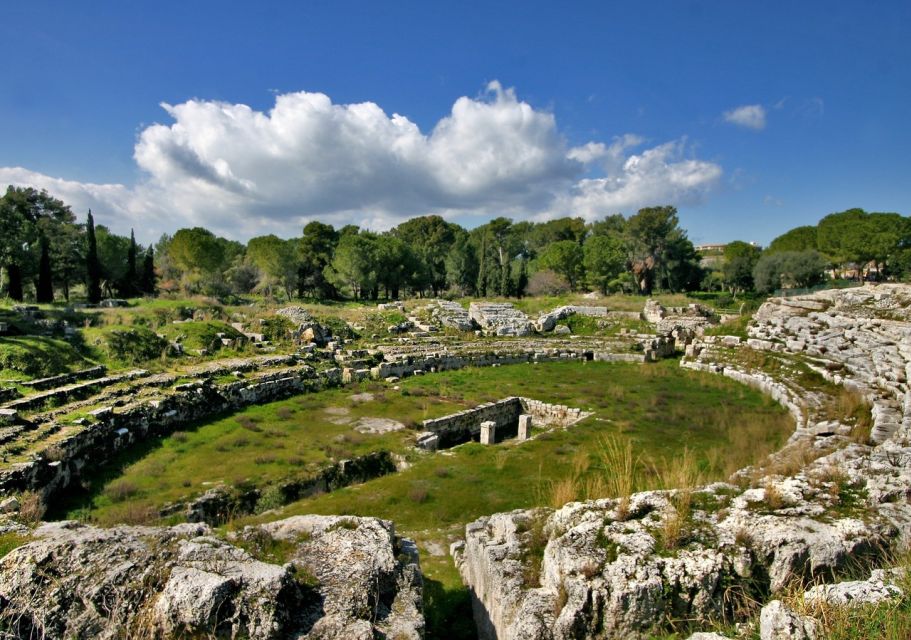
- Ear of Dionysius inside the quarries: you don’t just see it—you learn why it’s famous for its sound tricks
- Greek theatre + bay views: the timing and viewpoint make the ruins feel part of real daily life
- Latomie del Paradiso and Grotta dei Cordari: a rock-cut quarry walk with plants and textures that feel alive
- Roman finish: altar area and Roman amphitheater give you the full Greek-to-Roman arc
- Small-group feel: many tours run with a small group size, and you’ll hear the guide without strain
- Good guide energy: guests consistently highlight friendly, clear explanations and quick answers to questions
Why Neapolis is better with a guide than on autopilot
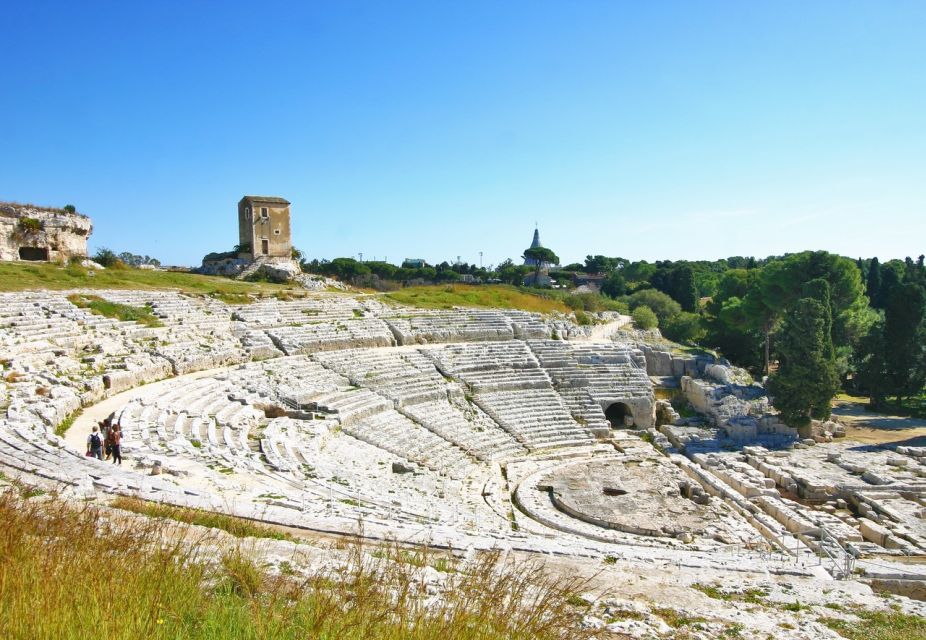
Neapolis Archaeological Park is the kind of place that looks incredible—but without context, it can also turn into a lot of “pretty ruins” in your photos. The difference on this tour is that you’re given a sequence: what you’re looking at, how it worked, and what changed when Romans took over.
I like that the route is built around the most important nodes of the site: the Greek theatre, the quarries at Temenite Hill (including Latomie del Paradiso), the famous Grotta dell’Orecchio di Dionisio (Ear of Dionysius), and then Roman monuments to bring the story forward. If you’re short on time in Syracuse, this structure helps you get the meaning, not just the scenery.
Another plus: the tour includes a licensed guide and the information is delivered in a way that seems to land for a wide range of ages. Some guests mention it worked even for teenagers, and one family appreciated how the guide adjusted to an 8-year-old’s pace.
You can also read our reviews of more tours and experiences in Syracuse.
Meeting at the park: keep an eye on the start point
You meet at the entrance gate of Neapolis Archaeological Park with a guide, and the meeting point may vary depending on which option you booked. The start/drop area listed is Largo Anfiteatro, 2, but don’t assume that will always be the exact corner—double-check your confirmation email.
This matters because Neapolis isn’t one compact museum building. Getting to the right starting point means you begin the walk with less stress, and you’re more likely to catch the group before it moves out.
Latomie del Paradiso and Grotta dei Cordari: the quarry walk you’ll remember
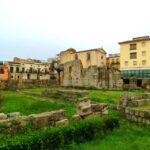
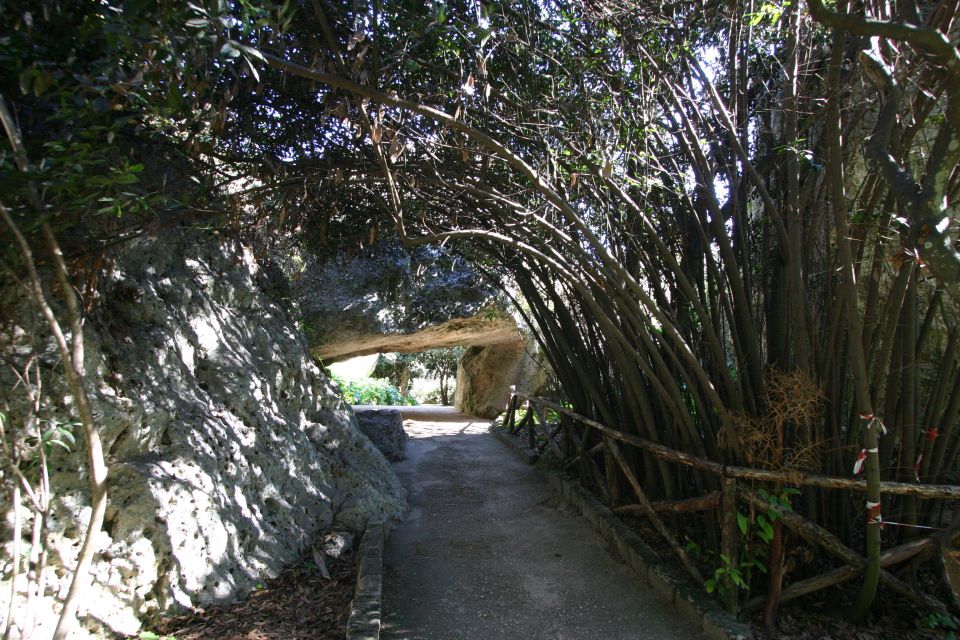
The first guided stops focus on the rock-cut spaces on Temenite Hill. You’ll see the ancient Greek quarry area known as Latomie del Paradiso, described as a stone quarry with local flora. Expect it to feel different from the open-air theatre area—more texture, more shadow, more “how did they even carve this?” energy.
From there, you head into Grotta dei Cordari for another guided segment. The key here isn’t just the rocks. It’s that these quarry spaces are the practical backdrop for the next must-see: the Ear of Dionysius grotto.
If you visit in spring, you might be treated to a sensory bonus. One April guest talked about the fragrance of orange and lemon blossom around the park, and it’s the kind of detail that sticks with you because it’s not just historical facts—it’s the place itself.
The Ear of Dionysius: where acoustics become a story
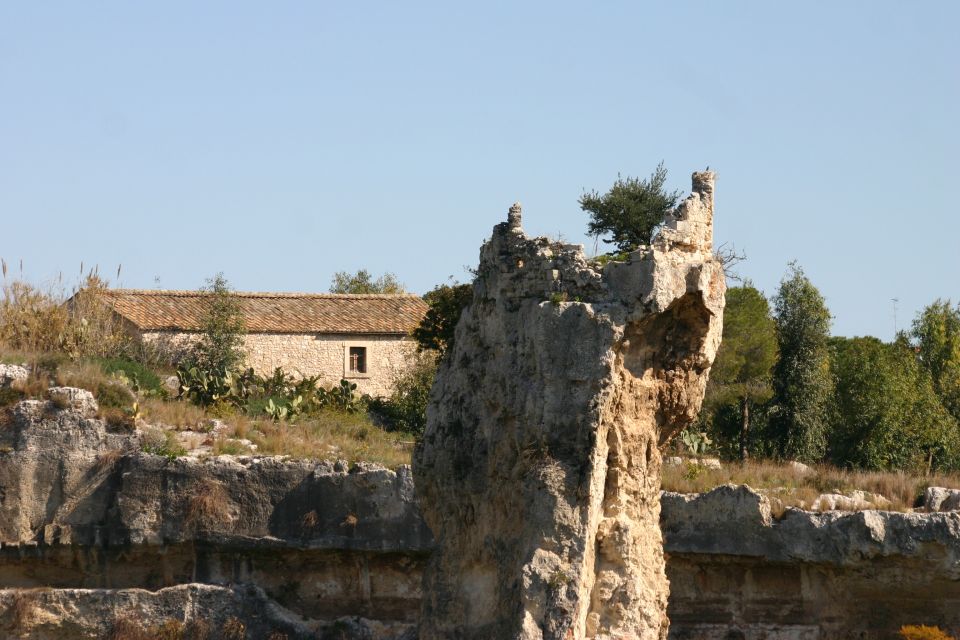
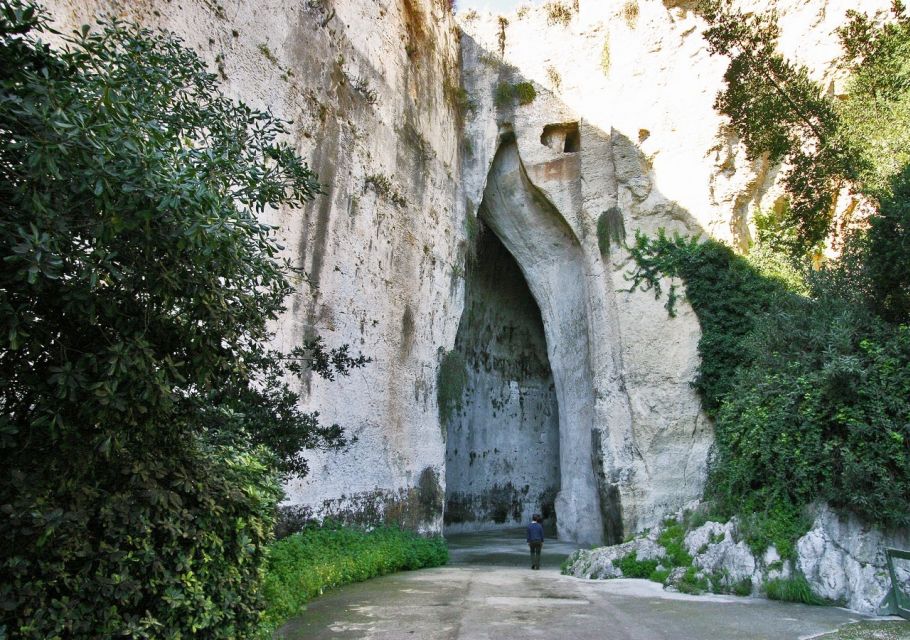
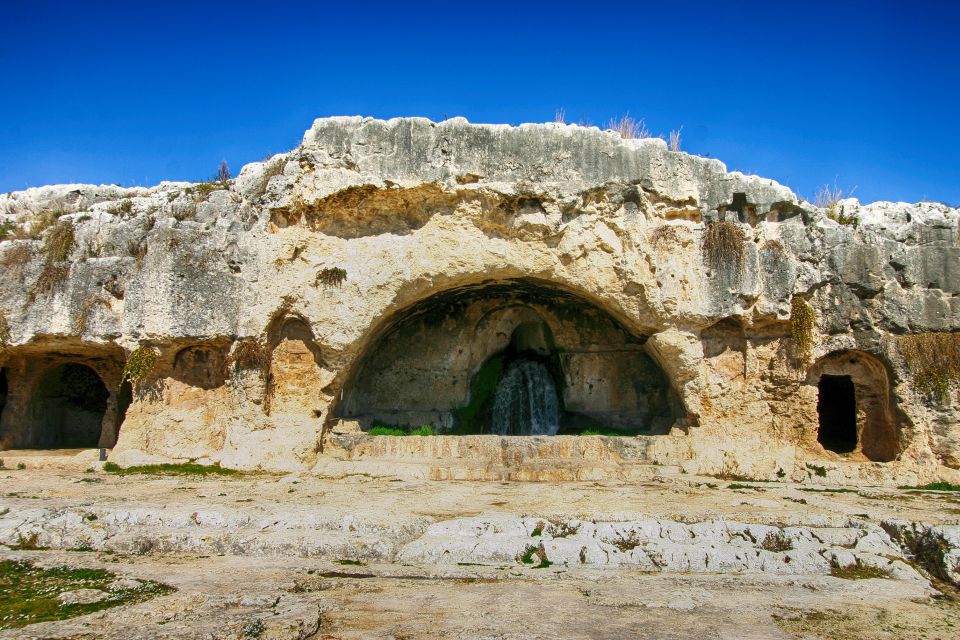
Yes, the Ear of Dionysius is famous. But what makes the tour work is that it places that fame in context. You enter the legendary grotto famed for its shape and echoing sounds, and your guide ties it to what this space likely meant to ancient people.
You’ll spend a focused guided chunk here (the tour includes a dedicated visit, not a quick peek). Even if you know the basic legend, hearing the explanation on-site helps you understand why the echo effect isn’t just a party trick. It’s one of those moments where history becomes physical: you’re standing in the same kind of stone cavity that makes the acoustics do their thing.
One practical tip: wear shoes you trust. Quarry areas can be uneven, and you’ll want your footing when you’re stopping to listen and look.
Greek theatre and Temenite Hill views: the bay is part of the monument
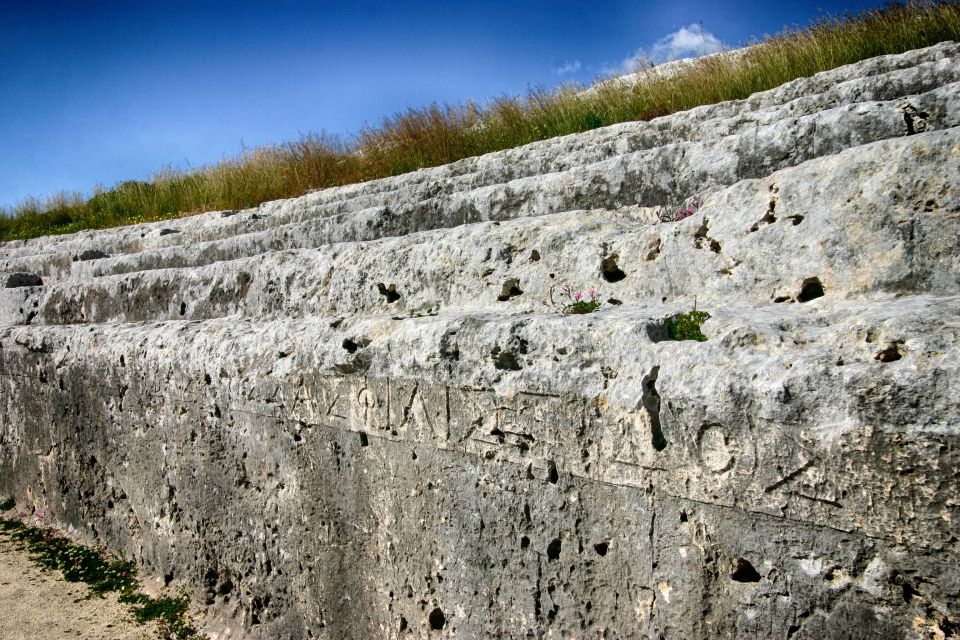
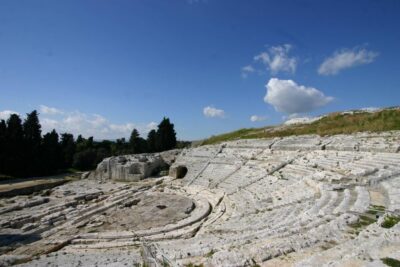
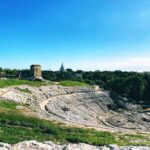
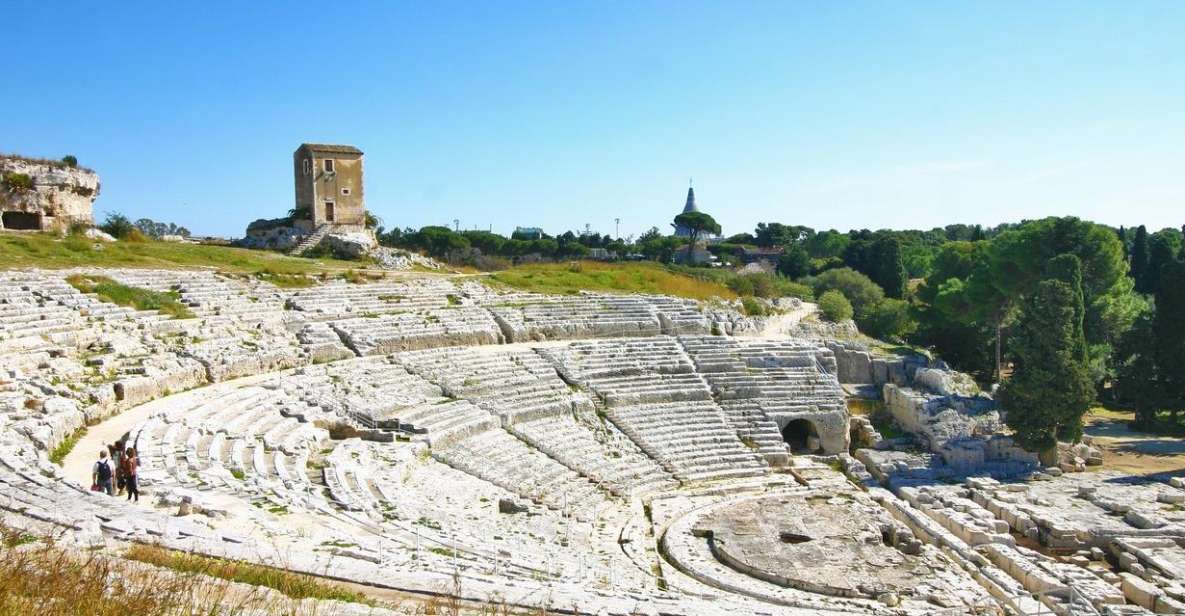
After the quarry stops, the tour shifts to the big star in daylight: the ancient Greek theatre. You’ll get a guided walk through the theatre area, plus time for the kind of view people only really appreciate when they’re standing where spectators once stood.
Your guide points out how the theatre sits and what you can see from the viewpoint—especially the views of the town’s bay. This is where the park clicks from “archaeology” into “how people lived.” You start imagining arrivals, performances, and conversations with the sea in the background.
One more subtle win: guides often connect these points to what you can see today, including how modern sculptures inside the park relate to the setting. A few guests specifically called out that this modern layer of meaning made the visit feel more relevant, not less.


Photo stop at Neapolis: don’t rush this pause
There’s a short photo stop during the visit. It’s worth treating that as your one moment to slow down and grab images with context: theatre framing, quarry textures, and the bay view where you can actually see why the location mattered.
If you take photos as you walk, you can end up spending energy later trying to recreate angles. Use the photo pause like a reset button. You’ll enjoy the rest of the tour more if you’re not still chasing the perfect shot.
Altar of Hieron II and the Roman amphitheater: the story keeps moving
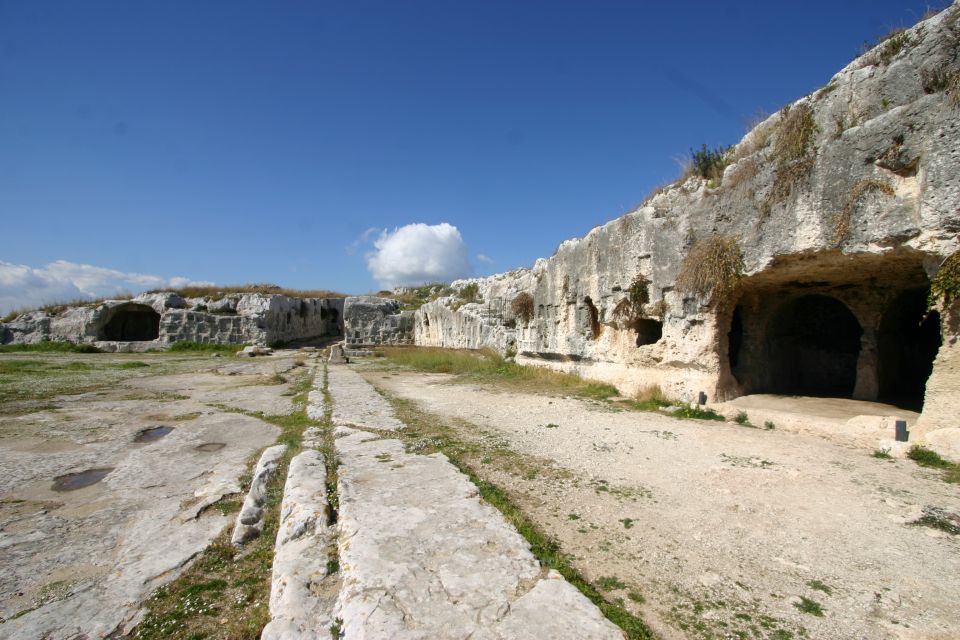
The tour closes with the monuments that show the Roman layer of Syracuse.
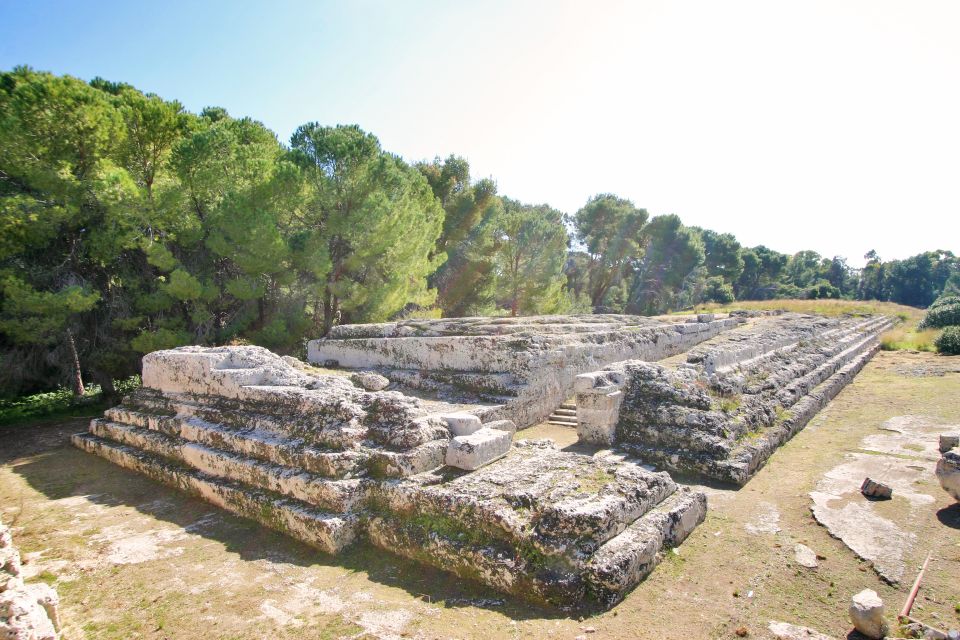
First comes the Altar of Hieron II, visited with guided explanation (not just a stop-and-go). Then you move to the Syracuse Roman Amphitheater, also guided. This order is useful because it gives you a clean shift: you see how Greek spaces and practices connect to the later Roman world that took shape on the island.
Roman sites can feel less intuitive than Greek ones because you don’t always have the same immediate cues. A guide helps you translate what you’re looking at so it doesn’t become guesswork.
There’s also a nice “human” note from the experience level of the guides: one guest shared that when a Roman portion looked like it might close early, the guide advocated so the group could still see that segment. It’s a small detail, but it shows why a guide’s role matters when real-world operations change.
Shared group vs private: choose based on how you like to learn
The tour gives you a choice between shared group and private options.
In shared format, you may join a small group. Some guests reported a group of about 10 and said they could hear everything clearly. If you’re in a larger shared group, the tour includes radio receivers, which can make a noticeable difference—especially when you’re standing in open spaces where voices can carry away.
Private tours typically feel better if:
- you want a slower pace or more time for questions
- you’re traveling as a family
- you care about hearing the explanations tailored to your interests
One guest said a private tour allowed the guide to adjust content for an 8-year-old, and another family noted the guide could handle English/Italian switching for a small group needing both languages. If languages matter for you, private can be a safer bet for getting your exact needs met.
Price and value: why $26 can feel like a steal here
At $26 per person for about 1.5 hours with a licensed guide, this is priced like a straightforward add-on day. But the value comes from the specific sites you cover—especially the Ear of Dionysius, which is hard to understand fully without on-site interpretation.
You’re not just paying for access. You’re paying for:
- a guided sequence that prevents your visit from feeling like scattered stops
- clear explanations timed to what you can see in each location
- time saved (you don’t have to figure out what matters most)
One “watch-out,” based on feedback: a few people felt the tour could be a touch slow. If you’re the type who wants maximum sites per hour, you might feel the pacing is gentler than expected. On the flip side, if you prefer absorbing details and taking photos without sprinting, that same pace can be a plus.
Practical tips so you enjoy it more
Here’s what I’d do to get the best experience out of your 90 minutes:
- Bring an ID or passport as requested.
- Plan to wear shoes with good traction and comfort for uneven stone.
- If you’re sensitive to sun or heat, consider timing your visit for later in the day—one guest specifically said it was incredibly warm and they liked doing the tour in the evening.
- Use the guide’s explanations as your “caption” while you look. When you hear why a place mattered, you’ll notice details you’d miss anyway.
- If you’re traveling with kids or mobility needs, ask when you meet the guide how the route will work. One review noted the guide helped with paved paths when a child fell asleep in a stroller.
Who should book this tour (and who might skip it)
This is ideal if you:
- want the highlights of Neapolis without mapping the whole park yourself
- love when a guide translates archaeology into human stories
- want the Greek-to-Roman storyline in one compact visit
- prefer small-group energy where questions are easy to ask
Skip it (or consider a faster self-guided pass) if you:
- hate walking and want something even more minimal
- are very confident you already know the key history and acoustics story
- only want free-roam time without structured stops
Should you book Hermes Sicily Tours for Neapolis?
If your time in Syracuse is tight, I think this tour is a smart booking. For the price, you get exactly the kinds of stops that turn Neapolis from confusing ruins into a set of connected scenes: theatre viewpoints over the bay, quarry rooms like Latomie del Paradiso, the signature acoustics of the Ear of Dionysius, and the Roman monuments that finish the arc.
Also, the guide factor seems to be a big deal here. Multiple guests singled out guides like Eva and Federica for clear explanations, friendly energy, and great pacing. If you want the history explained while you stand in the place, not later after the fact, this is a strong match.
FAQ
How long is the Syracuse Neapolis Archaeological Park tour?
It lasts about 1.5 hours.
Where do I meet the guide?
The meeting point may vary depending on the option you booked, but a starting option listed is Largo Anfiteatro, 2. Check your confirmation details for the exact spot.
Are entry tickets included?
Entry tickets are included if you select the option that includes them. The tour also notes entry tickets as an available add-on depending on your booking choice.
What language is the live guide?
The live tour guide is listed as Italian. In rare cases of very small shared-group tours, the explanation could be in two languages.
Do I need special equipment or a payment card?
Bring a passport or ID card. The tour includes a licensed guide and walking tour format; radio receivers may be provided for the large shared group option only.
Is the tour wheelchair accessible?
Yes, the tour is listed as wheelchair accessible.