REVIEW · MESSINA
Messina: 2-Hour Walking Tour with a Private Guide
Book on GetYourGuide →Operated by Italygonia Travel T.O. · Bookable on GetYourGuide
Messina compresses centuries into a short walk. In just two hours, you get Arab-Norman Sicily in the real streets, starting at the heart of town and ending with big water-and-sky views. It’s the kind of tour where architecture does the talking, and a good guide keeps the stories straight.
What I really like is the mix of landmark detail and street-level orientation. You’ll see the Fountain of Orion at the start, then the cathedral complex and bell tower with the famous mechanical and astronomical clock.
The one drawback is timing. The bell tower’s daily moving-figure moment happens at noon, so if your start time lands earlier or later, you may not catch the show.
Key points at a glance
- Fountain of Orion in Piazza del Duomo, with Latin verses and Michelangelo-era connections
- Santa Maria Assunta changes styles over time: Byzantine roots, Swabian expansions, later rebuilding
- Bell tower clock: large mechanical + astronomical system, with figures moving daily at noon
- War of the Vespers symbolism shown in the bell tower figures and scenes
- Port viewpoint over the largest port in Sicily, plus the Belvedere skyline at the end
In This Review
- Arab-Norman Messina in Two Hours: What You Actually See
- Starting at Piazza del Duomo and the Fountain of Orion
- Santa Maria Assunta Cathedral: From Byzantine Roots to 1900s Additions
- Duomo Façade Details and the 14th-Century Reliefs
- The Bell Tower’s Astronomical Clock at Noon: The Big Moving Figures
- Symbolism in Stone: War, Faith, and How the Guide Connects It
- The Port View and Ending at the Belvedere Skyline
- Private Guide Value: What You Pay For and How It Helps
- Pace, Timing, and What to Do With Your After-Tour Questions
- Who This Tour Fits Best (and Who Might Want More Time)
- Should You Book This 2-Hour Messina Tour?
- FAQ
- Where does the tour start?
- Where does the tour end?
- How long is the walking tour?
- Is this a private group tour?
- What languages are available for the guide?
- Is a licensed guide included?
- Is lunch or dinner included?
- Is pickup or drop-off included?
- How much does the tour cost?
- Can I cancel for a full refund?
Arab-Norman Messina in Two Hours: What You Actually See
This is a tight, focused walking tour built around Messina’s most important landmark cluster: the Duomo area. You start in Piazza del Duomo and work outward from there, picking up local meaning as you go.
You’ll also get the bigger picture of Sicily’s layered past, especially the Arab-Norman heritage mentioned for the experience. The best part is how the guide connects dates, damage, rebuilding, and changing decoration to what you’re standing in front of.
Because it’s only two hours, the pace is brisk. That can be perfect if you want the highlights first, then decide what to revisit on your own.
Starting at Piazza del Duomo and the Fountain of Orion
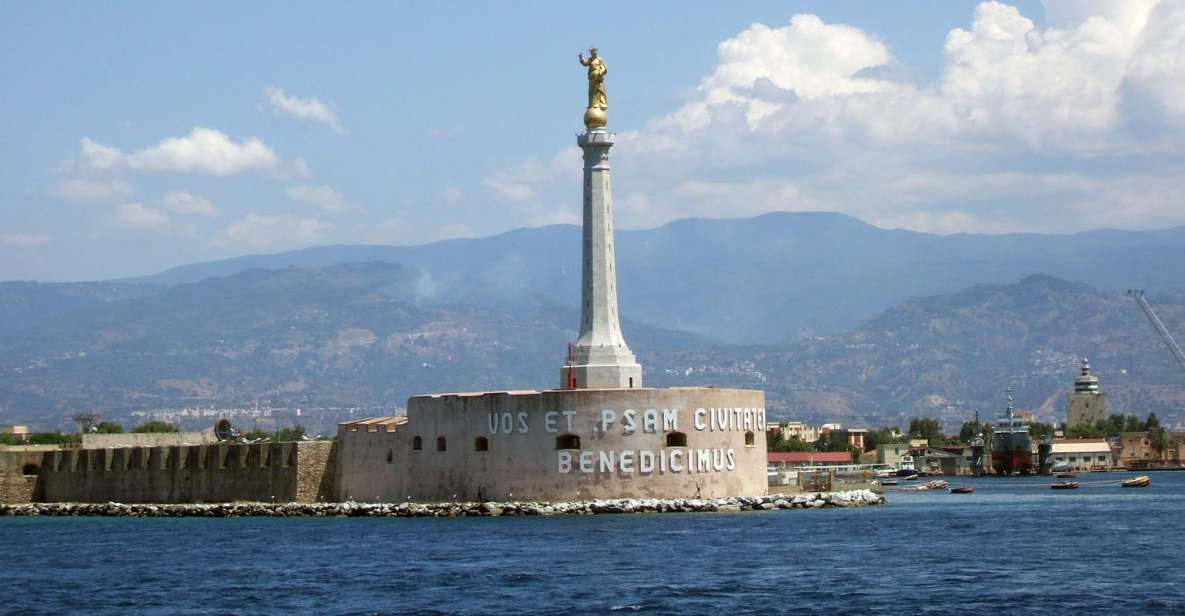
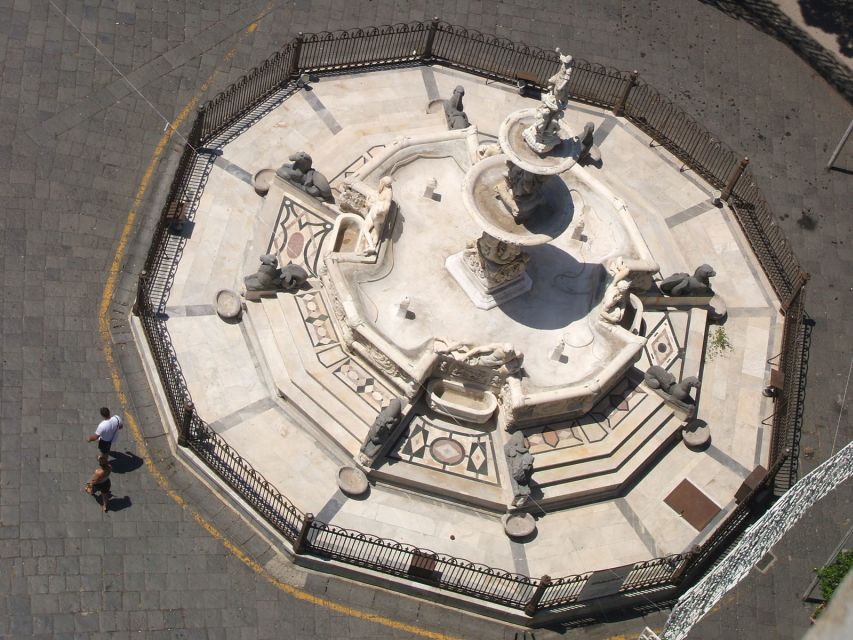
Your tour starts at Piazza del Duomo square, next to the fountain. The “waiting-to-be-noticed” trick here is that you begin with a work most people would otherwise pass quickly.
The Fountain of Orion was built in 1500 by a disciple and collaborator of Michelangelo Buonarroti. It isn’t just decorative: it includes representations of the four rivers, plus a Latin-inscribed upper basin with verses you can’t help but feel are meant to slow you down and read.
This opening matters because it sets the tone for the rest of the tour. You go from a Renaissance-era symbol of learning and order to a cathedral complex where styles and eras keep replacing each other over centuries.
You can also read our reviews of more walking tours in Messina
Santa Maria Assunta Cathedral: From Byzantine Roots to 1900s Additions
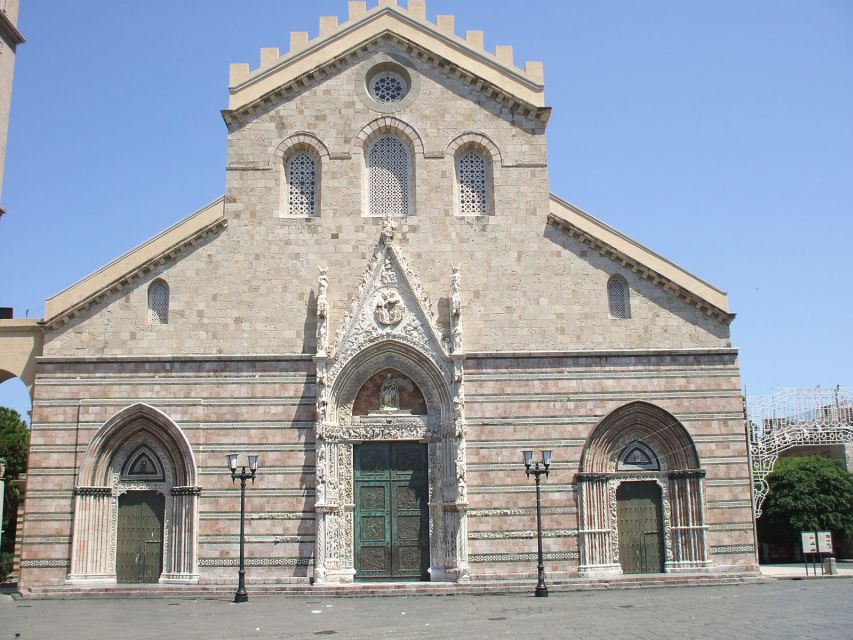
Next comes the cathedral dedicated to Santa Maria Assunta. The guide frames it as a building that keeps changing, rather than one “finished” monument.
Construction and expansion trace a long timeline: built in the Byzantine era, expanded during the Swabians, and then destroyed in 1254 during the funeral of King Corrado IV (son of Frederick II Hohenstaufen). Later, the cathedral was rebuilt in 1908. That whiplash of history is exactly why this stop feels alive.
Inside and around you’ll notice decoration spanning Renaissance and Baroque elements, and then additions from the 1900s. The tour also points out that you’ll see statues, marbles, and mosaics that are copies—since some originals are now lost.
Practical thought: a cathedral like this can feel overwhelming without context. Having a guide here is what turns “lots of stuff” into a timeline you can remember.
Duomo Façade Details and the 14th-Century Reliefs
Outside, the façade gives you a visual way to read the centuries. Multi-colored bands run along the exterior, and the surface is embellished with marble plus 14th-century reliefs.
This is one of those spots where I’d recommend you slow your pace for a minute. The façade decoration is easy to skim if you’re walking fast, but it’s where you start picking up patterns the guide highlights.
If you’re the type who enjoys how artists signal power and belief through materials and layout, you’ll get a lot from standing back and letting the details settle.
The Bell Tower’s Astronomical Clock at Noon: The Big Moving Figures
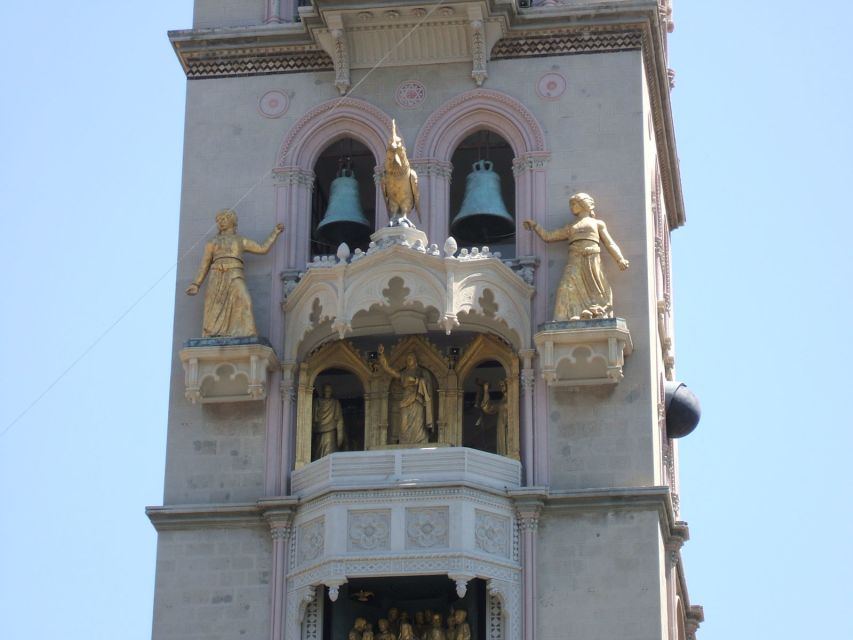
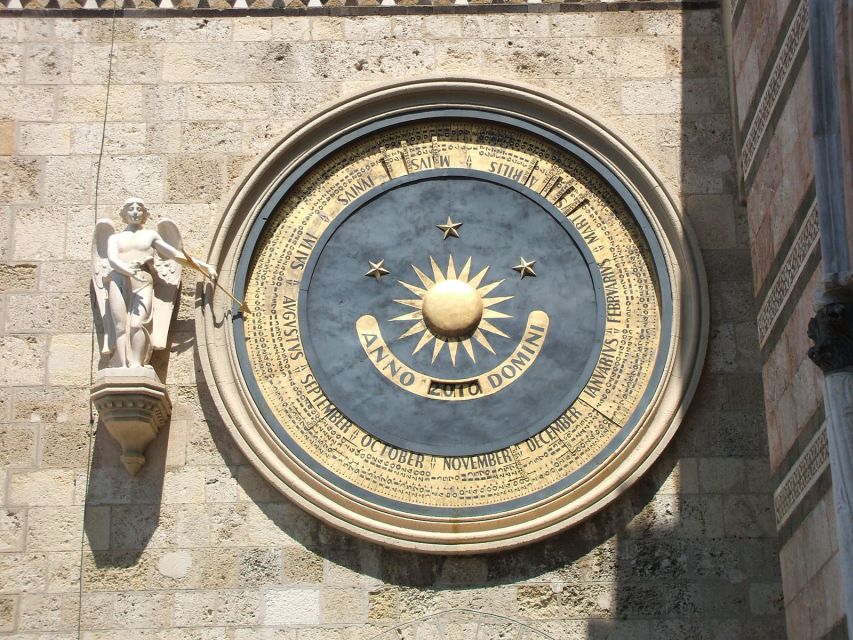
Then you shift to the real showpiece: the bell tower. It’s about 90 meters high and roughly 10 meters wide, and the clock system is described as the largest and most complex mechanical and astronomical clock in the world.
The most memorable detail is the daily moment at noon. The various statues move to the sound of the Hail Mary of Schubert. If your tour time is close to noon, you’ll want to pay close attention; if not, the guide can still explain what’s happening when the clock “performs.”
The bell tower figures also connect to political memory. They recall the War of the Vespers of 1282, when the Sicilians stood victorious over Charles of Anjou. It’s not random decoration—it’s storytelling in stone and motion.
Why this matters for you: many tours list impressive objects. This one gives you a reason to care about the object’s design and what it represents to the people who lived around it.
Symbolism in Stone: War, Faith, and How the Guide Connects It
One thing I noticed in how guides are described by other visitors is the emphasis on explanations that stick. In at least one review, the guide was called out by name as Lydia, specifically for detailed explanations that made the places feel personal and easy to follow.
That approach pays off here because the Duomo complex can feel like a stack of unrelated art unless someone ties it together. The bell tower’s clock mechanics, the noon performance, the religious cue of the Hail Mary, and the historical reference to the War of the Vespers all link into one theme: Messina’s identity is written in public.
And if you’re thinking, Yes, but how do I translate all that into something I remember?—this stop gives you a simple mental hook. When you hear the bell tower described, think: clock + faith + civic memory.
You can also read our reviews of more guided tours in Messina
The Port View and Ending at the Belvedere Skyline
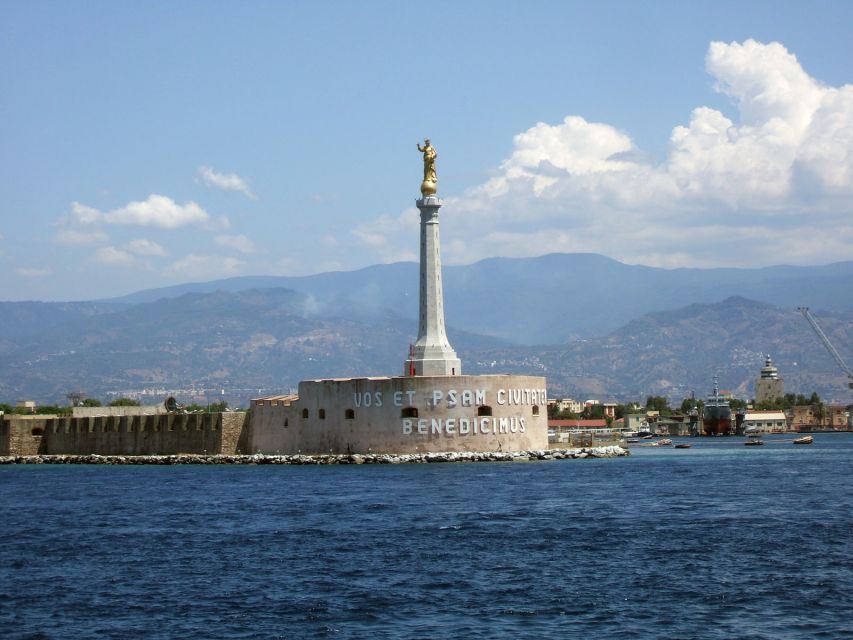
After the cathedral area, you move toward the water. You’ll get a view of the port, described as the largest in Sicily and one of the largest in Italy.
This part is short but useful. After all the stone and symbolism, you get a sense of why Messina’s leaders cared about monuments. Ports drive power. Power drives building programs. Then building programs outlast everything.
The tour finishes with views of the Belvedere skyline, returning you back to the meeting point. It’s a good way to close: not just “we’re done,” but “now look outward.”
Private Guide Value: What You Pay For and How It Helps
Pricing for this tour is listed as $348.92 per group, up to 25 people. That structure matters: you’re not paying per person based on a tiny group, and you’re getting a licensed guide and live interpretation.
This is a private-group tour with a guide who speaks Spanish, English, French, German, and Italian. In real terms, that’s what you want if you prefer your sightseeing to include context, not just facts read from a sign.
The reviews also point to a friendly, accommodating style. One review mentions a guide who was very accommodating, and another refers to a guide being very good and kind. Even without getting too sentimental, that tone matters in a cathedral setting where questions come fast: Why was it destroyed? Why rebuild in 1908? What does the clock actually do?
As for value: two hours isn’t a long time, but it’s a high-density route. If you’re a first-time visitor who wants the Duomo cluster plus a port view, you’ll likely feel the time was used well.
Pace, Timing, and What to Do With Your After-Tour Questions
The tour is built for a 2-hour window, so you should treat it like orientation plus highlights. You’ll leave with enough detail to recognize what you’re looking at if you come back later.
The timing consideration is the bell tower. Since the moving-figure moment happens daily at noon, your experience may shift depending on when you start. If your schedule lets you, try to line up your visit closer to noon. If you can’t, you can still learn what to watch for if you return.
Also, there’s no pickup or drop-off included. You’ll want to plan to arrive at Piazza del Duomo on your own, next to the fountain.
Who This Tour Fits Best (and Who Might Want More Time)
This tour is ideal if:
- You want a compact, high-impact walk centered on one major landmark area
- You enjoy architecture with specific stories tied to real dates and events
- You like explanations that connect art to local meaning
It may be less ideal if you prefer slow wandering without structured stops. Because it’s guided and timed, you may feel slightly rushed through details that you’d otherwise study longer on your own.
If you’re traveling with kids or teens, the moving clock-at-noon element can be a natural hook. You just need to match your start time to your energy level.
Should You Book This 2-Hour Messina Tour?
If you only have a short window in Messina, I’d book this. It hits the Duomo complex hard—Fountain of Orion, Santa Maria Assunta, and the bell tower clock—and it gives you an outward finish with the port and Belvedere skyline. That mix is rare in a two-hour walk.
Book it especially if you care about understanding what you’re seeing. The best part isn’t the fact that it’s famous; it’s how the guide connects the layers: Byzantine foundations, Swabian expansion, destruction in 1254 during the funeral of Corrado IV, rebuilding in 1908, then the clock’s noon performance and the War of the Vespers symbolism.
If you’re the kind of visitor who wants to stand alone and read every detail without guidance, you might enjoy it less. But if you want to get your bearings fast and leave with a mental map of Messina’s landmarks, this is a strong choice.
FAQ
Where does the tour start?
It starts at Piazza del Duomo square, next to the Fountain of Orion.
Where does the tour end?
The tour ends back at the meeting point in Piazza del Duomo square.
How long is the walking tour?
The duration is 2 hours.
Is this a private group tour?
Yes, it’s a private group experience.
What languages are available for the guide?
The guide is available in Spanish, English, French, German, and Italian.
Is a licensed guide included?
Yes. A licensed guide is included.
Is lunch or dinner included?
No, lunch or dinner is not included.
Is pickup or drop-off included?
No pickup or drop-off is included.
How much does the tour cost?
The price is listed as $348.92 per group (up to 25 people).
Can I cancel for a full refund?
Yes. Free cancellation is available up to 24 hours in advance.