REVIEW · SYRACUSE
Arancino Cooking Class in Ortygia Syracuse
Book on GetYourGuide →Operated by Do Eat Better Experience · Bookable on GetYourGuide
Your hands learn Sicilian comfort food in Ortygia. This Arancino cooking class in Syracuse is a fun, hands-on way to tackle one of Sicily’s most iconic snacks, guided by local food experts in a small room.
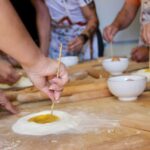
I like the small group setup (limited to 10), because it feels relaxed and you get real attention. I also like that you don’t just watch the process: you’re guided through making the traditional arancino/arancini, then you get to eat what you prepared plus more Sicilian favorites.
One thing to consider: depending on how the class runs that day, you may find the work is split, with some steps handled by the host. One review felt the price (around 60€ per person) was high for a smaller amount of hands-on shaping, and noted that most frying work was done by Massimo.
In This Review
- Key highlights to look for
- Arancini in Ortygia: why this 1.5-hour class works in Syracuse
- Meet at Banco di Sicilia and settle into a small-group kitchen
- From rice to stuffing: what you learn about making arancino
- Shaping and frying: the technique, plus what might be shared
- The aperitivo tasting: caponata, parmigiana and cannolo
- How much food you’ll eat and what value means here
- Who this class suits best (and who should skip it)
- Practical tips: shoes, bags, and timing in Ortygia
- Should you book the Arancino Cooking Class in Ortygia?
- FAQ
- How long is the Arancino Cooking Class in Ortygia Syracuse?
- What languages are the live guides speaking?
- How big is the group?
- Where do we meet for the class?
- What dishes are included besides arancino?
- Is the class hands-on, or mostly watching?
- What should I bring?
- Are pets or large bags allowed?
- Is the experience wheelchair accessible?
Key highlights to look for
- Limited-to-10 group size keeps the kitchen time friendly, not chaotic
- Maria + Massimo bring Sicilian food talk to life, not just instructions
- You learn the arancini method for classic stuffed rice balls
- Aperitivo tasting includes caponata and parmigiana, plus cannolo
- Comfortable pace for an enjoyable 1.5-hour experience in Ortygia
Arancini in Ortygia: why this 1.5-hour class works in Syracuse
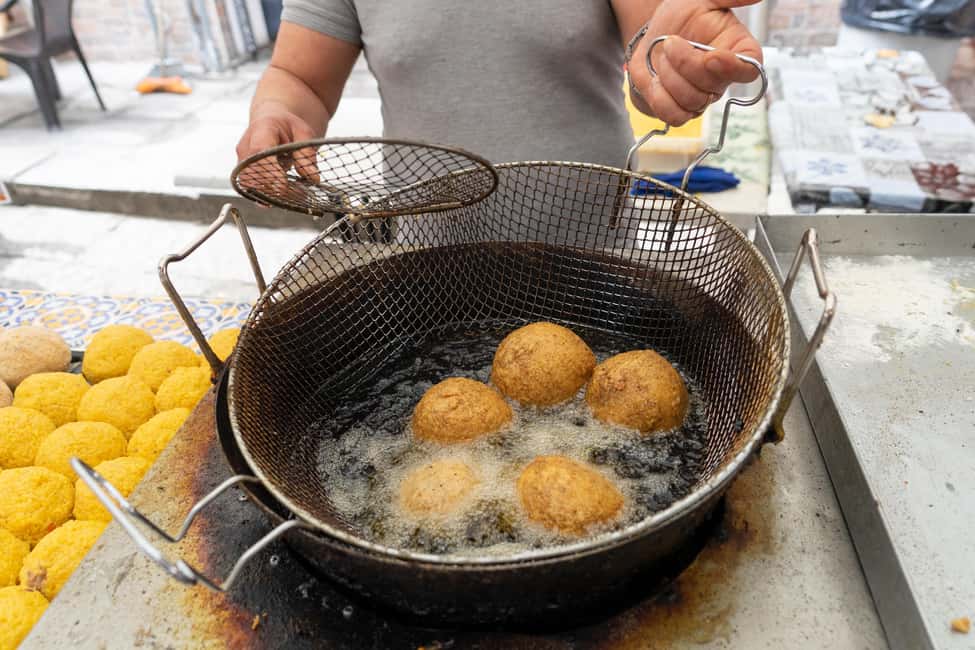
Ortygia is one of those places where food and street life mix all day. An arancino cooking class fits perfectly here because it’s local, practical, and short enough that you can still enjoy the island afterward. You’ll leave with a skill you can repeat, not just a souvenir.
The star is the arancino (often spelled arancini too). It’s a ball of rice stuffed with fillings and deep-fried until crisp. In a good class, you don’t just learn what it is; you learn how it behaves—how rice firms up, how stuffing stays inside, and how to think about portioning.
What makes this experience especially appealing is that it’s not presented as a “tour of Sicily” lecture. It’s a hands-on food moment in a small space, with guided cooking and tasting that ties together classic Syracusan and wider Sicilian flavors.
You can also read our reviews of more cooking classes in Syracuse

Meet at Banco di Sicilia and settle into a small-group kitchen
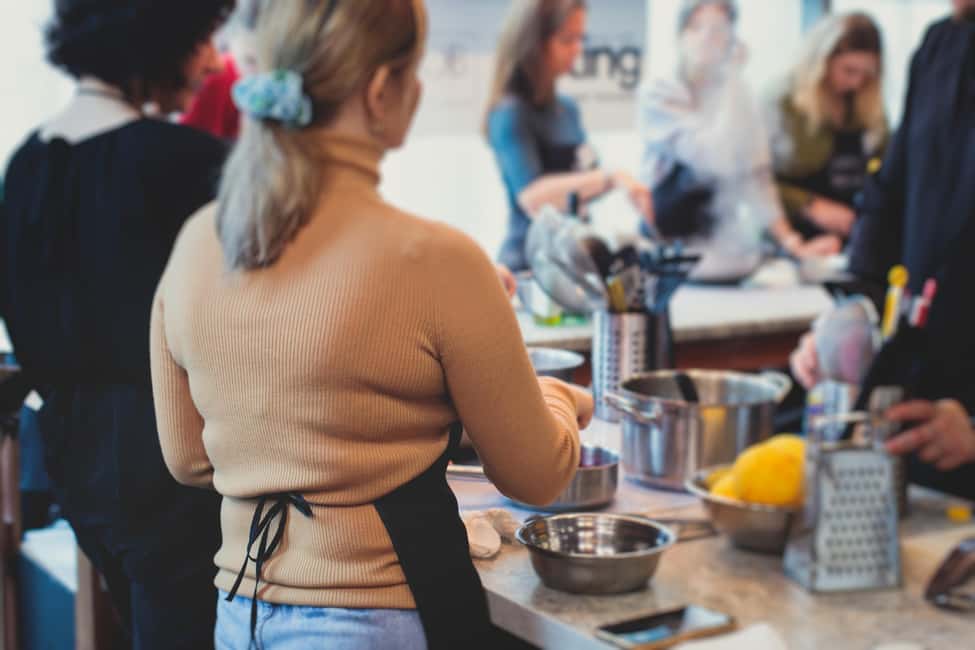
You meet in front of the entrance of the Banco di Sicilia in Ortygia (coordinates: 37.061317443847656, 15.293965339660645). It’s a straightforward meeting point—good when you’re wandering the island streets and don’t want to waste time guessing.
Inside, the class stays small and comfortable, which matters more than you’d think. With up to 10 participants, the guide can check technique and explain what you’re doing while the kitchen keeps moving. The experience is also built around a mix of people from different countries, so you’ll likely hear a few interesting cooking comparisons while you work.
This is also one of those activities where “bring your everyday clothes” is actually good advice. You’ll want comfortable shoes and comfortable clothes, because you’ll stand and move around as you handle ingredients and follow steps.
From rice to stuffing: what you learn about making arancino
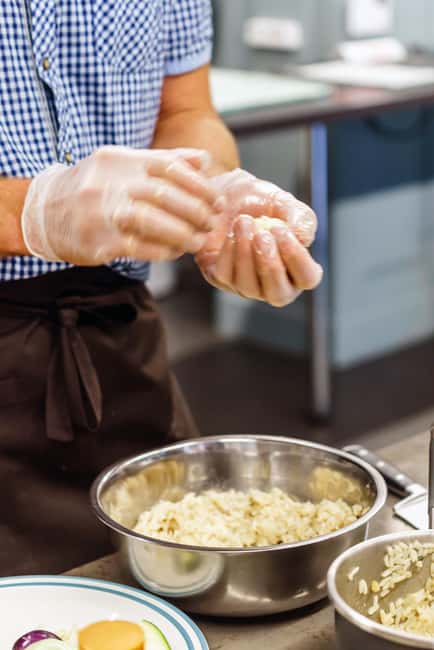
The core lesson is the traditional arancino: rice formed into a shell, filled, then fried. The class focuses on the technique behind the famous Sicilian snack, with guidance on how to assemble the rice correctly so the stuffing stays put.
Your guide talks through classic fillings, which can include options like meat, cooked ham, spinach, pistachios, and aubergines. The key idea is to understand the logic of stuffing: you want flavorful filling, but not something so wet that it leaks during frying or makes the rice shell harder to manage.
Even when a step is shared between participants and the host, you learn the “why” behind it. For example, how you portion rice affects the final shape and crunch. How you pack it affects whether you get a tight seal at the edges. Those are the details that make the difference between an okay arancino and a proper one.
And in a good class, you pick up the mental checklist. Before you start forming, you know what the end product should look like and what you’re aiming to control: shape, seal, and even thickness.
Shaping and frying: the technique, plus what might be shared
Deep-frying is the moment where technique matters most, but it’s also the riskiest part of the process. That’s where class dynamics come in. Some classes let you do every step. Others split tasks so everyone is safe and the workflow stays smooth.
In this experience, you are guided through preparation, but you might notice that key steps like coating or frying are handled by the host rather than fully done by each participant. One review specifically pointed out that Massimo took over much of the paning/frying while participants formed a smaller number of arancini. Another review described the experience as great fun and informative, suggesting the day-to-day flow can feel different depending on the group.
So here’s the fair way to think about it: you’re booking a teaching class, not a production line where you fry 20 arancini yourself. You should expect hands-on shaping and instruction, plus tasting afterward. If you’re the type who wants total control over frying, you may want to keep expectations flexible.
The aperitivo tasting: caponata, parmigiana and cannolo
The class doesn’t stop at arancini. You also get an aperitivo with typical Sicilian delicacies, which is a smart approach. You learn one classic “street food” item, then you taste complementary dishes that show how Sicilian cooking thinks: vegetables, tomatoes, herbs, and that sweet-salty mix that makes the region so memorable.
Here’s what’s included:
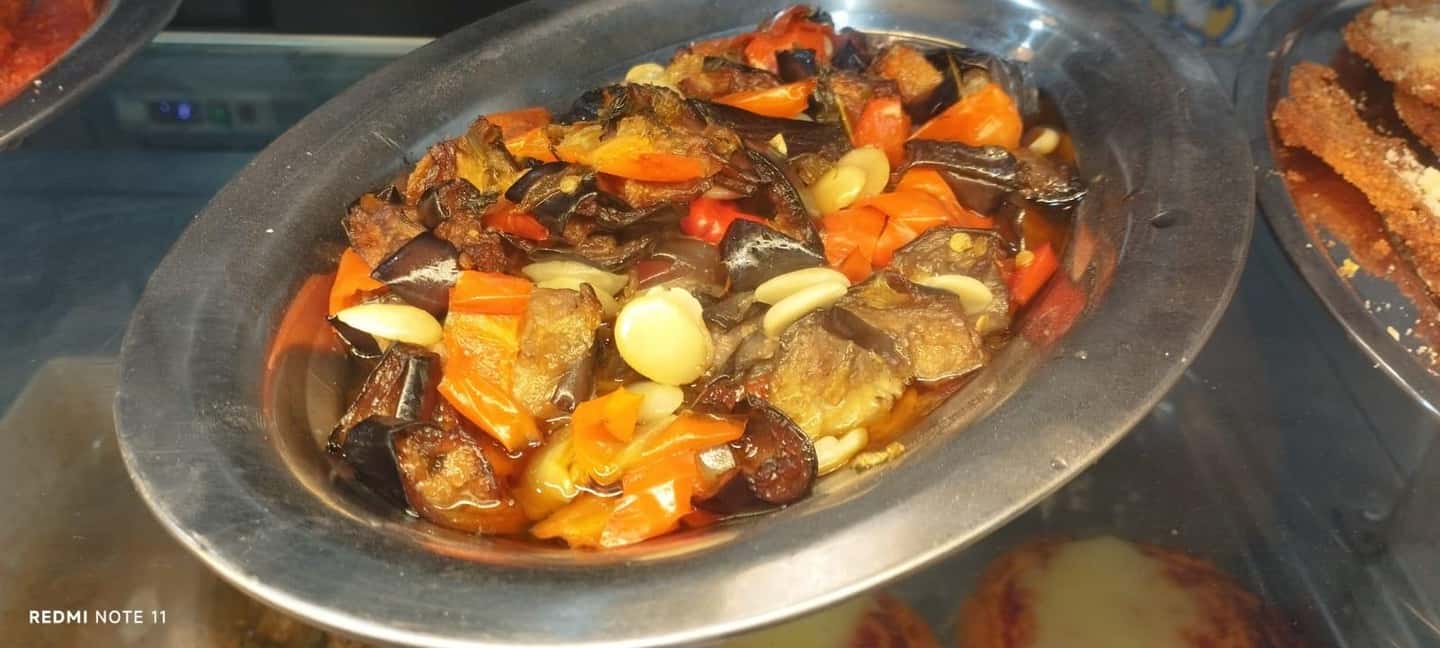
- Caponata (a mix of fried vegetables, often aubergines, with tomato sauce, celery, onion, olives, capers, sugar, and vinegar). Caponata can serve as a side dish, but it also has a place as a main dish in Sicily.
- Parmigiana (fried sliced eggplant layered with Parmesan cheese and tomato sauce, then baked).
- Cannolo (sweet ricotta-filled pastry, often with candied fruit, crunchy pistachios, or dark chocolate chips).
What I like about this lineup is that it covers the whole Sicilian flavor range in one sitting. You get savory depth (caponata), baked comfort (parmigiana), and then the classic sweet finish (cannolo). It also gives you a context for what you’re eating: the arancino isn’t isolated; it belongs to a broader table of flavors.
And since you taste items at the end, you can connect each dish to what you learned. You’ll often start noticing shared patterns, like eggplant’s role across multiple dishes, and the tomato-based backbone of the Sicilian kitchen.
You can also read our reviews of more tours and experiences in Syracuse


How much food you’ll eat and what value means here
Value is the big question with cooking classes, and this one is worth evaluating honestly. The duration is 1.5 hours, and the group is small. That usually helps quality, because the experience can stay personal.
Still, the food portions and hands-on time can vary. One negative review felt the session was pricey for what participants actually formed, stating that only a few arancini were made, with additional steps done mostly by Massimo. It also noted that the final tasting included one arancino per person, plus some caponata and a drink.
On the positive side, other reviews described the class as funny, informative, and delicious, with Maria presented as knowledgeable and authentic about Syracusan life and Sicilian cuisine. Another review praised the result as super tasty after the afternoon session.
So how should you think about price and value before booking? Here’s my practical take:
- If you want technique and a satisfying tasting, this likely delivers.
- If you expect to personally make and fry a large number of arancini, go in with softer expectations, because the class may split tasks to keep things safe and smooth.
- If you’re mostly there to enjoy Ortygia with good food talk and a fun small-group environment, you should feel more satisfied than someone who measures success by raw count of food produced.
Who this class suits best (and who should skip it)
This class is a great fit if you enjoy learning by doing and you want a clear culinary takeaway. It’s also ideal for couples, friends, or families who want one structured food activity without committing to a full day.
A big plus: the teaching languages are English and Italian, and there’s a live guide. That makes it easier if you don’t speak Italian well, while still letting you enjoy the local rhythm.
It’s also not built for everyone. It’s listed as not suitable for wheelchair users, and it also doesn’t allow pets or luggage/large bags. You’ll want to travel light.
If you have mobility limits or you’re traveling with bulky luggage, plan accordingly. Ortygia streets can be tight, and cooking classes keep you moving within a small area.
Practical tips: shoes, bags, and timing in Ortygia
Wear comfortable shoes. Even for a 1.5-hour class, you’ll stand and work in a compact space. Choose comfortable clothes too, since cooking means you’ll be close to food prep.
Travel light. The class doesn’t allow luggage or large bags, so if you’re carrying a day bag, keep it compact and easy. Also, skip bulky coats if the room runs warm during cooking.
Timing-wise, you’ll want to plan this as a focused experience. Ortygia is full of distractions, but a cooking class works best when you arrive ready to concentrate. Once you’re done eating, you’ll likely feel energized to continue exploring nearby streets and markets.
Should you book the Arancino Cooking Class in Ortygia?
Book it if you want a small-group Sicilian arancini/arancino lesson plus a real tasting of caponata, parmigiana, and cannolo. It’s the kind of experience that gives you both food skills and local food context, especially with guides like Maria and Massimo shaping the vibe.
Consider skipping or adjusting expectations if your top goal is maximum hands-on frying and a large amount of food production. Based on feedback, some days may involve more observation and host-led steps (especially for frying-related tasks). If that would frustrate you, look for a class that clearly guarantees full participant control.
If you’re flexible and you want an enjoyable, guided 1.5-hour food experience in the heart of Ortygia, this is a solid bet.
FAQ
How long is the Arancino Cooking Class in Ortygia Syracuse?
The class lasts about 1.5 hours.
What languages are the live guides speaking?
The live tour guide speaks English and Italian.
How big is the group?
It’s a small group limited to up to 10 participants.
Where do we meet for the class?
You meet in front of the entrance of the Banco di Sicilia in Ortygia Syracuse.
What dishes are included besides arancino?
The class includes an aperitivo with caponata or parmigiana and cannolo, alongside tasting of what’s prepared.
Is the class hands-on, or mostly watching?
You are guided in the preparation of the traditional arancino, but some steps may be handled by the host depending on how the class runs.
What should I bring?
Bring comfortable shoes and comfortable clothes.
Are pets or large bags allowed?
No. Pets are not allowed, and luggage or large bags are not allowed.
Is the experience wheelchair accessible?
No, it is listed as not suitable for wheelchair users.