REVIEW · SICILY
Mt. Etna Cycling to the Top small group
Book on Viator →Operated by EtnaTribe · Bookable on Viator
Pedal into Europe’s most famous active volcano. This small-group Etna climb blends e-bike assistance with real time on the ground—through old lava stretches, black sand, and pine woods—before you reach the summit area. I also love the way the guides make the volcano feel personal, not textbook-only.
One thing to plan for: this experience needs good weather, and conditions up high can feel very cold (gloves and warm layers matter).
In This Review
- Key points to know before you go
- E-bike up Mt. Etna: a practical way to reach the summit area
- The ride through lava, black sand, and pine woods
- Stop 1: Mount Etna (2 hours) and what you’re really doing up there
- Stop 2: Craters Silvestri (extinct) with a short 30-minute walk
- The Jonian coast views: why this route feels different than a vehicle-only day
- E-bike setup, SPD pedals, and what the gear means for you
- Duration and pacing: 3 hours that don’t drag
- Small-group advantage: you get more than a route
- Price and value: what you’re paying for at about $103
- Who this tour fits best (and who might feel challenged)
- Weather and what to do on a cold or windy summit day
- Should you book Mt. Etna Cycling to the Top with a small group?
- FAQ
- How long is the Mt. Etna cycling to the top experience?
- Where do I meet the tour?
- How many people are in the group?
- What kind of bike do you use?
- Is protective equipment provided?
- Are SPD pedals included?
- What’s included at the stops for admissions?
- What should I bring since snacks aren’t included?
- Is this tour dependent on weather?
Key points to know before you go
- Small group, max 10: more room to ask questions and get paced to the group.
- E-bike plus protective gear: you get powered help without losing the sense of effort.
- Free admission at Etna and the extinct Silvestri craters: saves money vs. pay-to-enter options.
- Short crater walk after the ride: you trade hours on a bike for a focused hike on moon-like ground.
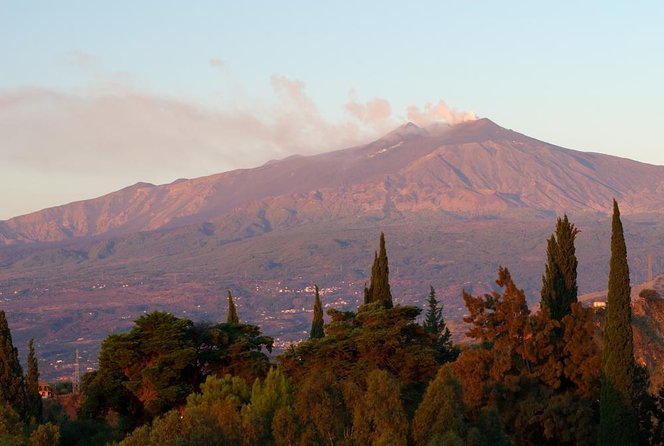
- Summit-area views: the Jonian coast view is a major payoff for the climb.
- Bring warm layers and gloves: even if it’s pleasant at the base, it can feel chilly near the top.
E-bike up Mt. Etna: a practical way to reach the summit area
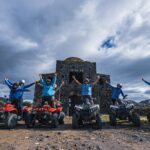
Getting to Mt. Etna’s higher zones can turn into a slow, complicated day if you rely only on vehicles and rigid schedules. This is different. You start at Euro Etna Tourism at Piazzale Funivia Etna Sud in Nicolosi and then you ride up with an e-bike, so you spend less time stuck on transit and more time actually moving through the volcanic terrain.
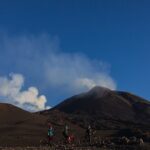
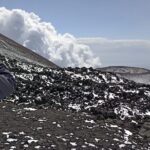
The setting helps too. As you climb, you pass through sections of the Natural Park that sit between old lava flows and darker volcanic ground, with stretches of pine tree woods. It doesn’t feel like you’re sightseeing from behind glass. It feels like you’re traveling through the volcano’s working “backyard.”
And you’ll get a short walk on foot once you’re high enough to explore the crater area. That mix—bike for the big elevation changes, walking for the volcanic details—is a good match for most people with moderate physical fitness.
You can also read our reviews of more cycling tours in Sicily
The ride through lava, black sand, and pine woods
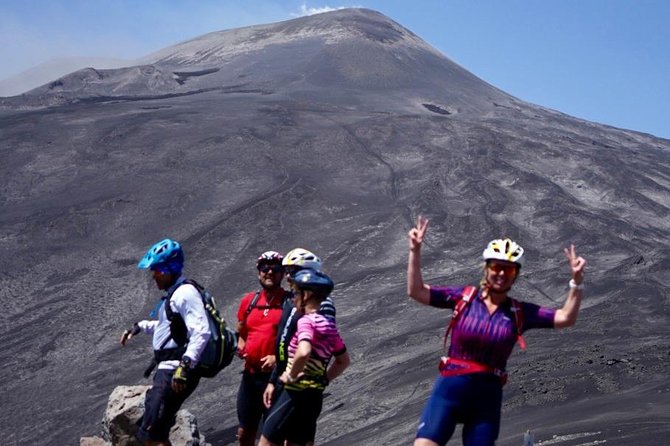
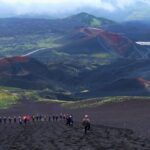
Here’s what I like about this format: the volcanic scenery changes while you’re still in motion. You’re not just arriving at a viewpoint. You’re watching the ground shift—older lava textures give way to new volcanic surfaces, and the vegetation pattern changes as you go.
The contrast is striking:
- Dark, rough volcanic ground under your tires
- Rows and patches of pine where the air feels different
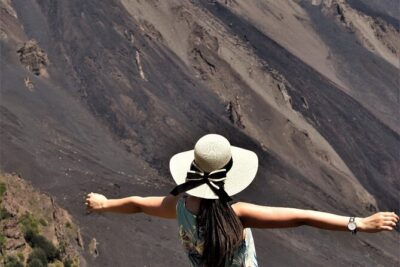
- That moon-like terrain near the summit area where the world looks almost extraterrestrial
This matters because it keeps the day from becoming a single-note climb. Even if you’re not obsessed with volcanology, your brain keeps getting new visuals every few minutes.
Stop 1: Mount Etna (2 hours) and what you’re really doing up there
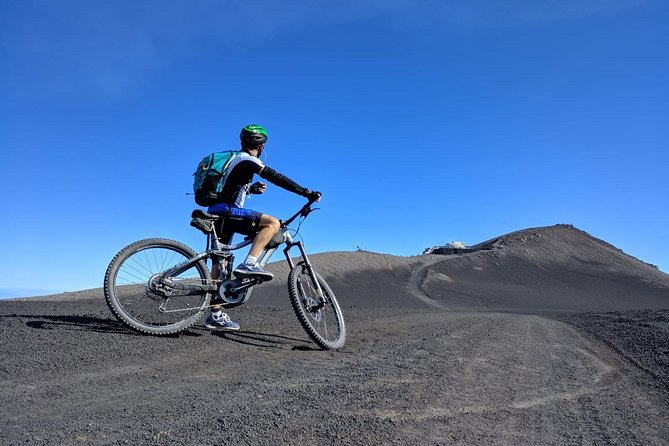
Your first big pause is at Mount Etna, including 2 hours on-site with admission free. This is the highest crest in Sicily and also the highest active volcano in Europe—so yes, it’s a major deal. But the more useful part for you is how you’ll spend your time there.
At this point, you’re in summit-area territory where you can experience the volcano as a physical place, not just a name on a map. You’ll be able to take in wide views and see the way the terrain folds outward from the high ground. One of the biggest payoffs is the panorama that reaches toward the Jonian coast.
Guides also tend to play a big role here. The folks you might be paired with—people named Simone, Salvo, and Luca show up in guides described by guests—are praised for giving clear explanations and a sense of humor. That combination helps. It turns the place from dramatic scenery into something you can actually understand in a few minutes.
A quick caution: altitude and wind can affect how you feel. Take your time, breathe steadily, and don’t treat the stop as a quick photo sprint.
Stop 2: Craters Silvestri (extinct) with a short 30-minute walk
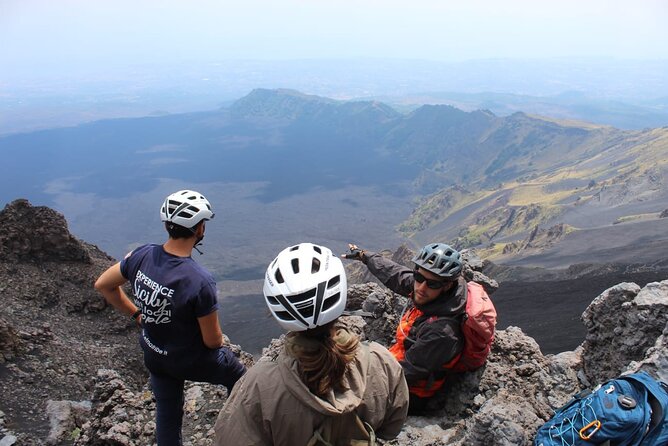
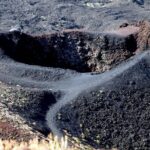
After the summit-area time, you’ll head to Crater Silvestri of Mt. Etna, an extinct crater zone with 30 minutes there and admission free.
This is the part that usually feels most “walkable-mysterious.” You’re high enough that the ground can look raw and bare, and you’ll explore a compact area on foot. A short crater walk is also a smart choice in the overall schedule. It keeps the walking distance reasonable while still letting you feel the geometry of the volcanic terrain—edges, slopes, and how the crater area opens up.
From a practical standpoint, this stop is also where good socks and warm layers pay off. If it’s windy or cool, you may feel it more while standing still and while walking slowly.
The Jonian coast views: why this route feels different than a vehicle-only day
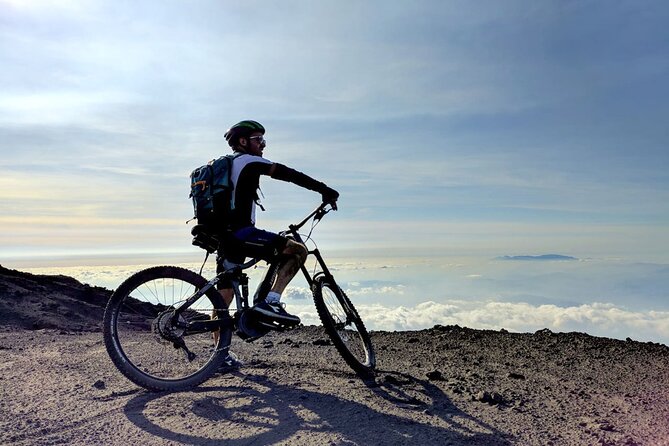
A lot of Etna day trips focus on getting you to a single overlook as quickly as possible. This one builds in time at the right elevations, which changes the view experience.
When you get that summit-area look out toward the Jonian coast, you’ve already traveled through the volcano’s story up close. That makes the view feel earned rather than handed to you by a bus window. It also helps you spot patterns: how the terrain spreads and how the high ground frames the far horizon.
If you care about photos, you’ll likely like the fact that you’re not just waiting in line for one shot. You get time that lets you look around, adjust your angle, and not feel rushed.
E-bike setup, SPD pedals, and what the gear means for you
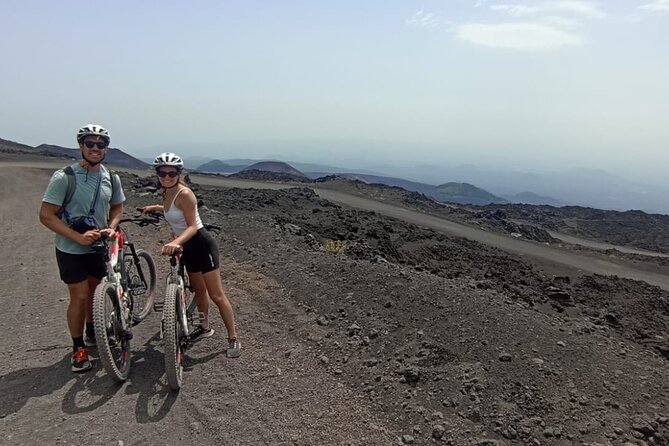
You’re provided protective equipment and an e-bike. That combination is the heart of why this tour works for people who want Etna without needing serious climbing stamina.
They also offer SPD pedals on request. If you ride with cycling shoes or clip-in pedals, this is the kind of detail that can make or break comfort. If you want it, ask ahead so you’re not trying to improvise with the wrong footwear.
One practical tip that comes up again and again from people who’ve done this: bring gloves and cover up well. Even if the base of Etna feels warm, the upper zones can run cold—especially if weather has turned or snow is involved. Layers beat one big bulky jacket because you can regulate heat as you ride.
Snacks aren’t included. You don’t need a picnic on a volcano, but having water (and maybe a light snack) can keep the energy steady, especially because you’re at altitude and moving through windy conditions.
Duration and pacing: 3 hours that don’t drag
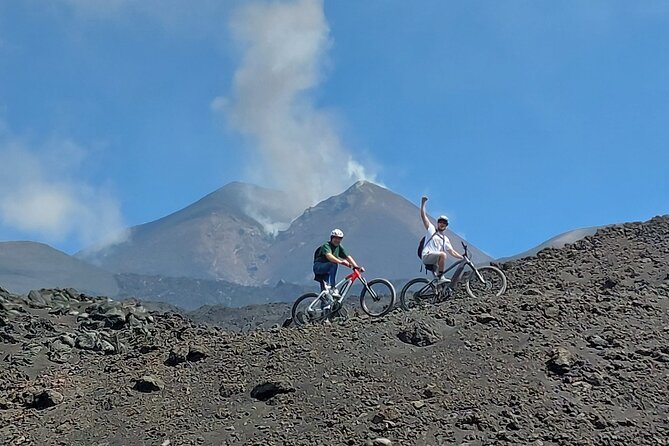
The tour runs about 3 hours. For a volcano day, that’s not long. And that short runtime is part of the value: you get a meaningful chunk of Etna without sacrificing your whole day in Sicily.
The pacing also matters. You ride up, then you do a shorter crater exploration on foot. That structure keeps you from feeling like you’re either:
- stuck riding in a slow line, or
- over-walking while your legs are already tired
Because the group cap is 10 travelers, the pace tends to stay manageable. In a larger crowd, you’d spend more time waiting. Here, you can usually keep moving and stay engaged with what the guide is pointing out.
Small-group advantage: you get more than a route
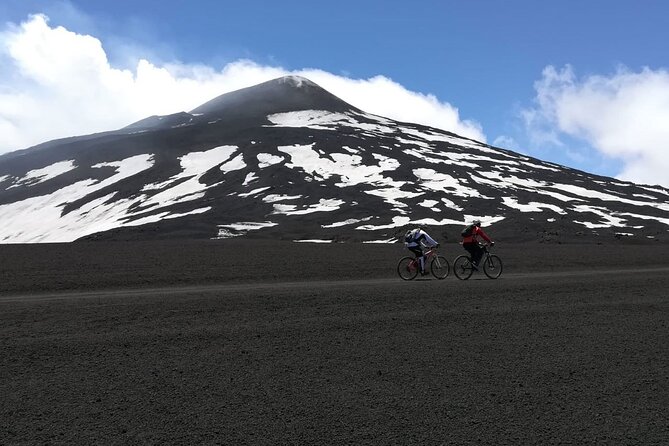
This is not a giant tour. With a max of 10 people, the guide can spend time explaining what matters and answering questions without shutting down conversation every few minutes.
The tone from guides mentioned in accounts—people like Simone and Alessio—leans toward being talkative, informative, and also fun. That matters because Etna can feel intimidating at first if you only think of it as a massive mountain. When your guide explains the relationship between the locals and the volcano, the day becomes more human.
If you like asking questions and you don’t want to feel like a number, this group size is a big plus.
Price and value: what you’re paying for at about $103
The price is $103.18 per person for roughly 3 hours. That might sound like a lot until you break down what’s included and what it replaces.
You get:
- an e-bike
- protective equipment
- admission-free stops at Mount Etna and the Craters Silvestri
You’re also not paying for a separate transfer model that depends on only cable car-style access. The powered ride is the main service cost, and it’s why you can reach the higher areas without a long, exhausting push from the ground.
What’s not included: snacks and anything not listed as included. So if you want a snack or drink, plan to bring it.
If you compare this to options that cost similar money but don’t include equipment and free admissions, the math gets better here. The e-bike is the centerpiece, and the free crater/summit admissions make the schedule feel more straightforward.
Who this tour fits best (and who might feel challenged)
This tour is a good fit if you:
- want to see high-altitude Etna without a big endurance workout
- like guided interpretation alongside the scenery
- prefer small groups and clear pacing
It may not be ideal if you:
- want a lot of long hiking time. You’re doing a short crater walk, not a full trek day.
- hate cold weather. You can dress for it, but the summit area can still feel chilly.
- have issues with steady sitting/riding. You’ll be on the e-bike for much of the climb, so it’s not a walking-only experience.
The booking info also calls for moderate physical fitness, which usually means you can manage effort, but you’re not expected to be an ultramarathon climber.
Weather and what to do on a cold or windy summit day
This experience requires good weather. That’s a real deal, not fine print. Volcanic terrain can be slippery, visibility can change fast, and wind can make the summit feel much colder than at the start.
If the weather looks iffy on your travel day, I suggest you keep a flexible schedule and plan to dress like it’s colder than you think. Gloves, warm layers, and a wind-resistant outer layer are your friends. The goal is comfort so you can actually enjoy the crater walk and the views, not just endure them.
Should you book Mt. Etna Cycling to the Top with a small group?
I’d book this if your priority is reaching the summit area with less hassle and more time on the volcanic ground. The e-bike does the heavy lifting, the stops are timed well for a half-day, and the free admissions help you feel like your money is going toward the actual experience—not just transport.
Pass if you want a long hiking expedition or if cold, wind, or uncertain weather would ruin your comfort level. If weather is a deal-breaker for you, consider adding a little flexibility to your Sicily itinerary.
If you’re excited by the idea of pedaling through lava history, then pausing to explore the extinct Silvestri craters, this is a strong choice.
FAQ
How long is the Mt. Etna cycling to the top experience?
It runs about 3 hours (approx.).
Where do I meet the tour?
You meet at Euro Etna Tourism, Piazzale Funivia Etna Sud, 95030 Nicolosi CT, Italy.
How many people are in the group?
The tour has a maximum of 10 travelers.
What kind of bike do you use?
You’ll use an e-bike.
Is protective equipment provided?
Yes, protective equipment is included.
Are SPD pedals included?
SPD pedals are available on request.
What’s included at the stops for admissions?
Admission tickets are free for the Mount Etna stop and the Craters Silvestri stop.
What should I bring since snacks aren’t included?
Snacks are not included, so it’s smart to bring what you want to eat and drink.
Is this tour dependent on weather?
Yes. The experience requires good weather, and if it’s canceled due to poor weather you’ll be offered a different date or a full refund.