REVIEW · PIAZZA ARMERINA
Piazza Armerina: Private Villa Romana del Casale Guided Tour
Book on GetYourGuide →Operated by Empeeria · Bookable on GetYourGuide
Few places in Sicily hit this hard. You’ll tour Villa Romana del Casale, where late Roman wealth shows up in stone and color, not just in stories. I really loved the thermal-bath contrast (hot caldarium to cool frigidarium) and the way the guide brings each mosaic scene to life with details like race-day energy and banquet-time imagination. One thing to keep in mind: the tour price is for the guide, and you still need to pay the entrance ticket separately, plus time can run a bit under the promised 2 hours depending on pacing.
For a private visit capped at up to 15 people, you get a real conversation, not just a headset. Meet your guide outside the entrance at the ticket booth, then you’ll move through baths, guest areas, public halls, and the private rooms of the villa’s owners. The best part is how quickly the place stops feeling like a ruin and starts feeling like a functioning home, with technology, daily routines, and art all braided together.
In This Review
- Key reasons this tour is worth your attention
- Why Villa Romana del Casale is special in the first place
- Meeting at the ticket booth and starting with the thermal baths
- Mosaics that read like stories: hunting, music, and daily life
- Public halls and the Great Hunt mosaic: power shown on the floor
- The private rooms of the domina and dominus: luxury as routine
- How long it really takes and what that means for your day
- Price and value: what you’re buying besides access
- Who this tour fits best (and who should rethink it)
- Should you book this private Villa Romana del Casale tour?
- FAQ
- How long is the private Villa Romana del Casale guided tour?
- What’s the meeting point for the tour?
- Is the entrance ticket included?
- What’s included in the price?
- What languages are available for the live guide?
- Is hotel pickup and drop-off included?
- Is this a private group?
- Are pets allowed?
- Can I cancel for a refund?
Key reasons this tour is worth your attention
- The baths feel physical: warm caldarium, cool frigidarium, and the water system you can picture.
- Mosaic storytelling in real space: scenes of hunting, banquets, music, and public spectacle.
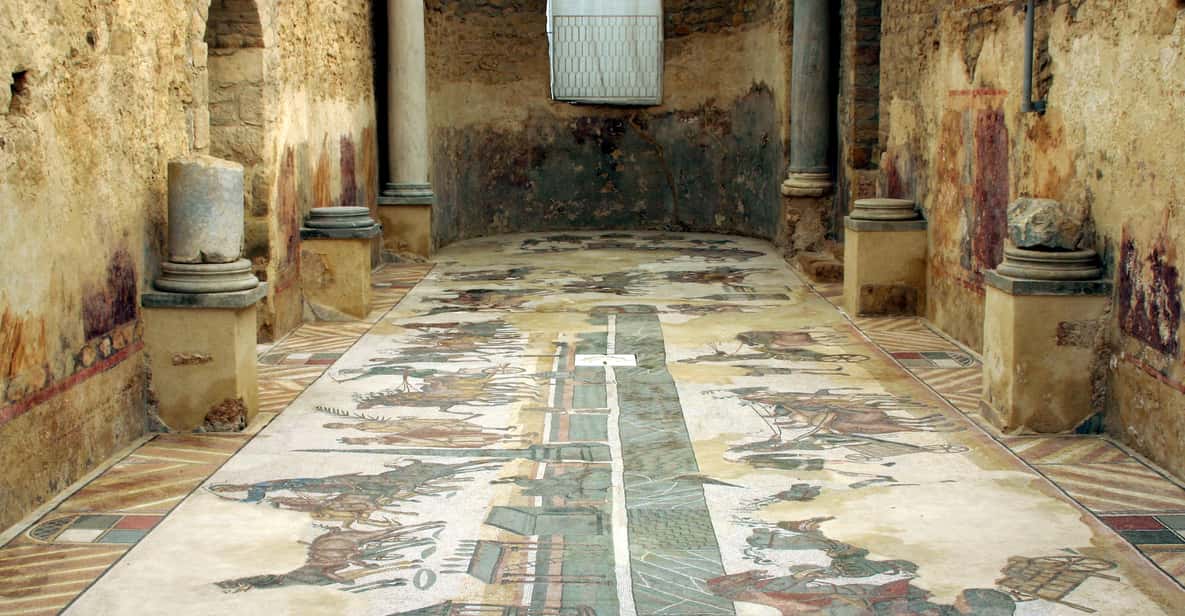
- The Great Hunt mosaic: a massive 4th-century image of the Roman world, not just decoration.
- Private rooms, not just showrooms: you see how a wealthy domina and dominus used the space.
- A live guide who can answer questions: including French-language explanations from guides like Rafaello and Stephania (when available).
Why Villa Romana del Casale is special in the first place
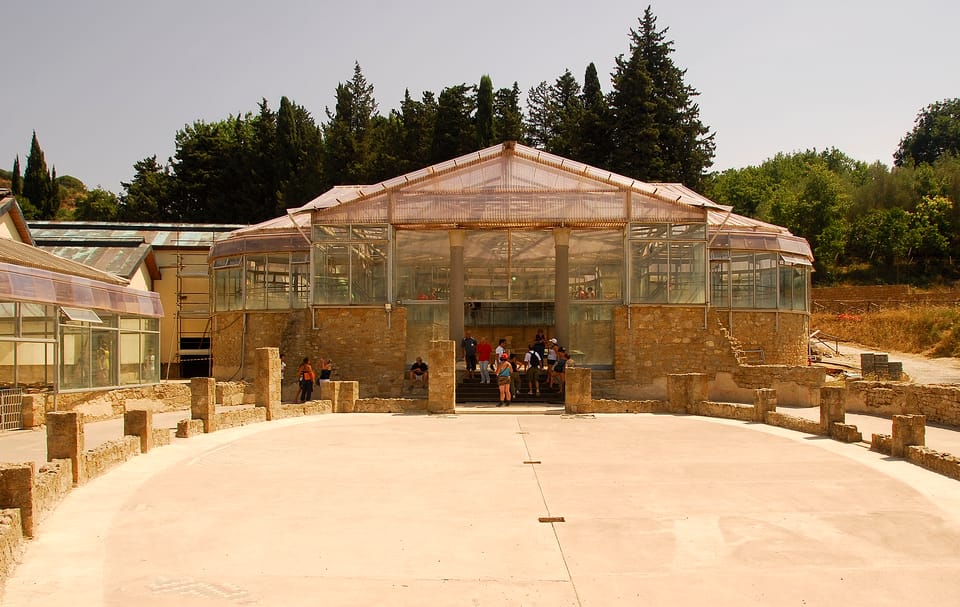
Villa Romana del Casale sits in Piazza Armerina’s landscape like a time capsule that never learned to fade. The late Roman world here isn’t generic. It’s specific, detailed, and expensive—exactly the kind of place where you can understand how power, leisure, and technology worked together.
The core draw is the mosaics. You’ll see one of the finest Roman-era villas on the island, with an especially strong concentration of mosaic floors from the 4th century A.D. That matters, because mosaics like these weren’t “fillers.” They were visual statements—about status, beliefs, mythology, and what the owners wanted people to think while walking their halls.
What makes the visit feel different on a guided private tour is pacing and interpretation. A guide can connect what you’re standing on—like a hunt scene or a music moment—to the daily rhythm of life. You’re not only looking at art. You’re learning the language behind it.
You can also read our reviews of more guided tours in Piazza Armerina
Meeting at the ticket booth and starting with the thermal baths
Your tour begins where it should: outside the villa entrance, meeting your guide in front of the ticket booth. From there, you’ll go straight into the heart of the complex—its thermal baths.
Start here for a reason. Roman bathing wasn’t just hygiene. It was social time, and it was part of how wealthy households displayed comfort and control over their environment. You’ll feel that immediately once you’re in the bathing spaces.
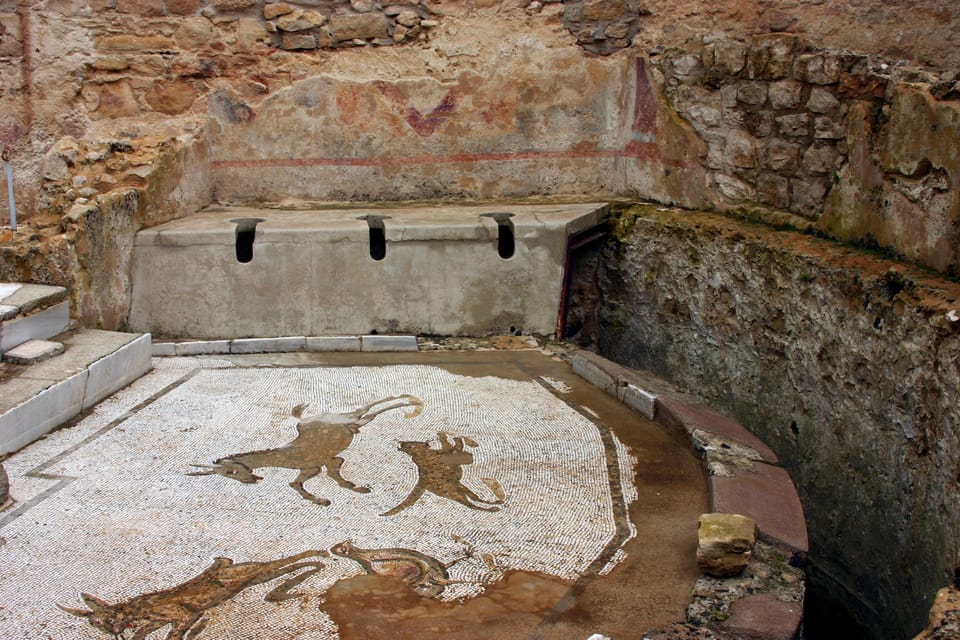
First you move through the caldarium, where the warmth is part of the atmosphere. Then you step into the frigidarium, a cooler space fed by the Gela River. That hot-to-cold rhythm is a classic Roman idea, but seeing it within this villa setting helps you picture how the system worked in real daily life.
Your guide will often translate the visuals into lived experience. You might be encouraged to imagine shouts in the background of a quadriga race of four-horse chariots, for example. Even if you’re not literally there, your brain grabs the idea: this is a place where entertainment and culture weren’t separate from bathing.
Practical note: baths are interior-heavy, so you’ll be under cover more often than you would be in open-air ruins. Comfortable shoes still matter, since mosaics and floors can make you want to stop often.
Mosaics that read like stories: hunting, music, and daily life
After the baths, you’ll keep moving room to room, and the villa’s mosaic “chapters” start to stack up fast. The guide’s job is to help you read them without getting lost in names and dates.
One standout section is the guest apartment area, where you’ll see scenes of everyday activities. You can expect mosaics connected to fishing, hunting, and banquets. This is where the villa shifts from being a luxury retreat to being a stage for hosting and hospitality.
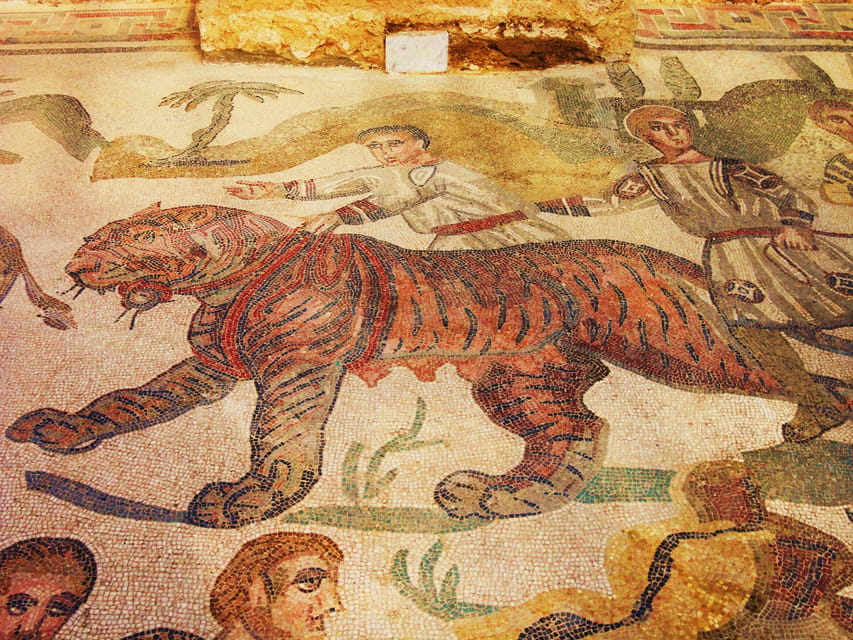
The hunting theme is especially memorable because you can spot the mood shift between scenes. The “Little Hunt” mosaic shows hunters in a more anticipatory moment, as if the action is about to start. When you’re standing there, the tiny details start to feel like timing—like you’re catching the pause right before the chase begins.
Then there’s the dining room moment tied to Orpheus playing his lyre. Your guide will help you imagine the sound and the reaction: animals gathering around as the music carries the scene. It’s one of those images that makes you realize these mosaics weren’t passive decoration. They were a way to frame belief and imagination at the table.
You’ll also hear explanations about cultural activities of ancient Rome and how these rooms fit into late antiquity life. Even if you’re not a Roman history expert, the structure of the tour makes it easy to follow: bath for restoration, guest spaces for hosting, dining spaces for mythology and conversation.
Public halls and the Great Hunt mosaic: power shown on the floor
Next comes a shift in mood. You’ll move toward the larger public halls, the spaces where the villa could host visitors and business—people often referred to as clientes.
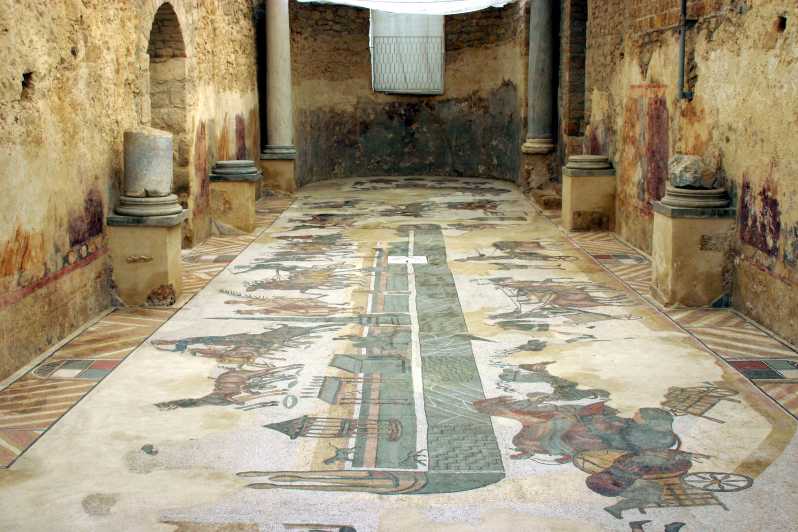
This is where the mosaics stop feeling like “pretty floors” and start feeling like political messaging. The mosaic called the Great Hunt is a major highlight, and it’s not just a hunting scene. It includes a monumental map of the Roman Empire, turning the villa floor into a statement about reach and identity.
While you look, you’ll also notice how the narrative expands beyond hunting into the wider world. The artwork includes a lioness attacking a hunter, an elephant boarding a ship, and a ship sailing through waves. The combination is striking because it ties local elite leisure to global imagery.
Why this matters for you: when a guide explains what you’re seeing in the context of late Roman society, the mosaic becomes a clue. It tells you what the owners wanted visitors to understand—who they were connected to, how they imagined the empire, and how myth and reality blended in elite culture.
This segment can be visually intense, because the Great Hunt mosaic has lots going on. If you tend to rush through museums, slow down here. Stand at a single point for a minute. Let the map elements and the action elements register together. That’s when it clicks.
The private rooms of the domina and dominus: luxury as routine
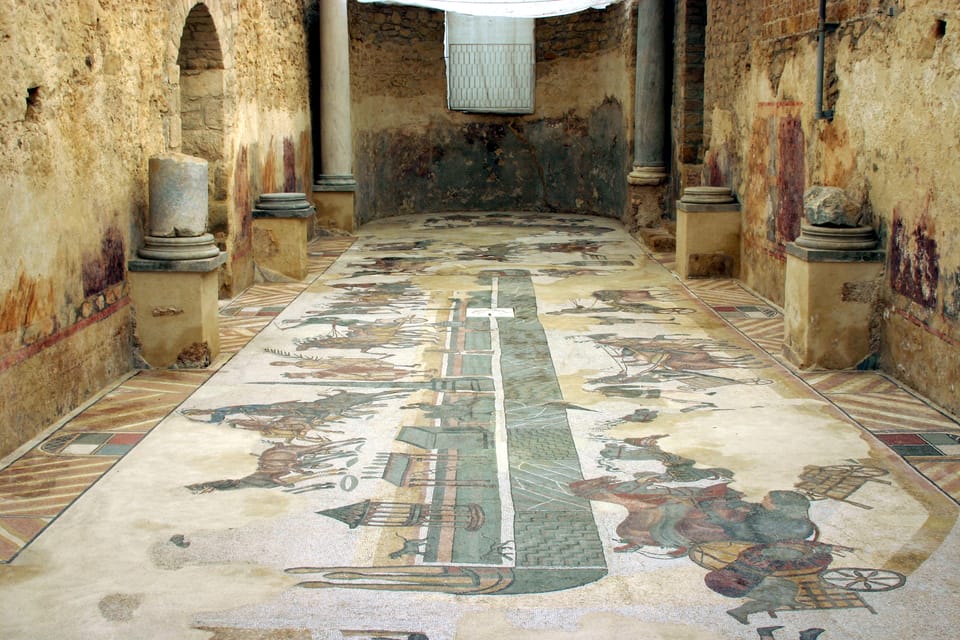
Toward the end, you’ll enter the villa’s private rooms belonging to the domina and the dominus—the household leaders. This is the part that often surprises people, because it’s easier to imagine “public” spaces at famous sites, but private rooms are where you start thinking about daily rhythm.
Here, the tour focus is on how the wealthy owners slept, ate, and conducted daily business inside this palatial complex. Your guide will connect these rooms to how power worked at home, not just in government.
Even though you’re walking through ruins, the layout and the mosaic themes help you imagine routine. A private bedroom isn’t just a place to sleep. It’s where you withdraw. A dining area isn’t just about food. It’s where status gets performed, even if it’s more subtle than a big reception.
You’ll also hear discussion about who may have owned the villa before the tour wraps up. That closing piece helps you connect the physical site to the human story, even if you’ll still need to do a little reading afterward to fill in unanswered questions.
How long it really takes and what that means for your day
The tour is listed as 2 hours, and that’s a reasonable target for a private walkthrough with explanation. Still, in real life, time can shift based on pace and how many questions you ask.
One practical takeaway from the experience format: you’ll likely spend a lot of time in mosaic-heavy areas, and those visuals invite stopping. If you have a tight schedule afterward, build in a buffer.
Also remember: entrance tickets aren’t included. So when you budget, you’re paying for two things—your private certified guide plus the site admission. For a group of four, for example, that can turn into an expensive outing quickly if you’re comparing it to a cheaper group tour.
My advice: treat the guide cost as the value engine. If you like interpretation—turning floors and fragments into daily life—this tour pays off. If you mainly want to walk around on your own and move fast, it may feel like you’re paying extra for time spent listening.
Price and value: what you’re buying besides access
At about $283.21 per group up to 15, the pricing is structured for private enjoyment rather than economy. That’s the big trade.
Here’s how I’d judge value in your shoes:
You’re likely getting your money’s worth if:
- You enjoy guides who can explain how the mosaics relate to daily life and late Roman culture.
- You want a private setting with the option to ask questions.
- You care about interpreting specific mosaic panels like the Great Hunt, Little Hunt, and Orpheus.
It may feel pricier if:
- You expected the entrance ticket to be included.
- Your schedule is tight and you end up with a shorter-than-expected visit.
- You’re fine with a general overview and you’d rather read plaques at your own pace.
For most people who love Roman art and want context, this kind of guided private tour is often a better match than a quick pass. The villa’s scale can be misleading. It looks like one site, but it’s really a whole domestic world, and a good guide helps you understand it fast.
Who this tour fits best (and who should rethink it)
This is a strong fit for:
- Couples and small groups who want a personal pace.
- People who love mosaics and want the scenes explained in plain language.
- Visitors who like architecture and technology stories, since you’ll encounter how bathing spaces and water systems worked.
It’s less ideal if:
- You’re traveling with very young kids who don’t tolerate slower museum pacing.
- You mainly want photos and minimal explanation.
- You’re trying to squeeze in many stops in one day and can’t spare time for a guided walk.
One more practical note: pets aren’t allowed, so plan accordingly.
Should you book this private Villa Romana del Casale tour?
If your goal is to understand the villa—not just to see it—then yes, book it. The best reason is the guide’s role in making the mosaics feel connected to real life: baths with hot and cold spaces, dining rooms with Orpheus, hunting scenes that build atmosphere, and the Great Hunt that links leisure with the empire’s map.
Before you hit reserve, do two quick checks:
- Confirm you’re comfortable adding the entrance ticket to your total budget.
- Give yourself a time buffer afterward in case the visit runs a bit under 2 hours.
If those boxes make sense, this private tour is one of those Sicily experiences where the art doesn’t stay flat on the floor. It starts behaving like a story you can walk through.
FAQ
How long is the private Villa Romana del Casale guided tour?
It’s scheduled for 2 hours.
What’s the meeting point for the tour?
Meet your guide in front of the ticket booth at the villa.
Is the entrance ticket included?
No. Entrance tickets are not included, so you’ll need to purchase them separately.
What’s included in the price?
A private certified guide is included.
What languages are available for the live guide?
The live guide is available in Spanish, Italian, German, English, and French.
Is hotel pickup and drop-off included?
No. Hotel pickup and drop-off are not included.
Is this a private group?
Yes. It’s a private group, with the group size up to 15.
Are pets allowed?
No, pets are not allowed.
Can I cancel for a refund?
Yes. Free cancellation is available up to 24 hours in advance for a full refund.