REVIEW · CATANIA
From Catania: Neapolis of Syracuse, Ortygia, and Noto Tour
Book on GetYourGuide →Operated by Kemedia · Bookable on GetYourGuide
Ancient Syracuse hits you fast. This day trip layers Neapolis Greek-Roman monuments with Ortigia’s historic streets and the Arethusa fountain, all explained in a way you can follow. I love that the guide handles the big story, so you’re not just wandering, and I also like the mix of temples, churches, and city views. The one drawback to keep in mind: the day is long, and a couple of stops can feel a bit tight if you want to linger.
You start with pickup in Catania and then ride in a shuttle with a small group (up to 8 people). That small size matters because it’s easier to hear your guide, stay together on breaks, and adjust pace when a road or crowd slows things down. The best part is that Neapolis is yours to explore at your own speed after you enter the park.
The tour style is practical: guided narration for the key highlights, then time to walk. You’ll often see very high marks for guides like Nando, Salvo, Lorena, and Andrea, especially for making the history clear and keeping the day moving smoothly—even when there’s weather drama.
In This Review
- Key highlights you’ll feel in your shoes
- A long, smart day from Catania to three UNESCO stops
- Noto’s Stone Garden: Sicilian Baroque streets on foot
- Neapolis Archaeological Park: Greek Theatre, Latomie caves, and Roman ruins
- The Greek Theatre and its massive cavea
- The Latomie and the Ear of Dionysius
- Christian Sicily at San Nicolò ai Cordari
- Roman imperial-age amphitheatre
- Ortygia Island: temples, churches, and Arabian-street charm
- Arethusa fountain and the Piazza del Duomo area
- Why Ortigia feels different from Neapolis
- When the guide really matters (and when sound can be tricky)
- Timing, lunch breaks, and comfort tips for an 8 to 9 hour run
- Is $130.28 good value for Syracuse, Ortygia, and Noto?
- Should you book this tour from Catania?
- FAQ
- Where are pickup and drop-off locations?
- How long is the tour?
- What does the price include?
- Is lunch included?
- Is Neapolis Archaeological Park guided?
- What languages is the tour guide?
- How big is the group?
- Is the tour suitable for people with mobility impairments?
- Are pets allowed?
- Can I book a private tour for 1 person?
Key highlights you’ll feel in your shoes
- Greek Theatre with one of the biggest cavea (seating areas) ever built
- Latomie limestone caves, including the Ear of Dionysius
- Ortigia’s mix of Greek, Christian, and Arabian influences
- Arethusa fountain and Piazza del Duomo photo moments
- Noto’s Sicilian Baroque, including the Stone Garden vibe
- A guide-led story plus self-paced wandering in Neapolis
A long, smart day from Catania to three UNESCO stops
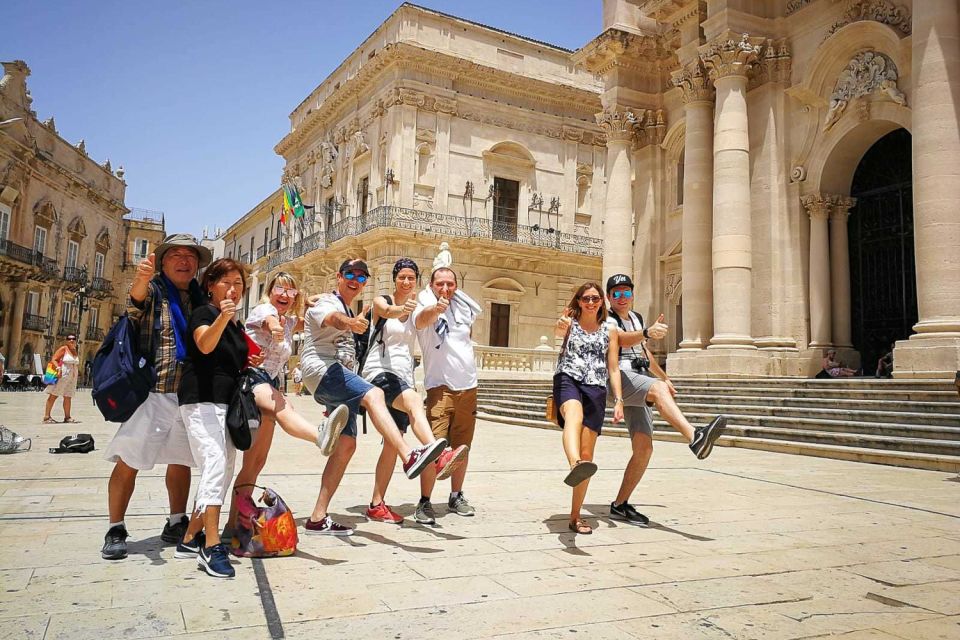
This is an 8 to 9 hour outing built for people who want a lot of Sicily’s top layers without doing the logistics themselves. You’ll get round-trip shuttle transport, a multilingual tour leader (Italian, English, Spanish), and Neapolis Archaeological Park entry. In other words, you spend your time looking at places, not figuring out how to get between them.
The group size is capped at 8, which is a big deal when you’re hopping between neighborhoods. It also helps on crowded walking areas in Ortigia and the tighter lanes of old-town Noto, where “stay close” is more than a suggestion.
A quick reality check: you’re stacking three major sights—Noto, Neapolis, and Ortigia—so timing is always a balancing act. If you like to take your time, you’ll want to plan for faster walking and prioritize what you care about most.
You can also read our reviews of more tours and experiences in Catania.



Noto’s Stone Garden: Sicilian Baroque streets on foot
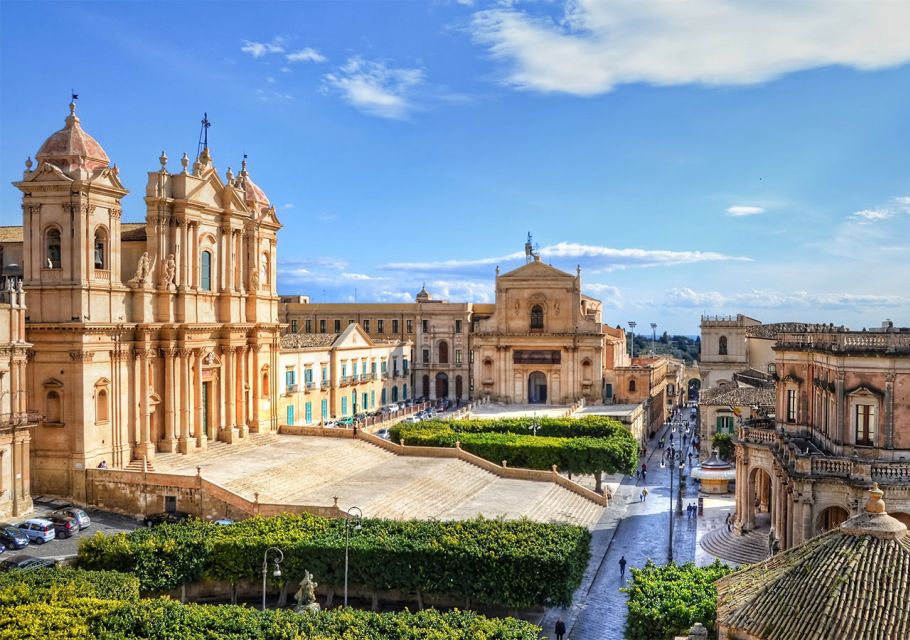
Noto is the kind of place that makes you slow down on purpose. In about 1.5 hours, you’ll take a guided walk through the town center and then have time to stroll along Corso Vittorio Emanuele, where the architecture does a lot of the talking. This UNESCO-listed town is known for Sicilian Baroque, and the buildings are grouped in such a way that the whole street feels like a sculpture you can walk through.
What to look for:
- Churches and palaces with dramatic facades that catch the light at different angles
- Repeated patterns of stonework—you’ll start noticing how the style ties buildings together
- Street-level views where the size of the facades makes more sense once you’re standing in the lane
Why Noto works on this tour: it breaks up the day after the drive and before the ancient sites. Baroque architecture is visual and immediate, so even if Neapolis is where your brain goes back in time, Noto gives your eyes a reward now.
The consideration: 1.5 hours can be just enough. If you’re the type who likes museum-style pacing—stopping often, reading every plaque—Noto might feel like a preview. If you’re good with “choose a few favorites and soak in the streets,” it’s a strong use of time.
Neapolis Archaeological Park: Greek Theatre, Latomie caves, and Roman ruins
Neapolis is where the story turns from pretty stone to serious ancient engineering. You’ll spend about 1 hour in the Archaeological Park, and this is a self-guided visit after you enter. That’s actually a plus for many people: you can start with the sights you care about and skip what you’re less excited to see.
Here’s what you’re aiming to catch in that hour:
The Greek Theatre and its massive cavea
The Greek Theatre is the headline. The seating bowl, or cavea, is described as one of the largest ever built by the ancient Greeks. Even without reading every sign, you can feel why—this is a space built for voices to carry and for crowds to gather.
If you want a simple strategy: spend a few minutes getting oriented first, then go back for a second look from another angle. The theatre changes as you move because the geometry of the stone frames the views.
The Latomie and the Ear of Dionysius
Near the theatre area you’ll see the latomie, including the limestone cave known as the Ear of Dionysius. The cave name is vivid, and it gives you something concrete to picture: this wasn’t just a ruin, it was a working landscape of stone and space.
This stop is also one of the best reminders that “ancient Sicily” wasn’t only temples. It was quarries, churches that later reused sacred ground, and reused spaces across centuries.



Christian Sicily at San Nicolò ai Cordari
You’ll also come across the Christian Church of San Nicolò ai Cordari. It’s a helpful contrast: Greek and Roman monumental architecture, then later Christian layers. If you like “how the past keeps getting repurposed,” this is a good place to notice it.
Roman imperial-age amphitheatre
You’ll see the Amphitheatre of the Roman imperial age too. One practical note: ancient parks can shift day to day due to maintenance or access routes. If something key is closed, don’t panic—you’ll still get the core of Neapolis, and the walking routes will guide you.
The self-guided part: you won’t have a lecturer inside the park explaining every corner. That’s why your guide’s setup before you enter matters. If you’re the type who wants interpretation at every step, you might wish for a longer guided time in Neapolis. But if you’re comfortable reading signs and picking your priorities, 1 hour can be enough to leave impressed.
Ortygia Island: temples, churches, and Arabian-street charm
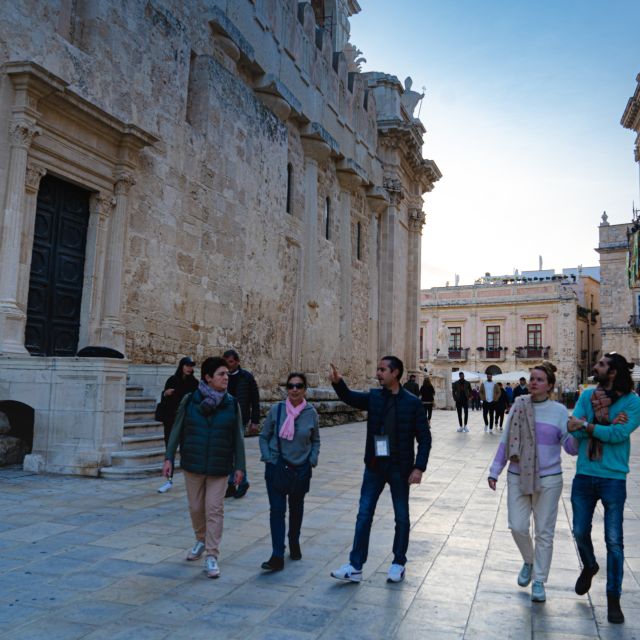
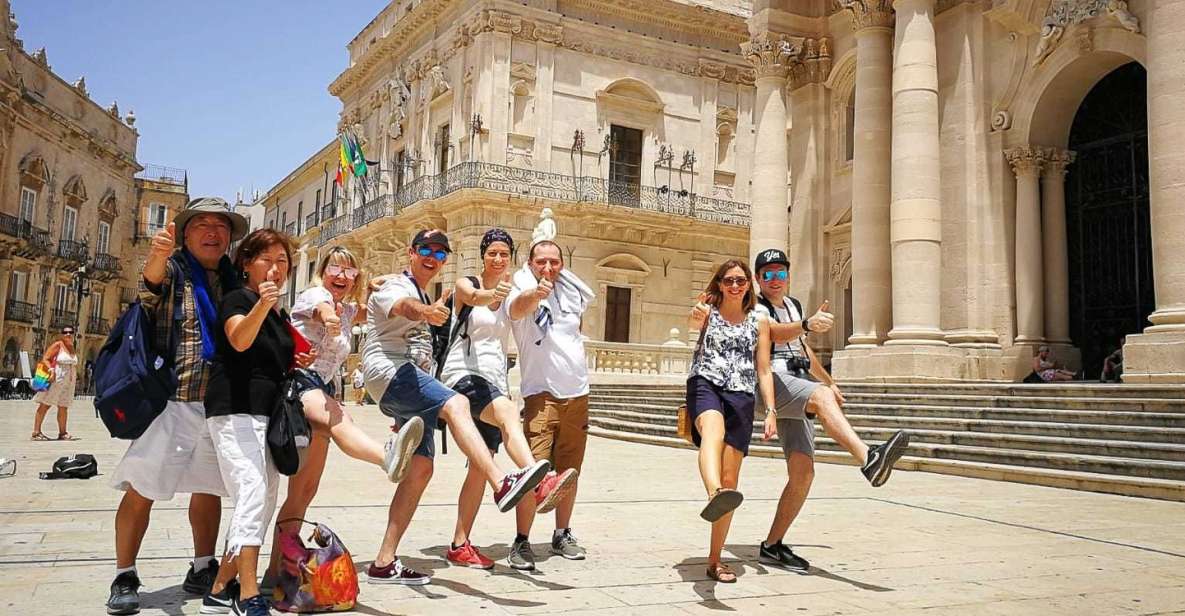
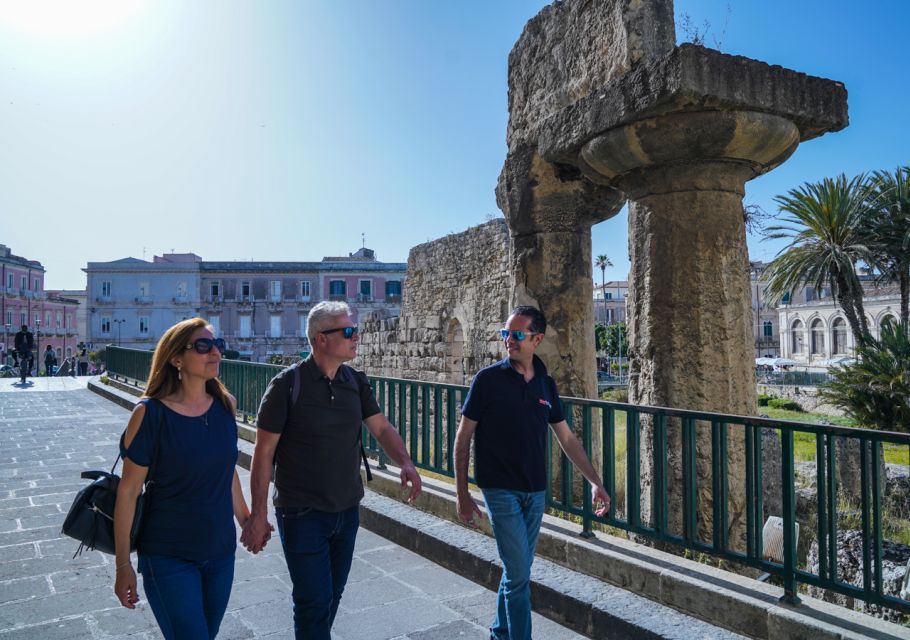
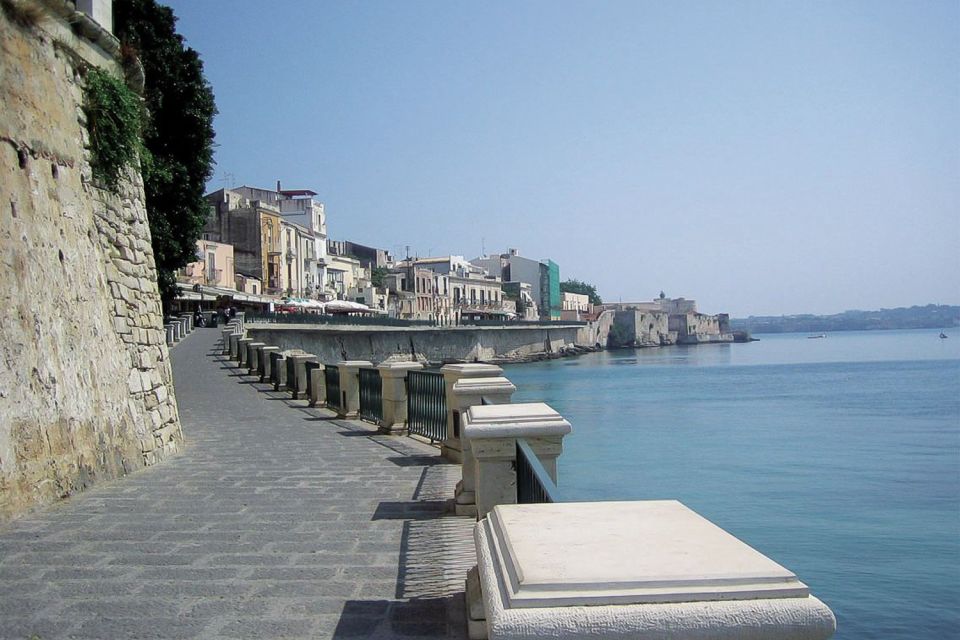
Ortigia is Syracuse’s old heart, sitting on an island separated by a narrow channel. It’s not one single sight—it’s a whole atmosphere. You’ll see Greek temples, Christian churches, and Arabian streets, often within a few turns of the road.
You’ll have about 1.5 hours here, so aim to walk with purpose but not stress. Ortigia rewards wandering, but it helps to know what you’re hunting.
Arethusa fountain and the Piazza del Duomo area
Two names pull this area into focus:
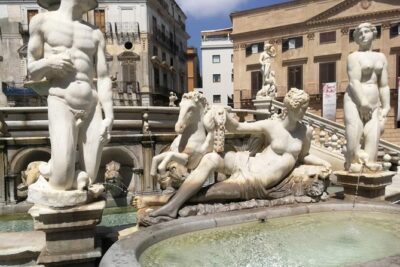
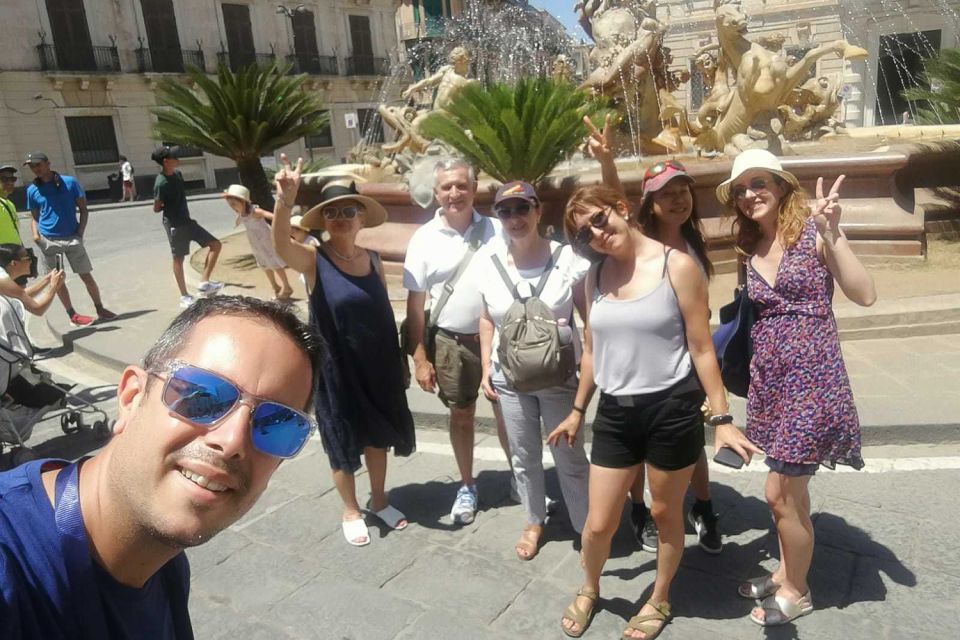
- The Arethusa fountain
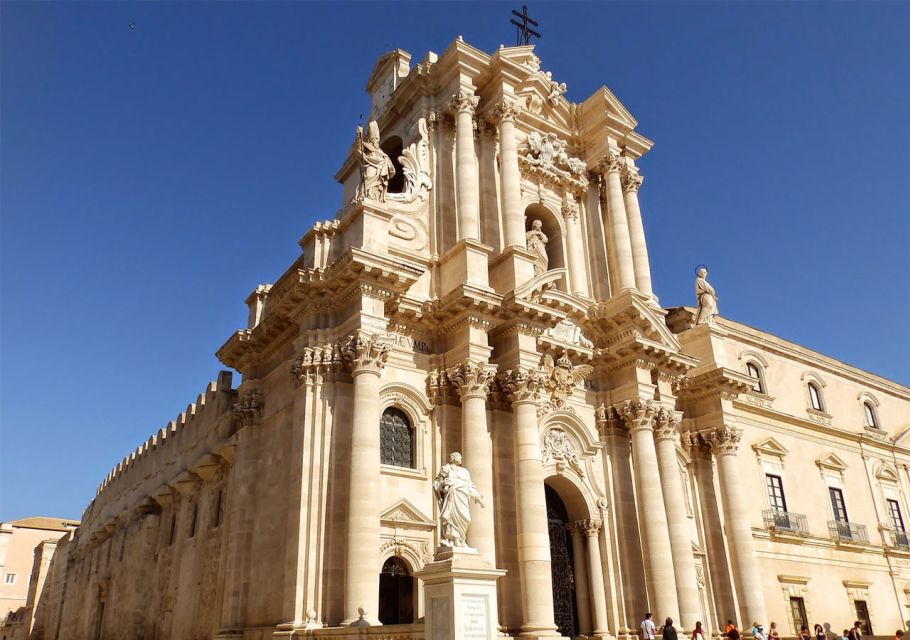
- Piazza del Duomo, where baroque palaces like the Beneventano del Bosco Palace and the Senate Palace make the square feel like an open-air gallery
Even if you’re not a hardcore architecture person, these stops give you clear reference points. You can photograph, orient yourself, and then flow into nearby streets without getting lost.
Why Ortigia feels different from Neapolis
Neapolis is stone history and big viewpoints. Ortigia is history that still functions as a neighborhood. You’re more likely to catch small street scenes, daily life, and the way old buildings sit close to modern movement. That contrast is one of the reasons this tour works so well as a full-day plan.
Timing consideration: 1.5 hours goes fast. If you want extra time for side streets, shopping, or a slower coffee stop, you’ll need to prioritize. On busy days or if the group gets delayed on logistics, Ortigia can feel like the stop you most wish had 30 minutes more.
When the guide really matters (and when sound can be tricky)
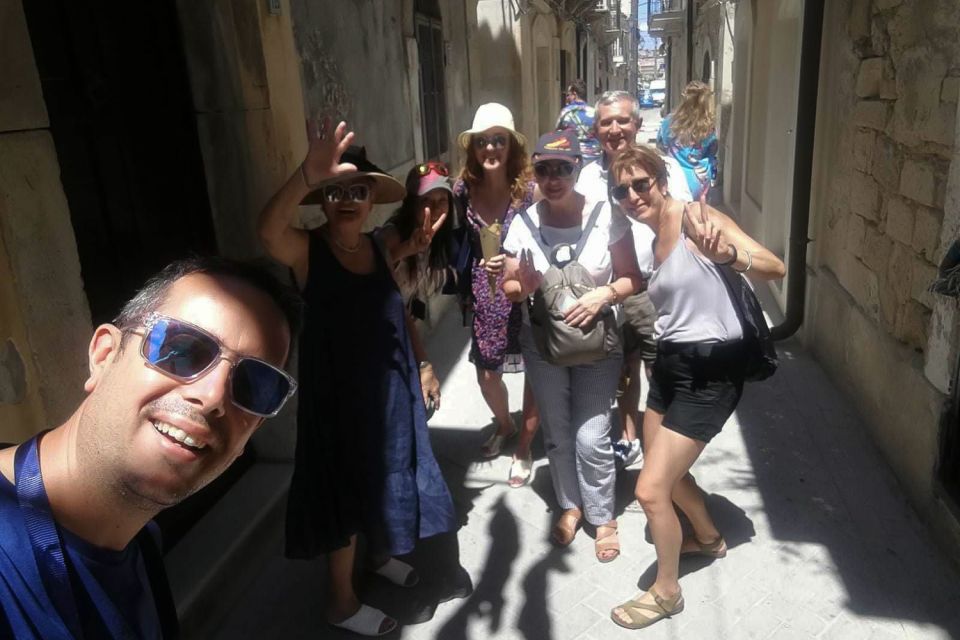
The most praised part of this experience is the guide. You’ll see repeated mentions of guides such as Nando, Salvo, Lorena, Andrea, Francesco, and Franco, and the common thread is that they explain the sites clearly and keep the day feeling friendly, not like a lecture marathon.
What a strong guide does for you:
- Helps you understand what you’re seeing at Neapolis without needing a textbook
- Keeps the group from wandering in the wrong direction
- Suggests smart photo angles and pacing so you don’t miss the big stuff
- Handles questions well, including little detours when possible
One example from the experience on this route: a guide was flexible enough to try arranging an unplanned boat ride around Ortigia in low season. That’s not something you can bank on, but it shows the style: responsive, not rigid.
Now, one thing to watch: group vehicle setup. In at least one case, commentary was harder to hear from the back because there weren’t speakers/microphone for everyone. If you’re sensitive to this, choose a seat where you’ll be closer to the front when you can.
Also, this is a full-day run with multiple pickups and drop-offs, plus parking time. If the van needs extra searching for parking, that time comes out of walking time. It doesn’t mean the day fails—it means you should build your expectations around “structured highlights with some variability.”
Timing, lunch breaks, and comfort tips for an 8 to 9 hour run
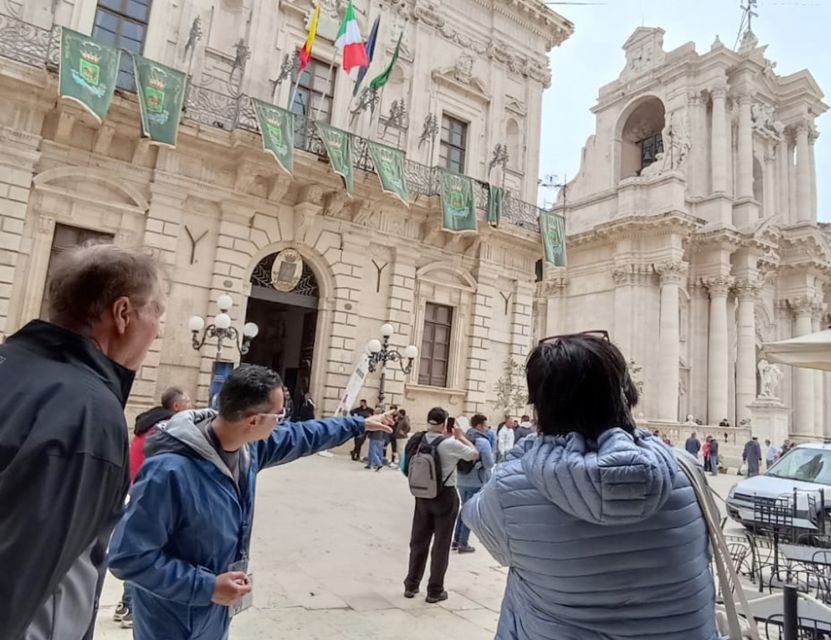
You’re looking at an 8 to 9 hour day, and most people underestimate how much that adds up once you include the in-between travel and the stop-and-go nature of historic towns.
Lunch is on your own, so plan your budget and your pace. One useful practical thought: Syracuse restaurants can be pricey in the most central spots, so if you’re watching costs, keep an eye out for places a few blocks off the very center or ask your guide what area makes sense to eat quickly.
Comfort checklist that actually matters:
- Wear shoes with grip for cobblestones and uneven ground
- Bring a layer even in good weather; stone and shade can change how you feel fast
- If it’s hot, don’t save all your sunscreen for Ortigia—Neapolis and open squares will hit you too
Food and restroom breaks can take time. So if you’re the kind of person who wants to maximize every minute, accept the rhythm: walk, stop, refuel, walk again. Trying to sprint between sites is how you end the day tired instead of happy.
Is $130.28 good value for Syracuse, Ortygia, and Noto?
At $130.28 per person, the value depends on what you’d otherwise have to DIY.
Here’s what this ticket includes:
- Hotel pickup and drop-off in Catania only
- Shuttle transport between the stops
- A multilingual tour leader
- Neapolis Archaeological Park entry ticket
What’s not included:
- Food and drinks
- A guided tour inside Neapolis (you explore there on your own)
So you’re paying for transport + on-the-ground guidance + one park entry. If you were to do this alone, you’d likely spend time and money on getting around plus you’d lose the guide’s “here’s what matters” context. That context is the difference between looking at random stones and understanding why the cavea size, the latomie caves, and the later Christian layers matter.
When it’s a great deal:
- You want a structured day with the big highlights done
- You like guided storytelling but also enjoy self-paced walking
- You’d rather spend money than time planning transport between Catania, Noto, Syracuse, and Ortigia
When it might feel pricey:
- If you want long, museum-style time at each stop (especially Neapolis and Noto)
- If you’re very focused on one site and want deeper guidance there
- If you’re sensitive to long days and lots of transfers
Given the mix of UNESCO sights and the small group format, I think it’s a fair price for most people who want a “best-of” day that still includes enough walking to feel real.
Should you book this tour from Catania?
Book it if you want a day that hits the most important Syracuse layers—Greek Theatre scale, the Latomie caves like the Ear of Dionysius, Ortigia’s old-town streets, and Noto’s Sicilian Baroque—without the stress of organizing transport. It’s also a smart choice if you like guides who can explain history in plain language and keep the group upbeat; the strong ratings for guides such as Nando and Salvo are exactly what you’re hoping for.
Skip it (or think twice) if mobility is an issue, because the tour is not suitable for people with mobility impairments. Also, if you need a private experience for one person, this format can’t be booked as a private tour for 1. And if you’re the type who gets irritated by sound issues in the vehicle, choose your seat carefully since some setups may not be evenly loud for everyone.
If you’re flexible about timing and you know this is a highlight-day, you’ll likely come away feeling like you really “got” eastern Sicily.
FAQ
Where are pickup and drop-off locations?
Pickup and drop-off are included for hotels and B&Bs in Catania only.
How long is the tour?
The duration is listed as 8 to 9 hours. Starting times vary, so you’ll need to check availability.
What does the price include?
The price includes hotel pickup and drop-off, shuttle transportation, a multilingual tour leader, and the entry ticket for Neapolis Archaeological Park.
Is lunch included?
No. Food and drinks are not included, so lunch is at your own expense.
Is Neapolis Archaeological Park guided?
Entry is included, but a guided tour inside Neapolis is not included. You visit Neapolis at your own pace.
What languages is the tour guide?
The tour leader speaks Italian, English, and Spanish.
How big is the group?
It’s a small group limited to 8 participants.
Is the tour suitable for people with mobility impairments?
No, it is not suitable for people with mobility impairments.
Are pets allowed?
Pets are not allowed.
Can I book a private tour for 1 person?
This activity cannot be booked as a private tour for 1 person.