REVIEW · SICILY
Siracusa Tour: Ortigia by Night in English
Book on GetYourGuide →Operated by Galya Sicily Tour · Bookable on GetYourGuide
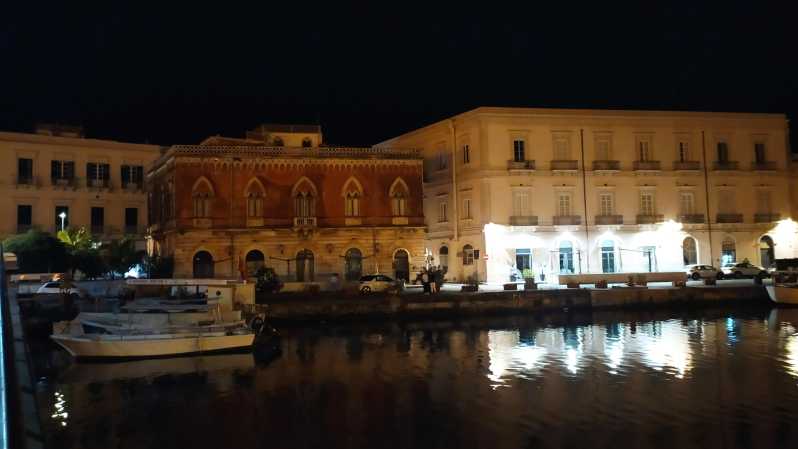
Night turns Ortigia into a storybook. On this Ortiga by night tour, the alleys and piazzas of Siracusa’s oldest quarter feel made for slow wandering, with dim street lamps turning stone monuments into something almost cinematic. I especially like getting up close to the Greek temple remains tied to Apollo and Athens, because seeing ancient masonry under night light hits differently than a daytime stop.
Second, I really value the pacing and the way an English live guide threads myths, legends, and monument stories into the walk. The route takes you past Gothic and Baroque-looking facades while you pause often enough to actually take it in, not just keep moving.
One thing to plan for: this is a walking tour and it’s not suitable for wheelchair users, so bring comfortable shoes and expect a steady stroll over uneven old streets.
In This Review
- Key things to look forward to
- Ortigia by Night: why the evening tempo works
- Starting at the Temple of Apollo (Apollonion): first impressions count
- Via Dione: short guided moments that build a big picture
- Palazzo Montalto stop: architecture you’ll actually notice
- Via della Maestranza and Via della Giudecca: where the myths feel local
- Church of Saint John Baptist and Via Roma: religious landmarks in a night glow
- Piazza Duomo: the big square moment
- Ending at Fonte Aretusa: a calm close to the walk
- How much it costs and what value you’re really buying
- What to wear and bring for a smooth night walk
- Who this tour suits best (and who should skip it)
- Should you book Ortigia by Night in English?
- FAQ
- How long is the Ortigia by Night tour?
- Where does the tour start and end?
- Is the tour offered in English?
- What’s included in the price?
- Do I need to bring anything?
- Is the tour suitable for wheelchair users?
- Is there hotel pickup or drop-off?
- Can I cancel for a refund?
- Can I reserve without paying right away?
Key things to look forward to
- Greek temple remains at night: Apollo and Athens come into focus under low light.
- Soft-glow street lamps: Photographable monuments with a calmer, romantic mood.
- Myths and legend stories: You’ll hear why these places mattered to people long ago.
- Gothic and Baroque architecture: Look for stylistic contrasts as you change streets.
- A guided pause at major corners: Short stops that add up to a full sense of Ortigia.
- Finish at Fonte Aretusa: The walk ends near a place that feels quieter than the main squares.
Ortigia by Night: why the evening tempo works
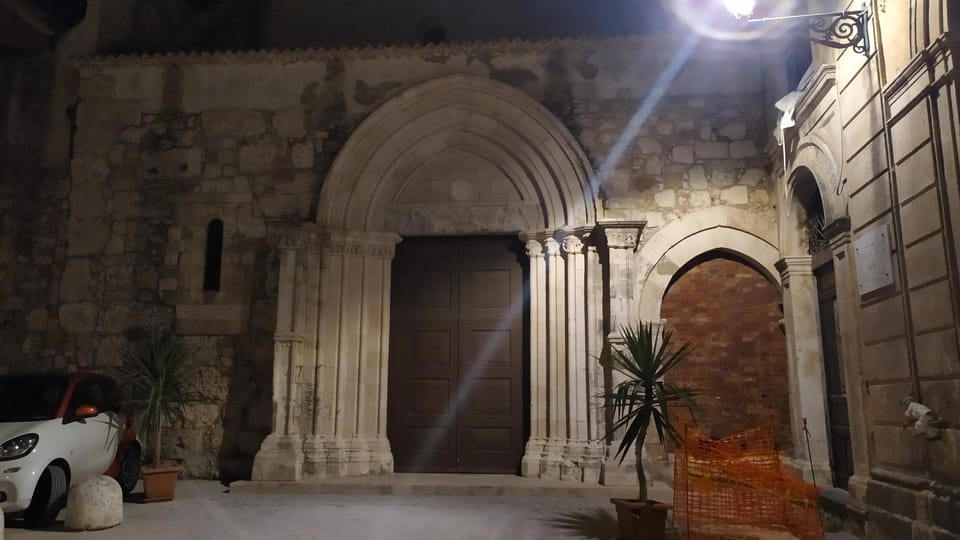
Ortigia is already atmospheric in daylight, but at night it changes temperature—visually and emotionally. The street lamps don’t blast the scenes. They shade them. That means you see more shadows, more texture, and more “how did they build this?” moments.
A 2-hour format also helps. You get enough time to cover multiple streets and viewpoints without turning your evening into a marathon. And since this is an English live guided experience, you’re not left piecing together what you’re looking at in the dark.
You can also read our reviews of more evening experiences in Sicily
Starting at the Temple of Apollo (Apollonion): first impressions count
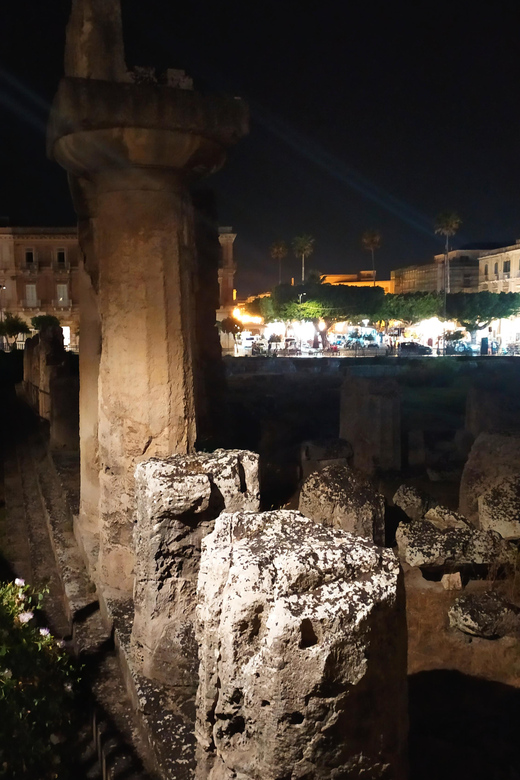
You begin at the ruins of the Greek Temple of Apollo, known as the Apollonion. This is a strong start because it sets the theme immediately: Ortigia isn’t just pretty streets—it’s layered in time, with Greek roots that still show through.
At night, those remnants feel more intimate. Instead of a wide, daytime overview, you’re staring at stone details and trying to picture how the space functioned. Your guide’s stories help you connect the dots, especially when myths and legends are part of what you hear rather than just names on plaques.
Practical tip: if you like photos, arrive with your camera ready. Low light can be tricky, so get set quickly rather than spending the best lamp-lit moments fiddling with settings.
Via Dione: short guided moments that build a big picture
From the temple area, the walk shifts into the street-and-block texture that defines Ortigia. Via Dione is one of those stretches where you learn how the neighborhood “moves”—what angles feel open, what corners feel narrow, and how the light changes as you turn.
A 10-minute guided stop here isn’t random. It’s long enough for the guide to orient you—where you are in the story of the island and why this part of town matters—then move you onward before it drags.
What I like about this style of routing is that it doesn’t treat the tour like a checklist. It treats it like a guided stroll with context.
Palazzo Montalto stop: architecture you’ll actually notice
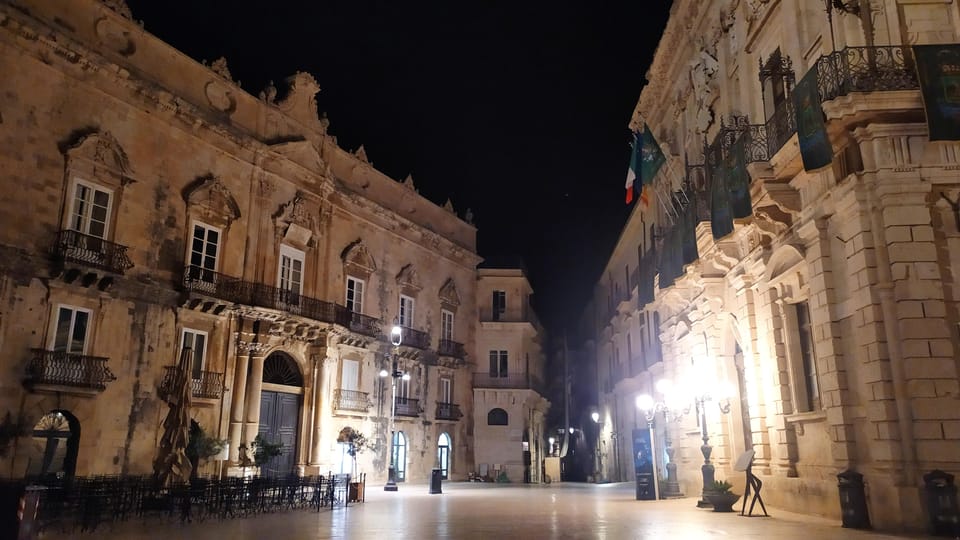
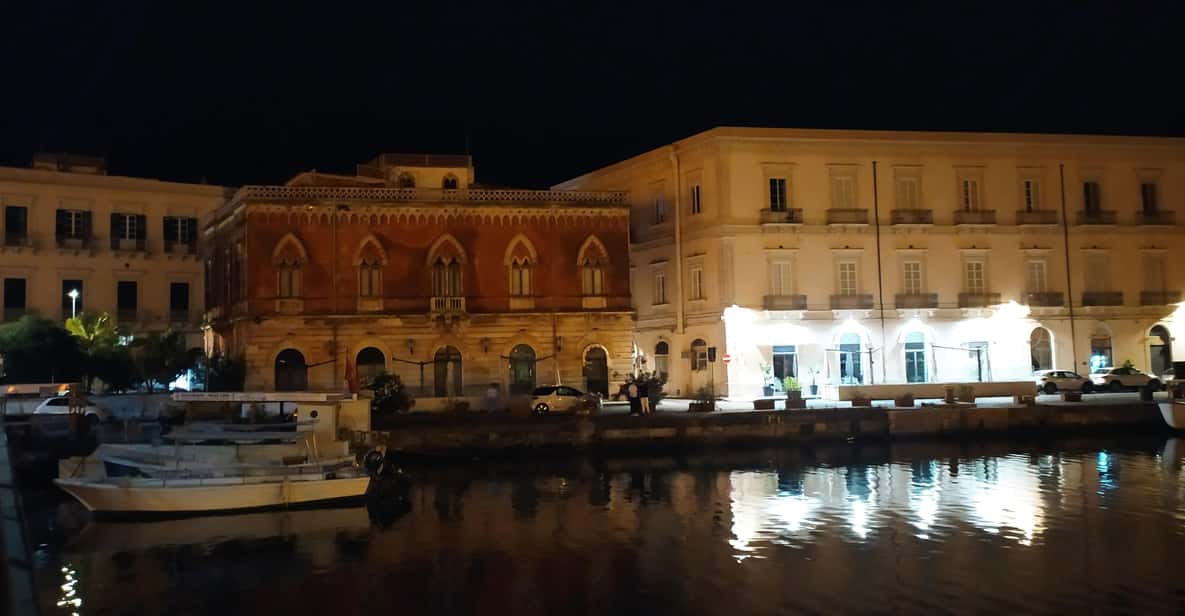
Next comes a shorter stop at Palazzo Montalto. Even with only a 5-minute guided moment, the point is to get your eyes working. Ortigia has a mix of architectural styles, including Gothic and Baroque elements, and at night those details can look more dramatic because lighting emphasizes edges and shapes.
This stop is best if you pay attention to the building surfaces rather than just the main doorway. In low light, contrasts matter—stone vs. shadow, curve vs. line. Your guide can point out what to watch for, which is what makes a quick architectural stop feel worthwhile instead of rushed.
Via della Maestranza and Via della Giudecca: where the myths feel local
You’ll continue to Via della Maestranza and then Via della Giudecca. These street names carry their own character, and the guided time at each one gives you room to understand why they were important beyond being locations on a map.
Both stops are about changing “mood.” One street might feel more open in how it frames monuments. Another might feel tighter and more lived-in. And because you’re listening as you walk, it’s easier to connect the atmosphere to the stories being told—myths, legends, and historical context tied to what you can see.
If you tend to get lost in a new city, this is where a guide really earns their fee. You’re not just walking—you’re building a mental map in real time.

Church of Saint John Baptist and Via Roma: religious landmarks in a night glow
A stop at the Church of Saint John Baptist keeps the tour anchored in living place, not only ruins. Even when you don’t know every architectural term, churches in older Italian neighborhoods tend to communicate identity quickly—through scale, placement, and the way people gather around them.
Then you move along Via Roma for another short guided segment. This is useful because the tour doesn’t stay locked in one “type” of sight. You’ll see Greek temple remains, then you’ll shift into churches and urban street life, and that contrast makes Ortigia feel like a whole system rather than separate postcards.
For photography: churches and street corners can be dark in a way that makes autofocus struggle. If your camera has a night mode or you can steady your hands, try it early during this section so you don’t miss the best angles.
Piazza Duomo: the big square moment
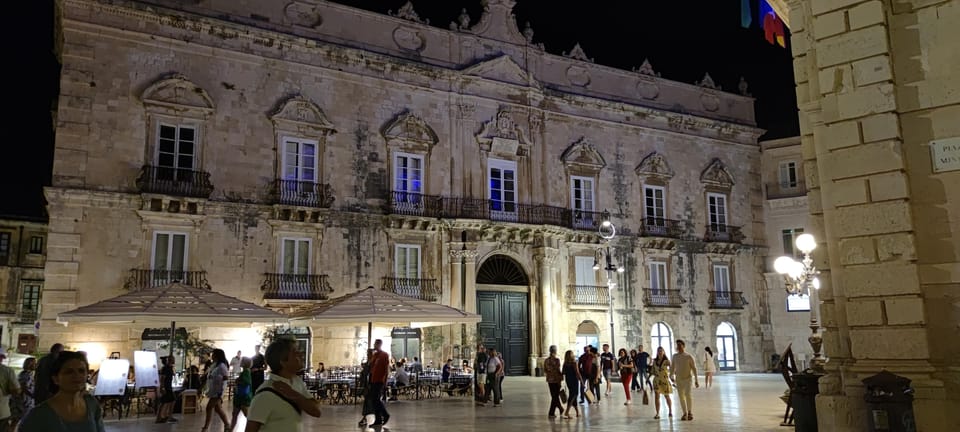
Piazza Duomo is your next key stop, with 10 minutes of guided time. Squares like this are where the tour’s romantic side really lands. You can pause longer, look around, and connect what you’ve been hearing to the open space that surrounds it.
This is also where the night lighting does its best work. When monuments face open areas, you get better sightlines and a clearer sense of how street lamps and building facades interact. The stories your guide shares here help you understand why Ortigia’s “center” feels like a stage.
If you like slow travel, this is the moment to slow down even more—don’t rush your last looks while the group moves on.
Ending at Fonte Aretusa: a calm close to the walk
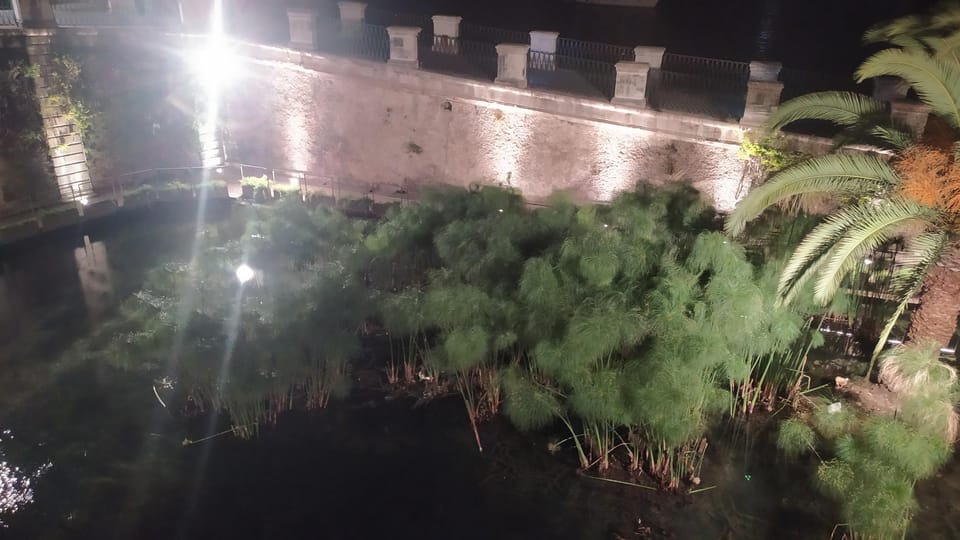
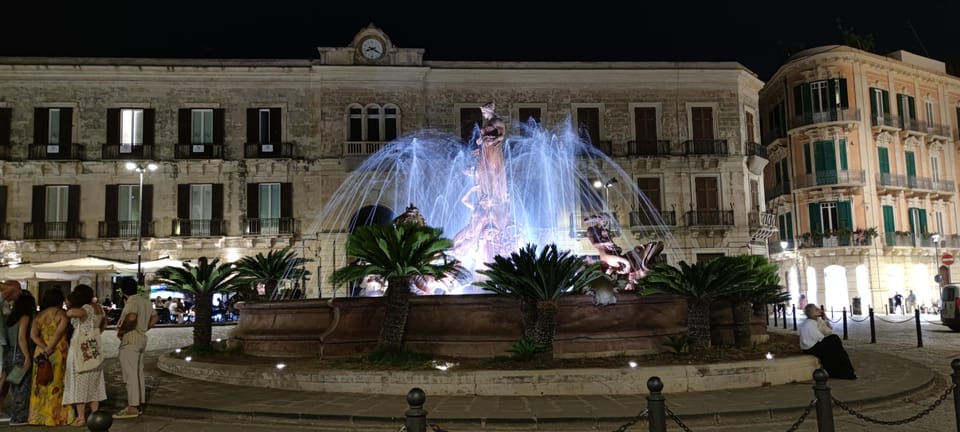
The tour finishes at Fonte Aretusa. Ending near a quieter, scenic anchor feels like the right way to wrap up a night stroll. You’ve spent about two hours moving through streets, squares, and monuments; now you can exhale.
Fonte Aretusa also works because it ties into the larger theme you’ve been hearing: Ortigia isn’t just stone. It’s a place people have mythologized, visited, and returned to for centuries.
If you want one last photo, this is the time—take it, then take your time.
How much it costs and what value you’re really buying
The price is $192.58 per group up to 1 person, lasting 2 hours with an English live guide. That pricing structure can actually make sense if you want a focused experience at your own pace rather than trying to keep up with a large group in the dark.
What you’re paying for here is not just “entry to sights.” You’re paying for a professional local guide who connects Greek temple remains and architectural styles to myths, legends, and history—then walks you through multiple streets so you don’t waste your limited time figuring things out.
You’ll still want to budget for what’s not included: food and drinks. Luckily, a 2-hour evening tour is easy to pair with dinner plans afterward.
What to wear and bring for a smooth night walk
This tour lives and dies on comfort. You’ll want comfortable shoes because the streets are old and you’ll be on foot for the full 2 hours.
Bring your camera if you want the dim-lamp look, but also bring patience. Night photography often takes trial-and-error, especially in narrow streets. If you’re using your phone camera, try a couple quick shots and then lock onto your favorite angle so you’re not stuck behind everyone while you experiment.
Who this tour suits best (and who should skip it)
This is a great match if you:
- Love walking tours but prefer them short and story-led
- Want a nighttime atmosphere instead of a daytime sightseeing sprint
- Enjoy hearing myths and legends tied to real places
- Want an English guide to help you see Greek, Gothic, and Baroque details without guesswork
It’s less of a match if:
- You need wheelchair accessibility (it isn’t suitable for wheelchair users)
- You don’t want to do any walking at all
Should you book Ortigia by Night in English?
Yes—if you want Ortigia’s “romantic night” mood with a guide who explains what you’re looking at, not just where you’re going. Starting at the Temple of Apollo (Apollonion) and finishing at Fonte Aretusa gives the walk a clean arc, and the mixture of Greek temple remains, Gothic and Baroque street views, and myth-led storytelling makes the 2 hours feel full.
Book it if you value atmosphere plus context, and you’re comfortable with an evening stroll on uneven streets. Skip it if mobility is an issue or if you’d rather explore alone with no guided structure.
FAQ
How long is the Ortigia by Night tour?
The tour lasts 2 hours. Starting times vary, so you’ll want to check availability for the time that fits your schedule.
Where does the tour start and end?
It starts at the ruins of the Greek Temple of Apollo (Apollonion). It finishes at Fonte Aretusa, and the activity concludes back at the meeting point.
Is the tour offered in English?
Yes. The live tour guide speaks English.
What’s included in the price?
You get a professional local tourist guide. Food, drinks, and hotel pickup/drop-off are not included.
Do I need to bring anything?
Wear comfortable shoes for walking. Bring a camera if you want to capture the night-lit monuments.
Is the tour suitable for wheelchair users?
No. The tour is not suitable for wheelchair users.
Is there hotel pickup or drop-off?
No. Hotel pickup and drop-off aren’t included, so you’ll need to make your own way to the meeting point.
Can I cancel for a refund?
You can cancel up to 24 hours in advance for a full refund.
Can I reserve without paying right away?
Yes. You can reserve now and pay later to keep your plans flexible.