REVIEW · SICILY
Tour of Etna and Alcantara
Book on Viator →Operated by Etnavic · Bookable on Viator
Etna in the morning, Alcantara by afternoon sounds like a movie plot. This one-day trip is a great mix of volcanic views and basalt gorges, with a small-group pace that keeps the day moving without feeling rushed. I love that the group stays small (up to 8), and I love the hands-on touch—helmets and torches for the lava cave. The only real drawback to plan around is that it runs 7 to 8 hours and depends on weather, so you’ll want to dress for changing conditions and be ready for a long day.
You’ll start in Catania and get pulled out of the city fast, first with a coastline drive past the waterfront and views toward Acitrezza. Then comes Etna’s crater area, scenic stops over lava history, a tasting of local products, and finally the Parc Fluviale dell’Alcantara with those dramatic columnar basalts and cold river water. Guides like Ludovico, Claudia, Monica, Rafaella, Giuseppe, and Filippo show up in the experience in a big way—passion for Etna isn’t just a job to them, it’s the point of the day.
In This Review
- Quick reasons this Etna and Alcantara day is worth your time
- Why Etna and Alcantara in one day makes sense
- From Catania waterfront to the first Etna crater trek
- Etna’s panoramic roads plus the lava cave with helmets and torches
- Valle del Bove and the Colata Lavica stop: seeing eruption history
- Oro d’Etna tasting: the short break that makes it feel local
- Parco Fluviale dell’Alcantara: cold water, basalt columns, and real atmosphere
- Price and what you’re really paying for (Tour of Etna and Alcantara)
- Timing, pacing, and small-group comfort (and why your guide matters)
- What to pack and what to eat for a smooth 8-hour day
- Best fit: who should book this Etna and Alcantara tour?
- Should you book the Etna and Alcantara day with Etnavic?
- FAQ
- How long is the Etna and Alcantara tour?
- What time does the tour start in Catania?
- How much does the tour cost?
- What’s included in the price?
- Do I need to buy a ticket for Alcantara?
- Is there food or water provided during the day?
- Are pickup and mobile tickets included?
- What should I bring for the Alcantara part?
- Does the tour run in all weather?
Quick reasons this Etna and Alcantara day is worth your time
- Small group size (max 8 travelers) keeps questions answered and the pace friendly.
- Lava cave visit comes with the practical gear: helmets and torches.
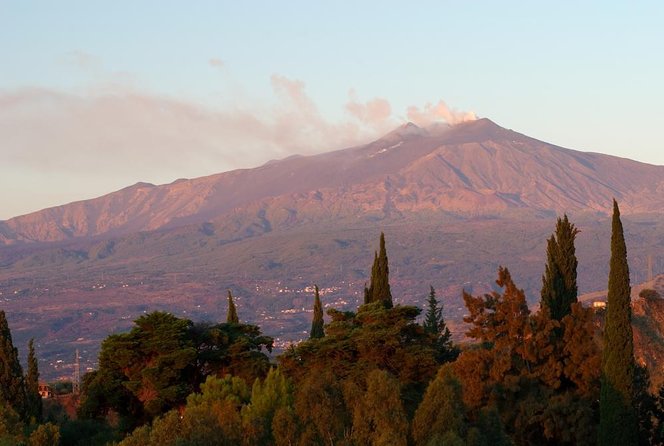
- Etna viewpoints built into the route so you get more than one kind of scenery.
- Stops timed for variety: craters trek, valley views, lava front, then Alcantara basalts.
- A real food break at Oro d’Etna for a free tasting of typical Etna products.
- Alcantara gorges are different from Etna—cold river, basalt columns, and a very physical setting.
Why Etna and Alcantara in one day makes sense
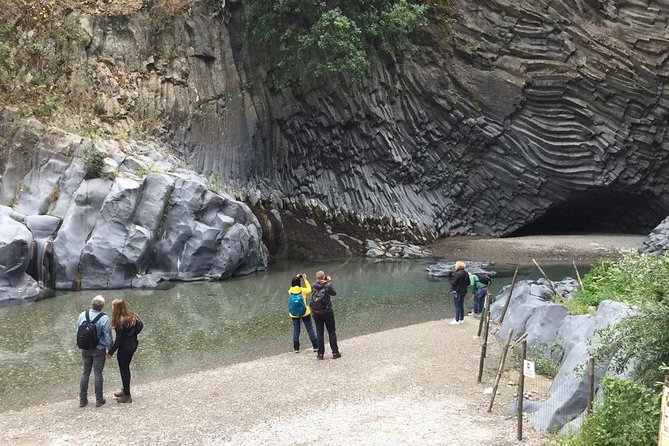
Etna is the big headline: you get craters, lava flows, and that moon-like feeling you only get on an active volcano. Alcantara is the contrast. The river runs between tall basalt walls formed by ancient eruptions, and the place feels sculpted by time and temperature as much as by rock.
What I like about combining them is that the day doesn’t turn into one long “look at a mountain” session. You’ll do a short trekking moment on Etna, then switch to panoramic viewpoints and lava history, then end with a river park where you can see basalt columns and feel how cold that water really is. That change of pace is what keeps a long day from dragging.
There’s also good value in the flow. Several stops are built around free admission tickets, and the tour includes the vehicle and the lava cave safety basics. You still pay a small extra for the Alcantara park entrance, but overall it’s a straightforward day with clear costs.
You can also read our reviews of more tours and experiences in Sicily.
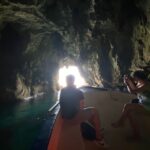
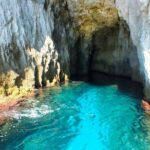
From Catania waterfront to the first Etna crater trek
You start at 8:00 am with pickup options from the Info Point (plus pickup from hotels in Catania, or another meeting point arranged in advance). The drive begins by passing the Catania waterfront. Even early in the day, you’re not staring at a blank screen of road—you get a sense of place, including views toward Acitrezza.
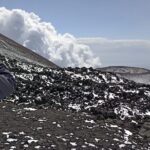
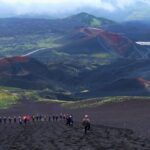
Then you move up to the craters area for the Craters Silvestri on Mount Etna. This part is a trek on one of the ancient craters and lasts about an hour. The goal isn’t distance for its own sake. It’s your first chance to walk on volcanic terrain and see the forms up close, before you move into longer views and cave time.
Practical note: you’re not just sightseeing from a bus window. The day includes walking on rocky ground, so you’ll want to be comfortable on your feet. If you know you’ll feel slow on uneven paths, plan to take your time early.
Etna’s panoramic roads plus the lava cave with helmets and torches
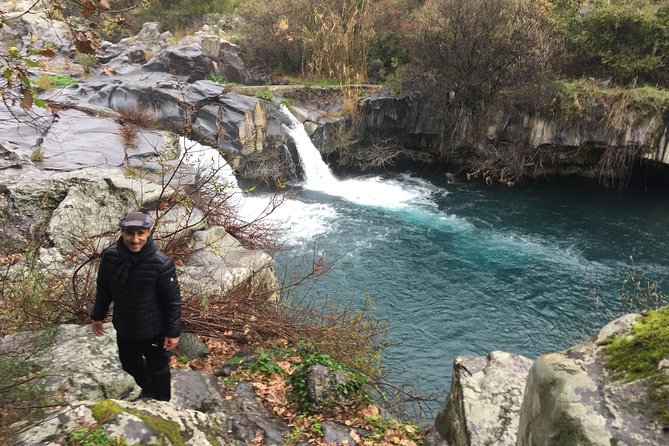
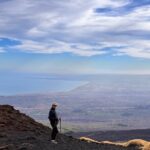
After the crater stop, the tour shifts into Etna proper. You’ll travel via panoramic roads and reach areas where you can see ancient and more recent lava flows. This is where the scenery turns from “cool rocks” into “geology with a timeline.” You’re looking at how the mountain has built itself, layer by layer, flow by flow.
The standout here is the lava flow cave visit. Helmets and torches are included, so you can focus on the experience instead of organizing gear. Expect a different kind of atmosphere than outside—cooler air, darker spaces, and the feeling of being under the mountain rather than beside it.
This is also a good moment for a guide to matter, because good explanations turn a cave stop into a story you can picture. In the group you’ll likely hear about how lava moves, why caves form, and what you’re actually seeing while you walk in the dark with your light.
Time at this main Etna phase is about 2 hours. It’s enough to see, learn, and move without burning out, especially because the overall group size stays small.
Valle del Bove and the Colata Lavica stop: seeing eruption history
Next you get two short, high-impact viewpoint stops.
Valle del Bove is a breathtaking panoramic look at an ancient valley. Even with limited time, this stop helps you understand Etna as more than a single cone. You’re seeing a larger structure, shaped by collapses and eruptions over long periods.
Then comes Colata Lavica 1992, focused on the lava front from the 1991–1993 lava flow. This stop is shorter (about 30 minutes), but it’s an important one because it connects the idea of lava to a more recent event—one that reached the village of Zafferana Etnea. It’s the kind of moment where the mountain stops being abstract.
If there’s a drawback to these quick stops, it’s that you need to be ready to look, listen, and move at a steady pace. You can’t linger for long photos or long conversations. But for most people, that’s exactly why this tour works: it stacks the big moments into a single day without turning it into a half-empty bus tour.
Oro d’Etna tasting: the short break that makes it feel local
Between volcano viewpoints, you’ll have a stop at Oro d’Etna for a free tasting of typical Etna products. This part is about 30 minutes.
I like this kind of break because it keeps the day from feeling like “only rock and walking.” You also get a sense of how people live alongside a volcano—what they make, what they sell, and what they consider worth sharing. It’s small, but it’s the kind of pause that makes the rest of the day more memorable.
Because the tasting is included, it’s also a small value win. You’re not paying extra to sit down and reset.

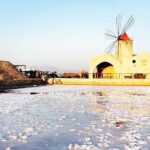
Parco Fluviale dell’Alcantara: cold water, basalt columns, and real atmosphere
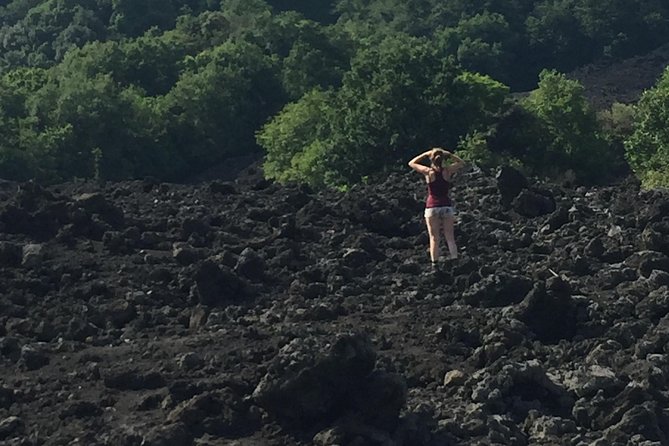
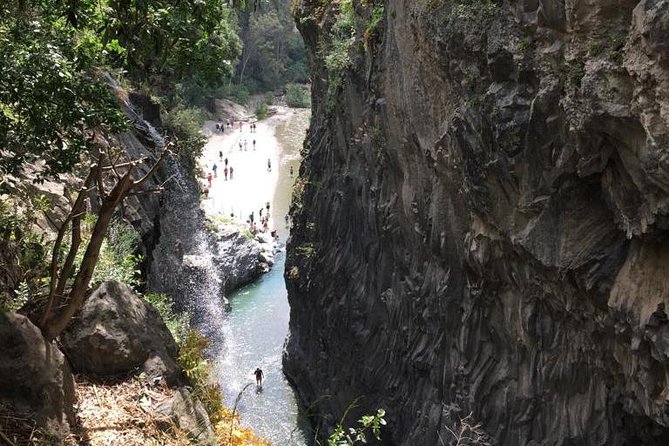
Then you head to Parco Fluviale dell’Alcantara, a river botanical park where you can admire columnar basalts formed from ancient eruptions. This stop is about 2 hours, and the municipal park ticket is €1.50 per adult, not included in the tour price.
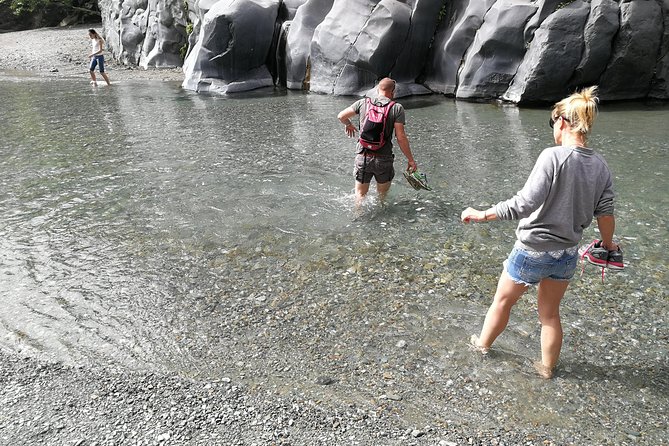
This is where the experience shifts from volcanic views to an active, physical environment. The Alcantara area is known for cold water and strong current, and the tone of the day becomes more practical than scenic. One of the most useful tips from experience is to wear sea shoes if you plan to get close to the water or try to reach the cascades area. Water is cold, and reaching the cascades can be tricky because there’s a lot of current.
If you prefer staying dry and photographing from safer points, you can still enjoy the basalt formations without getting in the water. But don’t assume it’s like a calm garden park. It’s a river setting, and that changes how you plan your feet and patience.
Price and what you’re really paying for (Tour of Etna and Alcantara)
The price is $125 for a 7 to 8 hour day, with pickup offered and a mobile ticket. At face value, it’s a budget-friendly way to combine Etna and Alcantara without hopping between multiple companies.
What makes it feel like good value is what’s included:
- Air-conditioned vehicle
- Helmets and torches for the lava cave
- Waterproof jackets on request (so you’re not completely stuck if conditions turn)
And what’s not included is clear:
- Alcantara park entrance ticket (€1.50 per adult)
- Lunch and snacks and water (you should bring them)
The free stops on the Etna side also help. You’ll spend time at several major Etna locations without paying entry tickets at each one. That matters because volcano tours can quietly rack up fees through separate attractions. Here, the extra cost is limited and predictable.
Bottom line: you’re paying for transportation, a guided day, and access to the lava cave experience with proper gear.
Timing, pacing, and small-group comfort (and why your guide matters)
With maximum 8 travelers, this doesn’t feel like a cattle-car day trip. The best tours on Etna and Alcantara are the ones where you can ask questions and actually hear the answer over engine noise and wind. A small group makes that possible.
The guides named Ludovico, Claudia, Monica, Rafaella, and Giuseppe come across as passionate and organized. Some tour moments are “just views,” but on this kind of volcano day, the explanations are what help you connect what you see to what it means. That’s why you’ll likely feel less bored even when you’re moving from viewpoint to viewpoint.
Pacing is steady rather than frantic. There are a few shorter stops (like Valle del Bove and Colata Lavica 1992), but they’re balanced by longer moments (like the lava cave and Alcantara). You’ll still want to take breaks when offered, and you’ll want water—especially because Alcantara involves cold river time.
What to pack and what to eat for a smooth 8-hour day
Lunch isn’t included, and neither are snacks or water. Since the day runs until you return to Catania, I strongly recommend you bring:
- A packed lunch or filling snacks
- Water (especially for the Etna side)
- Layers you can handle if weather shifts
Also consider footwear. You’ll do at least one short trek on Etna, and Alcantara is a river environment. If you plan to approach the cascades, sea shoes can be a smart choice based on firsthand tips about strong current and cold water.
One more small comfort detail: waterproof jackets are available on request. If rain is possible in your travel window, it’s worth asking early so you don’t get caught in a damp surprise.
Best fit: who should book this Etna and Alcantara tour?
This is a strong choice if you want a guided day that hits the essentials of Etna and then delivers a very different final act at Alcantara. It also suits people who like learning while they look—your guide’s style matters here, and the day’s structure supports plenty of conversation.
It can work well for families and mixed-age travelers because the group is kept small and the stops are varied. That said, it’s not a “sit down the whole day” tour. There’s trekking on Etna and a river park environment on Alcantara, so you’ll want to be comfortable moving and standing for periods.
If you’re the type who hates cold water, you can still enjoy Alcantara from the safer edges. But if you’re planning on going near cascades, be ready for cold and current.
Should you book the Etna and Alcantara day with Etnavic?
I’d book this tour if you meet two conditions: you want a full-day volcanic experience without juggling multiple tickets, and you’re okay with a steady pace from 8:00 am to evening. The mix of crater trekking, a guided lava cave with included helmets and torches, and the basalt-column experience in Alcantara makes the day feel like two different Sicilies in one shot.
I’d think twice if you know you’ll struggle with a long day, early start, and walking. Also consider that the weather matters—this is an outdoor volcano-and-river format, so poor weather can affect plans.
If you want an experience with small-group attention and a guide who can turn geology into something you actually picture, this one is a solid bet.
FAQ
How long is the Etna and Alcantara tour?
It’s about 7 to 8 hours.
What time does the tour start in Catania?
The start time is 8:00 am.
How much does the tour cost?
The price is $125.
What’s included in the price?
Included are an air-conditioned vehicle, helmets and torches for the lava cave, and waterproof jackets on request.
Do I need to buy a ticket for Alcantara?
Yes. The municipal botanical park entrance at Parco Fluviale dell’Alcantara costs €1.50 per adult and is not included.
Is there food or water provided during the day?
No. Lunch, snacks, and water are not included, so bring your own.
Are pickup and mobile tickets included?
Pickup is offered, and you receive a mobile ticket.
What should I bring for the Alcantara part?
The water is very cold and reaching the cascades can be difficult due to current. Sea shoes are a useful idea if you plan to get close to the water.
Does the tour run in all weather?
It requires good weather. If it’s canceled due to poor weather, you’ll be offered a different date or a full refund.