REVIEW · SICILY
Volcanological excursion of the wild and less touristy side of the Etna volcano
Book on Viator →Operated by Guide Vulcanologiche Etna Nord · Bookable on Viator
A wild volcano day starts with a quiet base. This Etna outing takes you to the north side—less packed than the usual routes—and puts you close to real craters and lava fields with a volcanologist guide. I like how guides such as Pepe and Poldo focus on what you’re seeing, not just what they’re saying.
You get two big wins: an easy-to-follow drive-up toward the Etna Nord Volcanological Observatory, then a hands-on walk across crater edges and volcanic dust. One thing to think about before you sign up: the footing can be unstable, and the hike includes dizzy-from-height edges on a steep volcanic route, so you’ll want solid stamina and good balance.
In This Review
- Key highlights you’ll feel (almost immediately)
- Getting to Etna’s wild north side: Piano Provenzana at 1,800 m
- The 4×4 ride into the October 2002 lava world
- Crateri Sommitali and the view from Piano delle Concazze
- The crater-edge hike on Mount Etna: 7 km of real volcanic terrain
- What you’ll likely see during the walk
- Summit limits (and why it doesn’t ruin the day)
- The descent back to Piano Provenzana
- What you should bring (beyond the gear they provide)
- Timing, group size, and why the morning start helps
- Price and value on this wild Etna day
- Who this Etna north tour is best for (and who should skip it)
- Should you book this wild north Etna tour?
- FAQ
- What time does the tour start?
- How long is the excursion?
- Is the tour offered in English?
- What’s included in the price?
- What costs are not included?
- Do I need moderate fitness?
- How big is the group?
- What happens if weather is bad?
Key highlights you’ll feel (almost immediately)
- Piano Provenzana at 1,800 m: a calmer start on Etna’s north flank, with parking, cafés, and the morning meeting point
- 4×4-only access: you travel across forest and lava fields from the 27 October 2002 eruption (when the routes are approved and open)
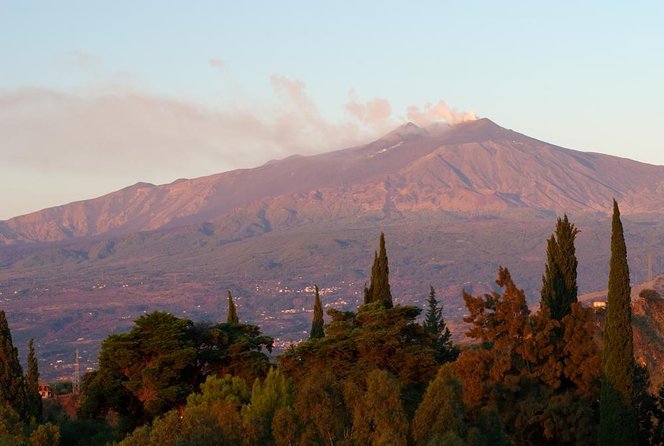
- Etna Nord Volcanological Observatory area (2,860 m): panoramic views on clear days and an up-close look at the summit landscape
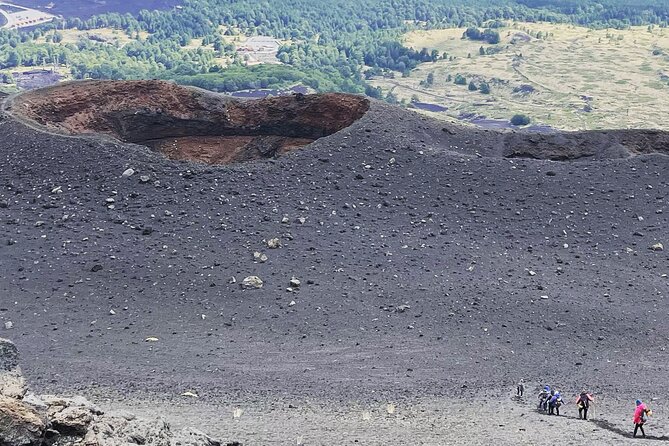
- Crater-edge hiking on volcanic ground: about 7 km of walking that mixes ash, sandy sections, fault lines, and old lava formations
- Small group feel (max 20): more time with your guide while you ask questions about how Etna works
- Science in plain language: guides like Linda, Vincenzo, and Domenico have been praised for making the geology click
Getting to Etna’s wild north side: Piano Provenzana at 1,800 m
Your morning starts at Chiosco Bar Mareneve di Ferraro Etna nord – Piano Provenzana, near Linguaglossa. The vibe here is noticeably different from the busier Etna areas. You’re at 1,800 meters, surrounded by pine forest, with the stark contrast of recent lava flows showing right along the access roads.
This is also the launchpad for one of the strongest reasons to choose the north: it stays quieter. The October 2002 eruption reshaped this whole zone and wiped out the older tourist infrastructure—things like restaurants, hotels, trails, and ski lifts—leaving you with a more “volcano first” setting. You’ll see the history in the terrain itself, not behind a gift shop.
Practical note: you’ll pay for parking in blue-striped spaces. If you’re coming by your own car, plan on arriving early enough to get sorted before the briefing and the vehicle check. If you’re coming by local transfer, just know the tour is built around the morning start time and a shared on-site meeting.
You can also read our reviews of more tours and experiences in Sicily.
The 4×4 ride into the October 2002 lava world
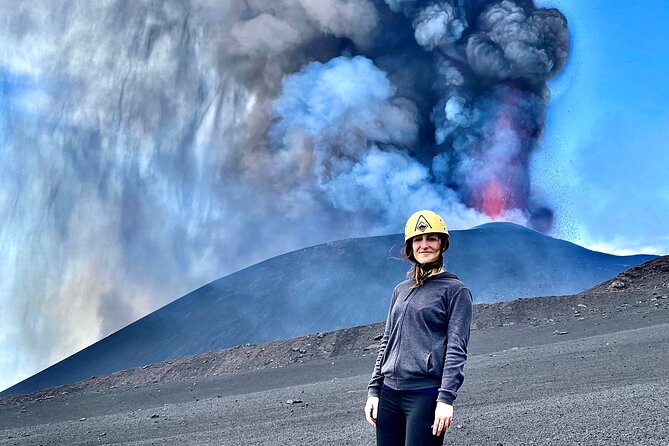
Once you meet your guide, the tour quickly shifts from normal roads to a controlled off-road world. You board authorized 4×4 vehicles that can handle the route where the main access is limited. This is one of those “it sounds logistical, but it changes the day” parts—because you’re not just driving to viewpoints, you’re moving through the actual volcano aftermath.
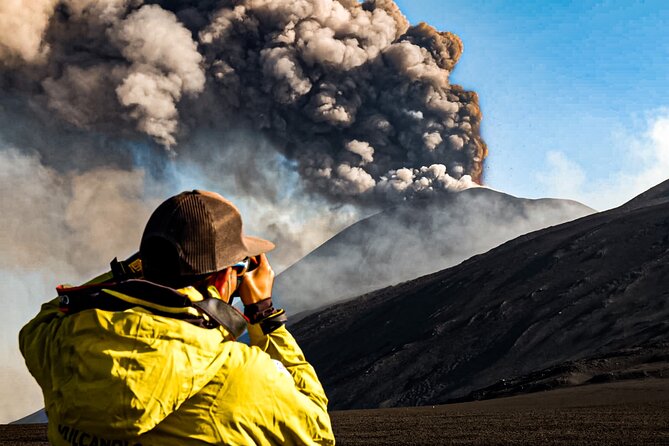
Along the way, you cross woods and broad lava fields from the 27 October 2002 eruption. You’ll also spot remnants of older tourist structures, including a roof that’s left semi-buried in lava. It’s a strange feeling: you’re walking around the edges of a landscape that erased people’s plans and then cooled into something you can now read like a giant geological map.
As you climb toward the upper volcano, your guide points out features you’d miss on your own—deep craters, eruptive fractures, and the INGV monitoring stations scattered across the lunar-looking stretches. On this part of the day, your questions matter. The guides in this program are known for answering them clearly, without turning the whole thing into a lecture.
Crateri Sommitali and the view from Piano delle Concazze
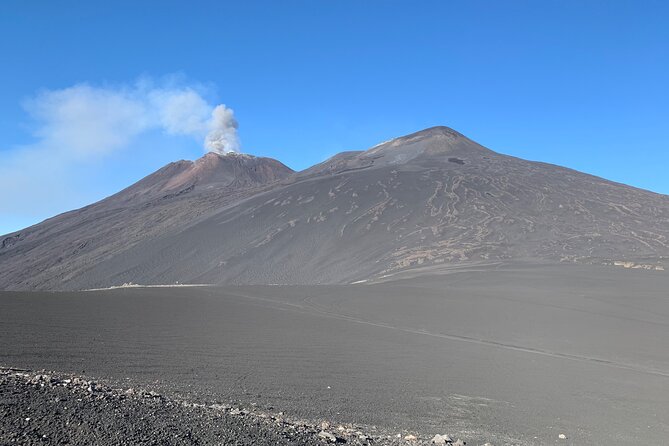
The next major stop centers on crater country. The drive climbs north toward the upper volcano, and then you end up at Piano delle Concazze (2,860 m) near the Etna Nord Volcanological Observatory. This is where the scenery opens up fast—especially on clear days.
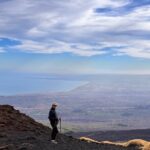
From here, the views can stretch a long way: across the mountains of the interior (Nebrodi and Peloritani), toward the Madonie, over to the Aeolian Islands, and even toward Calabria. On the right day, you can see from Catania to Syracuse along Sicily’s east coast.
This is also a good moment to understand what you’re looking at. Instead of only seeing crater bowls, you’ll connect them to the bigger patterns: where gases push up, how fractures spread, and why the summit area can look active even when you’re not near a dramatic eruption. If you’re hoping for something more than a “static” landscape, this is the section where your guide’s real-time interpretation helps.
One more thing: at altitude and on volcanic ground, wind and temperature can shift quickly. You might start the day in comfortable layers and then need to warm up again—so bring the extra warmth your kit is built around.
The crater-edge hike on Mount Etna: 7 km of real volcanic terrain
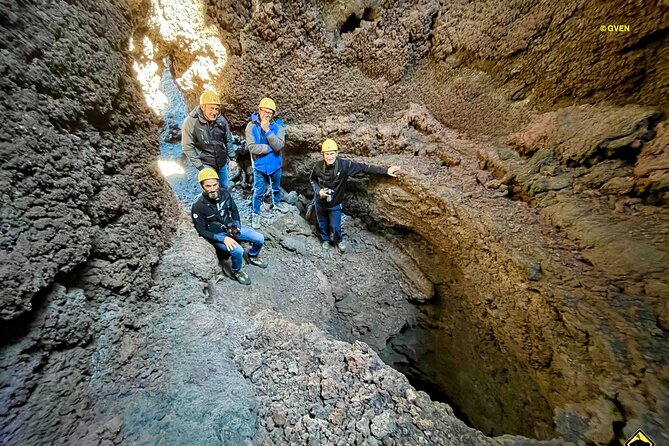
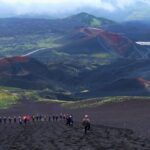
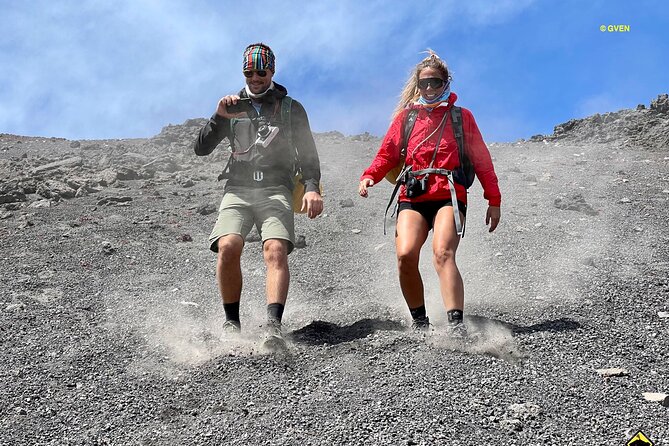
This is the heart of the experience. You’ll hike roughly 7 km over about 2 hours, starting from the high north route and returning through the crater-edge terrain. You’ll use provided trekking poles, shoes, helmets, a warm jacket, extra socks, and an extra backpack, which is a big help for comfort and safety.
The walking isn’t about speed. It’s about footing and pacing. Volcanic soil can be inconsistent and unstable, and there are sections that can feel mentally tricky if you’re sensitive to dizzying viewpoints—because the path tracks along crater edges.
What you’ll likely see during the walk
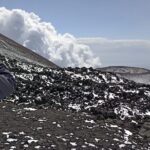
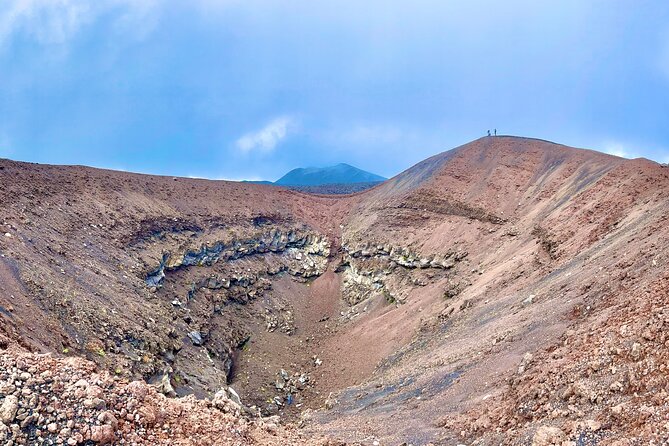
As you move across the plateau of ash and fresh lava, you’ll visit craters tied to different eruption periods, including 2002 and several older events like 1911, 1923, 1874, 1879, 1809, 1646, 1614, 1624. You’ll also pass through or near:
- the dramatic north-flank fault area
- ancient lava tubes
- patches of pioneer plants that start colonizing new rock
This mix matters. It makes Etna feel like a living system rather than a one-time eruption photo spot.

Summit limits (and why it doesn’t ruin the day)
If the summit is closed, the vehicles may only climb to the highest permitted point instead of going all the way up. The good news: you still get the crater-edge walk and the signature north-flank views. The tour is designed to work with those constraints, so you’re not left with a watered-down version.
The descent back to Piano Provenzana
After the hike, you return down toward Piano Provenzana. The descent route can include a sandy-channel feel and then a forest section, so your knees will get their turn. If you’ve been training on uneven ground at home, you’ll feel more confident here.
If you’re planning what to wear, think about traction and dust. One reason this tour is worth dressing for is simple: ash can get into everything, and contact lenses can become a problem when gases and dust are in the air. If you normally wear lenses, you should plan on switching to glasses for this day.
What you should bring (beyond the gear they provide)
Even though the tour provides a lot, you still need to show up ready for the realities of Etna.
Plan on bringing:
- A windbreaker (they note this is not included)
- Your own water planning mindset (you’ll want plenty, since there’s no real shade up high)
- A hat for sun and dust days
- No contact lenses if you can avoid them
Also, watch the basics of comfort. You’ll be walking on volcanic ash and dust, so keeping your feet happy matters. The included shoes and socks help, but you’ll still want a sensible day plan: pack light, keep your layers flexible, and keep an extra focus on hydration and balance.
And yes, it’s high altitude walking. The route is not for people with serious cardio-vascular, breathing problems, or hypertension. Even if you’re generally fit, you’ll want to take the height and the uneven ground seriously.
Timing, group size, and why the morning start helps
The start time is 7:45 am, and the full outing runs about 4 hours 30 minutes. That early departure helps because you’ll face less of the hottest part of the day and often get better weather conditions for clear-distance visibility.
The group size is capped at 20 travelers, which changes the feel. You can hear your guide, ask questions, and keep momentum without waiting in a long line. The structure is also built around fewer crowd pressures than the south-side stations, which is part of why the north experience feels calmer.
If weather turns bad, the tour can be rescheduled or refunded. That’s not a surprise on Etna, but it’s worth remembering. If you’re tight on days in Sicily, build in a buffer.
Price and value on this wild Etna day
The listed price is $71.20 per person for roughly 4.5 hours, including a licensed volcanological guide and entry admission to Mount Etna. Equipment and insurance are included too: trekking poles, trekking shoes, helmets, a warm jacket, extra socks, and an extra backpack, plus accident insurance coverage.
But here’s the honest value math you need: not everything is wrapped into that sticker price. You should plan for:
- Parking: about €5 for the day on weekdays or €8 on Sundays and public holidays
- A 4×4 vehicle fee paid on-site: €50 per person, tied to the vehicle segments from the 1,800 m / 2,800 m / 2,500 m areas
So the best way to think about the value is: you’re paying for a real guided volcanology experience plus access to restricted routes, with the equipment and safety gear handled for you. Then you add the on-site access and parking costs as needed. If you’d otherwise try to DIY Etna’s north side, you’d quickly run into access limits and the need for approved vehicles.
Who this Etna north tour is best for (and who should skip it)
This is a great fit if you want Etna’s working volcanic terrain without the biggest crowds. If you’re comfortable hiking several kilometers on uneven volcanic ground and you don’t mind going up to high altitude, you’ll enjoy the walk-to-view rhythm.
It’s also a strong pick if you like science explained in a practical way. The guides—such as Pepe, Linda, Poldo, Vincenzo, and Domenico—have been noted for solid organization, clear answers, and keeping the level right for a mixed group.
You might want to choose a gentler option if:
- you struggle with steep or uneven footing
- you’re sensitive to dizziness from crater-edge paths
- you have significant medical conditions the operator discourages (cardio-vascular, breathing issues, hypertension)
Kids are accepted if they’re over 6, but it still depends on the child’s comfort on crater-edge terrain and dust.
Should you book this wild north Etna tour?
I’d book it if you want the Etna experience that feels more like geology in motion than a checklist of viewpoints. The north side gives you space—less crowd pressure, more time for your guide’s explanations, and a route that connects crater history to how Etna behaves today.
If you’re flexible with weather and you’re ready for 7 km of real volcanic terrain, this tour has a clear payoff: craters, faults, lava tubes, and big-distance views from near the observatory. If any part of you is unsure about balance, altitude, or unstable ground, don’t gamble—choose a calmer route.
FAQ
What time does the tour start?
The tour starts at 7:45 am and returns to the same meeting point.
How long is the excursion?
It lasts about 4 hours 30 minutes (approx.).
Is the tour offered in English?
Yes, it’s offered in English.
What’s included in the price?
You get a licensed volcanological guide, trekking poles, trekking shoes, helmets, a warm jacket, extra socks, an extra backpack, insurance in case of accidents, and entry/admission to Mount Etna.
What costs are not included?
Parking is not included (about €5 weekdays or €8 Sundays/public holidays), and there is an on-site fee of €50 per person for the 4×4 vehicles for the route segments. Windbreaker is also not included.
Do I need moderate fitness?
The operator recommends a moderate fitness level. The hike includes crater-edge walking and can cause dizziness for susceptible people, and the soil can be unstable.
How big is the group?
The tour has a maximum of 20 travelers.
What happens if weather is bad?
The experience requires good weather. If it’s canceled due to poor weather, you’ll be offered a different date or a full refund.