Ortigia is best seen at low speed. This Ape-TUK route strings together cathedrals, fountains, viewpoints, and the Neapolis ruins without forcing you to fight the streets on foot. You get a private ride in English, with pickup in Syracuse/Ortigia if you plan your meeting point.
I like two things right away: you can cover a lot of ground in a short window, and the tuk tuk format makes it easy to hit major landmarks plus smaller neighborhood corners like Giudecca. It’s also the kind of tour where your driver can steer you through tight, older streets fast.
The main thing to watch is how stops work on-site. The tuk tuk driver typically doesn’t stay with you inside every church or monument, so plan to read signs, use your phone, or bring along a basic self-guided approach if you want more interpretation.
In This Review
- Key Stops That Make This 4-Hour Plan Work
- Entering Ortigia Like a Local: Why a Tuk Tuk Route Fits
- Piazza Duomo to Fonte Aretusa: The Classic Start Points
- Maniace Castle, Archimede Square, and Apollo Views
- Giudecca and Two Churches: A Side of Syracuse Most People Skip
- Mercato di Ortigia and the Preserves Moment
- Waterfront, Monuments, and Two Sacred Stops
- Neapolis Archaeological Park: The Ticket You Should Budget
- Price Per Group: What You’re Really Paying For
- What to Expect From the Guide and the Tuk Tuk Experience
- Practical Tips to Get the Most Out of Four Hours
- Should You Book the Ape-TUK Tour of Ortigia and Neapolis?
- FAQ
- How long is the Ape-TUK tour?
- What is the cost and group size?
- Is pickup available?
- What language is the tour offered in?
- Are tickets for Neapolis included?
- Where does the tour start and end?
- Can I cancel for free?
Key Stops That Make This 4-Hour Plan Work
- Piazza Duomo first: you start with Syracuse Cathedral and Church of St Lucia alla Badìa in one beautiful square
- Fonte Aretusa at a quick glance: short stop, high payoff for myth and views
- Maniace Castle and seaside terraces: you can browse the exterior and choose to pay for areas inside
- Giudecca church pair: Chiesa di San Filippo Apostolo and Chiesa di San Giovanni Battista bring the Jewish quarter into focus
- Mercato di Ortigia plus a local preserves stop: a real-feeling market break rather than a quick photo stop
- Neapolis ruins with an extra ticket: Greek Theater, Arch of Dionysus, and Roman Amphitheater are the one budget item
Entering Ortigia Like a Local: Why a Tuk Tuk Route Fits
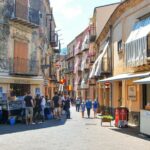
Ortigia is the heart of Syracuse, but it’s also where you’ll feel the city’s age. Streets narrow, turns come fast, and parking is not your friend. That’s exactly why a tuk tuk works so well here: it keeps you moving while still letting you stop at the spots that matter.
This tour is designed for a short, high-impact loop. You’re not just getting driven past sights; you’re dropped at scenic anchors across the island and the mainland (Neapolis is the big one). The private nature of the ride also helps. If you need a breather, want a little more time at the Duomo, or have mobility limits in the group, a private set-up makes adjustment easier.
I also like that the tour includes pickup inside Syracuse city and Ortigia. If you start closer to where you’re staying, you lose less time to transfers and waiting.
You can also read our reviews of more tours and experiences in Sicily.

Piazza Duomo to Fonte Aretusa: The Classic Start Points
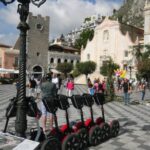
You begin at Piazza Emanuele Pancali, 17, in Syracuse, and then you head straight into one of the most photogenic zones in the whole area. Stop 1 is Piazza Duomo, where you can visit Syracuse Cathedral (admission is listed at €2 per person) and also see the Church of St Lucia alla Badìa. This is one of those places where architecture and atmosphere come together: the square gives you a strong orientation for the rest of Ortigia.
Why this start is smart: it sets your mental map early. From here you can understand the way Ortigia’s religious and civic life grew around the main public spaces.
Stop 2 is Fonte Aretusa. This one is short, but it’s a meaningful pause. You’re stopping to see the mythological fountain, which is one of those Syracuse details that many first-timers miss if they only focus on the big ruins and the waterfront.
Practical note: both of these early stops are quick (around 15 minutes for the Duomo area and about 10 minutes for Fonte Aretusa). If you want longer time inside the Cathedral, treat this as your best chance to ask for extra minutes right away, before the day fills up.
Maniace Castle, Archimede Square, and Apollo Views
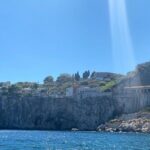
After the Duomo zone, the route shifts toward dramatic edges of the cityscape. Stop 3 is Castello Maniace. The entrance to the terrace is free, and you can choose to pay for the castle visit. Even if you skip paid areas, a terrace stop is worth it here, because you get a more open view of how Ortigia sits in the sea.
Stop 4 is Piazza Archimede, where you’ll stop near the Diana fountain. It’s an easy photo moment, but it also helps you connect the myth and iconography of Syracuse across different public squares.
Stop 5 is the Temple of Apollo (Tempio di Apollo), a 6th-century BC temple. This is the tour’s reality check moment: you’re not only seeing churches and baroque squares; you’re in a place with deep ancient roots. The stop is about 10 minutes, so treat it like a look-and-absorb moment. If you like tracing history in your head, this is where you’ll feel the timeline in one glance.
Tip I’d use: take 2 minutes just to face the temple and locate where you are in relation to the rest of the route. When you later stand in Neapolis, you’ll recognize the style of the ancient planning more easily.
Giudecca and Two Churches: A Side of Syracuse Most People Skip
Not every quick city tour slows down for neighborhood layers, and that’s why these next stops feel valuable. You’ll visit the Giudecca Jewish area through church stops rather than a long museum-style explanation.
Stop 6 is Chiesa di San Giovanni Battista, a short visit (about 10 minutes). Stop 7 is Chiesa Di San Filippo Apostolo, also around 10 minutes, in the Giudecca district. These aren’t huge time commitments, but they help you notice that Syracuse isn’t one era. It’s a stack of communities, faiths, and reused spaces.
The drawback is the typical one with short guided stops: you may want more context than what fits into 10 minutes. If you’re the type who reads placards and wants more detail, plan to save your extra questions for the moments when you’re with your driver, and do quick phone-based reading once you’re outside each church.
One more practical consideration from real-world experiences with this format: the driver may not join you into the sites. So if you want a fully guided walk-through, you’ll probably need to rely on signage, an audio guide, or additional explanation outside the walking time.
Mercato di Ortigia and the Preserves Moment
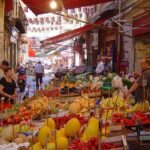
Stop 8 is the heart of the human scale: Mercato di Ortigia. This is your biggest time block at about 40 minutes. You’ll go inside the market area to see the fish stalls and other everyday activity, then you’ll move to a local family shop, F.LLI BURGIO, where they’ve been producing preserves for decades using traditional methods.
Why this stop is more than a food break: it gives you a sense of how locals live around the monuments. Even if you don’t buy anything, you’ll catch the rhythm of the place. And if you do buy, preserves are an easy Sicilian souvenir: small, long-lasting, and directly tied to local production.
You might also run into small tastings depending on your guide and route pacing. Some guides have built in sample stops like fresh mozzarella, mortadella, seafood, or cannoli around the market. Don’t count on it as a guarantee, but it’s a good sign that this tour often tries to connect you to local flavor instead of treating the market as a quick sightseeing checklist.
Timing note: a 40-minute market stop can feel short if you want to browse slowly. If you’re food-focused, arrive with a short plan: pick one or two stalls to study, and save rest browsing for your free time afterward.


Waterfront, Monuments, and Two Sacred Stops
The route continues with several quick, scenic interruptions that keep you from getting stuck in only one type of sightseeing.
There’s a small port stop called Sbarcedero Santa Lucia. It’s brief, but it breaks up the day with a maritime feel.
Then you stop at Monument to Syracuse Fallen in Africa, a panoramic point where you get another overview of the city layout. These “view first” stops matter because they help you understand what you’ve been circling since the Duomo.
Stop 10 is Santuario Madonna delle Lacrime, inaugurated by Pope John Paul II to honor a miracle from 1953. This is about 15 minutes. Stop 11 is Basilica Santa Lucia al Sepolcro, another 15-minute stop, in the Borgata district, where a Caravaggio painting is exhibited.
These two sacred stops are good value if you’re comfortable with brief, meaningful visits. If you’re not into church interiors, you can still get plenty from exteriors and the surrounding sense of place. But if art is your priority, try to keep your attention during the Caravaggio stop so you don’t rush through the one thing you came for.
Neapolis Archaeological Park: The Ticket You Should Budget
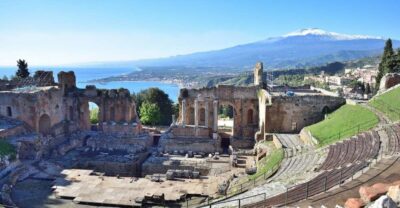
Stop 12 is Parco Archeologico della Neapolis. This is the one add-on cost: admission tickets per person are listed at €10 to €20, and they’re not included in the tour price. The time here is about 1 hour, which is a solid length for seeing the main targets without turning it into a full-day project.
You’ll cover:
- Greek Theater
- Earth of Dionysus
- Roman Amphitheater
(You’ll want to read whatever the signage spells out on-site for exact spellings, but the big three structures are the core.)
How to think about this part: it’s where the tour becomes more than a city stroll. Neapolis is the payoff for ancient Syracuse, and the hour you get here will feel different from the faster Ortigia stops. If you’re history-heavy, this is the section you should treat as your priority. If your group energy is low, still don’t skip Neapolis. The comparison of Greek and Roman structures in one place is exactly the kind of “wow per minute” that justifies doing the tour in the first place.
Price Per Group: What You’re Really Paying For
The listed price is $415.42 per group, up to 4 people, for about 4 hours. If you can fill all four seats, that works out to roughly $104 per person. If you’re traveling as two, the per-person cost rises, because it’s priced by group rather than per individual.
So what are you buying with that group price?
You’re buying:
- Private transportation in a vehicle made for tight streets
- Time-saving routing across multiple districts and sight types
- Pickup help if you’re staying in Syracuse city or Ortigia
- Stops placed at high-recognition anchors, including a market segment and Neapolis
This is the value sweet spot for people who want structure but don’t want to sit on a bus for a full day. It’s also a strong choice for families or mixed-age groups, because the stops can be paced to what your group can handle.
What to Expect From the Guide and the Tuk Tuk Experience
This is a tuk tuk tour offered in English, with a mobile ticket. In practice, your driver is also your on-the-ground narrator and route manager. From different guide styles, you can get a sense that the best outcomes happen when you share what your group wants to see.
You’ll see names like Marco and Francesco in past experiences, and Angelo has also been singled out for friendliness and patience. The consistent theme is simple: the guides help you get around fast and still make time for meaningful stops. Some guides have even adjusted pacing for mobility needs within the group.
One key detail to set expectations: you should plan to do most walking inside each stop area on your own, rather than expecting a guide to escort you through every church or monument. If you want deeper commentary, bring a phone audio option or be ready to read signage quickly at each site.
Practical Tips to Get the Most Out of Four Hours
Start smart. If you can, keep your day light on other commitments. A 4-hour tour feels like a sprint when you’re switching between districts, market areas, and Neapolis.
Bring:
- Comfortable shoes, since you’ll still walk between points
- Water, especially if you’re doing this in the warmer part of the day
- A phone camera and offline maps, because narrow streets can get confusing quickly
Plan for how you’ll handle the one paid area in Neapolis. Since the park ticket is not included and the listed range is €10 to €20, check current pricing on the day and have cash or card ready.
Finally, choose your priorities before you arrive. If you care most about ancient ruins, protect time for Neapolis. If you care most about Ortigia atmosphere and food, treat the market stop as the emotional anchor of the tour.
Should You Book the Ape-TUK Tour of Ortigia and Neapolis?
Book it if:
- You want a fast, structured way to see both Ortigia highlights and Neapolis in one outing
- You’re traveling with people who don’t want long walking stretches between distant areas
- You like practical stops: squares, fountains, churches, market time, and a real archaeological park add-on
Consider another option if:
- You expect a full walking guided tour inside every site
- Your group needs extended time inside multiple museums or large interiors, because several stops are designed to be short
- You’re not interested in mixing neighborhoods and markets into a history-focused route
If you do book, my advice is simple: aim to treat the 10–15 minute stops as quick impressions, not final exams. Save your deeper attention for the market and Neapolis, where time is either longer or the payoff is bigger.
FAQ
How long is the Ape-TUK tour?
The tour runs for about 4 hours.
What is the cost and group size?
It costs $415.42 per group, up to 4 people.
Is pickup available?
Pickup is offered. If you’re inside Syracuse city and Ortigia, you need to indicate the exact pickup point.
What language is the tour offered in?
The tour is offered in English.
Are tickets for Neapolis included?
No. The Archaeological Park of Neàpolis ticket per person is not included, and it’s listed at €10 to €20.
Where does the tour start and end?
It starts at Piazza Emanuele Pancali, 17, 96100 Siracusa SR, Italy, and ends back at the meeting point.
Can I cancel for free?
Yes. You can cancel up to 24 hours in advance for a full refund, based on local time.