REVIEW · SICILY
Etna South Trekking in summit area
Book on Viator →Operated by ETNAHIKER · Bookable on Viator
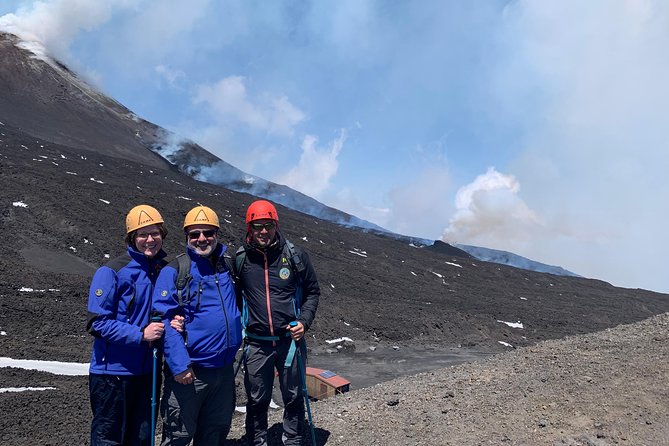
Etna changes while you walk. This 4.5-hour South-slope trek is built for the days when conditions may prevent going all the way up, yet you still get big summit-area scenery. I like that it keeps things practical: you’re not just looking—you’re moving through volcanic terrain with supplied boots, jacket, and helmet. One consideration: since it’s a real hike on an active volcano, you should be ready for uneven ground and a moderate fitness level.
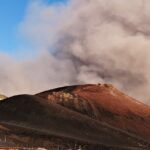
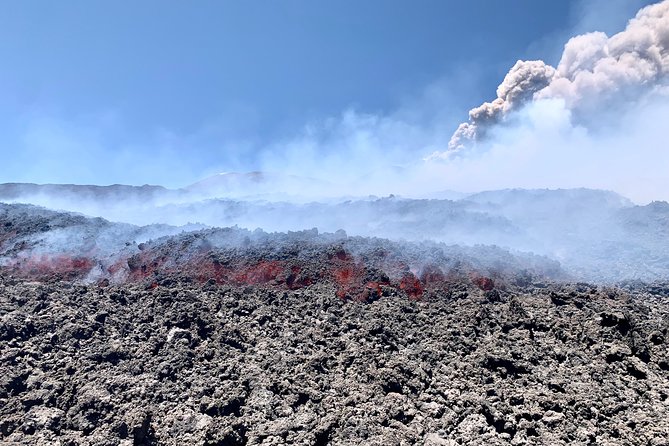
What I found most compelling is how the route is shaped by Etna’s constant evolution. You’ll see summit craters from the right angle, the famous Valle del Bove, and volcanic features tied to recent activity, including lava dated July 2019. The only possible drawback I’d flag is timing and weather—this experience requires good conditions, and if it’s canceled for poor weather you’ll need to switch plans or dates.
In This Review
- Key things to know before you go
- Etna South Trek: why this route feels different
- What you’ll see: craters, Valle del Bove, and July 2019 lava
- The gear and why it’s worth paying for
- Timing and pace: 4 hours 30 minutes, moderate fitness
- Starting at La Terrazza Dell’Etna (Etna Sud)
- The main stop: Mount Etna admission and a 30-minute view window
- On the ground: how the trek actually “teaches” the volcano
- Small group energy: guides and smooth communication
- Price and value: what $57.84 actually buys
- Who this trek is best for (and who should think twice)
- What if the volcano changes the plan?
- Should you book Etna South Trekking in the summit area?
- FAQ
- How long is the Etna South trekking experience?
- Where does the tour start?
- What time does the tour begin?
- How big is the group?
- What’s included in the price?
- What is not included?
- Is the ticket mobile?
- What happens if the weather is bad?
Key things to know before you go
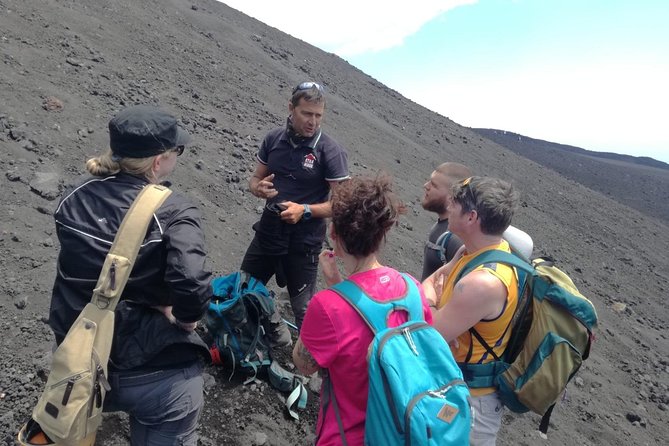
- Southern-slope focus when summit access isn’t possible: you’ll still get the dramatic views without needing the absolute top.
- Gear is included: trekking boots, a softshell jacket, and a helmet are part of the price.
- Small group size (max 15): it stays manageable and easier to coordinate on rocky terrain.
- You’ll pause for the good stuff: the Mount Etna stop includes an admission ticket and about 30 minutes to soak it in.
- You’ll learn what you’re seeing: the route highlights summit craters, Valle del Bove, and features like a lava channel/cave.
Etna South Trek: why this route feels different
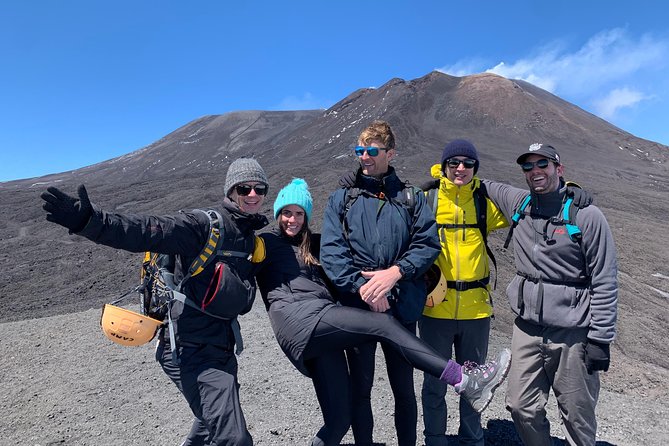
Etna is the highest and most active volcano in Europe, and that matters here. On the South slope, the ground and views reflect the volcano’s ongoing reshaping. The whole idea of the trek is to show you “what’s new and what’s changed” even if you can’t reach the strict summit zone due to activity.
For me, the value is in the balance. You still get the wow-factor views—summit craters and Valle del Bove—but you also get a walking experience that makes those visuals make more sense. Standing still at a viewpoint is nice; walking close to volcanic features is what turns it into a memory you can actually recall with detail.
And yes, the name includes summit area, but the operation is flexible. When conditions don’t allow reaching the summit zone, this is the version that keeps the experience moving and the views coming.
You can also read our reviews of more hiking tours in Sicily
What you’ll see: craters, Valle del Bove, and July 2019 lava
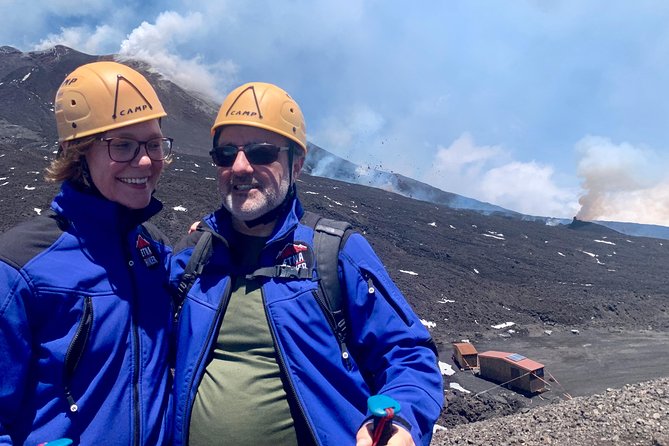
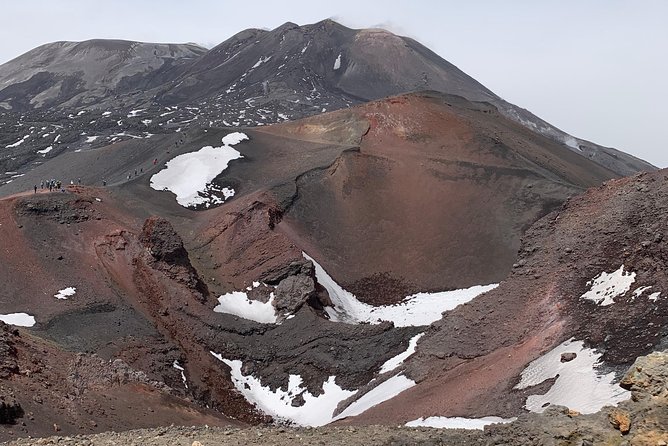
This trek is structured around specific volcanic features, not vague sightseeing.
You’ll get views of:
- Summit craters (from the southern approach)
- Valle del Bove, a large volcanic depression that helps explain how Etna’s eruptions have shaped the mountain over time
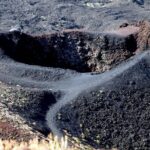
- A lava channel / lava flow cave area, where you can connect the idea of flow and cooling to something tangible
- Recent lavas dated July 2019, which adds a time marker you can remember instead of just seeing “rocks”
What I like about this kind of focus is how it helps your brain organize the scenery fast. You’re not just taking photos of a big mountain. You’re matching what you see to the volcanic story—craters up top, the valley slicing through the volcano’s structure, and the channels/caves where lava behavior becomes visible.
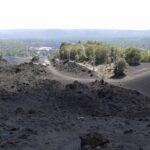
Also, the southern slope is often about contrast: darker volcanic surfaces, steep angles, and sharp lines between older ground and newer flow areas. That contrast makes the hike feel purposeful, even when the day is windy or hazy.
The gear and why it’s worth paying for
At $57.84 per person, the big surprise is what’s included. You get:
- Trekking boots
- A softshell jacket
- A helmet
That’s not just convenience. Etna terrain can be dusty, uneven, and exposed. Having proper footwear and a helmet turns the experience from “tourist hike” into something closer to what you’d do with an outfitter.
If you’re traveling light and don’t want to pack hiking boots and outerwear, this inclusion is a real win. If you already own gear, you can still appreciate that the tour standardizes what you’ll wear for safer, smoother movement.
Practical note: the softshell jacket can’t replace every weather situation, but it’s a smart baseline for a morning out on an active volcano.
Timing and pace: 4 hours 30 minutes, moderate fitness
Plan on about 4 hours 30 minutes total. It’s long enough that you’ll feel like you did something—rather than a short walk to a single view—but not so long that it turns into a full-day endurance challenge.
The tour asks for moderate physical fitness. That’s the right label. You should expect uneven footing and some walking on volcanic surfaces. The good part is that the operation is built for enjoyment and observation, not speed.
Also, because this is a small group (maximum of 15), the pace is easier to manage. It’s not a herd. That matters on rocky ground—slower moments stay calm instead of frantic.
Starting at La Terrazza Dell’Etna (Etna Sud)
The meeting point is La Terrazza Dell’Etna, Etna Sud, at Piazza Vittorio Emanuele, 95030 Nicolosi CT, Italy. It starts at 8:30 am.
I like early departures on Etna for two reasons:
1) You’re more likely to get clear visibility while the day is still waking up.
2) The mountain can get crowded later, and you’ll have a quieter feel to the trek when it’s fresh.
The location is also listed as near public transportation. So even if you’re not driving, you can still make this work without building a complicated plan around private transport.
The main stop: Mount Etna admission and a 30-minute view window
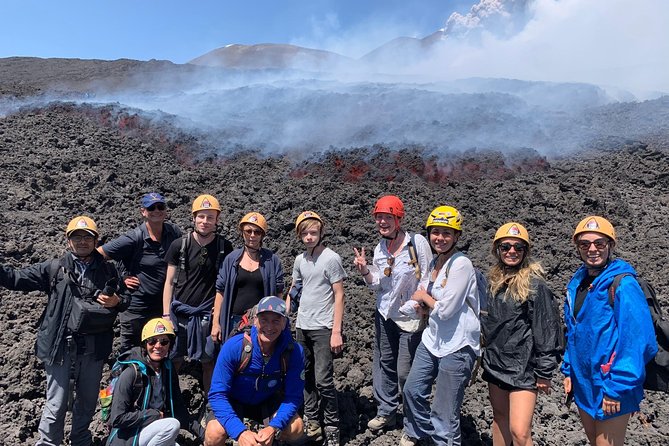
One clearly defined part of the experience is the stop at Mount Etna, where the admission ticket is included and you’ll spend about 30 minutes.
This matters because it signals you’re not only walking—you’re also getting time allocated for the views and observation that make the whole trek worth it. Thirty minutes on Etna is enough time to catch the best angles, take photos without rushing, and ask questions if your guide is fielding them.
If you care about “seeing the right things” rather than just “walking somewhere,” that built-in pause is one of the underrated quality signals of the experience design.
On the ground: how the trek actually “teaches” the volcano
This is the part you’ll feel more than you’ll read. As you move through the route, you’ll keep returning to the same set of volcanic landmarks: the craters, the Valle del Bove, and the lava channel or lava flow cave area.
That repetition does something useful: it turns a huge, confusing subject (a live volcano) into something your eyes can track. You’ll start to see how different sections of Etna relate to one another—how a valley cut can look like a natural “map line,” and how lava pathways create scars that linger long after a flow cools.
I also think it helps that the route connects to a specific recent date (July 2019). You may not remember every geological detail, but you’ll remember the idea that the mountain is not frozen in time. It’s active. You’re looking at the present tense.
Small group energy: guides and smooth communication
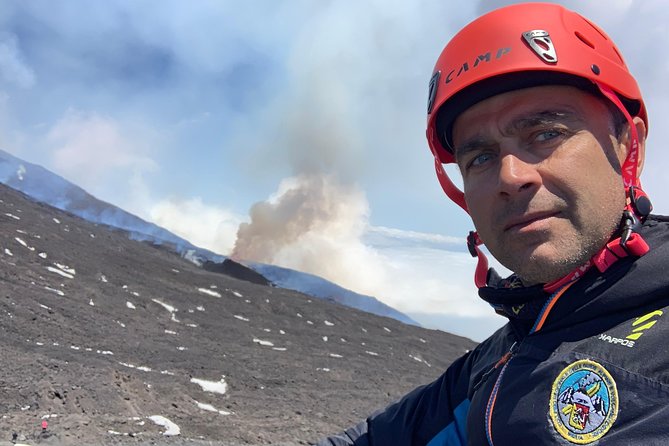
The experience is capped at 15 travelers, and that shows in how groups tend to move. It’s easier to keep track of everyone, and you’re more likely to get personal attention if you have a question about what you’re seeing.
From past participants, the guide experience comes up positively, including names like Luca and Max, and in other variants Giuseppe. Even without leaning on any single personality, the pattern is clear: people value guides who can explain what’s happening on Etna and keep the day organized without stress.
Communication also seems to be straightforward, with WhatsApp mentioned as a simple, uncomplicated way to coordinate.
Price and value: what $57.84 actually buys
Let’s talk value in plain terms. For $57.84 per person, you’re getting:
- A structured 4.5-hour volcanic trek
- Gear included (boots, softshell jacket, helmet)
- Admission included at the Mount Etna stop
- A small-group format (up to 15)
You’re not paying separately for the biggest headaches: finding appropriate footwear, tracking down proper protective gear, and figuring out entry for a key stop.
The cost does not include private transportation, so you’ll want to plan how you’re getting to Nicolosi and the meeting point. But if you’re already in the area or can use public transit, the price looks more like a “do it for me” setup than a bare-bones hike.
Who this trek is best for (and who should think twice)
This is a great match if:
- you want volcano views without the stress of summit-access swings
- you don’t want to travel with bulky trekking gear
- you’re comfortable with a moderate hike and uneven terrain
- you like the idea of learning while walking, not just staring
You might think twice if:
- you’re hoping for a totally gentle, flat stroll
- you’re traveling with mobility challenges (the tour only says moderate fitness, not wheelchair-friendly)
- you hate plans that depend on weather, since the experience requires good conditions
What if the volcano changes the plan?
The South slope version exists for exactly this reason. Sometimes Etna’s activity won’t allow reaching the summit area, and this excursion is designed to still deliver an authentic experience on the southern side.
That flexibility is a big deal. Instead of losing your day, you’re still in the game—still seeing craters, the Valle del Bove, and lava features tied to recent activity.
Just keep your expectations aligned: you’re not guaranteed summit access, but you are getting the volcano-focused version that stays meaningful even when summit conditions are off-limits.
Should you book Etna South Trekking in the summit area?
Yes, I’d book it if you want a high-impact Etna experience that’s built for real walking and real volcanic scenery, without forcing you into summit-only access.
I’d especially lean toward booking if:
- you value gear included (boots, jacket, helmet)
- you want the viewpoints that connect to the volcano’s structure (craters + Valle del Bove)
- you’re okay with a moderate hike and morning timing at 8:30 am
- you’re traveling with minimal fuss and prefer a small group
But I’d pause if you’re chasing a guaranteed summit day no matter what. This tour is about the South slope and the summit-area feel, with flexibility when conditions won’t cooperate.
Either way, if good weather is in your forecast and you’re ready for an active-volcano walk, this is one of the more sensible ways to get Etna’s drama into your itinerary.
FAQ
How long is the Etna South trekking experience?
It runs for about 4 hours 30 minutes.
Where does the tour start?
It starts at La Terrazza Dell’EtnaEtna Sud, Piazza Vittorio Emanuele, 95030 Nicolosi CT, Italy.
What time does the tour begin?
The start time is 8:30 am.
How big is the group?
The experience has a maximum of 15 travelers.
What’s included in the price?
Trekking boots, a softshell jacket, and a helmet are included, and the admission ticket for Mount Etna is included as well.
What is not included?
Private transportation is not included.
Is the ticket mobile?
Yes, it uses a mobile ticket.
What happens if the weather is bad?
The tour requires good weather. If it’s canceled due to poor weather, you’ll be offered a different date or a full refund.