REVIEW · SICILY
Etna – Trekking to the summit craters (only guide service) experienced hikers
Book on Viator →Operated by Guide Vulcanologiche Etna Nord · Bookable on Viator
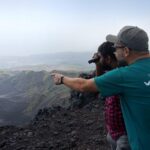
Summit craters, minus the tourist rush. This Etna Nord hike sends you onto Sicily’s active volcano from the quieter Piano Provenzana area, then up toward the main summit craters with a licensed volcanology guide. I love the north-slope feel: more authentic terrain, fewer people, and plenty of stops to understand what you’re actually seeing.
I also love the way the day is built for real hikers, not just sightseeing: you get fitted with the essentials (including trekking poles, boots, helmet, and layers) and you’re guided step-by-step from the 4×4 ride into the crater zone. The possible drawback is simple but serious: the hike is steep and long, with altitude (about 2,960 to 3,323 m), and it can feel harder on the knees during the long descent.
Timing matters too. You’ll typically meet at 7:45 a.m. (with an early start), which is ideal for better air and calmer conditions before the day fills in.
In This Review
- Key things that make this Etna summit-crater hike work
- Piano Provenzana: the Etna start that feels less scripted
- The 4×4 panoramic drive up Etna’s north flank
- The summit hike: how the guide targets the most active safe craters
- Expect the long descent: plan for knees, sand, and wind
- What’s included in your ticket, and what to pack anyway
- Price and value: where the €139.13 really lands
- When this Etna Nord hike is the right fit (and when it isn’t)
- Day-by-day timing: mornings, afternoons, and what that changes
- Should you book the Etna summit-crater trek on Etna Nord?
- FAQ
- What meeting point should I use?
- What time does the tour start?
- How long is the hike?
- How high do you hike?
- Are meals included?
- What’s included in the price?
- What should I bring if it’s cold or windy?
- Is the tour suitable for children?
- Are there restrictions for pregnant travelers?
- What if the tour is affected by volcanic activity or weather?
Key things that make this Etna summit-crater hike work
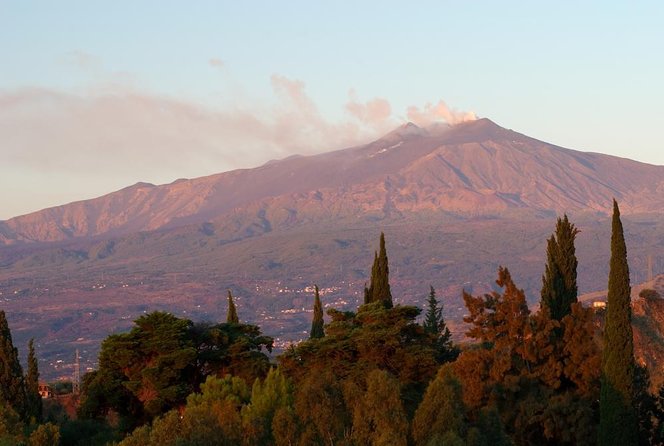
- Small groups on the north side mean more time with your guide and fewer crowds on the steep parts
- A 4×4 panoramic climb first gets you high quickly, so your hike focuses on the summit craters
- Route choice changes daily toward the most active but safe crater, based on gas, heat, and fractures
- Real summit objective: the hike targets the four main craters (North-East, Voragine, Bocca Nuova, South-East)
- Equipment is part of the value: boots, helmet, trekking poles, warm jacket, extra socks, and a backpack
Piano Provenzana: the Etna start that feels less scripted
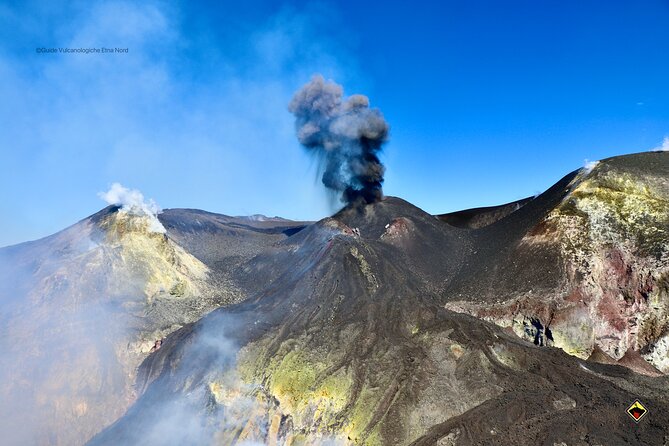
Most Etna days focus on the south. This one takes you to the north flank at Piano Provenzana, where the vibe is calmer and more connected to the volcanic terrain around you. The meeting area sits inside a 2002 lava-flow area, and the original facilities were destroyed in that eruption (October 27, 2002).
There’s also a practical bonus: Piano Provenzana is easy to reach by car because the access road is drivable. If you’re visiting in winter, you should plan for snow chains or winter tires, since conditions change fast at higher elevations.
When you arrive, you’re not rushed. You can use restrooms, grab breakfast (there are cafés at the start), and take a moment before the guides handle gear and the briefing. That “reset” time helps, because the next phase is a proper climb on uneven volcanic ground.
You can also read our reviews of more guided tours in Sicily
The 4×4 panoramic drive up Etna’s north flank
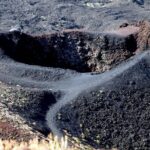
From the Piano Provenzana area, you board authorized 4×4 vehicles with the guides. The drive is not just transport. It’s part of the experience, because you cross lava fields and lateral craters while climbing from about 1,800 m to 2,960 m (the point where your trek begins).
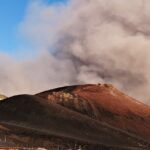
On the drive track, you can expect wide views over northern Sicily and, on rare clarity days, far-off ranges and seas. You may see the Aeolian Islands, Strait of Messina, Calabria, both the Ionian and Tyrrhenian Seas, the Gulf of Catania, and places like Syracuse and Augusta. Even if visibility isn’t perfect, the route itself teaches you how Etna carves terrain—fractures, old flows, and recent volcanic features show up constantly.
This is also where the guide’s expertise matters. A good team keeps the group together, watches the mountain conditions, and sets expectations for what the walking will feel like once you leave the 4×4.
The summit hike: how the guide targets the most active safe craters
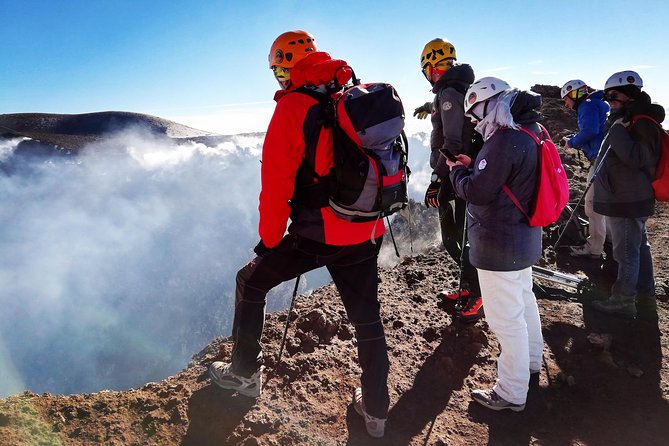
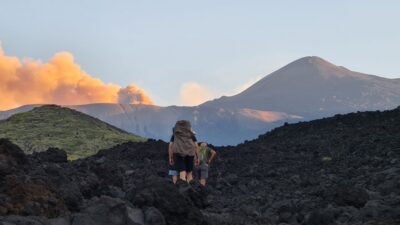
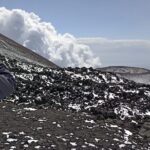
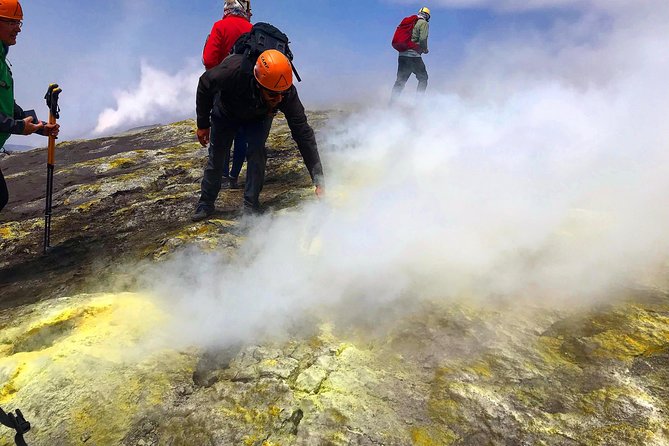
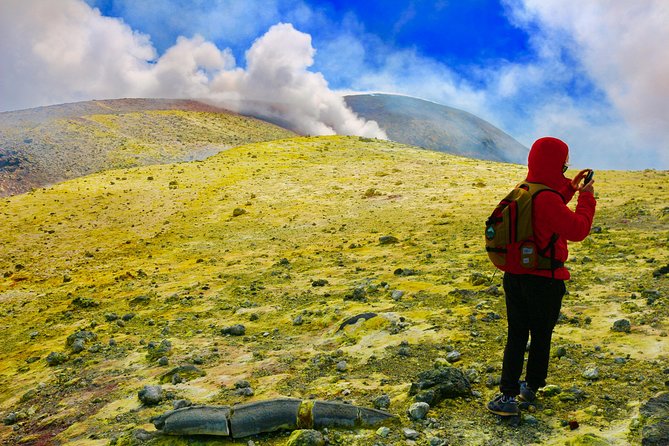
Your main hike starts at roughly 2,960 m and climbs about 550 m over around 5 km to the summit crater area. From there, the goal is to get you to the edge zone near Etna’s four main craters: North-East, Voragine, Bocca Nuova, and South-East.
What makes this better than a fixed “walk to one dot on the map” is the daily route choice. Because Etna’s activity shifts, guides decide the safest path toward the most active craters that are still secure. They adjust when gas, heat, or fractures make one route safer than another.
You’ll feel altitude. The walk operates in the 2,960–3,323 m range, so if you’re sensitive to breathlessness, rushing, or fatigue, take it slow from the first steep step. I’d rather you arrive calm than heroic here. One practical note: the terrain is soft scoria and sandy gullies in places, and you may walk along crater edges, which can trigger dizziness in susceptible people.
As for guide quality, the names that come up often include Nikos, Daniele, Paolo, and Raphael (and others). The consistent theme is good pacing and clear explanations about what’s happening beneath your boots, not just where you’re walking.
Expect the long descent: plan for knees, sand, and wind
After the summit-area time, you’re not done. The return is a long descent on foot from about 3,300 m down toward around 1,800 m. Think roughly 7 km with about 1,500 m of negative gain.
This part can feel harder than the climb. Even if your fitness is strong, downhill walking on loose volcanic ground stresses knees and hips. I’d treat this as your “second workout” and plan your pace accordingly. If you tend to brace or overstride downhill, this is the time to shorten your steps and keep stable footing.
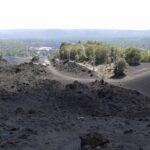
The path follows soft volcanic material through areas like recent lava sections and the Piano delle Concalze, then it crosses about 2.5 km of ski-slope ground that tends to feel rougher and stony. You’ll likely deal with grit getting into shoes. A tip that shows up repeatedly in real-world feedback: wear long socks and long pants that cover your boot ankles, because small lava stones can slip into footwear during the descent.
What’s included in your ticket, and what to pack anyway
The base price is for a complete hike package, not just a meeting with a guide. Included items typically cover:
- Licensed volcano guide
- Trekking poles and trekking shoes
- Helmets, warm jacket, extra socks, and an extra backpack
- Insurance for accidents
- Entry/admission to Mount Etna
There are still clear items not included. You should plan on bringing:
- A hat and gloves for autumn, winter, and spring (the tour notes these are not provided)
- Sunscreen and layers you can adapt quickly for wind and cold
- Contact lenses are not recommended due to volcanic gases and ash (and the irritation risk is real)
One safety detail matters for your insurance coverage: you need adequate shoes. The tour specifically states that without adequate footwear you are not covered by insurance, so don’t gamble with flimsy trainers if the ground gets rough.
You can also read our reviews of more hiking tours in Sicily
Price and value: where the €139.13 really lands
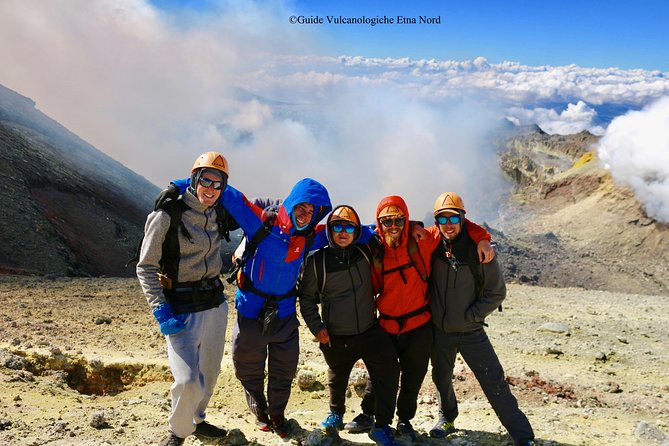
The listed price is $139.13 per person and the duration is about 5 hours 30 minutes (approx.), with a hiking-focused day that can run closer to about 6 hours on the mountain depending on route choices and conditions. On paper, this may look like a “standard day trip.” In practice, you’re paying for three expensive ingredients: a licensed guide, high-altitude access support, and crater-area entry.
The best value signals are:
- Equipment is included (boots, helmet, poles, warm jacket, socks), which saves money and hassle
- The guide manages route safety daily, so you get more than a generic “hike leader”
- The small group format (max 12) improves the experience when conditions get technical
That said, you should budget for extras that can show up depending on your route and how you return. Not included costs can include:
- Parking ticket (about €5 weekdays, €8 Sundays/public holidays)
- Off-road vehicle supplement: one-way from about 1,800 m up to 2,825 m costs €50 per person on the spot
- Return by bus from around 2,850 m to 1,800 m: the stated supplement is €70 instead of €50
Also, routes can change for volcanic activity and weather. One review mentions added cable car costs on a shifted plan, but since that depends on conditions, don’t assume it’s always necessary. Treat it as a “maybe” rather than a sure thing.
When this Etna Nord hike is the right fit (and when it isn’t)
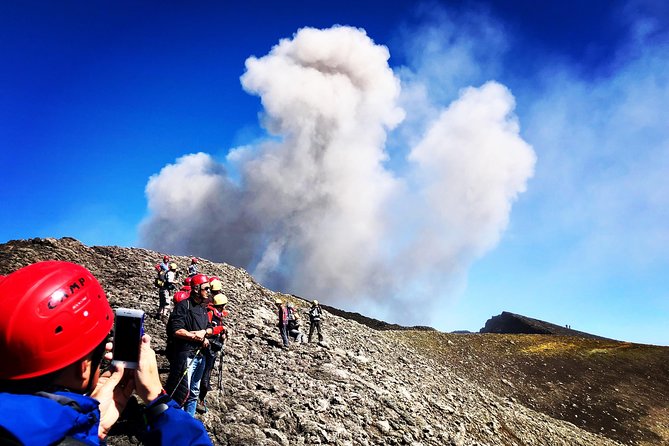
This excursion is for people with strong physical fitness. The tour notes it isn’t suitable for people with certain health conditions, including breathing issues or hypertension, and it’s not for kids under 12. Pregnant travelers after the third month are not allowed.
The hike requires good preparation because it’s high altitude and the terrain is volcanic with unstable rocks. If you’ve got steady knee strength, solid hiking endurance, and you can handle cold wind, you’re in the right zone. If you’re the type who struggles with steep descents, this is still doable but you’ll want to take the downhill slowly and focus on footing.
Day-by-day timing: mornings, afternoons, and what that changes
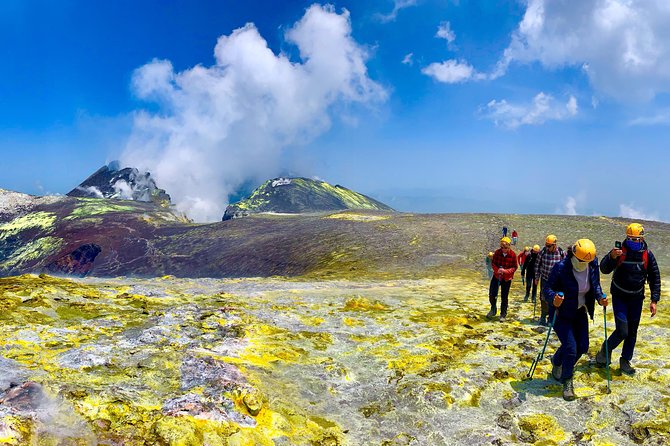
Your typical start is early: you meet around 7:45 a.m. at the CHIOSCO BAR MARENEVE DI FERRAROEtna nord-Piano Provenzana area (Via Provenzana, Linguaglossa). Departure is usually between 8:00 and 8:15 a.m.
There’s also an afternoon option that runs May to October, starting around 1:00 p.m. If you hate early mornings, the afternoon start may feel kinder. If you want the calmest conditions and best odds for visibility, mornings usually have the edge on Etna.
Should you book the Etna summit-crater trek on Etna Nord?
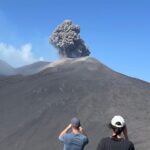
Book it if you want a real volcano hike: the kind where you walk toward active crater zones, get explanation time from a guide, and spend the day on terrain that makes Etna feel alive. The repeated “must-do” factor is the combination of small group size, strong guide communication, and the fact you reach close enough to crater activity to feel the scale.
I’d skip it (or choose a gentler alternative) if your knees aren’t great on steep descents, if altitude affects you strongly, or if you’re dealing with health limitations like breathing issues or hypertension. Also, because conditions can change and the guides may adjust or stop for safety, go in expecting a flexible plan, not a guaranteed “stand on the exact highest point every single day.”
If you do book: wear proper hiking boots, bring long socks and pants for the way down, and dress warm for wind. Etna will reward you for showing up prepared.
FAQ
What meeting point should I use?
You meet at CHIOSCO BAR MARENEVE DI FERRAROEtna nord-Piano Provenzana, Via Provenzana, 95015 Linguaglossa CT, Italy.
What time does the tour start?
The meet time is 7:45 a.m. The group typically departs between 8:00 and 8:15 a.m. An afternoon start at 1:00 p.m. can run May to October.
How long is the hike?
It’s listed at about 5 hours 30 minutes (approx.), with a longer day possible on the mountain depending on route and conditions.
How high do you hike?
The walking is in the 2,960–3,323 m altitude range, targeting the summit crater area and the four main craters (North-East, Voragine, Bocca Nuova, South-East).
Are meals included?
You can stop at the café at Piano Provenzana before departure, but the tour does not state that a meal is included. Bring or plan for your own food needs accordingly.
What’s included in the price?
You get a licensed volcano guide, trekking poles, trekking shoes, helmets, warm jacket, extra socks, extra backpack, insurance for accidents, and entry/admission to Mount Etna.
What should I bring if it’s cold or windy?
Bring a hat and gloves for autumn, winter, and spring since they’re not included. Also plan for layers because wind and cold at altitude are part of the day.
Is the tour suitable for children?
No. It is not suitable for children under 12 years old.
Are there restrictions for pregnant travelers?
Pregnant women who have passed the third month are not allowed to take part.
What if the tour is affected by volcanic activity or weather?
The excursion can be interrupted, modified, or canceled for safety due to environmental, climatic, or volcanic conditions. If canceled due to poor weather, you’ll be offered another date or a full refund. There is free cancellation up to 24 hours in advance for a full refund.