REVIEW · CATANIA
From Catania: Syracuse, Ortygia, and Noto Tour
Book on GetYourGuide →Operated by Tourist Dream · Bookable on GetYourGuide
Three stops, three eras of Sicily. You’ll move from the Neapolis Greek and Roman ruins to the myth-soaked streets of Ortygia, then finish in UNESCO-town Noto with its famous Sicilian Baroque façades. The big potential snag is that this tour can feel more like a transfer with an audio guide than a fully guided experience, and timing at Neapolis can be tight.
I like that the whole thing is set up as one long, comfortable loop: an air-conditioned van from Catania, a clear sequence of sights, and an audio guide available in many languages. You meet at Duomo square in central Catania, then the day flows from Syracuse to Ortygia and onward to Noto, with time to wander instead of only standing in lines.
In This Review
- Key things to know before you go
- From Catania’s Duomo Square to Syracuse: the ride that sets the tone
- Neapolis Archaeological Park: Greek theater, Roman amphitheater, and stone quarries
- Ortygia’s fortified island: myths at the Fountain of Arethusa and Baroque edges
- Noto: how Sicilian Baroque turns into a full-town outdoor show
- Audio guide versus a live guide: what you should expect in the real world
- Timing, tickets, and your best game plan for a 9-hour loop
- Comfort, food, and what to bring for Syracuse heat and stone streets
- Value check: when this tour is a smart buy and when to skip it
- Should you book this tour or not?
- FAQ
- Where does the tour meet in Catania?
- How long is the tour?
- What stops are included?
- Is an audio guide included, and what languages are available?
- Do I need to buy tickets for Neapolis Archaeological Park?
- Is there free time for wandering in Ortygia and Noto?
- What should I bring with me?
- What is not allowed during the tour?
- Is the tour wheelchair accessible?
- Is cancellation possible, and up to when?
Key things to know before you go
- Duomo square pickup in Catania keeps your start simple and central.
- Neapolis tickets are on you, not included in the tour kit, so plan a little extra time.
- Audio guide in multiple languages (English, French, German, Spanish, Russian, Italian) helps you travel at your own pace.
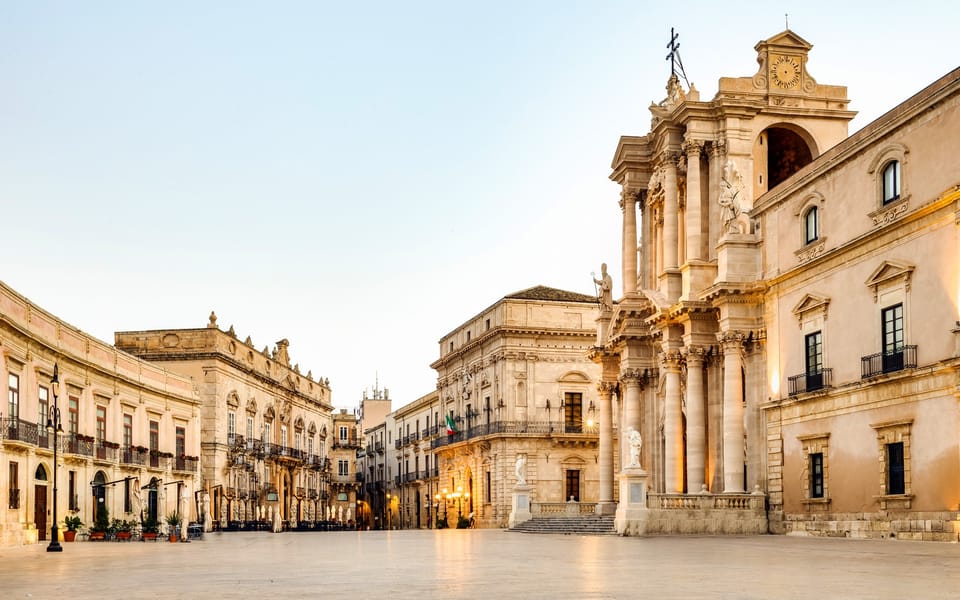
- Ortygia is best on foot, with wandering time for the Fountain of Arethusa, Piazza Duomo, and fortress walls.
- Noto is the Baroque highlight, with free time for major palaces like Palazzo Astuto and Palazzo Trigona Cannicarao.
- Expect a long day: Syracuse, Ortygia, and Noto in 9 hours means good shoes and realistic expectations.
From Catania’s Duomo Square to Syracuse: the ride that sets the tone
This tour starts in the middle of things. You’ll meet your driver in Duomo square in Catania, then you’re off in an air-conditioned van toward Syracuse. That comfort matters on a Sicilian day, because once you get out, you’ll do plenty of walking in sun, stone, and uneven streets.
One useful mindset here: this is a “three stop sampler” route. You’re not meant to slow down and study each site for hours; you’re meant to see the big highlights and move on. If you’re the type who loves planning tiny routes in advance, you’ll do fine. If you prefer slow and detailed, you might feel rushed—especially around the archaeology park.
Also, keep an eye on how you’ll get your context. The tour includes an audio guide, while your driver’s role is mainly to get you from place to place. That can be great for self-guided pacing, but it also means you should not expect the kind of spoken, live narration you get on a true small-group history tour.
You can also read our reviews of more tours and experiences in Catania.


Neapolis Archaeological Park: Greek theater, Roman amphitheater, and stone quarries
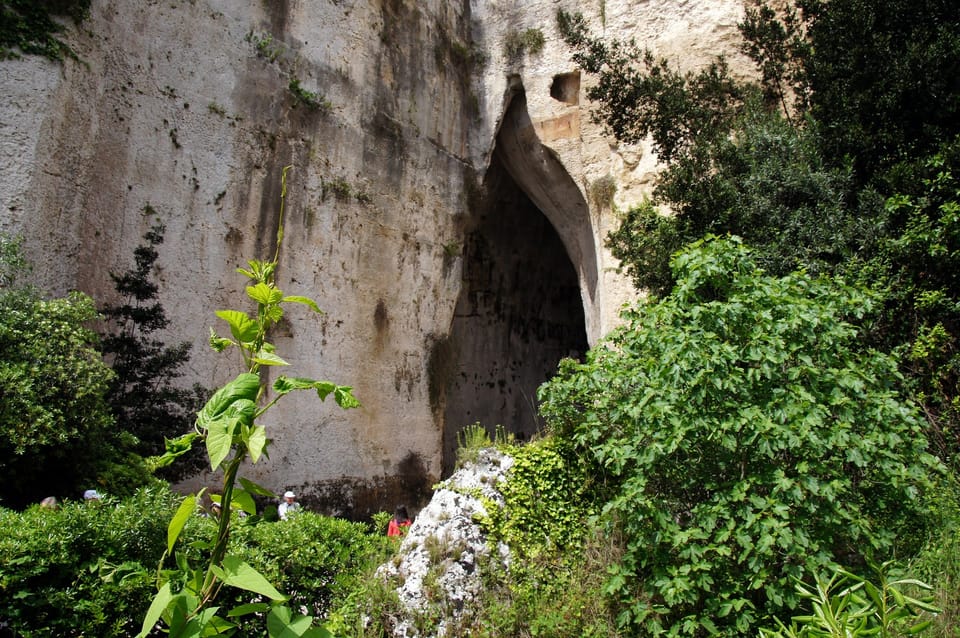
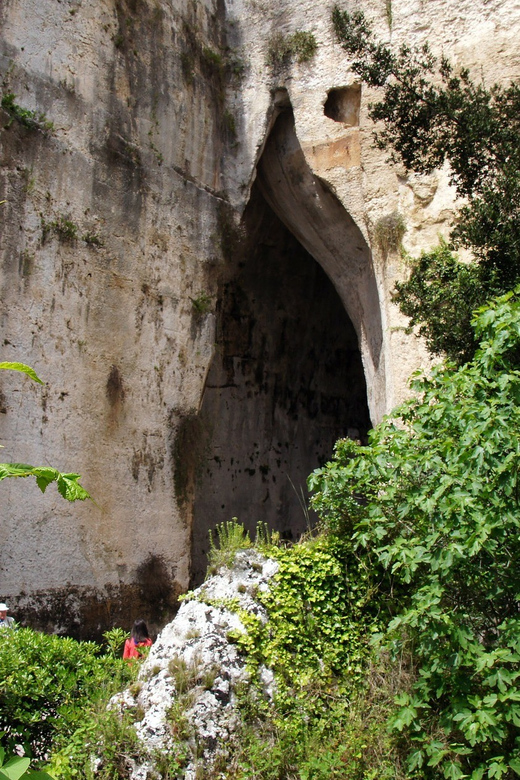
The day’s first major stop is Neapolis Archaeological Park in Syracuse. This is where you step into the layers: Greek and Roman architecture built on the same dramatic ground. The highlight stops are usually the magnificent Greek theater, the Roman Amphitheater, and the stone quarries.
Here’s why this place feels so powerful. Even if you don’t know every Greek term, the scale hits you fast. The theater seating and open sky give you a sense of how performances and public life were staged here. And then the Romans come in with their own way of organizing spectacle, which you can literally see in the layout and style.
Time is the make-or-break factor. The park can’t be appreciated at a sprint, but the schedule fits it into a single block of time. The result is that you should enter thinking about priorities: what you want most, and what you’re willing to skip. If the visit time is short, focus on the theater area and the key viewpoints rather than trying to cover every nook.
One more practical note: you’ll need to purchase tickets to the park. So bring a payment method (a credit card is listed) and expect that ticketing and entry can affect how much time you actually get inside.
Ortygia’s fortified island: myths at the Fountain of Arethusa and Baroque edges
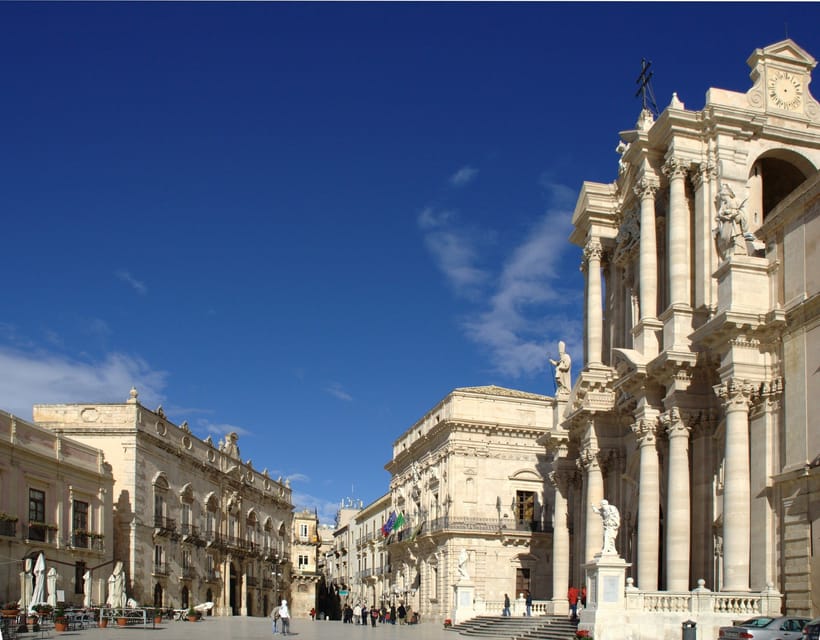
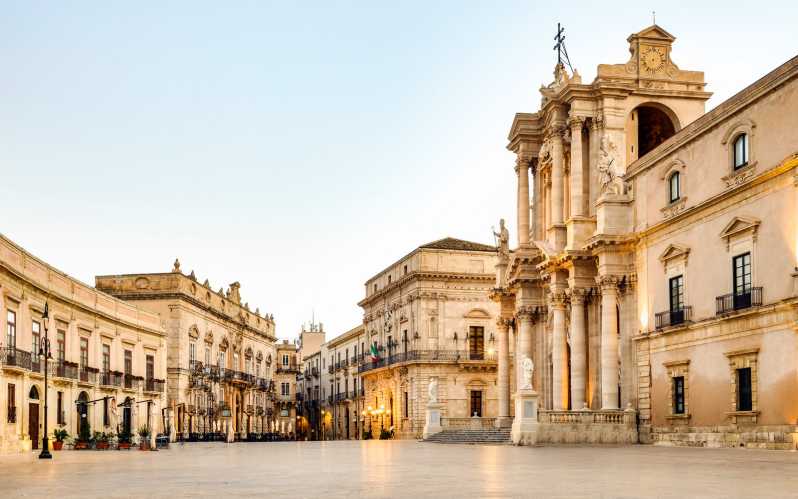
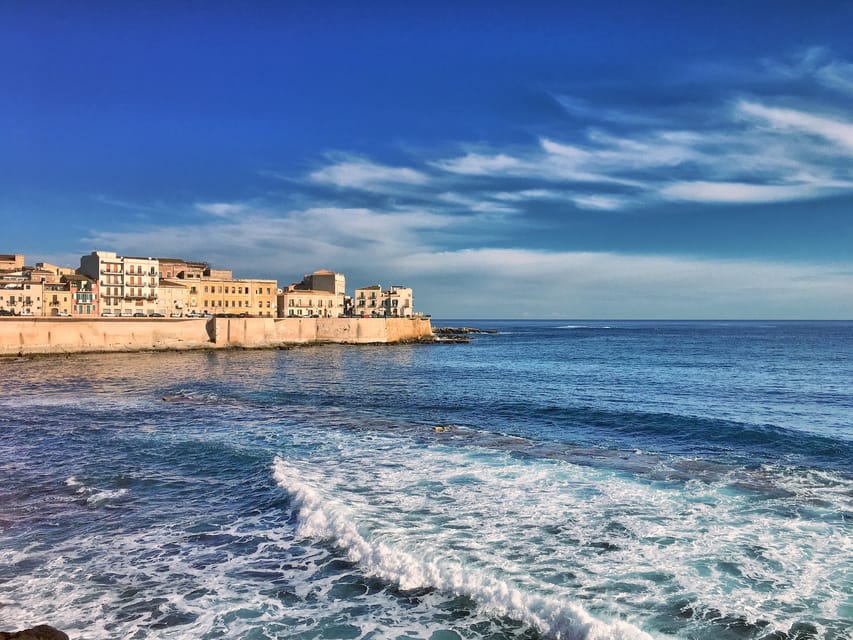
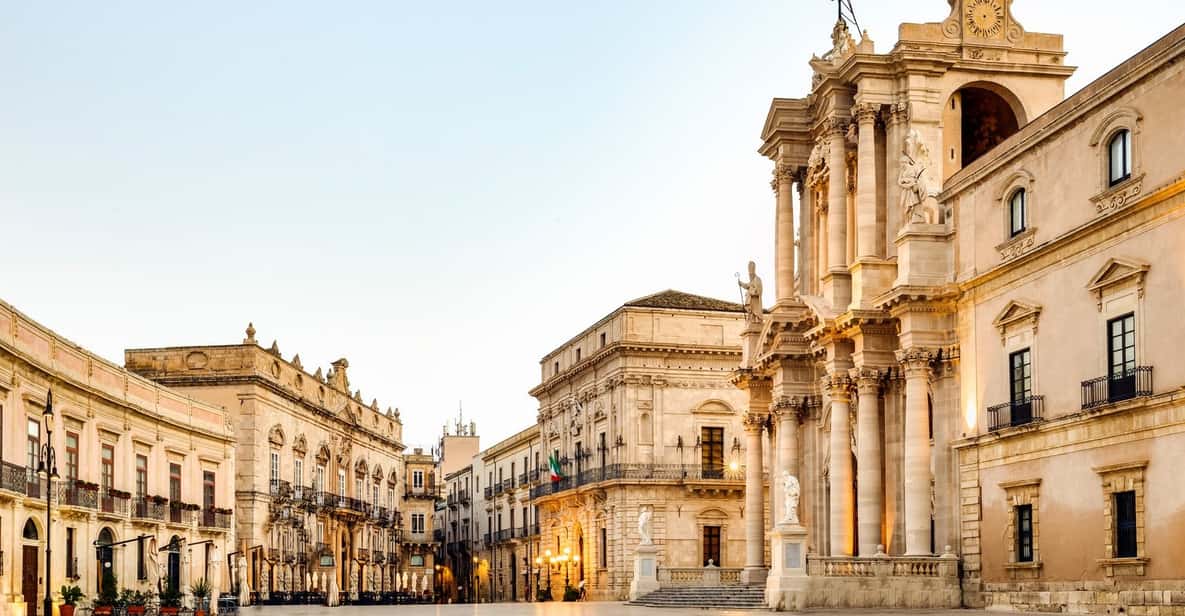
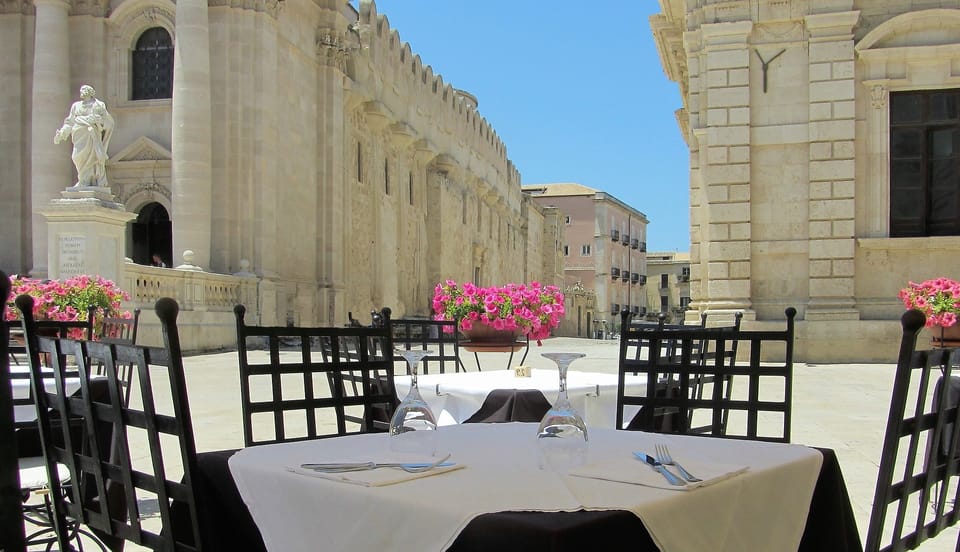
After Syracuse, you head to Ortygia, the ancient, fortified island that wraps Syracuse in history. This is where the vibe changes from archaeology to old-town wander. You’re spending time roaming the streets, and the tour naturally leans into myths and landmarks rather than strict site-to-site checking.
Your itinerary includes classic Ortygia anchors:
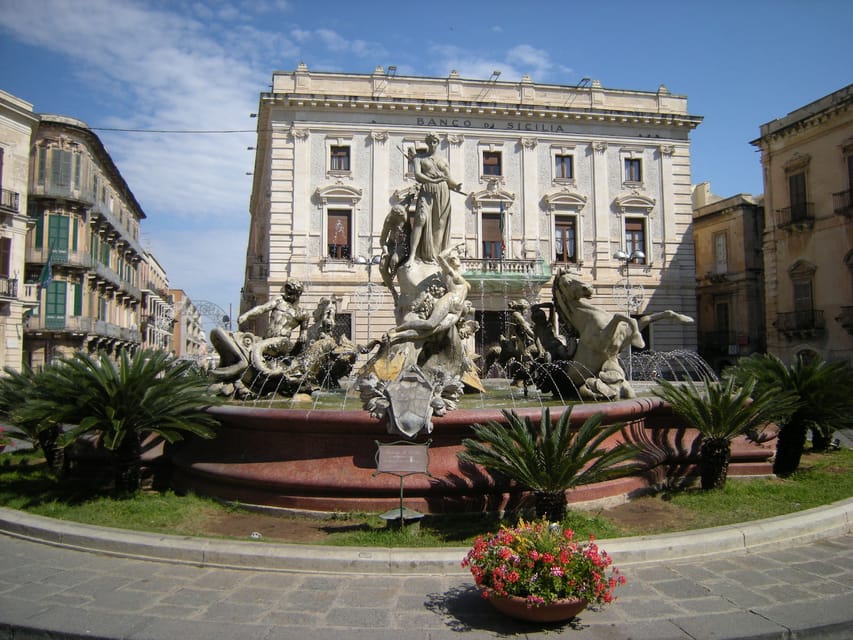
- Fountain of Arethusa (a mythical focal point)
- Piazza Duomo
- fortress walls
- Baroque churches and palaces you’ll spot as you walk
This stop works best when you’re willing to meander. Ortygia rewards foot traffic: you turn a corner and suddenly you’re in a new square or under a new façade. Even if the streets are crowded at times, it’s still one of the most satisfying places to “get your bearings” fast and let the town guide you.
If you love photos, start by catching Piazza Duomo and the surrounding church façades early in your walking time. Then loop back toward the water area for the Fountain of Arethusa. The goal is simple: avoid spending your best light chasing every side street with no plan.
Also, remember that Ortygia involves walking on uneven surfaces. Wear shoes that don’t punish your feet, because you’re doing multiple walking bursts across the day.
Noto: how Sicilian Baroque turns into a full-town outdoor show
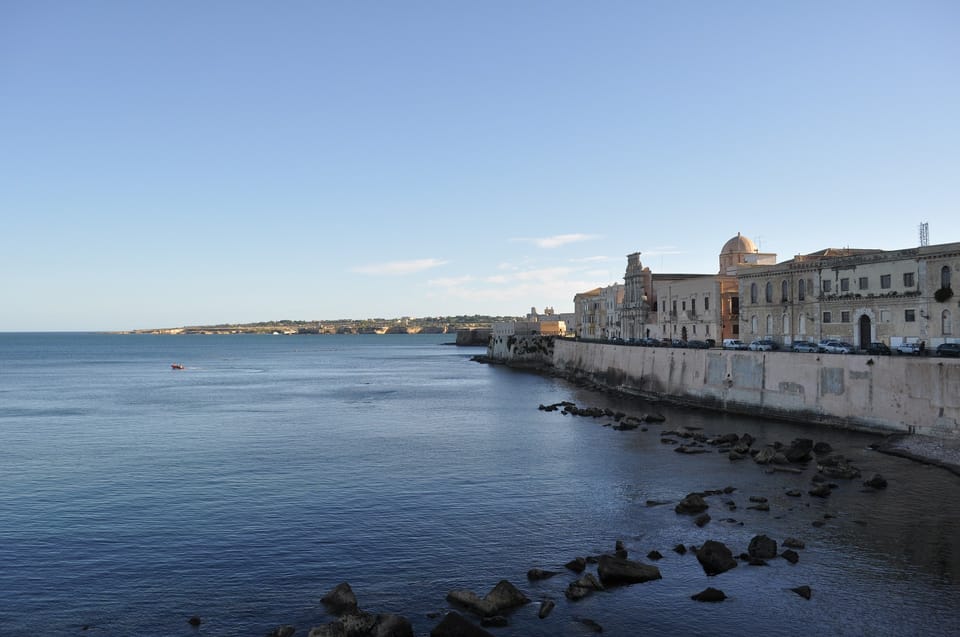
Then you roll to Noto, the UNESCO World Heritage town known for Sicilian Baroque. The feel here is different from Ortygia. Ortygia is tight, older, and story-driven. Noto is grand and sculptural, a town where the architecture acts like set dressing.
The tour offers free time, so you can choose your pace. Sights you’ll likely aim for include the Fountain of Hercules, plus noble palaces such as Palazzo Astuto and Palazzo Trigona Cannicarao. This is the part of the day where you can slow down, look up, and appreciate details without worrying that a guide will move you along every few minutes.
Baroque in Sicily isn’t just about decoration. It’s about drama: curves, stonework, and façades that look almost theatrical in the afternoon light. If you’re someone who likes to understand why buildings look the way they do, take a few minutes to notice repeated motifs—then you’ll see the design logic instead of just spotting pretty stone.
Because Noto is a town-wide experience, you’ll get the most from your visit if you pick a “triangle” of stops. Choose one main square area, one palace/monument, and one viewpoint spot. That way, you can enjoy the streets between them instead of trying to do everything.
Audio guide versus a live guide: what you should expect in the real world
The tour includes an audio guide, and that’s a real plus because you get historical context in multiple languages. The audio guide languages listed include English, French, German, Russian, Spanish, and Italian. If you like reading background while you walk, this format can work really well.
But here’s the honest part. Some days can feel like you’re working more independently, with the driver handling transit and basic directions. In other words, you should not assume you’ll get a full, interactive, live commentary at every stop.
If you’re booking because you want a true live guide explaining each site with stories in real time, you might be disappointed. If you’re booking because you want the convenience of transport plus an audio track you can pause and replay, you’ll likely be happy.
A practical trick: download offline maps on your phone before you go. Even with an audio guide, you’ll navigate faster if you’re not trying to decode street signs with spotty reception.


Timing, tickets, and your best game plan for a 9-hour loop
This is a 9-hour full-day route, so your success depends on how you manage time between stops. Your sequence is clear: Catania to Neapolis, then onward to Ortygia, and finally to Noto. The van does the heavy lifting, but you still need to move efficiently once you’re out.
Start with Neapolis. Since you must buy tickets, plan for a small buffer before entry. If you want the Greek theater and Roman Amphitheater, prioritize those first once inside, then decide how far you go toward the quarries and side areas.
At Ortygia and Noto, treat your time as walking blocks. In Ortygia you’re touring a historic island by wandering, so your goal is to hit Arethusa and Piazza Duomo and then take your own scenic route. In Noto, pick your palaces and fountain early, then enjoy the rest as slow looking time.
Packing tip: bring what your feet will thank you for. Comfortable shoes and water are listed, and I agree with both. If you bring a packed lunch (also listed), you’ll have more freedom in Noto when you land, instead of scrambling for food at exactly the wrong moment.
And one more thing: don’t plan to “finish later.” This tour is built on fixed transit and stop times. If you lose time at the first major site, the rest of the day tightens up.
Comfort, food, and what to bring for Syracuse heat and stone streets
The van is air-conditioned, which you’ll feel immediately in Sicily’s warmer months or if you’re traveling during a hot season. That comfort is not just nice; it helps you arrive less drained and walk more comfortably once you’re out.
For what to bring, the essentials listed are:
- Passport or ID card
- Comfortable shoes
- Credit card
- Water
- Comfortable clothes
- Packed lunch
- Cash
The packed lunch suggestion tells you something: you might not have a long, flexible lunch break. So if food timing is important to you, bring it. At minimum, have a plan to eat before you run out of energy.
What’s not allowed is also worth noting. The tour lists that alcohol and drugs are not allowed, and alcoholic drinks in the vehicle are not permitted. So keep your day clean and focused on sight-walking.
If you’re sensitive to crowds or uneven sidewalks, choose shoes with grip and cushioning. You’ll be on stone streets in Ortygia and walking through town areas in Noto.
Value check: when this tour is a smart buy and when to skip it
This tour makes sense if you want three major Sicily stops in one day without the hassle of coordinating transport. You get:
- transport in an air-conditioned van
- an included audio guide
- enough time at Neapolis, Ortygia, and Noto to grasp the big ideas
For value, the key question is what you want from the “guide” part. If audio guidance works for you, and you’re comfortable moving at a set schedule, the mix is strong. You’re seeing UNESCO-level Noto Baroque and the big Syracuse archaeological highlights in a single loop.
If you’re booking because you want a hands-on, spoken guide who will guide you through every site in detail, this might not fit. The tour’s structure leans toward driver-led logistics and audio context, not constant, live narration.
One more practical decision point: mobility. The info says the tour is wheelchair accessible, but it also says it’s not suitable for people with mobility impairments. That contradiction is a reason to contact the operator and ask what’s actually possible on the ground (especially in old-town areas like Ortygia and on uneven archaeological paths). If mobility is a concern for you, don’t guess.
Should you book this tour or not?
Book it if you want a smooth, air-conditioned day trip that strings together Syracuse’s Neapolis ruins, Ortygia’s myth-and-monument wandering, and Noto’s Sicilian Baroque. It’s a good fit for independent walkers who can handle an audio guide and don’t need every fact delivered by a live storyteller.
Skip it (or look harder) if you need a fully guided experience with deep, real-time explanations, or if you’re worried about tight time windows at Neapolis. If you do book, go in with priorities: pick your must-see features at Neapolis, plan a simple walking loop in Ortygia, and then let Noto be your slower architecture-look day.
FAQ
Where does the tour meet in Catania?
You meet your driver in Duomo square in the center of Catania.
How long is the tour?
The tour duration is 9 hours.
What stops are included?
The tour includes the Neapolis Archaeological Park, the historic old town of Ortygia, and the town of Noto.
Is an audio guide included, and what languages are available?
Yes. The audio guide is included, with languages listed as French, German, Italian, Russian, Spanish, and English.
Do I need to buy tickets for Neapolis Archaeological Park?
You purchase tickets to the park to admire the Greek theater, Roman Amphitheater, and stone quarries.
Is there free time for wandering in Ortygia and Noto?
Yes. You spend some time wandering Ortygia’s streets, and in Noto you have free time to see sights like the Fountain of Hercules and palaces.
What should I bring with me?
Bring a passport or ID card, comfortable shoes, a credit card, water, comfortable clothes, a packed lunch, and cash.
What is not allowed during the tour?
Alcohol and drugs are not allowed, and alcoholic drinks in the vehicle are not permitted.
Is the tour wheelchair accessible?
It is listed as wheelchair accessible, but it is also noted as not suitable for people with mobility impairments. If mobility is a concern, confirm details with the operator.
Is cancellation possible, and up to when?
Free cancellation is available up to 24 hours in advance for a full refund.