REVIEW · CATANIA
From Catania: Syracuse, Ortigia and Noto Full-Day Tour
Book on GetYourGuide →Operated by Sicily Grand Tour · Bookable on GetYourGuide
Greek and Baroque in one Sicilian day. This Catania-to–southeastern-Sicily tour lines up the ancient weight of Syracuse with the postcard streets of Ortigia, then finishes in the dramatic Baroque look of Noto at Meti Hill.
I love the English-speaking driver/guide approach, where you get the story as you move—not just a pile of stops. I also love the air-conditioned transfers and door-to-door pickup/drop-off style, because Sicilian distances can be a real energy tax. The one drawback is the day is packed, so you can’t expect long, slow museum-style wandering.
Before you go, plan for pickup logistics. The tour operates from the Catania area and can shift to a nearby meeting point if your hotel is in a pedestrian or street-market zone, so having the full hotel address (and a reachable phone number) matters.
In This Review
- Key points to know before you go
- Why Syracuse, Ortigia, and Noto work as one 8-hour loop
- Pickup in Catania: door-to-door helps more than you think
- The drive to Syracuse: the 70-minute segment sets the tone
- Syracuse and Neapolis: Greek theater, latomie, and Epipoli viewpoints
- Ortigia on foot: Apollo and Athena where later buildings took over
- Santa Lucia and Caravaggio: why this stop feels like a payoff
- Noto in 90 minutes of wonder-making: Baroque look meets Meti Hill
- The pacing reality check: where you can save time (and where you shouldn’t)
- Price and value: what $113.29 gets you (and what it doesn’t)
- Who should book this trip
- Should you book this Syracuse, Ortigia and Noto day tour?
- FAQ
- How long is the Catania to Syracuse, Ortigia and Noto tour?
- Where do you get picked up and where do you get dropped off?
- What’s included in the tour price?
- Are meals and tickets included?
- What languages are spoken during the tour?
- Can I cancel, and do I need to pay right away?
Key points to know before you go
- A two-city Greek-to-Baroque day: Syracuse and Ortigia in the morning, Noto in the afternoon
- Ortigia’s ancient layers: Greek temple foundations and later cathedral reuse close together
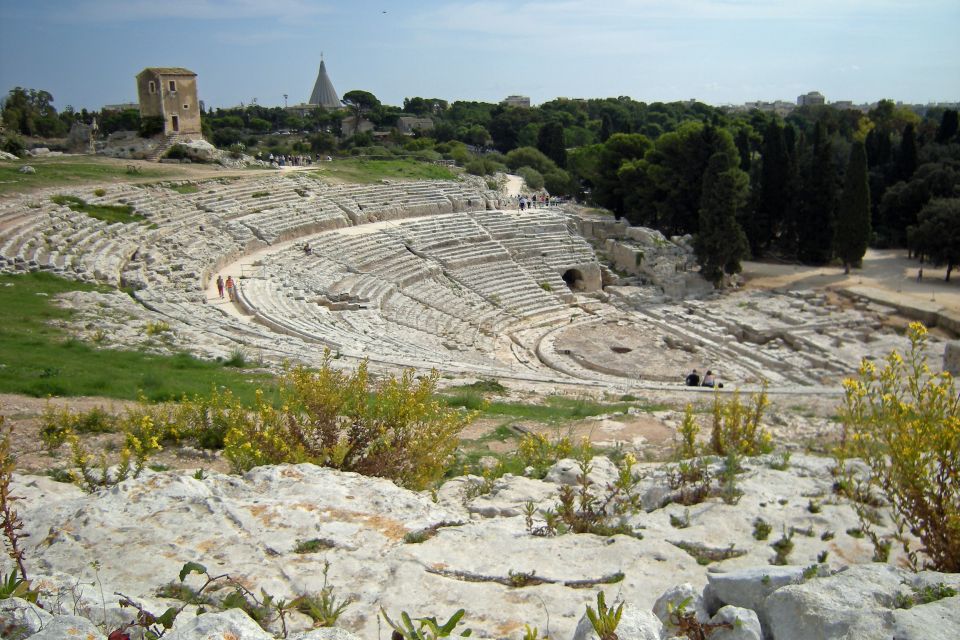
- Neapolis and the quarry landscape: latomie scenery and classic Greek theater views
- Santa Lucia’s Caravaggio connection: a chance to see his paintings inside the basilica
- Noto’s Garden of Stone on Meti Hill: Baroque restoration linked to the 1693 earthquake
- Guides that flex to real conditions: smoother timing when festivals or traffic hit (Carmelo, Alessio, and Rustian are names that come up often)
Why Syracuse, Ortigia, and Noto work as one 8-hour loop
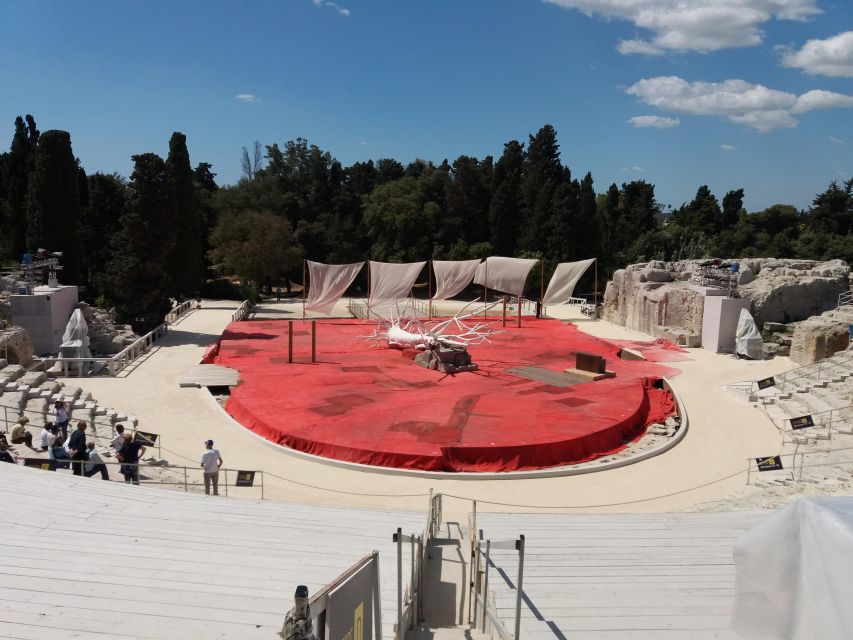
If your days in eastern Sicily are limited, this is one of the more sensible ways to see the big contrasts in a single run. Syracuse gives you ancient Greek power—stone theater lines, quarry cuts, and viewpoint energy. Then you slide to Ortigia, Syracuse’s island quarter, where temples, churches, and street life overlap in a way that feels historically “used,” not staged.
Finally, Noto offers a different kind of awe. You’re not looking at ruins from one era—you’re looking at a Baroque city rebuilt after a disaster, with Meti Hill’s Garden of Stone tying the story together in a single location. For a first-time visitor, it’s a clean arc: myth and empire to urban beauty after catastrophe.
The pacing is the trade. You’ll see a lot, but you’ll also want to choose what you slow down for. Think of it as “guided highlights with context,” not “stay all day at one site.”
You can also read our reviews of more tours and experiences in Catania


Pickup in Catania: door-to-door helps more than you think

This trip is set up for easy logistics. Pickups are offered in the Catania area, including your accommodation (or a convenient meeting point if you’re in a pedestrian/market street). Drop-off options include Catania and Aci Castello.
Two practical notes from how the operation works:
- You’ll want your hotel/b&b name and full address ready.
- Provide a full phone number with the international code so the guide can reach you if the meeting point needs to be adjusted.
If you’re staying outside the Catania territory, pickup can be possible, but it’s on demand and may come with extra cost at the level of taxi/uber fare. That’s not a small detail—on a day trip, transit costs can change the value quickly.
The drive to Syracuse: the 70-minute segment sets the tone
The itinerary includes about 70 minutes by van to reach Syracuse territory. That may not sound romantic, but it buys you two things:
- you arrive without the stress of rental-car navigation in a busy region
- you start your sightseeing day with a guide already in motion, telling you what you’re about to see
You also get a comfortable buffer for Sicilian weather shifts. The tour notes that activities can be subject to cancellation due to weather conditions, and the air-conditioned van part is a real quality-of-life factor when the temperature swings.
Syracuse and Neapolis: Greek theater, latomie, and Epipoli viewpoints
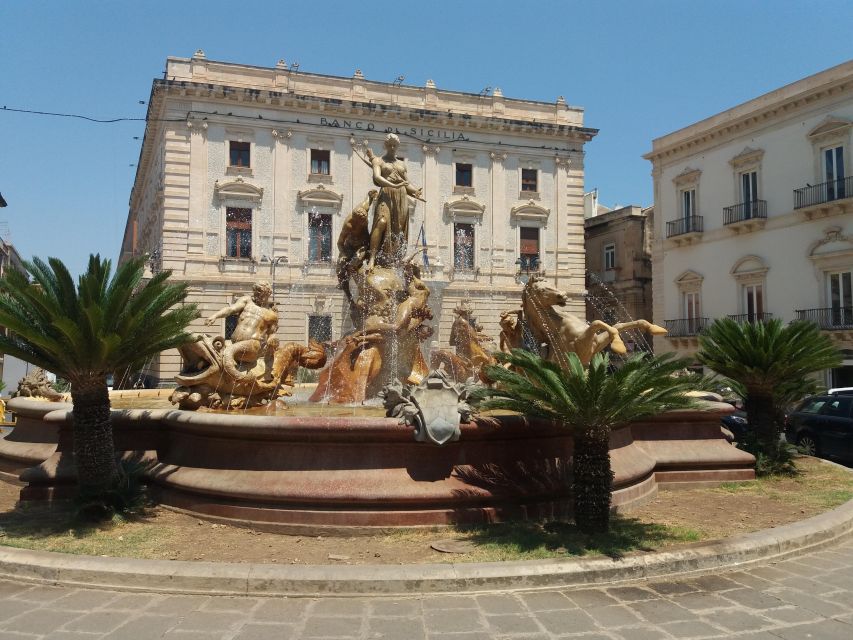
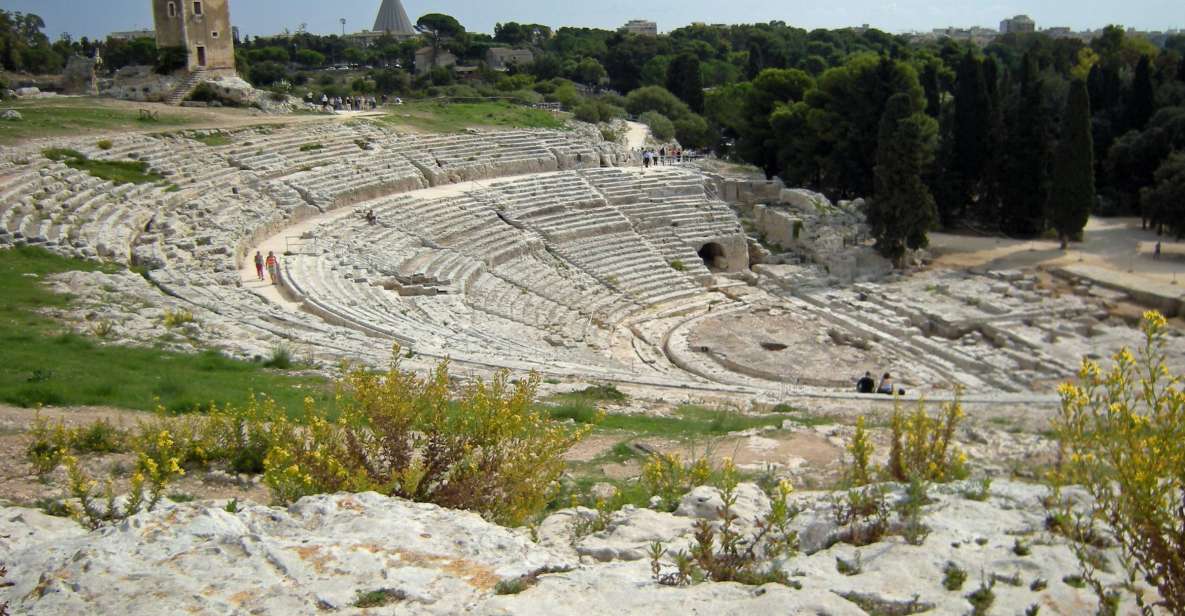
You’ll have around 1.5 hours for Syracuse. This stretch is the backbone of the “ancient Greek history” promise, and it focuses on features that don’t feel like checklist items once you understand what they were for.
Here’s what you can expect to be shown:
- the Greek theater area (where sound and sight lines were part of the design)
- the latomie of Neapolis, the stone-quarry landscape tied to the way the city was shaped
- the site of ancient Epipoli, which helps you understand the geography and elevation that made Syracuse strategic
If you’re the kind of person who wants more than dates—who wants to understand why a place is placed where it is—this part of the tour tends to click. A good guide doesn’t just point. They connect the stones to the way people lived, worked, fought, and built.
One review detail you might appreciate: some guide-led runs include stops such as the Ear of Dionysius while staying in the Syracuse/Neapolis zone. Even if you don’t get that specific addition every time, the broader message is consistent: you’re not only in ruined-stone land; you’re in story land.
Ortigia on foot: Apollo and Athena where later buildings took over
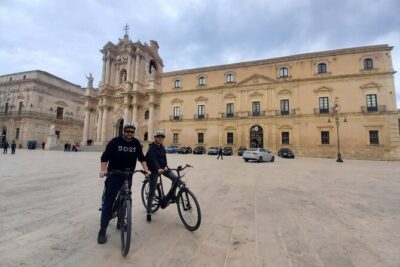
After Syracuse, the tour heads to Ortigia (guided time is about 2 hours on the island). Ortigia is where you’ll feel the most “real city” atmosphere, with ancient foundations sitting under the weight of newer architecture and everyday life.
The guided walk centers on the Greek remains linked to:
- the temples of Apollo and Athena on Ortigia
- the cathedral area, where the origins of the Greek Temple of Athena trace back to the 5th century BC
- the legend of Arethusa, Syracuse’s patron figure
This is one of those spots where a guide makes a noticeable difference. Without context, it’s easy to look at a facade and miss that you’re also looking at a layered construction history—first Greek, then reused and reworked by later eras.
Ortigia is also practical to visit on a tour. The island layout is compact enough to walk, but the “where do I go next” problem can still slow you down. With a guide, you’re choosing the right sequence so you don’t backtrack.





Santa Lucia and Caravaggio: why this stop feels like a payoff
The tour description includes a chance to see Caravaggio paintings at the Basilica of Santa Lucia. One cited work in the tour experience is The Burial of Saint Lucia.
Even if you’re not a dedicated art-spotter, this can be a smart contrast point. You start the day reading Greek power in stone. Then you get a later, intensely human artwork anchored in a working church.
This also helps balance the physical vibe of the day. Ortigia walking is street-level. A basilica stop adds a different rhythm: slower, dimmer, and more focused.
Tip for you: if interiors are part of your plan, go in with a little quiet time mindset. Interiors don’t reward the rush-and-snap approach. Give the paintings a few minutes.
Noto in 90 minutes of wonder-making: Baroque look meets Meti Hill
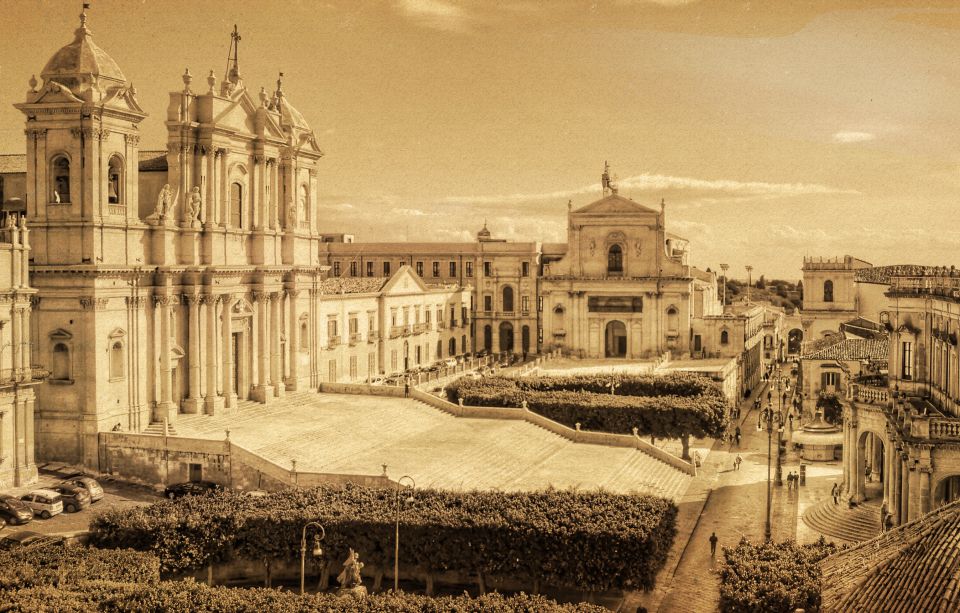
You’ll transfer by van for about 45 minutes to Noto, then have roughly 1.5 hours for the guided visit.
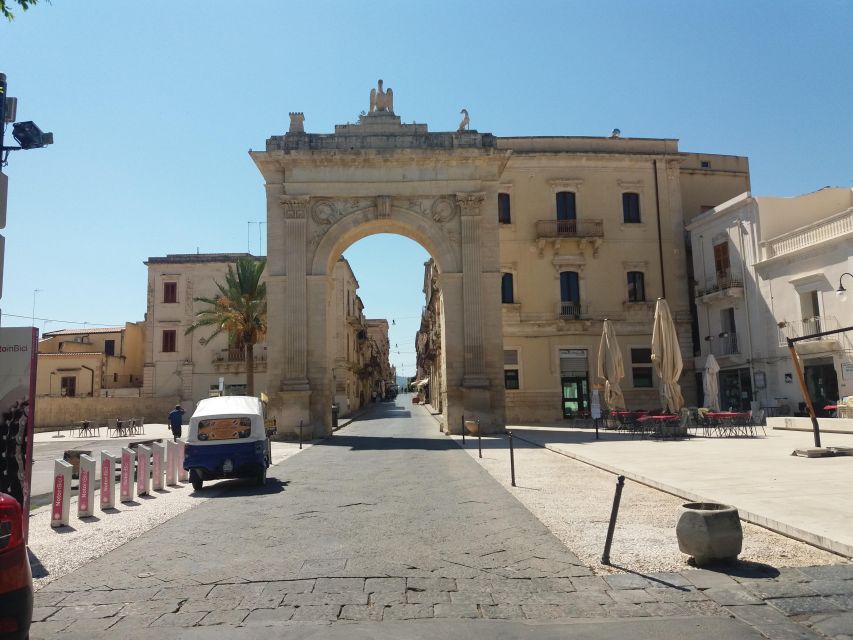
Noto’s big draw is Baroque style on full display. Straight lines, pale stone, sculpted facades—then the real story behind it. The tour highlights the Garden of Stone on Meti Hill, known for its Baroque heritage and for its reconstruction after the 1693 earthquake.
This is where the tour’s theme becomes more than architecture tourism. You’re seeing how a city rebuilt itself into a new identity. That makes the Baroque feel less like surface decoration and more like resilience turned into design.
If you’re asking whether Noto is worth the drive, this is the answer: yes, because you see not just the look, but the reason that look exists. It gives the “pretty” something to stand on.
The pacing reality check: where you can save time (and where you shouldn’t)
This is an 8-hour outing with multiple road segments and guided stops. That means you’re always moving from one “mode” to another:
- van → ruins and viewpoints
- ruins → island walking
- walking → church/interiors
- van → Baroque city
- van → return home
So where do people often feel it most? Usually at the boundaries. When a festival causes traffic or parking issues, you don’t want to lose time searching. The tour’s strength is that guides can adjust—like allowing time to stroll through town when parking doesn’t cooperate, then looping back when it makes sense.
For you, the best way to enjoy this without feeling rushed is simple:
- Wear comfortable shoes you can walk in for an extended period.
- Bring sun protection and water (meals aren’t included, so you’ll want something practical).
- Use your energy on your “must-not-miss” moments: pick whether you want the most time at Ortigia streets or the most time at Noto details.
Price and value: what $113.29 gets you (and what it doesn’t)
At $113.29 per person, you’re paying for a day that includes:
- pickup and drop-off at accommodation/port area within the offered zone
- all transfers by air-conditioned car or minivan
- gas, parking fees, and tolls
- an English-speaking driver/guide (plus Spanish and Italian language capability)
That’s the real value math. Syracuse and Noto aren’t next-door to Catania, and the “hidden costs” of getting there yourself—driving time, fuel, parking, stress—add up fast. If you’d rather trade planning effort for guided storytelling and smooth logistics, this fits.
What’s not included:
- meals
- tickets
- anything not listed
So you should budget extra for site entry if tickets are needed for specific areas or interiors. The guide can tell you how things work on the day, but since tickets aren’t part of the price, you don’t want to assume everything is covered.
Who should book this trip
This is a strong pick if you:
- want a Greek + Baroque contrast in one day
- like guided context that ties myths (Arethusa) and history (Athena’s temple origins) to what you’re actually seeing
- would rather avoid day-trip navigation and parking from Catania
- appreciate a flexible guide style (names that come up with strong flexibility include Carmelo, Alessio, and Rustian)
You might reconsider if you:
- need lots of free time to wander at your own pace for long stretches
- prefer very deep archaeological study with extended time in one site area
- don’t like schedules that run close together (because this one is built to cover three major zones)
Should you book this Syracuse, Ortigia and Noto day tour?
If your goal is to experience the highlights of Syracuse, Ortigia, and Noto without spending your vacation day figuring out logistics, I’d book it. The price makes sense because it bundles transport, parking/tolls, and an on-the-ground guide who can connect the stones to the stories.
My booking advice is very practical: if you’re okay with a full itinerary and you’ll plan for meals and tickets on your own, this day trip can be a high-value use of time. If you hate rushed schedules, or you want slow, deep museum time, you may prefer splitting the trip into separate days or doing one city more thoroughly.
If you want one “best possible first pass” through eastern Sicily from Catania, this is that pass—Greek theater and quarry drama in the morning, island myth by lunchtime, and Noto’s rebuilt Baroque energy by afternoon.
FAQ
How long is the Catania to Syracuse, Ortigia and Noto tour?
The duration is listed as 8 hours.
Where do you get picked up and where do you get dropped off?
Pickup can be arranged in the Catania area, including accommodation or a sea port. Drop-off options include Catania and Aci Castello.
What’s included in the tour price?
The tour includes pick-up and drop-off, all transfers by air-conditioned car or minivan, an English-speaking driver/guide, gas, parking fees, and tolls.
Are meals and tickets included?
No. Meals and tickets are not included.
What languages are spoken during the tour?
The driver/guide lists Spanish, English, and Italian.
Can I cancel, and do I need to pay right away?
The activity offers free cancellation up to 24 hours in advance for a full refund, and it also offers a reserve now & pay later option.