REVIEW · SYRACUSE
Guided tour of Ortigia with Fish Street Food at the market
Book on GetYourGuide →Operated by Empeeria · Bookable on GetYourGuide
Ortigia tastes like history. You start at the Temple of Apollo and finish in the fish-stall chaos of the Ortigia market with fresh seafood street food. Along the way, the guide ties place to story, from Greek-era landmarks to Sicilian myths.
I especially like how this tour mixes major sights with slower, human-scale stops like Piazza Archimede and the Cathedral of Syracuse (entrance ticket included). It also helps to have guidance that keeps the group moving at a steady pace, so you can actually look around and take photos.
One thing to watch: if you were expecting a full-on cannoli sampling, the sweet part is handled more like a voucher for one, and you may need to pick it up on your own after the tour.
In This Review
- Key Highlights
- Meet Under the Pomegranate Tree and Get Oriented Fast
- Temple of Apollo: The Greek Start That Makes Ortigia Click
- Piazza Archimede and the Fountain of Diana: A Story Stop, Not a Speed Stop
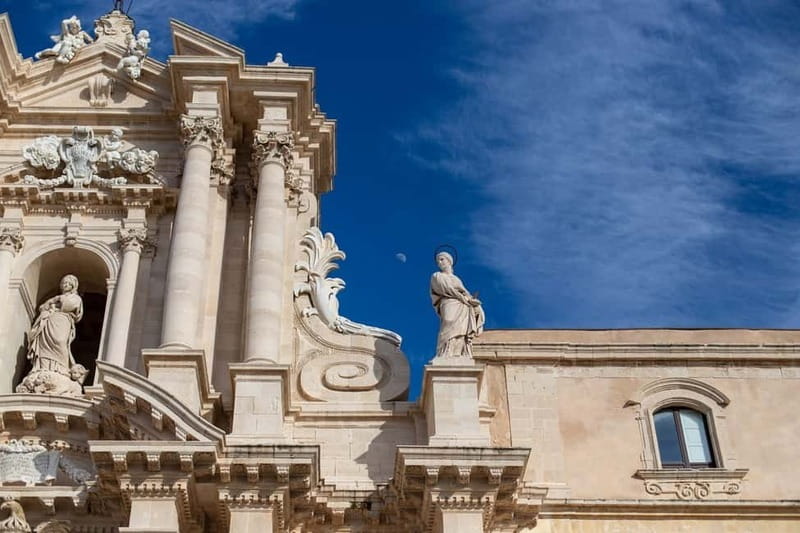
- Piazza Duomo and the Cathedral of Syracuse Entrance Ticket
- Arethusa Spring: Where Myth Meets the Water You Can Actually See
- Fish Street Food at the Ortigia Market: The Real Payoff
- The Cathedral Ticket and Fish Tasting: Where Your $57 Actually Goes
- Who This Tour Suits (and Who Might Want Something Else)
- Should You Book This Ortigia Fish Street Food Tour?
- FAQ
- How long is the Ortigia guided walking tour with fish street food?
- Where does the tour start, and where should I meet?
- What’s included in the price?
- What languages is the tour offered in?
- Are there any monument or visit timing changes possible?
- Do I need to mention allergies before booking?
Key Highlights
- Temple of Apollo start: the oldest Greek temple in Sicily sets the tone fast
- Legends and myths at key fountains: Diana and Arethusa show how Ortigia thinks
- Cathedral of Syracuse included: you get an entrance ticket as part of the loop
- Arethusa Spring is a real viewpoint stop: it’s more than a quick photo moment
- Ortigia market seafood tasting: fresh fish street food at the stalls, not in a dining room
- Earphones and slow pacing can help: better listening for English/Italian groups
Meet Under the Pomegranate Tree and Get Oriented Fast
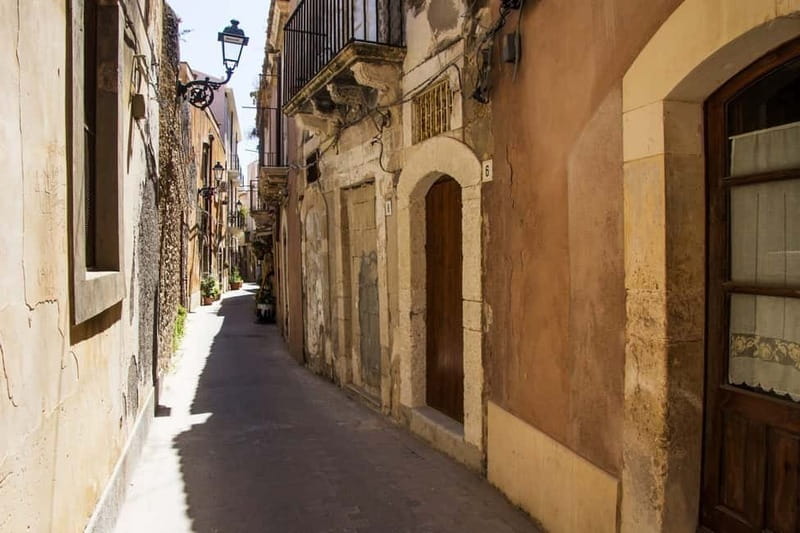
This tour is built for people who want Ortigia’s highlights without playing map Tetris for 2.5 hours. You meet at the roundabout where Corso Matteotti starts, right in front of the Temple of Apollo, and you’ll see the guide with a badge under the pomegranate tree. It’s a clear starting point, which matters in Ortigia because streets change names, alleys appear, and scooters love turning your head at the wrong moment.
Plan to arrive 10 minutes early. That extra time helps you settle in before the group departs, and it reduces that awkward moment of standing near the wrong arch wondering if you’re at the correct “Largo.” The tour ends back at the same meeting point, so you’re not trying to navigate back on your own after your hands are sticky from seafood.
The guide may run the experience with Italian and English happening at the same time. If you struggle to hear in crowds, that’s a good sign. In past similar experiences with this format, earphones have been used to make listening easier, which can be a lifesaver when market noise ramps up.
You can also read our reviews of more food & drink experiences in Syracuse

Temple of Apollo: The Greek Start That Makes Ortigia Click
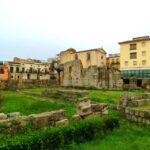
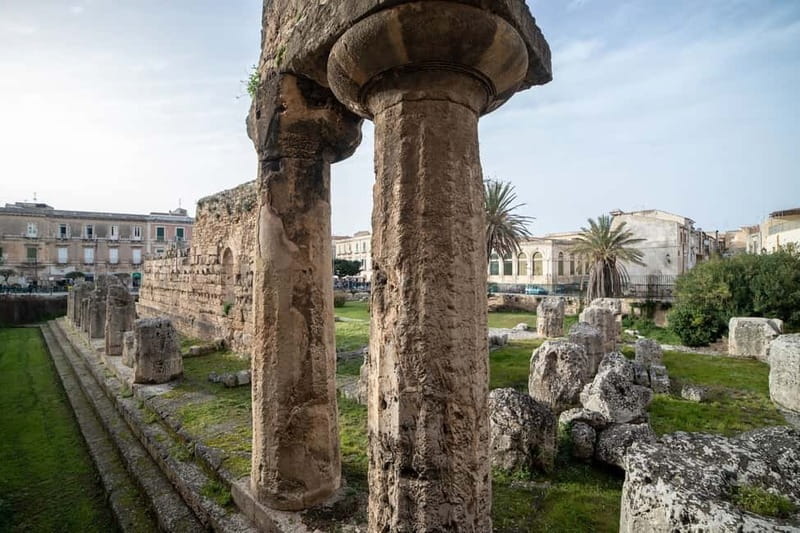
The tour begins at the Temple of Apollo, described as the oldest Greek temple in Sicily. Even if you’re not a hardcore archeology person, this is a powerful starting point because it frames Ortigia as layered, not single-theme. You’re not just sightseeing modern streets; you’re stepping into the physical memory of Syracuse.
The guide spends about 30 minutes on this first stop, which is enough time to orient yourself: where the landmark sits, why it’s significant, and how Greek presence still shapes the island’s layout and atmosphere. This is also where you’ll usually get practical context for the rest of the walk. Once you understand the “why” of the first monument, the later fountain stories land better.
Practical tip: wear comfortable shoes. You’re doing a walking loop, and Ortigia streets can feel smooth until you hit the wrong stone. Also bring a light layer if you tend to get cold near the sea breeze later in the route.
Piazza Archimede and the Fountain of Diana: A Story Stop, Not a Speed Stop
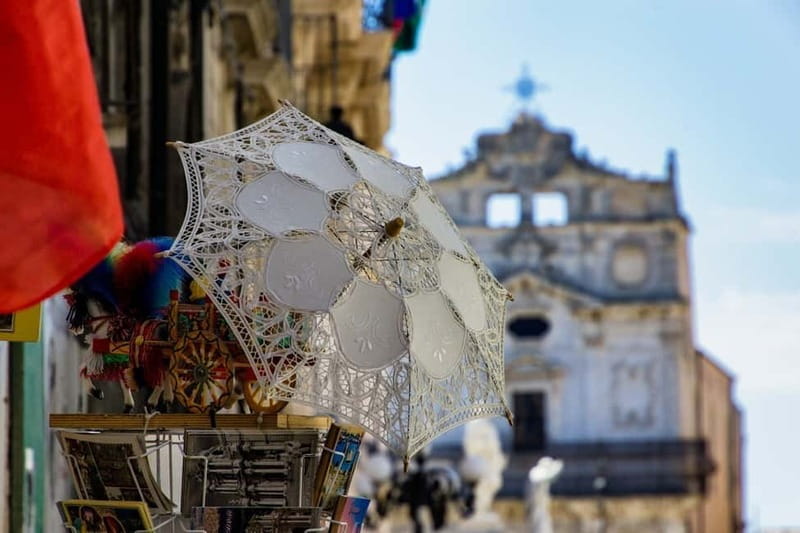
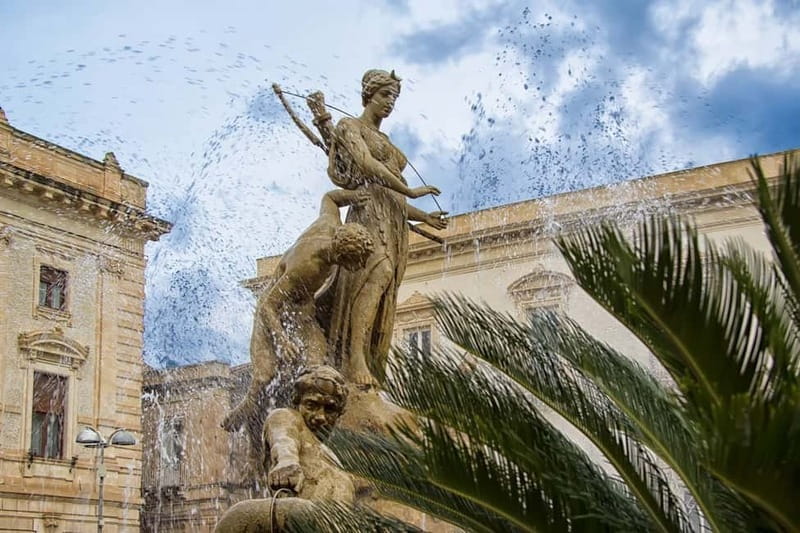
Next comes Piazza Archimede, with the Fountain of Diana. This is where the tour leans into legends and myths. The idea is simple: you look at the fountain, then the guide connects it to why Ortigia tells these stories the way it does.
You get about 20 minutes here. That’s a sweet spot. Long enough to take photos without feeling rushed, and short enough that you don’t lose the thread of the walking route. I like that this stop isn’t treated like a checkbox. You’ll be encouraged to pay attention to what’s around you—how the square functions, how people gather, and how a myth becomes part of everyday street life.
If you’re the type who likes to understand a place beyond the postcard view, you’ll enjoy this. The guide’s explanation of legends makes the area feel more lived-in, and you’ll notice details you’d normally walk past.
Piazza Duomo and the Cathedral of Syracuse Entrance Ticket
After the myth-and-square moment, you move to Piazza Duomo and the Cathedral of Syracuse. This is a major change in vibe—more weight, more formality, and a chance to see why the center of Ortigia became the place for grand religious architecture.
This portion runs about 45 minutes with guided time, and it includes an entrance ticket to the Cathedral of Syracuse. That’s an important value point. You’re not just standing outside for a quick look; you’re getting access built into the tour pricing. For many travelers, that’s where a walking tour turns from nice to genuinely worth it.
A practical note: monument visits can vary depending on holidays and opening hours. So if you’re traveling during a busy season or a religious holiday period, don’t assume every interior space will be available exactly as you expect. The guide may adjust the flow accordingly, but the core route is designed around these landmarks.
Arethusa Spring: Where Myth Meets the Water You Can Actually See
Then the walk lands at the Arethusa Spring, with guided time (about 40 minutes). This stop is another big story moment, and it’s tied to Sicilian mythology. The fountain isn’t introduced as a vague legend. You get the sense that these myths are part of how locals interpret place—why water, stones, and city corners feel meaningful.
What I like about this segment is that it feels like a pause. You’ve been walking and listening; now you’re given time to slow down. Arethusa Spring is also one of those locations where photos are easy, but good photos come from watching how the light hits the water and how people move through the area.
You’ll notice that the tour returns to Arethusa Spring at the end for another 30 minutes of street-food tasting at the market area nearby. That rhythm matters: the myth stop is not immediately swallowed by the food stop. You get to process the story, then you switch gears.
You can also read our reviews of more tours and experiences in Syracuse

Fish Street Food at the Ortigia Market: The Real Payoff
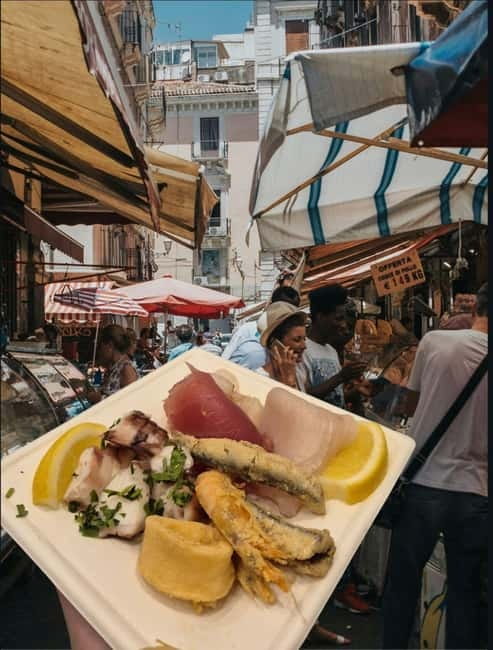
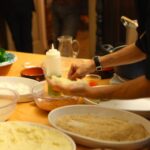
The grand finale is the Ortigia market, where the tour shifts from legends to senses. Expect fish stalls, color, sound, and that unmistakable smell of the sea mixed with market life. This is where the experience earns its name: the tour ends with fresh fish street food tasting.
The tasting portion is about 30 minutes, which is enough time to get a proper flavor of the market without turning the walk into a full food crawl. The guide’s job here is valuable. You’ll be pointed toward the right stall and food setup, and you avoid the common mistake of ordering something that looks good but isn’t the best local move.
One additional detail worth knowing: this is a fish-focused finish. If you were hoping for a canoli festival, keep your expectations grounded. In some versions of this kind of tasting setup, the sweet element is handled as a voucher for one cannoli that you pick up later on your own rather than multiple guided tastings. That doesn’t make the seafood less satisfying, but it can affect your dessert expectations.
A practical tip: if you’re sensitive to strong smells or have a food allergy, tell the operator when booking so the guide can plan for you. The tour asks you to specify allergies or intolerances during booking, which is a smart move because market food choices need real-time flexibility.
The Cathedral Ticket and Fish Tasting: Where Your $57 Actually Goes
At $57 per person for 2.5 hours, this tour is priced like a small, guided “do more with less stress” experience. You’re not paying only for talking. You’re paying for three tangible things that add up: a certified local guide, entrance to the Cathedral of Syracuse, and a fish tasting at the Ortigia market.
Many walking tours keep costs low by avoiding paid entry. Here, the entrance ticket is included, which helps you squeeze more value out of the time you spend. And the food stop is part of the guided finish rather than a random recommendation. That matters because markets are fast, loud, and easy to feel unsure in if you’re not sure what’s fresh.
Is it a bargain? It’s not the cheapest way to spend an afternoon. But it is a strong value when you factor in: guide time plus a paid monument plus a guided tasting. If you’ve got limited time in Ortigia, that combo can be the most efficient use of your vacation hours.
Who This Tour Suits (and Who Might Want Something Else)
This tour fits best if you want a guided walk through Ortigia’s core landmarks without doing a separate history lesson for each stop. If you like learning how myths and architecture shape a place, the route works well: Temple of Apollo, Piazza Archimede, Piazza Duomo, then Arethusa Spring, ending with a seafood-market finish.
It’s also a good match for people who prefer structured pacing. The walk isn’t described as a sprint, and the timing gives you enough breathing room to take photos and absorb the stories.
You might consider a different food tour if your main priority is a long list of sweets or a larger variety of tastings. The market stop is fish-forward, and the dessert piece may be limited to a voucher for one cannoli picked up later.
Should You Book This Ortigia Fish Street Food Tour?
I’d book this if you’re doing Ortigia for the first time and you want the highlights in one smooth loop, with a seafood market finish that feels local instead of staged. The included Cathedral of Syracuse entrance ticket is a clear value win, and the ending tasting is the kind of thing you can’t easily replicate on your own without some trial and error.
Book it with realistic expectations about dessert. If you want a long cannoli tasting party, this may not be the format you’re imagining. If you want to connect the dots between Greek-era Syracuse, Sicilian myths, and the real-life flavors of the Ortigia market, this is a very solid choice.
FAQ
How long is the Ortigia guided walking tour with fish street food?
The tour lasts about 2.5 hours, from the meeting point to returning back to the same location.
Where does the tour start, and where should I meet?
Meet the guide with a badge under the pomegranate tree, in front of the Temple of Apollo at the roundabout where Corso Matteotti starts.
What’s included in the price?
You get a certified local guide, an entrance ticket to the Cathedral of Syracuse, and fish tasting at the Ortigia market.
What languages is the tour offered in?
The tour is available in Italian and English, and it could be conducted simultaneously in both languages.
Are there any monument or visit timing changes possible?
Yes. Visits to monuments may vary depending on holidays and opening hours.
Do I need to mention allergies before booking?
Yes. When booking, specify any allergies or intolerances so the tour can plan for your needs.