REVIEW · SYRACUSE
From Taormina: Syracuse Tour with lunch in Food Market
Book on GetYourGuide →Operated by Sicily Activities · Bookable on GetYourGuide
Ortigia at sunset feels like story time. I love how the tour strings together 3,000 years of history with an unhurried walk through Syracuse’s old maze of streets, and how it ends with a lunch tasting in an open-air food market instead of a generic restaurant meal. You’ll also see the Apollo Temple, the Duomo area, and the Jewish District with a local guide who ties it all together.
The only real drawback I’d flag is simple: it’s a 6-hour outing, and it’s mostly walking, so plan for a steady pace and some time in the evening cool.
In This Review
- Key highlights at a glance
- Ortigia at sunset: the best way to feel Syracuse’s layers
- Apollo Temple and Via Cavour: getting oriented fast
- Duomo Square: the core of Ortigia’s religious center
- The Jewish District route and the Archimede Fountain
- Aretusa Fountain by the sea: papyrus and quiet realism
- Lunch tasting at Syracuse’s oldest open-air food market with wine
- Price and value: what $259.42 gets you for 6 hours
- Who this private Syracuse + food market tour suits best
- Should you book this Syracuse tour?
- FAQ
- How long is the Syracuse tour from Taormina?
- Is this tour private?
- What sights will we see in Ortigia?
- Is lunch included, and is there wine?
- What language is the guide?
- Where does the tour start and end?
Key highlights at a glance
- Ortigia sunset walking tour with a local guide and an easy rhythm
- Apollo Temple to Via Cavour for big-photo moments and colorful street atmosphere
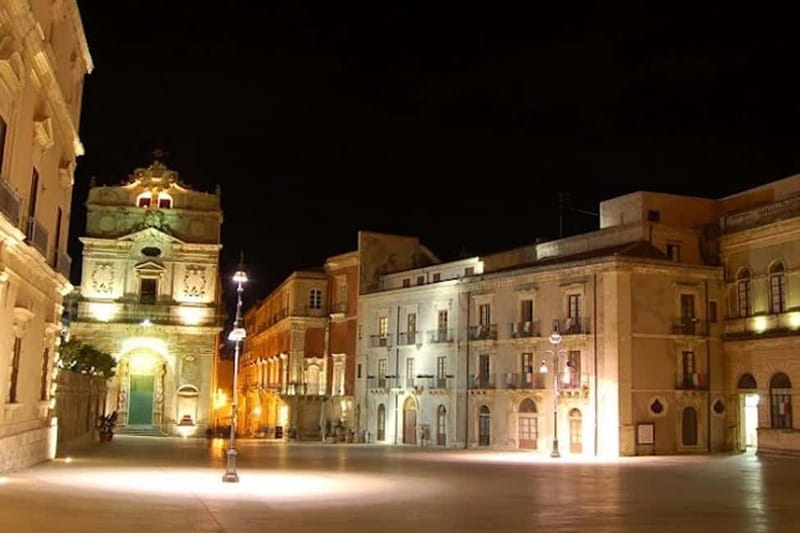
- Duomo Square highlights including the Duomo and Church of St. Lucy
- Jewish District route plus the Archimede Fountain on the way
- Aretusa Fountain by the sea where papyrus still grows
- Authentic open-air food market lunch tasting with wine
Ortigia at sunset: the best way to feel Syracuse’s layers
This tour is built around one smart idea: start in daylight, then let Ortigia change as the evening light softens the buildings. You get picked up from your accommodation, then head into Syracuse’s old center where the streets don’t feel like a checklist. They feel like a route through centuries.
I like that the focus stays human. Instead of rushing from one landmark to the next, you’re walking, seeing, and stopping long enough to notice details like the way streets funnel you toward key squares and fountains. The payoff is that you leave with a map in your head, not just photos.
One more practical point: the guide is local and leads the experience in English or German (private group). That matters because Ortigia can be confusing if you’re on your own. Even if you know the major sights, you’ll still appreciate having someone explain what you’re looking at.
You can also read our reviews of more food & drink experiences in Syracuse

Apollo Temple and Via Cavour: getting oriented fast
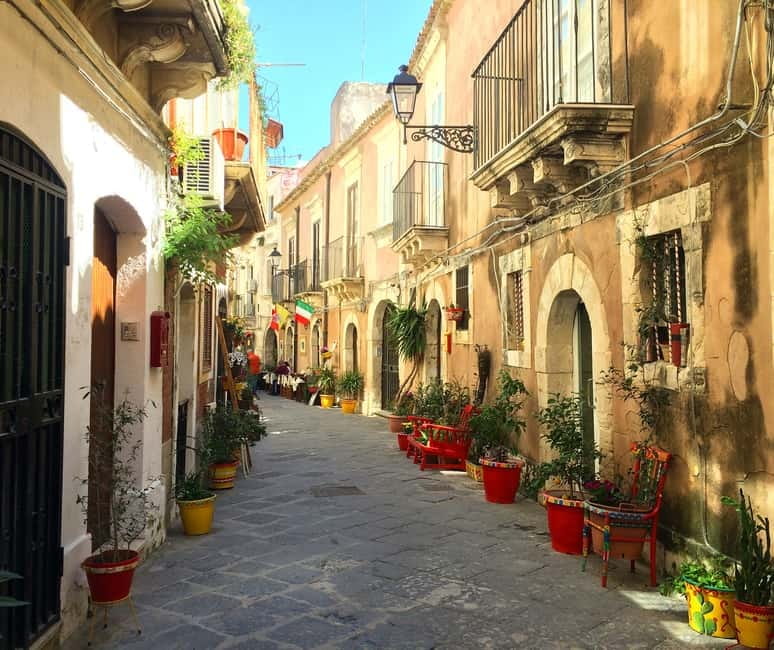
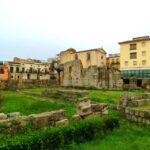
The early part of the tour is all about getting your bearings fast. Before you go deep into the lanes, you admire the Apollo Temple for the big, obvious reason: it sets the tone for what Syracuse once was and what it later became.
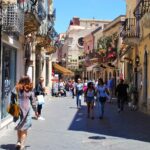
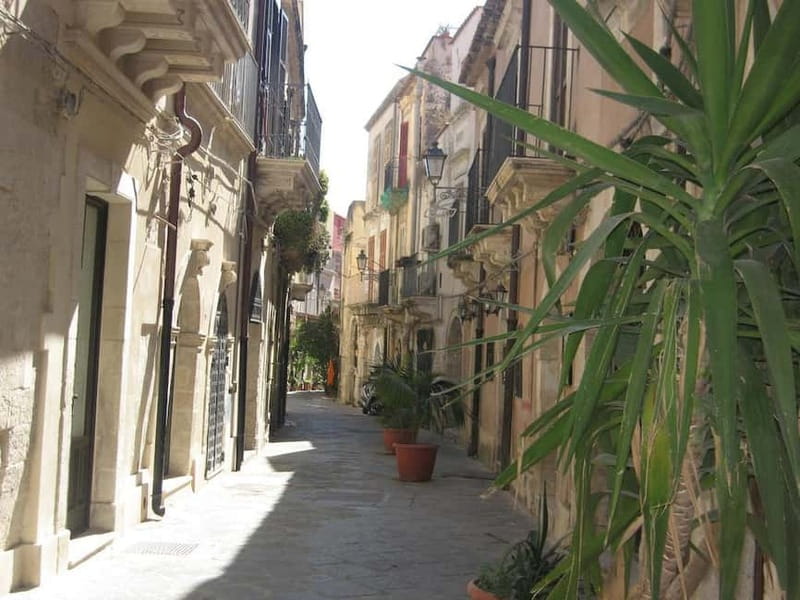
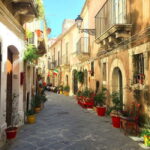
Then you move down Via Cavour, one of Ortigia’s most colorful streets. This is where the tour starts to feel lived-in. You’ll be walking through a street that’s visually busy even when you’re not trying. It’s the kind of place where small storefront details and street layout tell you how the neighborhood works.
If you’re the type who likes to understand a city’s “why,” this section helps. It positions you between the monumental side of Syracuse and the everyday rhythm of the old town. You’re learning how to read Ortigia: approach by way of major landmarks, then wander the smaller connections between them.
Duomo Square: the core of Ortigia’s religious center
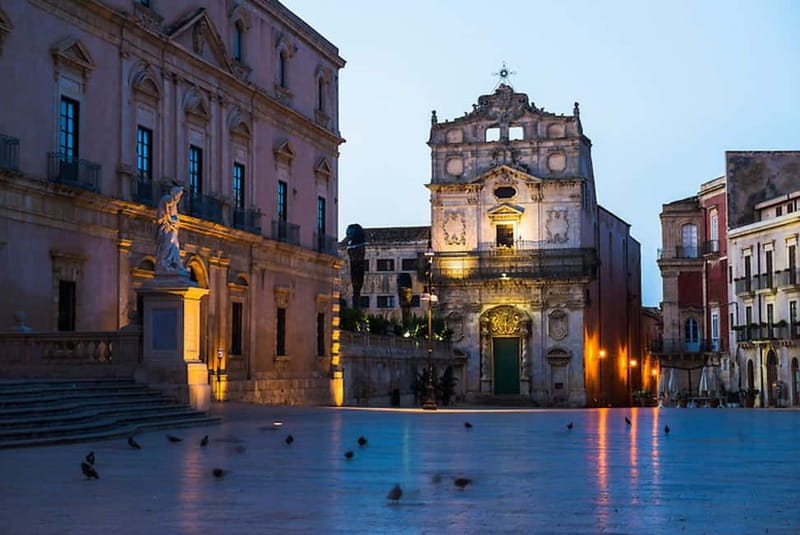
When you reach Duomo Square, you’re stepping into the heart of Ortigia. This is one of the most beautiful squares in Italy, and it’s not just pretty—it’s functional, like a hub where important buildings anchor the area.
Two stops matter here: the Duomo and the Church of St. Lucy. Seeing them in the square context is key. The Duomo isn’t experienced only as a structure; it’s experienced as part of the public space around it. That’s what makes it click when you’re walking rather than viewing from a distance.
This is also a good moment for your pace to settle. After street walking and moving through passages, squares let you slow down, look up, and regroup. If you’ve got photos to take, this is where you’ll want to spend your attention, because you’re surrounded by architectural focus.
The Jewish District route and the Archimede Fountain
From Duomo Square you start tracking toward areas tied to older chapters of Syracuse. A highlight on the route is the Jewish District, noted as being founded in the 3rd century BC. That detail matters because it shifts your thinking. You’re not just seeing buildings; you’re seeing evidence of long continuity in the city’s life.
On the way, you’ll encounter the Archimede Fountain, which the tour uses as a storytelling moment while you move through the old-town connections. Fountains are perfect guide tools in cities like this. They act like time markers—you stop, you look, and suddenly the walk has a narrative instead of just a direction.
A practical consideration: old districts mean small streets and turns. That’s part of the charm, but it also means you’ll want to stay aware of where you’re going with the guide rather than drifting. Private guide + your own group size makes this easier, since the pace stays flexible to your questions.
Aretusa Fountain by the sea: papyrus and quiet realism
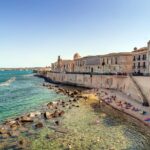
One of the most memorable moments comes next: Aretusa Fountain, by the sea. The tour highlights something specific that I really like about this stop—papyrus still grows there. That’s the kind of detail that makes a sight feel less like a “check and move on” attraction.
Aretusa works well at this point in the day because the setting lets you shift from “looking at monuments” to “feeling the place.” You’re no longer only in stone and arches; you’re at the edge where water meets the city. Even if you’re not chasing myths or facts, the location itself gives the stop weight.
If you’re thinking, Can I skip this kind of moment? I’d say don’t. This is exactly the part of a walking tour where you remember the atmosphere. The guide puts it into context, and you get to breathe for a few minutes while the sea does what it does.
You can also read our reviews of more tours and experiences in Syracuse

Lunch tasting at Syracuse’s oldest open-air food market with wine
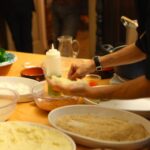
The finale is the best kind of meal for a tour: not a single dish, but a tasting lunch with wine in the open air. The description calls it the oldest open-air food market of Syracuse, and you can feel why the tour uses it as a capstone.
This is where Ortigia becomes “real life” again. You’re eating in a place that likely makes sense to locals first and tourists second. A market meal doesn’t just feed you—it helps you understand what this neighborhood buys, cooks, and celebrates.
A tasting format also makes the lunch smarter. Instead of committing to one plate and hoping you like everything, you sample your way through the market vibe. And because the tour ends here before dropping you back to your accommodation, it keeps the day flowing. You’re not trying to squeeze food into the middle of sightseeing; you’re giving the city time to show you what it’s like.
Two practical tips for this part:
- Go a bit hungry. A tasting lunch is still lunch, and you’ll enjoy it more if you don’t arrive stuffed.
- Expect a lively setting. This is an open-air market atmosphere, so keep your phone brightness low and your attention high.
Price and value: what $259.42 gets you for 6 hours
At $259.42 per person for a 6-hour private tour, the price is in the “serious experience” category. The key question is whether you’re paying for time or for guided value.
Here’s what you’re getting that justifies the total:
- A local guide (English or German)
- VAT and taxes
- An evening walk in Ortigia (the route includes Apollo Temple, Duomo Square, the Jewish District area, and fountains)
- Tasting lunch with wine in Syracuse’s open-air food market
- Pickup from your accommodation and drop-off back to your accommodation/meeting point
So you’re not just buying photos and walking time. You’re buying someone to route you through the old center, point out what to notice, and translate the meaning behind the sights. In Ortigia, that guidance is the difference between seeing a square and understanding why it matters.
Also consider the private group angle. With a private group, you can ask questions at the exact moment they come up, rather than waiting for a fixed group schedule. For a city with narrow streets and layered neighborhoods, that flexibility can be worth real money.
Who this private Syracuse + food market tour suits best
This is best for you if:
- You want a guided, narrative walk rather than an app-based route
- You care about meaning—like how the Jewish District is tied to the 3rd century BC
- You like food experiences that are social and local, not just a sit-down meal
- You prefer evenings, when Ortigia’s streets feel calmer and more atmospheric
It may not be the right fit if you want a long, museum-style deep study with lots of sitting. This is a walking-focused itinerary with key stops, plus a market lunch tasting.
Since it’s a private group, it also works well for friend groups and couples who want a shared pace. And if your group includes mixed language comfort, the guide approach can help keep everyone connected—one highlighted example involved a guide adjusting so French-speaking people could follow along when English wasn’t enough.
Should you book this Syracuse tour?
I’d book it if your ideal day in Syracuse includes three things: Ortigia streets at sunset, major stops like the Duomo and Apollo Temple, and a lunch tasting that feels tied to the city instead of pasted onto it. The 6-hour length is long enough to make the day feel complete, yet the structure keeps it from dragging.
If you want a guided route where the history, the fountains, and the food market all connect, this private tour is a strong choice.
FAQ
How long is the Syracuse tour from Taormina?
The tour lasts 6 hours.
Is this tour private?
Yes. It’s described as a private group tour.
What sights will we see in Ortigia?
You’ll see the Apollo Temple, Via Cavour, the Archimede Fountain on the way to the Jewish District, Duomo Square with the Duomo and the Church of St. Lucy, and the Aretusa Fountain by the sea.
Is lunch included, and is there wine?
Yes. The tour includes a tasting lunch in the open-air food market, with wine.
What language is the guide?
The live tour guide is available in English and German.
Where does the tour start and end?
The guide picks you up at your accommodation. The tour ends back at the meeting point (described as ending back where you started for the activity).