REVIEW · SICILY
Noto Baroque Masterpieces: small-group tour (max 6 Guests)
Book on Viator →Operated by Viaggio a Sud-Est · Bookable on Viator
Noto’s Baroque hits different up close. In this small-group 90-minute walk in Sicily, Dr. Enrica De Melio (licensed guide and PhD archaeologist) helps you read the details in major Noto landmarks, from oval church layouts to painted illusions and an active theater. I particularly like the tight group size (max 6, so questions don’t get lost), and I like how the tour mixes art and archaeology in plain language.
One consideration: it’s point-to-point, with no transportation included, and you start at Porta Reale or Ferdinandea and end at Piazza XVI Maggio. So you’ll want to plan how you’ll reach the meeting spot and what you’ll do after the tour.
In This Review
- Key highlights worth showing up for
- Why Noto’s Baroque works so well in 90 minutes
- Who you’ll be with: Dr. Enrica De Melio’s guide style
- Santa Chiara: the oval-plan church and what to look for first
- Cattedrale di San Nicolo: what the 1996 dome collapse changed
- Via Corrado Nicolaci and the Infiorata tradition
- Palazzo Nicolaci: reading the facade and the family story
- Trompe-l’oeil at San Carlo Borromeo: art that tricks your eyes
- San Domenico restoration and why timing matters
- Teatro Tina Di Lorenzo: Baroque town life beyond churches
- Price value: what you get for your time (and what you don’t)
- Practical tips so the 90 minutes feel smooth
- Should you book the Noto Baroque Masterpieces tour?
- FAQ
- How long is the Noto Baroque Masterpieces tour?
- Is the tour offered in English?
- What group size should I expect?
- Where does the tour start?
- Where does the tour end?
- Is it a mobile ticket?
- What admission is included?
- Is transportation provided during the tour?
- What weather conditions does the tour require?
Key highlights worth showing up for
- Dr. Enrica De Melio leads the walk, bringing together licensing and a PhD-level archaeology background
- Max 6 people means you get real back-and-forth, not just listening to a script
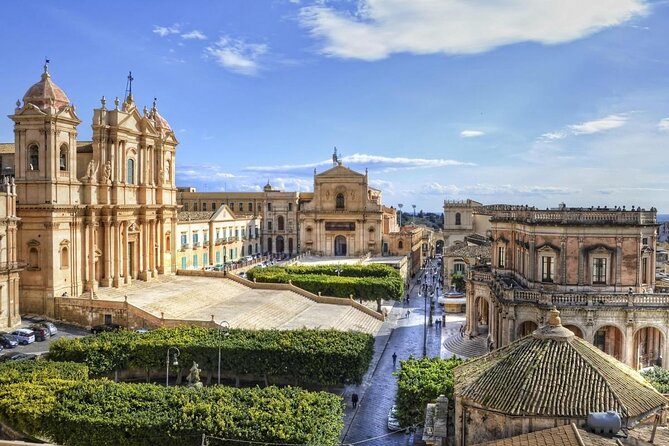
- Seven Baroque stops in 90 minutes keeps the focus tight and walking efficient
- Cattedrale di San Nicolo entry is included, so you don’t have to juggle extra tickets for that highlight
- Trompe-l’oeil church painting plus restored Baroque details gives you variety, not repetition
- English tour with a mobile ticket, useful if you’re juggling a busy trip schedule
Why Noto’s Baroque works so well in 90 minutes
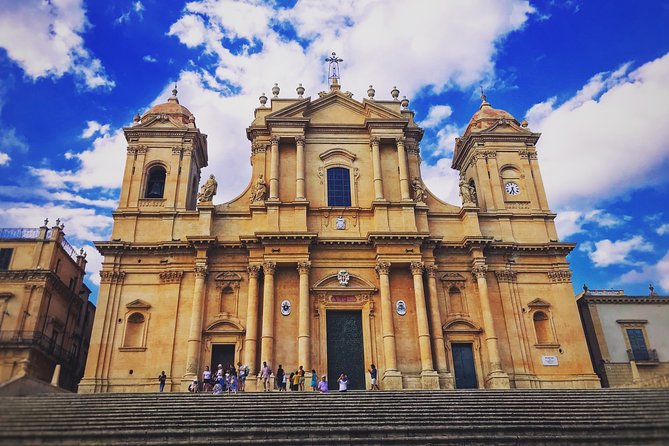
Noto’s Baroque can feel like a lot at first—facades, interiors, statues, ceilings, and street stories all competing for your attention. This tour solves that problem by keeping the pace controlled and the group small, so you can actually connect what you’re seeing to what it meant.
You also get a nice mix of stops: a church with an unusual floor plan, a cathedral shaped by modern history after the 1996 collapse, and even a theater that still has a role in Noto’s cultural life. In short, it’s not just pretty buildings. It’s the logic behind the style.
And because the tour is offered in English and runs about 1 hour 30 minutes, it’s easy to fit into a day that also includes Sicilian food, side trips, or relaxed wandering through town.
You can also read our reviews of more tours and experiences in Sicily.

Who you’ll be with: Dr. Enrica De Melio’s guide style
The biggest reason this tour earns top scores is the guide. Dr. Enrica De Melio is a licensed tourist guide and a PhD archaeologist, and you feel that balance right away: art and decoration are explained, but so are the deeper reasons people built and restored these places.
From the way she’s described by past participants, her approach is part competence, part warmth, and part empathy. That matters because Baroque churches can be visually overwhelming, especially when you’re standing inside them with time ticking away. A good guide helps you pick what to look at first, then makes the rest click.
If you like tours where questions are welcome and the explanations don’t talk down to anyone, this is a strong match—especially for families who want the information without the lecture vibe.
Santa Chiara: the oval-plan church and what to look for first
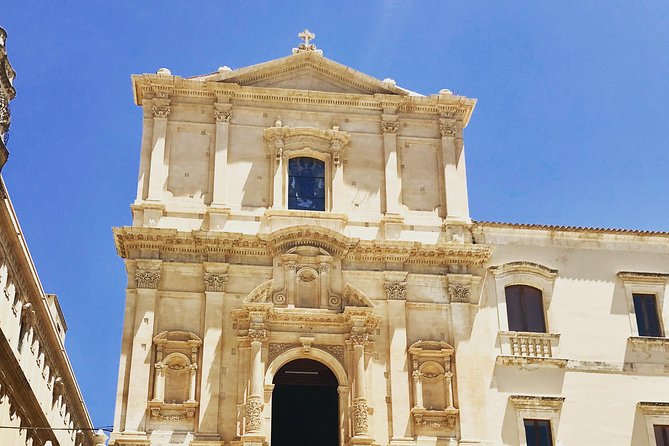
Your first stop is Chiesa Santa Chiara, where you go inside and get oriented fast. Even if you only have a short time, the church is worth the effort because of its distinctive oval layout.
In a town full of Baroque flourishes, architectural shape is a real clue. An unusual plan changes how light moves, how people gather, and how artworks land in your line of sight. With a guide, it’s easier to notice that the building isn’t just decoration—it’s a designed experience.
This stop is listed at about 15 minutes, and admission is free for this part of the tour. That combination—interesting structure plus no extra ticket hassle—sets a great tone for the rest of the walk.
Cattedrale di San Nicolo: what the 1996 dome collapse changed
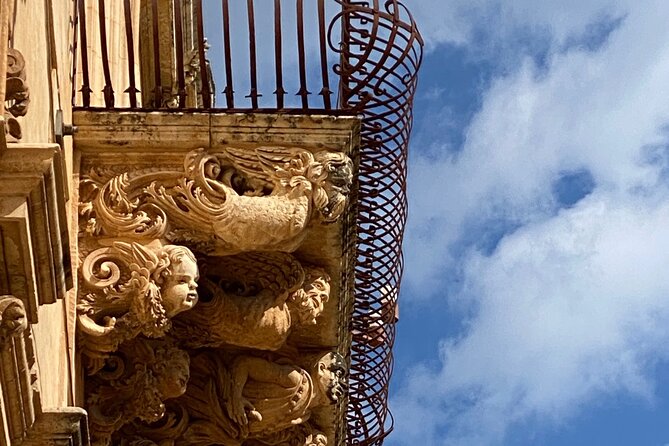
Next comes Cattedrale di San Nicolo. The key story here is practical and dramatic: the cathedral was partially reconstructed after the collapse of the 18th-century dome in 1996.
Why you should care: reconstruction doesn’t just replace what fell down. It can change proportions, materials, and how the interior feels when you step inside. With a guide, you’re more likely to spot what looks restored and understand why modern interventions sit within a historic Baroque shell.
Admission for the cathedral is included in the tour package, even though you’ll see that entry isn’t included for that specific stop label. Either way, plan on it being covered—this tour is designed so you don’t get stuck buying the one ticket that matters most here.
Via Corrado Nicolaci and the Infiorata tradition
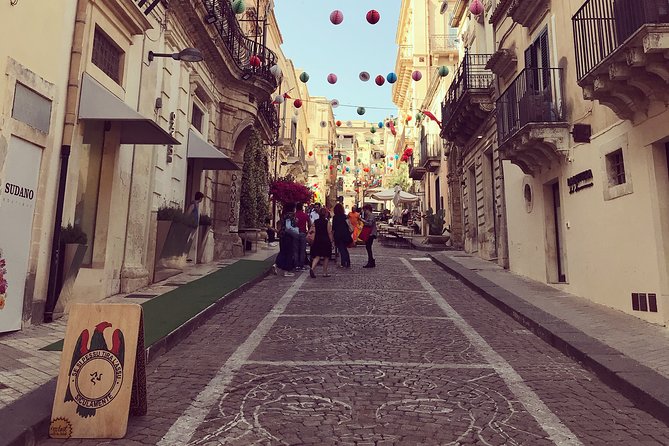
After the cathedral, you shift to the street: Via Corrado Nicolaci. This is where Noto’s Baroque moves from buildings to living tradition, because the guide connects the street to the famous Infiorata that happens each year.
Here’s the value of this stop: it helps you see Baroque as a seasonal culture, not just stone and paint. Street celebrations turn architecture into a stage, and the guides’ explanation makes you look differently when you later wander on your own.
This is a shorter stop (around 10 minutes) and admission is free. Think of it as the bridge between the quiet interiors and the more ornate facades you’ll see next.

Palazzo Nicolaci: reading the facade and the family story
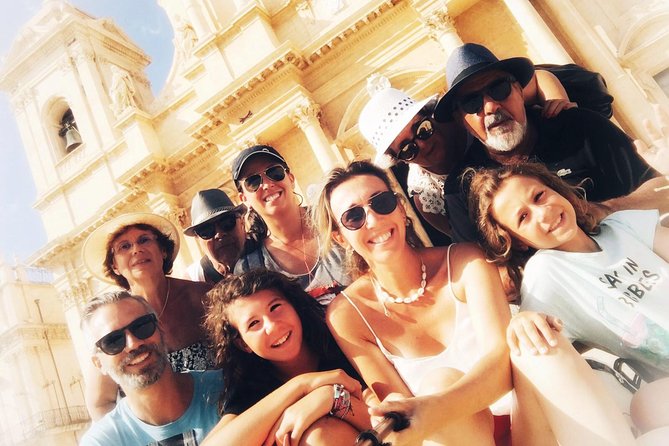
Then you go to Palazzo Nicolaci, where the guide explains the facade and talks about the family that lived there.
Facades can be tempting to treat like backgrounds—pretty fronts that you photograph and move on. A guided stop changes that. When someone explains who paid for the building and why, the facade turns into a communication tool: status, taste, and local power made visible.
This stop is about 15 minutes and admission is free. That’s the right length for a palazzo exterior because you can take in the details without burning half your day. You’ll also be better prepared to notice how the street’s architecture fits together as you stroll afterward.
Trompe-l’oeil at San Carlo Borromeo: art that tricks your eyes
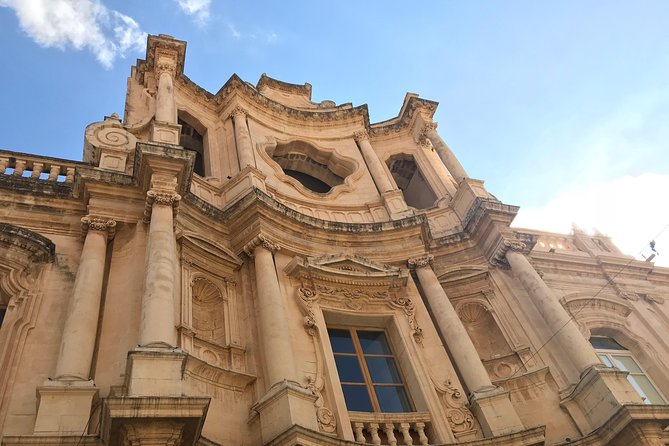
Next is Chiesa di San Carlo Borromeo, known for two side chapels with painted decoration using trompe-l’oeil techniques.
Trompe-l’oeil is one of those artistic methods that feels magical in person and logical once you know what to look for. A guide helps you understand how the painting creates depth cues, where the illusion begins, and why the effect would have mattered to worshippers and visitors.
This stop is shorter (around 10 minutes) and admission is free. Even with limited time, it’s a memorable contrast after the exterior storytelling: you’re focusing on how paint and perspective can make architecture feel bigger than it really is.
San Domenico restoration and why timing matters
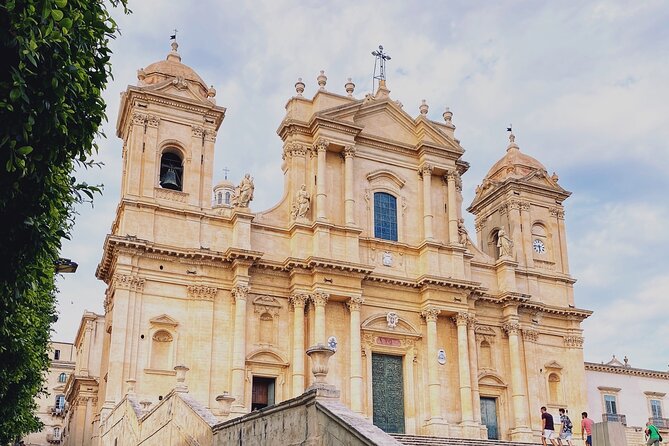
Your penultimate church stop is Chiesa San Domenico, described as realized by Gagliardi and recently restored.
Restoration is one of those topics where a little context goes a long way. When you see a Baroque interior that looks sharp and detailed, it can be tempting to assume it’s all original. But restoration affects textures, color balance, and what survives from the original work versus what’s been stabilized or corrected.
This stop is about 10 minutes and admission is free. The short time is perfect here: you get the main visual points and the reasons behind the current look.
Teatro Tina Di Lorenzo: Baroque town life beyond churches
The final stop is Teatro Tina Di Lorenzo, built in 1880 and still in use for Noto’s theater and concert season.
This is an underrated kind of stop. You might start the tour thinking it’s only about churches and palaces. Ending with a working theater gives you a broader view of Noto’s cultural identity: Baroque style may dominate the architecture, but the town’s creative life continues in newer forms too.
This stop is around 15 minutes and admission is free. If your travel style is part sightseeing and part soaking up local atmosphere, you’ll likely enjoy how this feels less like a museum and more like a living town.
Price value: what you get for your time (and what you don’t)
Even without pricing listed here, you can still judge value by the package design. You’re paying for a licensed guide experience that focuses the walk and interprets what you see, in a group capped at 6. That small size is not a luxury detail—it’s what makes short stops feel meaningful instead of rushed.
Also important: the tour includes entry for the Cattedrale di San Nicolo, which is the one stop where admission clearly matters in the package. Everything else on the walk is marked as free for the tour’s time at each site.
What you shouldn’t expect: transportation to and from attractions is not included. The tour starts at Porta Reale or Ferdinandea and ends at Piazza XVI Maggio, so you’ll want to keep your shoes ready and your post-tour plan simple.
Practical tips so the 90 minutes feel smooth
- Dress in smart casual. Churches are part of the experience, so comfort matters, but keep it neat.
- Bring a phone or camera, since you’ll likely want photos of oval-plan architecture and trompe-l’oeil effects.
- Plan to arrive early. The meeting point is specific, and you’re walking through multiple locations.
- If you’re sensitive to heat or crowds, go with a time of day when Noto feels comfortable. The tour needs good weather.
One more small thing: because it’s offered in English with a short duration, I recommend you come with at least one curiosity question. Even something simple—why this plan shape, why this restoration—will help you get more out of the guide’s explanations.
Should you book the Noto Baroque Masterpieces tour?
I’d book this if you want a focused introduction to Noto Baroque that doesn’t leave you drowning in details. The combination of Dr. Enrica De Melio’s background, the max 6 group size, and the mix of architecture, painting, and a still-active theater makes it a practical way to learn fast.
I wouldn’t make it your only Noto plan if you hate walking or if you prefer unstructured wandering with long photo stops. This tour is designed for short, guided moments at key places, then letting you use the knowledge you gained to explore on your own.
If you’re visiting Noto for the first time and want your time to count, this is one of the easiest ways to do it.
FAQ
How long is the Noto Baroque Masterpieces tour?
It lasts about 1 hour 30 minutes.
Is the tour offered in English?
Yes, the tour is offered in English.
What group size should I expect?
The tour has a maximum of 6 travelers.
Where does the tour start?
The meeting point is Porta Reale or Ferdinandea on Corso Vittorio Emanuele, 182, 96017 Noto SR, Italy.
Where does the tour end?
It ends at Piazza XVI Maggio, 96017 Noto SR, Italy.
Is it a mobile ticket?
Yes. The tour uses a mobile ticket.
What admission is included?
Entry to the Cattedrale di San Nicolo is included.
Is transportation provided during the tour?
No. Transportation to/from attractions is not included.
What weather conditions does the tour require?
This experience requires good weather. If it’s canceled due to poor weather, you’ll be offered a different date or a full refund.