REVIEW · PALERMO
Palermo: alla scoperta dei suoi monumenti, storie e mercati
Book on GetYourGuide →Operated by Antonella · Bookable on GetYourGuide
Palermo turns history into a walk. This 3-hour center stroll pairs UNESCO monuments with real-life street scenes, so you get context as you move. I especially like the way the guide connects the city to street food markets and bigger-than-life stories, including mafia legends and pop-culture references (films, novels, TV). One note up front: the tour is Italian-only, and you’ll need modest clothing for the Cathedral.
If you want the easiest possible start, be ready for a walking route through busy areas. The pace is perfect for seeing a lot without feeling rushed, but you will spend time on uneven sidewalks and market streets, especially near the Capo and Pretoria areas.
In This Review
- Key highlights worth your time
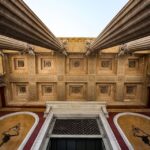
- Teatro Massimo: where Palermo’s grandeur starts
- UNESCO monuments: Opera dei Pupi and Palermo Cathedral
- Mercato del Capo: Arab-origin market energy and a street-food stop
- Cassaro to Quattro Canti: old Palermo’s main stage
- Piazza Bellini: coffee breaks, church-side sweetness, and time to reset
- Piazza Pretoria and the Ballarò–Vucciria edge
- Stories, films, and mafia lore: why the guide style matters
- Price and time: $41 for 3 hours, and what you actually get
- Accessibility and comfort on a walking route
- Who should book this Palermo monuments and markets walk
- Should you book this Palermo tour?
- FAQ
- Is this tour only available in Italian?
- How long is the walking tour?
- What is included in the price?
- Do I have to pay for the cathedral entrance?
- Is street food included?
- Where does the tour meet?
- What should I wear for the cathedral?
- Is the tour wheelchair accessible?
- What are the cancellation and payment options?
Key highlights worth your time
- Teatro Massimo as the perfect opening: Belle Époque drama, plus connections to the historic Florio family.
- UNESCO sites on one route: the Opera dei Pupi area and Palermo Cathedral, with key moments like the 1130 coronation.
- Mercato del Capo street-life focus: an Arab-origin market atmosphere and a stop built for tasting.
- Cassaro to Quattro Canti: Palermo’s oldest main street leading into the showpiece square often used as a film set.
- Piazza Bellini breaks up the walking: coffee and nuns’ sweets from Santa Caterina.
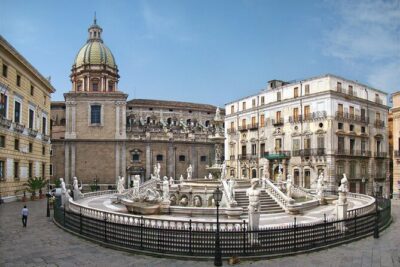
- Piazza Pretoria at the market edge: the fountain of Shame and a view into the Ballarò–Vucciria neighborhood.
Teatro Massimo: where Palermo’s grandeur starts
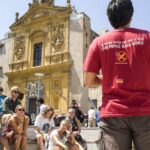
The tour begins in front of the Banca d’ltalia, with the guide holding a card that says Guida Turistica. From there, you head to Teatro Massimo, Italy’s largest opera house. This is a smart first stop because it frames Palermo’s story as something more than old ruins. You start with the city’s 19th-century energy and the Florio family, whose role in Palermo’s rise helps explain why the city invested so heavily in culture and spectacle.
Teatro Massimo also works as an orientation point. Even if you’re not an opera fan, the building gives you scale and style cues. Palermo can feel layered and confusing at first; starting here helps you understand the “before and after” moments the guide will keep referring to as you walk.
You can also read our reviews of more tours and experiences in Palermo.
UNESCO monuments: Opera dei Pupi and Palermo Cathedral
One of the biggest values here is that you’re not just seeing one famous building. You’re getting a line-up of UNESCO-linked places in a walkable arc through the historic core.
First, you pass the famous Opera dei Pupi theater area. The guide uses it to set up Palermo’s long tradition of storytelling through puppetry, which matters because it reflects how culture traveled and adapted over time. It’s a quick moment, but it acts like a cultural bridge before the heavier symbolism of the cathedral.
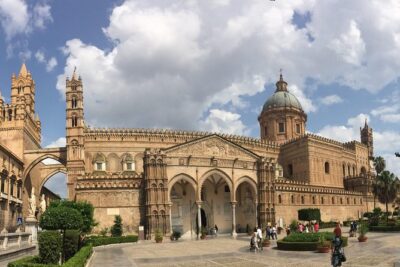
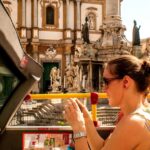
Then comes Palermo Cathedral, a key UNESCO site that blends architectural influences you can actually spot while you’re there. You learn why it looks the way it does and why the building tells a story of a multi-ethnic Sicily. The guide also anchors the visit in dates and figures that shaped power in the region. Two highlights the tour emphasizes:
- the first king of Sicily was crowned here in 1130
- the tomb of Frederick II is within the cathedral
Entrance is noted as free, which helps keep your budget under control. The one real caution: you need modest clothing to enter. If you’re traveling in summer heat, it’s worth planning light layers that still meet that rule.
Mercato del Capo: Arab-origin market energy and a street-food stop
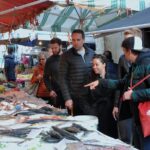
Next, the route shifts from monument-reading to street-level life at Mercato del Capo. This market is known for its Arab-origin roots, and the guide uses that background to explain why the area feels the way it does: the density, the rhythm, the mix of locals doing everyday tasks while food stalls do their own thing around them.
You’ll also understand why fish restaurants have such a strong presence here. Even without going deep into menus, just hearing the history behind the market helps you read what you’re seeing instead of treating it like a random lunch area.
This is where the tour becomes practical: there’s a short stop where you get the chance to taste classic Palermo street food. Food is not included in the price, so you’ll be paying for what you choose, but you’re not left guessing. The guide’s job here is to tell you what to try and how to order without turning the market into a confusing experiment.
If you care about value, this stop is a good one: you get a guided food moment in a place where self-guided wandering can easily lead to overpriced or wrong choices.
Cassaro to Quattro Canti: old Palermo’s main stage
After the market scene, you cross the Cassaro, described as Palermo’s oldest street. Walking it with a guide changes the experience. Instead of seeing a long stretch of buildings, you start noticing patterns: where power concentrated, how different eras left marks, and how the street connects key parts of the city center. It’s one of those stretches where the guide’s storytelling turns distance into meaning.
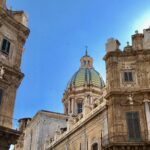
Then you reach Quattro Canti, the central square of historic Palermo. This is one of those places where the architecture almost feels staged, and it’s also why it’s frequently used as a film set. On the tour, Quattro Canti is more than a photo stop. The guide ties its visual layout to the city’s historical organization, so you understand why it looks like it does and what it symbolized for everyday movement through Palermo.
This segment is also a useful break for your mental map. By the time you’re standing here, you have a clearer sense of where you are relative to the bigger sights.
Piazza Bellini: coffee breaks, church-side sweetness, and time to reset
The tour then reaches Piazza Bellini, which functions as a small reset before the final stretch. This is where the city’s atmosphere feels more social and slower. You’re encouraged to take a coffee break here, and the tour highlights that it’s among the best in the world.
Just as important, you get a taste of Palermo’s religious-and-food connections. The tour points you toward the sweets tied to the nuns of Santa Caterina. Again, you’re not required to buy anything, but you’re given a clear direction for what to look for when you’re ready.
Why this matters for you: after walking the heavy historic core and market streets, you’ll appreciate a moment that’s easier on the pace. Piazza Bellini is a good place to regroup, drink something, and let your brain absorb what you’ve just learned.
Piazza Pretoria and the Ballarò–Vucciria edge
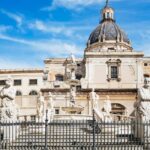
The tour ends at Piazza Pretoria, near the markets of Ballarò and Vucciria. This finale is designed like a smooth handoff: you finish at a dramatic sight, then you’re placed right where you can keep exploring on your own.
Piazza Pretoria is known for the fountain often called the fountain of Shame. The guide frames it as an artistic statement and a lesson in how meaning can shift with time and context. You’ll also take in the surrounding monasteries, churches, and palaces that make this square such a strong visual finale.
From here, you’re close to Ballarò and Vucciria, which means you can extend your evening with more market atmosphere. Since food and drinks are not included on the tour, this ending helps you decide what you want next without feeling like the guided portion has left you stranded.
Stories, films, and mafia lore: why the guide style matters
This is not a “stand here, take a photo, move on” walk. The guide tells Palermo through stories: legends, mysteries, miracles, heroes, and mafia themes. The tour also references Palermo in films, novels, and TV series, which is a big deal if you’ve encountered the city in pop culture but haven’t understood the real geography behind it.
I like this approach because it gives you a second way to remember what you saw. Architecture can fade from memory, but a good story stays. And in Palermo, where so many layers overlap, story-based context helps you connect distant points you’d otherwise treat as isolated stops.
You may be guided by Antonella or Fabrizio. The guides are described as attentive, welcoming, and professional, with explanations that don’t rush past the meaning of details. That’s the difference between a tour that shows you places and one that helps you read Palermo.
Price and time: $41 for 3 hours, and what you actually get
At about $41 per person for a 3-hour walking tour, the value depends on what you’re optimizing for.
You’re not just paying for walking access. You’re paying for:
- a route through the historic center with key monuments efficiently grouped
- explanations that connect UNESCO sites to the city’s bigger power story
- a market stop built around the right kind of street-food decision-making
- practical tips on where to drink coffee and what sweets are worth looking for
Because entrance fees are not included (and the cathedral entrance is free), your main added costs will be food and drinks. If you skip the extra purchases, you can keep expenses tight. If you do try the street food stop and enjoy a coffee or dessert, the guide’s direction is the part that usually pays back.
In practical terms, 3 hours is a good window for people who want the highlights without turning the day into a full-day endurance test.
Accessibility and comfort on a walking route
The tour is listed as wheelchair accessible, which is a big plus. Still, you should expect some uneven city surfaces and crowded areas near markets. If mobility is a concern, it’s worth going at the group’s pace and bringing supportive footwear for walking.
Since you’re outdoors most of the time, dress for sun and wind. And since cathedral entry requires modest clothing, plan light layers that still meet that requirement.
Who should book this Palermo monuments and markets walk
This tour is a strong fit if you:
- want UNESCO-linked monuments plus market life in one outing
- enjoy guided storytelling instead of only historical facts
- want help choosing what to eat in busy places (especially around Mercato del Capo)
- like tours in Italian and don’t mind that the whole experience is conducted in that language
It’s also ideal if you’re short on time. The route hits Teatro Massimo, Palermo Cathedral, Quattro Canti, Piazza Bellini, and Piazza Pretoria without requiring you to plan separate visits.
If you’re traveling with someone who hates walking, you may want to consider a shorter alternative or go prepared for a steady pace for 3 hours.
Should you book this Palermo tour?
I’d book it if you want a guided path through Palermo that makes the city feel connected, not just stop-by-stop. The combination of UNESCO monuments, the Arab-origin market atmosphere at Mercato del Capo, and the ending at Piazza Pretoria near Ballarò–Vucciria gives you both structure and freedom.
Skip it only if Italian-only tours are a dealbreaker for you, or if modest clothing for the cathedral isn’t practical. Otherwise, this is one of the better ways to get oriented fast and start seeing Palermo the way locals do: with food, stories, and monuments all in the same frame.
FAQ
Is this tour only available in Italian?
Yes. The tour is conducted in Italian only.
How long is the walking tour?
The duration is 3 hours.
What is included in the price?
You get a guided walking tour with a professional tour guide. Entrance fees and food/drinks are not included.
Do I have to pay for the cathedral entrance?
The information provided notes that the Cathedral entrance is free, and entrance fees are not included in general.
Is street food included?
Food and drinks are not included. The tour includes a short stop where you have the opportunity to taste Palermo street food, but you’ll pay for what you choose.
Where does the tour meet?
It meets in front of the Banca d’Italia. The guide will have a card that says Guida Turistica.
What should I wear for the cathedral?
You must wear modest clothing to enter the cathedral.
Is the tour wheelchair accessible?
Yes, it’s listed as wheelchair accessible.
What are the cancellation and payment options?
You can cancel up to 24 hours in advance for a full refund. There is also a reserve now & pay later option.