REVIEW · PALERMO
Palermo: NO Mafia Walking Tour
Book on GetYourGuide →Operated by Addiopizzo Travel · Bookable on GetYourGuide
Palermo’s Mafia story hits harder than TV. This guided walking tour through Palermo’s historic center connects major landmarks with the civil anti-Mafia movement, so the topic feels practical, not mythy. You’re walking in the same streets where intimidation, compliance, and courage have shaped daily life, and your guide keeps the focus on what’s at stake. Mafia beyond myths is the point.
I especially like how the route threads big-name sights into the narrative, including Teatro Massimo and the surrounding old-city fabric. I also love the stop-and-look moments tied to civic resistance, like the orange stickers along the Cassaro linked to pago chi non paga (I pay who does not pay).
One possible drawback: it’s a serious subject, and it’s a 3-hour walking format, so plan for a listening-heavy experience with comfortable shoes.
In This Review
- Key takeaways before you go
- Why this tour is more than a Mafia-themed walk
- Route highlights around Teatro Massimo and the Cassaro
- Il Capo market stop: how daily commerce fits the story
- Piazza della Memoria: remembrance with a clear civic focus
- Piazza Beati Paoli, Palermo Cathedral, and Palermo City Hall
- The anti-Mafia movement story: past, present, and what changes
- What 3 hours on foot feels like in Palermo
- Price and value: what $40 really buys you
- Who should book this tour (and who might prefer something else)
- Pairing it with your remaining Palermo time
- Should you book the Palermo No Mafia Walking Tour?
- FAQ
- How long is the Palermo No Mafia walking tour?
- What’s the price, and what’s included?
- What major places will we see during the walk?
- Which languages are available for the live guide?
- What should I bring?
- Is free cancellation available?
Key takeaways before you go
- Orange stickers on the Cassaro point to businesses that refused extortion, tied to pago chi non paga (I pay who does not pay).
- Piazza della Memoria is a real memorial space for prosecutors and judges killed by the Mafia.
- Teatro Massimo and Il Capo market area anchor the story in Palermo’s everyday city life.
- Guides like Linda, Valeria, and Giuseppe are repeatedly praised for staying engaging and answering questions clearly.
- Addiopizzo charitable contribution means your ticket supports the anti-Mafia work the tour highlights.
- Small group pacing helps you keep up without feeling rushed through the details.
Why this tour is more than a Mafia-themed walk
Palermo has a way of making big stories feel personal. This tour doesn’t treat the Mafia like a movie villain or a glamorous gang. Instead, it frames Cosa Nostra as something that moved through society, politics, and local economics, and it explains why resistance came from ordinary people too.
What makes this worthwhile is the balance between explanation and location. You’re seeing landmarks you’d likely pass on your own, but the guide connects them to how the Mafia operated—and how the anti-Mafia movement pushed back over time, with attention to what’s happening now and what comes next. You get the civic side, not just the crime side.
And since the experience includes a contribution to Addiopizzo, it also avoids the feel of education that ends when the tour ends. You’re learning the story and supporting the work the story is about.
You can also read our reviews of more walking tours in Palermo
Route highlights around Teatro Massimo and the Cassaro
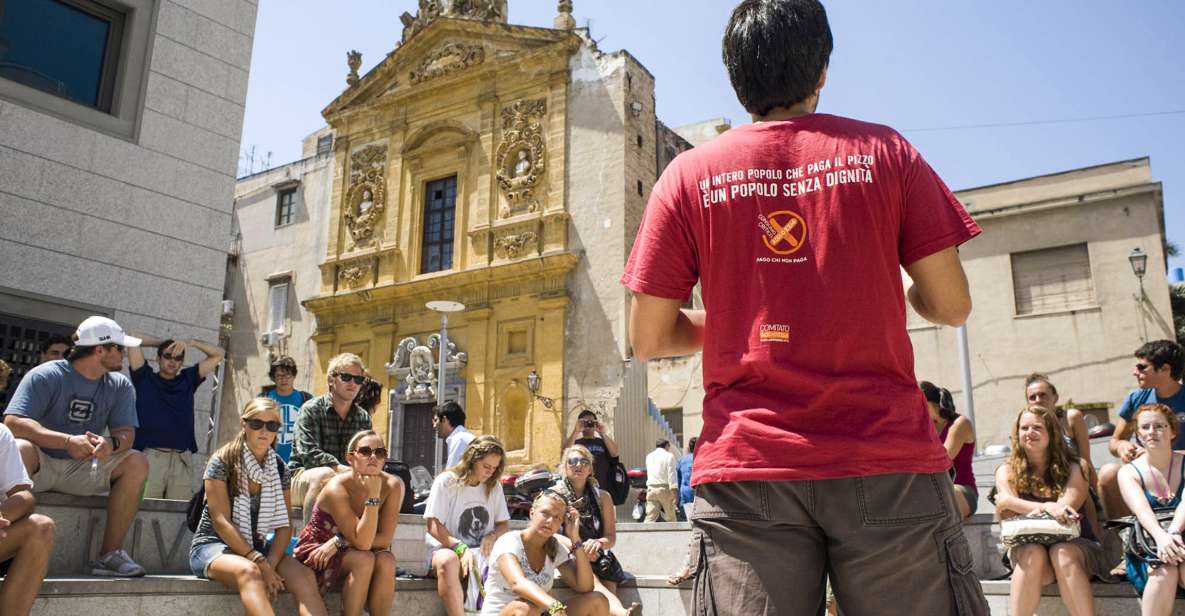
The walking route centers on Palermo’s historic core, where you’ll feel the city’s energy even when the conversation turns heavy. Early on, you’re guided through major landmarks and the surrounding street life, so the tour stays grounded in how Palermo really looks and moves.
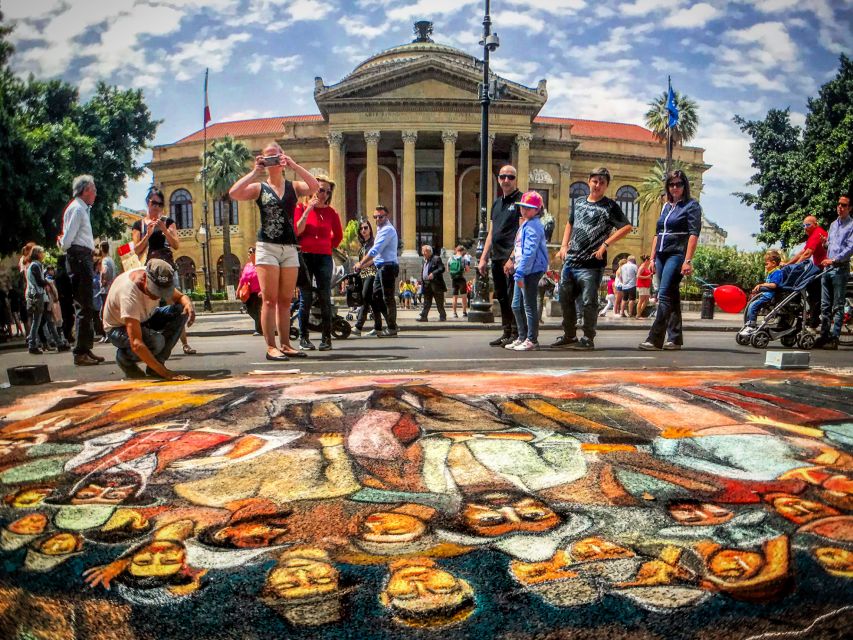
One of the most memorable segments is the area around Teatro Massimo. Even if you’ve never been inside, it’s a huge cultural landmark in Palermo, and your guide uses it as a starting point to talk about the city’s transitions and how power structures influence public life. Then the walk flows toward the Cassaro, the main artery of the historic center, where commercial streets show the human scale of the Mafia’s pressure.
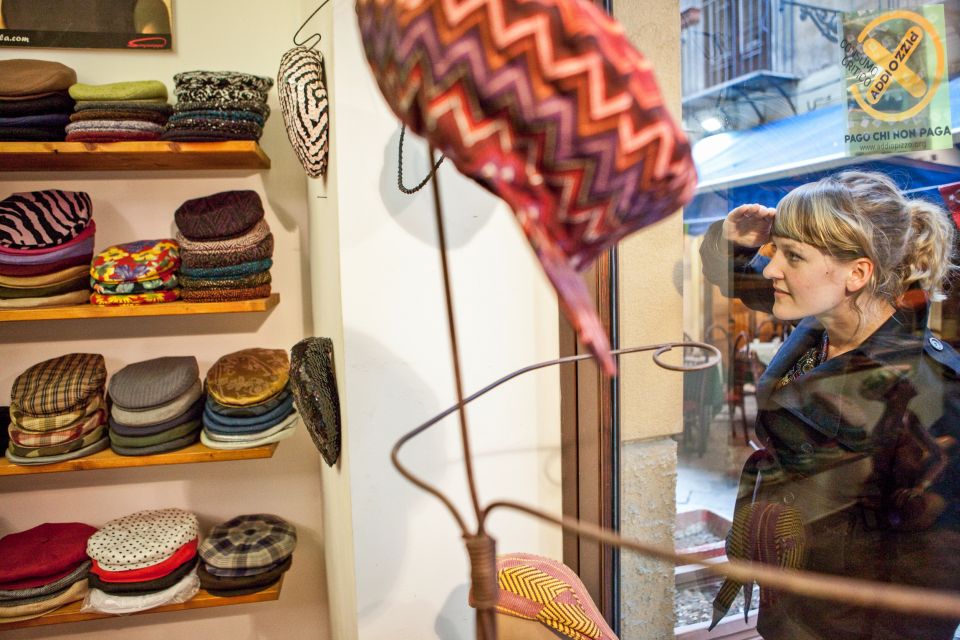
This is also where you’ll notice the orange stickers on shop windows. They aren’t decorative. They’re part of an ethical consumer campaign—pago chi non paga (I pay who does not pay)—that identifies businesses that said no to extortion. Seeing that in person is one of those moments that makes the topic feel current instead of stuck in the past. You’re not just learning about resistance; you’re looking at its visible traces.
Practical note: you’ll cover enough ground that you want to keep your pace comfortable. If you slow down to look around, you’ll get more out of it.
Il Capo market stop: how daily commerce fits the story
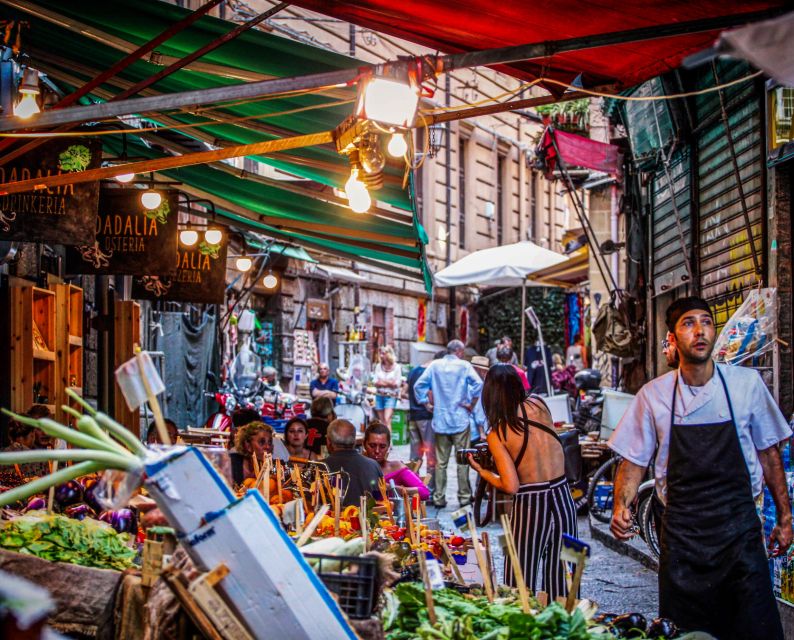
One of the stops that helps the tour stay real is the visit to the Il Capo market area. Markets are where you see social life at street level—people haggling, chatting, buying food, and moving through the day.
Your guide uses this kind of setting to explain how the Mafia phenomenon wasn’t only about violence. It also mattered because of everyday economic pressure: who gets support, who gets cut off, and how intimidation can shape what people do long before any dramatic headlines. When your guide talks about that, Il Capo helps the message land.
This stop also keeps the mood from becoming only memorial and courtroom talk. It reminds you that the story is woven into the normal routines of Palermo. If you want context that connects theory to street reality, this is one of the best places to get it.
Piazza della Memoria: remembrance with a clear civic focus
At Piazza della Memoria, the tour shifts from explanation to commemoration. This memorial is dedicated to prosecutors and judges killed by the Mafia, and it gives the tour a strong moral center.
What I like about including this stop is that it reframes the anti-Mafia movement as something built around institutions and public courage—not just street-level defiance. It’s easier to understand why Palermo’s resistance has multiple layers: legal work, civic action, community pressure, and the slow work of changing what people feel they’re allowed to do.
It’s also the kind of stop where your guide’s tone matters. The best guides keep it respectful and specific, helping you understand who was targeted and why their loss mattered beyond one case. The goal isn’t shock—it’s clarity about what Mafia violence tried to protect and what anti-Mafia work tried to defend.
Give yourself a minute to pause and look around. If you rush through this stop, you’ll miss the emotional weight it’s meant to carry.
Piazza Beati Paoli, Palermo Cathedral, and Palermo City Hall
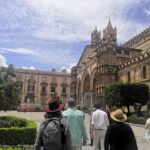
After the major civic memorial element, the tour keeps rolling through more landmark-rich streets. You’ll pass by Piazza Beati Paoli, then continue toward historic anchors such as Palermo Cathedral and the city hall area.
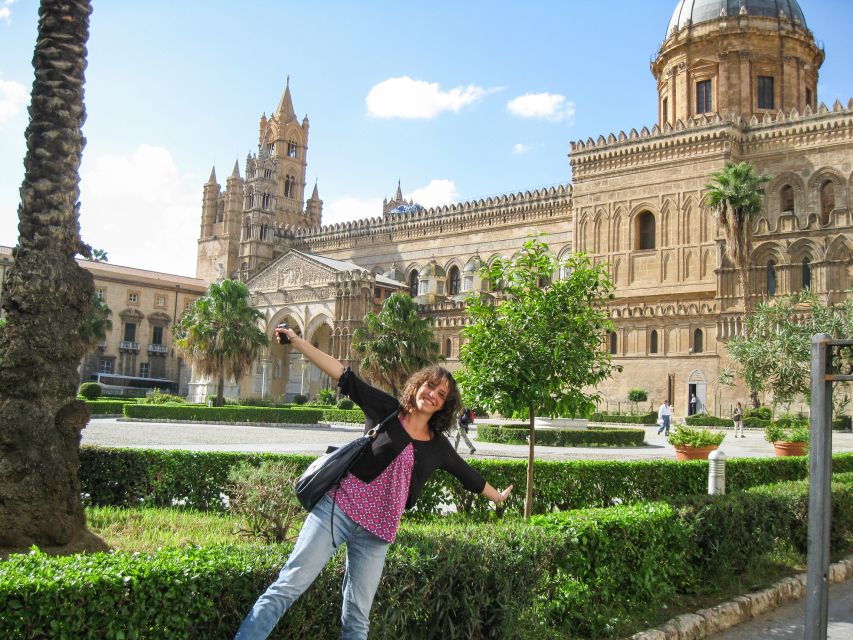
These stops might sound like standard sightseeing on paper, but in practice they work because the guide uses them as stepping stones. The Cathedral and city center areas are the kinds of places that represent public life—religious, civic, and social. Your guide ties those meanings to the broader theme: where the Mafia’s influence tried to fit itself into everyday legitimacy, and how the anti-Mafia movement pushed back.
You also get something else here: contrast. The city’s monumental architecture makes you think of stability. But the tour’s narrative reminds you that stability can be fragile when intimidation reshapes people’s choices. That tension is part of what makes the tour memorable.
If you’re the type who likes to ask questions, these segments are great for it. Ask about how the civic movement worked in practice, or why certain public spaces became symbols. The guide format is designed for conversation, not just a monologue.
The anti-Mafia movement story: past, present, and what changes
The best part of this tour is the way it treats the anti-Mafia movement as a real force made of real people. You’ll hear the Mafia history and its role in Sicilian society, but the guide keeps correcting the stereotypes that pop up in pop culture—especially the idea that the only action comes from dramatic criminals or last-minute heroics.
In the guides’ storytelling, one theme shows up again and again: change doesn’t only come from the top. It grows from citizens and grassroots action—people choosing not to cooperate, people supporting ethical consumer choices, and people backing institutions that refuse to be intimidated.
Guides such as Linda, Valeria, Ermes, Laura, Attilio, Marinella, Salvatore, Claudio, and Giuseppe have been praised for exactly this kind of framing: engaging narrative, room for questions, and a clear sense of why the movement matters. If your goal is to understand the Mafia phenomenon beyond clichés, the tour is built for that.
And since the experience also supports Addiopizzo, it naturally ties learning to action. You leave knowing the story’s not only historical.
What 3 hours on foot feels like in Palermo
This is a 3-hour walking tour with a small group and a live guide. That structure matters because it shapes how you absorb the information. With fewer people, you’re more likely to get answers to your questions instead of watching the guide look at the clock.
Language options are Spanish, French, English, and Italian, so you can match your comfort level. Many departures are conducted in English, and guides have been noted for speaking clearly and keeping the full three hours moving without feeling like a lecture marathon.
You also shouldn’t underestimate pacing. Several guide comments mention that they create small breaks when possible—shade, places to sit, and a human rhythm—because Palermo walking can be hot even when you’re not in peak summer. If you’re sensitive to heat, start early in the day when you can and keep water in mind.
Wear comfortable shoes. You’ll be on uneven sidewalks and cobblestones in the historic center.
Price and value: what $40 really buys you
At $40 per person for a 3-hour guided walking tour, the value comes from three things.
First, you’re paying for a local storytelling guide who connects sites to a serious civic topic. This isn’t only about seeing buildings—it’s about understanding the social logic behind how the Mafia functioned and how the anti-Mafia movement countered it.
Second, you get a contribution to Addiopizzo as part of the experience. That turns your ticket into support for the work the tour highlights, not just a pay-to-learn experience.
Third, you’re getting a format that includes multiple landmarks—Teatro Massimo, Il Capo market area, Piazza della Memoria, and more—without paying separate entrance fees. Museums and monument entrances aren’t included, so if you want indoor access, you’ll need to plan that separately.
If your travel style includes asking big questions about how places actually work, this price is easier to justify. If you’re only looking for a casual stroll and photos, you might find the subject matter demanding.
Who should book this tour (and who might prefer something else)
I think this tour is a great fit if you want:
- a clear, grounded explanation of the Mafia’s place in Sicilian society
- the anti-Mafia movement’s civic angle, not just crime stories
- a route through Palermo’s historic center that teaches as you walk
It’s also a strong choice for first-timers in Palermo. Doing it early can help you read the city better afterward—especially the meaning behind public spaces and community signals like the orange stickers on shop windows.
If you prefer low-emotion sightseeing, or if you’re traveling with someone who doesn’t handle heavy historical and political content well, you may want to pair this with a lighter day. There’s no wrong way to travel. Just match the day to your energy level.
Pairing it with your remaining Palermo time
Since the tour ends in the old-town center, you’ll usually have a natural flow into your next activities. Your guide typically shares tips on where to taste Sicilian specialties after the walk, which is helpful because you’ll be in the right neighborhood zone for an easy transition.
If you want to explore more on your own, use the tour as your map of meaning. Look back at the places you visited and ask yourself what the guide emphasized: who had power, who resisted, and what those choices did to daily life.
Also, since entrances aren’t included, treat this as interpretation first. If you want museums or monuments, schedule those as separate stops when you’re ready to pay the extra time and ticket cost.
Should you book the Palermo No Mafia Walking Tour?
Yes—if you want the honest context behind Palermo. This is one of those experiences where the walk becomes a lesson in how civic action can matter, not just a recap of crime trivia.
The strongest reason to book is the combination of major landmarks with a civil resistance framework, plus the Addiopizzo support. The most important reason to hesitate is the seriousness of the subject and the fact that you’ll be walking and listening for three hours.
If you’re comfortable with intense history and you like guided storytelling that connects the street to society, book it early in your Palermo trip and plan your day around it.
FAQ
How long is the Palermo No Mafia walking tour?
It lasts 3 hours.
What’s the price, and what’s included?
The price is $40 per person. It includes a guided walking tour, your guide, and a contribution to the Addiopizzo charitable organization.
What major places will we see during the walk?
You’ll see landmarks such as Teatro Massimo, Il Capo (open-air market area), Piazza della Memoria, Piazza Beati Paoli, Palermo Cathedral, and the city hall.
Which languages are available for the live guide?
The live tour guide is offered in Spanish, French, English, and Italian.
What should I bring?
Wear comfortable shoes.
Is free cancellation available?
Yes. You can cancel up to 24 hours in advance for a full refund.