REVIEW · PALERMO
Palermo Tour: Magnificent Mixture Of Architectural Styles
Book on GetYourGuide →Operated by Italygonia Travel T.O. · Bookable on GetYourGuide
Palermo in two hours is a lot, because the city never does things halfway. This walking tour puts you right in the historic center and strings together major landmarks with the everyday streets that give Palermo its personality. I like the way it connects big architecture (the cathedral and Teatro Massimo) to the market areas, where the city feels lived-in. I also like the format of a private group with a licensed guide, so you can ask follow-up questions instead of just hearing a script. One thing to consider: it’s a walking tour, so you’ll want comfortable shoes and a pace that works for you.
You’ll start near Piazza Politeama and work your way through the central streets, then into older neighborhoods with Arabic influences, and finish back near where you began. The guiding has real standout praise—guides like Roberta and Marilou have been commended for flexible, in-depth local storytelling and for making Palermo feel authentic rather than museum-like. One possible drawback: the tour doesn’t include entry tickets for the royal tombs, so if that’s a must for you, you may need to plan for extra costs.
In This Review
- Key Points You’ll Remember
- Where the Walk Begins: Piazza Ruggiero Settimo and Politeama Theater
- Linking Palermo’s Main Streets to Teatro Massimo
- Arabic-Influenced Streets: Palermo’s “Older Layer” on Foot
- Capo Market: A Sensory Stop That Explains the City
- Palermo Cathedral and the Frederick II Connection
- Vucciria and Piazza San Domenico: Ending on Real Palermo Streets
- Price and Value for a Private Group (Up to 25 People)
- What the Guide Style Adds (Especially If You Like Real Storytelling)
- Who This Tour Suits Best
- Should You Book This Palermo Architecture and Market Walk?
- FAQ
- Where does the tour start?
- How long is the walking tour?
- What’s included in the price?
- What is not included?
- What languages is the live guide offered in?
- Is free cancellation available?
Key Points You’ll Remember
- Piazza Politeama as your launchpad: the main-street meeting point where you get oriented fast
- Teatro Massimo stop: see Italy’s largest lyric theater and learn why it matters in the city
- Arabic-influenced neighborhoods: you’ll pass the older lanes that shaped Palermo’s look and feel
- Capo Market and Vucciria: marketplaces as a living window into daily Palermo life
- Cathedral visit with royal remains nearby: a big historical anchor for the walk
- Private group feel: easier questions and a more personal pace
Where the Walk Begins: Piazza Ruggiero Settimo and Politeama Theater
The tour kicks off at Piazza Ruggiero Settimo, right in front of the Politeama Theater, next to the statue. I like this start point because it’s easy to orient yourself around Palermo’s central area before you start threading into smaller streets. You’re not dropped into some random back lane immediately—you begin where the city’s main roads meet, which makes the rest of the walk feel more logical.
From there, you’ll head along streets that connect everyday shopping streets with more historic pockets. Expect a steady change in scenery: broad urban space near Politeama, then tighter lanes, then open-air market areas where noise and movement become part of the experience. It’s a good rhythm for a 2-hour outing. And because it’s a guided walk (licensed guide included), you’re not just watching architecture—you’re learning how the pieces fit together.
You can also read our reviews of more tours and experiences in Palermo.
Linking Palermo’s Main Streets to Teatro Massimo
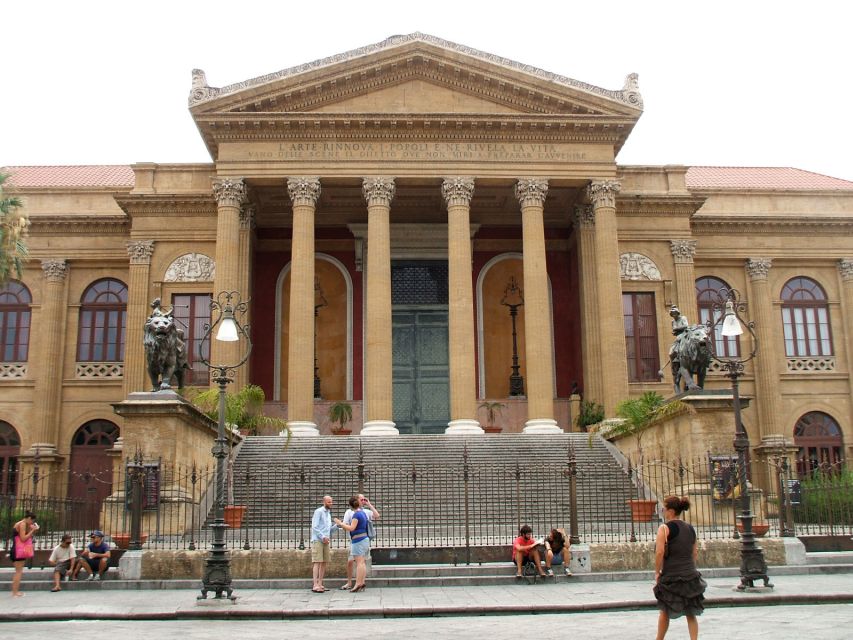
One of the early treats is the transition from the street vibe—shops, storefronts, people moving in and out of doorways—toward a grand cultural landmark: Teatro Massimo. The tour route runs along Via Ruggero VII, nicknamed the living room of Palermo. That phrase matters. It’s basically a local shorthand for a street that’s social, central, and always in motion.
As you walk via Principe di Belmonte with historic shops, you’re building context for why Teatro Massimo is such a big deal. The theater is described as the largest lyric theater in Italy and the third largest in Europe, and even if you’re not a hardcore opera person, you’ll feel the weight of that scale when you’re standing in the area.
I like that the tour doesn’t treat the theater as a photo stop only. It sets up the theater in the middle of the city’s normal street life. That keeps it from feeling like a separate world. You’ll get architecture and city context in the same breath.
Practical tip: if you care about a quick look for photos, do it early around your theater stop. Once the walk continues into older neighborhood lanes and market areas, it’s harder to pause without breaking the flow.
Arabic-Influenced Streets: Palermo’s “Older Layer” on Foot
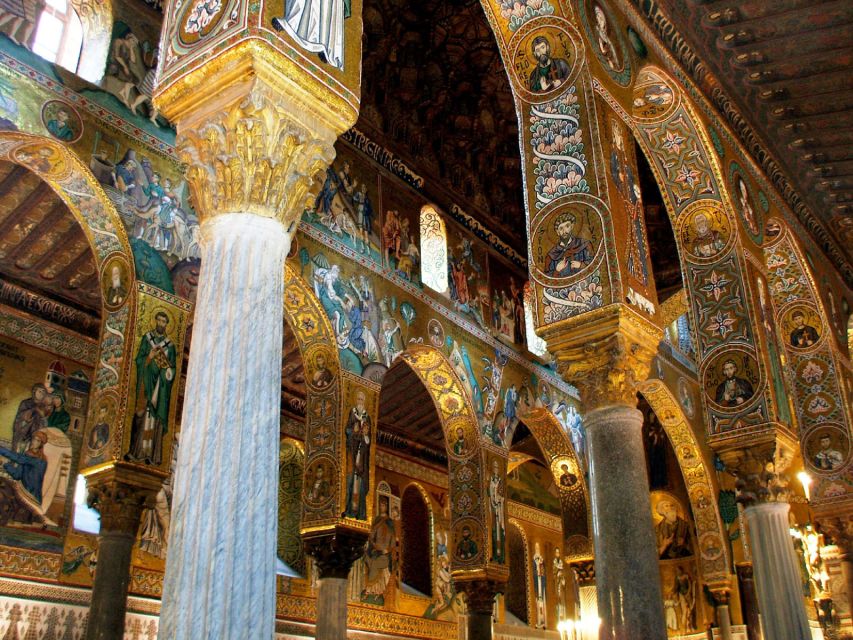
After Teatro Massimo, the walk shifts into areas described as having Arabic origins. This is where Palermo starts to feel like a layered city—different eras leaving traces in streets, shapes, and the look of surrounding buildings.
This part is especially valuable because you experience those influences in the way they were meant to be seen: not from inside a classroom, but by walking past the urban fabric itself. You get the small-scale feel of alleys and side streets. You’re seeing how people actually move through the city, not how a map imagines it.
Also, the walking style matters here. A guided route through these neighborhoods works best when you’re comfortable moving at a local pace. You’ll pass crowded squares and side lanes where the architecture isn’t isolated behind ropes. That’s exactly what makes this section feel real.
And since the tour is private, the guide can steer you around the densest spots when needed, so your experience stays more about learning than about fighting through foot traffic.
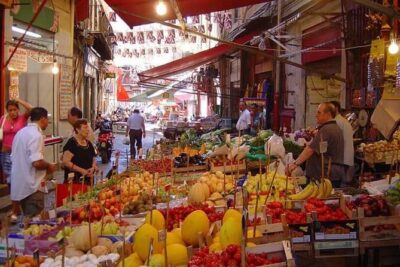
Capo Market: A Sensory Stop That Explains the City
Next up is Capo Market, presented as the most famous market in Palermo. This is one of those stops that can go one of two ways on a tour: it’s either a quick glance, or it becomes a useful snapshot of local life. Here, it’s treated as part of the story of Palermo’s center.
You’re not just looking at stalls. The market stop ties the day together by showing the city’s rhythm. When you walk into Capo Market after passing architectural layers and historic streets, it makes sense why Palermo’s buildings don’t feel “old” in a dead way. People are still living inside the layers.
I also like that the tour doesn’t isolate the market from the larger historical narrative. It’s positioned as another chapter, not a detour. If you want one reason this itinerary is worth the time, it’s that it treats food-and-market culture as something tied to place and history.
Palermo Cathedral and the Frederick II Connection
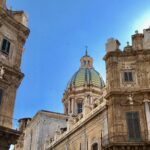
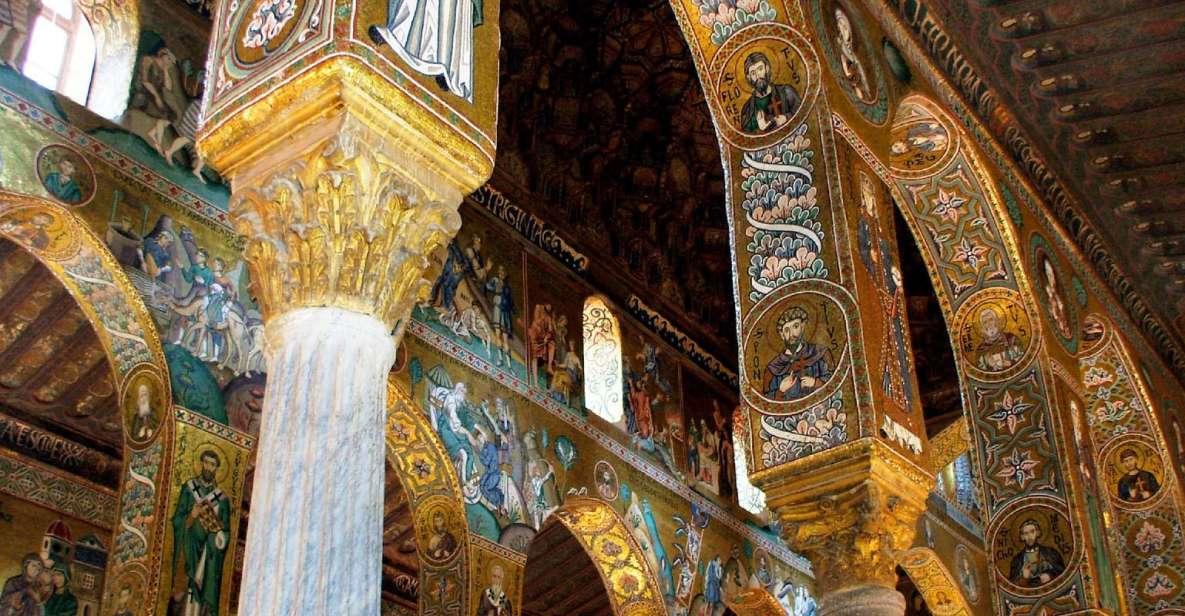
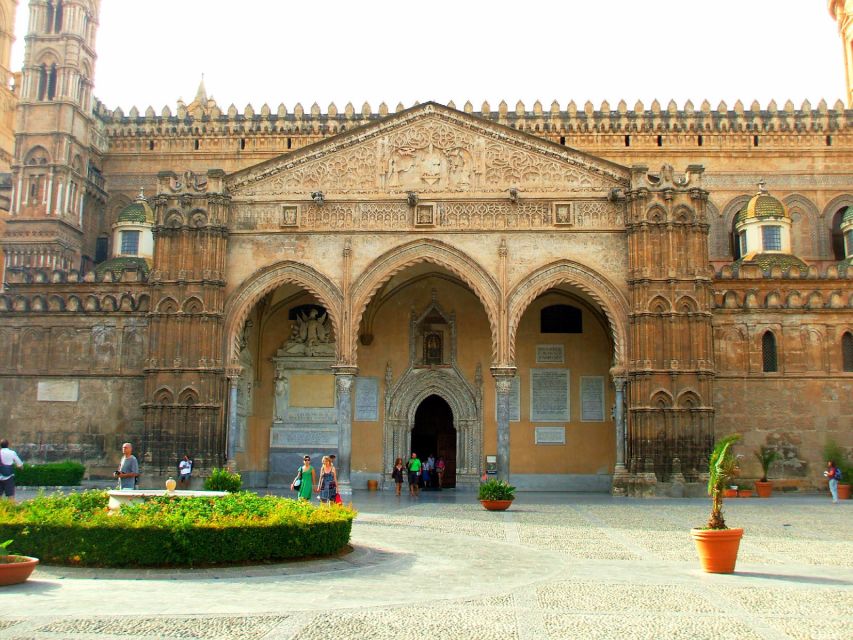
The next major anchor is the Cathedral of Palermo, where the remains of Frederick II of Swabia and his family are kept. Even if you don’t know every detail about Frederick II, this stop gives you a serious historical spine for the walk. Palermo isn’t only a city of pretty facades—it’s a city where major rulers left marks.
There’s also an important note for planning: the tour does not include ticket royal tombs. That means you may see areas associated with the cathedral’s royal connections, but you shouldn’t assume you’ll automatically get full tomb access as part of the standard tour price. If royal tomb entry is a top priority, you’ll want to budget for the additional ticket.
Even with that consideration, a cathedral stop works well in a walking format because it slows the pace. After market movement and tighter streets, you get an architectural breather. It’s the kind of moment where you can look up, take in scale, and understand why this city became such a crossroads of influences.
Vucciria and Piazza San Domenico: Ending on Real Palermo Streets
After the cathedral area, the tour continues to the historic open market of Vucciria. Like Capo Market, Vucciria helps you read Palermo as a living city. You’re seeing another market atmosphere, and comparing it in real time as part of the same walk.
This is also a smart sequencing choice. You’ve already had one market stop (Capo), then you hit the cathedral, then you return to market life. That back-and-forth prevents the day from feeling one-note. It’s history, then daily life, then history again, then daily life again.
Finally, the walk returns to Piazza San Domenico Square, and the tour ends back at the meeting point area near Piazza Ruggiero Settimo. I like that finish, because it makes it easier to keep your day moving after the tour—whether that means continuing on foot, catching a ride, or grabbing a meal nearby.
Price and Value for a Private Group (Up to 25 People)
The listed price is $344.39 per group (up to 25) for a 2-hour guided walking tour. On paper, that looks like a group price rather than a per-person ticket, so the real value depends on how many people are in your group.
Here’s how to think about it: if you’re traveling with family, friends, or you’ve got a small group, you’re paying once for the guide and experience rather than paying separately for each person. That often turns a “tour price” into something closer to a guided orientation plus a structured sightseeing walk.
Also, since transportation/pickup/drop-off isn’t included, you’re mainly paying for the walking route plus a licensed guide. That’s fine because the itinerary is designed for foot movement in central Palermo. You’re not buying a bus ride; you’re buying time and direction in places where self-guided sightseeing can feel scattered.
If your group is large (up to the cap), the cost per person drops. If you’re traveling solo or as a duo, it may still be a good idea when you want a private-group style experience, but it’s best to compare against other Palermo tour options that price per person.
What the Guide Style Adds (Especially If You Like Real Storytelling)
Even though the tour details focus on the route, the real difference usually comes from the guide. In the praise you shared, Roberta and Marilou are highlighted for being flexible, giving profound local knowledge, and sharing an authentic, almost personal-feeling Palermo. That kind of guiding matters more than people think.
A good guide helps you connect what you’re seeing: why an Arabic-influenced neighborhood feels different, why a major theater lands where it does, and why a cathedral stop is tied to royal remnants. It also helps you avoid the common mistake of treating architecture as scenery instead of as evidence of how Palermo changed over time.
With languages including Spanish, English, French, German, and Italian, you should be able to match the guide’s communication to your comfort level, which makes the whole walk easier to enjoy.
Who This Tour Suits Best
This is a great fit if you want a structured way to see Palermo’s historic center in a short window. It’s especially good for you if:
- you like architecture, but you also want the city’s daily life (markets) to be part of the same story
- you prefer walking with a guide rather than wandering without context
- you’re traveling in a group and want the private-group feel
- you care about a cathedral stop connected to major historic figures
It may be less ideal if you want a slow, sit-down tour with long time inside major interiors. The pace is built around walking, viewing, and moving between areas.
Should You Book This Palermo Architecture and Market Walk?
I’d book it if your goal is a high-impact walk: cathedral + major theater + Arabic-influenced lanes + two major market areas, all within a tight 2-hour window. The biggest reason is balance. You’re not stuck in only monuments, and you’re not stuck only in crowds and stalls. The itinerary ties place and history together on foot.
Skip it or plan extra if you’re specifically focused on royal tomb entry, since tickets are not included. Otherwise, this is exactly the kind of central Palermo tour that helps you get your bearings and understand what makes the city look the way it does.
FAQ
Where does the tour start?
The tour starts at Piazza Ruggiero Settimo square, in front of the Politeama Theater next to the statue.
How long is the walking tour?
The duration is 2 hours (starting times vary, so you’ll need to check availability).
What’s included in the price?
It includes a licensed guide.
What is not included?
Not included are ticket royal tombs, tastings/lunch/dinner, and transportation/pickup or drop-off.
What languages is the live guide offered in?
The tour guide is available in Spanish, English, French, German, and Italian.
Is free cancellation available?
Yes. You can cancel up to 24 hours in advance for a full refund.
![|FROM CATANIA| The Godfather - Savoca and Taormina [PRIVATE] - Savoca, the medieval perch where The Godfather still feels close](https://b2.sicily-guide.com/wp-content/uploads/from-catania-the-godfather-savoca-and-taormina-private-400x600.jpg)