REVIEW · PALERMO
Palermo: Art and Architecture Walking Tour
Book on GetYourGuide →Operated by MySicilyGuide · Bookable on GetYourGuide
Palermo changes every few steps. This small-group tour helps you focus on the big stops like the Capella Palatina and Palermo’s stunning cathedral without getting stuck in long lines. I also like that the guide weaves in key legends such as St. Rosalie, so the architecture feels personal, not just historic. The main catch is that entrance tickets are not included, so you’ll still budget for monument entry fees on the day.
What makes it practical is the structure: tight timing, a licensed guide, and headsets if your group is larger than 15 so you can actually hear the story. You’ll also be walking in classic street-stair Palermo, so bring comfortable shoes and expect a fair amount of time outdoors in the sun.
In This Review
- Key things to know before you go
- Why this Palermo art-and-architecture route feels worth it
- Getting oriented around the Politeama sestiere
- Capella Palatina and the Arab-Norman story you can see
- Fontana Pretoria: a famous fountain with a backstory
- Palermo Cathedral: one facade, many eras
- Quattro Canti: street corners that act like stages
- Teatro Massimo: Europe-sized opera, Palermo-sized pride
- The value equation: $317.20 per group (up to 5)
- Timing and walking reality (3 hours means focused, not rushed)
- Who will love this tour most?
- Practical tips so the day goes smoothly
- Should you book this Palermo Art and Architecture walking tour?
- FAQ
- How long is the Palermo art and architecture walking tour?
- Is this tour private, and how many people can be in a group?
- Are entrance tickets to monuments included?
- Which stops are included on the tour?
- What languages are offered by the live guide?
- Is the tour wheelchair accessible, and are there any clothing or bag restrictions?
Key things to know before you go
- Skip-the-line approach with a separate entrance at major sights
- Capella Palatina + Palermo Cathedral for Arab-Norman and multi-era architecture
- Fontana Pretoria viewed for what it represents, not just what it looks like
- Quattro Canti as a street-corner lesson in Palermo’s layout and symbolism
- Teatro Massimo for context on one of Europe’s largest opera houses
- Private group feel (priced for up to 5) with licensed guiding
Why this Palermo art-and-architecture route feels worth it
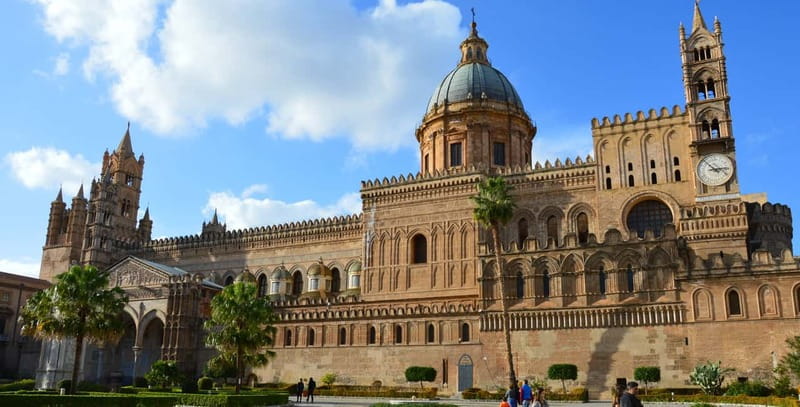
If Palermo feels overwhelming at first, that’s normal. The city center is dense, layered, and visually loud in the best way. This tour is built for that reality. Instead of trying to see everything, it targets the sites that explain Palermo’s style changes and power shifts, from ancient roots to the Arab-Norman era and beyond.
I like that you’re not just standing in front of famous buildings. The guide frames each stop with why it matters: who built it, what belief shaped it, and how it fits into the streets you’re walking through. That makes the hours feel efficient without becoming rushed.
And because it’s designed for small groups, the pace is easier to manage—especially around places where crowds normally pile up. The skip-the-line setup matters. In Palermo, saving minutes isn’t just convenience; it protects the flow of your visit.
One more detail worth appreciating: the tour languages cover a lot of travelers (Russian, English, French, Italian, Spanish, and German). Even when your group isn’t big, you want clear direction and timing.
You can also read our reviews of more walking tours in Palermo
Getting oriented around the Politeama sestiere
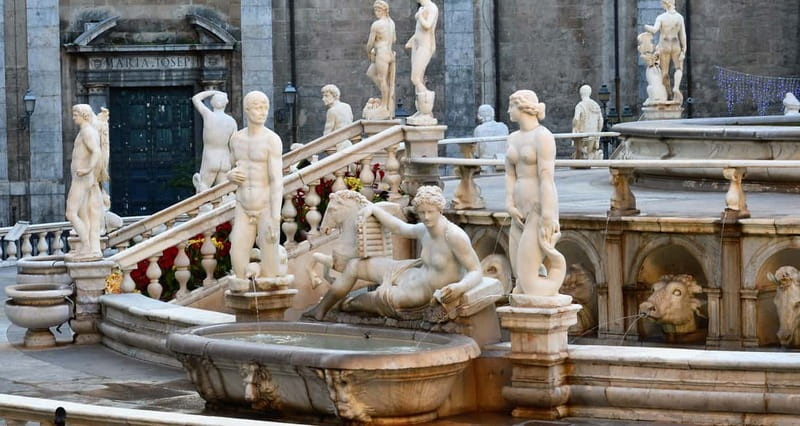
The route starts near Teatro Politeama Garibaldi (or Villa Bonanno, depending on the option you book). From the beginning, you get oriented in the Politeama area—an area that helps you understand how the city’s identity extends beyond the old core.
You’ll make an early photo stop and then move into the parts of Palermo where the architecture starts talking back. This is the moment where a good guide earns their fee. You’ll learn what you’re looking at and why the streets feel the way they do. You also get a sense of how Palermo’s buildings interact—facades, courtyards, and the street grid all tie together.
Practical note: if you’re sensitive to walking, wear shoes you trust. Comfortable footwear isn’t a suggestion on a walking tour—it’s how you enjoy the tour instead of surviving it.
Capella Palatina and the Arab-Norman story you can see
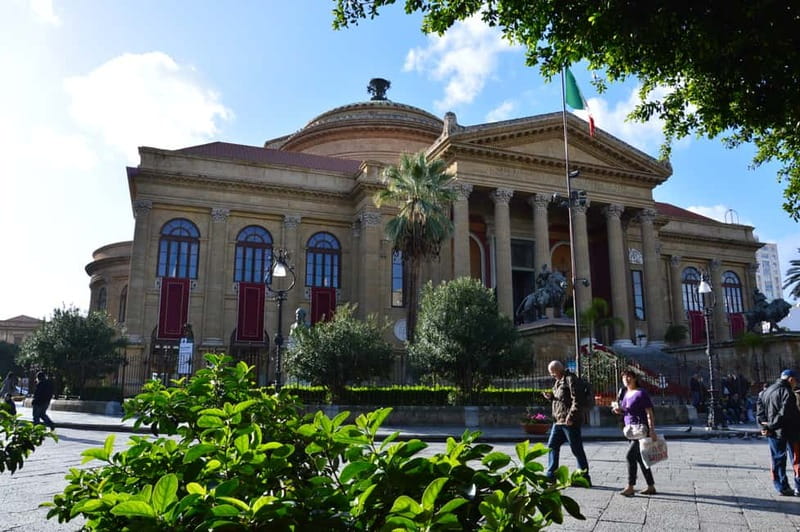
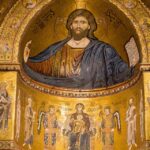
One of the tour’s top draws is the Arab-Norman era, tied to religious rites and palace culture. The star for this is the Capella Palatina (Palatine Chapel), a 12th-century site connected to the Palazzo Reale.
This stop is valuable because it’s the clearest bridge between styles. The chapel is famous for how different artistic influences meet under one roof. Rather than treating it like a museum object, your guide explains what you’re seeing in plain terms, including how Palermo’s rulers used religion and art to signal authority.
What you should expect: you’ll step into a world where decoration isn’t just decoration. It’s a language. The guide helps you read that language quickly, so you don’t spend the visit staring at details without understanding why they’re there.
Also, this tour is structured to help you access major monuments through a separate entrance. That’s a real help here, because famous sites can turn into line marathons.
Fontana Pretoria: a famous fountain with a backstory
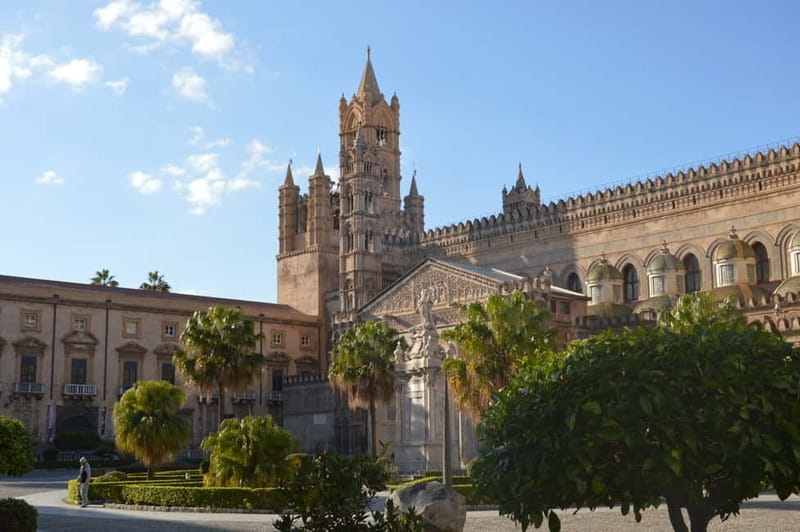
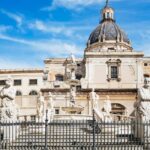
Next comes Fontana Pretoria. It’s photographed constantly, but it can become just a pretty landmark if you don’t get any context. This tour helps you avoid that trap by explaining what the fountain represents and how it fits Palermo’s broader culture of art, power, and public space.
Expect a photo stop plus guided time. That combo matters. You get a moment for your pictures, then you get the story that makes those pictures more meaningful later—especially when you understand how the fountain’s imagery connects to what Palermo wanted to project.
If you’ve never been to a city where fountains are basically political theater, Palermo will convert you fast.
Palermo Cathedral: one facade, many eras
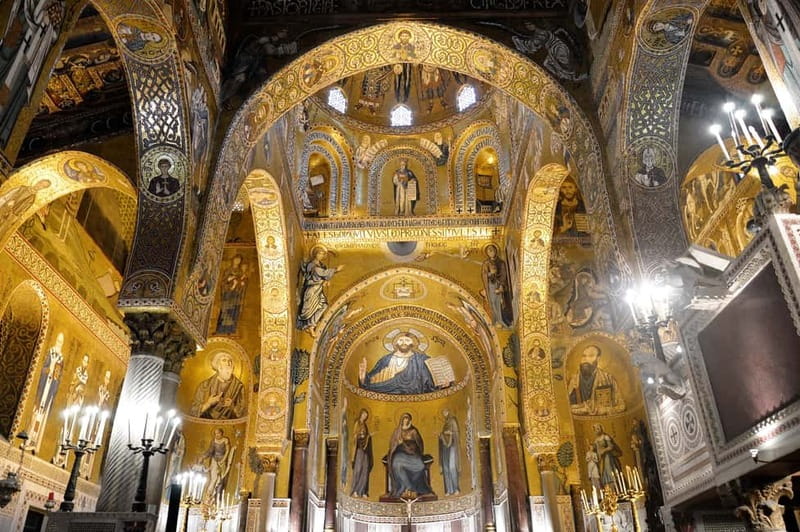
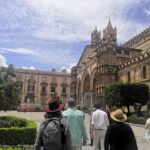
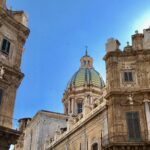
Palermo Cathedral is the big one, and it’s easy to see why it anchors the entire tour. The facade changes style as you look across it, and that’s not just visual variety—it’s a record of time.
Your guided hour here is meant to teach you how to read the building. You’ll notice shifts that reflect different periods, including Gothic through early Renaissance and Baroque influences. That’s the kind of “multi-era building” that most travelers either miss or barely understand. With a guide, you don’t.
You’ll also learn about Palermo’s spiritual identity through stories linked to local devotion—especially the legend of St. Rosalie, the patron saint of Palermo. Even if you don’t normally care about saints, this story makes sense in context: it explains why religious sites carry deep meaning in a city like this.
Possible drawback: Palermo Cathedral is an active, high-visibility site. You’ll want to plan for a steady pace and some crowd flow even with the skip-the-line approach. In practice, that means patience is part of the experience—more so than on quieter stops.
Quattro Canti: street corners that act like stages
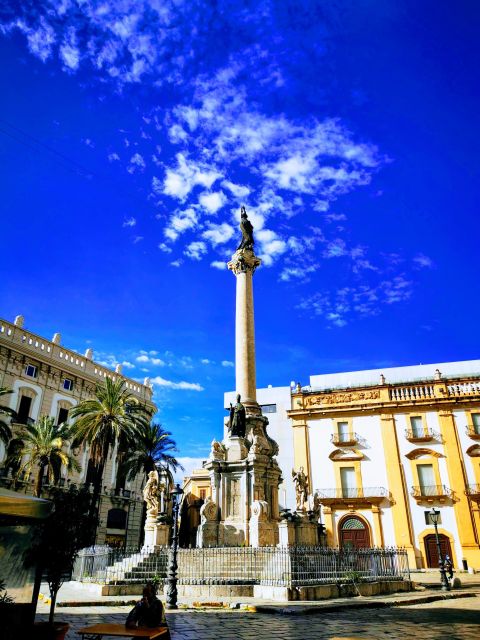
Quattro Canti is short, but it’s powerful. This is one of those places that looks like a landmark and behaves like a lesson. The four-sided setting turns a crossroad into something ceremonial, and the guide uses it to explain how Palermo organizes power and symbolism in everyday public space.
You’ll get a photo stop plus guided time, which is ideal for this location. If you only pass through without context, you might walk away thinking it’s just another scenic intersection. With a guided explanation, it becomes a key to the city’s layout.
This is also a good moment to pause, look up, and reset your attention before the tour shifts again toward the theatrical side of Palermo.
Teatro Massimo: Europe-sized opera, Palermo-sized pride
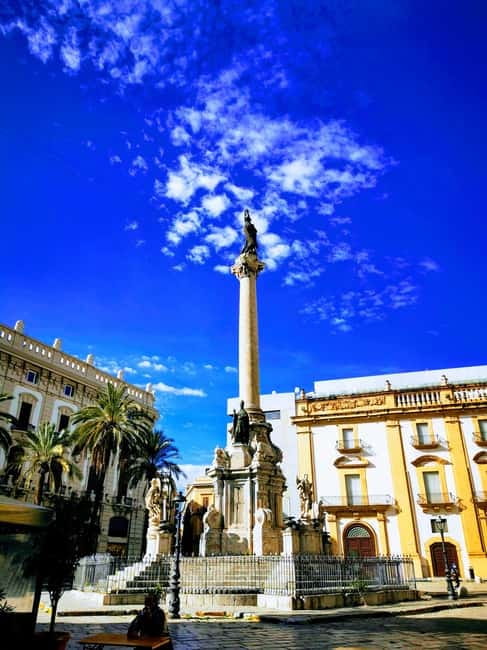
Teatro Massimo is one of Europe’s largest opera houses, and it’s hard to miss once you see it in person. The tour gives you photo time and guided time so you understand what you’re looking at and why it matters culturally.
This stop works especially well if you like architecture that connects directly to public life—because opera isn’t a private interest here. It’s a civic identity. Your guide ties the building back to the city you’ve been walking through, including how theaters and historic districts help define Palermo’s rhythm.
Even if you don’t plan to attend a performance, you’ll leave with a better mental map of why this theater sits where it does and what kind of status it represented.
The value equation: $317.20 per group (up to 5)
At $317.20 per group for up to 5 people, the big value question is: what do you gain compared with booking separate tickets or trying to DIY it?
Here’s the honest math in plain terms:
- You’re paying for a licensed guide who controls the pacing and the “what matters” filter.
- You’re paying for skip-the-line access via separate entrances at major sights.
- You’re paying for time savings in the places that usually lose it—cathedral and palace-related sites.
- You’re not paying for entrance tickets, so monument fees are an added cost on top.
For families and mixed-age groups, the value can be excellent because the guide can adjust the experience without making the visit feel chaotic. The tour format is also described as accommodating all ages, and some guides have managed needs like seating and elevator access where possible.
If you’re traveling solo, the price per group might feel high. But if you’re splitting it among a small party, you’re buying a guided explanation for several major sites in a single half-day.
Timing and walking reality (3 hours means focused, not rushed)
The duration is listed as 3 hours. That’s not a full-day deep study. It’s a focused walk that prioritizes the headline monuments and city highlights.
So what should you expect from the pace?
- Photo stops are built in, but you won’t be spending half the tour trying to get the perfect shot at every corner.
- Monument visits are guided for specific time blocks, including a longer cathedral stop and shorter highlights like Fontana Pretoria.
- You end back at the meeting area, which keeps logistics simple.
One practical consideration: the tour rules say shorts are not allowed, and large bags or backpacks aren’t permitted inside monuments. Plan on a day bag that stays manageable. Also bring sunglasses, sunscreen, and a hat. Palermo sun can be no joke, and you’ll be outside a lot between stops.
Who will love this tour most?
I’d recommend this tour if you’re the kind of traveler who likes architecture with stories attached. You’ll enjoy it if you want to see major monuments—Palermo Cathedral, Capella Palatina, Fontana Pretoria, Quattro Canti, and Teatro Massimo—without turning your trip into a queue simulator.
It’s also a good match for:
- Small families who want a guide to explain the city in a way that works for kids and adults
- Older travelers who benefit from patient navigation and planned breaks
- Anyone who prefers a private-group feel rather than being swept along with strangers
If you’re the type who wants total freedom and doesn’t care about context, you could DIY parts of this route. But you’d miss the story thread that makes the sights connect.
Practical tips so the day goes smoothly
A few details from the tour rules and real-world needs are worth taking seriously:
- Wear comfortable shoes; you’ll be walking through the historic center.
- Bring sun protection: sunglasses, sun hat, sunscreen.
- Skip shorts, oversize luggage, and backpacks. These restrictions matter because monuments have internal limits.
- Entrance tickets aren’t included. You’ll pay monument entrance fees directly to your guide.
- Free entrance days can apply on the first Sunday of each month, but you may still need to pay a €3 per person reservation fee and a €3 per person fee related to booking/headsets, depending on how the visit is handled.
If you want clear audio, headsets are included for groups larger than 15 participants. With a private-group size, you may not need them—but it’s still good that the system exists.
Should you book this Palermo Art and Architecture walking tour?
If your goal is to see Palermo’s top artistic and architectural landmarks in a smart, guided way, this tour is an easy yes. The skip-the-line format, the focused route across major monuments, and the way the guide links the sites to stories like St. Rosalie make the experience feel purposeful.
I’d especially book it if you’re short on time, traveling as a small group of up to five, or you hate spending your vacation learning the city from a phone screen. Just factor in that entrance fees are extra and that you’ll want to dress and pack according to the monument rules.
If that all sounds workable, you’ll get exactly what this tour is designed for: a high-impact Palermo walk where the buildings explain themselves.
FAQ
How long is the Palermo art and architecture walking tour?
The tour duration is listed as 3 hours. Starting times vary, so you’ll need to check availability for the schedule.
Is this tour private, and how many people can be in a group?
It’s a private group experience. The price is listed per group up to 5 people.
Are entrance tickets to monuments included?
No. Entrance tickets are not included, and entrance fees should be paid directly to your guide before departure.
Which stops are included on the tour?
The tour includes major sights such as Fontana Pretoria, Palermo Cathedral, Quattro Canti, and Teatro Massimo, plus an early start near Teatro Politeama Garibaldi or Villa Bonanno.
What languages are offered by the live guide?
The live guide language options are Russian, English, French, Italian, Spanish, and German.
Is the tour wheelchair accessible, and are there any clothing or bag restrictions?
Yes, the tour is wheelchair accessible. Shorts, oversize luggage, and backpacks are not allowed, and large bags are not permitted inside monuments.