REVIEW · PALERMO
Palermo: UNESCO World Heritage Sites Guided Walking Tour
Book on GetYourGuide →Operated by Towns of Italy · Bookable on GetYourGuide
Palermo tells its story on foot. This guided walk stitches together key UNESCO sights in Palermo’s center, from Piazza Pretoria and the Martorana mosaics to a real stop inside Palermo’s Cathedral.
I love how the route connects big architecture with small street-life details, so the Norman-Arab style doesn’t feel like a textbook. I also like that you get an actual entrance inside Palermo Cathedral, not just a photo from the sidewalk.
The one drawback to plan for is effort: it runs rain or shine and lasts up to about 5.5 hours, so comfy shoes and water matter.
In This Review
- Key things I’d prioritize on this Palermo UNESCO walk
- Why this Palermo UNESCO walk works so well
- Timing, walking pace, and what the 3–5.5 hours feels like
- Teatro Massimo to Church of Saint Dominic: starting with icons and mood
- Vucciria Market: the senses stop you can’t get from postcards
- Martorana Church mosaics: the golden moment you’ll remember later
- Piazza Pretoria and Quattro Canti: where Baroque meets Norman-Arab style
- Palermo Cathedral inside: the one interior stop that changes everything
- Praetorian Palace, Palazzo dei Normanni, and the optional Norman Palace upgrade
- The sweet treat: small, but it seals the memory
- Guide quality is the real value here (and it shows in the details)
- Price and value: why about $41 often makes sense
- Who should book this Palermo UNESCO walking tour
- Should you book this Palermo UNESCO walking tour?
- FAQ
- How long is the Palermo UNESCO guided walking tour?
- Where does the tour meet?
- Is the Cathedral entrance included?
- What monuments do we see during the tour?
- Does the tour run in bad weather?
- What languages are available for the guide?
- Is there a sweet treat during the walk?
- Are hotel pickup and drop-off included?
- Can you upgrade to include Norman Palace and Palatine Chapel?
- Are pets allowed on the tour?
- What if I need assistance with mobility?
Key things I’d prioritize on this Palermo UNESCO walk
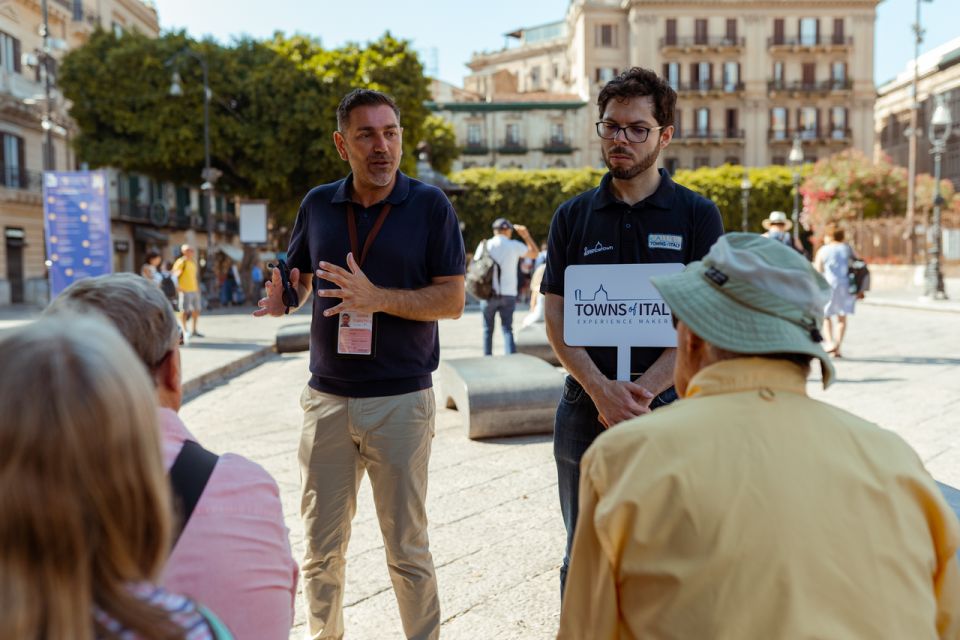
- Local-style storytelling that turns monuments into living context, not just dates
- Golden mosaics at the Martorana Church as the tour’s most wow-worthy visual stop
- Piazza Pretoria and its mix of Baroque and Norman-Arab elegance, plus those famous marble details
- Cathedral entry included, so you see more than exteriors in Palermo’s UNESCO core
- A sweet Sicilian treat at the end, with cannoli or granita-style stops depending on the guide
- Multiple starting and ending options, which can help fit your day in the city
Why this Palermo UNESCO walk works so well
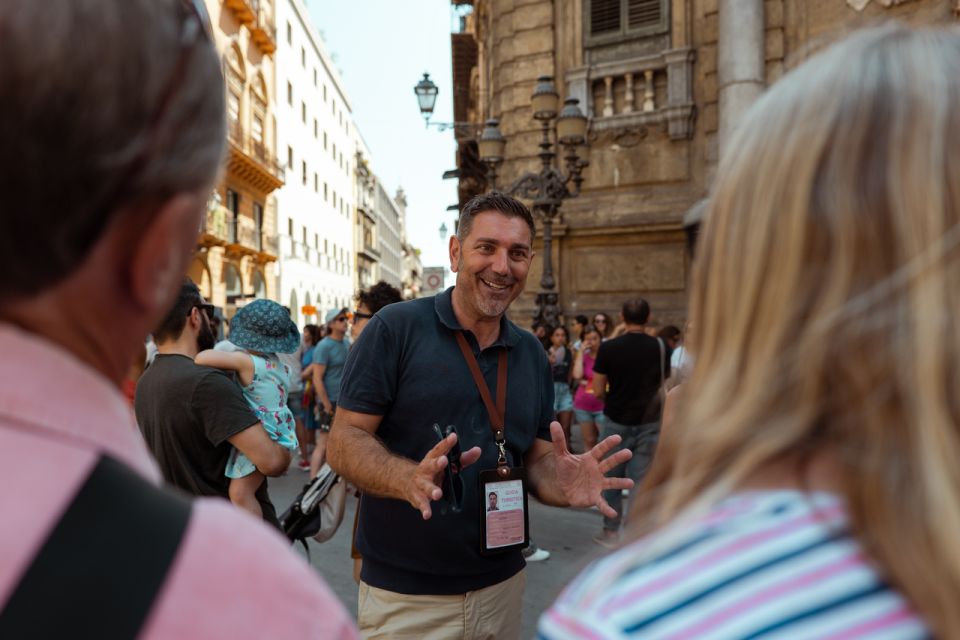
If you’re short on time in Sicily, you need a route that does two jobs at once: show the sights and explain what you’re looking at. This tour is built for that. You spend hours in Palermo’s UNESCO heart, moving through squares and churches that reflect different eras of rule and worship.
What makes it especially useful is the balance. Yes, you’ll see the famous landmarks tied to UNESCO status. But you’ll also get the day-to-day flavor of Palermo—fresh pastry smells, market chatter, and guide stories that connect the architecture to local customs. That combo helps you understand why these buildings look the way they do.
You also get a practical structure. The tour includes photo stops, guided walkthroughs, and at least one interior moment with entrance to the Cathedral. You’re not forced to run from place to place, but you’re also not wandering aimlessly with no plan.
You can also read our reviews of more walking tours in Palermo
Timing, walking pace, and what the 3–5.5 hours feels like
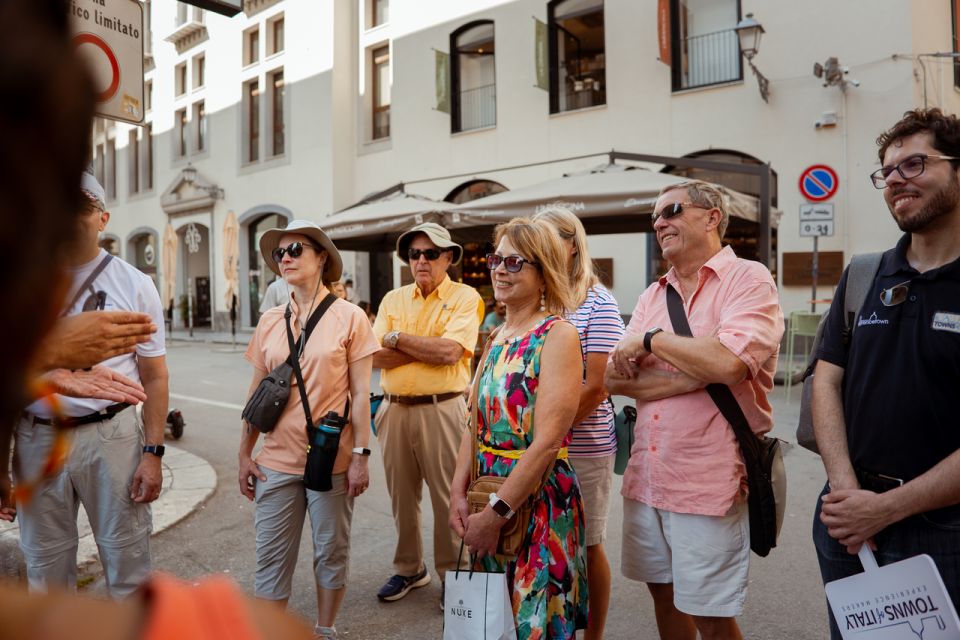
Expect a tour length of about 3 to 5.5 hours. The exact feel depends on the starting option and how your group moves, but it’s not a quick 90-minute hit. This is a “see the core, learn the meaning” kind of afternoon.
The tour runs rain or shine, so you should dress for changing weather. Even on sunny days, Palermo can get warm fast, and the route includes open squares where shade isn’t guaranteed. One consistent theme from guide feedback: staying comfortable matters, and some guides actively look for better spots to pause when it’s hot.
You should also plan around no hotel pickup. Meeting points vary based on the option you book, and drop-off can happen at different locations. If you like to plan cleanly, save a little extra time before and after so you’re not rushing across town.
Teatro Massimo to Church of Saint Dominic: starting with icons and mood
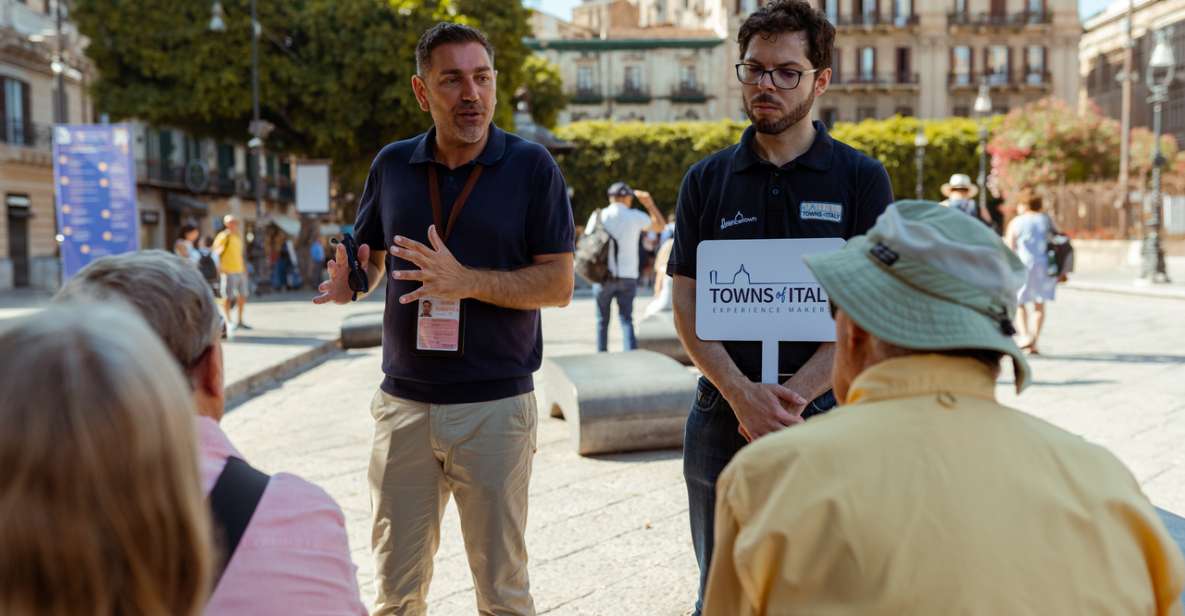
Most days begin with a major city landmark: Teatro Massimo. You’ll typically get a photo stop and a guided pass-by. Even if you don’t go inside, it sets the tone. It reminds you Palermo isn’t only about old churches and ancient empires; it’s also a living modern city with culture still in motion.
From there, the walk shifts toward the more religious side of the UNESCO core, including the Church of Saint Dominic. You’re in the historic lanes where churches act like anchors, and the buildings around them help you read the street grid. The guide’s job here is to connect why this area looks layered—different powers, different artistic styles, and the way later generations built on top of older foundations.
A good thing about this start: it helps you orient fast. After a first stop near Teatro Massimo, the rest of the route feels easier to track. You start recognizing squares and sightlines instead of just reacting to each building one by one.
Vucciria Market: the senses stop you can’t get from postcards
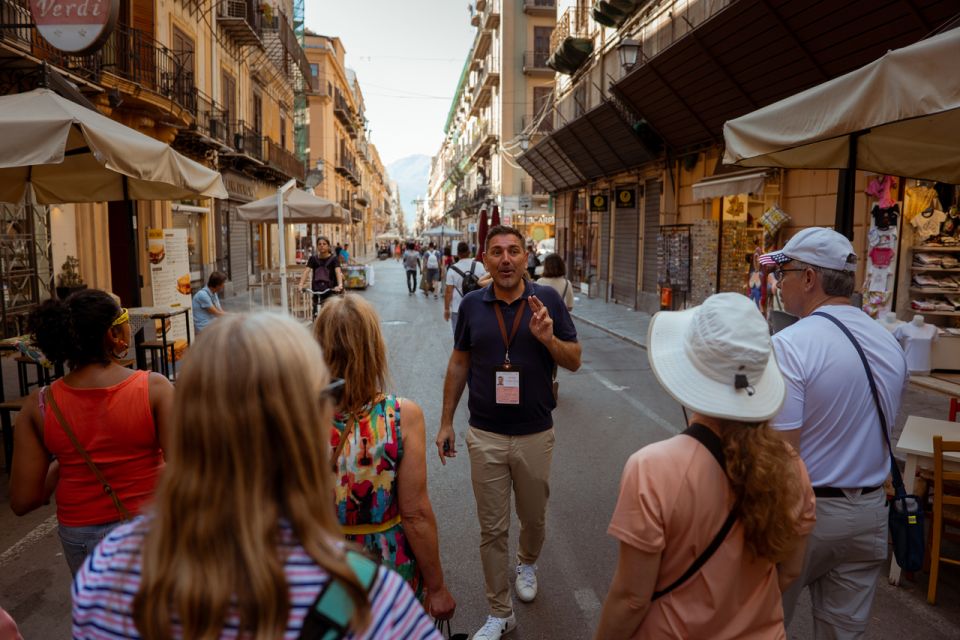
One of the most memorable segments is Vucciria Market. This is where the tour stops being only visual. You’re likely to pick up the smells of fresh pastries and hear the rhythm of vendors as you pass through.
Even if you don’t plan to shop, this kind of stop is valuable. It’s one thing to know Palermo’s architecture. It’s another to experience the atmosphere that surrounds it. Markets help explain why the city’s historic center stayed relevant. People didn’t just move on after the empires changed—they kept living, selling, eating, and rebuilding routines around these spaces.
Practical note: market areas can be busy and loud. If you’re someone who gets overwhelmed by crowds, keep your pace steady and lean into the guide’s directions. A strong local guide helps you avoid getting stuck staring at one stall while the group moves on.
Martorana Church mosaics: the golden moment you’ll remember later
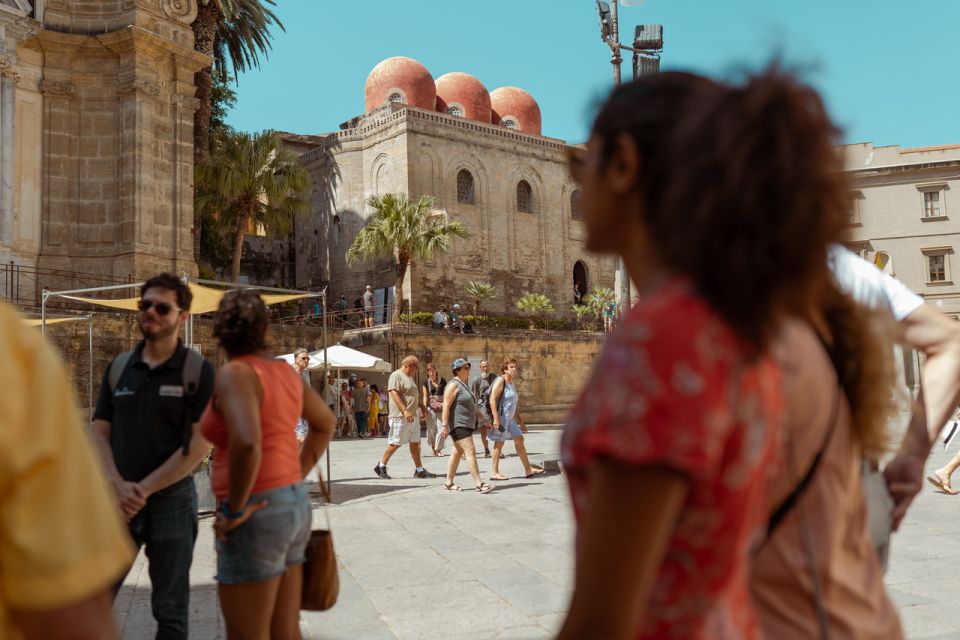
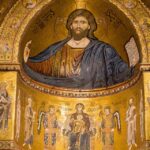
The Martorana Church is where the tour earns its wow factor. You’re guided to see the golden mosaics that make the church look like it’s lit from the inside. This is the kind of art that holds your attention longer than you expect, because the details keep rewarding you as you look up again and again.
The story behind it matters. The information shared on the walk frames the mosaics as a cultural meeting point—religion and artistry shaped by different communities over time. That context makes the mosaics feel less like decoration and more like evidence of how Palermo absorbed influences and turned them into something local.
You’ll also get a sense of why Martorana is considered such a standout UNESCO site. It’s not just that it’s old. It’s that the surface still looks alive—teaching your eyes how to read light, color, and pattern.
You can also read our reviews of more guided tours in Palermo

Piazza Pretoria and Quattro Canti: where Baroque meets Norman-Arab style
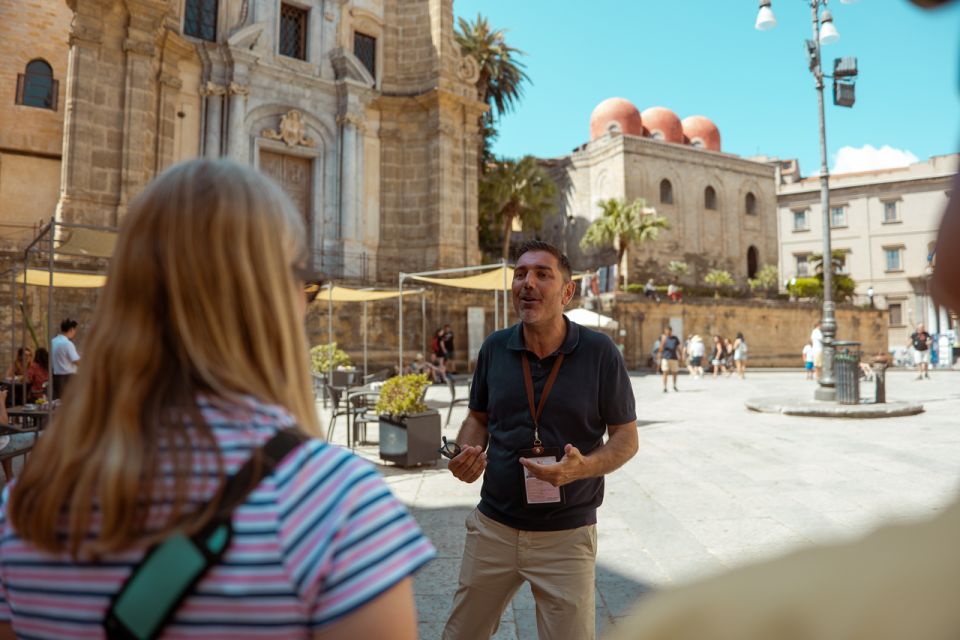
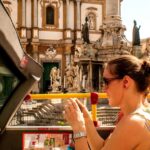
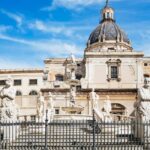
Next comes Piazza Pretoria, which is famous for dramatic contrast. You get a guided look at the plaza’s design language: Baroque curves and an elegance tied to Norman-Arab influence. If you’re into sculpture and stonework, this is one of the best “stand and look” locations on the route.
A big draw here is the marble fountain area and the statues. The guide’s narration helps you notice what you might otherwise miss. Without that framing, Piazza Pretoria can turn into a quick photo stop. With it, the plaza becomes a lesson in how Palermo’s power shifts showed up in art and public space.
You’ll also pass Quattro Canti, another key square in Palermo’s historic core. It’s the kind of place where the city’s layout becomes visible. The guide helps you connect the geometry of the streets with what you’re seeing in the buildings, which makes Palermo feel more navigable once the tour ends.
Palermo Cathedral inside: the one interior stop that changes everything
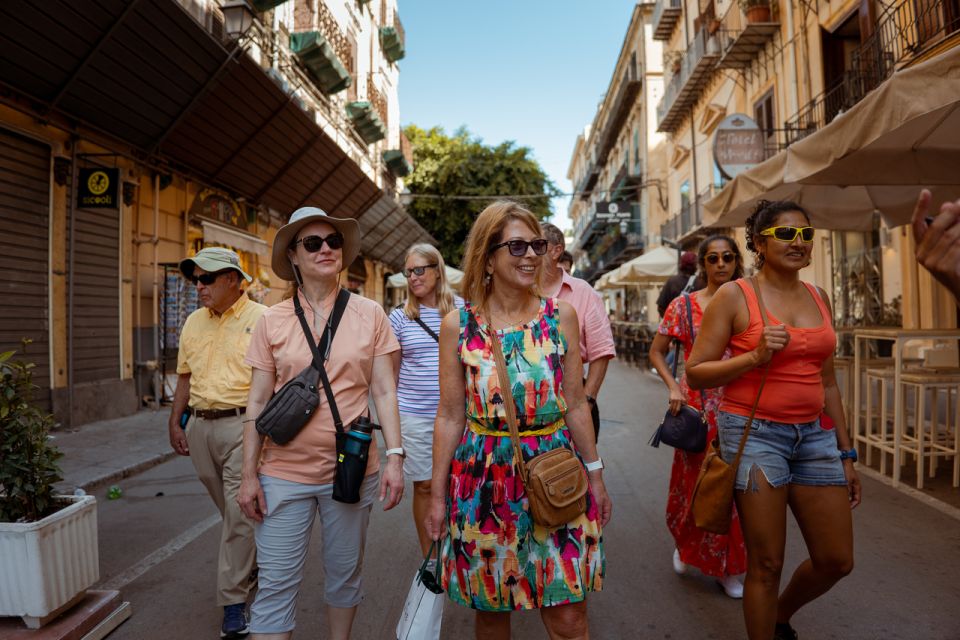
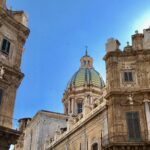
The tour includes entrance to Palermo Cathedral, which is a big deal. Exterior churches are great for orientation. Interiors are where styles become undeniable—stonework, structure, and historical layers become real instead of implied.
The Cathedral’s appeal is the mix of cultures you can literally see. The walk describes it as a living patchwork where Muslim, Norman, and Christian influences overlap. That means you’re not just looking at one artistic tradition. You’re watching Palermo’s history in layers.
If you like art details, keep your eyes up. Some guides use tools like a laser pointer for difficult-to-see ceiling areas, helping you track intricate surfaces and complicated design patterns. Even if you don’t see that exact tool on your day, you can still expect a guide-led focus on ceilings and key decorative elements.
One practical tip: Cathedral interiors can change temperature and lighting quickly. If you’re taking photos, do it in short bursts. Otherwise, you’ll spend the whole time adjusting settings instead of actually seeing the details the guide points out.
Praetorian Palace, Palazzo dei Normanni, and the optional Norman Palace upgrade
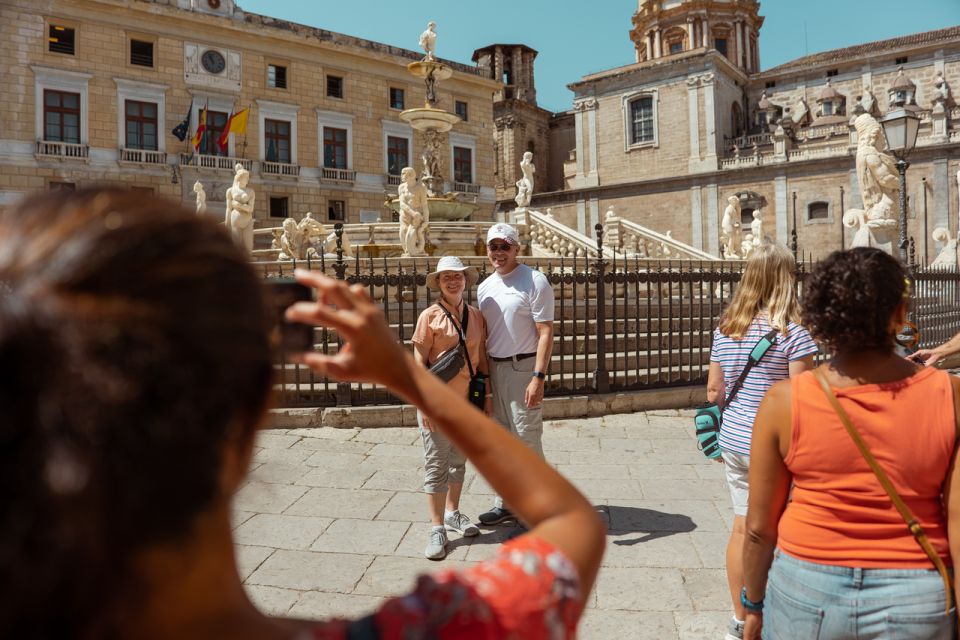
This tour doesn’t only cover one building. It also gives you a sense of Palermo’s civic and royal spaces.
On the way through the UNESCO core, the walk highlights the Praetorian Palace area as a former Town Hall setting tied to the 14th century. The guide may share stories about civic power and what it meant to govern from this area. The tour framing includes the possibility of catching sight of the mayor passing by, though that obviously depends on timing.
You’ll also see the Palace of the Normans area from outside as part of the broader loop. But here’s the key decision point: if you truly want Norman Palace and Palatine Chapel as interiors, you’ll want the optional upgrade.
The upgrade is described as Walking Tour + Norman Palace & Palatine Chapel. It functions like two spectacular guided experiences, with different meeting points for each part. That setup matters. It’s how you avoid cramming everything into one walk and ending up with half-seen rooms.
If you’re the type who loves interiors and ceilings (and not just exteriors), consider upgrading. If you mainly want a smart overview plus Cathedral entry, the base tour already hits the core highlights.
The sweet treat: small, but it seals the memory
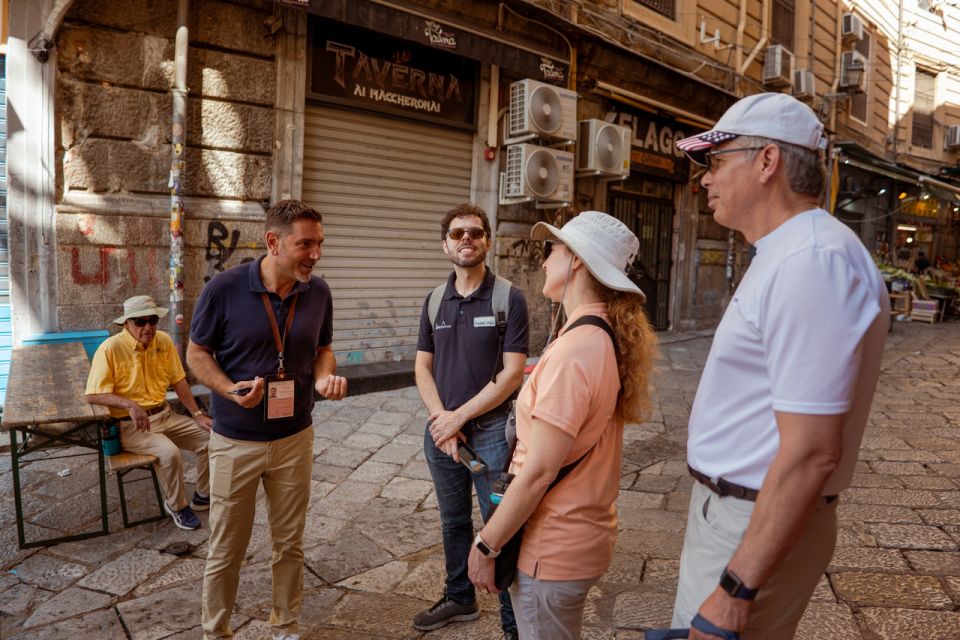
A guided walking tour is often about stories and structure. The sweet treat is the part that makes it feel like Palermo, not just a list of UNESCO stops.
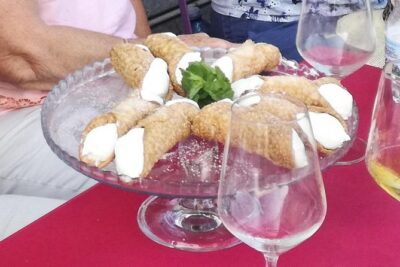
The tour includes a sweet Sicilian delicacy during the walk. In practice, guides often treat people to something like cannoli or sometimes granita, depending on the day and guide. The best part is how it’s tied to the pacing: a pause when you’ve done enough walking to really appreciate the break.
I like this detail because it stops the tour from feeling too formal. Food acts like a reset button. You get a final taste of the culture, and you leave with something you can picture even days later.
Guide quality is the real value here (and it shows in the details)
You’re buying a guided experience, not a building entry. That’s why the guide matters. Across the available guide notes, the common thread is energy and clarity.
Names you may encounter include Simon and Simon-like guide styles, along with Renata/Renatta, Simone, Jade, Fabio, Stephania, Enrico, Liviana, Debbie, Peter, Laura, Roberto, Valeria, and others. Different personalities, same goal: make the city’s layers understandable without turning it into a lecture.
Look for guides who:
- answer questions while staying on schedule
- connect architecture to daily life
- pace for photos and pauses
- explain ceilings and ornamentation in ways you can actually see
You’ll also hear small local references that make Palermo feel lived-in. Some guides share how they grew up around these places, while others stick tightly to historical themes. Either approach helps you process what you’re looking at.
If you’re deciding between doing this tour and wandering on your own, think about this: learning the city’s language in 3–5.5 hours beats learning it slowly over days of guesswork.
Price and value: why about $41 often makes sense
At around $41 per person, the price feels fair for a guided walk that lasts several hours and includes Cathedral entrance. You’re getting:
- a licensed English-speaking guide
- a walking route through major UNESCO-linked monuments
- Cathedral entry
- a sweet stop along the way
Even if you’d normally skip a guided tour to save money, this can still be smart. You’re not just paying for directions. You’re paying for interpretation—stories that help you understand what you’re seeing in Piazza Pretoria, Martorana, and Palermo Cathedral.
Also, the tour is priced well for group learning. You can ask questions, get explanations tailored to what you notice, and benefit from the guide’s habit of pointing out details most people miss.
If you love self-guided travel, you can still use the tour as a “get your bearings and then explore deeper” move. Many people treat this as the first day in Palermo, then return later to spend more time where the guide’s stories made them curious.
Who should book this Palermo UNESCO walking tour
This is a good fit if you:
- want a guided overview of Palermo’s UNESCO core in one focused afternoon
- love churches, mosaics, and architecture with cultural overlap
- appreciate local storytelling and street-level context
- prefer walking with set stops instead of free-form wandering
It’s also a strong “first day” option. The route helps you understand where everything sits relative to squares like Piazza Pretoria and Quattro Canti.
It might be less ideal if you:
- dislike long walks in warm weather (even with shade breaks)
- want deep, extended interior time at multiple royal sites
- the base tour includes Cathedral entry, while Norman Palace and Palatine Chapel need the optional upgrade
Should you book this Palermo UNESCO walking tour?
If you want Palermo’s UNESCO sites without turning your trip into a scavenger hunt, I’d book this. The mix of Martorana mosaics, Piazza Pretoria’s design drama, and Cathedral entrance hits the big visual targets. The guide-led explanations and the sweet treat make it feel like a real introduction to the city.
Book the upgrade if you know you’ll want Norman Palace and Palatine Chapel as interiors, not just an outside pass-by. If you’re aiming for a smart, satisfying core tour and then exploring the rest at your own pace, the base walk already gives you a strong start.
FAQ
How long is the Palermo UNESCO guided walking tour?
The tour duration is listed as 3 to 5.5 hours. Check availability for the specific starting time you want.
Where does the tour meet?
The meeting point may vary depending on the option booked. One listed start is Towns of Italy (Palermo, Via Volturno, 40).
Is the Cathedral entrance included?
Yes. Entrance to Palermo Cathedral is included in the tour.
What monuments do we see during the tour?
The tour is described as viewing all the main monuments of the city from the outside, plus the Cathedral entrance. You’ll also pass by major sights as photo stops.
Does the tour run in bad weather?
Yes. It runs rain or shine.
What languages are available for the guide?
The live tour guide operates in Spanish and English, and an optional audio guide is available in English.
Is there a sweet treat during the walk?
Yes. The experience includes a sweet Sicilian treat during your walking adventure.
Are hotel pickup and drop-off included?
No. Hotel pickup and drop-off are not included.
Can you upgrade to include Norman Palace and Palatine Chapel?
Yes. There’s an optional upgrade for a guided visit to the Norman Palace and the Palatine Chapel, with two different meeting points in one booking.
Are pets allowed on the tour?
No. Pets are not permitted on this tour.
What if I need assistance with mobility?
If you let the provider know in advance about special needs or impaired mobility, they will do their best to accommodate you.