REVIEW · SICILY
Selinunte Archaeological Park and Cusa Caves from Palermo, Private Tour
Book on Viator →Operated by Panormus Autoservizi · Bookable on Viator
Sicily has a quarry you can still walk. This private day pairs Cave di Cusa ancient stone pits (with half-worked blocks left where they were) and the sprawling Selinunte Archaeological Park on the west coast. I especially like the door-to-door pickup from Palermo and the chance to explore Selinunte at your own pace across seven areas. One consideration: this isn’t really a guided museum tour—a driver handles transport, while a certified guide is available separately, and you’ll still need to manage tickets/entry timing.
I also like how the Cave di Cusa stop tells a clear story without fancy extras: quarrying started in the 6th century BC and abruptly stopped after the Punic conquest, leaving the site in the state it was at the interruption. In Selinunte, the park’s size (270 hectares) means the big win is time: you get several focused hours on-site instead of a rushed photo stop.
That price, $331.13 per person for a private setup, can feel steep if you’re hoping for a lecturer plus a fully planned guided walk. But if you want comfortable transport from Palermo and you’re happy to read signs, ask questions at the entrances, and move on your own schedule, it can be a very practical day.
In This Review
- Key highlights to know before you go
- Cave di Cusa meets Selinunte: why this pairing works
- Palermo hotel pickup and private transport: what to expect in real life
- Cave di Cusa: ancient quarrying, half-worked stone, and a sudden stop
- Selinunte Archaeological Park: 270 hectares across seven areas
- Tickets, shuttles, and avoiding the time traps
- Pacing for a 6-hour day: where you’ll feel rushed
- Price and value: is $331 per person worth it?
- Language and expectations: how to keep communication smooth
- Who this tour suits best (and who should look elsewhere)
- Should you book? My decision guide
- FAQ
- How long is the tour?
- Does the tour include pickup from Palermo?
- Is this tour private?
- Is the tour offered in English?
- Are tickets included?
- Is a guide included?
- Is bottled water or Wi‑Fi included?
- Is the park visit walkable?
Key highlights to know before you go
- Cave di Cusa quarries: ancient extraction sites left half-finished, with no shops or modern “tour Disneyland” feel
- Big-site planning made easier: a private Palermo pickup and transport to a far-west archaeological stretch
- You control the pace at Selinunte: walk the route, or use options inside the park like electric cars or the train tour
- Ticket strategy matters: Cave di Cusa admission is free, but Selinunte admission isn’t included, and lines can shape your time
- Driver vs. guide expectations: the included bilingual driver is there for logistics, not a substitute for a certified guide
Cave di Cusa meets Selinunte: why this pairing works
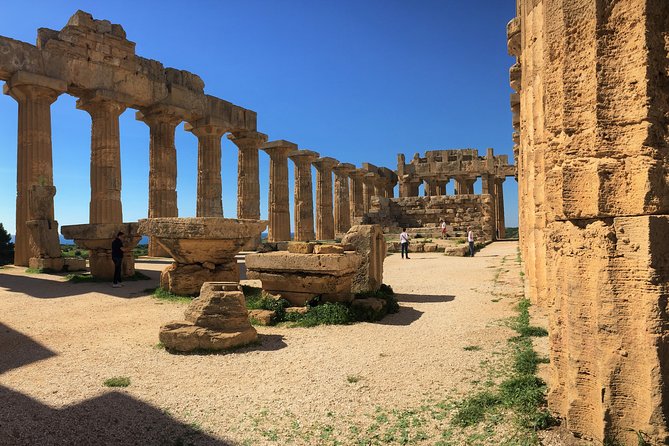
If you’re doing one Sicily archaeology day from Palermo, this combo makes sense. Cave di Cusa is about how ancient Selinunte built itself: stone was cut there, then used for temples and major projects. Then Selinunte Archaeological Park shows you the result—temples, sanctuaries, altars, and the scale of a Greek city on the island’s west coast.
The value of pairing these two stops is that you can connect cause and effect. You’re not only looking at ruins; you’re seeing the physical “factory floor” that produced them. It’s one of the few ways to turn a big site into something more than scattered columns.
The day also helps you feel where you are on Sicily’s map. Selinunte sits along the western coast between Mazara del Vallo and Sciacca, so you get that west-coast geography rather than just sticking to Palermo and its neighborhoods.
You can also read our reviews of more private tours in Sicily
Palermo hotel pickup and private transport: what to expect in real life
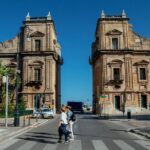
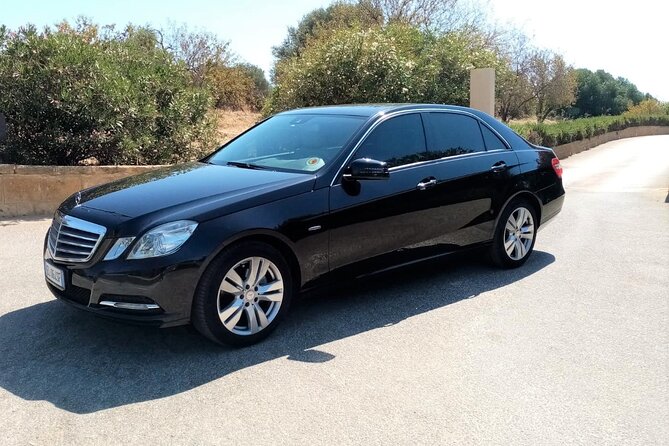
This tour is built around pickup from any hotel or address in Palermo (including the port area). That matters because getting to Selinunte and Cave di Cusa involves more than a casual bus hop. With private transportation, you’re not spending your day battling schedules and transfers.
You also get practical perks on board: Wi‑Fi on board and bottled water. On a hot Sicilian day, water alone is a small thing that makes a big difference in comfort.
One more practical point: this is a private tour/activity, meaning only your group goes along. Group discounts are mentioned, but you’re not sharing the experience with random strangers in the way you would on a standard group bus.
Here’s the key reality check. Even though this is offered in English, the included driver is meant to handle transportation and timing, not act as a full-on certified guide. If you want a deep, fluent explanation of iconography, architecture, and context, plan on booking a certified guide at the park entrance.
Cave di Cusa: ancient quarrying, half-worked stone, and a sudden stop
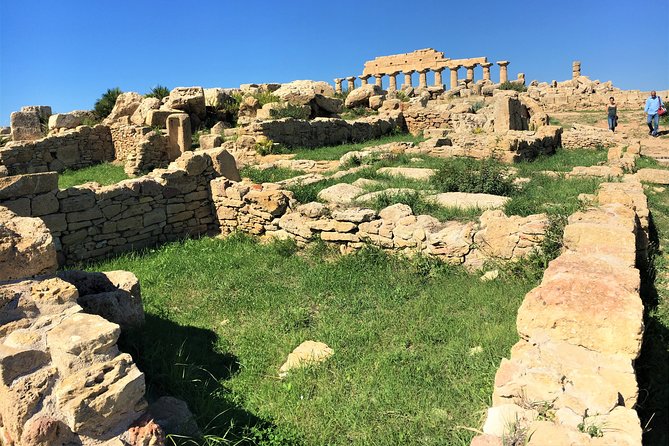
Cave di Cusa sits about 13 kilometers northwest of Selinunte. It’s tied to the stone quarries that fed Selinunte’s building boom, including materials intended for temples.
What makes Cave di Cusa special is the state of the work. Instead of a finished “monument,” you see extraction pits and massive rocks that remain half excavated. You can spot how the technique was long and complex, which is exactly what you want from a quarry site—proof of process, not just a final product.
The story you’re picking up here is sharp. Quarrying ran from the 6th century BC until the end of the Greek city’s life, then the work was suddenly interrupted after the Punic conquest. Pieces were left where they were, some rough-hewn and others more completely worked. That sudden halt is what gives the place its eerie feeling: you’re looking at work interrupted mid-stream.
A nice detail for your expectations: there are no shops and no modern interventions. That’s a plus if you like the archaeological vibe without distractions. It also means you’ll want to treat it like a walk-through site: wear shoes you trust and bring what you’ll need for a simple outdoor visit.
Cave di Cusa is scheduled for about 1 hour. If you like taking photos and reading every sign, you might still fit it in—just don’t plan on lingering for long after your start time.
Selinunte Archaeological Park: 270 hectares across seven areas
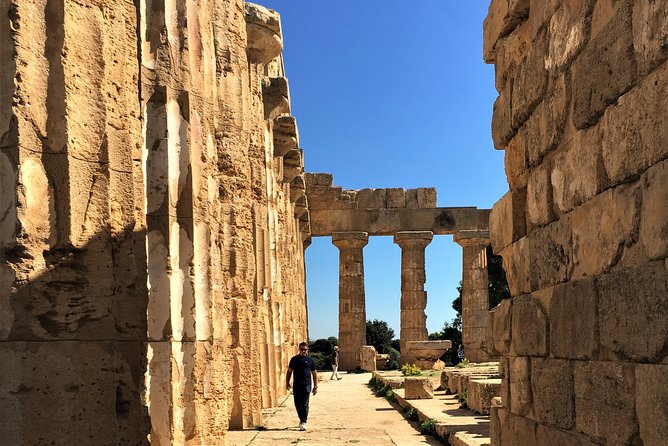
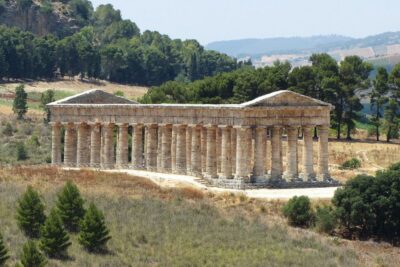
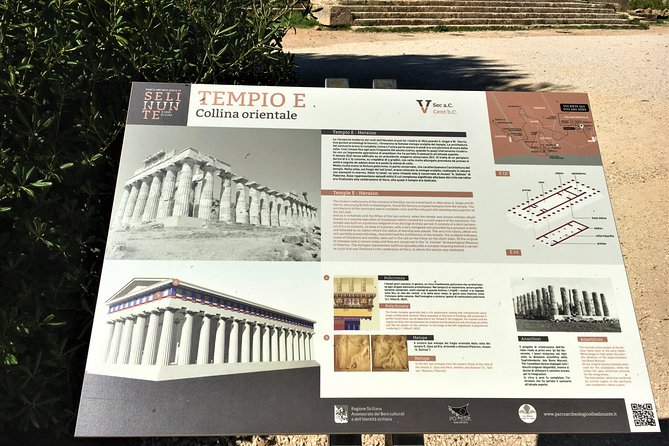
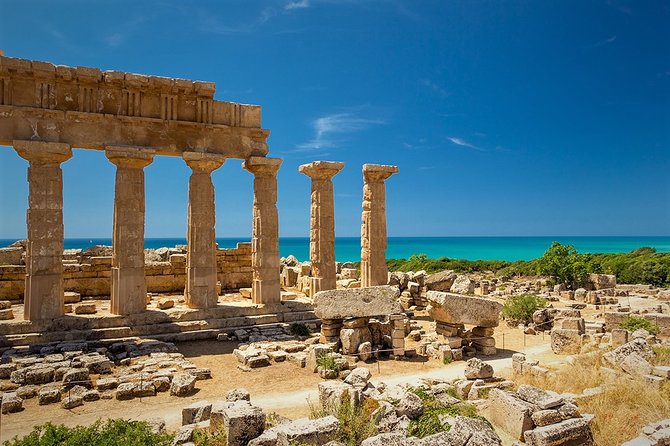
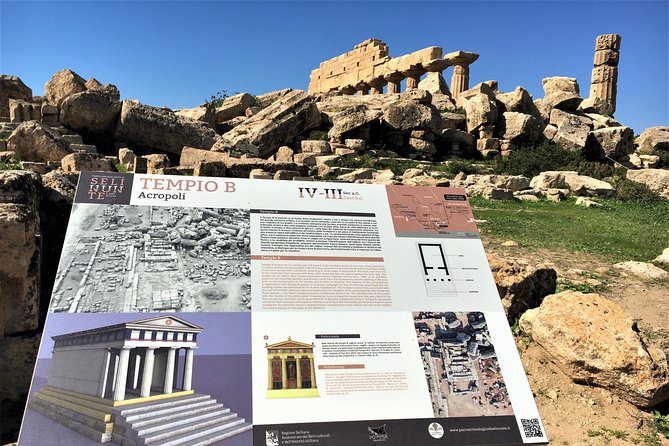
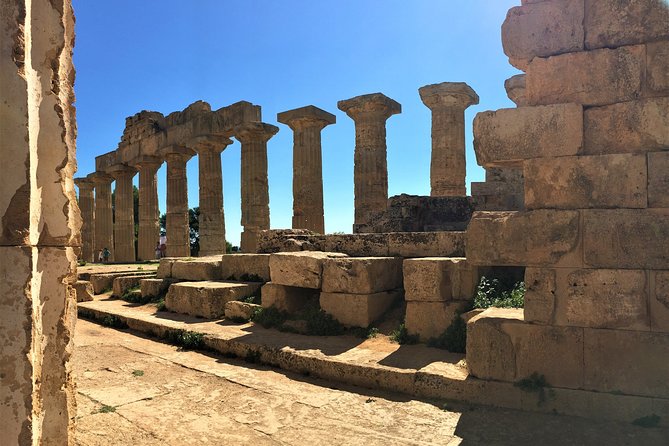
Selinunte Archaeological Park is described as the largest and most impressive archaeological site in Europe, stretching across 270 hectares. Even if you ignore the superlatives, the practical truth is that this is big, and big changes your visit.
The park is organized into seven distinct areas along a defined route. This is good news: you’re not wandering randomly. You follow a path that helps you keep your bearings and connect one area to the next.
You’ve got roughly 3 hours allocated on site. That’s usually enough time to see a meaningful chunk of the route if you don’t stop every five minutes for a long coffee break. If you want a slower, more interpretive approach, you’ll probably need a certified guide to help you prioritize.
Inside the park, you can visit on foot, but there are options if your legs want a break. You can rent electric cars from private individuals, or you can buy a ticket for a train tour (about 6 euros). If you’re traveling with older relatives or you just want to maximize what you see, using one of these transport options can be a smart trade.
One small local pleasure: you may spot the chance to buy a Sicilian granita made with seasonal fruit during your time in the park area. It’s not the same as a full meal, but it’s a very Sicily solution to heat and fatigue.
Tickets, shuttles, and avoiding the time traps
This tour uses a “manage it smart” approach, and that’s where you can win or lose time.
Cave di Cusa admission is listed as free. That doesn’t mean the logistics are zero-cost. You may still spend time figuring out where to enter, what to show, and how reservations are handled for your time slot.
Selinunte admission is not included. In practice, that means you should be ready to handle ticketing before you arrive rather than assuming everything is bundled. The experience description specifically recommends purchasing tickets online and using the shuttle included to avoid long waits.
This is especially important because Selinunte is large and your time is limited. If you burn 45 minutes in lines, you don’t magically gain it back later. Your 3 hours on-site can feel like 2 if you aren’t careful.
So here’s my advice for you: treat tickets as part of the tour, not an afterthought. Plan for a little extra buffer, and keep your expectations flexible if entry timing runs slower than you hoped.

Pacing for a 6-hour day: where you’ll feel rushed
At 6 hours total (approx.), this is a full day, but it’s also not a slow, two-basecamp kind of outing. You have:
- About 1 hour at Cave di Cusa
- About 3 hours at Selinunte
- Additional time for driving, pickup timing, and the handoffs between stops
The “rushing risk” is most likely to happen at Selinunte, because it’s huge. If you arrive and decide you want to do everything on foot, you’ll feel time pressure quickly.
Also, remember that the included driver is mainly there for transport. If you want a detailed guided walkthrough—especially at a site with Greek-era layers—you may need to coordinate a certified guide separately. That can be well worth it, but it affects your schedule.
If you’re the type who likes structure, pick a route plan before you set foot in the park. For example, choose the areas that matter most to your interests—temples and sanctuaries if you love architecture, or the broader route if you like a sweeping overview.
Price and value: is $331 per person worth it?
Let’s be honest: $331.13 per person is not “throw-away money.” It’s a premium compared to a standard group bus, and you should know what you’re paying for.
You’re paying for:
- Private transportation
- Pickup and drop-off from Palermo hotels/addresses
- Wi‑Fi on board and bottled water
- A bilingual Italian-English driver for logistics
- A day that organizes the two sites so you don’t build your own transport puzzle
What you are not paying for:
- A tourist guide (not included)
- Selinunte admission
- Extra paid transport inside the park if you choose the train or electric cars
So the value equation works best if you benefit from private logistics. If you’re traveling with someone who needs door-to-door convenience, or you just don’t want to negotiate bus lines and train times, it can be a fair spend.
If you’re trying to “buy the best explanation,” the tour’s included staffing may not be enough by itself. In that case, you’d want to add a certified guide at the entrance so you’re not relying on a driver for museum-level interpretation.
Language and expectations: how to keep communication smooth
One of the most common frustration points on Sicily day trips is communication. Even when English is offered, the real-world level can vary.
In this case, the included driver is listed as bilingual Italian-English. Still, you should assume the driver is optimized for practical communication—where to go, when to return, what to show—rather than for explaining temple symbolism or quarry engineering in detail.
To protect your day, do two things before you go:
- Have your ticket info and any reservation details saved on your phone and ready to show
- Decide ahead of time whether you’ll hire a certified guide once you’re at the entrance
This keeps your day from turning into a “translation game” when you’re trying to enjoy the site.
Who this tour suits best (and who should look elsewhere)
This private tour fits you best if:
- You want a structured day with pickup from Palermo
- You like independent wandering inside a big archaeological park
- You’re comfortable adding a certified guide if you want deeper explanation
- You value convenience enough to pay more for private transport
You might look for a different setup if:
- You want a full guided narration across both stops included in the price
- You don’t want to manage tickets and entry timing yourself
- You’re sensitive to communication gaps and prefer tours with fully English-speaking guiding staff
If you’re flexible and you arrive ready to plan your ticket timing, this can be an excellent way to see both the quarry source and the monumental city it helped create.
Should you book? My decision guide
Book this tour if you want an efficient, comfortable day out of Palermo and you enjoy the idea of connecting stone-cutting to stone ruins. The Cave di Cusa quarrying stop is the kind of place that feels real because it’s not rebuilt for show. Then Selinunte gives you the scale and the satisfaction of seeing the work made visible.
Don’t book it just because it’s “private.” Private transportation helps, but it won’t replace the value of a certified guide if you want interpretive depth. If you care most about storytelling and architecture details, plan to add that layer on-site.
Finally, book with timing in mind. This experience is often reserved far in advance (on average 157 days), which is a hint that the combination of limited quarry access and high interest in Selinunte can make last-minute planning harder.
FAQ
How long is the tour?
It’s about 6 hours total (approx.), with about 1 hour at Cave di Cusa and about 3 hours at Selinunte Archaeological Park.
Does the tour include pickup from Palermo?
Yes. Pickup is offered from any hotel or address in Palermo, and you’ll get contact details for the local operator after booking.
Is this tour private?
Yes. It’s a private tour/activity, meaning only your group participates.
Is the tour offered in English?
Yes. The experience is offered in English.
Are tickets included?
Cave di Cusa admission is listed as free. Selinunte Archaeological Park admission is not included.
Is a guide included?
No. A tourist guide is not included. The driver handles transportation, and certified guidance can be arranged at the park entrance if you want it.
Is bottled water or Wi‑Fi included?
Yes. Bottled water is included, and there is Wi‑Fi on board.
Is the park visit walkable?
The park can be visited on foot, but it’s large. Electric cars can be rented inside the park, and there is also a train tour option (about 6 euros).