REVIEW · AEOLIAN ISLANDS
Stromboli: sunset trekking to Sciara del Fuoco – Ashàra
Book on Viator →Operated by Ashàra Etna & Stromboli Guides · Bookable on Viator
Fire and walking shoes meet here.
This guided Stromboli sunset trek takes you toward the Sciara del Fuoco lava flow with enough daylight for the climb and enough night to actually see what Stromboli is doing. You’ll go out from Piazza San Vincenzo about two hours before sunset, hike up to the volcano’s 400-meter maximum altitude with a Volcanology guide, then return downhill with a headlamp.
Two things I really like: first, you get that up-close view of the lava flow at sunset, when the Aeolian Islands look unreal. Second, you’re not trying to follow a trail by yourself—your guide handles route decisions and safety, and you get photo breaks along the way plus more dramatic views at the final overlook.
One drawback to plan for: this is not just a pretty walk. You’ll be hiking back in the dark with a headlamp and you can feel the wind and chill at the top, so bring layers even if the island is warm earlier.
In This Review
- Key Things to Know Before You Go
- Stromboli Sunset Trek: What You’re Really Signing Up For
- Meeting at Piazza San Vincenzo: Timing That Makes or Breaks the View
- The 400-Meter Climb: Craters, Old Cemetery, and Constant Strombolicchio
- Sciara del Fuoco at Sunset: When the Sky Turns Red
- The Return in the Dark: Headlamp Work and Cold-Wind Reality
- Gear, Shoes, and Pace: What Actually Helps on This Trek
- Price and Value: Is $36.30 a Smart Use of Your Evening?
- Guide Experience: Geologists, Real Explanations, and Named People
- Weather and What to Pack: Simple Choices That Pay Off
- Should You Book the Stromboli Sunset Trek to Sciara del Fuoco?
- FAQ
- How long is the Stromboli sunset trek to Sciara del Fuoco?
- How high do you hike during the trek?
- What gear is included?
- Do I need to bring water or food?
- Is the tour only offered in English?
- What if the weather is bad?
Key Things to Know Before You Go
- You hike to 400 meters max with a Volcanology guide, so you’re close to the action but still inside the allowed boundary.
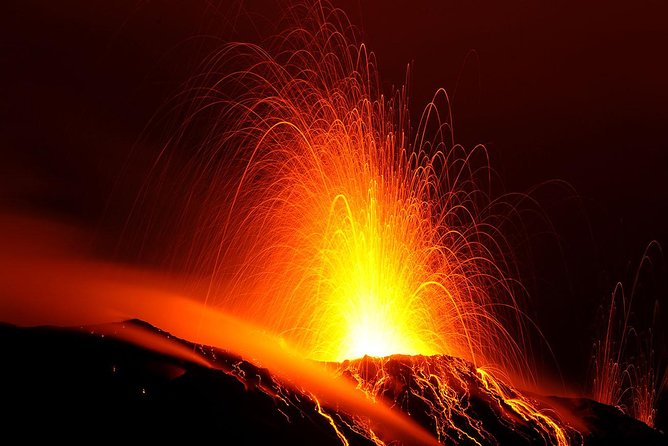
- Sunset + night eruptions are the main event, and you’ll watch the volcanic glow from a panoramic platform.
- Old cemetery stop and scenic breaks keep it from feeling like a straight grind.
- Gear is built in: shoes/poles plus a headlamp and helmet for the darker return.
- Group size is capped at 25, which helps you move safely and keep the pace sane.
Stromboli Sunset Trek: What You’re Really Signing Up For
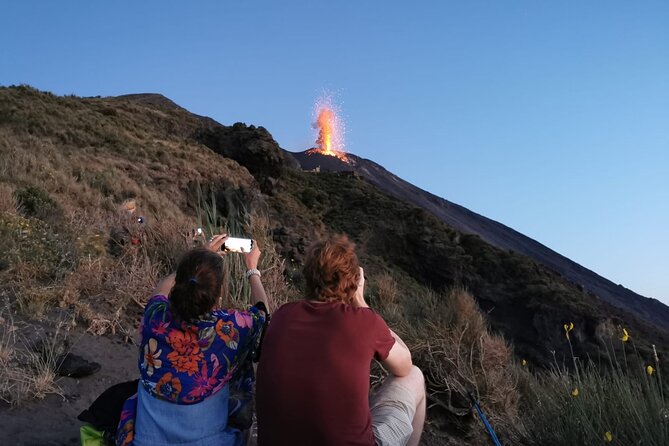
Stromboli has a special kind of glow—less fireworks show, more living volcano. This trek is built around that idea: you climb while the sky is still open, then you stay long enough at the end to watch eruptions light up the night.
What makes this experience worth your time is the combination of (1) a guided climb and (2) a timed payoff. The guide doesn’t just lead you; they help you interpret what you’re seeing—rock formations, the volcano’s behavior, and why Sciara del Fuoco is the dramatic side of the island. That’s why the walk feels more like a field trip with drama than a hike where you’re guessing.
Also, the view doesn’t just happen at the end. You’ll keep seeing Strombolicchio and the coastline as you cross Mediterranean scrub, plus you’ll have breaks for photos. Even if the number of eruptions varies (it does), the sunset colors over the archipelago are still a strong reason to go.
You can also read our reviews of more evening experiences in Aeolian Islands
Meeting at Piazza San Vincenzo: Timing That Makes or Breaks the View
The schedule is simple, and that’s a good thing. You meet at Piazza San Vincenzo and depart about two hours before sunset, after a safety briefing. From there, you’re on the move—up to 400 meters on a nature trail, then back down after dark.
This timing matters for two reasons. First, you need daylight to reach the viewpoint comfortably. Second, you need night fall at the end because the whole point is watching eruptions illuminate the sky—not just seeing a dark slope.
Plan to arrive early enough that you’re not rushed. If you want a pre-trek snack strategy, some participants report the Bar Ingrid area near the meeting point works well for picking up paninis/snacks and water before you start. If you’re doing that, do it early; once you’re in hike mode, you’ll be glad you’re fueled.
And yes, this can run long. The experience is about 5 hours on average, and people describe it as a climb plus a return that includes headlamp time.
The 400-Meter Climb: Craters, Old Cemetery, and Constant Strombolicchio
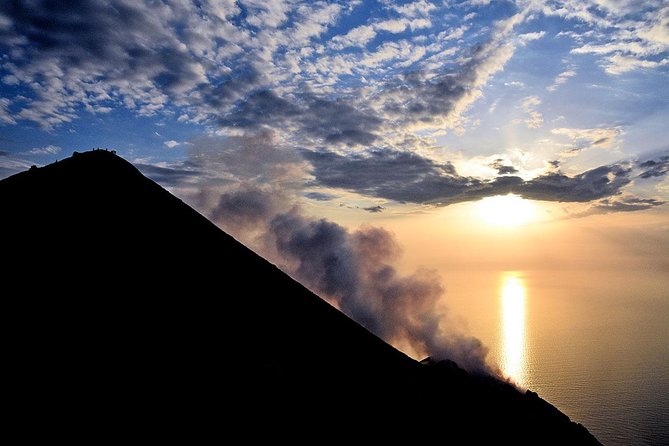
Your hike begins on a nature trail that leads you to 400 meters, the maximum altitude allowed with a Volcanology guide. That number is practical: it keeps the hike in a safe zone, while still putting you in a position where the volcano’s features are visible and meaningful.
Along the way, expect several “pause and look” moments. You’ll have breaks to admire views and snap photos, and you’ll get to see the summit craters and Sciara del Fuoco from the upper areas you reach.
One part I’d highlight if you like variety on a hike: you’ll also visit the island’s old cemetery during the trek. It’s not about thrill-seeking. It adds a human layer to the landscape (literal and emotional), reminding you that people live with this volcano nearby, not as a distant headline.
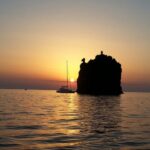
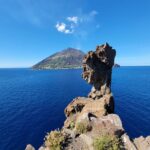
As you continue, you’ll cross Mediterranean scrub with Strombolicchio in view. That steady backdrop makes the hike feel cinematic. It’s also helpful for orientation—your brain can track the island’s shape even as you move.
How hard is it? The tour is described as having a moderate physical fitness level. People call it mildly challenging to medium, with some finding the climb straightforward but the overall pace slow (likely for safety and stopping time). If you’re comfortable walking uphill for a few hours and you’re not afraid of uneven ground, you’ll probably do fine.
Sciara del Fuoco at Sunset: When the Sky Turns Red
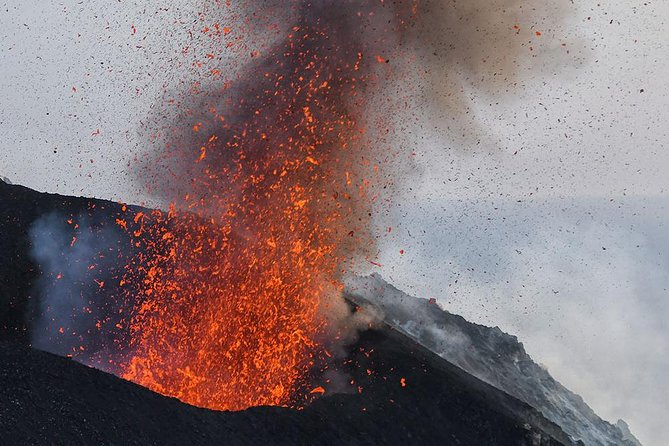
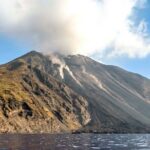
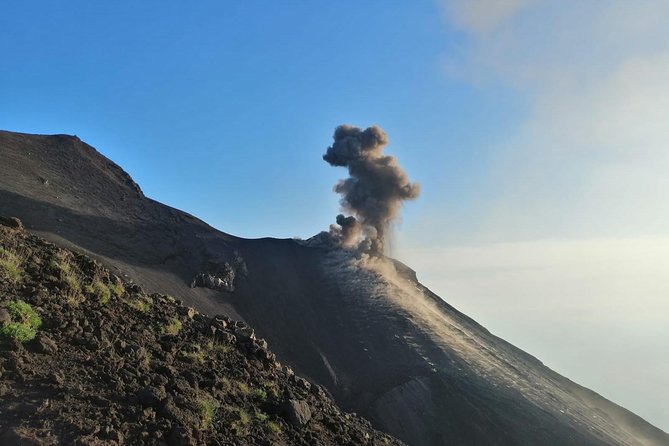
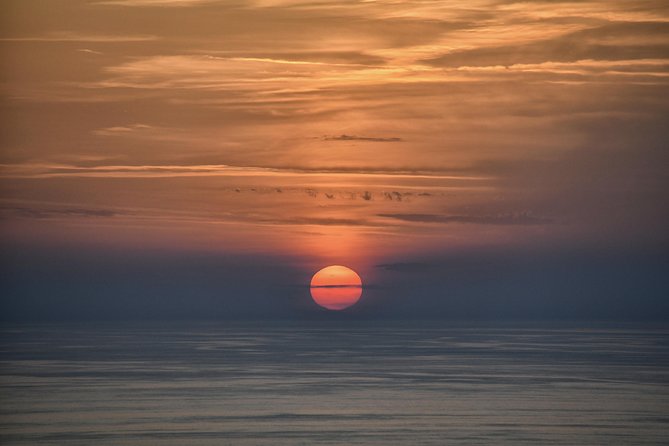
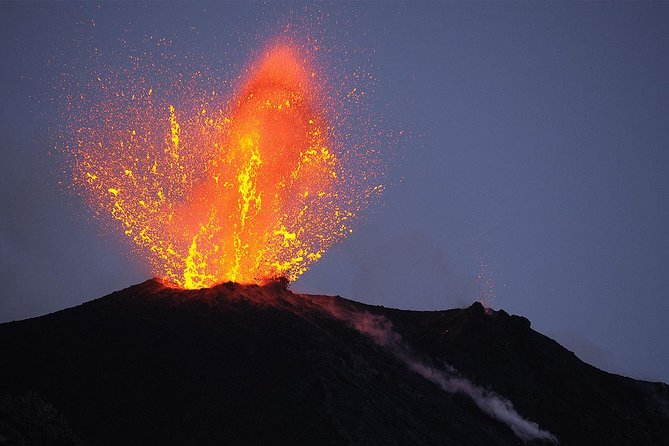
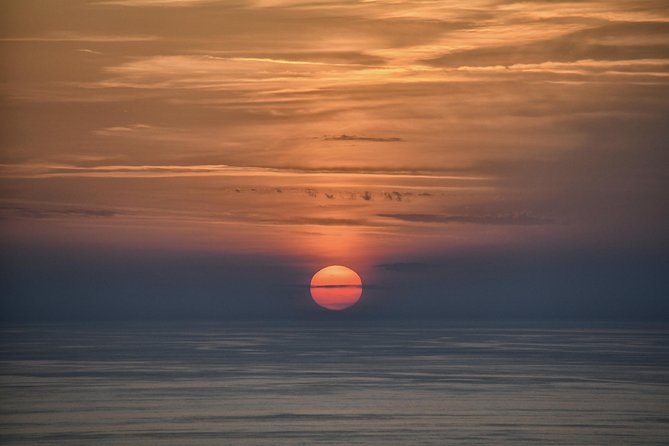
Once you arrive at the panoramic area on the Sciara del Fuoco side, the mood shifts fast. This is where sunset colors the Aeolian archipelago red, and where you start to see the volcanic activity that’s been building interest during the hike.
You’re not just standing there. You’ll be there long enough to watch eruptions in the night sky. Some people report about an hour at the top platform to take it in. Wind can be strong at that side of the island, so if you run cold easily, bring a light sweater or windbreaker even if you packed for warmth earlier.
What about the eruptions themselves? This is active volcano behavior, so counts can vary. Some people describe getting very frequent eruptions; others say they saw fewer. The most honest way to think about it: you’re going for the chance to see close eruptions and the volcano glow in the dark. Some nights are louder and brighter than others.
Still, the overall “wow” factor is the same. Sciara del Fuoco is the part of Stromboli that feels like a window into the volcano—when it lights up, it’s hard to reduce it to photos.
The Return in the Dark: Headlamp Work and Cold-Wind Reality
After the top viewing time, you hike downhill in the dark. The tour provides a headlamp, and in the tour description you’re returning equipped with torches/lighting.
Here’s what to know before you go: downhill at night can feel longer than the climb, mostly because visibility changes how your feet land. Reviews also mention that some routes can be longer on the descent. That doesn’t mean it’s unsafe—just that you should expect the timing to feel different.
This is where the gear actually earns its keep. A helmet and headlamp aren’t decoration. They help when you’re navigating uneven ground after sunset. If you wear the provided gear correctly and take the descent slowly, the darkness becomes manageable instead of stressful.
Also, dress like a person who will be outside for hours. Wind is real at the top. Even if you’re sweating on the hike up, you can freeze while waiting for eruptions to show. Bring a layer you’ll be happy to wear for a long pause.
Gear, Shoes, and Pace: What Actually Helps on This Trek
The tour highlights that you’ll have hiking shoes and poles for the walk, plus a headlamp and helmet for safety. That’s a big value if you’re traveling light or don’t want to deal with renting the right shoes on an island.
Poles can be surprisingly useful on both the uphill and downhill parts. They reduce strain on knees and help you stay steady when the path is uneven. If you’ve never used poles, you’ll still benefit—your guide will be keeping a pace where everyone can move safely.
The pace itself is another big deal. People describe the guides as caring and attentive about group needs, and one review notes a guide adjusting route choice (medium up, easier down) to match abilities. The tour also keeps groups to a maximum of 25, which helps avoid the “single-file chaos” feeling.
If you’re thinking about suitability, this trek fits best if you:
- can walk uphill and downhill for hours
- don’t mind cold wind and a night return
- want a guided volcano experience focused on active viewing
If you hate night walks or have very limited mobility, this probably won’t feel comfortable. The headlamp makes it possible, but it doesn’t remove the fact that it’s still dark hiking.
Price and Value: Is $36.30 a Smart Use of Your Evening?
At $36.30 per person, this is one of those activities that looks cheap on paper and then delivers more than you expect because it’s timed to the volcano’s most photogenic window. You’re paying for a guided hike, specialized safety gear, and a long viewing period at Sciara del Fuoco.
What you’re not getting is food and water. Bottled water and dinner/snacks aren’t included. You should plan for at least 1.5 liters of water per person. One review even suggested 2 liters as a better buffer. With a hike this long—plus potentially waiting at the top—you don’t want to reach the end thinking you should have packed more.
If you arrive hungry, some people mention picking up paninis/snacks at the meeting point area before the trek. And after you’re done, there may be food options nearby (one review mentions finishing back at a place where pizza and beer are possible). That makes the whole outing feel like an evening plan, not a rushed excursion with no payoff.
So, is it good value? I’d say yes—if you show up prepared. The guided volcano part is the pricey part elsewhere. Here, the cost stays approachable because it’s short-to-medium on distance, capped on group size, and focused on one big objective: seeing Sciara del Fuoco eruptions at night.
Guide Experience: Geologists, Real Explanations, and Named People
A lot of the “this was worth it” feedback centers on the guides. Several people specifically mention guides who are geologists and who explain what you’re looking at in a clear way.
Names you might hear include Giuseppe (including an older Giuseppe), Pepe, and Fabio. People even recommend asking Giuseppe what his favorite volcano is at the start—apparently that sparks a fun, energetic style of commentary that keeps the hike entertaining while staying informative.
That matters because active volcanoes aren’t just visuals. The better the guide is, the more you can connect the rock forms and the eruption behavior to what you see in front of you.
Language is mostly handled well for English-speaking visitors. The tour is offered in English, and people mention guides speaking English and Italian. Still, one review complained about a mismatch with French expectations. If French is important to you, it’s smart to confirm language availability at booking.
Weather and What to Pack: Simple Choices That Pay Off
This experience requires good weather. If conditions are poor, the activity may be canceled, and you’ll likely be offered a different date or a full refund. That’s normal for volcano hiking—wind, rain, and visibility matter.
What you control is what you bring. I’d pack for:
- wind and chill at the top (a light windbreaker helps)
- long hours outside (layers beat one warm jacket)
- hydration (plan at least 1.5L, and consider more if you run hot)
Also, don’t assume there will be a convenient toilet stop. One review specifically mentions planning because there’s no toilet access during the walk. That’s not something you can fix on arrival, so plan your timing and your liquids accordingly.
Finally, charge up your phone and clear some photo space before you go. Night eruptions are the goal, and your shots will matter—especially when you want to remember that orange glow hanging over the sea.
Should You Book the Stromboli Sunset Trek to Sciara del Fuoco?
I think you should book if:
- you want to see an active volcano up close from a guided viewpoint
- you like hikes that include interpretation, not just walking
- you can handle a moderate uphill climb and a dark descent with headlamp
I’d skip it (or book with extra caution) if:
- you dislike night hiking or feel unsteady in the dark
- you’re not comfortable with cold wind while waiting at a viewpoint
- you can’t commit to bringing water and layers
This trek is one of the best “evening plans” on Stromboli because it’s built around the moment when the volcano turns from scary background to actual show. The hike is part of the ticket price, the guide improves the entire experience, and when the eruptions light the night sky, it’s the kind of view you don’t get from a postcard.
FAQ
How long is the Stromboli sunset trek to Sciara del Fuoco?
It lasts about 5 hours on average, with departure from Piazza San Vincenzo about two hours before sunset and a return back to the meeting point.
How high do you hike during the trek?
You hike to a maximum altitude of 400 meters, which is the limit allowed when a Volcanology guide is leading the group.
What gear is included?
The tour includes a headlamp and a helmet, and the hiking setup also includes hiking shoes and poles for the walk.
Do I need to bring water or food?
Bottled water is not included. You should plan to bring at least 1.5L of water per person. Dinner/snacks are also not included.
Is the tour only offered in English?
The experience is offered in English, and confirmation is received at booking.
What if the weather is bad?
This experience requires good weather. If it’s canceled due to poor weather, you’ll be offered a different date or a full refund.