REVIEW · PALERMO
Discover Palermo in 3 hours. Art, history, markets and street food
Book on Viator →Operated by Palermo a Piedi - Walking Tour · Bookable on Viator
Three hours, and Palermo makes sense fast. This Italian-only walk pulls together the Capo Street Market and Norman-Arab cathedral sights with baroque squares and big-city stories. You’ll feel like you’re being shown the city by a true Palermo insider, not just marched past monuments.
I especially like how the tour connects food to history at Capo, with entry into the daily market atmosphere and built-in chances for quick sampling. I also love the Cathedral of Palermo stop, where the mix of royal tombs, Santa Rosalia, and that famous sundial turns a church visit into a real story.
One consideration: the whole experience is Italian-only, so if you’re not comfortable following spoken Italian, you may miss some of the richer legends and stage-setting details.
In This Review
- Key highlights you’ll feel immediately
- Three hours of Palermo on foot: what this tour is really for
- Capo Street Market and the Arab-root daily life of Palermo
- Inside Cattedrale di Palermo: Norman-Arab art with real royal weight
- Piazza Verdi and Teatro Massimo: Belle Epoque Palermo in one glance
- Quattro Canti: baroque street-corner theater (and why it matters)
- Piazza Pretoria: the Fountain of Shame and what locals mean
- Piazza Olivella and Piazza Bellini: where the city’s layers show
- Opera dei Pupi and the Cassaro axis: street culture with UNESCO weight
- Porta Carini and the old walls: the city’s boundaries you can still feel
- Price and value: why $34.76 can make sense here
- Who this tour suits best
- Should you book Palermo in 3 hours?
- FAQ
- Is the tour guide available in English?
- How long is the tour?
- How many people are in the group?
- Where does the tour start and what time?
- Where does the tour end?
- What’s included in the ticket price?
- Is the Palermo Cathedral entrance included?
- Are food and drinks included?
- Is it a mobile-ticket experience?
- What is the cancellation policy?
Key highlights you’ll feel immediately
- Capo Street Market entry plus free tastings right where locals shop and eat
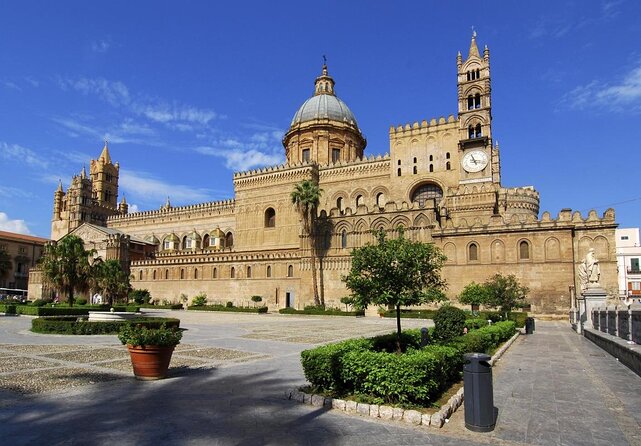
- Cattedrale di Palermo (built in 1185) with Norman-Arab art, royal tombs, and Santa Rosalia
- Teatro Massimo (Piazza Verdi) and Belle Epoque context tied to the Florio family
- Quattro Canti: Palermo’s dramatic baroque street-corner geometry in real life
- Piazza Pretoria’s “Fontana della Vergogna” and what the nickname really hints at
- Teatro dell’Opera dei Pupi (puppet opera by Mimmo Cuticchio), linked to UNESCO heritage
Three hours of Palermo on foot: what this tour is really for
This is an efficient, story-driven orientation walk. In about three hours, you get a strong sense of Palermo’s eras stacked on top of each other: Arab-influenced design, Norman power, Renaissance taste, and baroque theater. The format works best if you want to understand the city quickly, not if you’re chasing long museum time.
You’ll be moving through lively streets and important squares, with short stops that keep the pace realistic. That means you come away with names, context, and “where to go next” energy—especially helpful if you have limited days.
It also helps that the group stays small (up to 16 people). In a city like Palermo, that matters: you need enough space to hear the guide and enough control to not get swallowed by crowds in the market lanes.
You can also read our reviews of more food & drink experiences in Palermo
Capo Street Market and the Arab-root daily life of Palermo
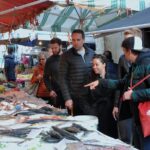
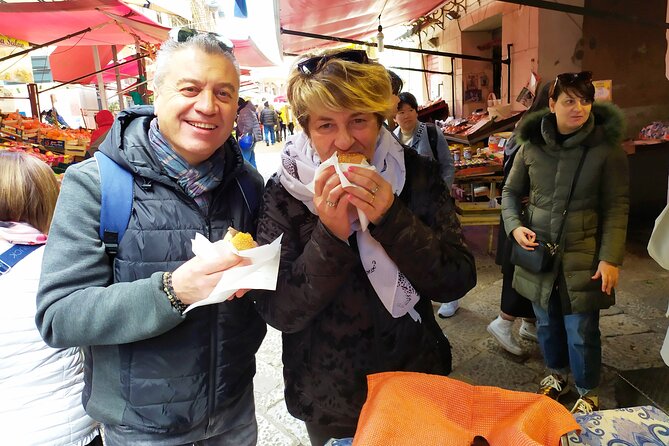
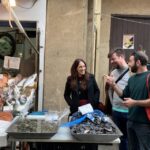
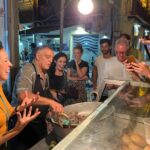
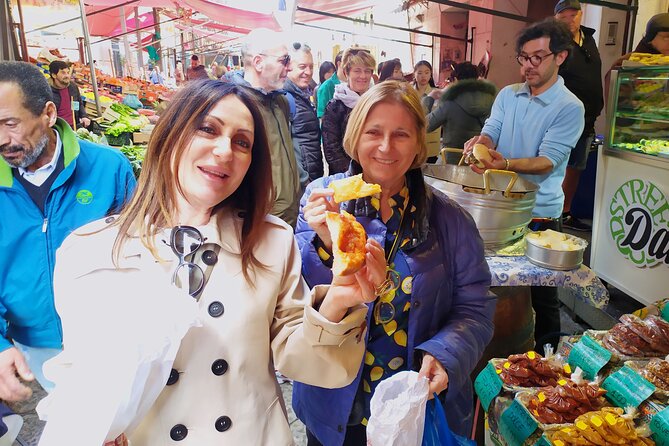
Your day kicks off at the Capo area market—an ancient food market linked to Arab origins, stretching along the streets around Via Porta Carini and Via Bandiera. This is the place where Palermo feels normal, not staged. You’re not just viewing history; you’re stepping into a living routine.
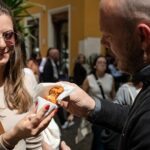
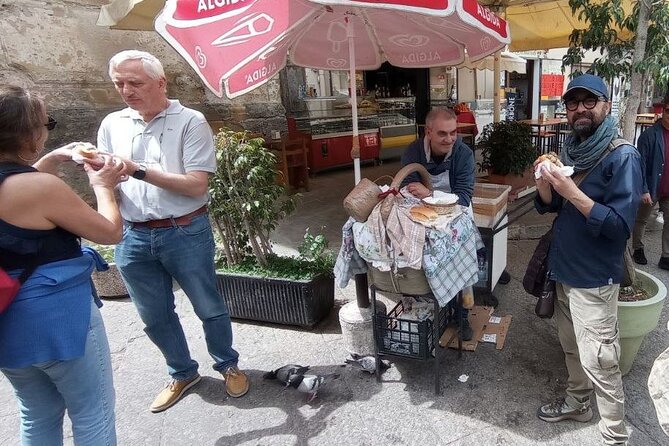
Entry is included, and there are free tasting stops built in. Even if you don’t make a full meal out of it, those small bites help you read the city’s flavors like a local would. It also gives you an easy way to break the ice with Palermo’s street-food culture.
One practical note: markets can be tight and busy. Wear shoes that handle uneven pavement and crowded corners, and don’t expect wide sidewalks. It’s part of the experience, but it’s smart to dress for movement.
Inside Cattedrale di Palermo: Norman-Arab art with real royal weight
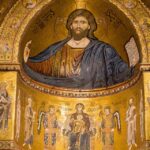
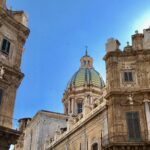
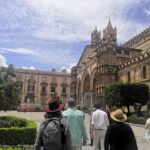
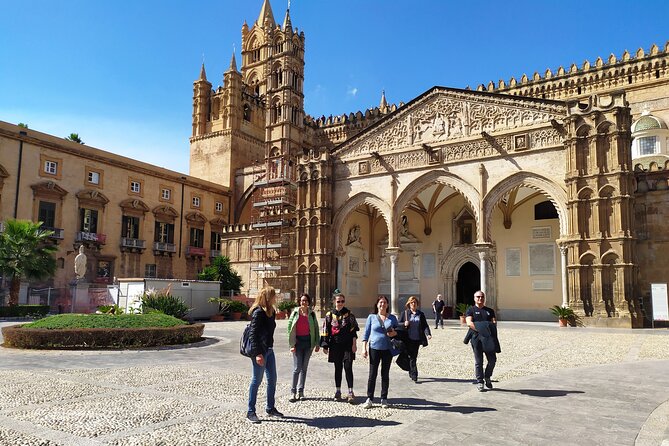
The walk then brings you to the Cathedral of Palermo, a masterpiece of Norman-Arab art built in 1185. If you’ve ever wondered how Palermo can feel both European and Middle Eastern in the same breath, this is where that question gets answered.
The cathedral visit is included in the price, and you’ll get a guided look at the standout features: the royal tombs, the chapel tied to Santa Rosalia, and an extraordinary sundial. You also get the broader UNESCO frame—these Sicilian cathedral complex sites are part of the Arab-Norman itinerary (with Monreale and Cefalù included).
This stop is valuable because it’s not just about admiring a façade. It’s about learning how power and faith were mixed into one building. When you understand why the decoration, burial spaces, and local devotion matter, the cathedral stops being “a pretty church” and becomes a political and cultural document.
Piazza Verdi and Teatro Massimo: Belle Epoque Palermo in one glance
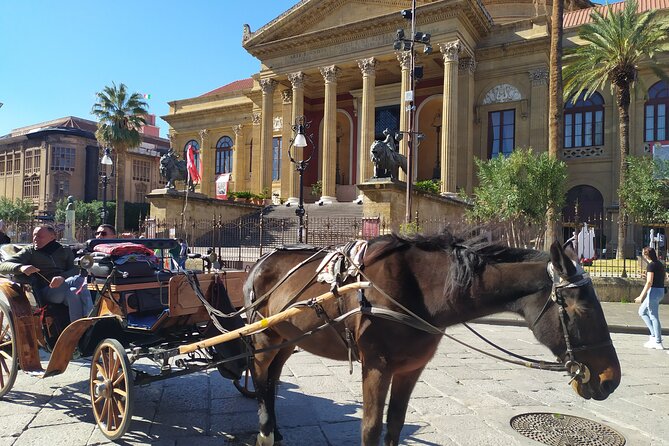
From the cathedral area, you move toward the imposing neoclassical Teatro Massimo in Piazza Giuseppe Verdi (also known by its local square identity around the theater). This is Palermo’s big-stage moment, tied to the Belle Epoque and the Florio dynasty.
Even without going inside, the exterior setting helps you grasp why Palermo’s wealth and ambition showed up in such a grand way. The guide’s storytelling here matters: when you hear about the Florio family and the theater’s place in the city’s drama, the building reads differently.
If you’re the kind of traveler who likes to connect the architecture to the people and money behind it, this is one of the best “meaning-making” stops on the route. It’s also a good mental reset point—after crowded market lanes, you step into a more open, monumental view.
Quattro Canti: baroque street-corner theater (and why it matters)
Quattro Canti is one of the most scenographic baroque squares you’ll see in central Palermo. The idea is simple but brilliant: this is the crossroads of the old city staged like a play, with carefully arranged views at each corner.
The value here is orientation. When you understand Quattro Canti, you start to see Palermo as a grid of meaningful directions rather than a maze of turns. It’s a shortcut to confidence.
This is also one of those stops where you’ll look up more than you look ahead. Take a moment, let your eyes adjust, and you’ll notice how the baroque design turns an ordinary street junction into a statement.
You can also read our reviews of more tours and experiences in Palermo
Piazza Pretoria: the Fountain of Shame and what locals mean
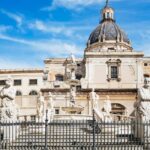
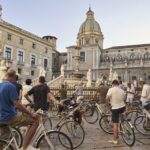
Next comes Piazza Pretoria and its famous fountain. It’s considered one of Palermo’s symbols and is built from 48 statues of white Carrara marble. The sculptors were Tuscan, and the fountain was purchased in 1573—then nicknamed by Palermitans the Fontana della Vergogna, which translates as the Fountain of Shame.
That nickname is the hook. A guide can explain why a fountain becomes a joke, a critique, or a social commentary. When you hear the story behind the nickname, the fountain turns from “cool statues” into a snapshot of how people thought and talked at the time.
This stop is short, but it’s worth treating it as a pause rather than a quick photo stop. The statues are best when you slow down for a minute and let the symmetry and details land.
Piazza Olivella and Piazza Bellini: where the city’s layers show
The route continues through more key squares, including Piazza Olivella and Piazza Bellini, both excellent places to understand Palermo’s layered identity.
Piazza Olivella is known for the scenic setting with the Baroque church of Sant’Ignazio and the Archaeological Museum nearby. Even if you don’t enter the museum, the square gives you a sense of how the city uses space to keep the past visible.
Then Piazza Bellini brings you into a more historic, monumental atmosphere, with major buildings around it. This is where you’ll run into the Church of the Martorana (12th century) and the Arab-style church of San Cataldo, plus the Church and Monastery of Santa Caterina. These names are not just facts—they’re signposts. They help you recognize Palermo’s mix of influences as you walk later on your own.
Opera dei Pupi and the Cassaro axis: street culture with UNESCO weight
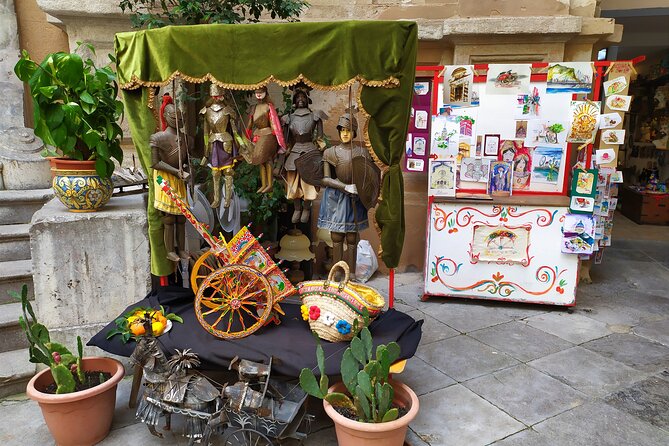
One of the more fun stops is the Teatro dell’Opera dei Pupi, linked to Mimmo Cuticchio. The puppet opera tradition dates back to the 1800s and is connected to UNESCO heritage.
If you’ve never seen opera dei pupi mentioned outside of a cultural reference list, this is where it becomes concrete. It’s a reminder that Palermo’s “history” isn’t only stone buildings—it’s also performance, storytelling, and local crafts kept alive through generations.
From there, you shift toward the Cassaro, the oldest street in Palermo, lined with palaces, churches, and convents. This stretch helps you understand how the city’s main artery shaped everything from wealth to religion. It also sets you up for self-guided wandering after the tour ends, because you’ll know the street name and the overall direction to take.
Porta Carini and the old walls: the city’s boundaries you can still feel
Near the Capo market area, the tour connects to Mura, Bastione e Porta Carini—ancient walls from the first half of the 16th century, including Porta Carini, the entrance that leads into the Capo market zone.
This is a satisfying detail because it gives the market district a frame. It’s easy to treat the market as just a place to eat. But when you see the walls and the gateway, you understand that this neighborhood was historically protected, organized, and controlled—like everything else in Palermo.
You’ll likely leave with better instincts for where you are and how this part of town fits into the bigger old-city structure.
Price and value: why $34.76 can make sense here
At $34.76 per person for about three hours, the value depends on what you’d otherwise pay and how you plan to use the time.
Here’s what the price covers that you can’t easily replicate with a casual walk: entrance to the Capo market, the Cathedral of Palermo, and a guided route that ties monuments to stories. On top of that, you get free tasting stops, which usually matters more than you expect. Small tastings are often enough to “teach your taste buds” without committing to a full sit-down meal.
If you’re on a tight schedule, this is also practical. It’s especially useful for cruise passengers because the tour is relatively close to the port area, and you’ll get info to help you plan the rest of your day.
What it doesn’t include is food beyond the free tasting pauses, plus it doesn’t mention extra museum or palace entry beyond the cathedral. So if you like to eat heavily or want to add paid interiors, you’ll budget for that separately.
Who this tour suits best
This is a strong match if you:
- have a short stay and want a quick, coherent grasp of central Palermo
- like street life as much as monuments
- enjoy guide-led stories about legends and local characters
- want a practical way to start your exploring, ending in a useful area like Piazza Bellini
This is also a good choice for first-timers who want to learn the names of places and how they connect, so the rest of your day feels less random.
The biggest mismatch is language. Since it’s only in Italian, your enjoyment will depend on how well you follow spoken Italian during the storytelling parts.
Should you book Palermo in 3 hours?
Book it if you want a time-efficient walk that mixes major sights with real Palermo daily life. You’ll come away with a clearer understanding of the city’s cultural blend, plus concrete next steps for wandering after you finish at Piazza Bellini.
Skip it (or consider another option) if you need an English guide, because the storytelling is a core part of the experience. Also, if you prefer slow, museum-heavy days, three hours may feel like you’re scratching the surface.
If your goal is to get your bearings fast, eat a few tastings, see the Cathedral, and understand why Palermo’s squares and legends matter, this is a smart use of limited time.
FAQ
Is the tour guide available in English?
No. This experience is only in Italian.
How long is the tour?
It runs for about 3 hours.
How many people are in the group?
The tour has a maximum of 16 travelers.
Where does the tour start and what time?
The meeting point is Via Cavour, 135, 90139 Palermo PA, Italy, and the start time is 10:30 am.
Where does the tour end?
The tour ends in Piazza Bellini, 90133 Palermo PA, Italy.
What’s included in the ticket price?
Entrance to the Capo Market, free tasting stops, and entry to Palermo Cathedral are included, along with a guide in Italian.
Is the Palermo Cathedral entrance included?
Yes, the entrance to Cattedrale di Palermo is included in the price.
Are food and drinks included?
Food and drinks are not included, but you do get free stops for food and drink tastings.
Is it a mobile-ticket experience?
Yes, the tour uses a mobile ticket.
What is the cancellation policy?
You can cancel for a full refund up to 24 hours before the experience starts. If you cancel less than 24 hours in advance, the amount paid is not refunded.